

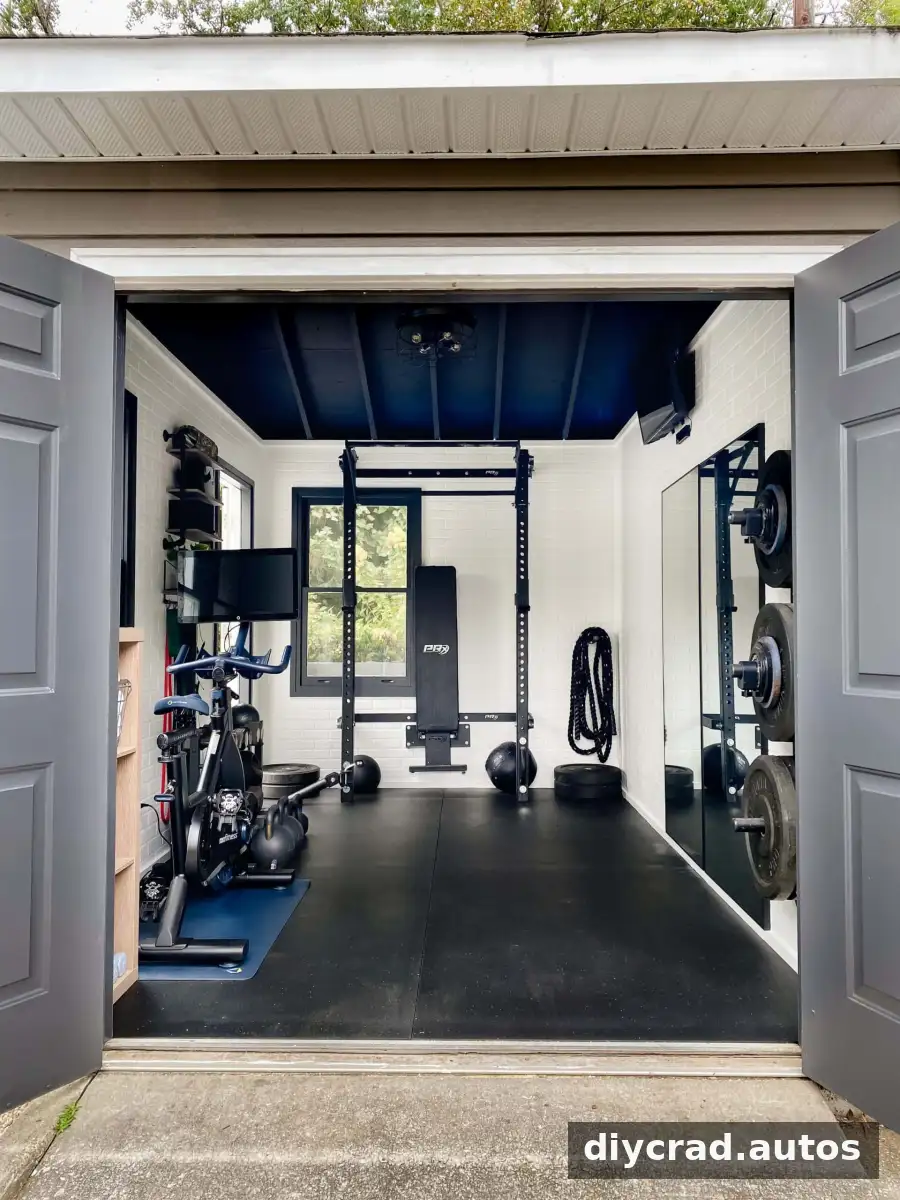
A shed home gym can turn an underused backyard building into a convenient place to exercise without the ongoing cost of a gym membership. With secondhand equipment, simple storage, and a few thoughtful updates, you can create a functional workout area while keeping costs under control.
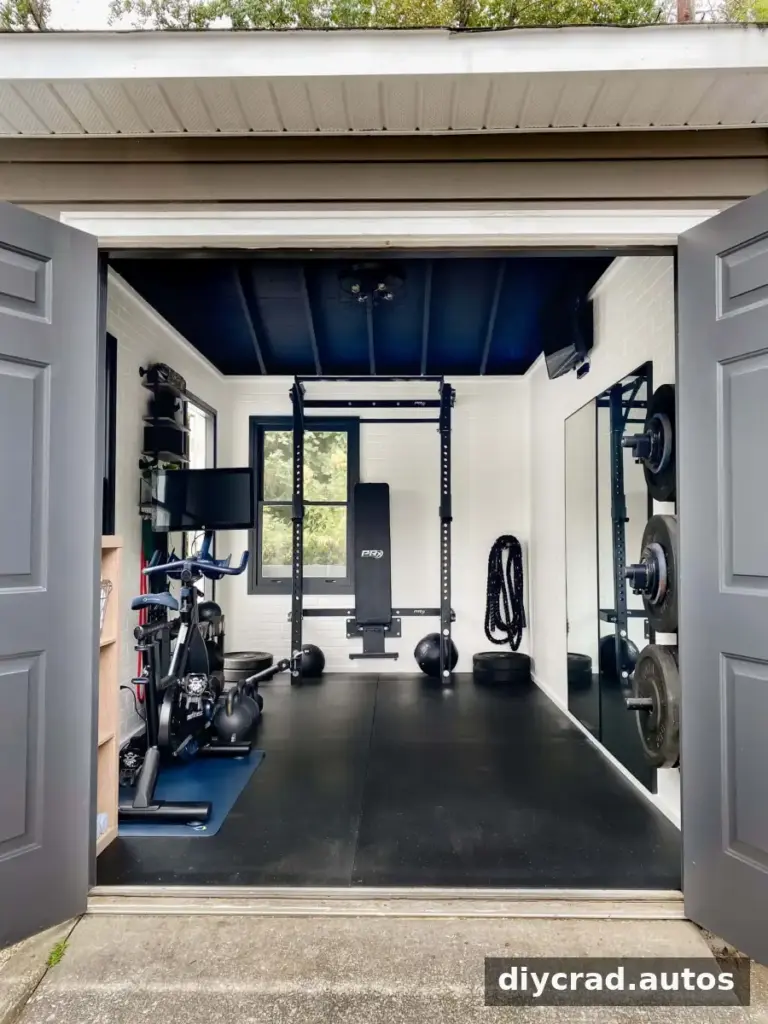
This shed makeover took place over about two weeks and made use of repurposed lumber, leftover paint, and inexpensive faux-brick wall panels. The space also shows how a mix of existing and pre-owned equipment can help make a backyard gym more affordable.
Before buying anything, measure the shed and decide which activities matter most. A plan for cardio, strength training, or floor exercises will help you choose equipment that fits rather than filling the room with items you rarely use.
Planning a Budget Shed Home Gym
A dedicated workout space can make it easier to fit exercise into a daily routine. It may also reduce travel time and, depending on your circumstances, help you avoid recurring gym fees. The best setup is one that suits your available space and the workouts you actually plan to do.
Over the past 10 years, Robert collected much of the gym equipment from local secondhand listings and used sports stores. The equipment had previously been stored in a garage before it was moved into the shed.
Small upgrades can make a basic workout space feel more organized and comfortable. Prioritize useful items such as storage, lighting, and a place to keep water and towels before spending on decorative extras.
Home Gym Storage
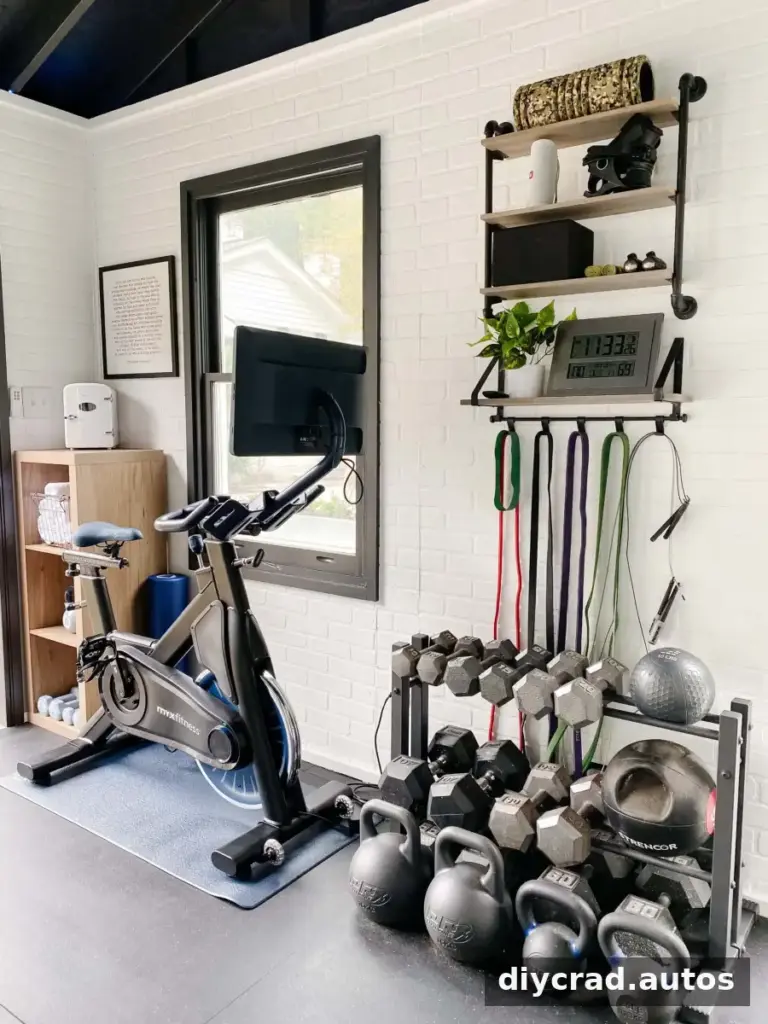
Shelves and hooks keep smaller items visible and easy to reach. They can hold yoga mats, resistance bands, jump ropes, small weights, and a Bluetooth speaker. Keeping equipment off the floor also helps preserve open space for movement.
A shelf with metal hooks can work well for bands and jump ropes. Choose a secure location and use fixings suited to the wall material; avoid loading a shelf beyond its stated capacity.
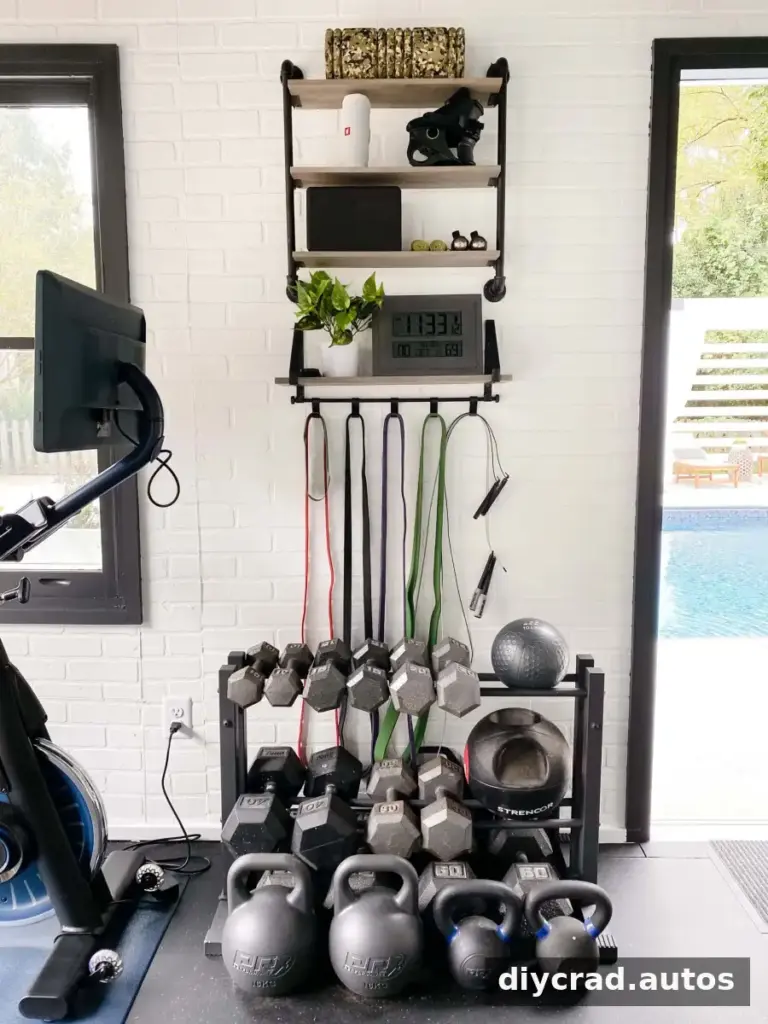
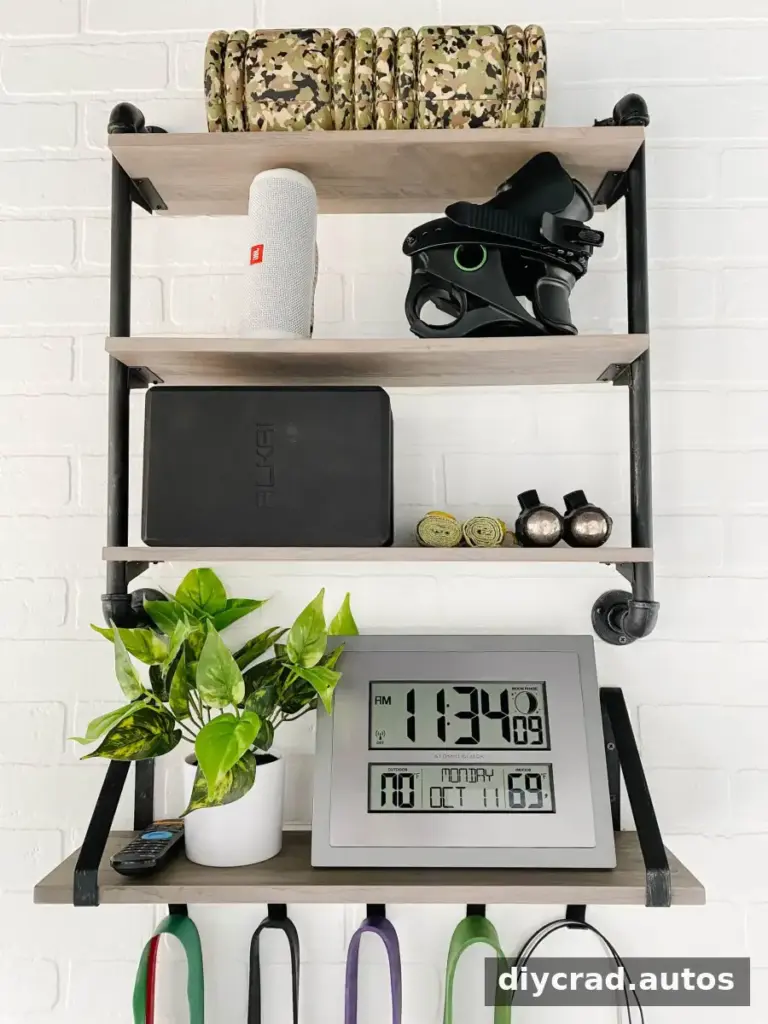
An industrial-style pipe shelf can hold compact items such as a speaker, yoga blocks, an atomic clock, or a foam roller. A small plant can add a touch of color, provided it is placed where it will not interfere with exercise or equipment.
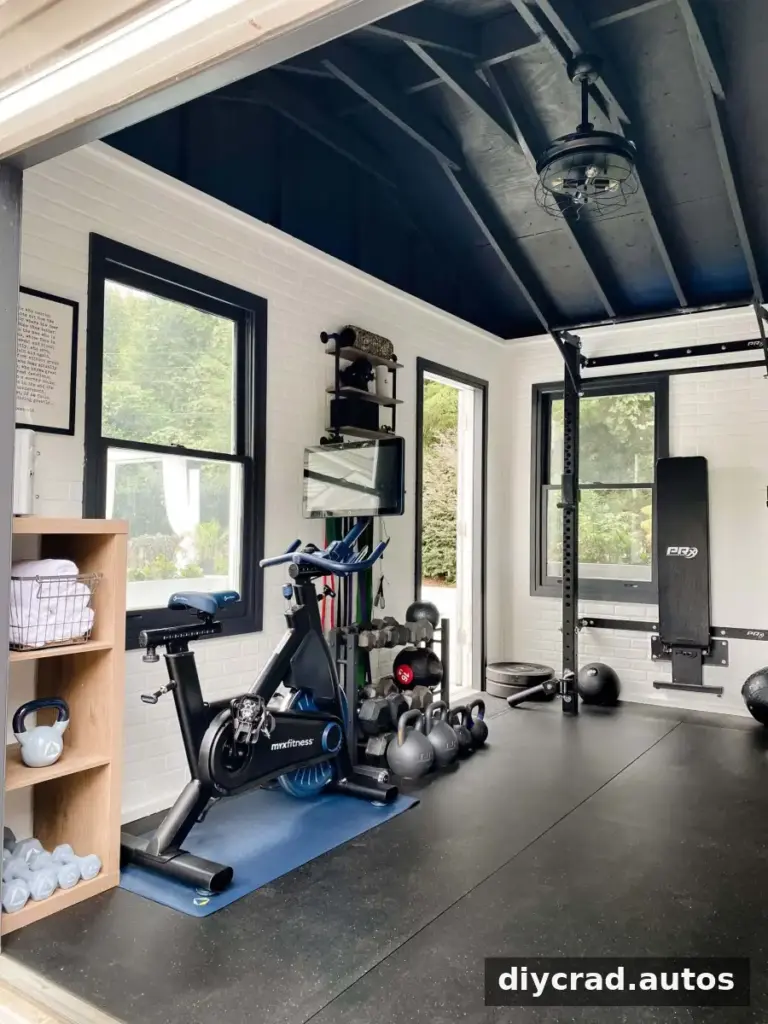
A three-cube shelf beside the door can store hand weights, while a wire basket can hold gym towels. Keeping water bottles near the exit makes it easier to grab them before or after a session. If you use a mini fridge, make sure it has a suitable, safely installed power source.
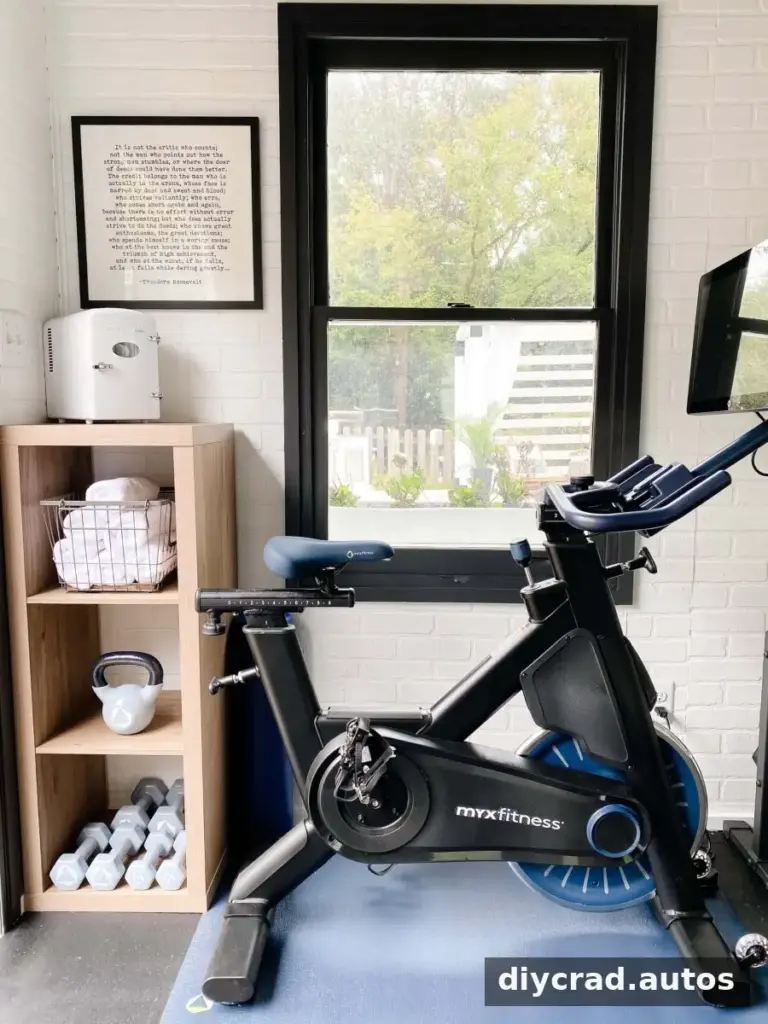
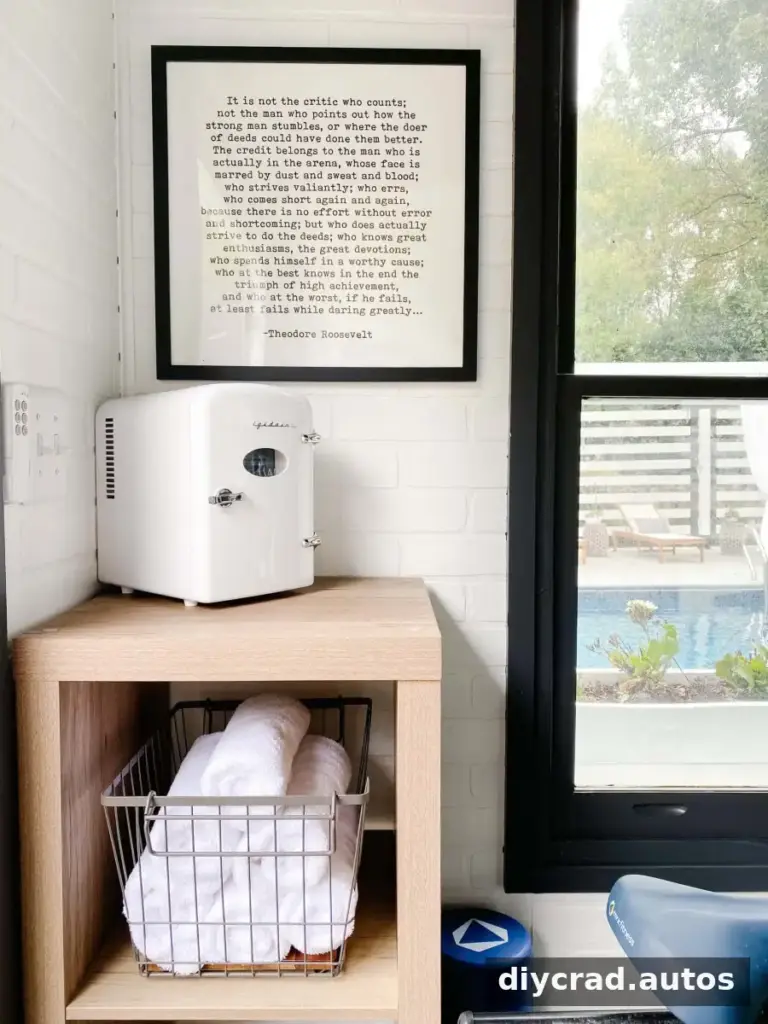
Motivational artwork, including a framed Theodore Roosevelt quote, can make an otherwise plain corner feel more personal. Keep wall decor secured and away from areas where weights or other equipment may strike it.
Flooring and Workout Space
Heavy-duty rubber mats found secondhand were placed over the concrete slab in this shed. Used mats can be a cost-effective option when they are clean and still in good condition. Horse-stall mats from a local farm supply store may also be an affordable flooring choice.
Practical tip: Place heavier equipment around the perimeter when appropriate, leaving an open central area for stretching and bodyweight exercises. Check that the floor is level and that the equipment sits securely before using it.
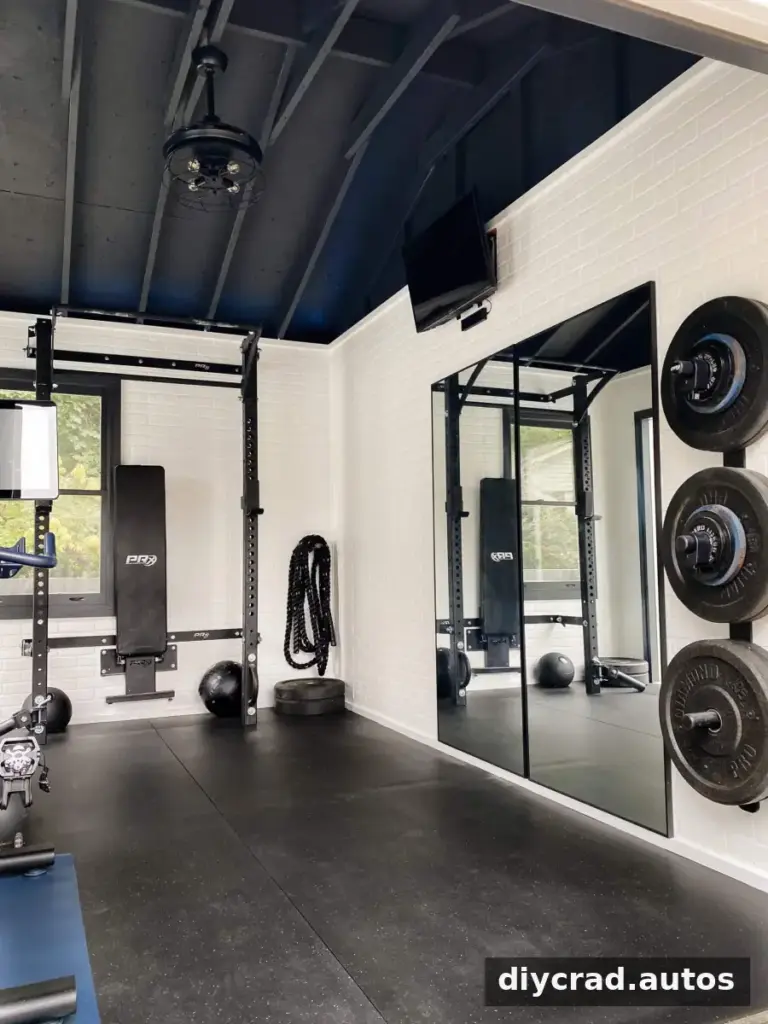
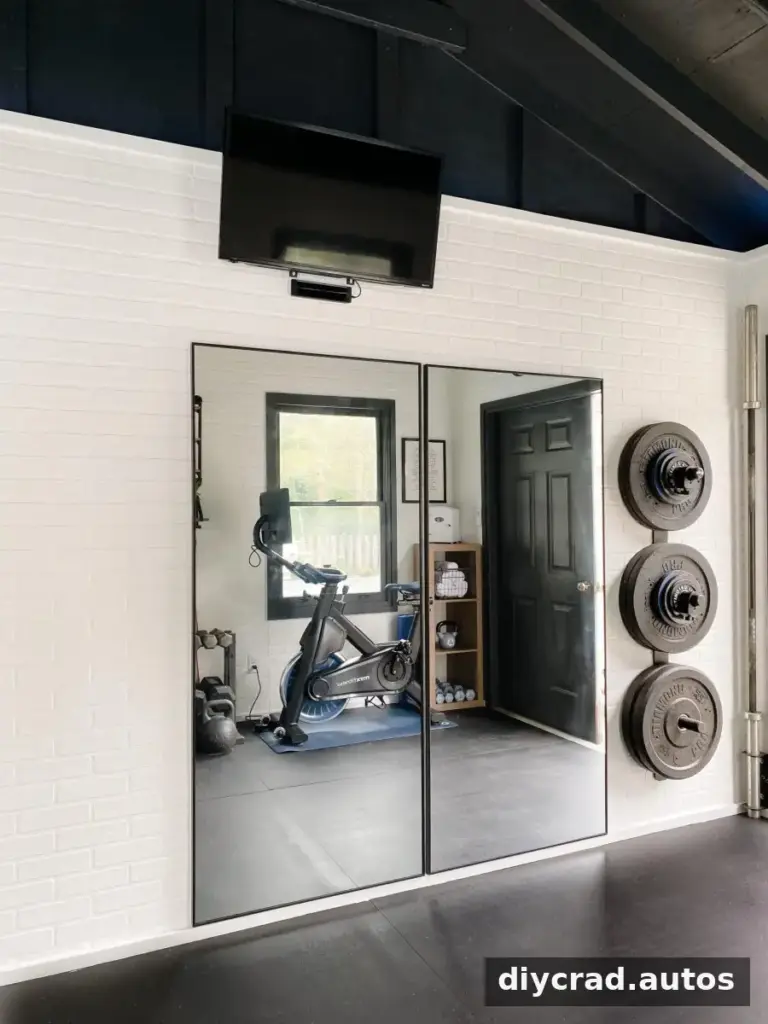
Two large, black-framed mirrors help users check their form and make the room feel more like a studio. Position mirrors securely and avoid placing them where they could be hit by weights. Even a small shed can support a useful workout if it has enough clear floor space for safe movement.
Lighting and Comfort
Color-changing LED strip lights were added along a ledge near the top of the faux-brick walls. Battery-operated strips can avoid the need for a nearby outlet, and rechargeable batteries may reduce repeat battery purchases. Follow the product instructions when installing any lighting.
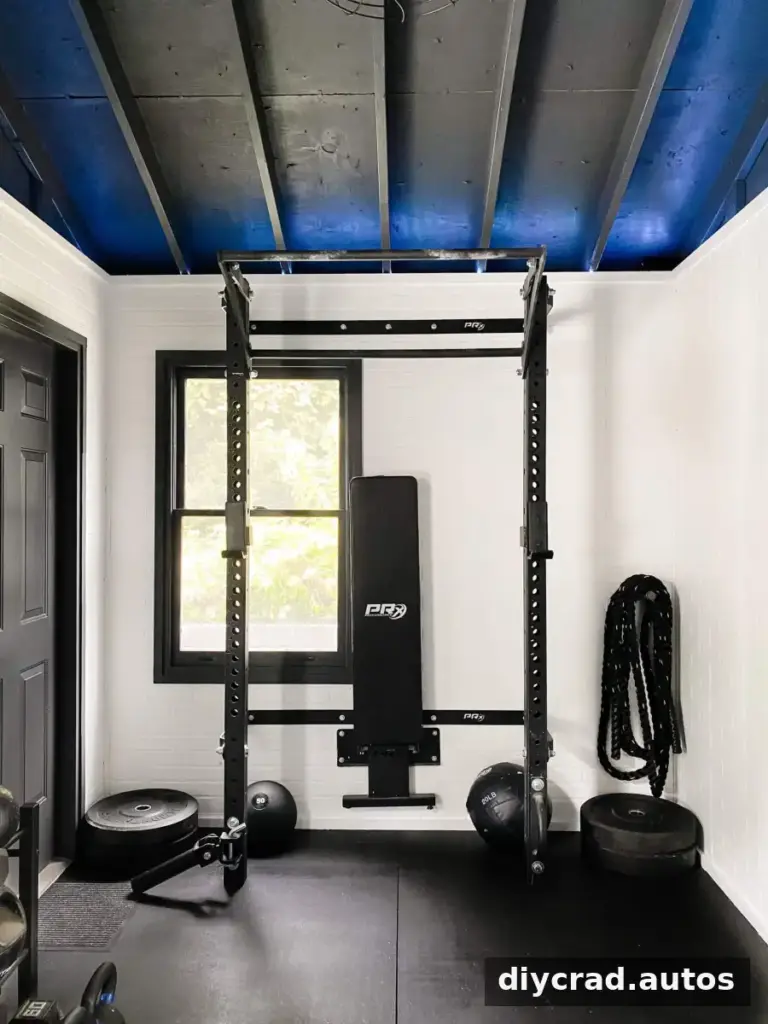
Some light strips include preset effects, which can add atmosphere to early-morning workouts. Make sure decorative lighting does not create glare or leave workout areas too dim to see equipment and foot placement clearly.
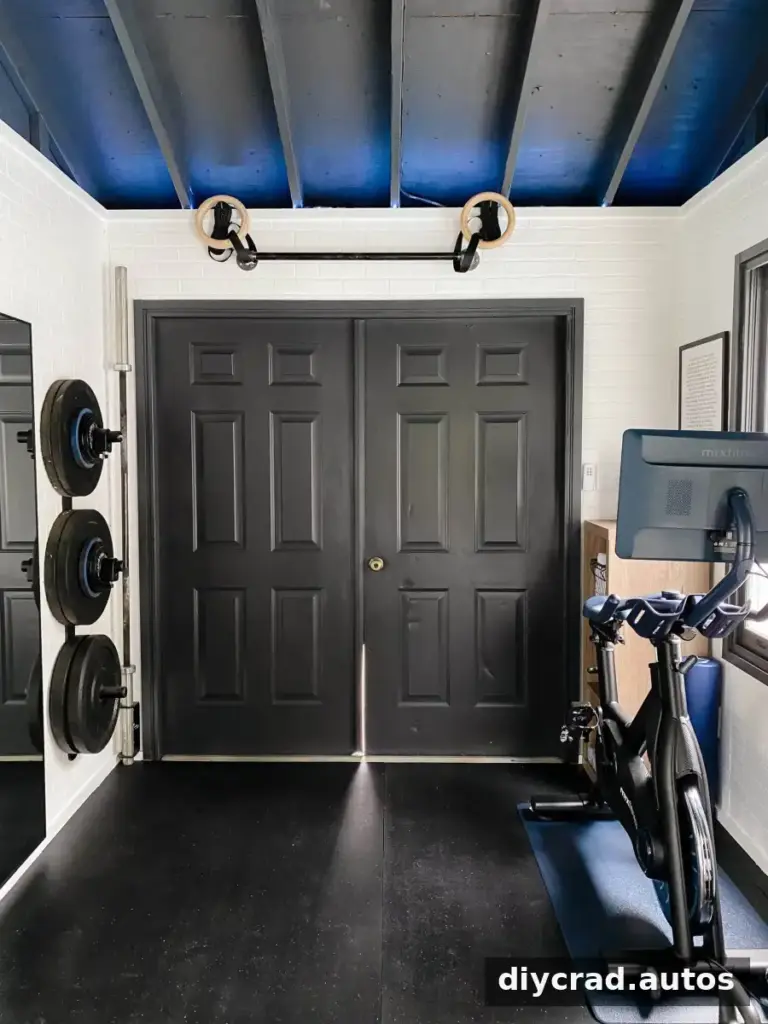
An industrial-style fan with lights and retractable blades provides airflow. A wall-mounted air-conditioning unit was being considered for warmer weather. Before adding electrical equipment or making structural changes, check the shed’s condition and follow applicable local requirements. Good ventilation and a dry interior are important for comfort and for protecting equipment from moisture.
Cardio Area
An exercise bike was the only new piece of equipment added to this setup. Placing it beside a window gives the rider a view of the backyard. Leave enough clearance around cardio equipment for mounting, dismounting, and safe use, and follow the manufacturer’s setup and maintenance guidance.
Weight-Lifting Area
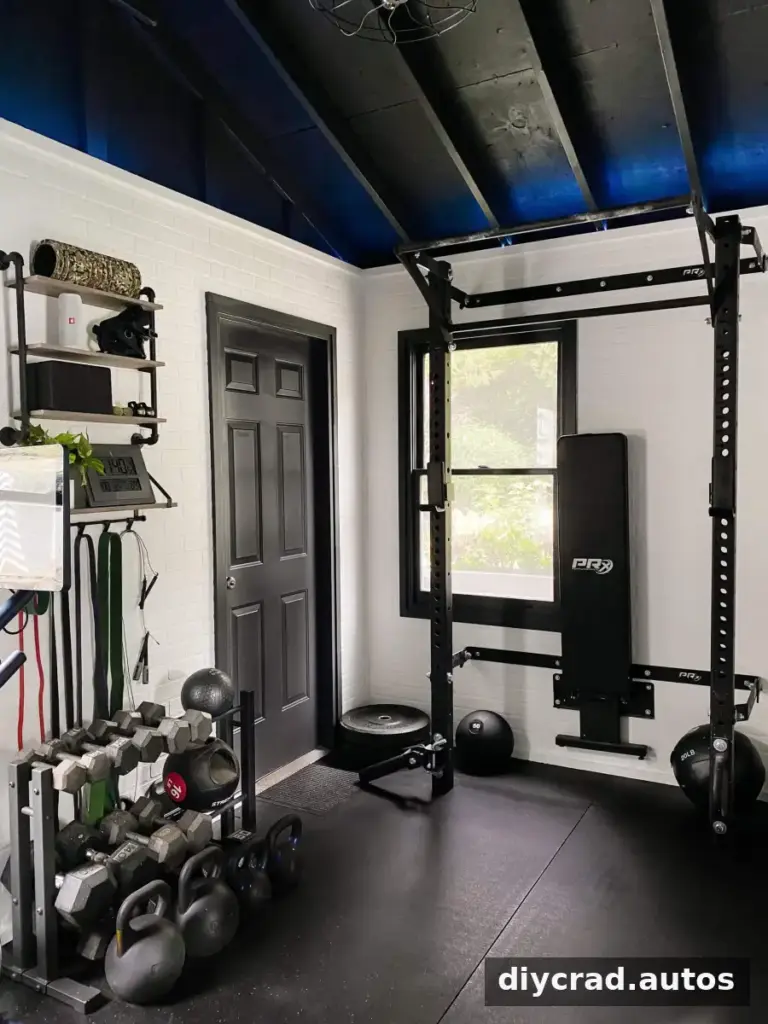
A squat rack that had previously been kept in the garage now has a dedicated place in the shed. Before using a rack, confirm that it is stable and positioned on a suitable surface, with enough room to move safely. Keep the area around it clear and use appropriate safety supports for the exercises being performed.
A chalkboard can be a simple place to write workout circuits and goals. Robert has a bachelor’s degree in Exercise Science, which informs how he uses the space and plans workouts.
Tips for Creating a Home Gym on a Budget
Look for Secondhand Equipment
Check local classifieds and secondhand sports stores for used equipment. Inspect items for visible damage, missing parts, rust, or instability before buying, and make sure they suit your intended exercises.
Refresh the Walls Inexpensively
Paint, stencils, inexpensive panels, or a simple poster can make a shed feel more inviting without a major renovation. Choose finishes suitable for the space and address any dampness before covering walls.
Organize Smaller Items
A compact shelf, hooks, or a basket can keep smaller gear easy to find. Store frequently used items within reach and keep walkways clear.
Consider Rubber Flooring
Rubber mats can provide a more forgiving surface than bare concrete for many workouts. Check that the mats lie flat and do not slide; select flooring appropriate for the equipment and exercises you plan to use.
Start with the Basics
If you are building a gym from scratch, resistance bands, a jump rope, and suitable running shoes can support a range of strength and cardio activities. Add equipment gradually as your routine and budget develop.
Items Used in the Shed Gym
The additional items used to complete this setup included:
- Faux-brick wall panels
- Mirrors
- Three-cube shelf
- Wire basket
- Hand towels
- Shelf with hooks
- Three-tier industrial pipe shelf
- Atomic clock
- LED strip lights
Many of the other pieces were already on hand. Building a home gym gradually can help spread out costs: begin with a few versatile basics, then add equipment when you know what your routine requires.
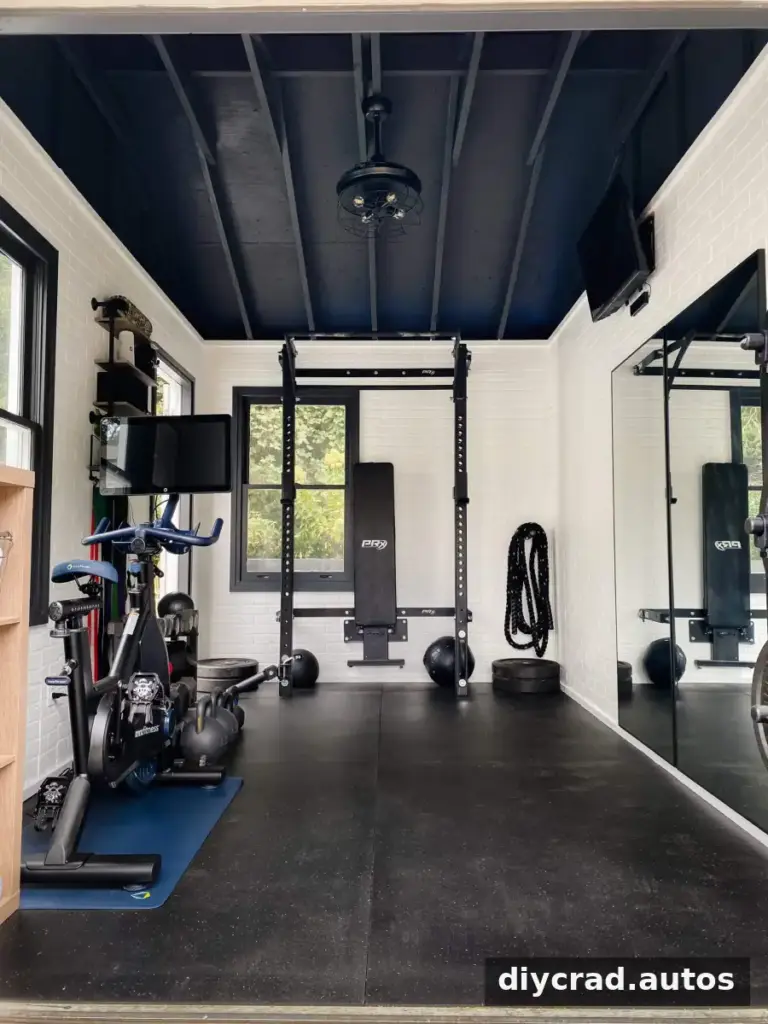
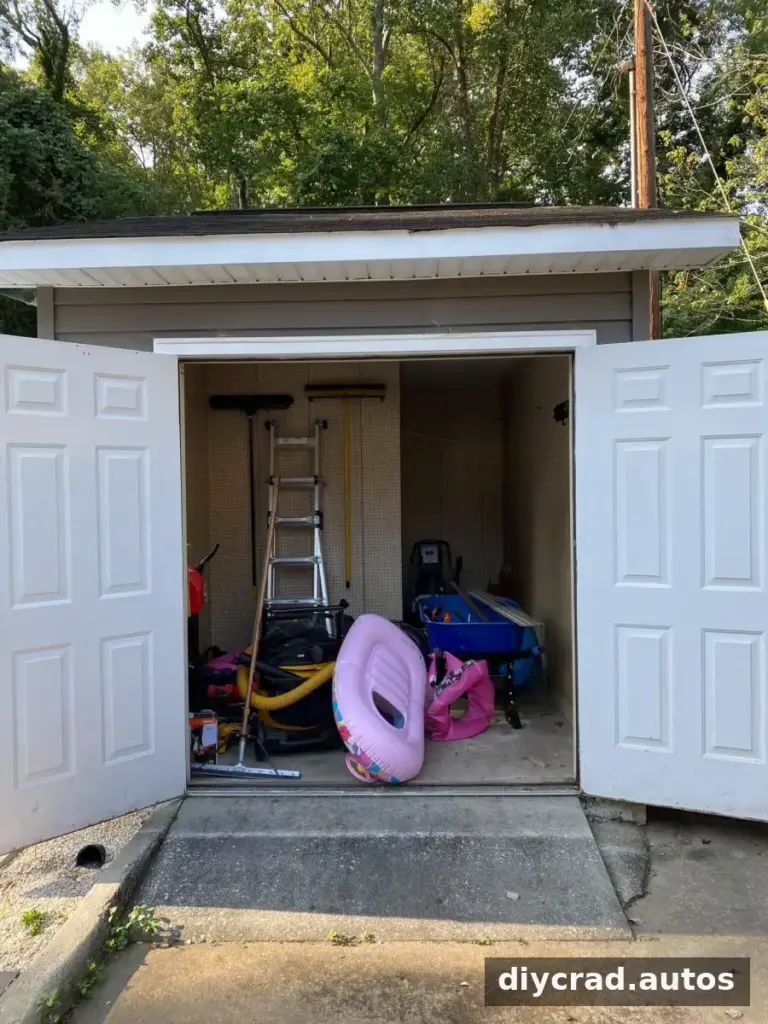
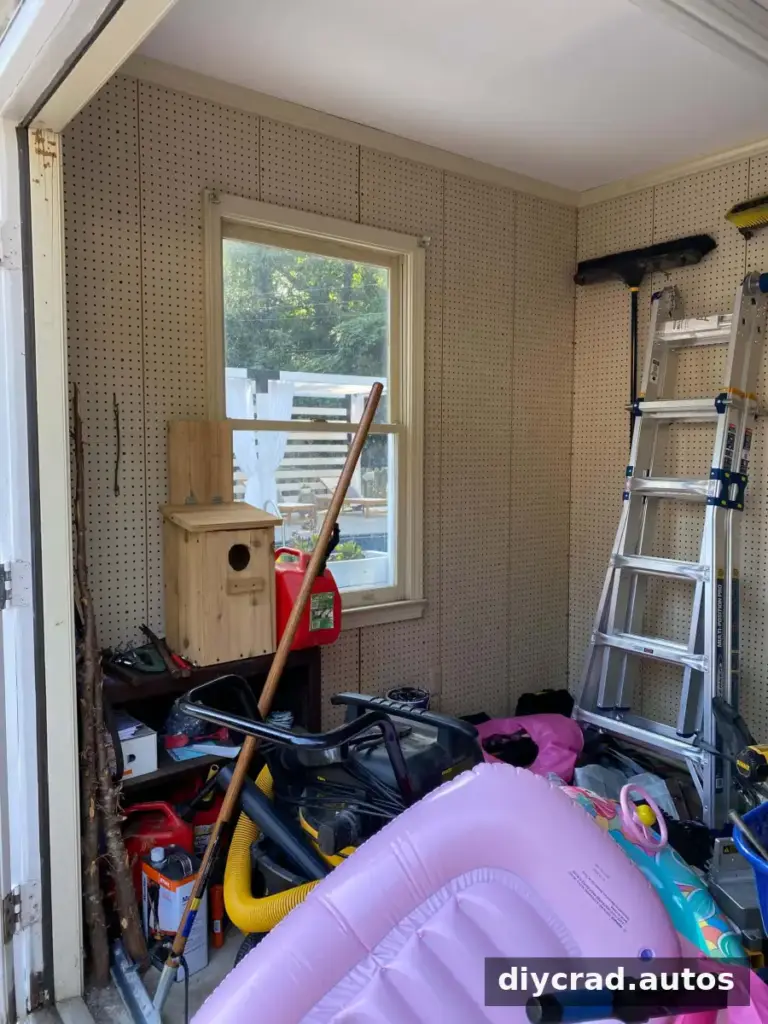
The finished shed looks very different from its earlier cluttered state. The makeover demonstrates how storage, flooring, and carefully chosen equipment can make a small outbuilding more useful.
Frequently Asked Questions
How big does a shed need to be for a gym?
The space you need depends on the equipment and the amount of clear floor area you want. A home gym commonly uses about 50 to 200 square feet. Measure larger equipment and leave room to move safely before deciding how to arrange the shed.
Is it cheaper to buy a shed or build one yourself?
Building a shed can save on labor costs, while buying one can save time. Your choice depends on your budget, skills, available time, and local requirements. Shed kits are another option that can simplify construction.

Conclusion
A shed home gym does not need expensive equipment or a complete renovation to be useful. Start by measuring the space, sourcing suitable secondhand gear, and organizing the floor plan around safe movement. With practical storage, durable flooring, and comfortable lighting and ventilation, a backyard shed can become a convenient place to maintain a regular workout routine.

