


Faux marble herringbone tile can bring the classic look of stone to a bathroom while offering a practical porcelain surface. In this renovation, cool gray-toned floor tile, polished shower walls, and a coordinating hexagon accent help create a more cohesive, light-filled space without using real marble.
Faux Marble Herringbone Tile: The Bathroom Update
The primary bathroom had received a temporary refresh with paint, vinyl flooring, and decor while a larger renovation was planned. An HVAC leak led to water mitigation and brought that project forward sooner than expected. During the work, the dated beige shower surround was removed, making room for a new design with marble-effect porcelain tile.
Before and Previous Refresh

The earlier update helped the room feel more comfortable, but it was not intended to be a permanent renovation. The shower remained the main feature in need of change.
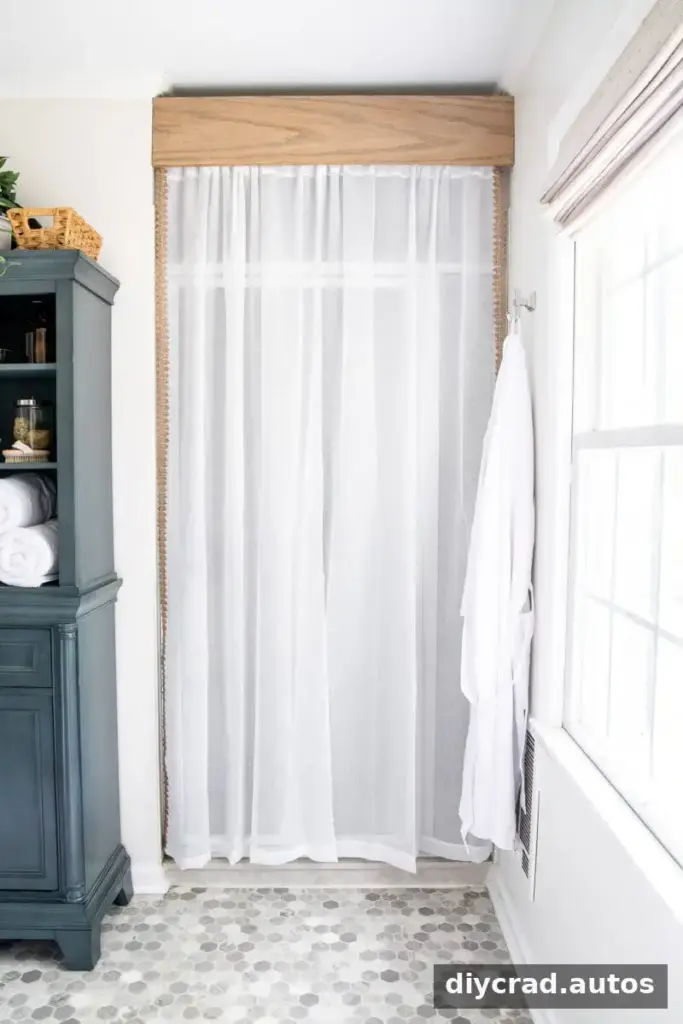
Once demolition exposed the shower, the existing beige surround could be replaced with a brighter, more contemporary finish.
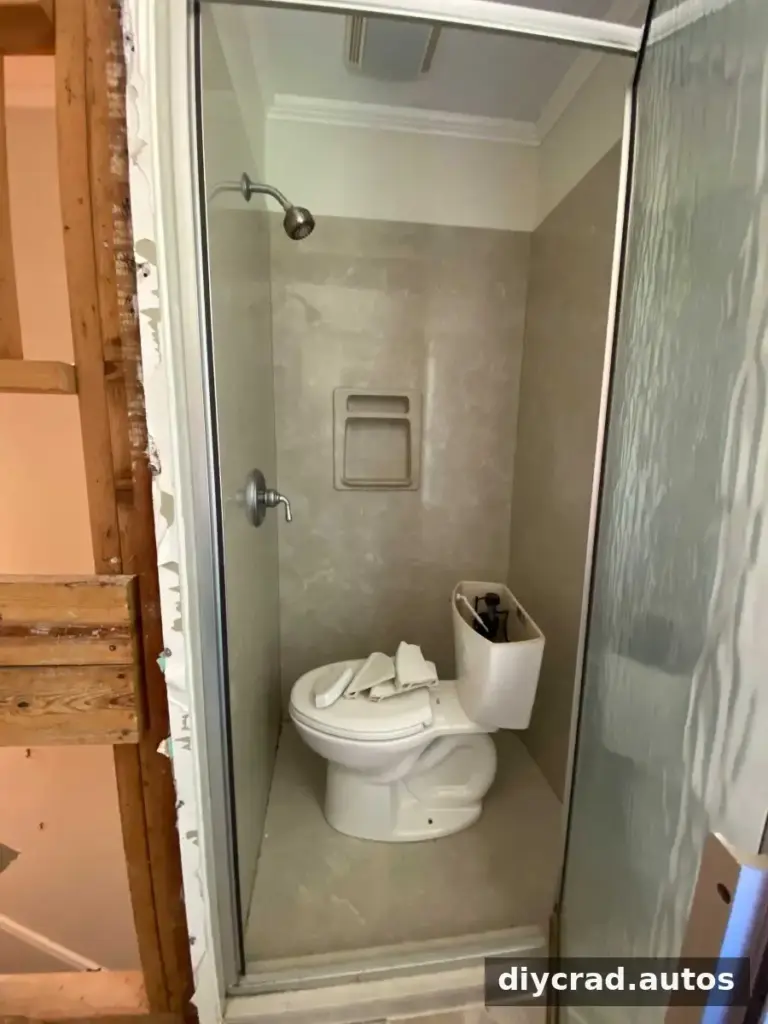
Choosing Marble-Effect Porcelain for the Shower
The shower walls use RTWM Statuary marble-effect porcelain tile in a 4×16 size. Porcelain was selected to achieve a marble-inspired appearance without the etching concerns associated with real marble. The range includes 17 tile types in the same finish, making it possible to coordinate different shapes and sizes within a bathroom.
The veining gives the surface visual variation, while the consistent finish helps the different tile formats work together. When comparing tiles, it is useful to view samples in the room’s actual lighting; natural and artificial light can change how gray, beige, and white tones appear.
Faux Marble Herringbone Tile Floor
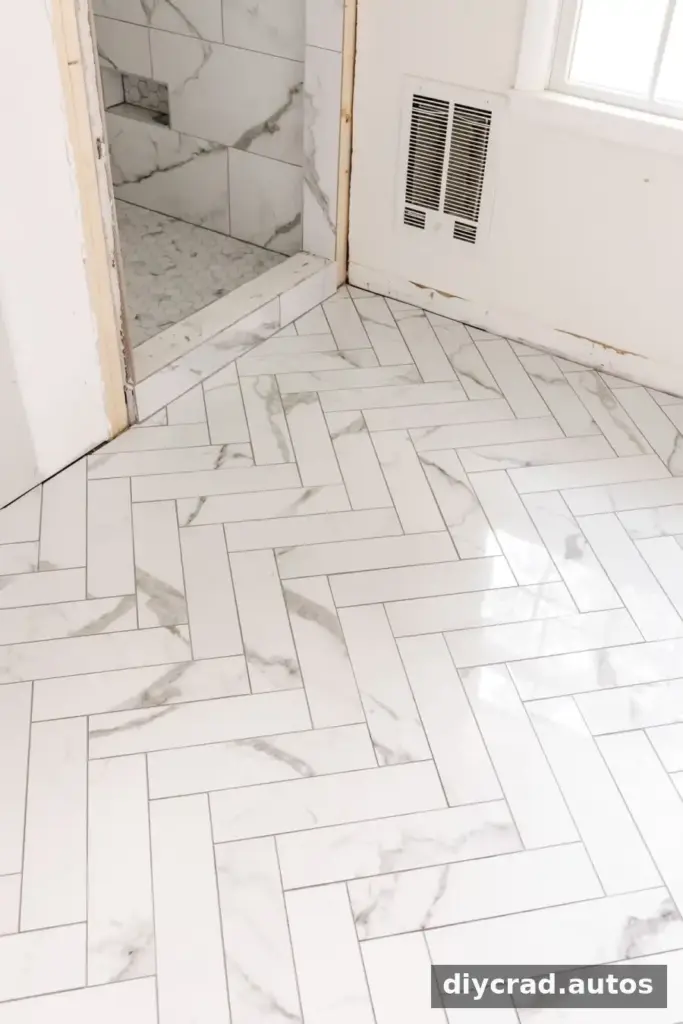
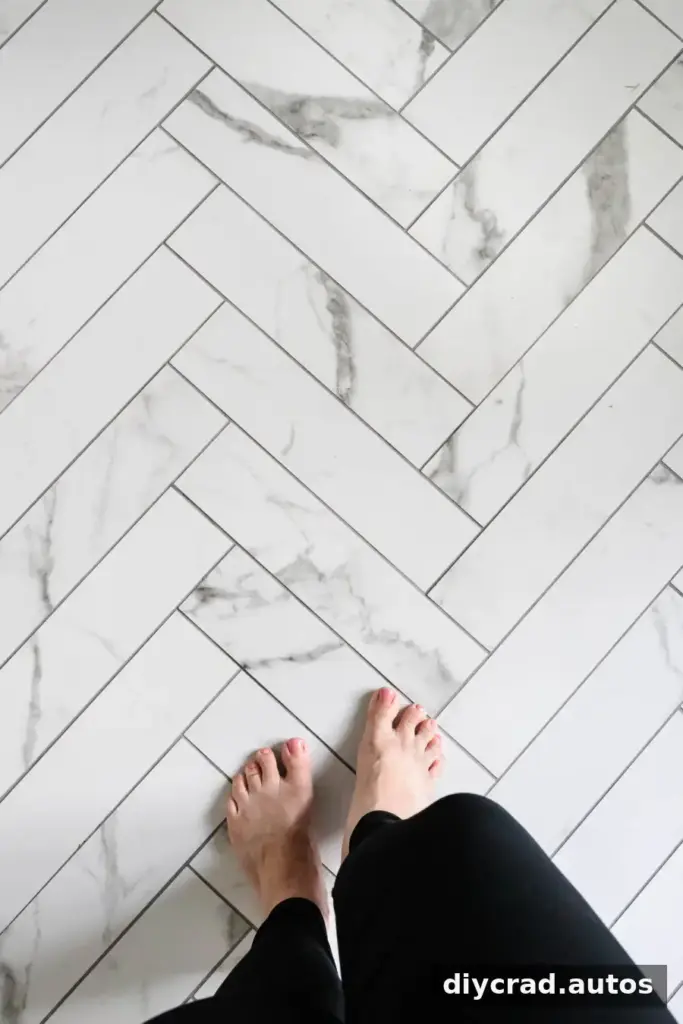
The bathroom floor features faux marble tile arranged in a herringbone pattern. Its polished finish reflects light from the window, which can help a compact room feel brighter and more open. The selected color has a cool gray cast rather than a beige one, supporting the intended modern-meets-timeless look.
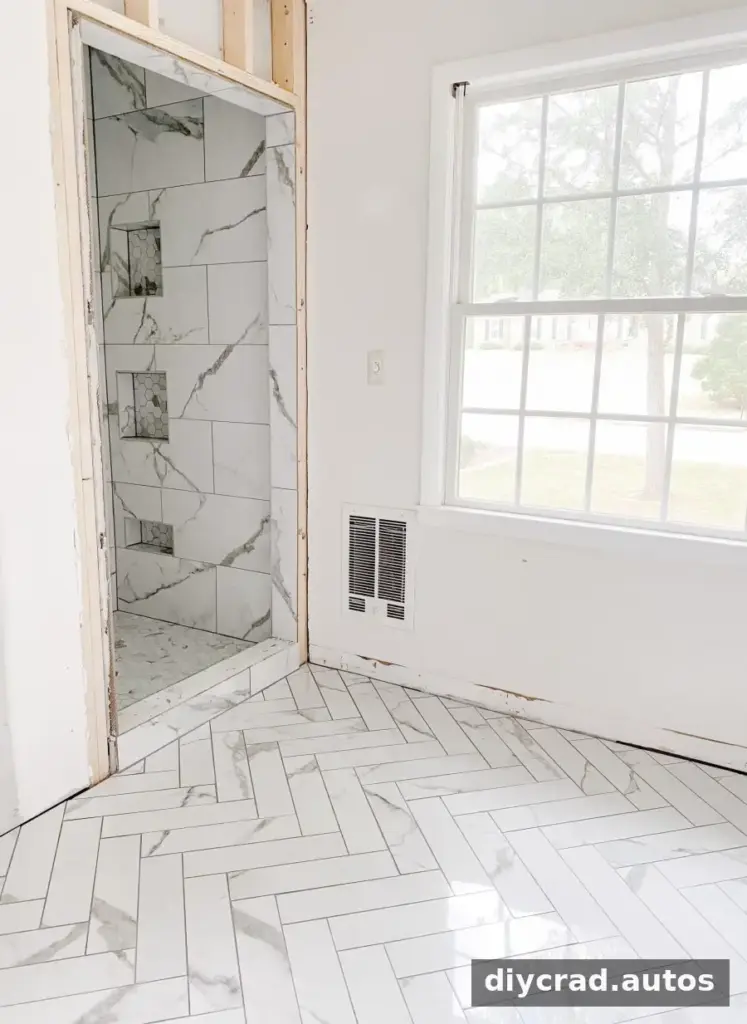
A medium-gray grout, MAPEI Timberwolf, was chosen to complement the tile and make everyday marks less conspicuous than they might be with very light grout. Grout color also affects how clearly a pattern stands out: a closer match creates a softer effect, while stronger contrast emphasizes each tile and the herringbone layout.
For a lasting result, follow the tile and grout manufacturers’ care instructions and use cleaning products suitable for the installed materials. Confirm grout color with a sample when possible, since a small test area can look different from a full floor.
Coordinating the Shower Floor and Details
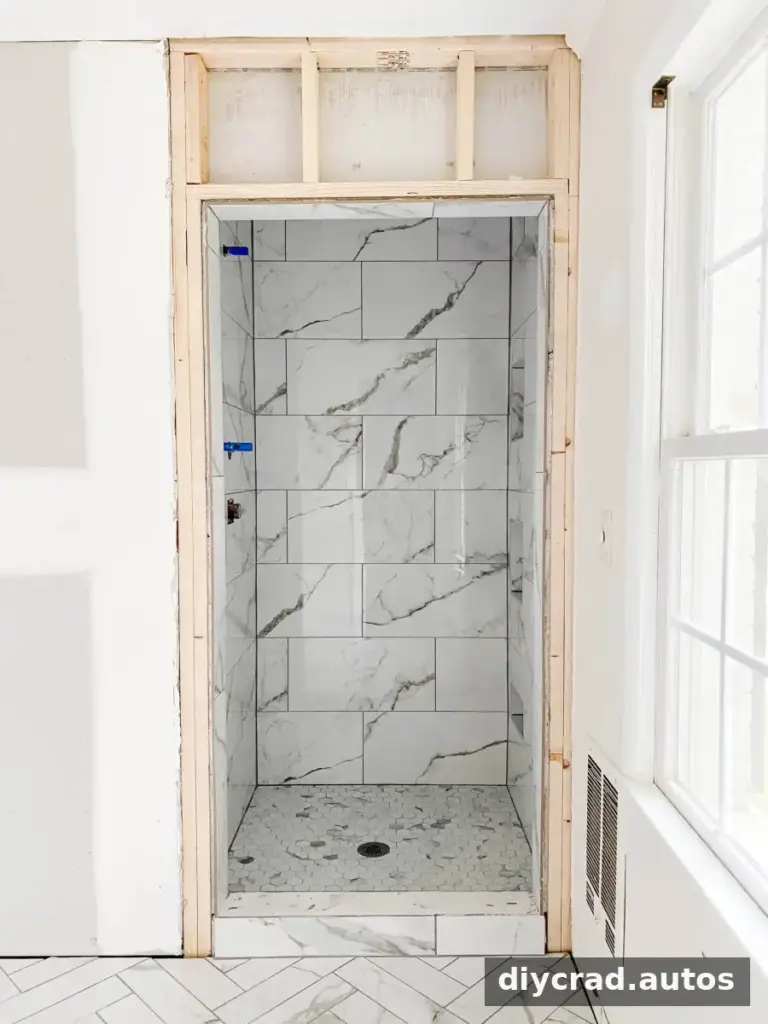
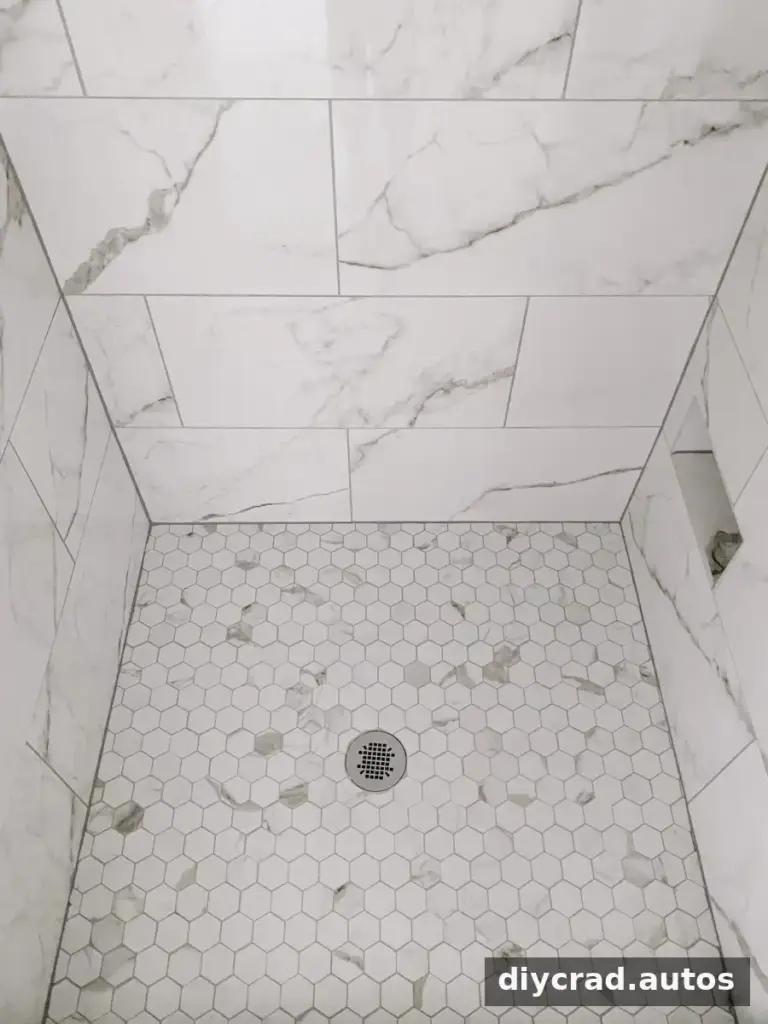
The shower walls use larger 12×24 RTWM Statuary porcelain tiles. The polished surface continues the light-reflecting look, while the larger format creates fewer visible grout lines than smaller wall tiles. Tile size alone cannot change a shower’s dimensions, but a consistent palette and fewer visual breaks can make the space feel less busy.
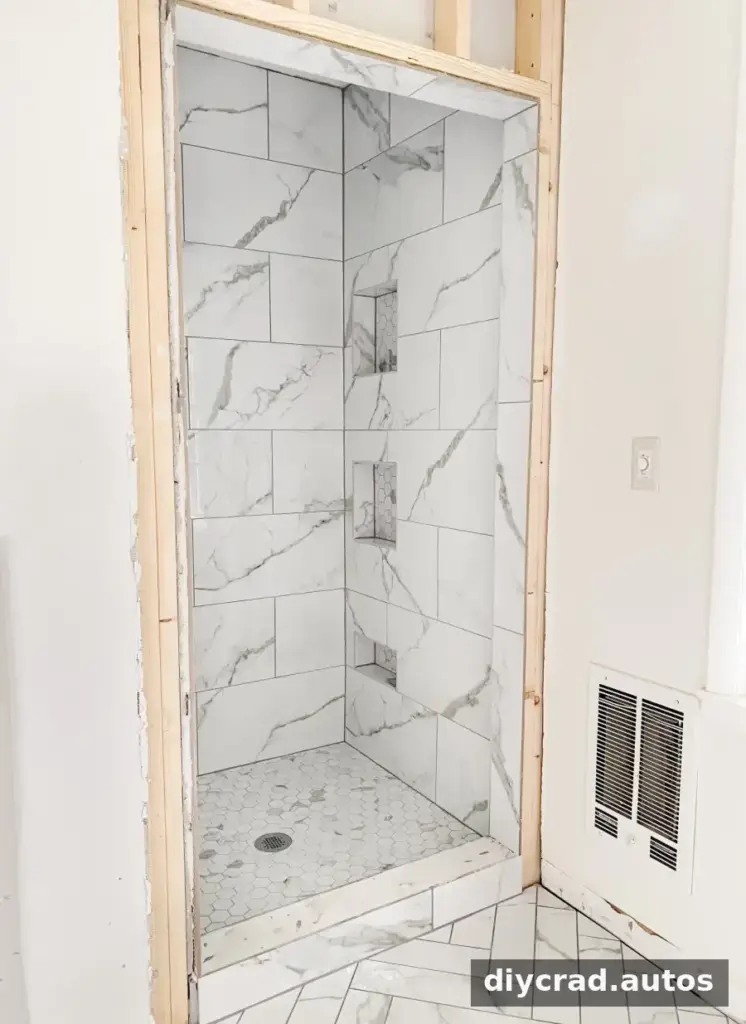
Hexagon tile in the same marble-effect finish adds detail to the shower floor and niches. Repeating hexagon shapes used elsewhere in the home helps connect the rooms visually. For shower floors, tile selection should also account for the slope, drainage, and the surface’s suitability for wet areas; confirm these requirements with the installer and product specifications.
Next Steps for the Bathroom Renovation
The planned work includes bringing in the vanity and preparing for countertops, followed by paint and finishing details. The original goal was to have the bathroom completed by October, though the project schedule was still uncertain. Wall color was also undecided, with bright white and light gray under consideration.
Planning Color and Finishing Choices
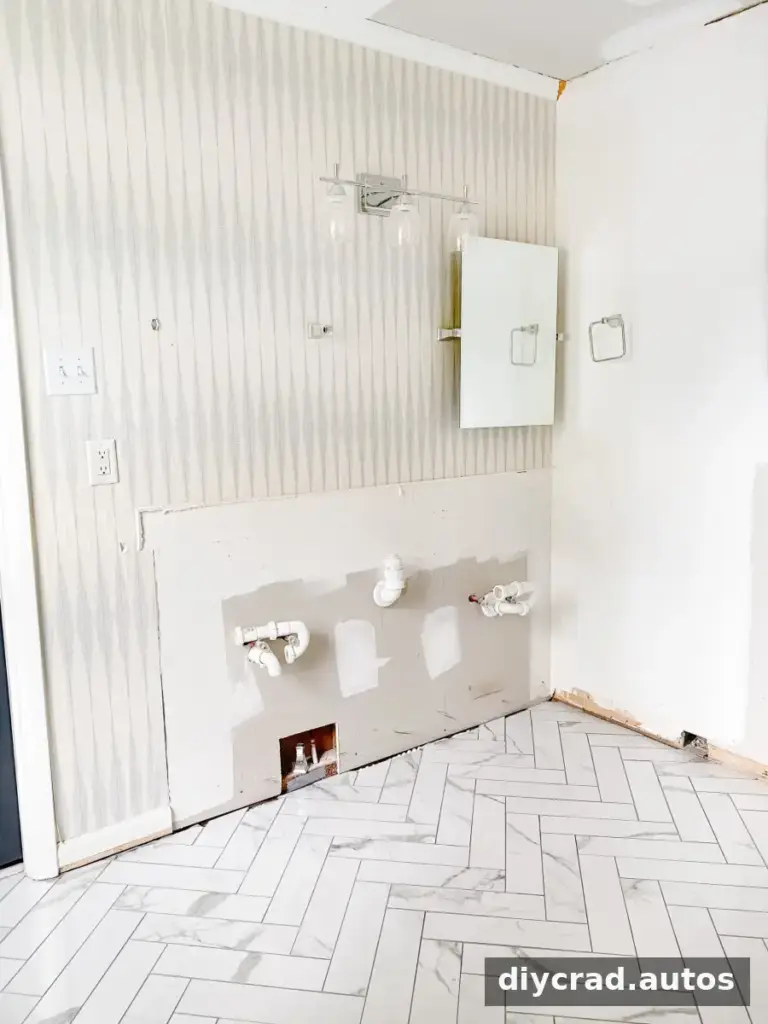
Before choosing a wall color, compare paint samples beside the tile at different times of day. This makes it easier to see whether a white reads warm or cool and whether a light gray works with the floor’s undertones.
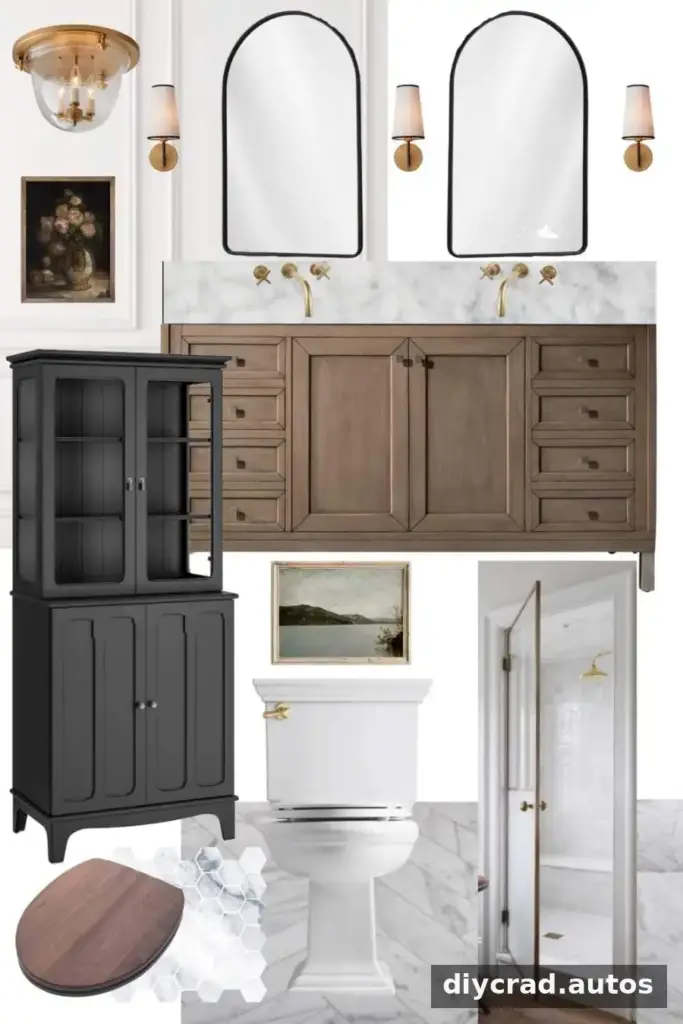
The renovation began unexpectedly, but the combination of porcelain surfaces, a herringbone floor, and repeated hexagon accents gives the room a clear design direction.
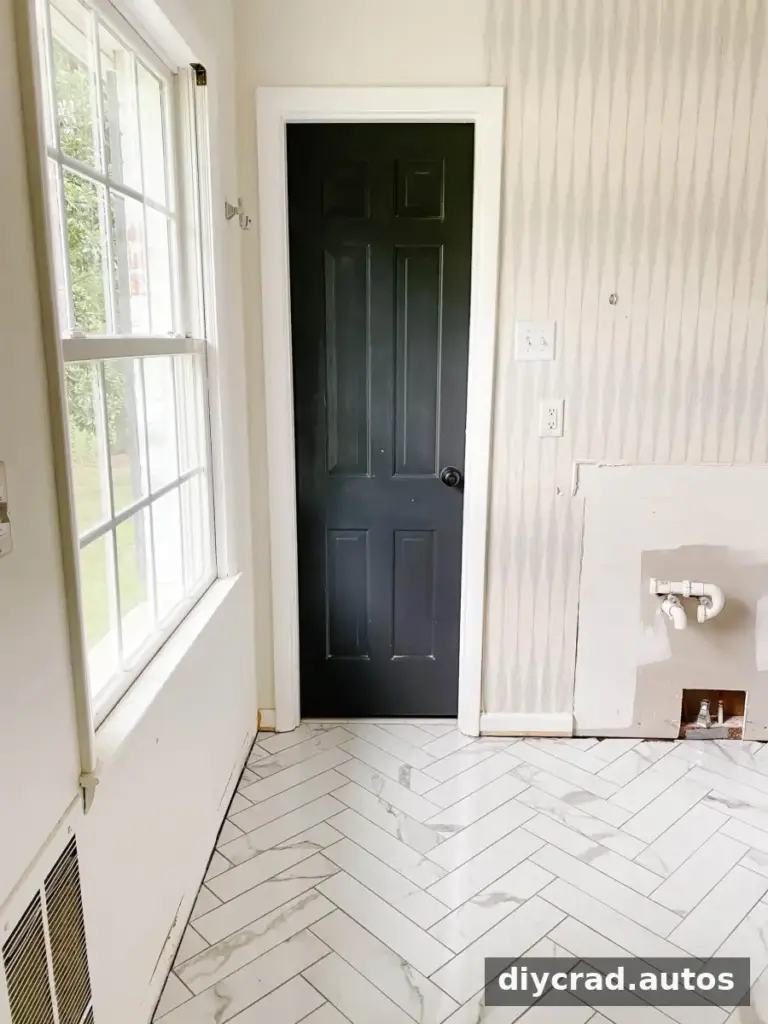
Overall, faux marble herringbone tile offers a way to introduce a classic pattern and marble-inspired movement into a bathroom. Pairing it with coordinated shower tile and a considered grout color can help a small room feel brighter and more unified. The remaining choices, including wall paint and vanity details, can build on the cool-toned palette already established.

Related Bathroom Ideas
- Marble Tile vs. Marble-Effect Tile: Which Is Best?
- How to Install Sheet Vinyl Flooring Over Tile
- DIY Moroccan Vinyl Tile Floor
- How Patterned Vinyl Tile Holds Up Over Time
- Choosing Tile for a Small Budget
- Wood Bathroom Vanities for Different Budgets

