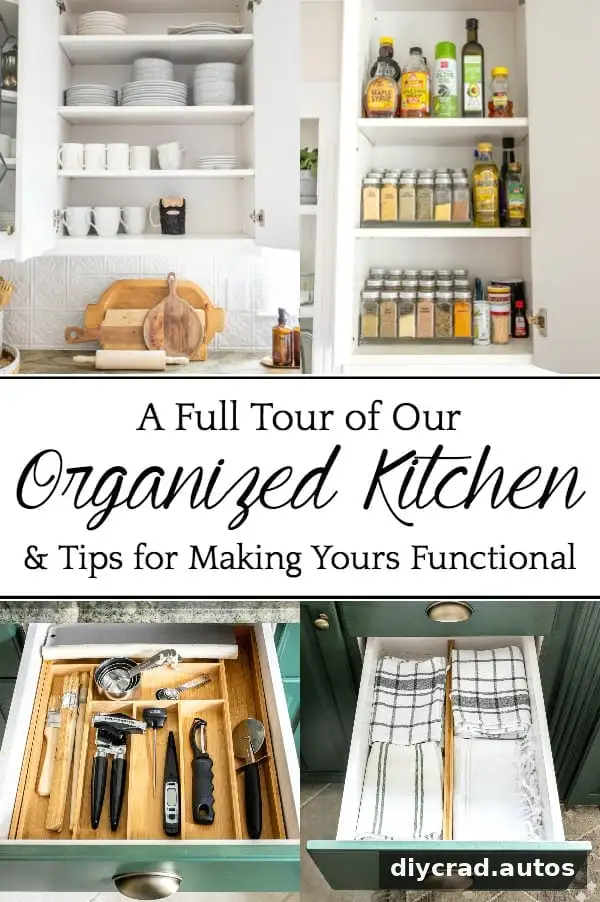
A well-organized kitchen can make everyday cooking easier, even when a full remodel is not an option. This kitchen organization makeover focuses on sorting cabinets and drawers, creating practical storage zones, and keeping frequently used items within reach. The full project took about three hours, and the ideas can be adapted to kitchens of different sizes.
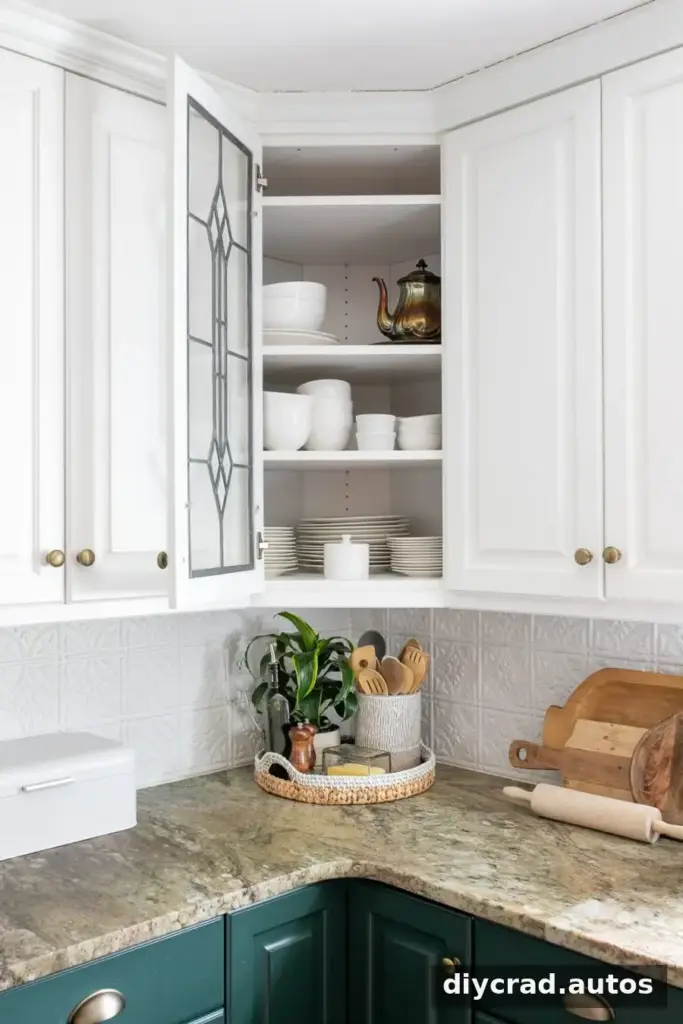
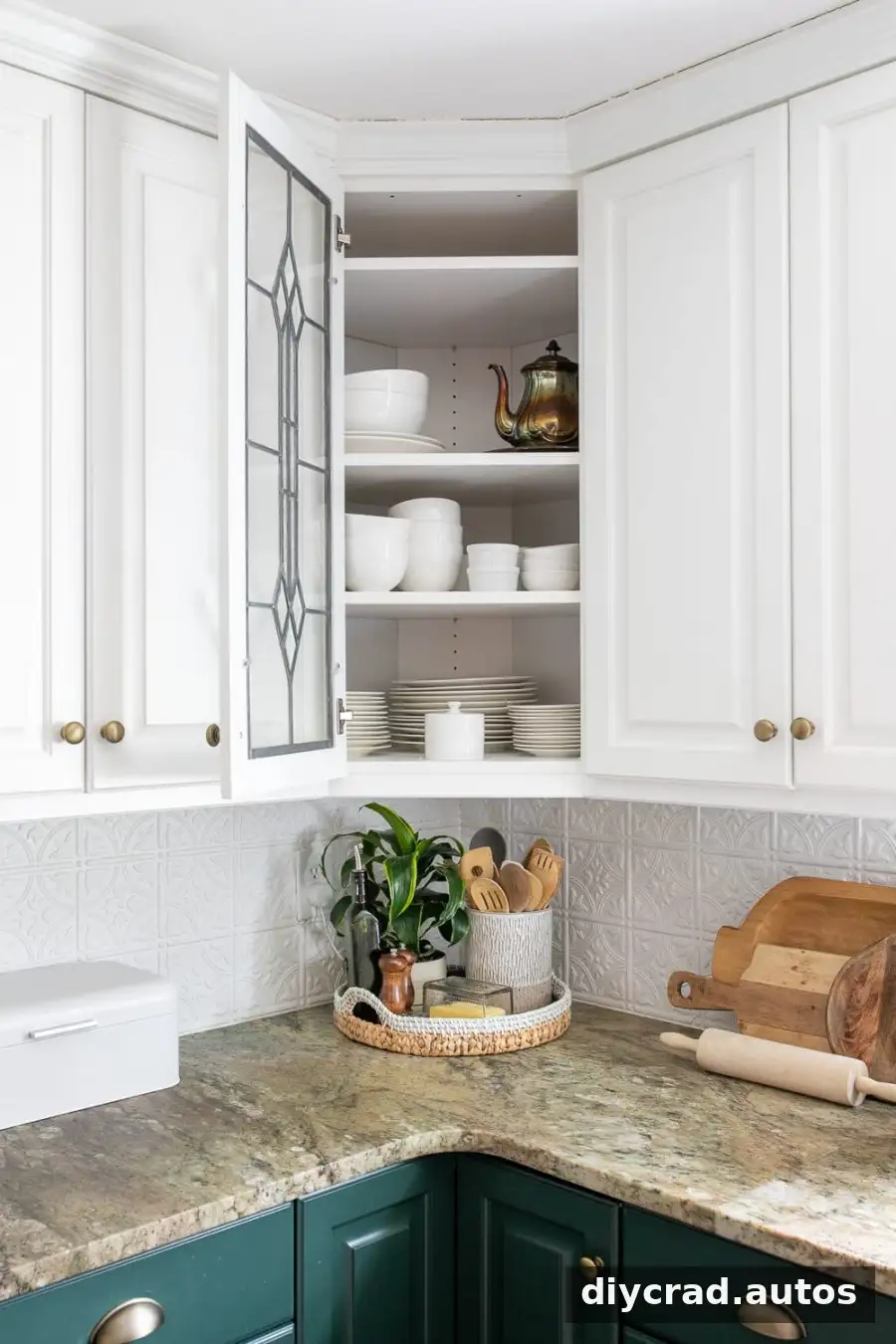
Rather than tackling every cupboard at once, work through one area at a time. This makes it easier to decide what you actually use and where items belong. Before adding storage accessories, take everything out of the space and check what needs to stay.
Kitchen Organization: Three Rules to Start With
- Review items you have not used in a year. Consider donating or recycling suitable items you no longer need. Check expiration dates on food and spices, and follow local guidance for disposal.
- Organize by zones. Keep related items together, such as cooking tools near the stove and everyday dishes near the dishwasher or dining area. Focus on one cabinet or drawer at a time.
- Use organizers where they solve a problem. Drawer dividers, shelf risers, and baskets can help make storage easier to access. Measure the space first so organizers fit properly.
Even a few small changes can improve the function of an existing kitchen. Clear countertops, grouped supplies, and a designated place for everyday tools can help make the room feel calmer without a renovation.
Cabinets for Spices, Pantry Items, and Dishes
Spice Cabinet
Start by checking spice dates and removing expired or stale products. Arrange the remaining jars so labels are easy to read. Clear cabinet risers can make items in the back more visible, while grouping seasonings by type helps you find what you need during cooking.
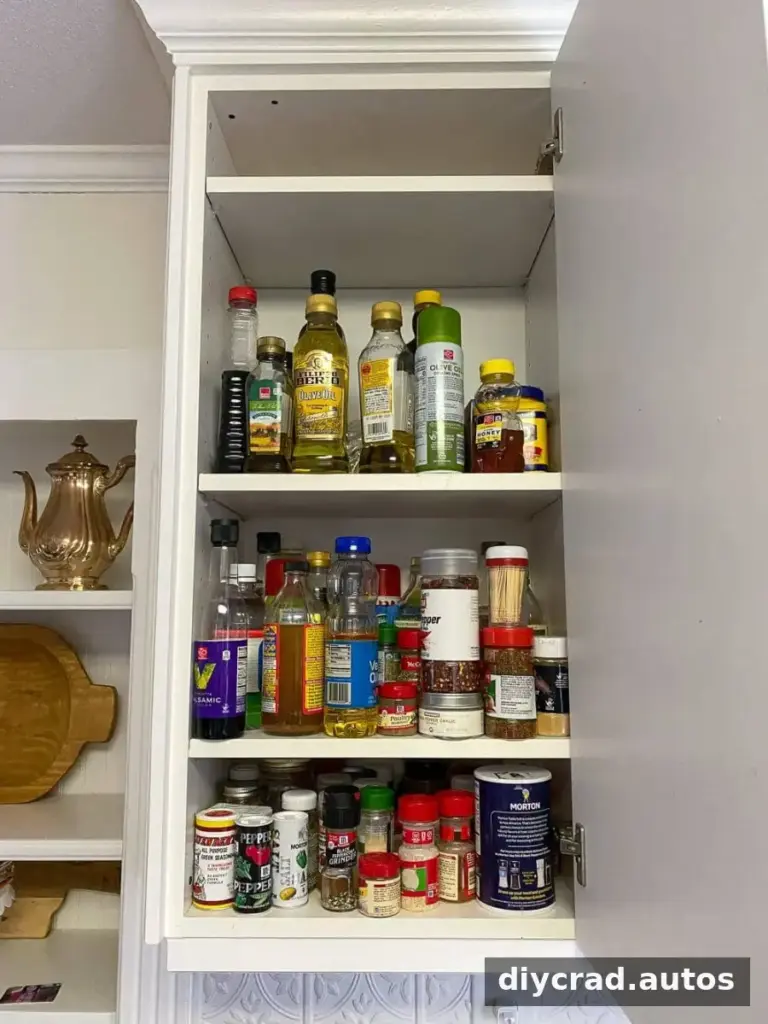
Two clear cabinet risers and a spice jar organization kit were used to make better use of the cabinet. A separate shelf area can hold larger seasoning bottles. Group other bottles by category, such as syrups, vinegars, oils, and honey.
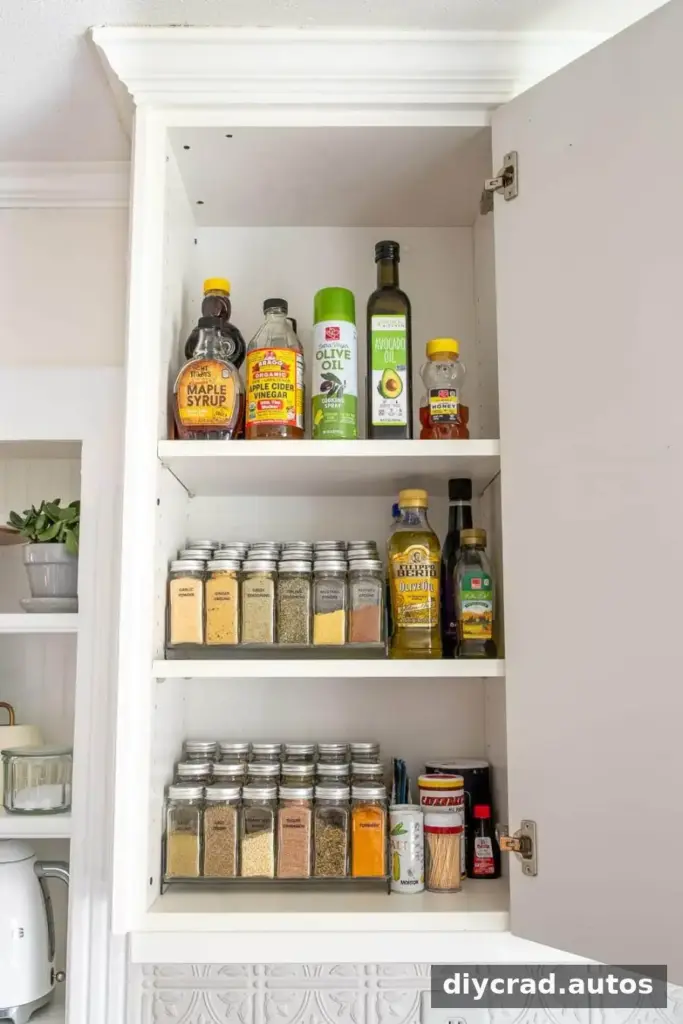
Practical tip: Keep the spices and condiments you use most often at the front. Avoid transferring products into containers unless you can label them clearly and keep relevant date information.
Pantry Cabinet
IKEA Hemnes wall cabinets serve as a makeshift pantry for snacks, breakfast foods, and canned goods. Ingredients used most often for cooking are kept in a cabinet near the stove, making them easy to reach while preparing meals.
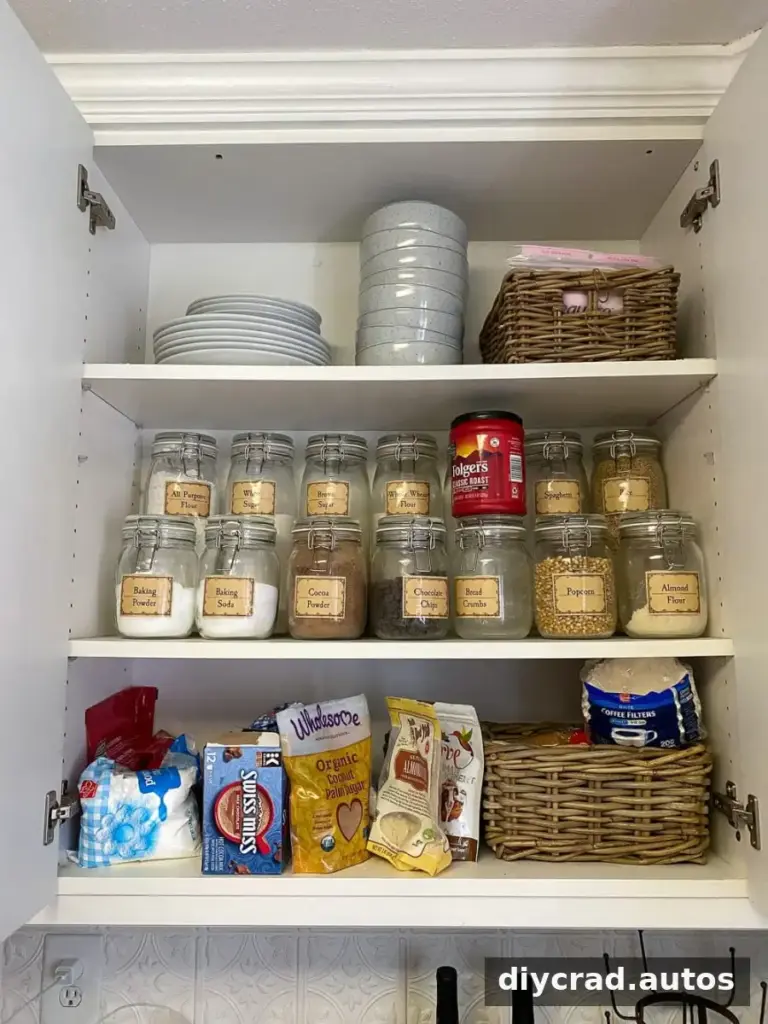
Refresh storage baskets when categories change, and make sure labels reflect what is actually inside. Tea, coffee, cocoa, and baking or other dry ingredients can each have a clearly defined place.
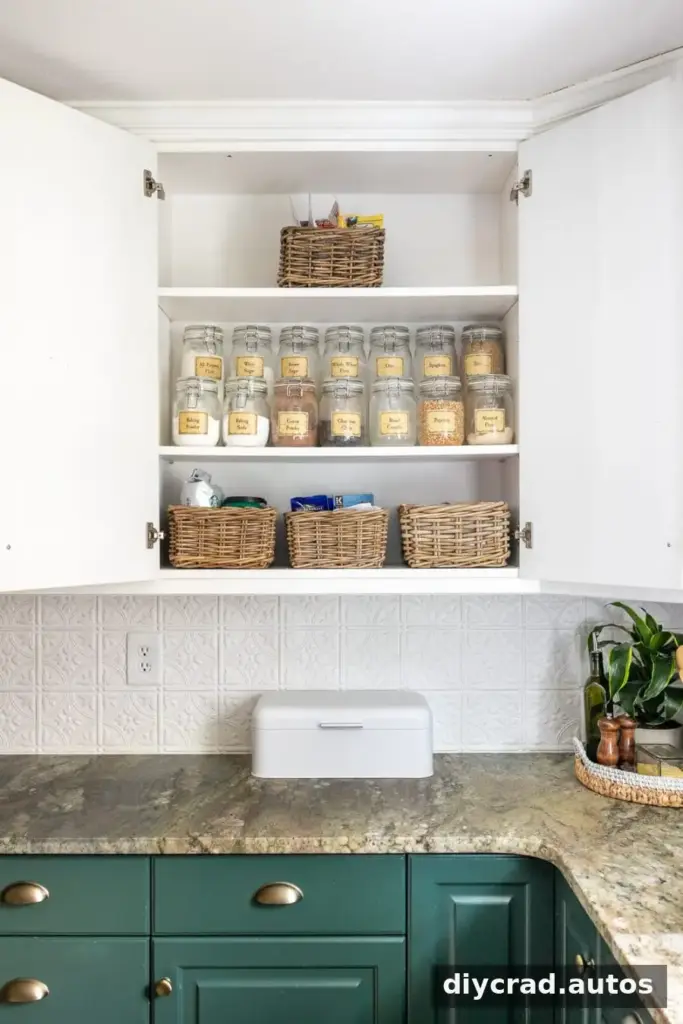
Grouping similar foods in containers can make a pantry easier to scan. Glass jars help show how much of an ingredient remains, but store food in clean, dry containers and label them when contents might be difficult to identify.
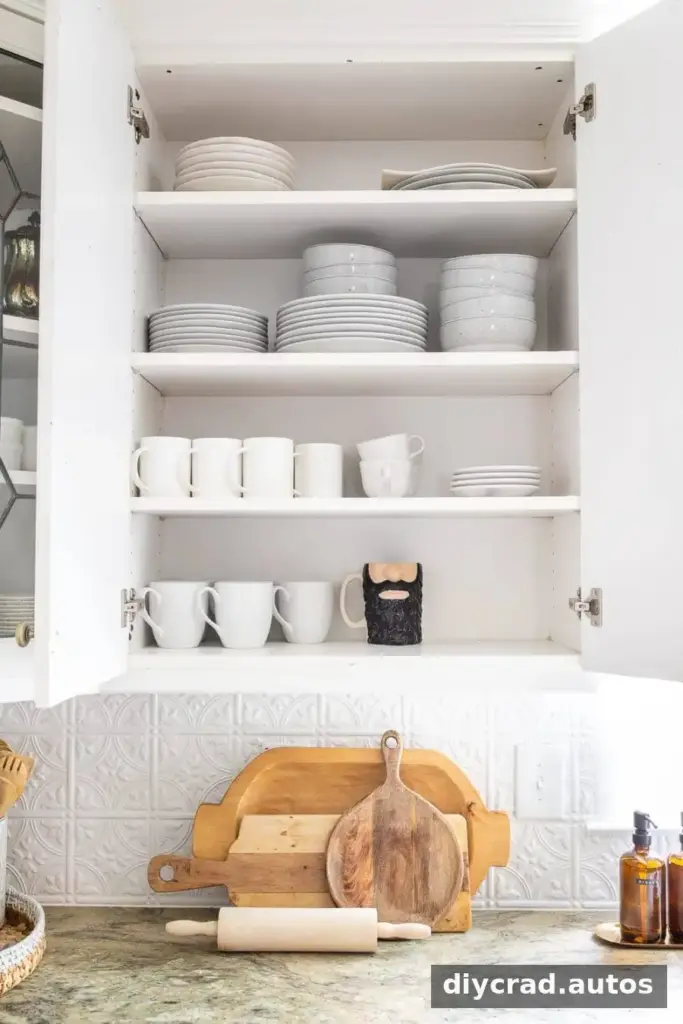
Dishware Cabinets
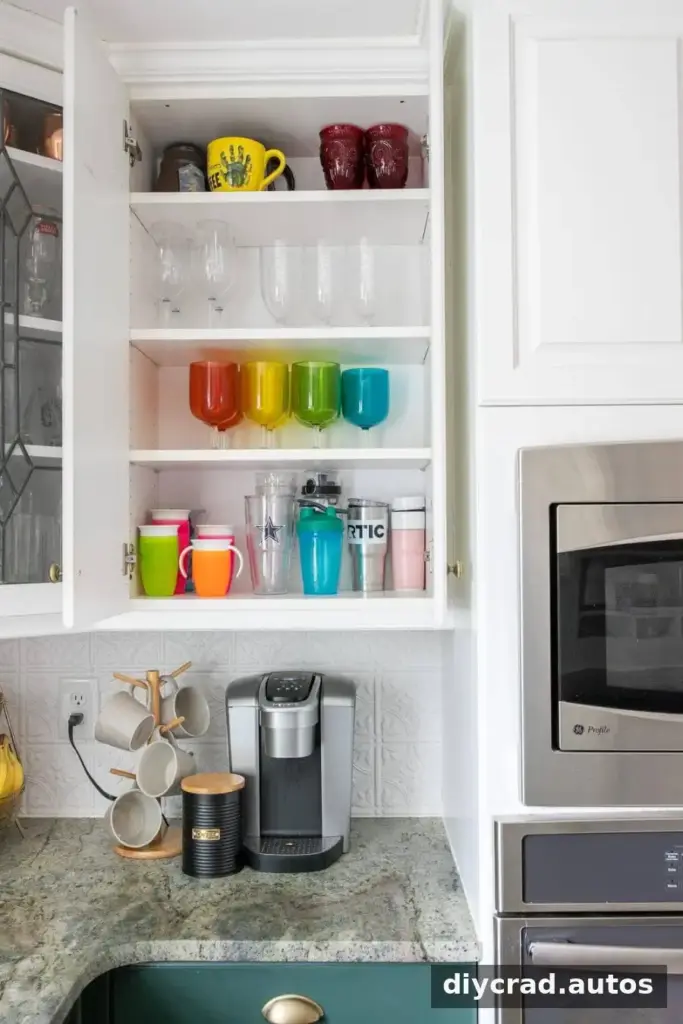
Review plastic cups and coffee mugs, especially souvenirs or duplicates that rarely get used. Donate clean, usable items when appropriate, and keep the everyday favorites that earn their cabinet space.
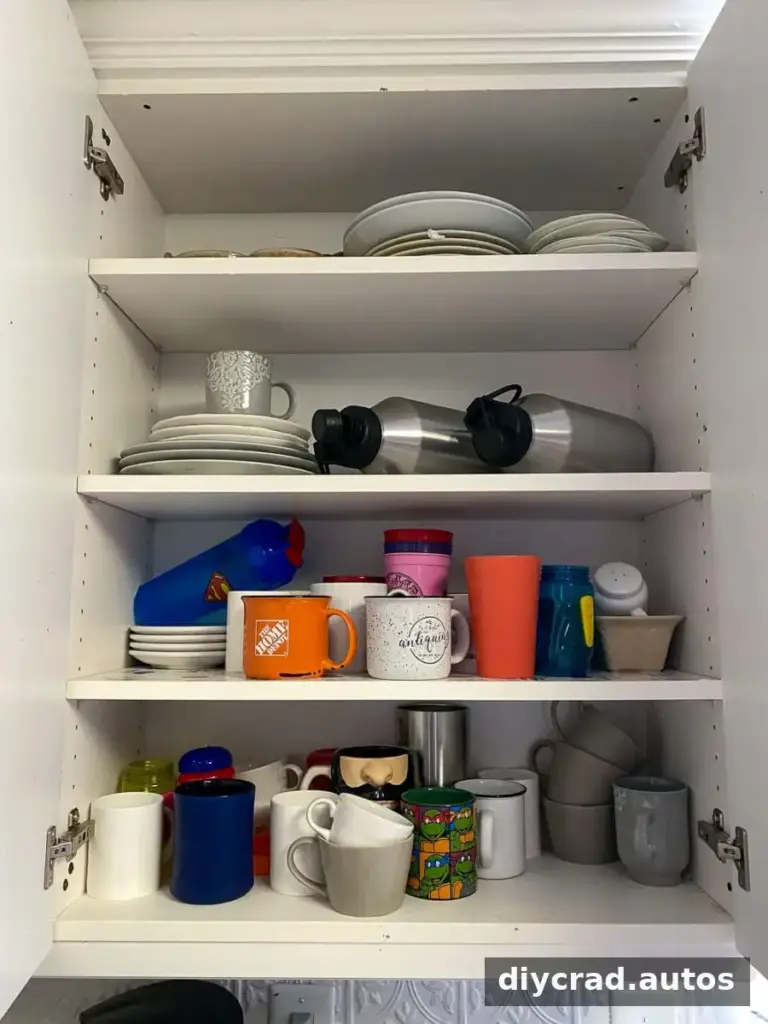
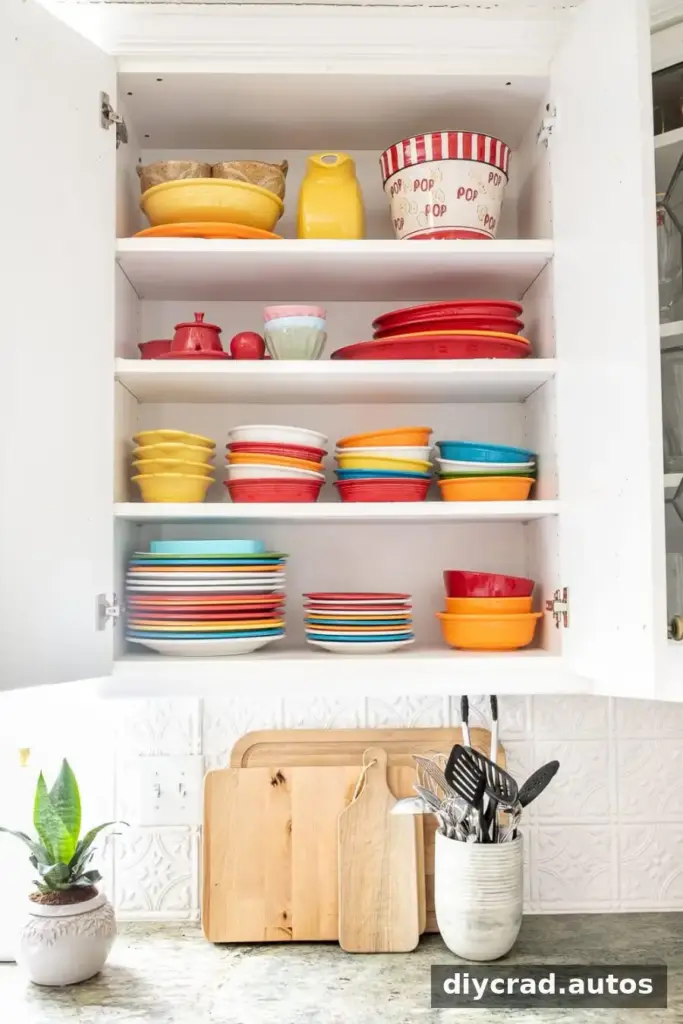
Arrange dishes by size, and optionally by color. Keeping stacks and groups consistent can make it easier to put items away and see when something is missing.
Fiestaware collected over time adds color for gatherings, even if a simpler everyday palette is preferred. Store frequently used dishes at a comfortable height and reserve harder-to-reach shelves for occasional-use pieces.
Drinkware Cabinets
Glass-front cabinets make stored items visible, which can encourage regular tidying. If two cabinets are being used for cups, check whether both are necessary or whether one can be reassigned to another category.
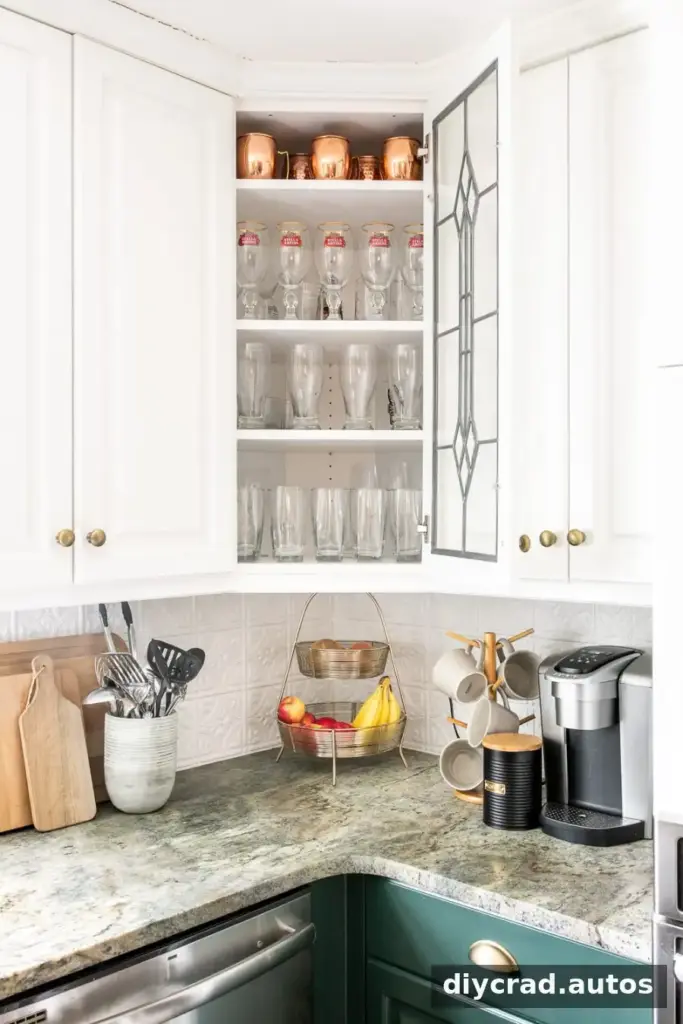
A collection of acrylic cups can be useful for drinks around a pool. If those cups are only used outdoors, consider storing them with other outdoor items when a suitable storage space is available.
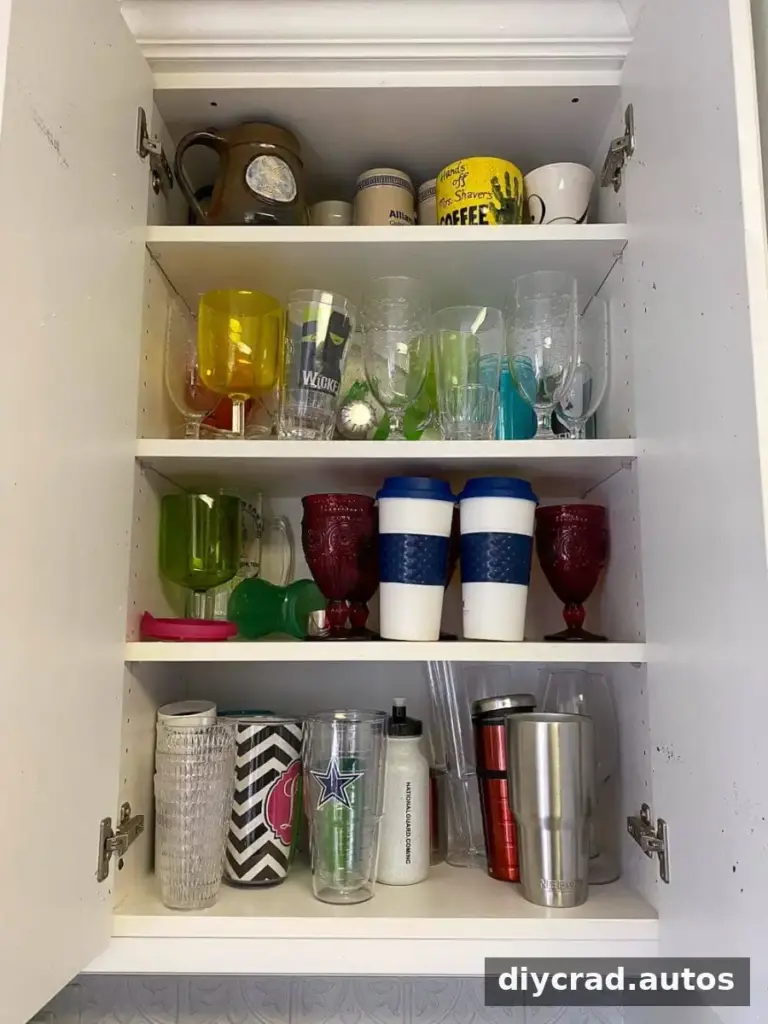
Keep travel mugs and children’s cups on an accessible shelf. Reducing duplicates can free up space; one useful guideline is to keep two or three travel cups per person in the household, adjusting the number to fit actual routines.
Organizing Drawers and Cooking Tools
Utensil Drawers
Searching through mixed utensils while cooking can be frustrating. Gather the tools used most often and keep them within easy reach. Frequently used wooden spoons can go in a countertop holder, while metal and plastic spoons or spatulas can be grouped separately.
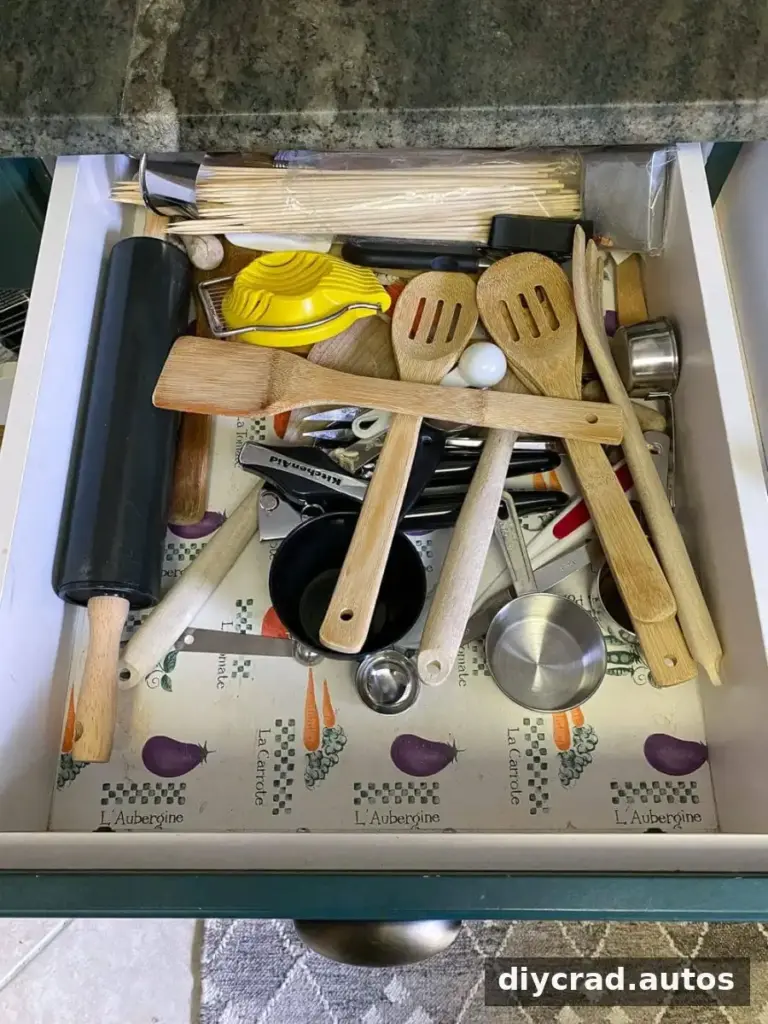
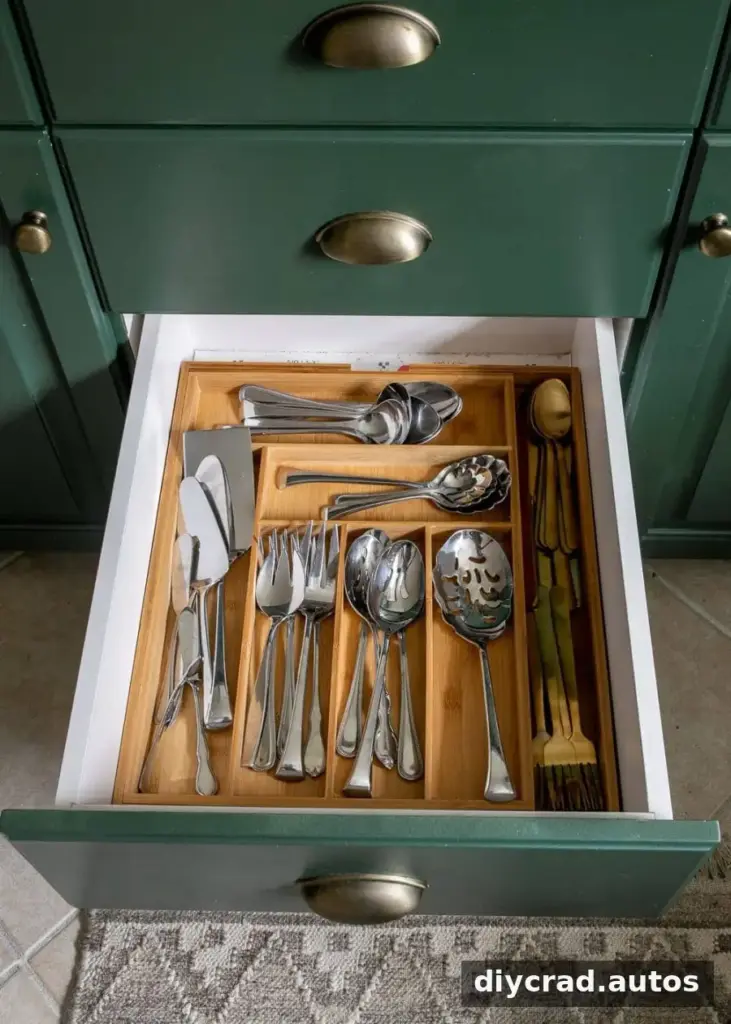
Sort the remaining tools by purpose: for example, dedicate a drawer to serving utensils and a container to grilling tools. Expandable drawer organizers can help separate categories, provided they fit securely and do not prevent the drawer from closing.
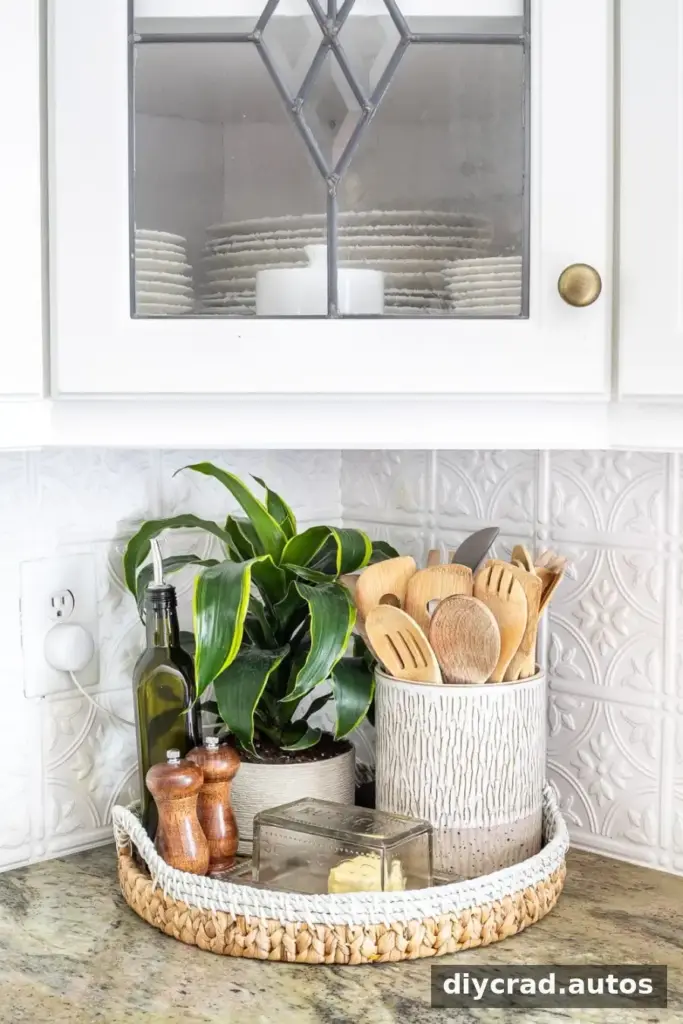
Place everyday tools in the most accessible drawer. Less frequently used specialty tools can go in a middle or lower drawer, while serving utensils can be kept together in another section.
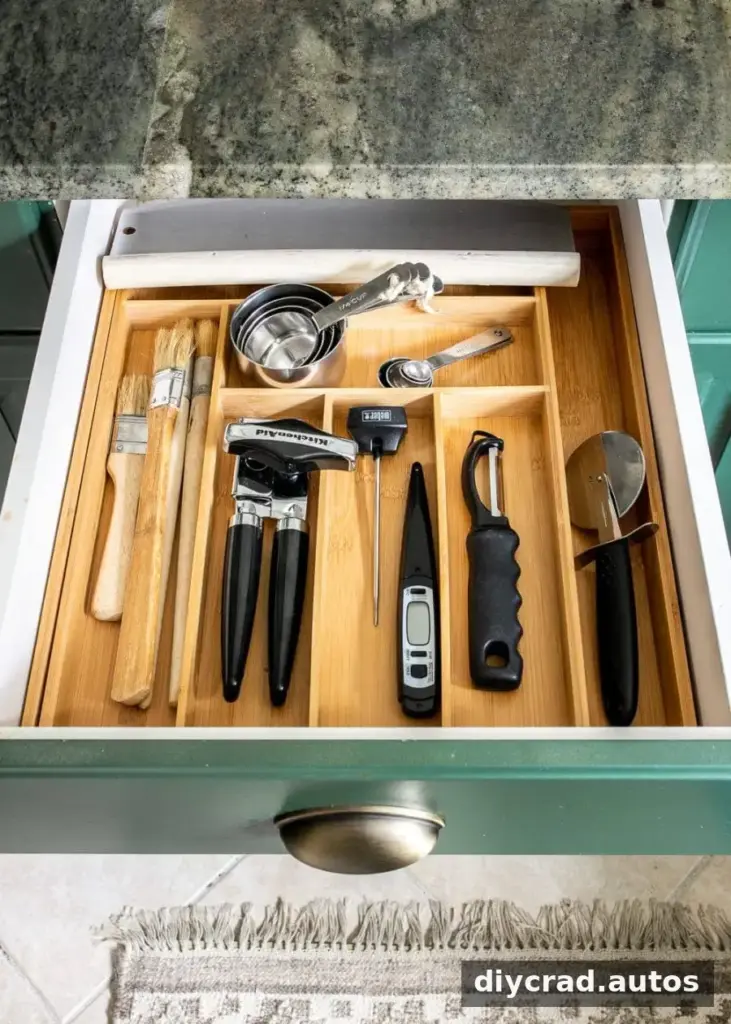
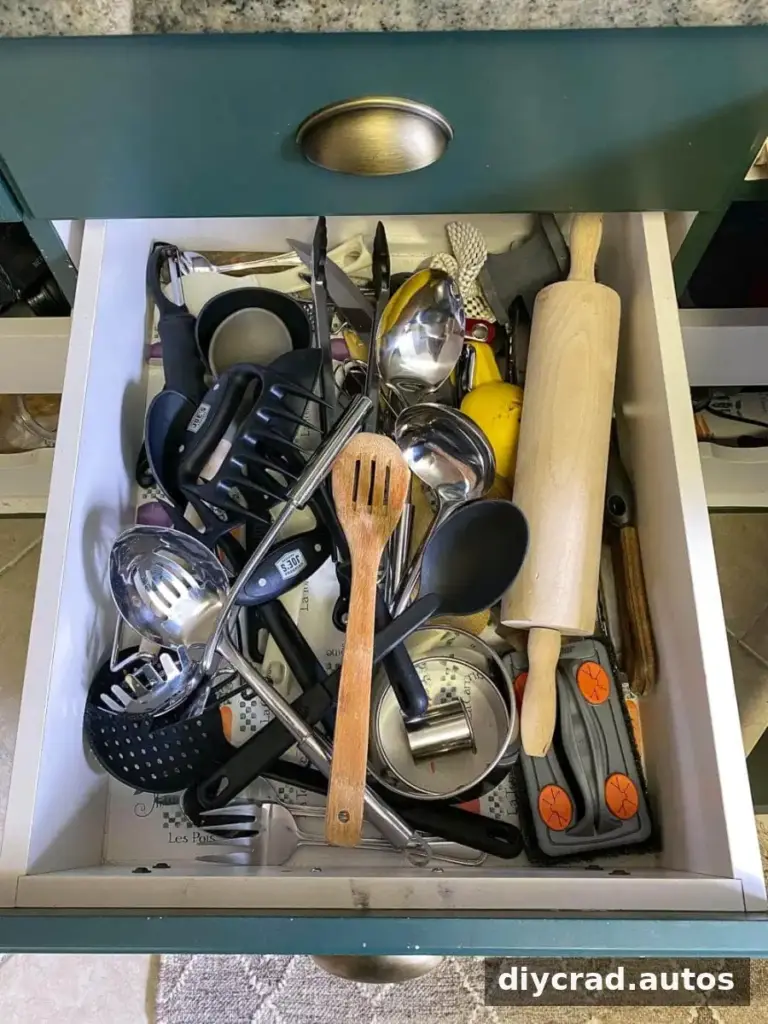
Assigning a consistent place to each category makes it easier for everyone in the household to return tools after use.
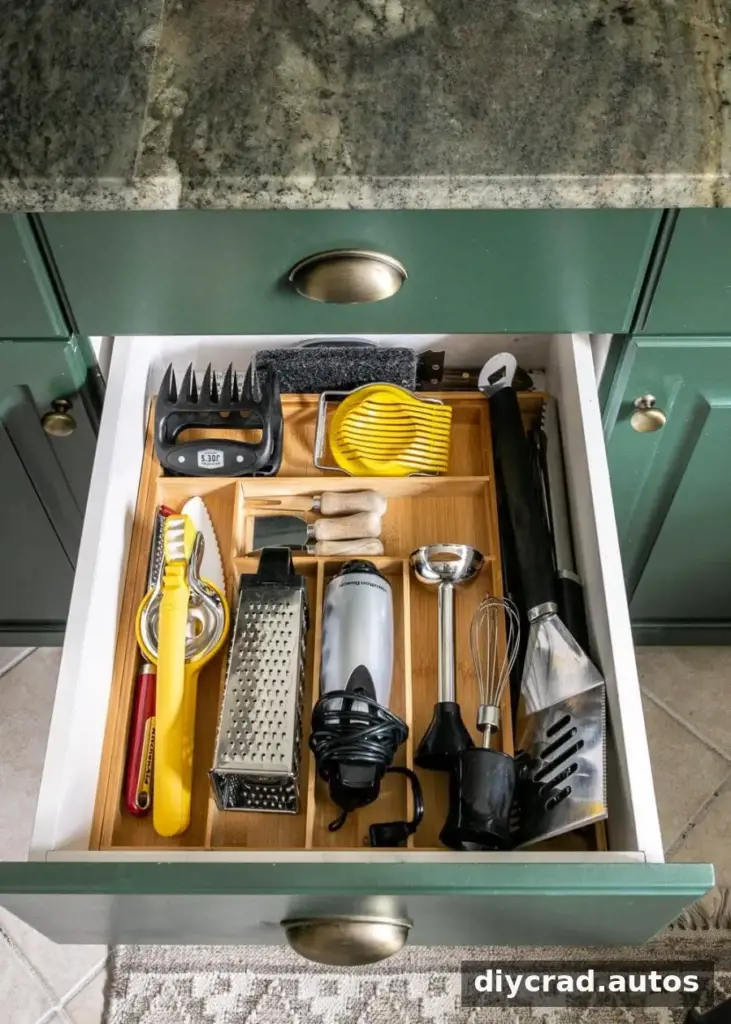
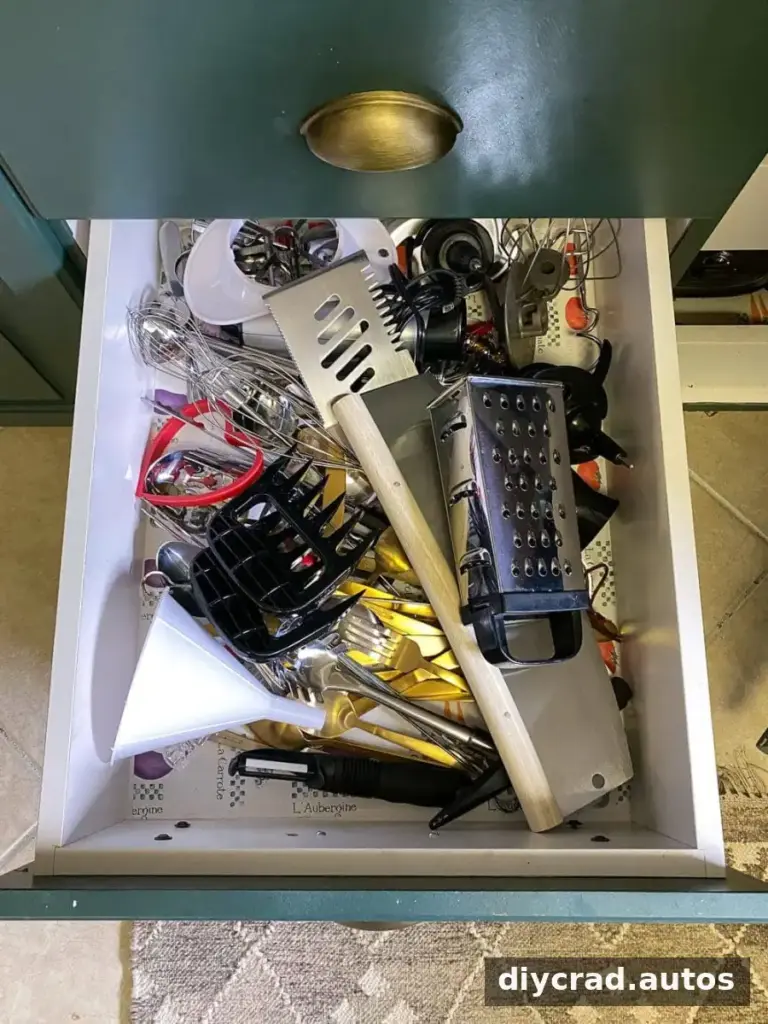
Keep serving utensils together so they are easy to find when setting the table or hosting a meal.
Kitchen Towel and Apron Drawers
A small bamboo divider can separate folded kitchen towels and prevent the drawer from becoming a loose pile. Fold towels consistently and avoid packing the drawer so tightly that items are difficult to remove.
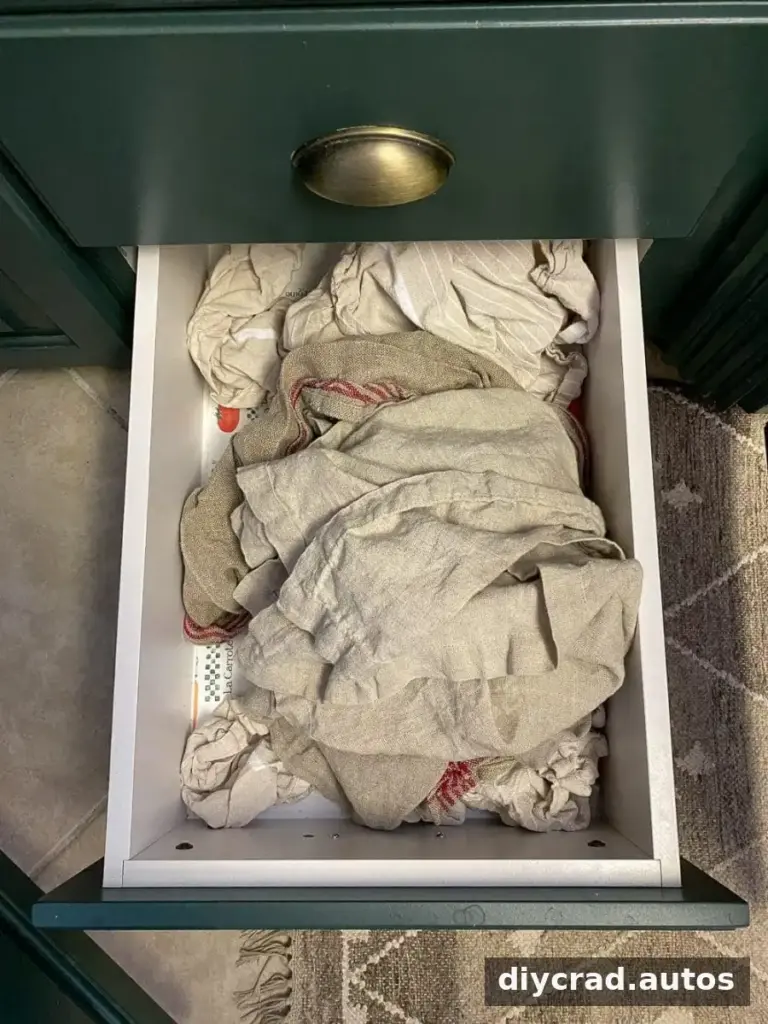
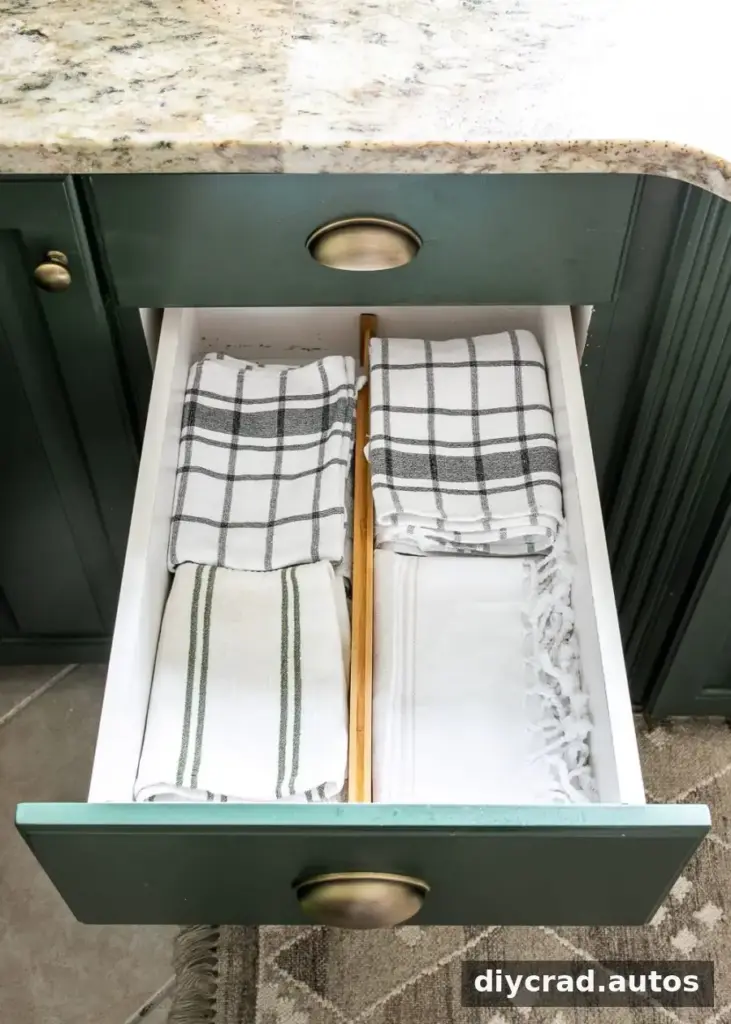
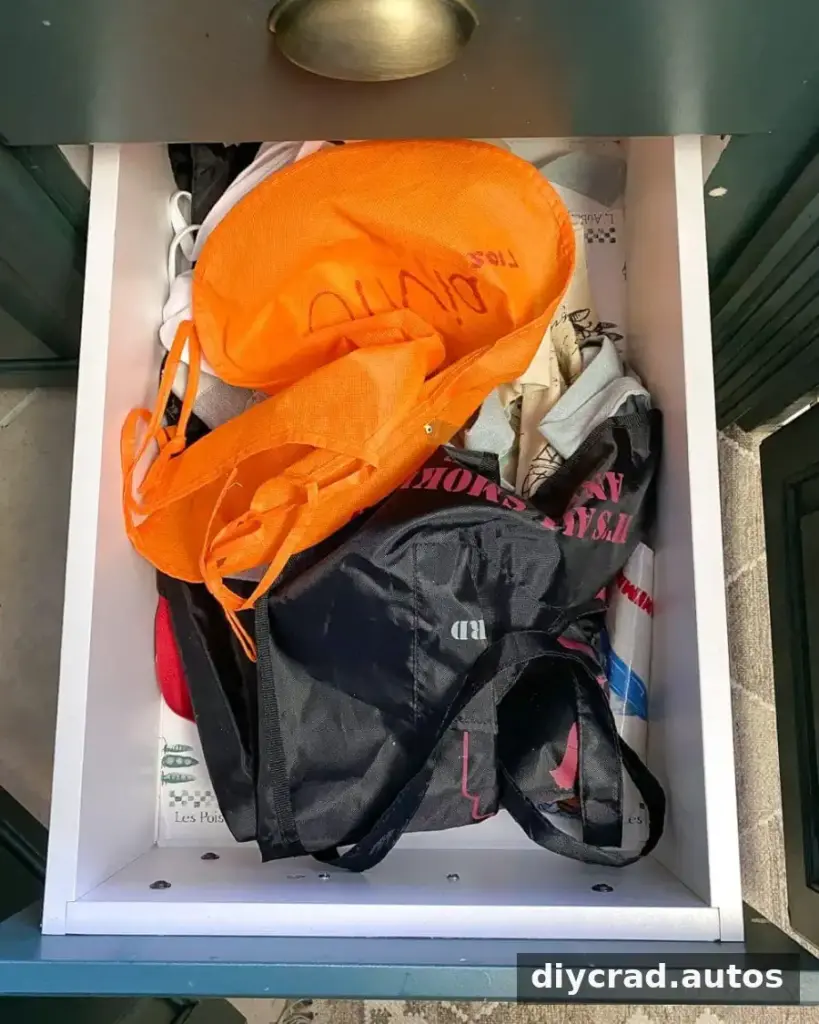
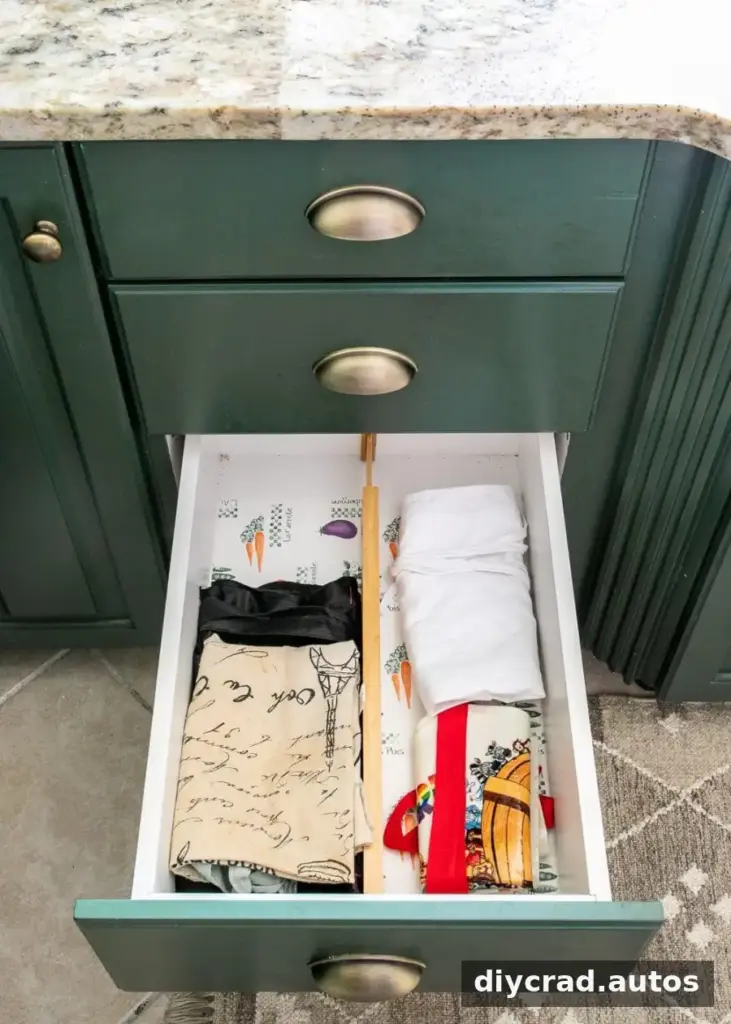
Drawer dividers can also keep aprons together and make them easier to access. Choose a divider that leaves enough room for the drawer to open and close smoothly.
Small Appliance Cabinets
Keep each cabinet focused on its intended purpose. Remove unrelated items and return them to their appropriate storage area. Medicines should be stored in a designated, secure place out of a young child’s reach.
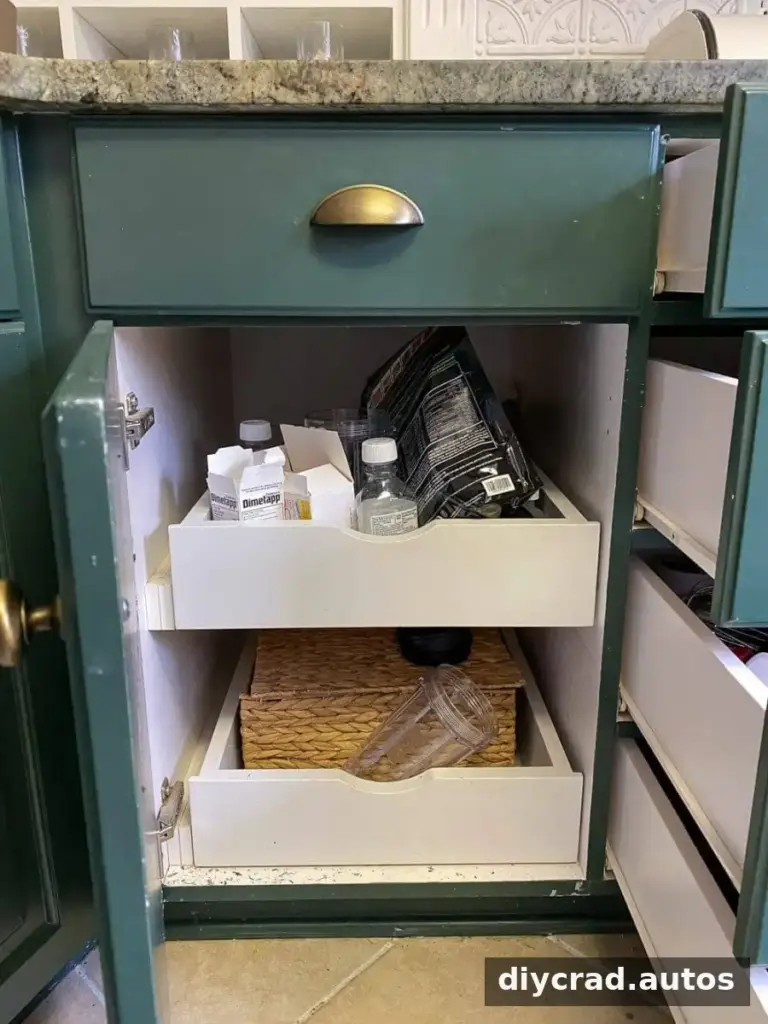
After sorting, check the cabinet’s lining and finish. Worn contact paper or paint can be addressed as a separate maintenance task, but restoring the cabinet’s contents to clear categories is a useful first step.
Maintenance tip: Review cabinets and drawers every three to six months. A short reset can catch duplicates and misplaced items before clutter builds up again.
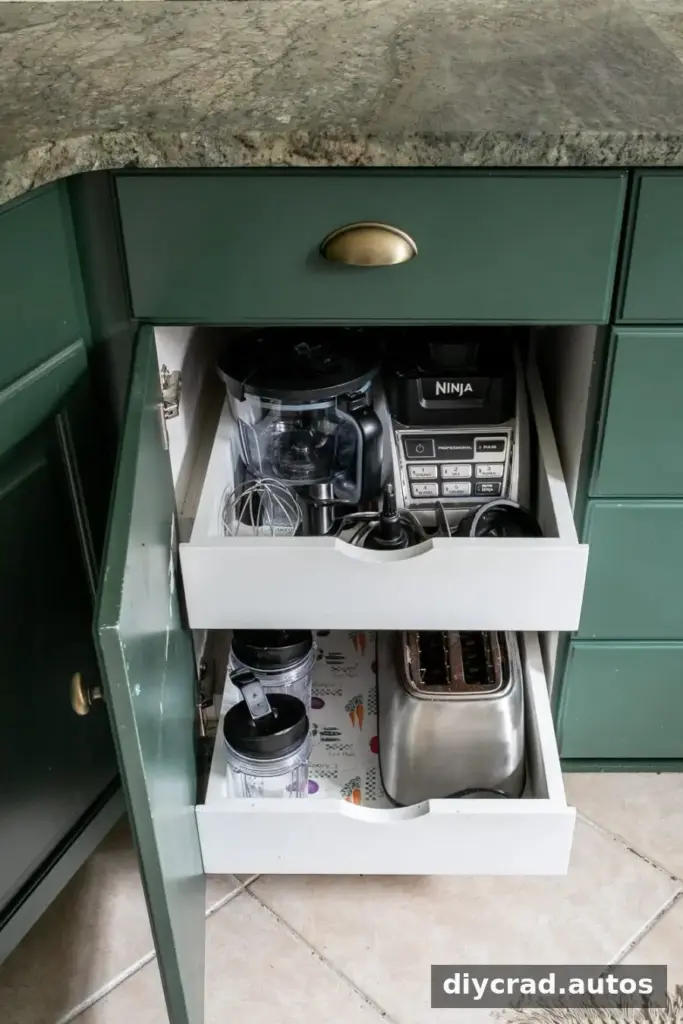
Food Storage Containers and Cooking Pans
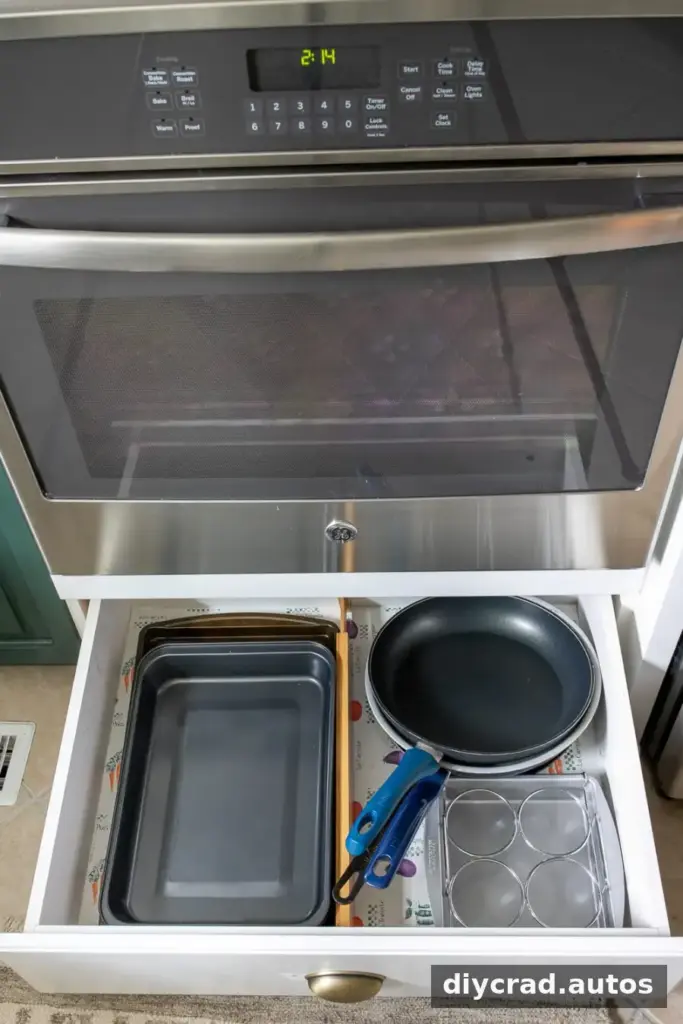
Food storage containers are easier to manage when lids and bases are stored together or arranged in separate, clearly defined sections. If replacing mismatched containers, check that the new set fits the available drawer or cabinet before buying it.
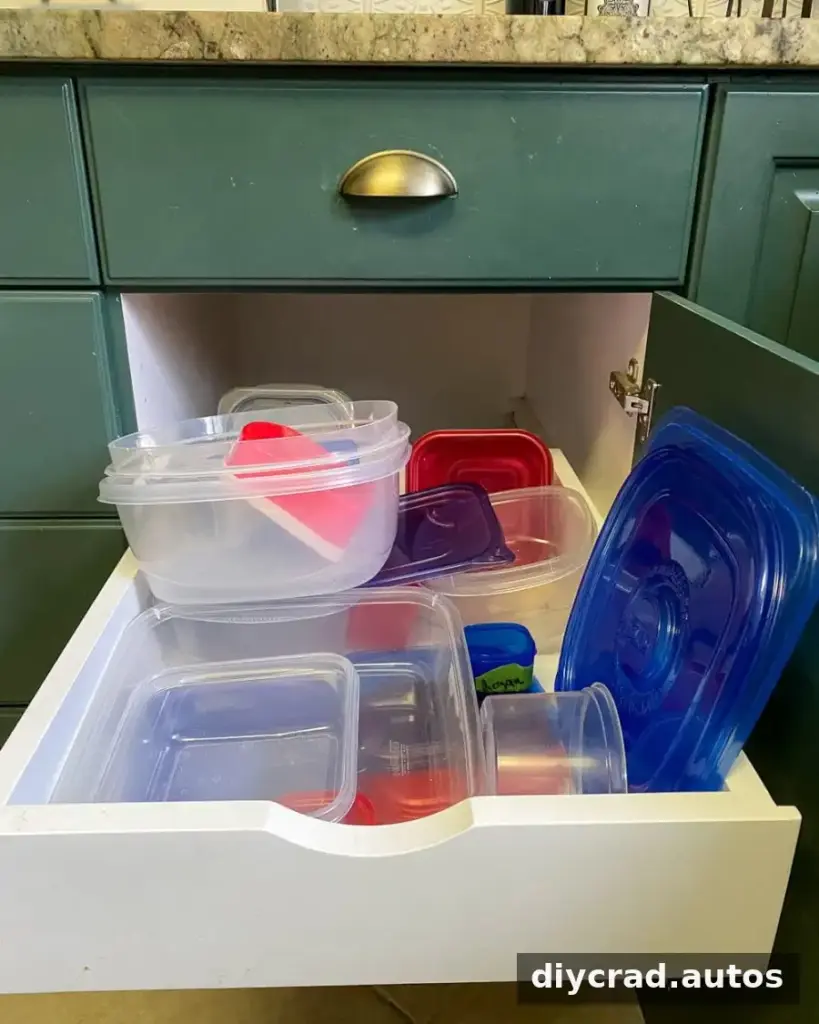
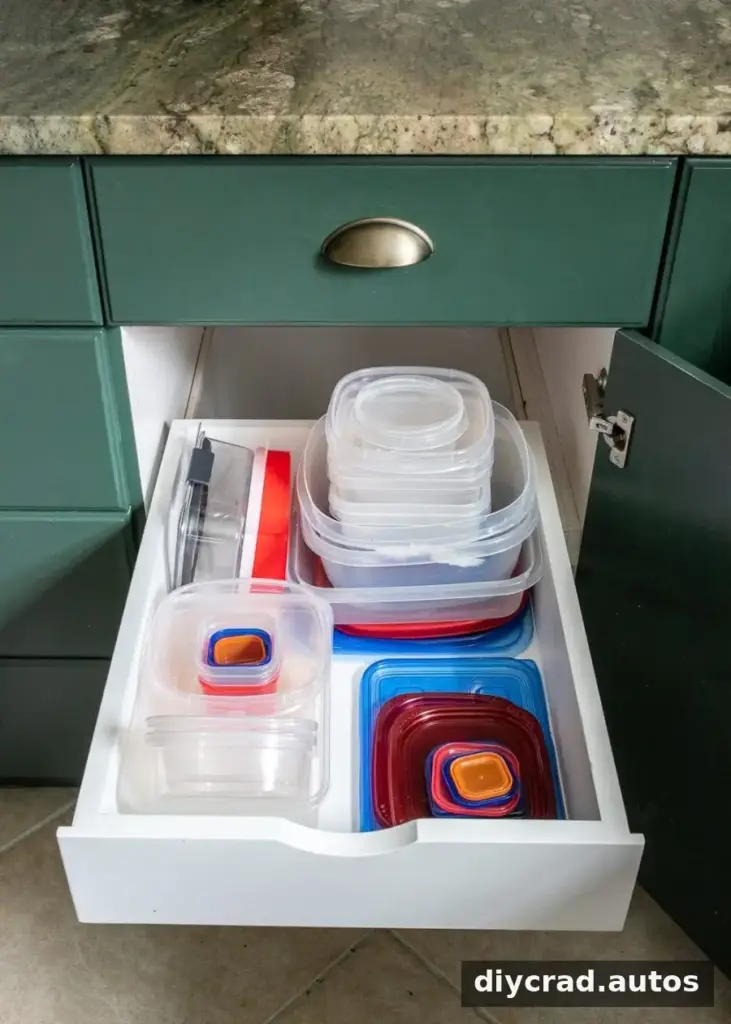
Use the same approach for pots, pans, mixing bowls, and glass bakeware: group similar items and place the ones used most often where they are easiest to reach. Corner cabinets with rotating shelves can help make use of hard-to-access space.
Under-Sink Cabinet
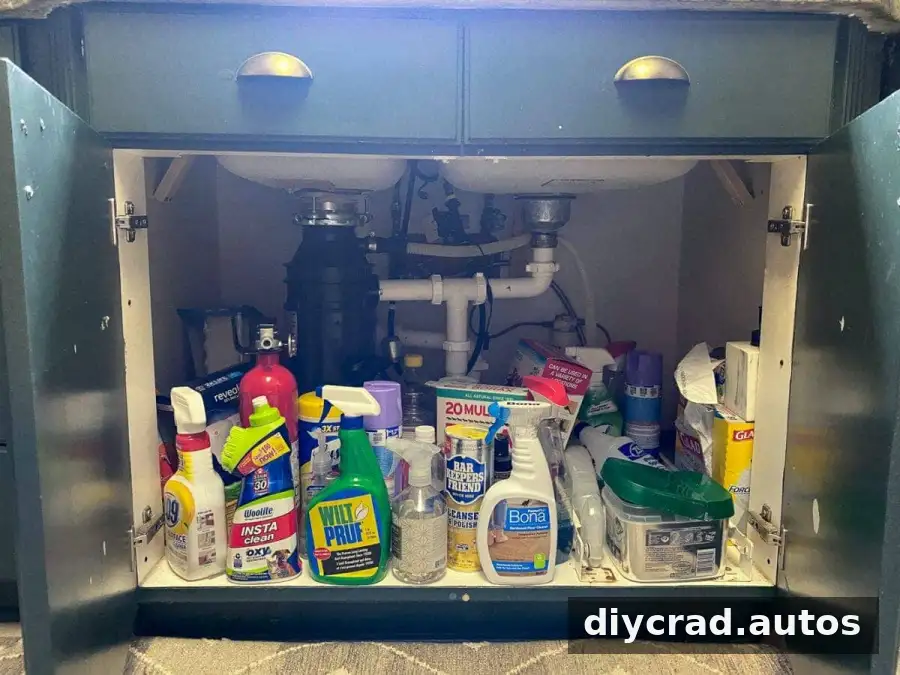
The area under the sink can become difficult to manage when cleaning supplies, bins, and miscellaneous items are mixed together. Remove everything first, discard or relocate items that do not belong there, and check for signs of leaks or moisture before replacing supplies.
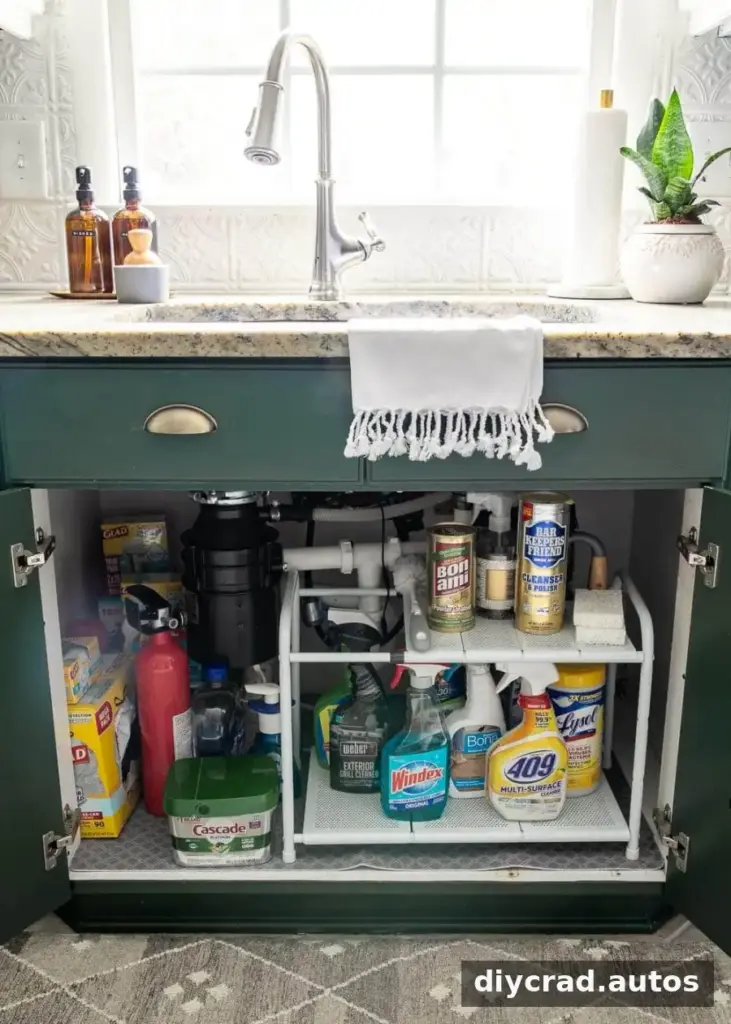
A waterproof cabinet mat can help protect the base, and a two-tier shelf can create extra levels for suitable cleaning products. Keep the cabinet organized so stored items remain visible and easy to reach, while following product labels for safe storage.
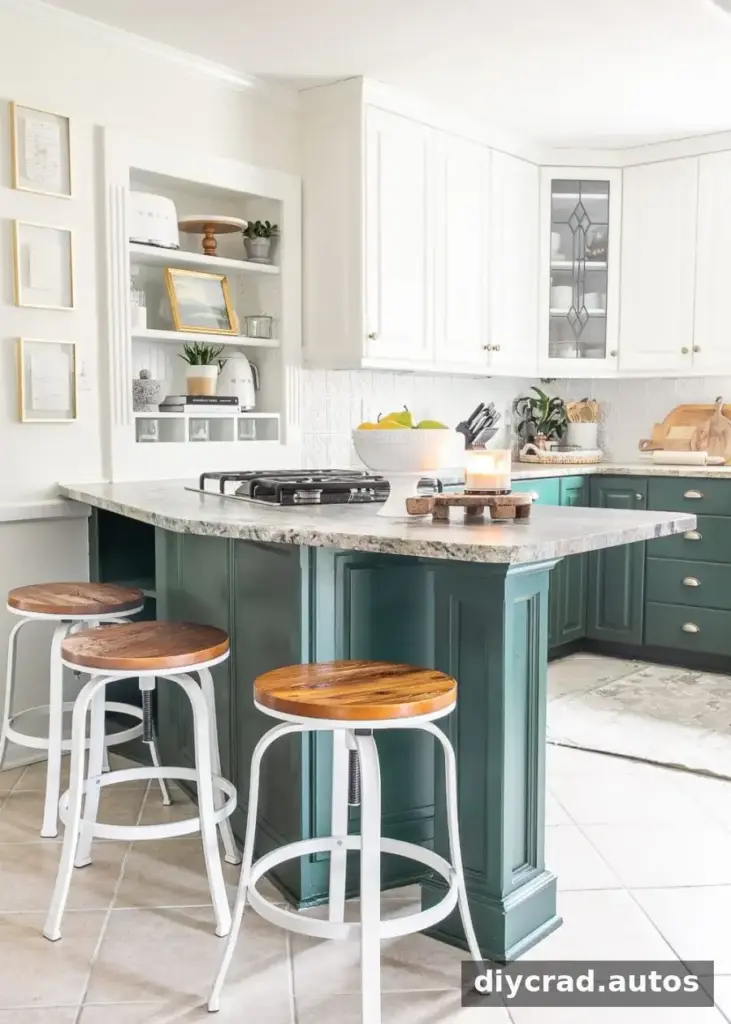
When each item has a defined place, putting things away becomes simpler and the kitchen is easier to maintain. The most useful system is one that suits your household’s routines, rather than one that requires constant adjustment.
Keeping Your Kitchen Organization Working
For lasting kitchen organization, return items to their assigned zones and do a brief check every few months. Remove expired pantry goods, reconsider rarely used duplicates, and adjust storage as your cooking habits change. Small, regular resets are often easier than waiting until every drawer needs a complete overhaul.
Useful areas to review include spice storage, pantry categories, drinkware, cooking utensils, towels, food containers, and the cabinet under the sink. Start with the spot that causes the most daily frustration, then move on to the next one.