

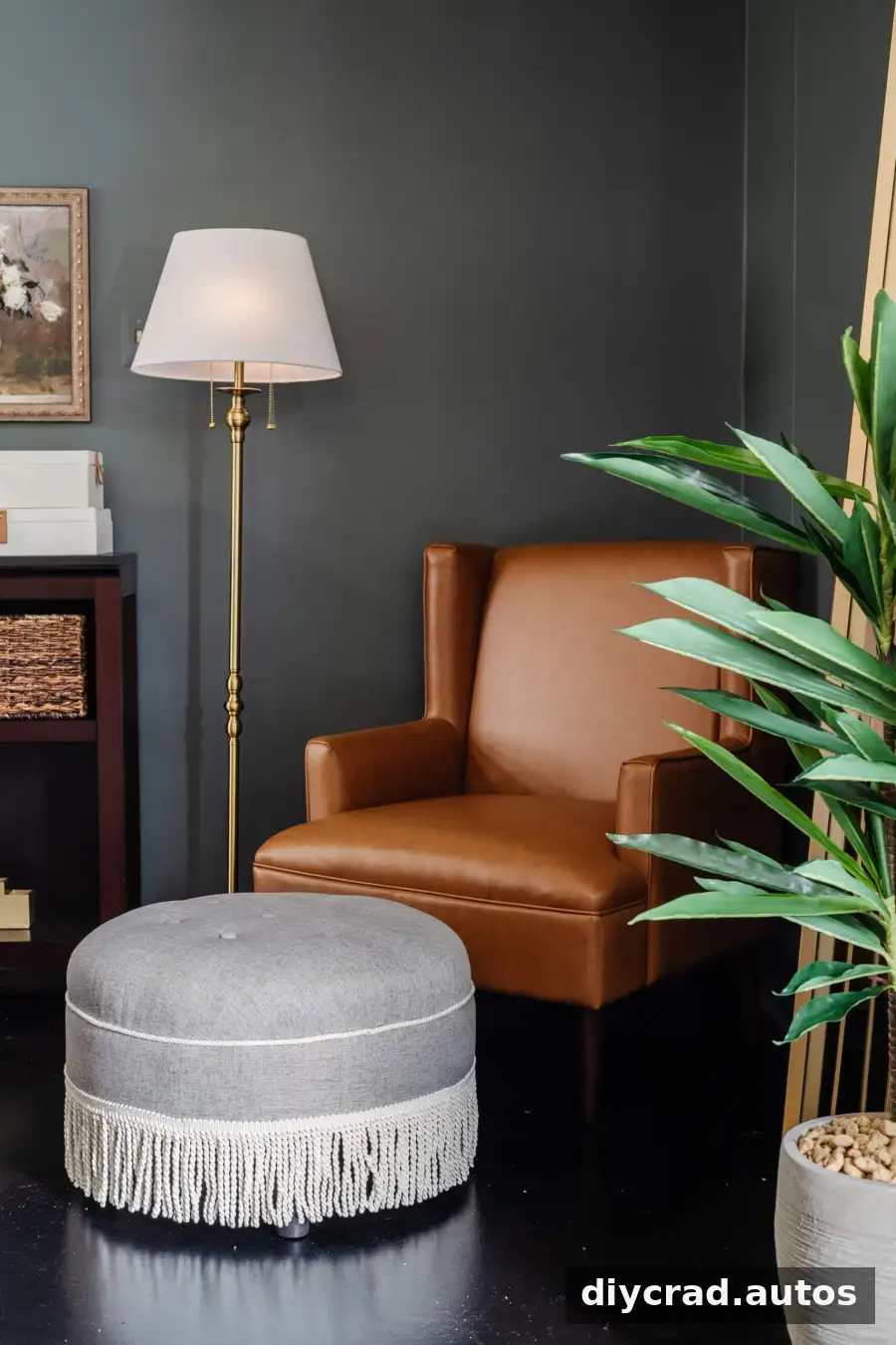
Bullion fringe furniture brings texture, movement, and a touch of traditional glamour to a room. The decorative trim is appearing on ottomans, chairs, and sofas, especially in spaces inspired by Art Deco, Victorian, and Hollywood Regency interiors. Whether you want to update a piece you already own or choose furniture with fringe built in, a little planning can help you make the look feel intentional.
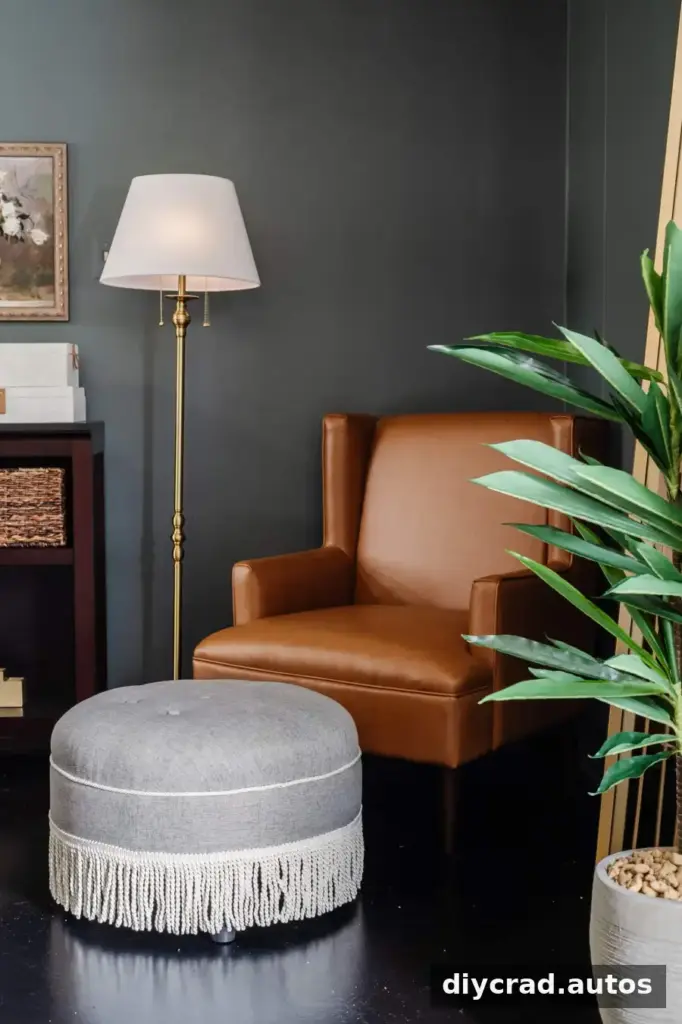
Fringe can be a distinctive detail without requiring a full room makeover. Try it on one accent piece first, then consider how its color, length, and texture work with the surrounding furniture and fabrics.
What Is Bullion Fringe?
Bullion fringe is a decorative trim made from twisted cords. It is commonly used on upholstered furniture, lamps, and drapery, where it adds a textured edge and a more formal finish. Its elaborate appearance makes it a natural fit for maximalist interiors and traditional styles such as Victorian, Art Deco, and Hollywood Regency.
Interest in these styles has grown alongside the use of details like burl wood furniture and chinoiserie wallpaper. Compared with minimalist rooms, maximalist spaces often bring together more color, pattern, and texture. Bullion fringe can help connect those elements, but it does not have to dominate a room: a single ottoman or chair can provide a small, noticeable accent.
Choose what suits your home. Trends can offer inspiration, but they are not rules. If you like the trim and it works with your furnishings, it can be a worthwhile choice regardless of what is currently popular. Traditional design details may also blend naturally with established furniture and decor.
How to Add Bullion Fringe to Furniture
Adding fringe to an existing ottoman or chair can be a relatively simple way to explore the style. It may also help give a modern piece a more traditional appearance. Before attaching trim, measure the area carefully and check that the fringe will hang evenly around the intended edge.
- Test the placement: Use removable tape to position the trim temporarily and check its length and appearance from different angles.
- Choose an appropriate attachment method: Depending on the furniture and trim, options may include sewing, upholstery-safe adhesive, or double-sided tape. Check the product instructions and test on a hidden area first.
- Work in manageable sections: This can make it easier to keep the trim straight and avoid uneven gaps, especially around corners.
- Consider everyday use: On a frequently used seat, place the trim where it is less likely to catch on clothing or interfere with the furniture’s movement.
Fringe can also be used on lampshades or decorative curtains to echo the detail elsewhere in the room. Keep the trim away from bulbs and other heat sources, and follow the care and safety instructions for the item being updated.
A budget-friendly DIY idea
A fringe detail can make a piece feel more custom without replacing the whole item. For inspiration, a DIY fringe sofa by Tuft and Trim shows how trim can contribute to a Grand Millennial, maximalist look. Courtney’s project is an example of using a decorative detail to change the character of a sofa. When adapting an idea, consider the existing upholstery color and whether a contrasting or coordinating trim will fit your room.
Bullion Fringe Furniture for Different Budgets
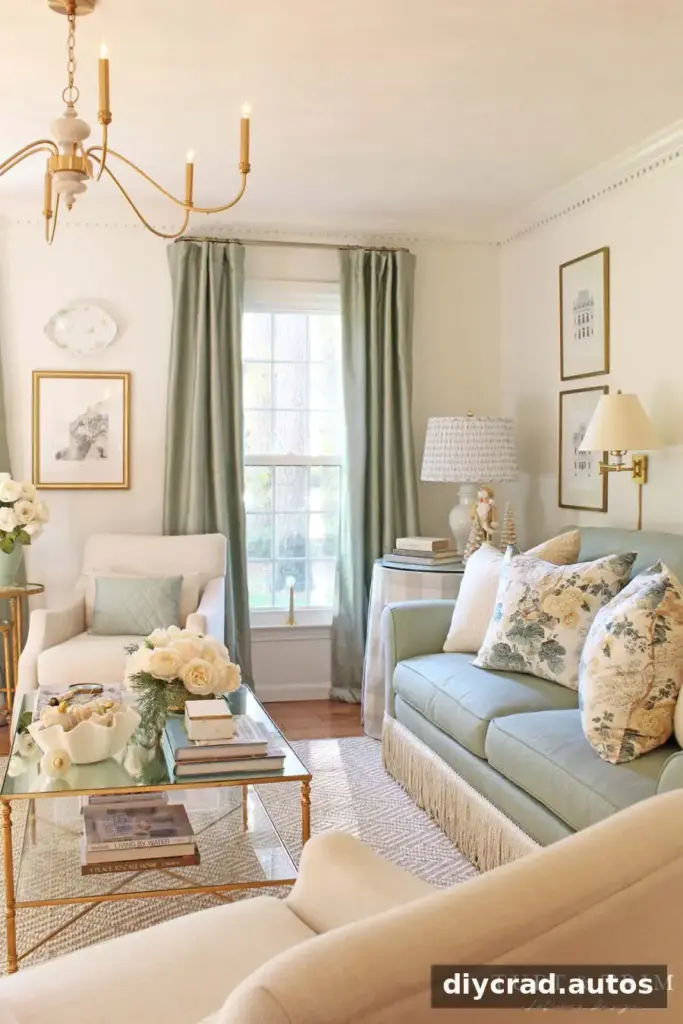
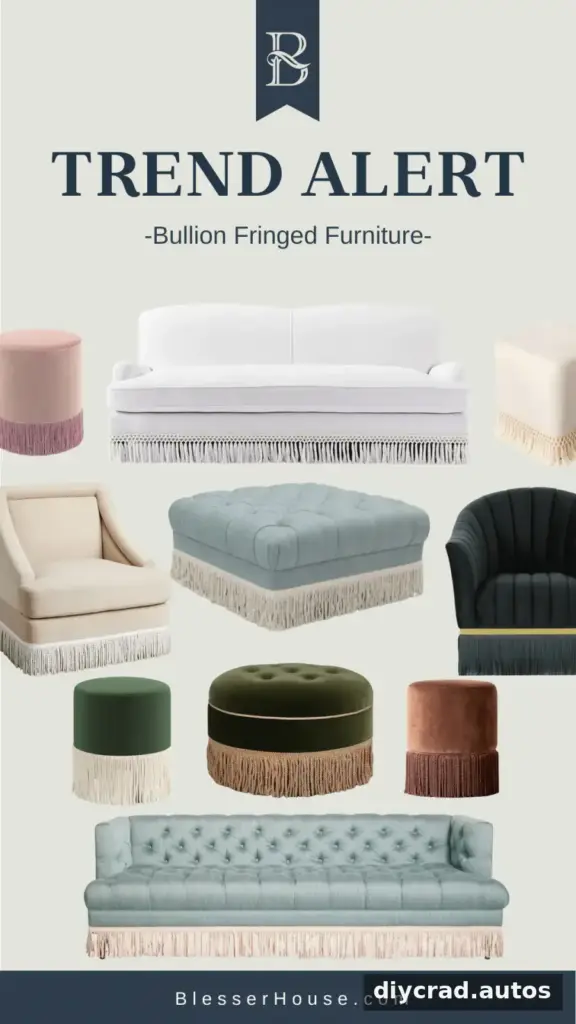
If you would rather skip a DIY project, ready-made furniture is another option. Fringe ottomans are available from $60 and up, while fringe chairs and sofas are also part of the broader selection. Larger upholstered pieces are generally a bigger purchase, so compare dimensions, materials, and care requirements before deciding.
When shopping, check the product details to understand where the fringe is attached and how the upholstery should be cleaned. Measure the intended space, including the room needed to walk around the furniture, and compare those measurements with the item’s listed dimensions. For a lower-commitment update, an ottoman can introduce the look without making fringe the focal point of the entire seating area.
How to Style Fringe Without Overdoing It
Let one fringed piece stand out by pairing it with simpler textures nearby. If the room already has patterned wallpaper, carved wood, or detailed upholstery, choose fringe that complements those features rather than competing with them. Repeating a color from the trim elsewhere in the room—such as in a cushion or accessory—can help the detail feel connected to the overall design.
Bullion fringe furniture offers a way to add character to both traditional and more contemporary rooms. Start with a small accent, check that the trim suits the furniture’s use, and build the look around pieces you genuinely enjoy. That approach makes the trend easier to adapt to your home and budget.

