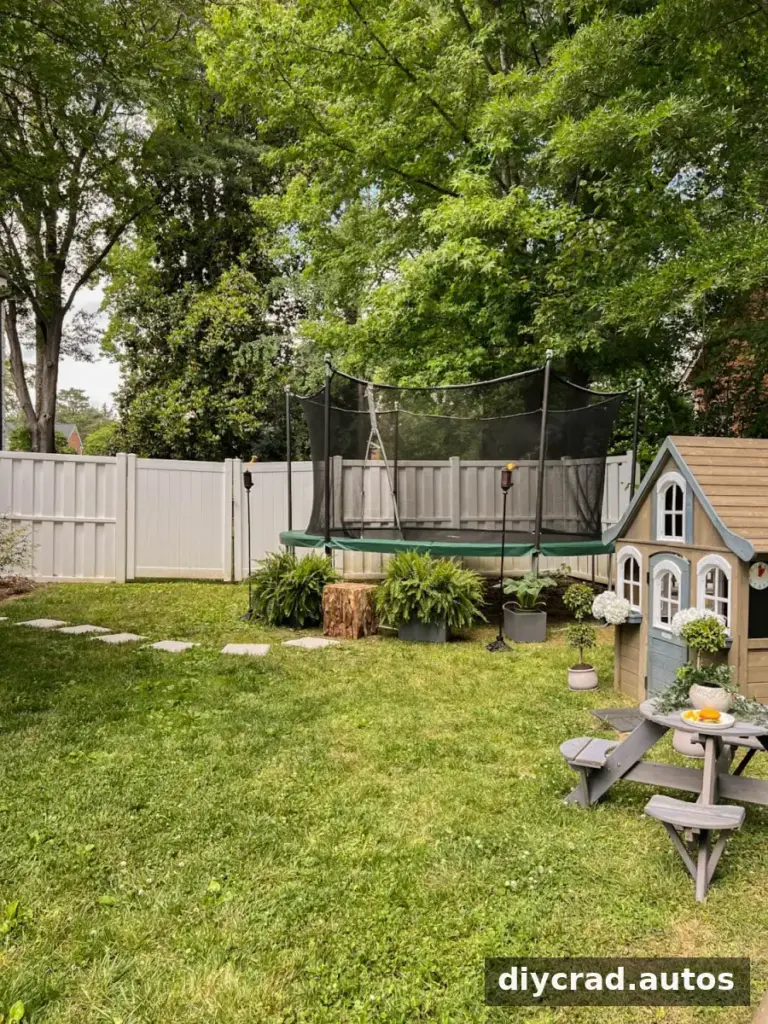
These side yard play area ideas can help turn a muddy, underused patch of lawn into a more welcoming place for kids to play. A few practical additions—such as planters, stepping stones, a small table, and thoughtful lighting—can make the space feel more finished without requiring a complete landscape renovation.
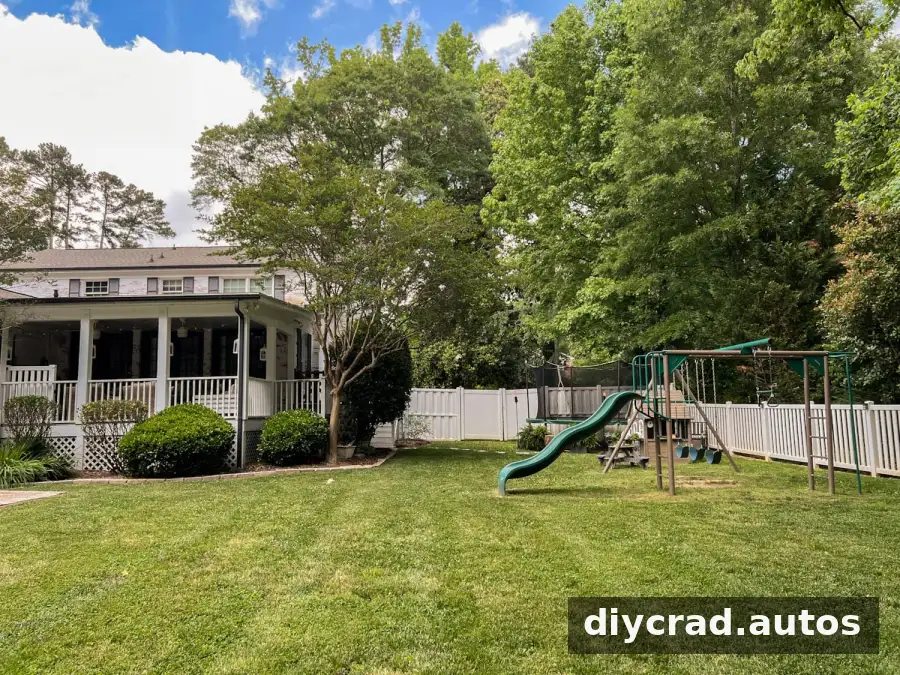
Side Yard Play Area Ideas for a More Useful Space
Areas around trampolines and play equipment can develop bare spots, muddy paths, and worn padding. A heavily landscaped surface may look polished, but it can also need regular upkeep, especially beneath trees that drop leaves and other debris. Simple, durable features are often easier to maintain in a busy family play area.
The ideas below focus on making a side yard more attractive and functional. Before adding anything, check the available space, drainage, equipment instructions, and any local safety requirements.
1. Add Large Plants Near a Trampoline
When an In-Ground Trampoline May Not Suit a Yard
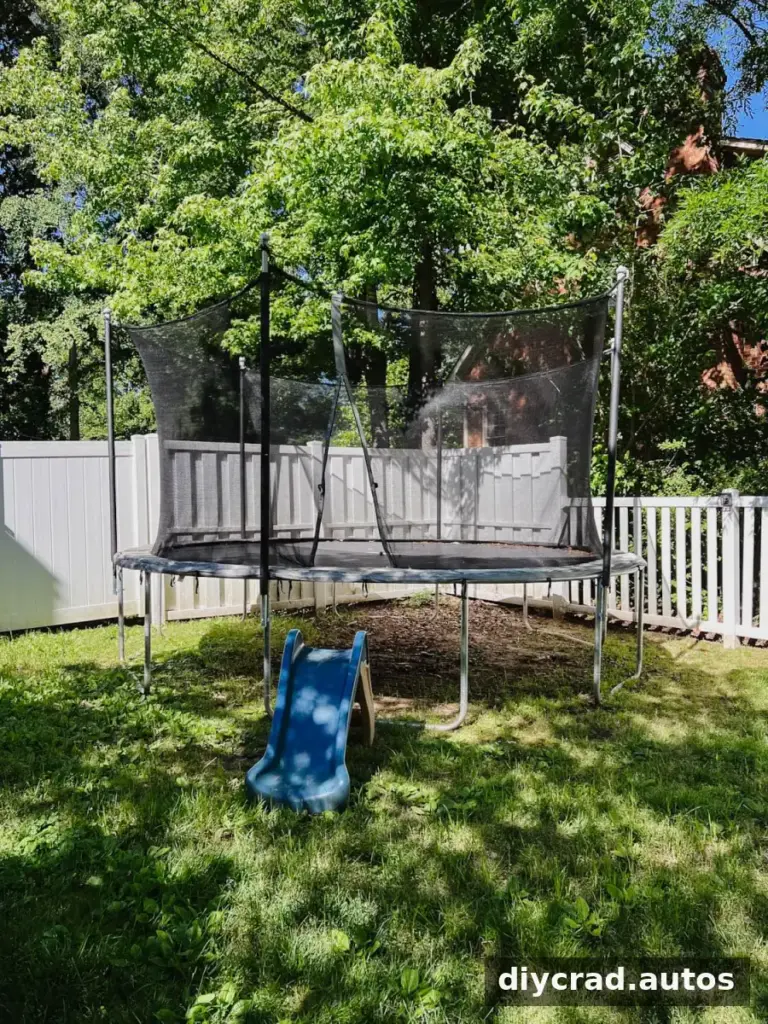
An in-ground trampoline can have a streamlined appearance, but digging is not practical in every yard. Underground utility lines, poor drainage, or a high risk of standing water may make excavation unsuitable. In areas where snakes are common, an excavation or sheltered gap beneath equipment may also require extra consideration. Contact utility services before any digging and assess the site carefully.
Plants to Consider Beneath or Beside a Trampoline
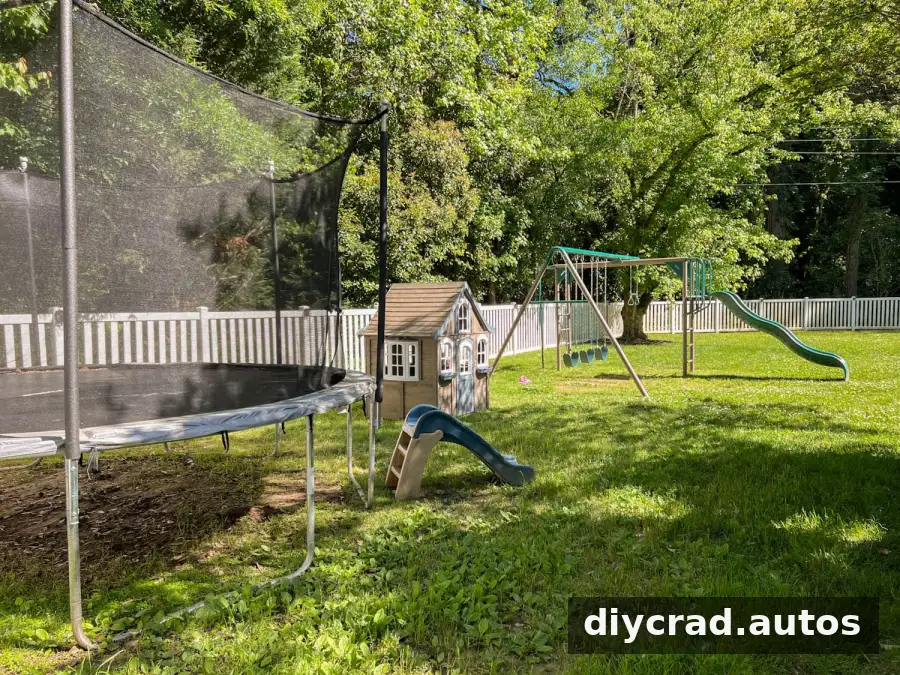
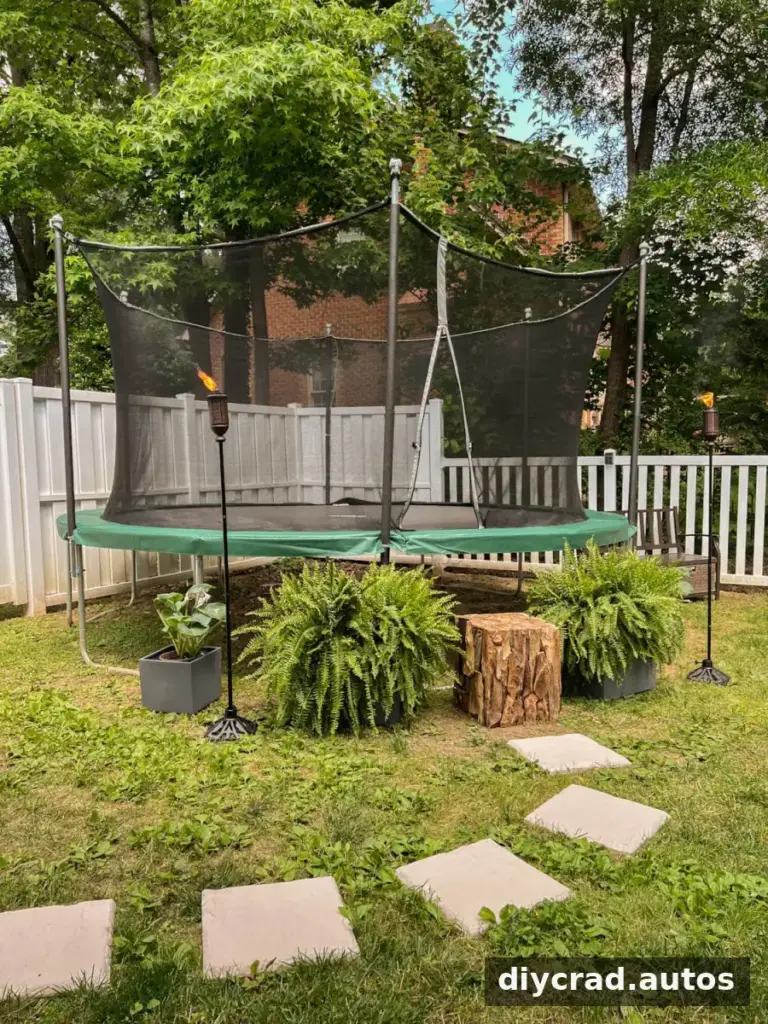
Large planters placed near an above-ground trampoline can soften the look of bare ground without requiring a planted bed. Ferns and hostas are examples of shade- or partial-shade plants that can grow into substantial foliage. Other options mentioned for this type of setting include:
- Fern
- Hosta
- Sweet Potato Vine
- Caladium
- Lily of the Valley Shrub
- Coleus
- Japanese Forest Grass
- Hydrangea
Choose plants according to your climate, sunlight, and soil, and leave enough clearance around the equipment for safe access. If children or pets may touch or eat the plants, check their suitability before planting.
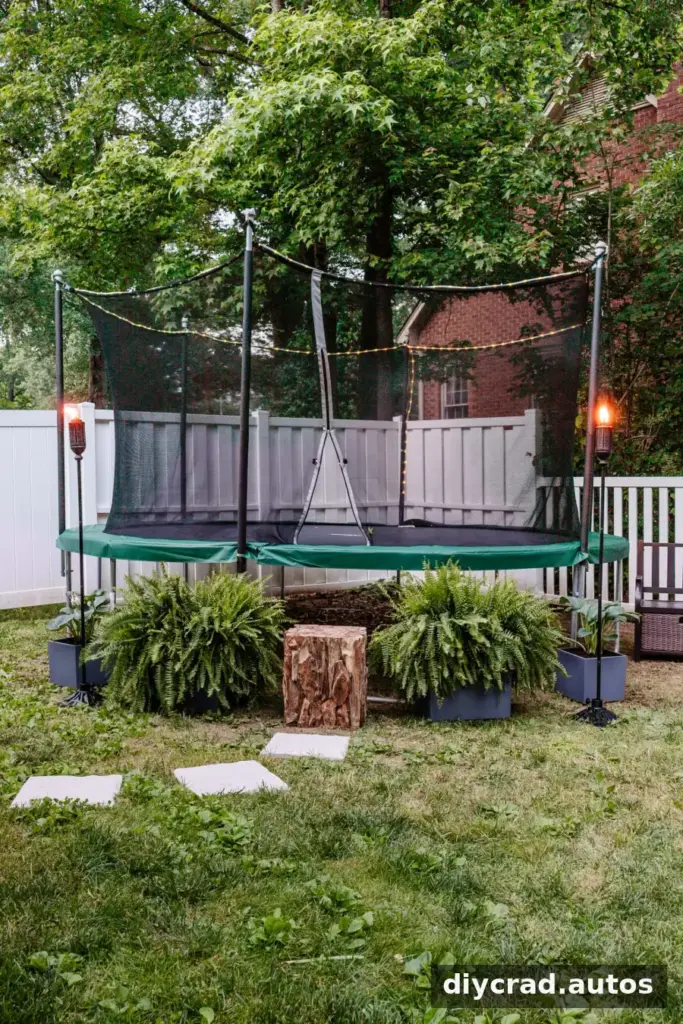
Planters can help disguise worn or bare areas, while replacing a damaged trampoline pad can improve the overall appearance. Follow the equipment maker’s instructions when checking or replacing parts.
2. Use a Stable Step Near the Trampoline
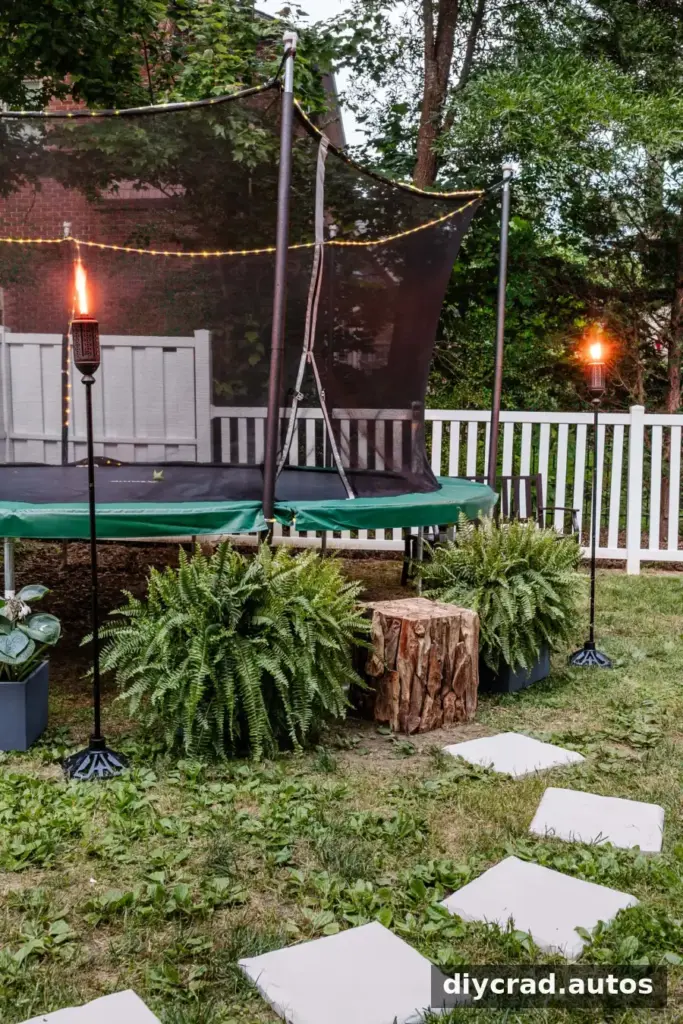
A sturdy tree stump can provide a natural-looking step beside a trampoline, while a reclaimed teak-root cube table is another decorative option. Whatever you choose, stability matters more than appearance: place it on firm, level ground and ensure it does not create a tripping hazard or interfere with the trampoline’s entrance.
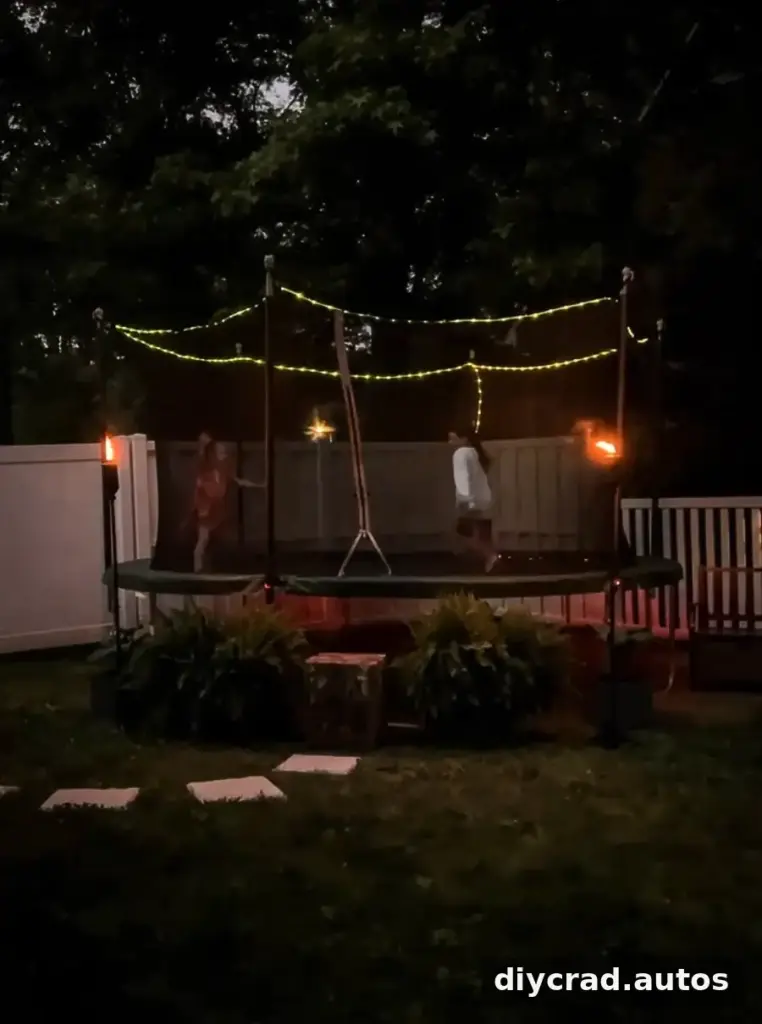
3. Place Tiki Torches Well Away from Play Equipment
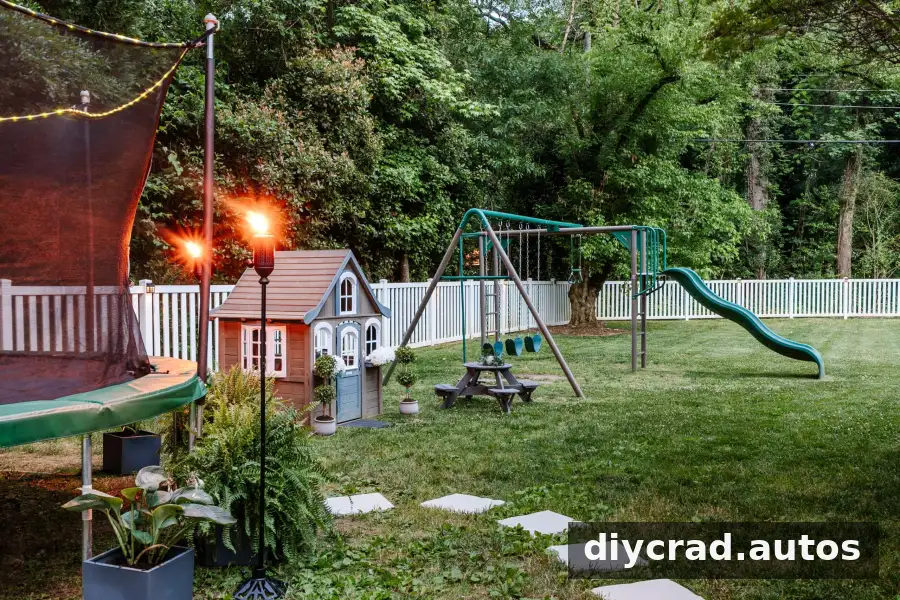
Tiki torches can add ambient light to an outdoor gathering, but they use an open flame and must be kept a safe distance from trampolines, playhouses, plants, and other combustible materials. Never leave a lit torch unattended or use one while children are unsupervised. For a play area, consider whether a non-flame lighting option is more appropriate.
4. Create a Path with Stepping Stones
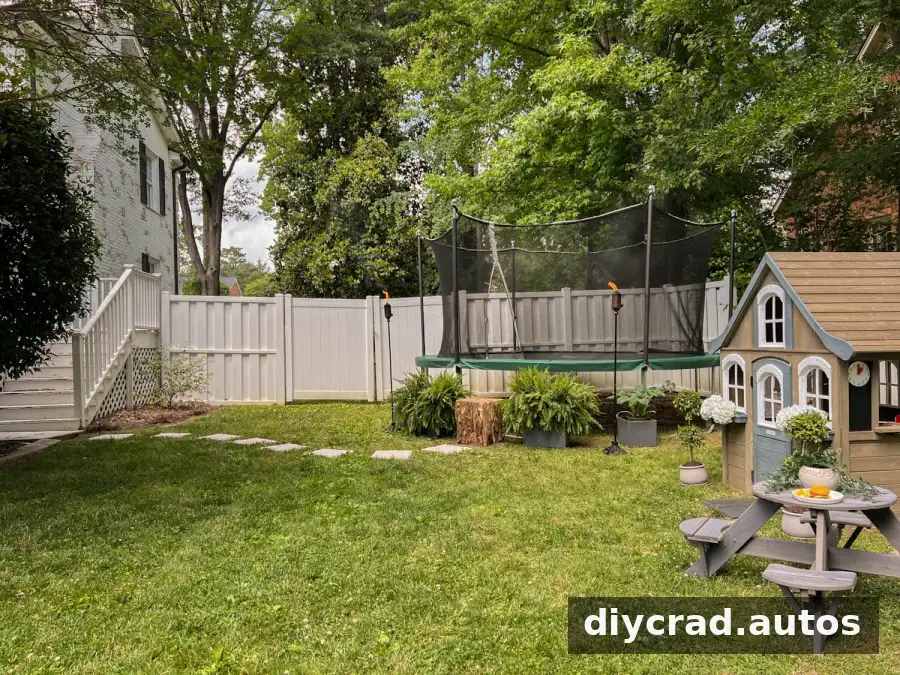
Stepping stones can help children move between play features without walking through muddy patches. Polyresin stones may feel less hot underfoot than some real-stone surfaces on sunny days, though temperatures vary with the weather and material. Choose stones with a stable, nonslip surface and secure them as directed so they do not shift.
A path can also become part of imaginative games such as “The Floor Is Lava” or “Leapfrog.” Leave enough space between stones for the ages and abilities of the children using them.
5. Add a Kids’ Picnic Table
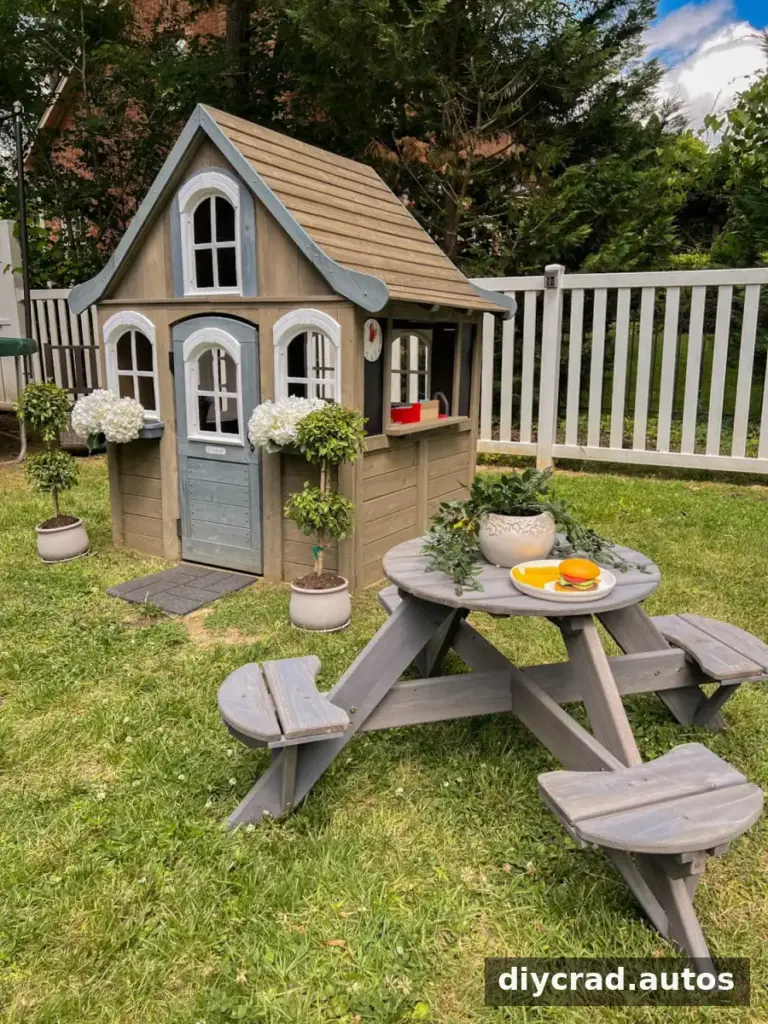
A small outdoor table gives children a place for snacks, drawing, painting, and pretend play. Select a size that suits the children and the available space, and position it on level ground away from trampoline entrances and busy walking routes. Regularly check the table for loose parts or weather-related wear.
6. Include an Outdoor Playhouse
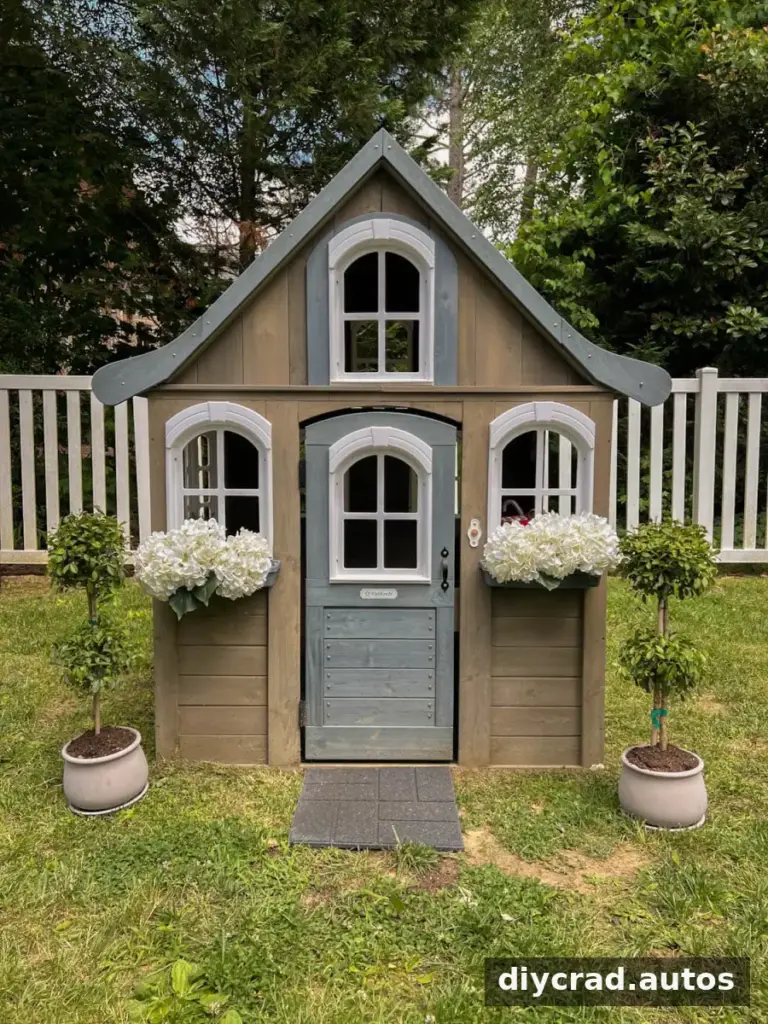
A playhouse can encourage imaginative activities, from running a pretend restaurant to playing with a toy kitchen. Window boxes and decorative faux plants can add color without requiring much maintenance. Keep decorations securely attached, and avoid placing small or fragile items where they could become trip hazards.
7. Choose a Swing Set That Fits the Yard
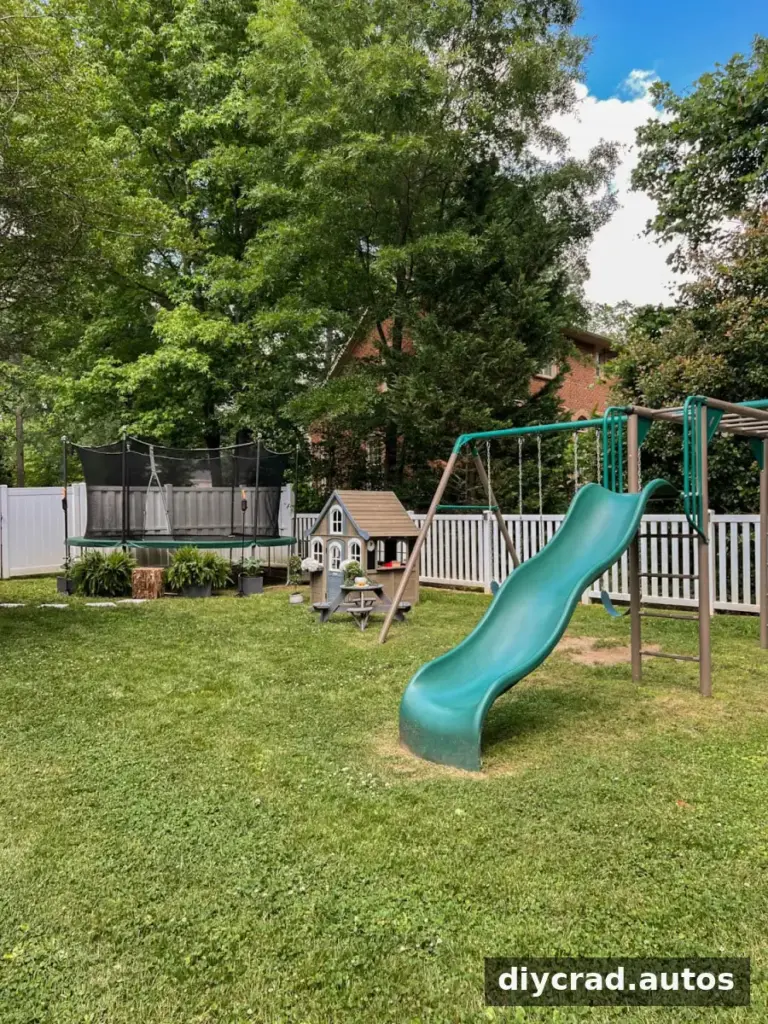
Swing sets are available in different sizes and configurations, from compact frames to larger sets with climbing features and forts. Check the product’s age and weight guidance, installation requirements, and recommended clearance area before choosing a model. Inspect the frame and moving parts regularly, and keep the landing zone clear.
8. Add Lights to the Trampoline Area
Outdoor lights can make a play area feel inviting when daylight fades. Lights attached around a trampoline should be suitable for outdoor use and installed so that cords, ties, and battery packs cannot become entanglement or trip hazards. Keep electrical components protected from rain according to their instructions, and do not let decorative lighting replace adequate visibility or adult supervision.
Make the Side Yard Play Area Work for Your Family
Small changes can make a side yard feel more organized and enjoyable without the upkeep of a major landscaping project. Start with the problems the space actually has—such as mud, worn ground, or limited seating—and choose additions that fit the yard and the children who use it. These side yard play area ideas are most effective when appearance and safety are considered together.
Planning Checklist
- Trampoline and compatible replacement padding
- Outdoor trampoline lights
- Swing set
- Playhouse
- Stepping stones
- Rectangular planters
- Kids’ picnic table
- Reclaimed teak-root table or another stable step
- Tiki torches and suitable stands, used with fire-safety precautions