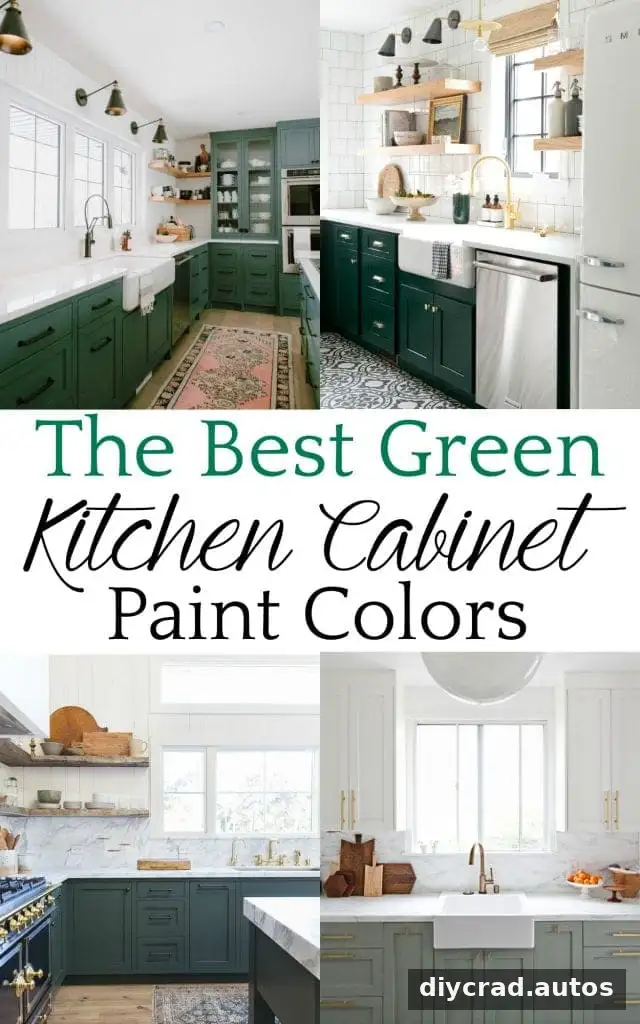
Green kitchen cabinets can add color and character while working well with neutral finishes, natural materials, and a range of countertop tones. From deeper greens to softer, muted shades, the right paint color depends on your room’s light, existing surfaces, and the overall look you want. These 12 paint colors offer inspiration, along with practical steps for choosing a shade for your own kitchen.
Green Kitchen Cabinets: 12 Paint Color Ideas
The colors below come from kitchens designed by a variety of studios and designers. Use the list as a starting point rather than relying on a screen to judge the exact shade: photographs, lighting, and display settings can all affect how paint appears.
Dunn-Edwards Black Spruce
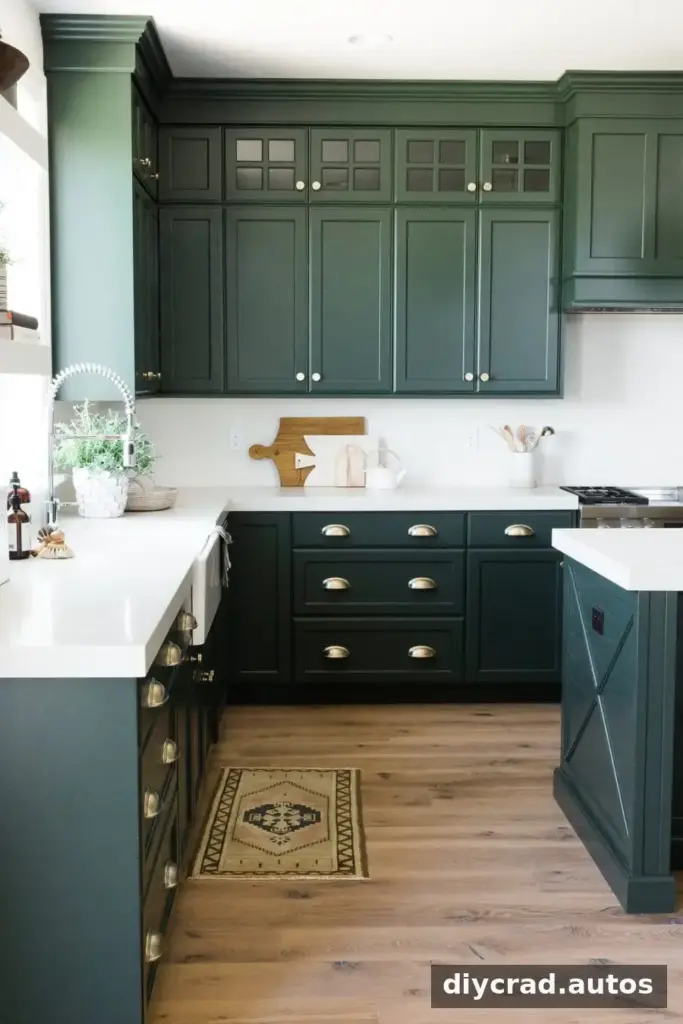
Design credit: Studio McGee.
Consider this option if you are exploring a darker green for cabinetry. Before painting every cabinet, test a sample on a door or board and view it at different times of day.
Sherwin-Williams Billiard Green
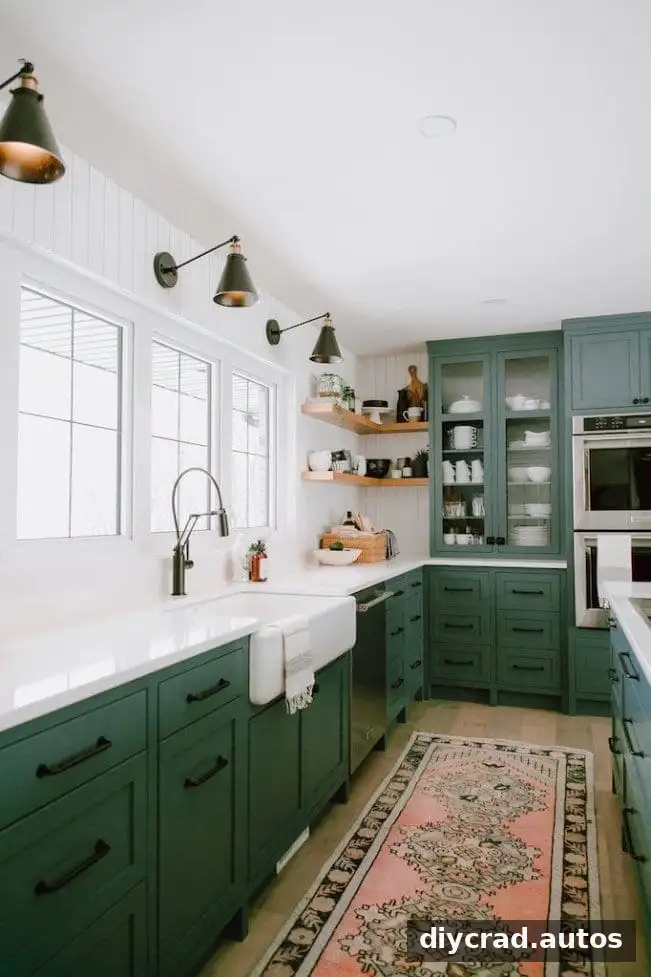
Design credit: Jaclyn Peters Design.
When comparing this shade with your countertops, check the samples side by side. Nearby stone or tile can make a paint color appear warmer, cooler, or more subdued.
Dunn-Edwards Midnight Spruce
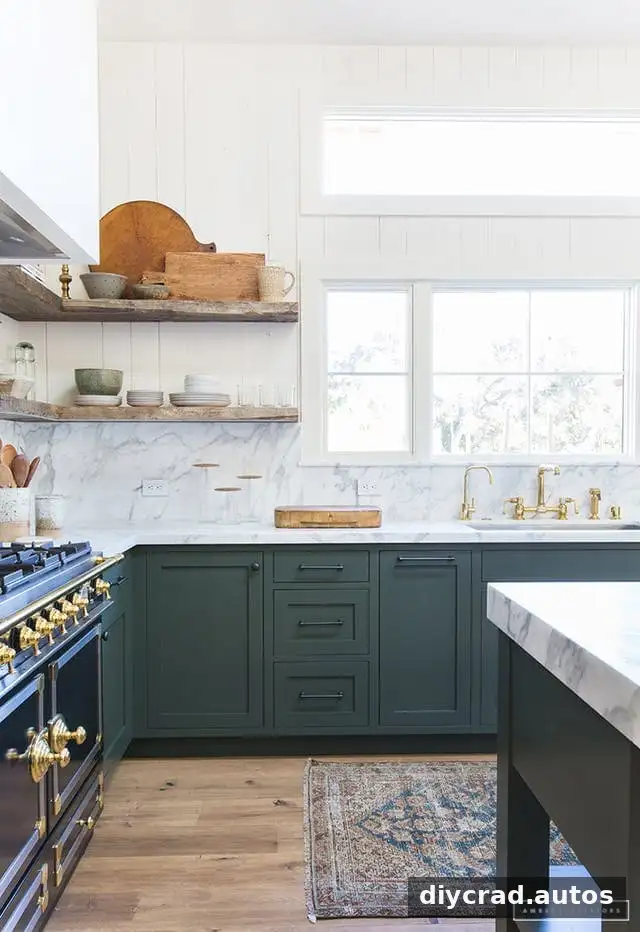
Design credit: Amber Interiors.
A deep cabinet color can create a strong focal point. In a kitchen with limited natural light, test the shade in the room before committing to all the cabinetry.
Farrow & Ball Pigeon
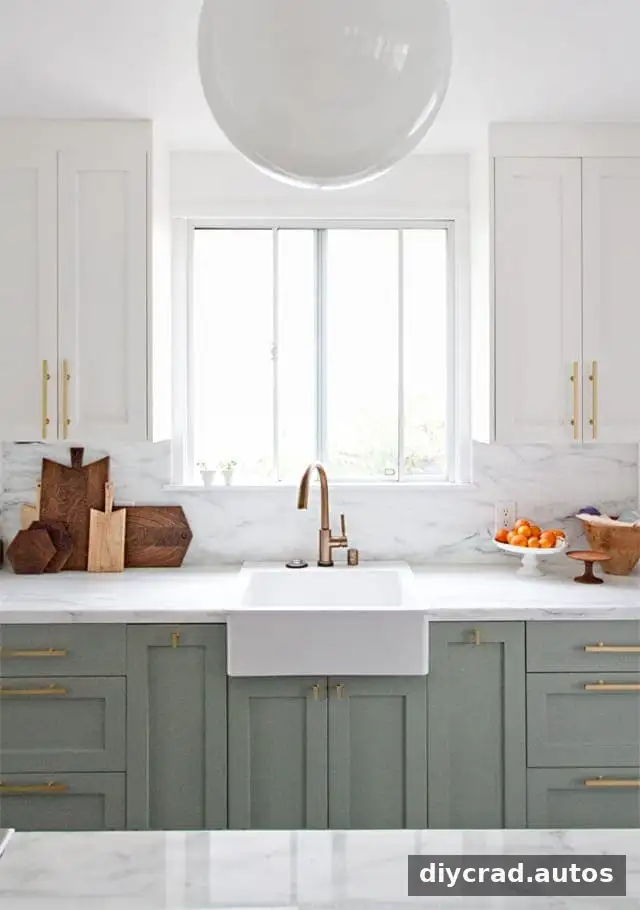
Design credit: Sarah Sherman Samuel.
Muted colors are worth considering when you want cabinetry to feel colorful without overwhelming other finishes. Compare the sample with flooring, backsplash tile, and hardware.
DeVOL Trinity Blue
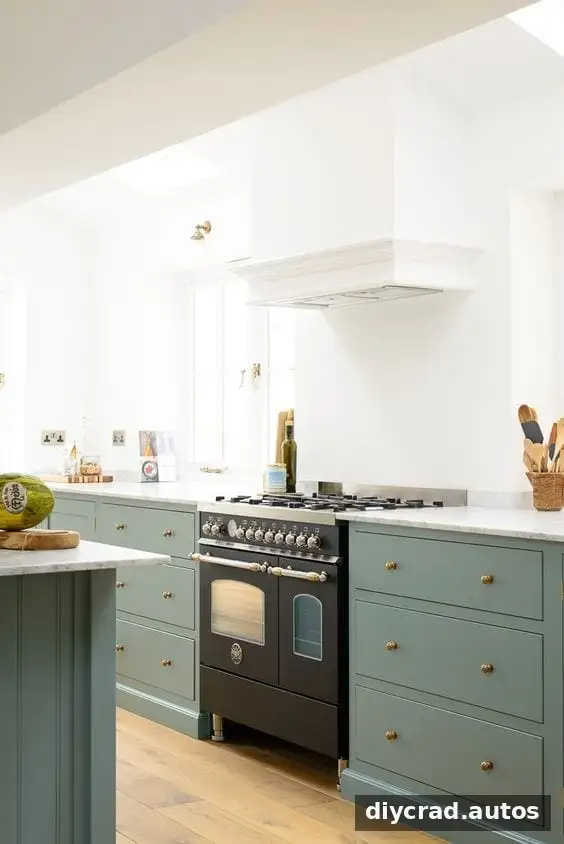
Design credit: DeVOL.
Although the name includes “Blue,” this color is included as an option in this collection of green kitchen inspiration. Check the actual paint sample, rather than the name or a photo, to assess its appearance in your space.
Benjamin Moore Forest Green
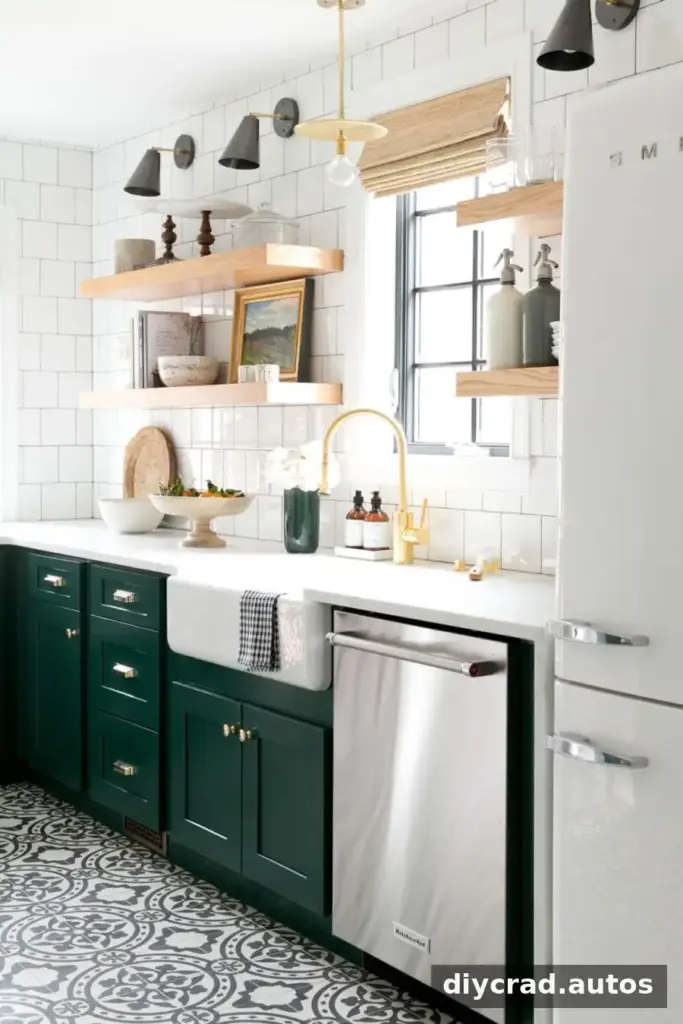
Design credit: Studio McGee.
For a confident color choice, consider how the cabinets will relate to large fixed elements such as counters and flooring. These surfaces are usually harder to change than paint.
DeVOL Pantry Blue
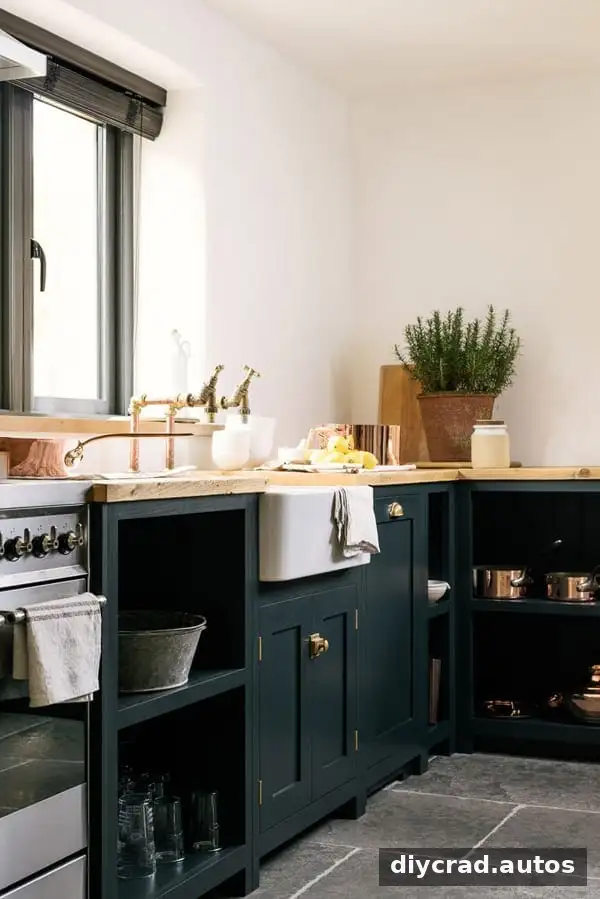
Design credit: DeVOL.
This named shade is another example to compare in person. Paint samples can look different on vertical cabinet doors than they do on a small, flat color card.
Waterworks Wellie
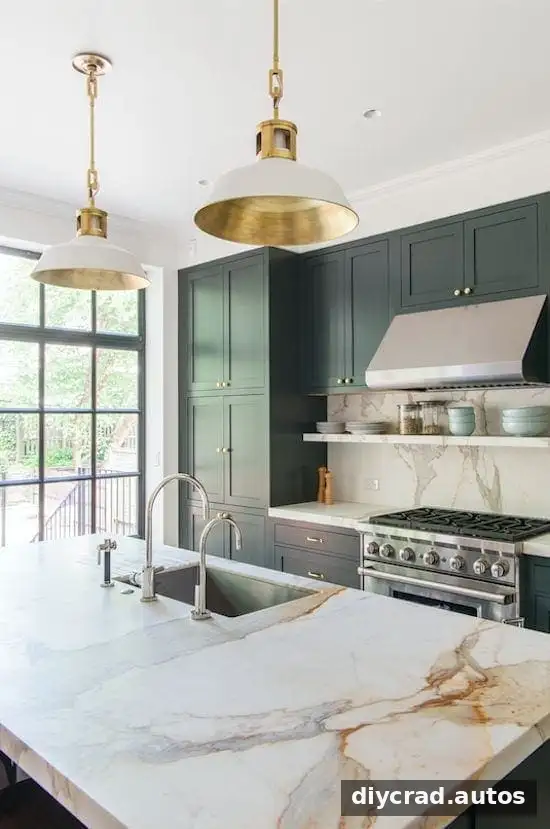
Design credit: Elizabeth Roberts.
When reviewing a cabinet color, look at it alongside the room’s lighting and surrounding materials. A sample viewed under both daylight and your usual evening lights gives a more useful comparison.
Benjamin Moore Chimichurri
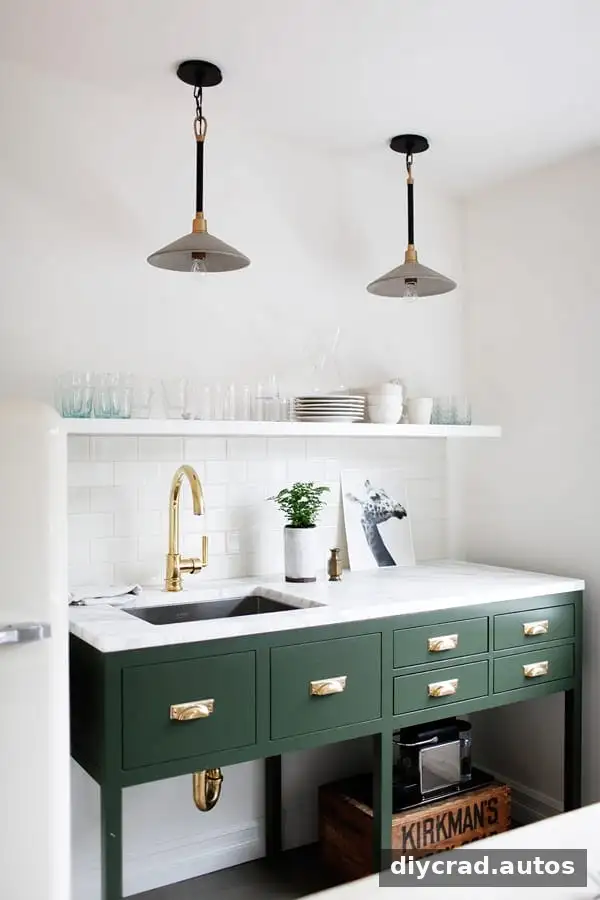
Design credit: Katie Hackworth.
If you are considering a saturated green, balance the decision by checking how it works with the backsplash and countertop. Repeating a related color in small accessories can also help the palette feel considered.
Benjamin Moore Tea Light
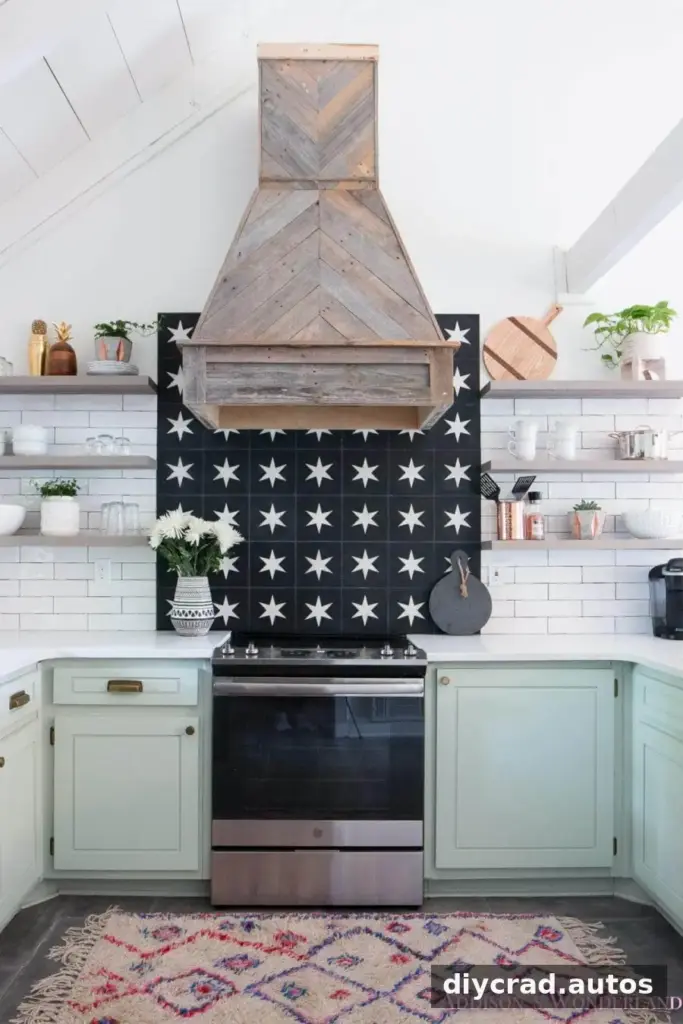
Design credit: Addison’s Wonderland.
Test this shade in the specific area where it will be used. A kitchen’s windows, orientation, and artificial lighting can all influence how a paint color reads.
Sherwin-Williams Halcyon Green
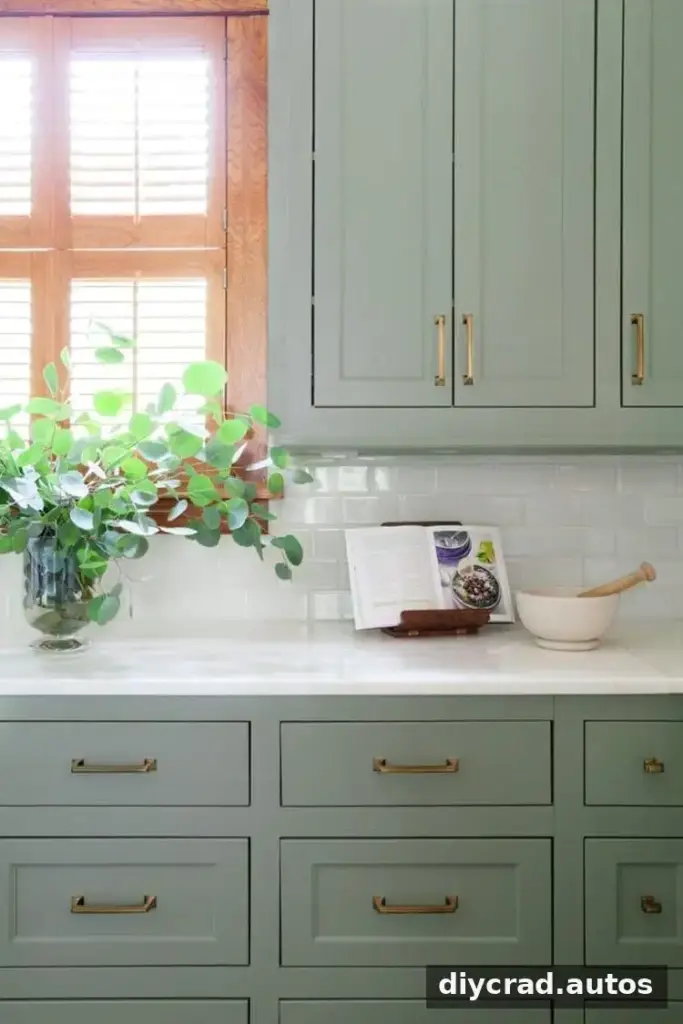
Design credit: Room for Tuesday.
Before ordering paint, confirm the exact color name with the manufacturer or retailer. Keep the sample label so you can refer to it when selecting the appropriate cabinet coating and sheen.
Benjamin Moore Forest Floor
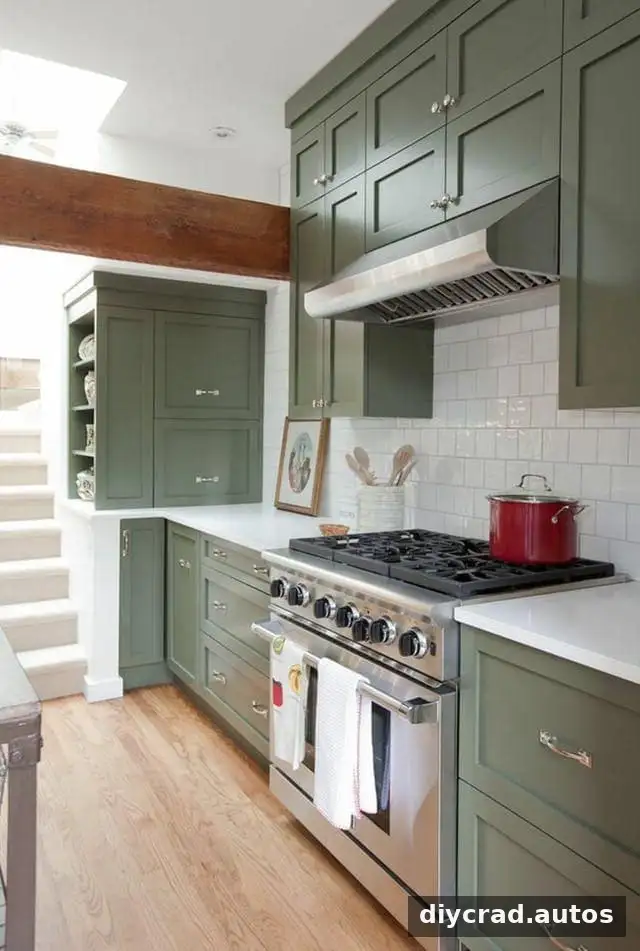
Design credit: Jillian Harris.
Cabinet paint needs to suit the surface and expected wear. Follow the paint manufacturer’s preparation and application instructions, and allow the recommended curing time before returning items to shelves or using doors heavily.
How to Choose Green Kitchen Cabinets
Start by identifying the finishes that will remain, including countertops, backsplash, floor, and appliances. Then collect paint samples and compare them directly with those materials. For a more reliable preview, test the color on a movable board or an inconspicuous cabinet area and observe it in morning, afternoon, and evening light.
- Check the manufacturer’s current color information and confirm the exact shade before purchase.
- Use a primer and cabinet-suitable paint system that are compatible with the existing surface.
- Clean and prepare cabinet doors carefully; dust, grease, or a poorly prepared finish can affect the result.
- Test the planned sheen, since sheen can change how color and surface imperfections appear.
Green kitchen cabinets are a versatile way to introduce a noticeable color update without changing every finish in the room. Compare several samples in your own kitchen, account for the fixed materials and lighting, and choose the shade that feels right in context. A small test area is a practical final check before beginning a full cabinet repaint.