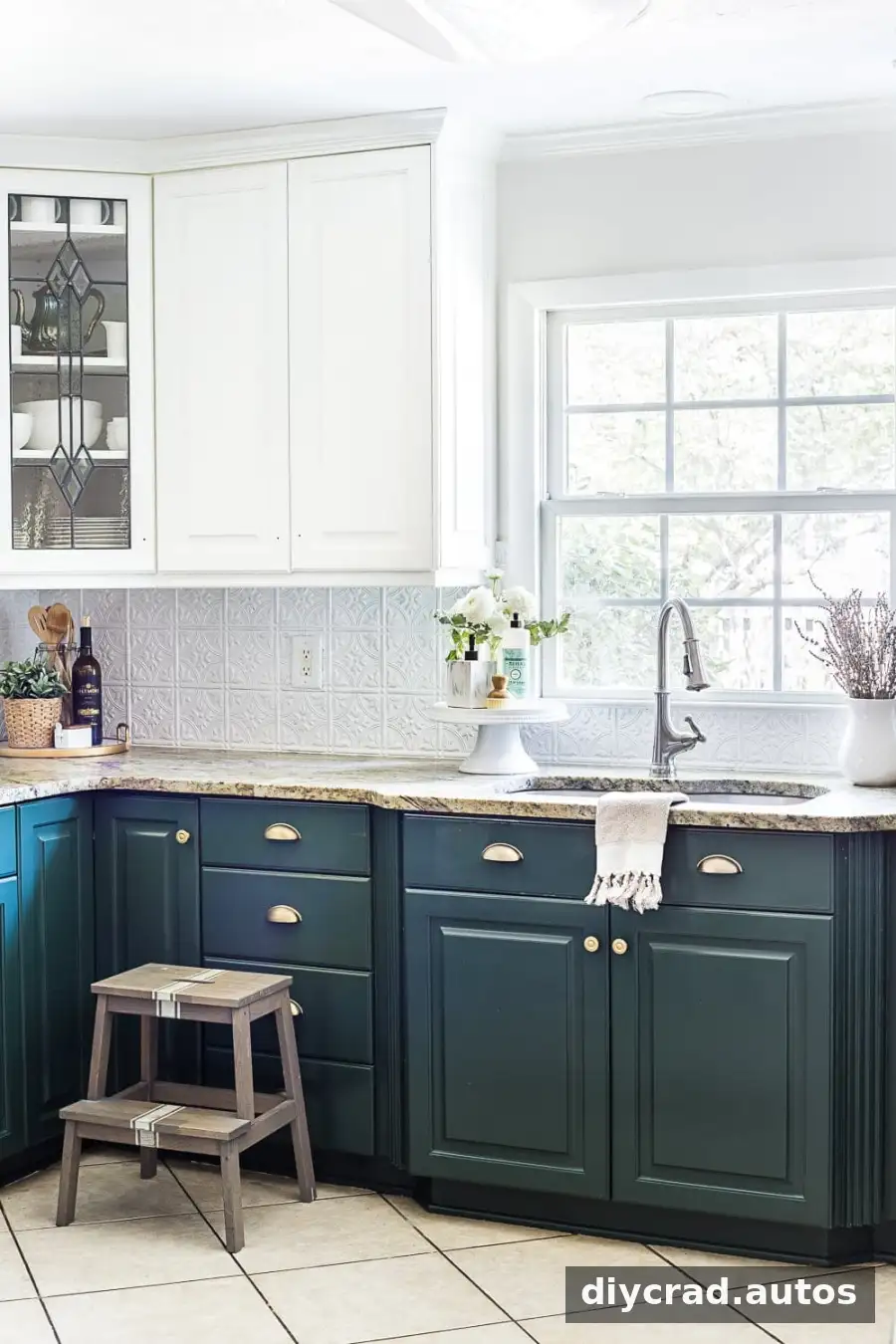
Green kitchen cabinets can add depth and character to a room without requiring a complete renovation. In this kitchen refresh, deep green lower cabinets are paired with bright white upper cabinets, updated hardware, and a pressed-tin-style backsplash. The changes keep the existing layout and countertop while giving the space a bolder, more finished look.
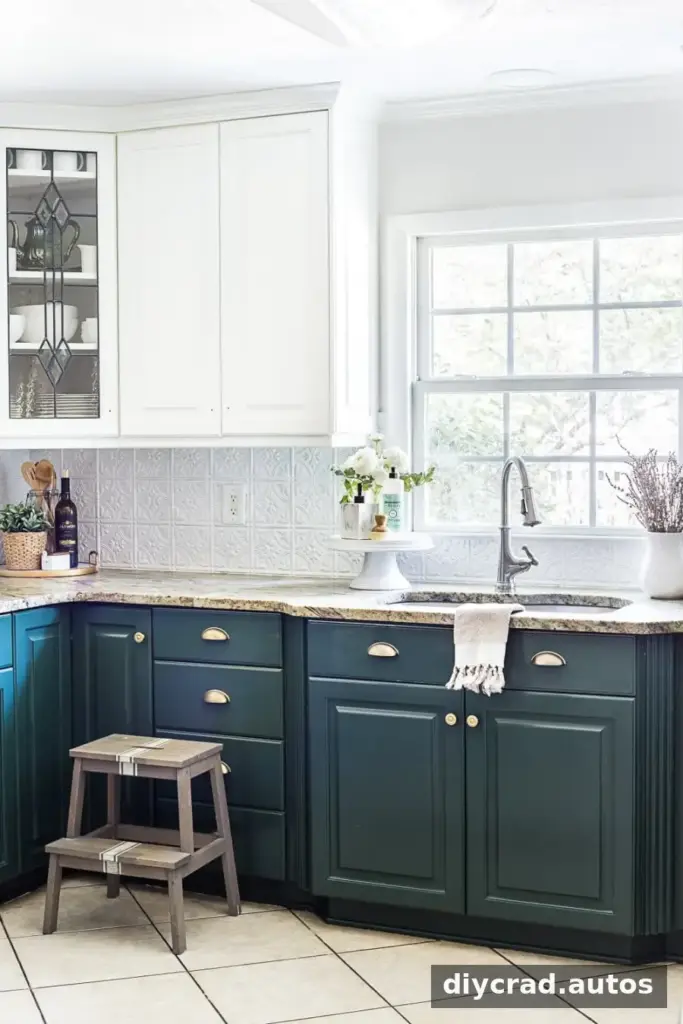
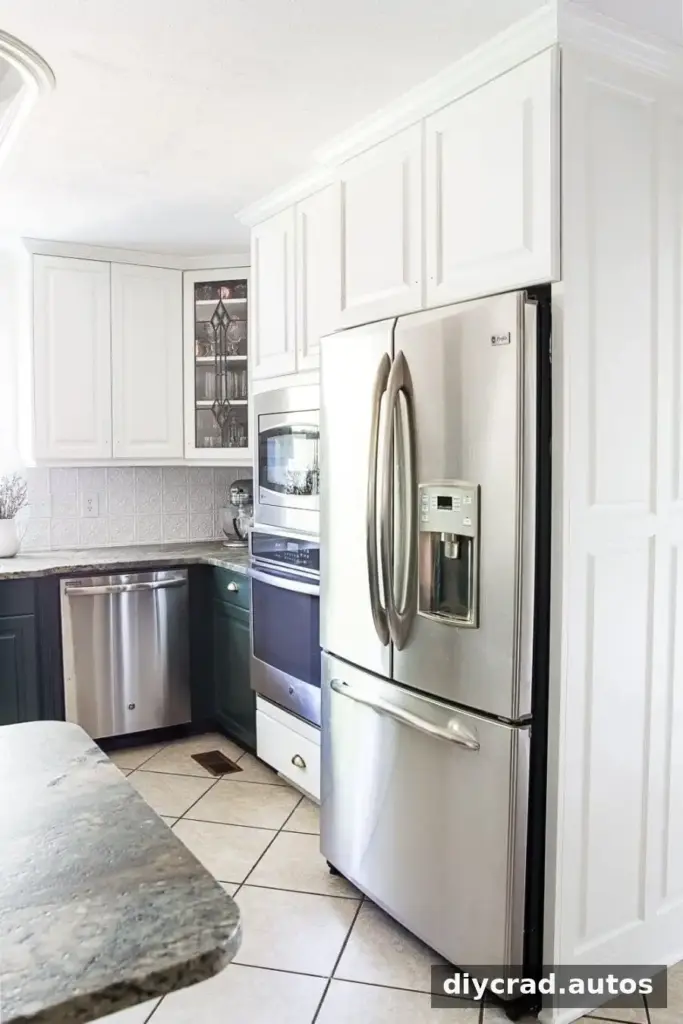
The lower cabinets were painted Billiard Green, a rich shade that complements the subtle green tint in the existing leathered granite. The upper cabinets were refreshed in Simply White, creating contrast and helping the darker color stand out.
Green kitchen cabinets and the color choice
Choosing a cabinet color is easier when you consider the finishes that will stay in the room. Here, the granite countertop helped guide the decision: its slight green undertone made a deep green cabinet color a natural fit. The result feels bold and contemporary, while the cabinet style and existing materials retain a traditional character.
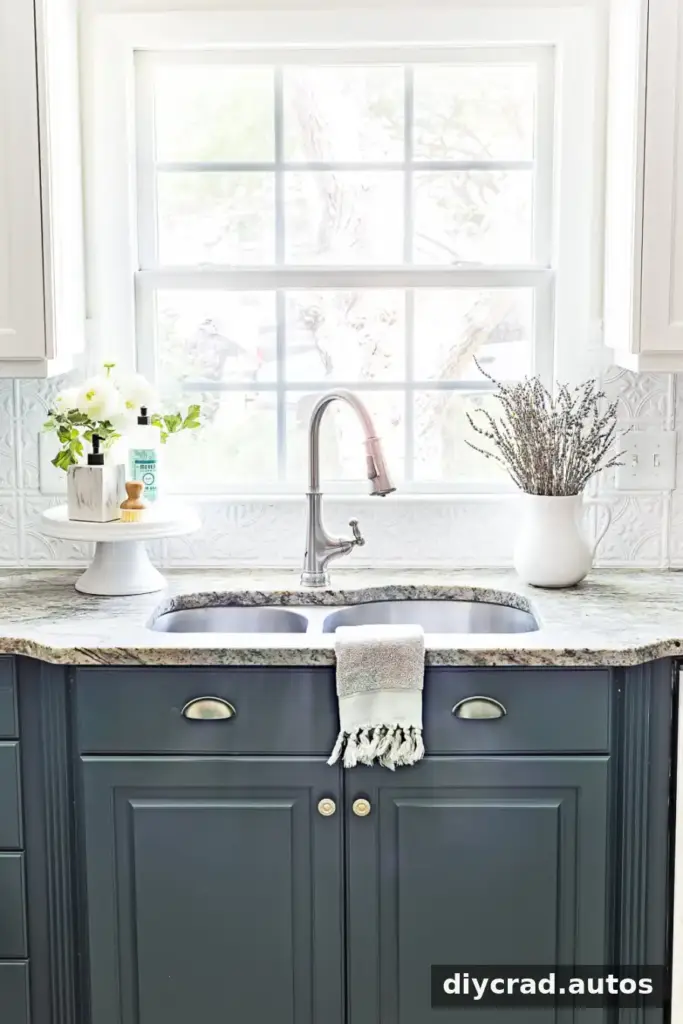
Lighting can also affect how paint appears. The early project photos had uneven, purplish and teal color casts, so they may not show the paint accurately. When selecting a shade, test it in the kitchen and view it at different times of day. A sample beside the countertop and backsplash can make it easier to judge how the colors work together.
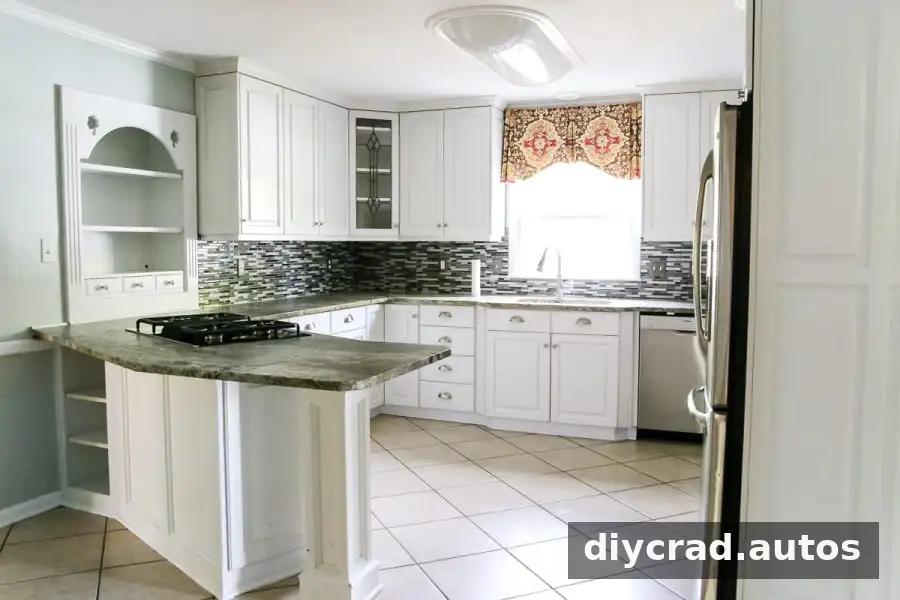
The project builds on earlier updates to the backsplash and painted surfaces. Comparing the stages can help show how a few coordinated changes alter the overall feel of the room.
A kitchen refresh without changing the layout
This work is a temporary update before a larger renovation that may change the kitchen layout. Rather than replacing the cabinets or countertop, the refresh focuses on paint, hardware, and lighting. These changes can have a noticeable visual effect while leaving the existing arrangement in place.
The walls were painted Swiss Coffee, and the cabinet colors were chosen to create a high-contrast scheme. Bright white and deep tones can make a room feel more defined, but it is worth considering how much natural light the kitchen receives before committing to dark lower cabinets.
Previously white cabinets had begun to look yellowed with age, so repainting them helped bring the lighter surfaces into line with the new palette. For a durable cabinet finish, use products intended for cabinetry and follow the preparation and application instructions on the product label. Allow adequate drying and curing time before reinstalling hardware or putting cabinets back into regular use.
Hardware that completes the cabinet update
The original plan was to repaint the existing knobs and pulls with brass-colored spray paint. Four finishes were tested, but they looked too glittery for the desired result. Instead, aged-brass cup pulls and matching knobs were selected to coordinate with the planned lighting update.
Choosing replacement hardware avoids relying on a painted finish that may wear or chip with frequent use. Before buying, check the spacing between existing pull holes and confirm that new hardware will fit. Cup pulls were installed first, while the matching knobs were still on order, which temporarily made some cabinets harder to open.
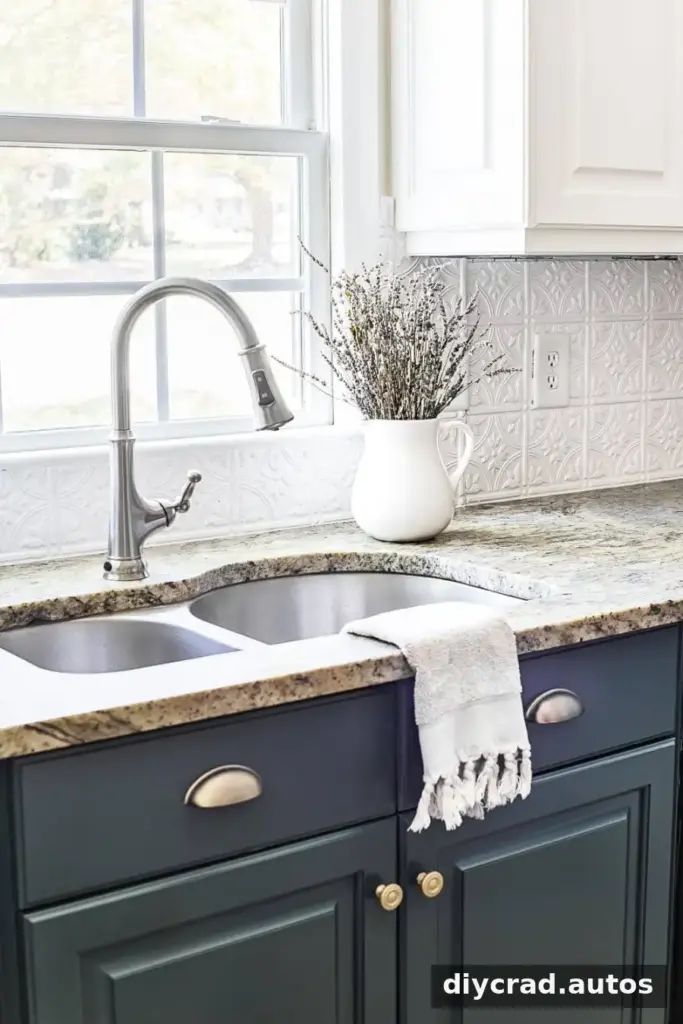
The combination of green lower cabinets, white upper cabinets, and aged-brass details makes the kitchen feel less plain while connecting it to the high-contrast style used elsewhere in the home. The example also shows why paint color, hardware, and lighting are best considered together: each affects how the others look.
Project cost and remaining updates
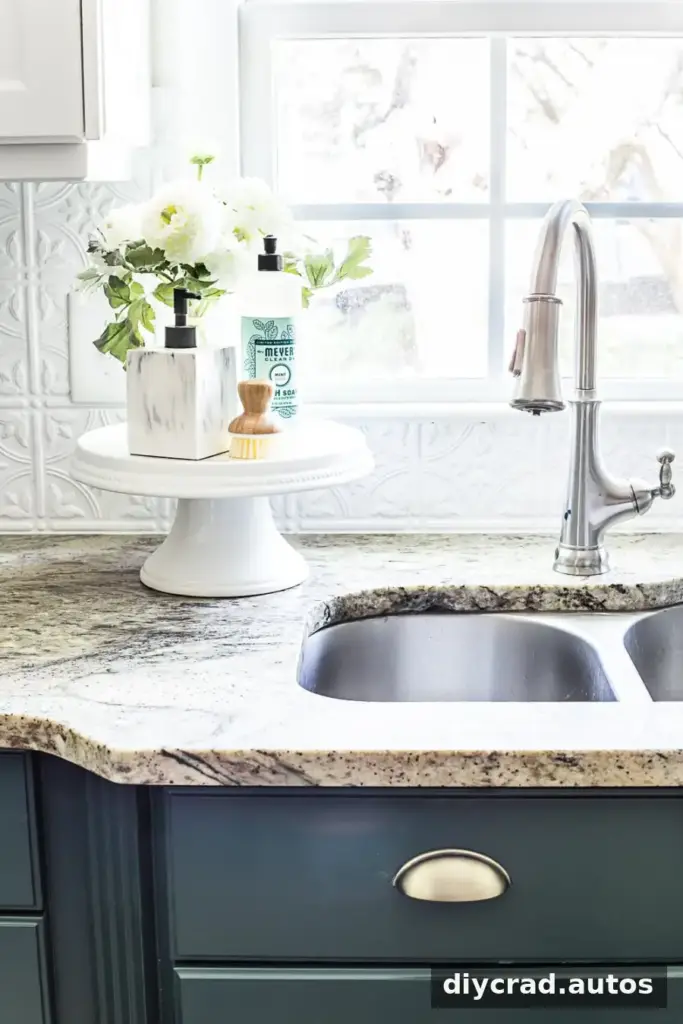
The backsplash, paint, and hardware had cost about $340 at this stage. For comparison, hiring a professional to paint the cabinets alone was estimated to cost well over $1,000. Actual costs vary by location, materials, cabinet condition, and the amount of preparation required, so the figures are specific to this project rather than a general price estimate.
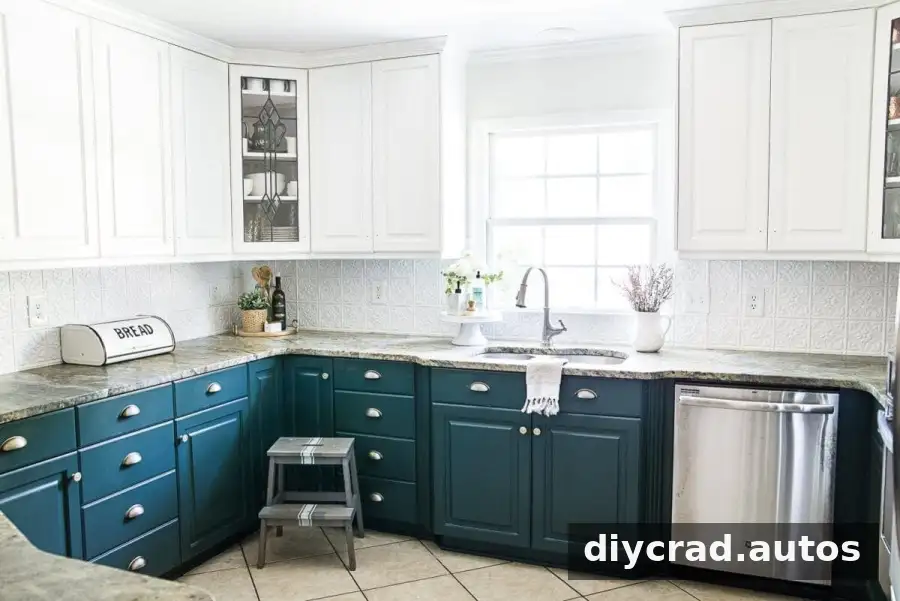
The kitchen refresh still has several planned tasks. This list distinguishes the updates already completed or underway from the work that remains:
- Cover the existing backsplash with pressed ceiling tiles
- Paint the kitchen cabinets Billiard Green and Simply White
- Paint the walls Swiss Coffee
- Add new knobs and pulls
- Add a mini pendant light over the sink
- Remove the cluttered shelf and create a command center wall
- Replace the old track light with an aged-brass light
- Remove shamrock cut-outs from the built-in shelf
- Refresh the floor grout
- Hang wall art around the coffee bar
- Add an accent rug
What to consider before painting kitchen cabinets
Before starting a similar update, decide which elements will remain and use them to guide the color palette. Check paint samples in the room’s actual lighting, measure hardware carefully, and plan for the time needed to prepare and cure painted surfaces. Keeping the existing layout, countertops, and cabinets can limit the scope of a refresh, while new lighting and coordinated hardware help the finished space feel intentional.
Green kitchen cabinets offer a way to introduce color while preserving much of an existing kitchen. In this project, pairing deep green with white paint and aged-brass hardware produced a substantial visual change for about $340 in reported project costs, without undertaking a full renovation.