

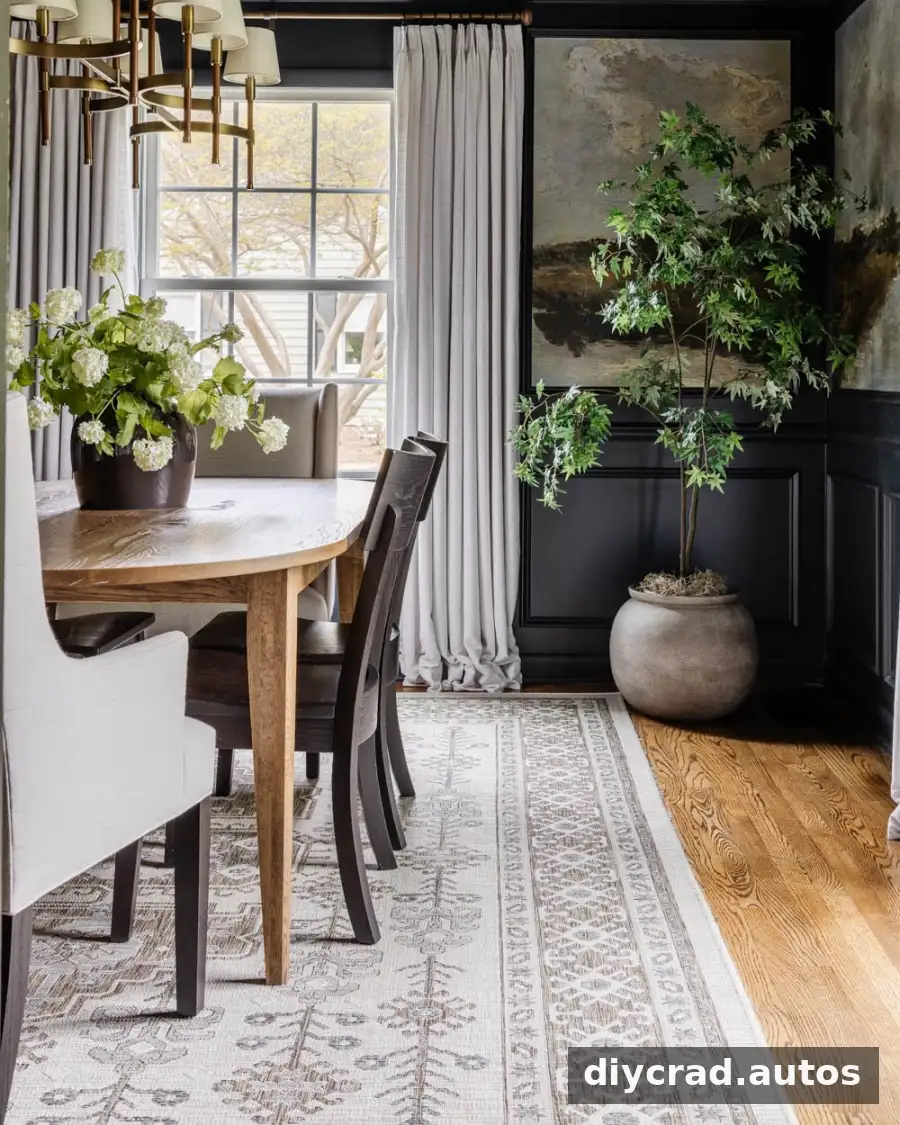
An outdoor rug under a dining table can be a practical alternative to a traditional indoor rug, especially in a busy dining area. Its low-profile surface can make it easier to move chairs, while many styles are designed for straightforward cleaning. The right choice still depends on the rug’s care instructions, the size and shape of your table, and how your dining space is used.
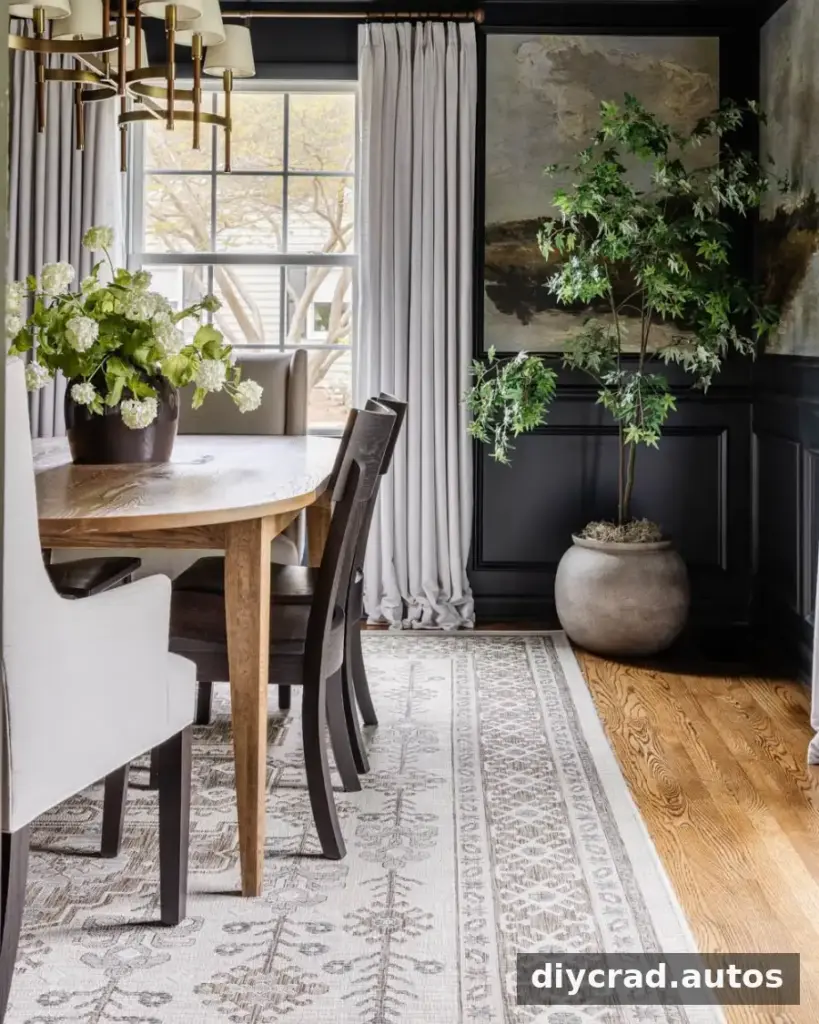
Why Choose an Outdoor Rug Under a Dining Table?
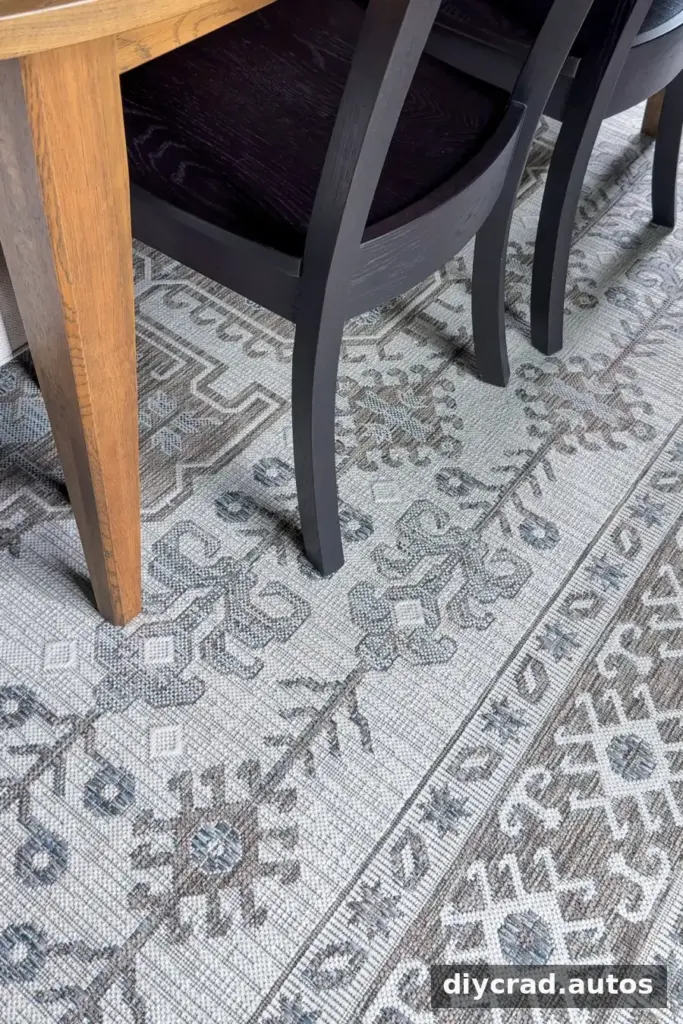
Dining rooms see frequent spills, crumbs, and chair movement. A rug in this area should look inviting but also work well with everyday meals. Outdoor rugs are worth considering because many have a flat or low-pile construction that suits a dining setup.
- Chairs can move more easily. A low-pile or flat-weave surface is less likely to catch chair legs than a thick, fluffy rug. Check that chairs remain stable and slide smoothly before settling on a style.
- Cleaning may be simpler. Crumbs can often be removed with routine vacuuming, and some spills can be wiped away. Follow the care label; only rinse or hose down a rug if its manufacturer says that method is suitable.
- There are plenty of design options. Outdoor rugs come in a range of patterns and colors, so it is possible to choose one that complements the dining room rather than looking purely utilitarian.
Before placing any rug indoors, check its care and material guidance. If it becomes wet during cleaning, let it dry fully before putting it back in place. A rug pad can also help keep it from shifting, provided the pad is compatible with both the rug and the floor.
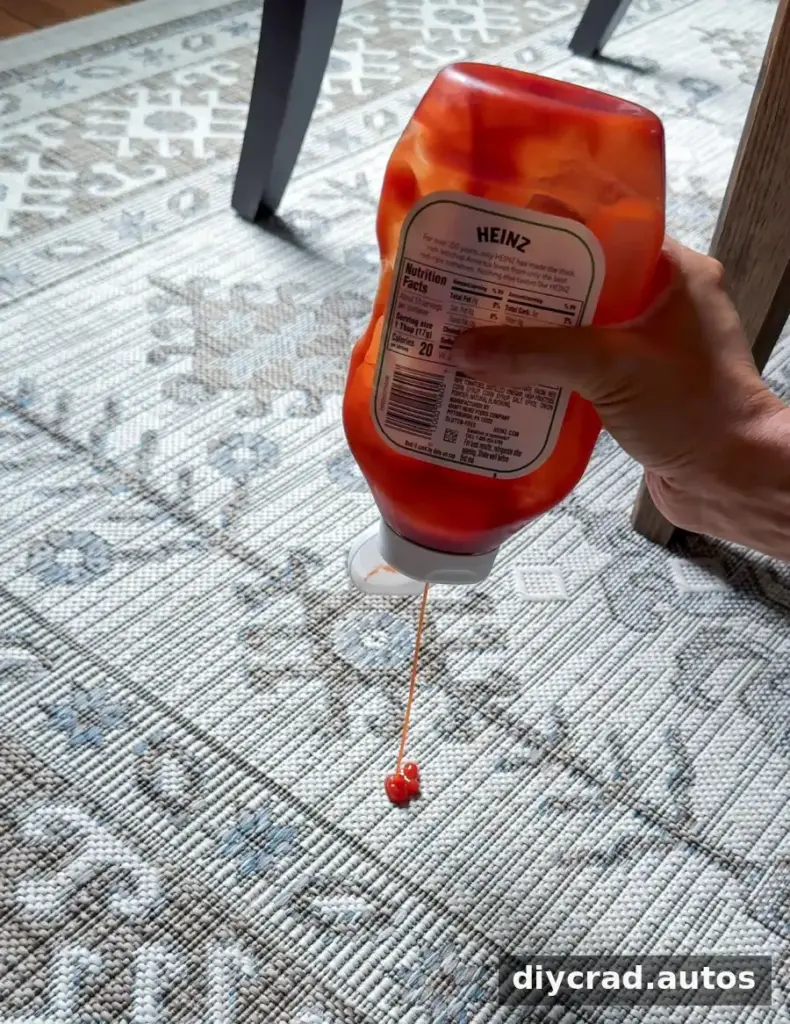
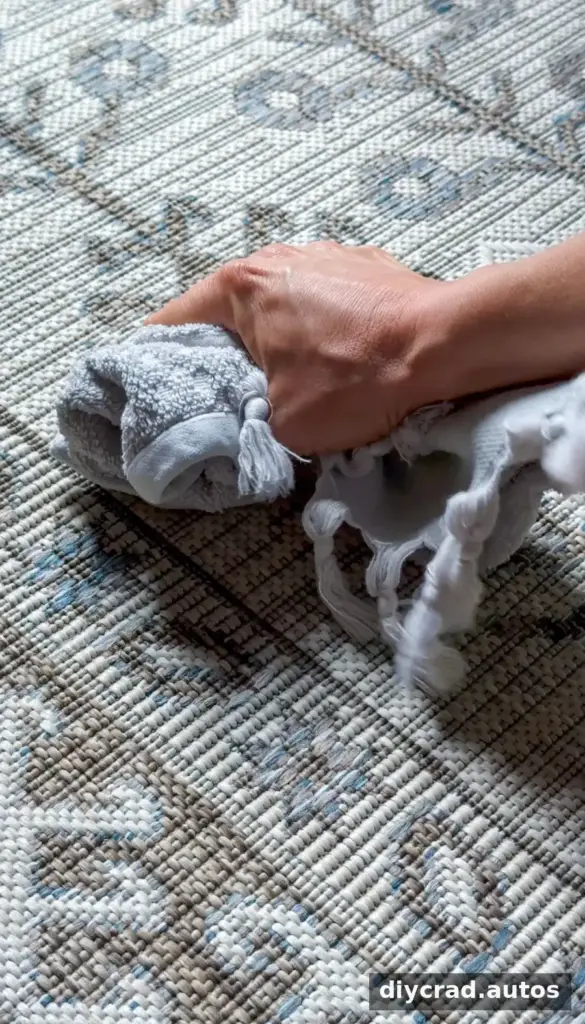
A patterned design can help make small crumbs or minor marks less noticeable between cleanings, though it does not replace regular care. For an easier routine, vacuum the area consistently and address spills promptly according to the rug’s instructions.
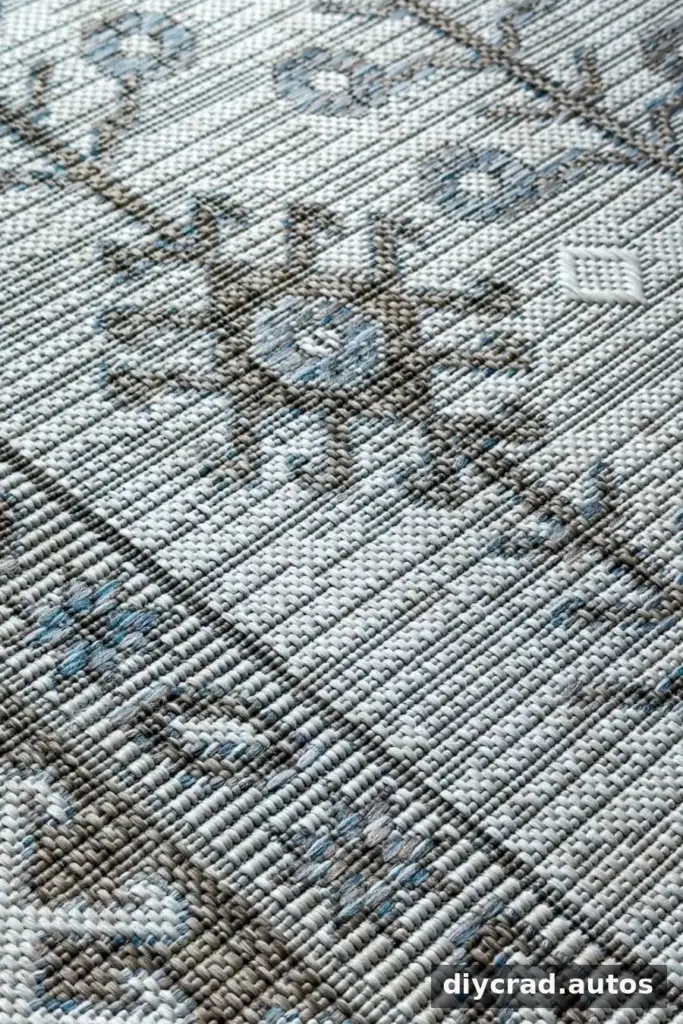
Choosing an Outdoor Rug Under a Dining Table
Size is one of the most important details. The rug should extend at least 24 inches beyond the table on all sides. This gives chairs room to slide backward while their legs remain on the rug, reducing the chance that they catch on its edge.
Measure the table and the area around it before shopping. If possible, mark the proposed rug dimensions on the floor with painter’s tape, then pull the chairs out as they would be used during a meal. This simple check can help reveal whether the rug will be large enough.
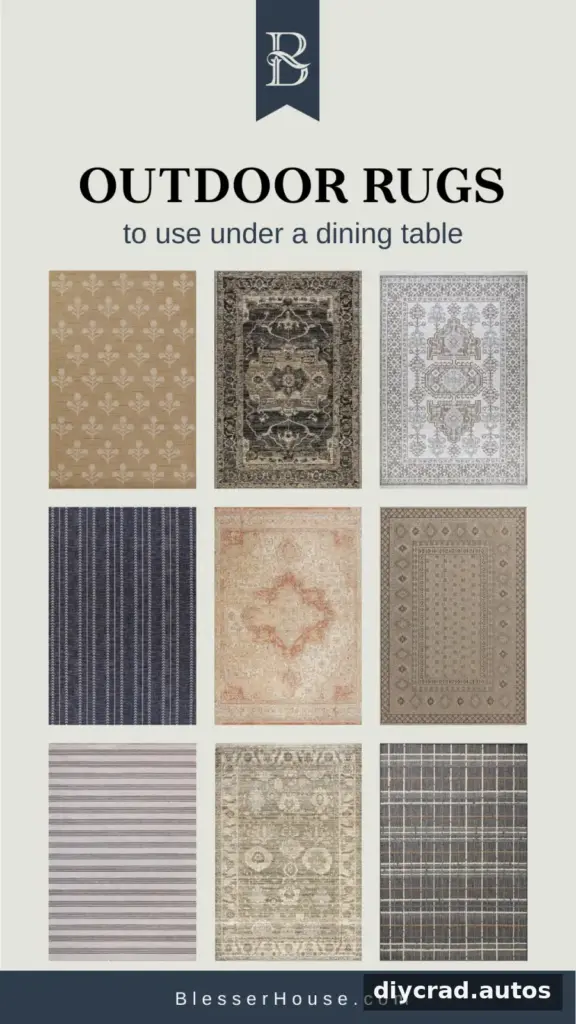
Consider pile, pattern, and shape
- Choose a low pile or flat weave. These profiles are generally more convenient for dining chairs than a thick, plush surface. Avoid a rug that makes chair movement awkward.
- Use pattern thoughtfully. A patterned rug may make everyday crumbs and minor marks less conspicuous. Select colors and motifs that work with the room’s existing finishes.
- Coordinate the rug shape with the table. A round rug can suit a round table, while a rectangular rug is usually a natural match for a rectangular or oval table. Also consider the shape of the room and the space available around the chairs.
For households with children or frequent guests, prioritize easy care and enough room for chairs over a delicate texture. Always compare the rug’s cleaning guidance with your needs before buying; “outdoor” does not mean every rug can be cleaned in the same way.
Final Thoughts
An outdoor rug under a dining table can bring color and definition to a dining area while offering a practical surface for everyday use. Choose a low-pile style, allow at least 24 inches beyond the table on every side, and match the rug’s shape to the table where possible. With the right size and care routine, a dining rug can make the room feel more finished without making chair movement or cleanup unnecessarily difficult.

