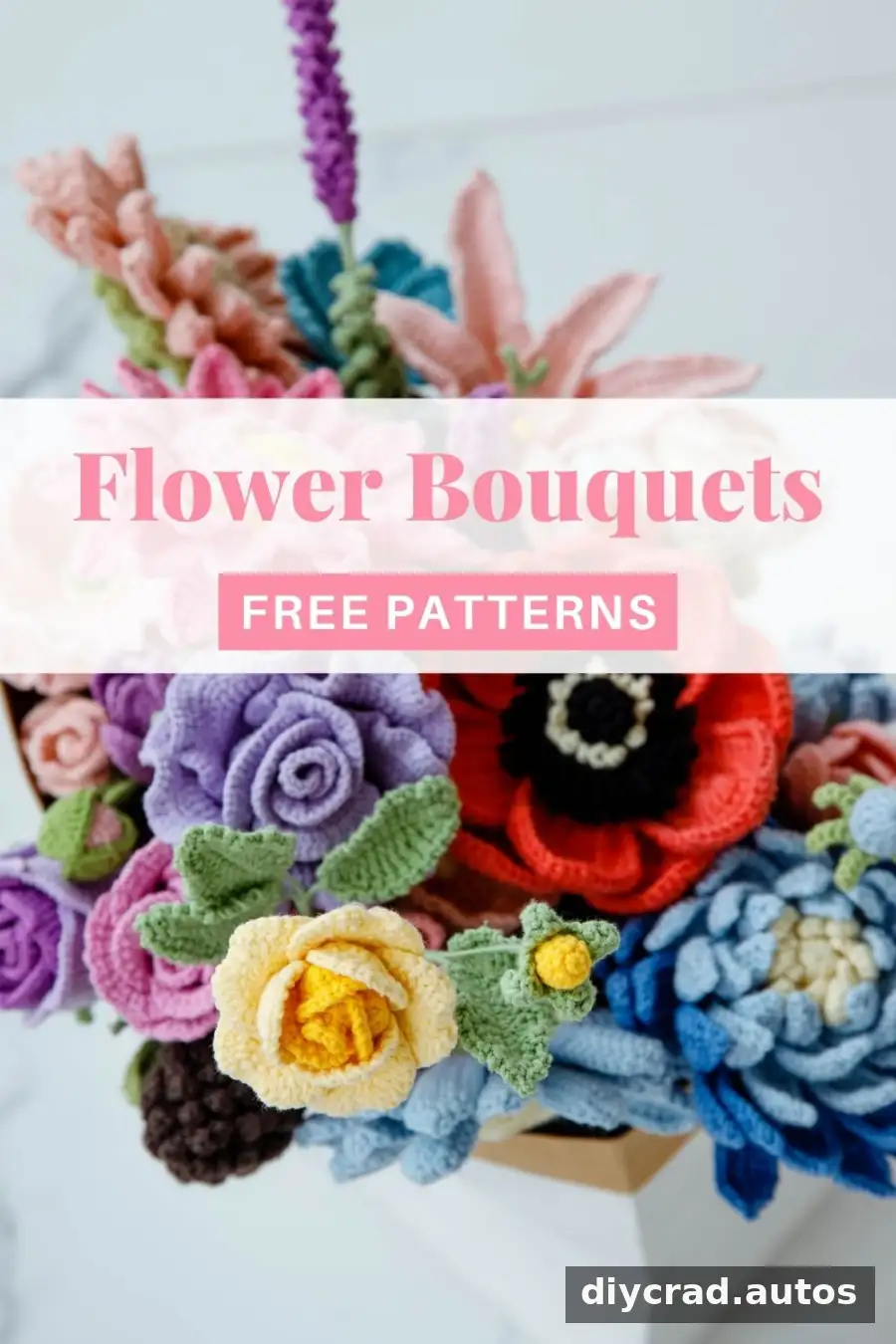
These crochet flower bouquet patterns can help you plan a handmade arrangement for a wedding, baby shower, birthday, or home decoration. Choose colors to suit your occasion, combine blooms of different sizes, and use the pattern directory below to find ideas for focal flowers, accents, fillers, and greenery. Beginners can start with simpler flowers, while more experienced crocheters can try layered designs.
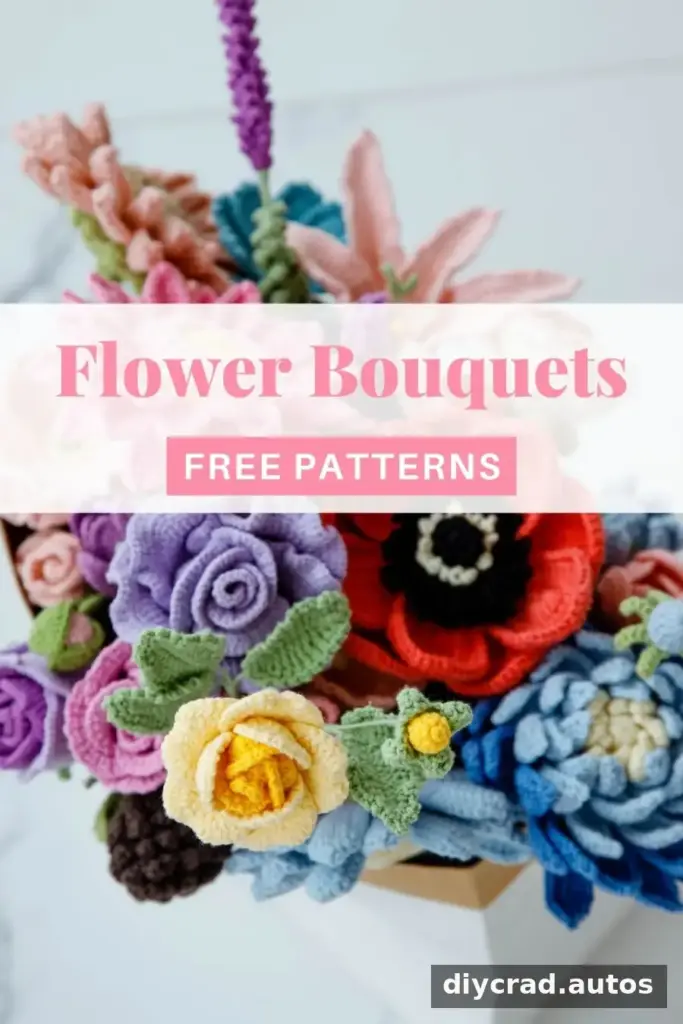
A crocheted bouquet is reusable and can be arranged in a vase or wrapped as a gift. Before you begin, decide where the bouquet will be displayed and whether you want a coordinated color palette or a more varied, garden-inspired look. A small test flower can help you check the yarn color and finished size before making several pieces.
Crochet flower bouquet patterns at a glance
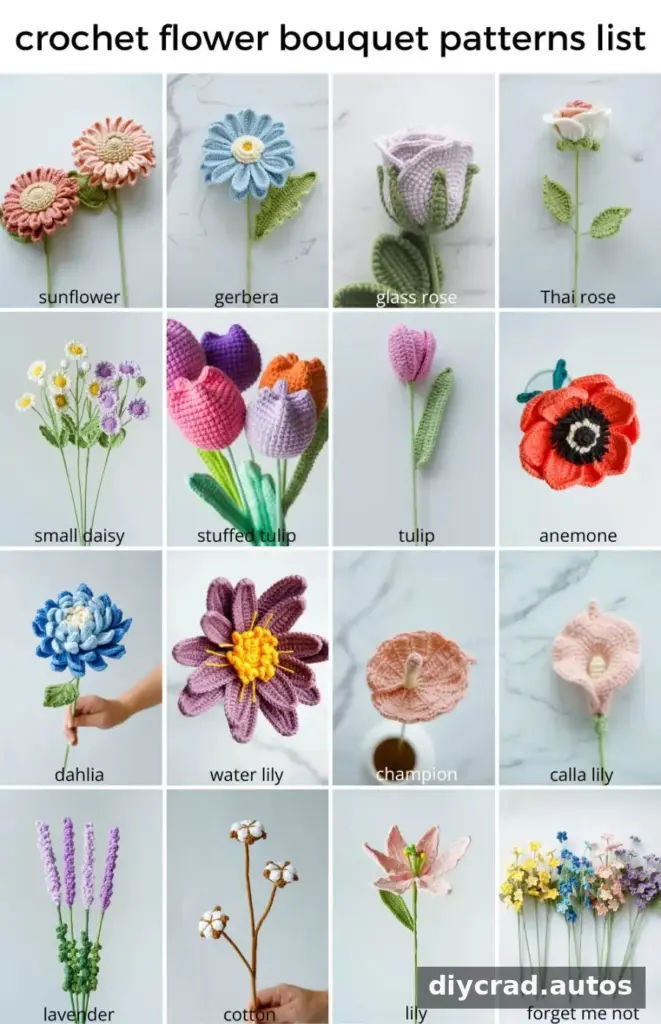
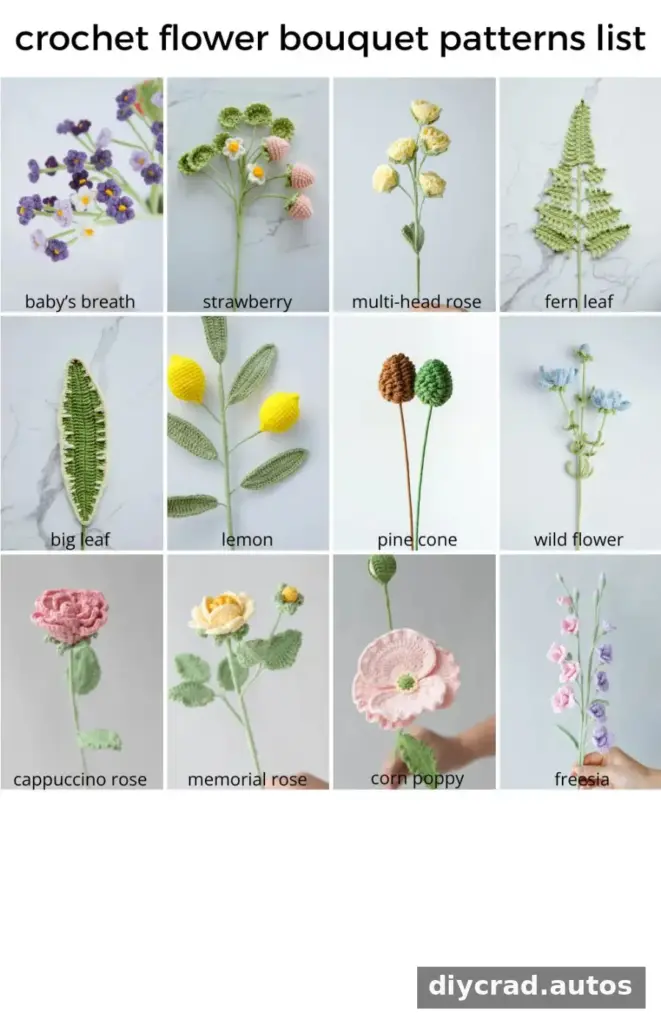
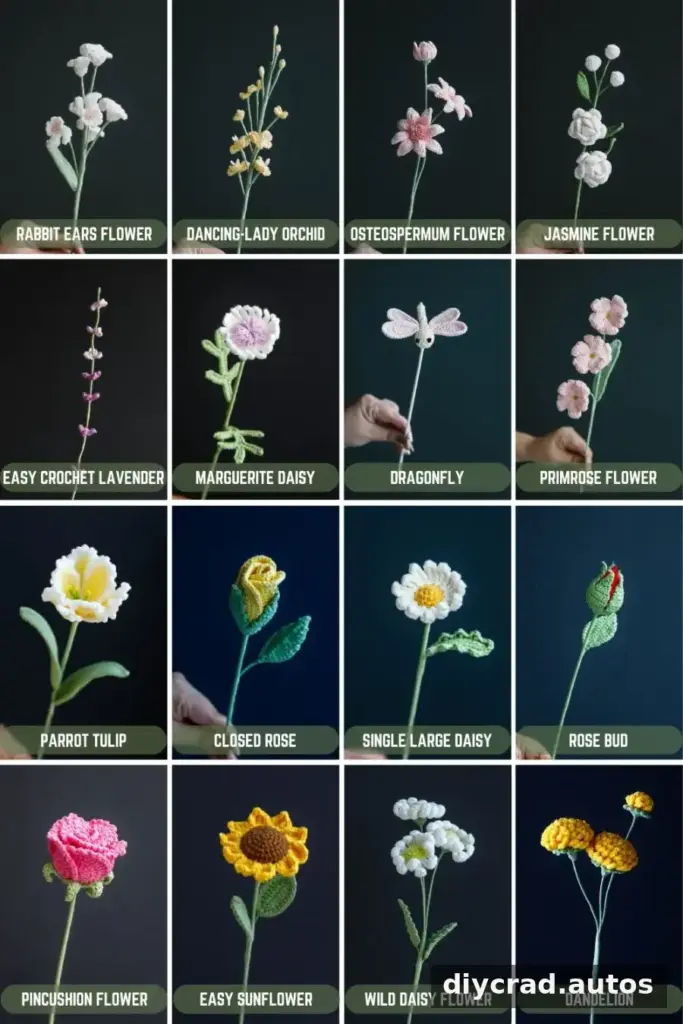
Use this directory to plan a bouquet by role. Pattern names below identify the flowers and decorative pieces featured in this guide.
- Main flowers: Sunflower, African daisy, classic rose, small Thai rose, daisy, anemone, dahlia, water lily, lily, cappuccino rose, memorial rose, and corn poppy.
- Secondary and accent flowers: Stuffed tulip, open tulip, Pink Champion, calla lily, lavender, lemon, wild flower, and freesia.
- Fillers: Forget-me-not, baby’s breath, strawberry, multi-head rose, and pine cone.
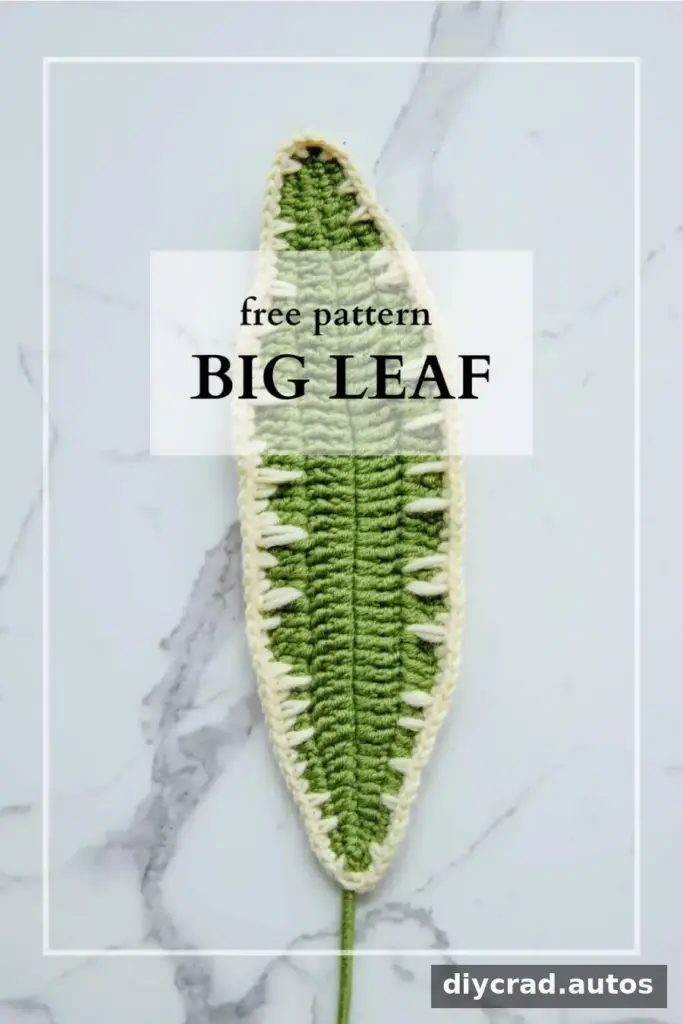
- Greenery: Fern leaf and big leaf.
- Additional flower: Cotton flower.
For a balanced arrangement, choose one or a few focal blooms first, then add smaller flowers and leaves to fill spaces. The final number of pieces depends on the size and shape of the bouquet you want.
Materials for a crochet flower bouquet
Gather your tools and materials before starting. The original recommendations include a 2.0 mm hook with lightweight cotton yarn or a 2.5 mm hook for lightweight cotton yarn. Always check the pattern instructions and make a small sample if you are unsure about the fit or firmness of your stitches.
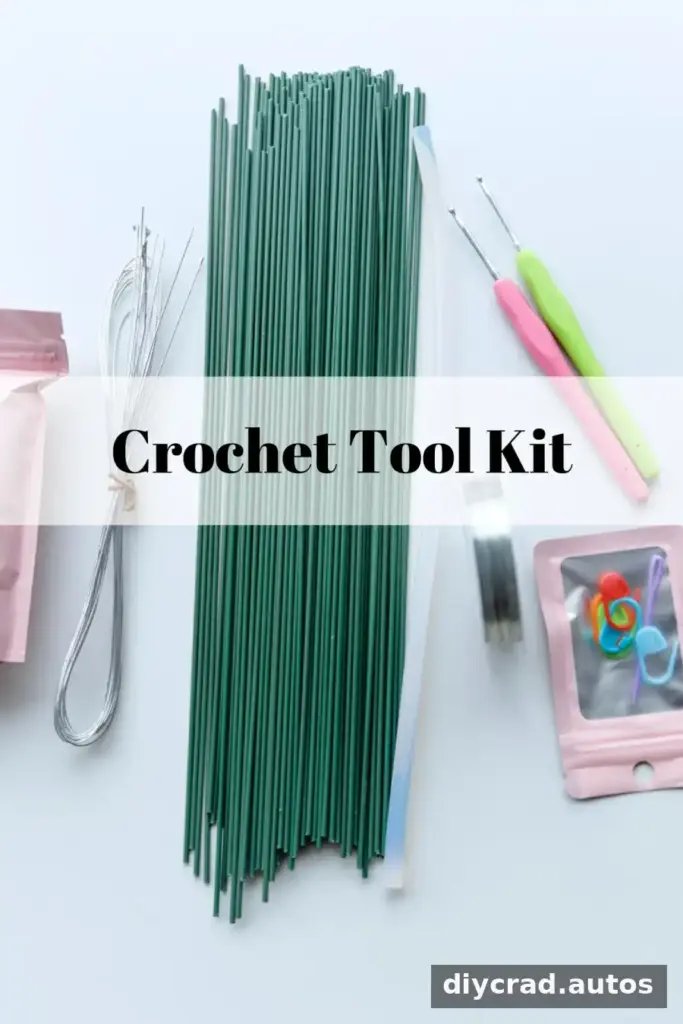
- Crochet hook: A 2.0 mm or 2.5 mm hook is suggested for lightweight cotton yarn; use the size that works with your yarn and pattern.
- Yarn: Choose colors and weights that suit the flowers and the look you want.
- Scissors: Use them to trim yarn tails neatly.
- Tapestry needle: Optional for some designs, including the sunflower and African daisy.
- Stitch marker: Optional, but useful for keeping track of rounds or important stitches.
- Flower stems: Stems measuring 30 cm or 40 cm can be used, depending on the intended arrangement. Some flowers, such as the sunflower, may require two stems per flower.
- Hot-melt glue: Useful for securing assembled crochet pieces. Follow the product instructions and handle hot glue carefully.
- Iron wire: Helps support and shape stems or petals where needed.
If you are new to crochet, begin with a simple flower and assemble one stem before making a full bouquet. This lets you practise joining pieces and decide whether the stem support is strong enough.
Choosing yarn for crochet flower bouquet patterns
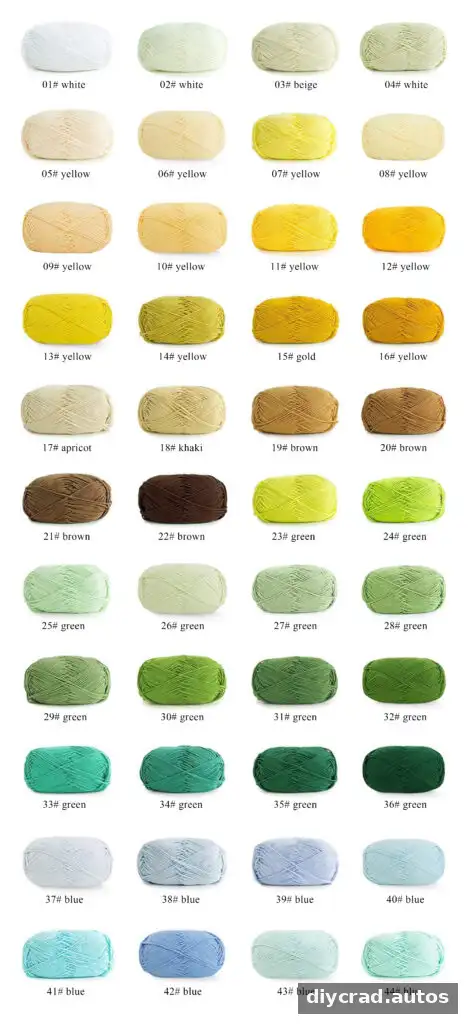
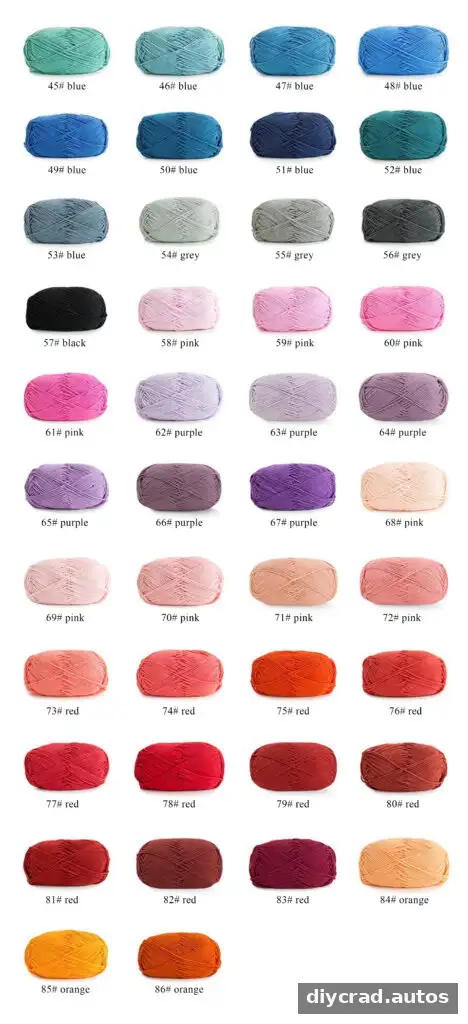
Yarn affects a flower’s texture, drape, and appearance. Consider the pattern, the desired finish, and how the bouquet will be handled when choosing a fiber.
- Cotton: Cotton yarn has a matte finish and a firm feel, which can suit rustic or vintage-inspired flowers. It is available in many colors and can help petals hold their shape.
- Acrylic: Acrylic yarn is widely available in a broad range of colors and is generally easy to care for. It can be a practical option for beginners.
- Wool: Wool creates a soft, cozy-looking finish. It may be less suitable for warm conditions, so consider where the bouquet will be displayed.
Fingering-weight yarn is suggested for delicate, small flowers such as forget-me-nots and baby’s breath. Lightweight yarn can also be used for larger focal flowers, including sunflowers, African daisies, and dahlias. Keep yarn weight consistent within a flower when you want its petals to match in size.
How to plan and assemble a crochet bouquet
Once the materials are ready, build the arrangement in stages. Planning the flower roles first makes it easier to create a bouquet that looks balanced rather than crowded.
- Prepare the yarn, hooks, scissors, needle, stems, and any shaping materials.
- Choose the main flower or flowers that will form the visual focus.
- Add secondary blooms and accent flowers to introduce variety and color.
- Make greenery and filler pieces to soften gaps between the larger flowers.
- Arrange the finished pieces in a vase or gather and wrap them as a bouquet. A vase arrangement can be a straightforward option; a wrapped bouquet requires arranging and securing the stems together.
Lay the pieces out before attaching them. This makes it easier to adjust the spacing and color balance without undoing completed assembly.
Main flowers for a crochet bouquet
A main flower is the focal point of the arrangement and helps set its overall style. A large bloom can anchor a bouquet, while several smaller focal flowers can create a looser, varied look. Choose the main flower before selecting complementary accents.
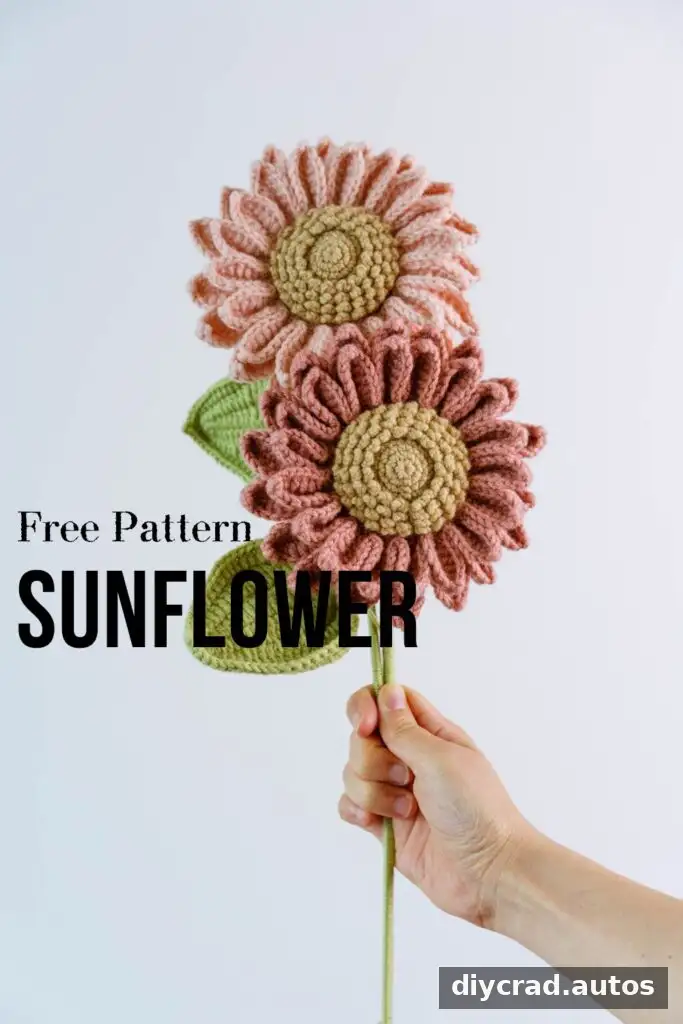
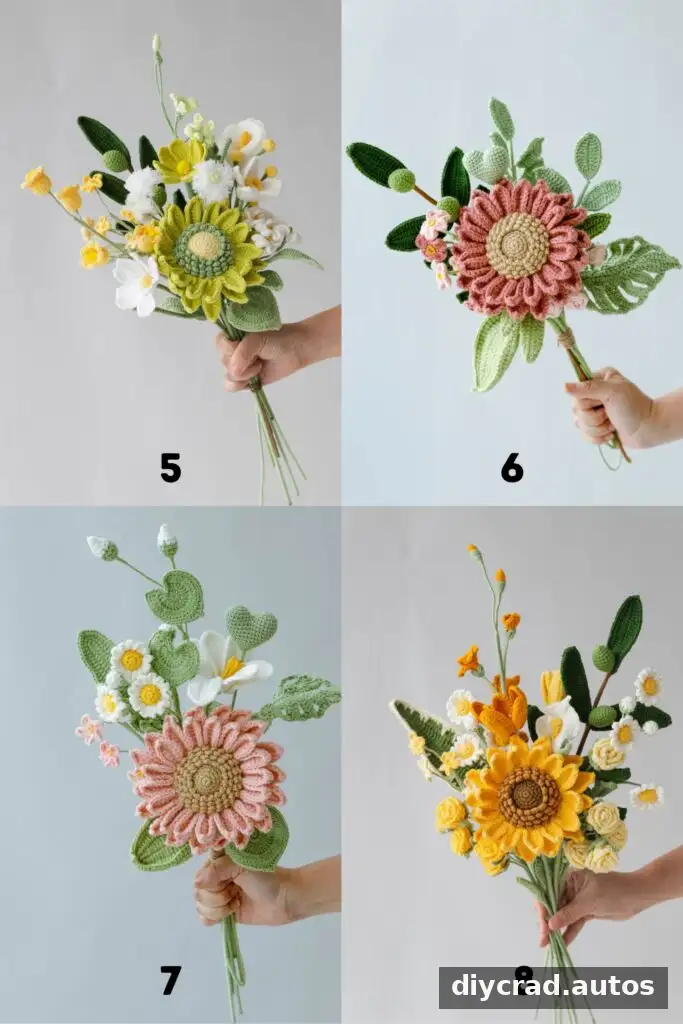
Crochet sunflower
The sunflower pattern includes petals, a seed center, and one leaf. The finished flower is around 10 cm in diameter, making it a noticeable focal bloom. Sunflowers can be paired with leaves, calla lilies, heart shapes, or daisies. Check the stem support as you assemble the flower; some sunflowers may need two stems.
Rose patterns
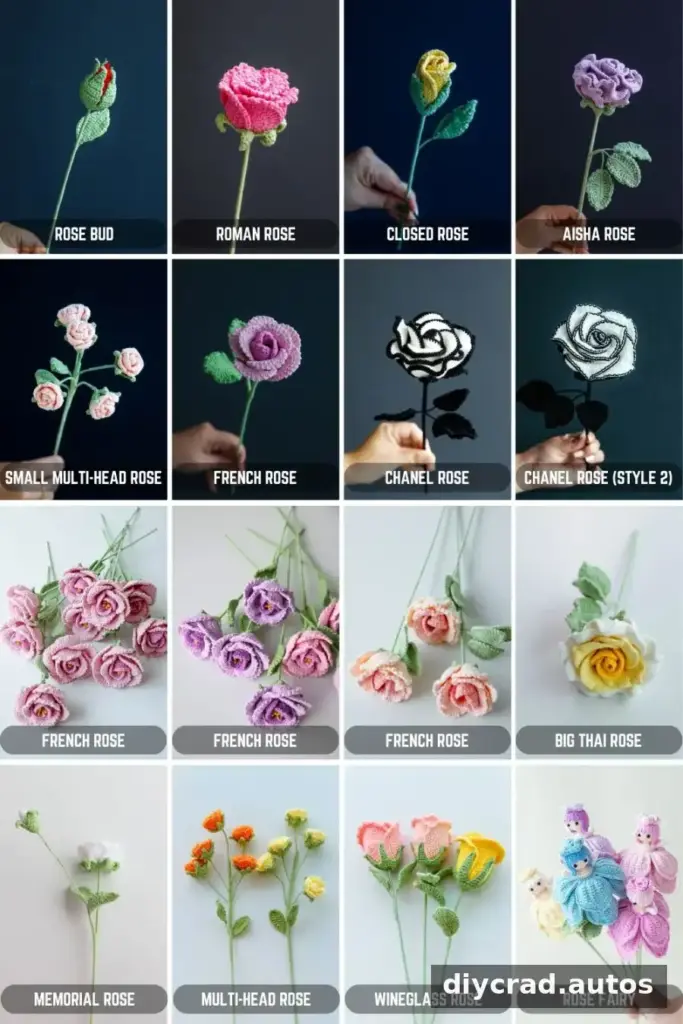
Roses work well as focal flowers and can also be combined with smaller blooms. Several rose styles offer different shapes and levels of openness.
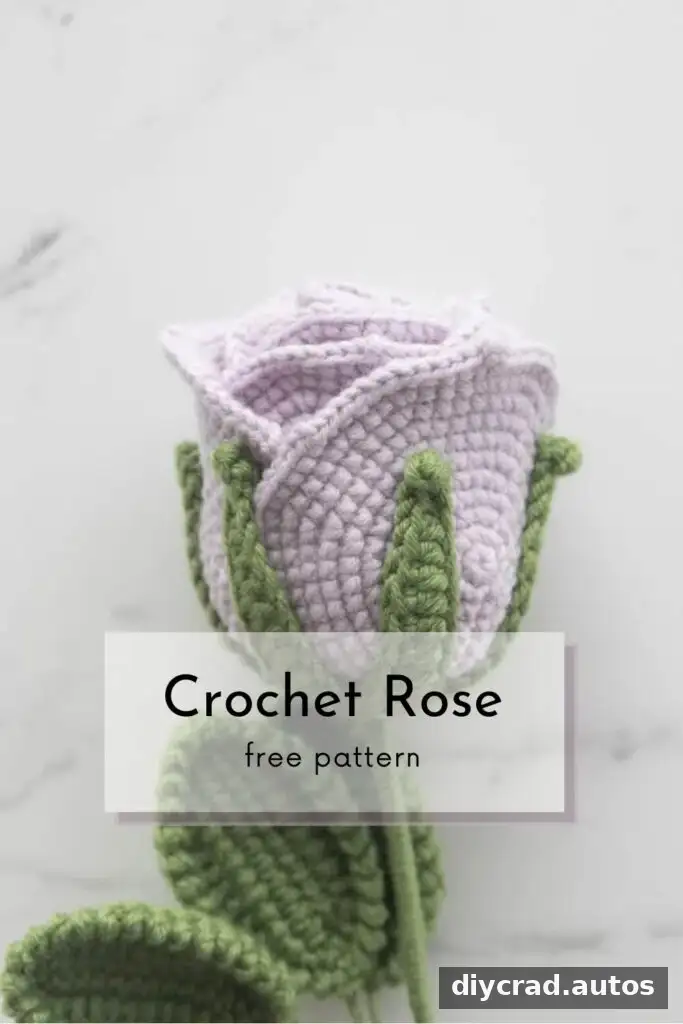
Classic rose
The classic rose is built from multiple petals and has a layered, cupped appearance. It can be made in solid or gradient colors. Pair it with daisies, small multi-head roses, forget-me-nots, or fern leaves for contrast in size and texture.
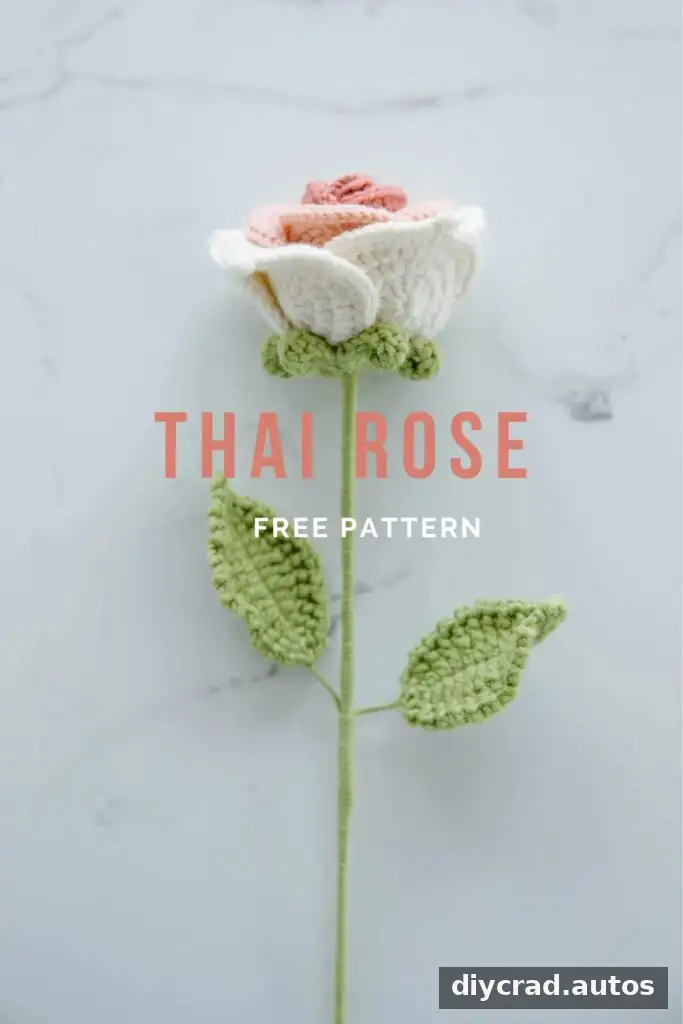
Thai rose
The Thai rose has a more open bloom than the classic rose. Its shape can add variety to a rose-focused arrangement or complement other flower styles.
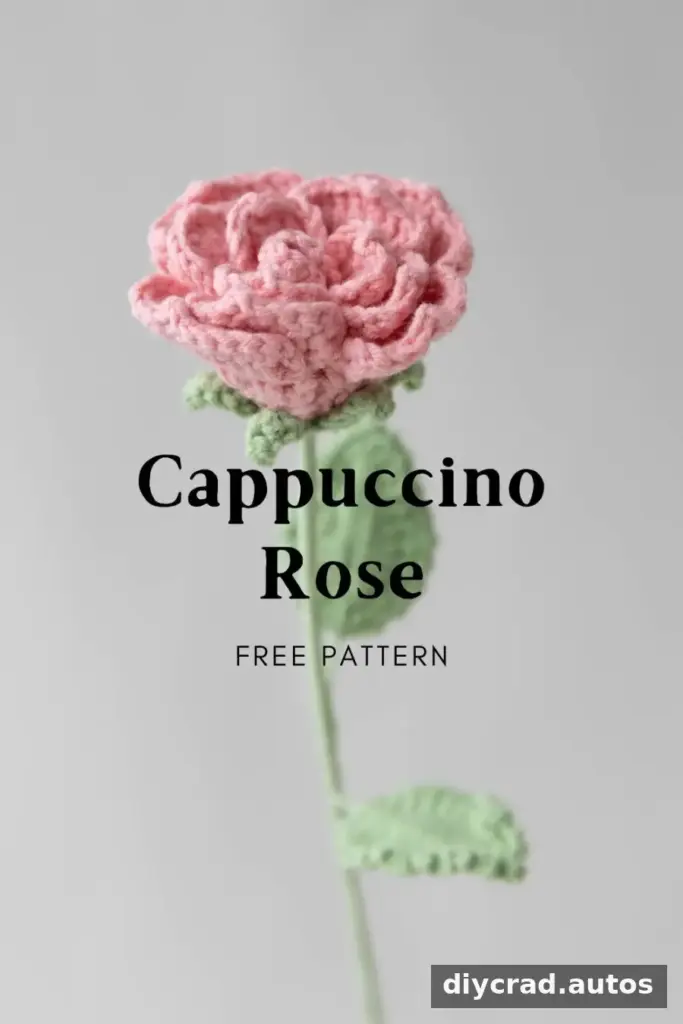
Cappuccino rose
The cappuccino rose is suited to a muted, vintage-inspired palette. Its coffee-colored tones can be combined with light-colored flowers or neutral wrapping for a softer arrangement. Consider placing it alongside blooms with simpler shapes so its layered petals remain easy to see.
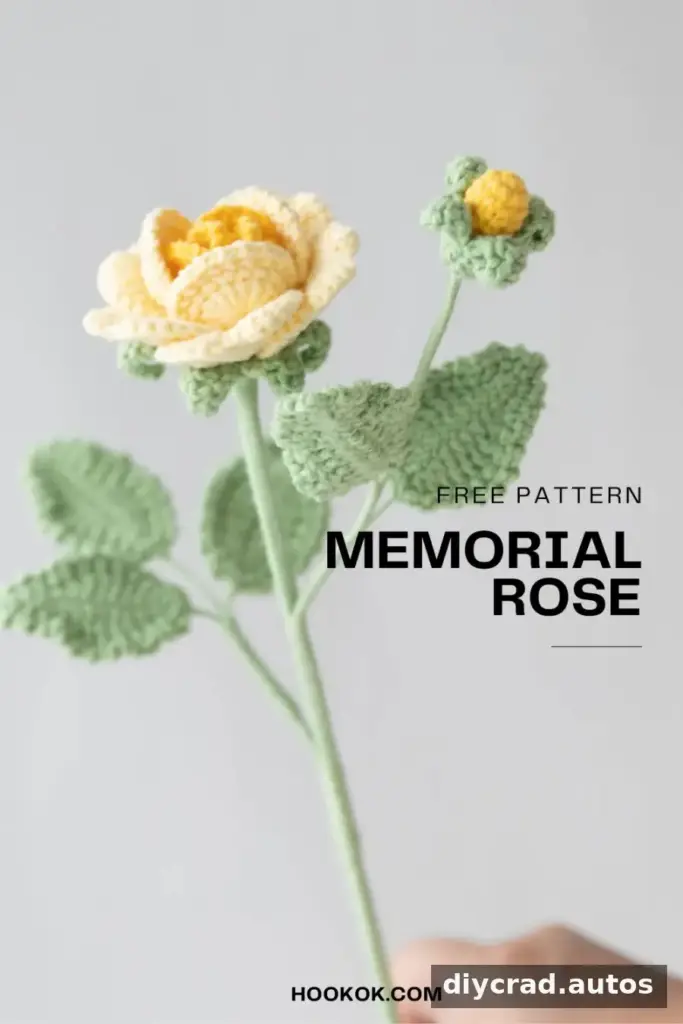
Memorial rose
The memorial rose is described as a wild-rose style flower. Roses are often associated with love and beauty, while wild roses can also be used as a reminder of resilience. This design can suit a thoughtful keepsake bouquet.
Gerbera and daisy
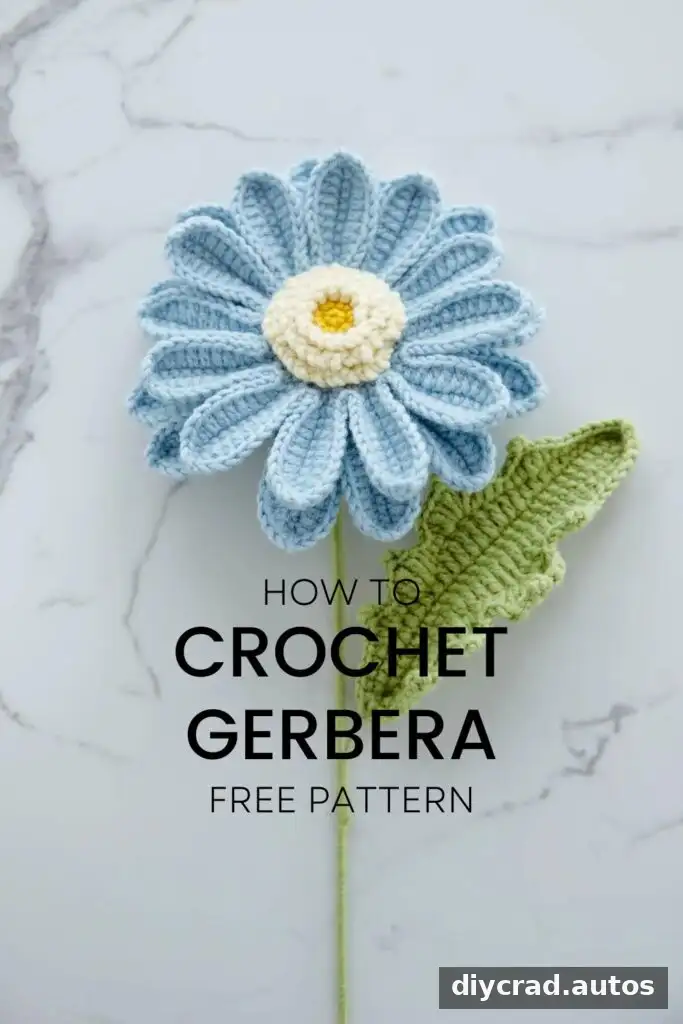
Gerberas are known for bold colors such as magenta, coral, yellow, and orange. The crocheted design has layered petals and a rounded shape, making it a strong focal flower. Because it is visually prominent, using one gerbera in a bouquet can leave room for smaller supporting flowers.
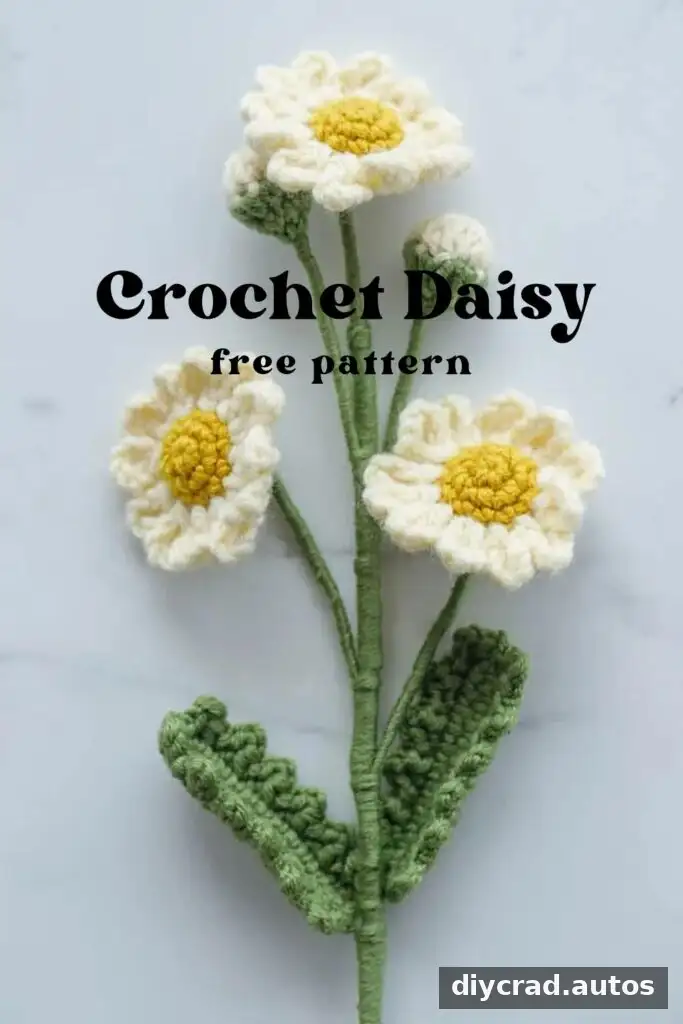
Daisies have a simple shape that is easy to adapt in different colors and sizes. They can be used as an accent or as the main bloom in a relaxed arrangement with leaves and other flowers. Their uncomplicated form also makes them a useful choice when practising a new pattern.
Tulips
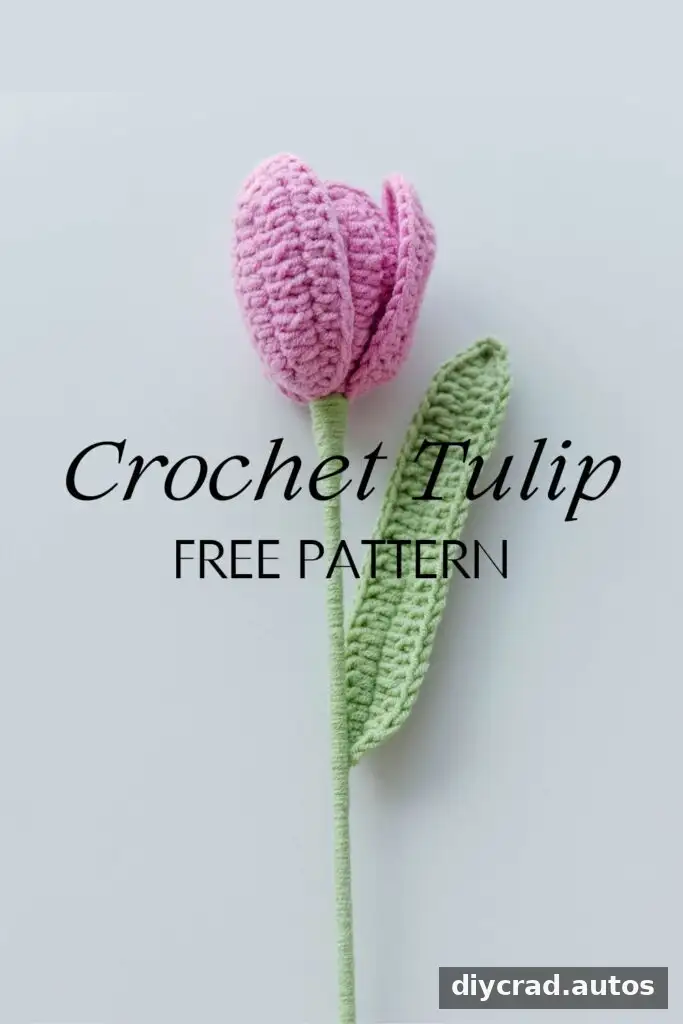
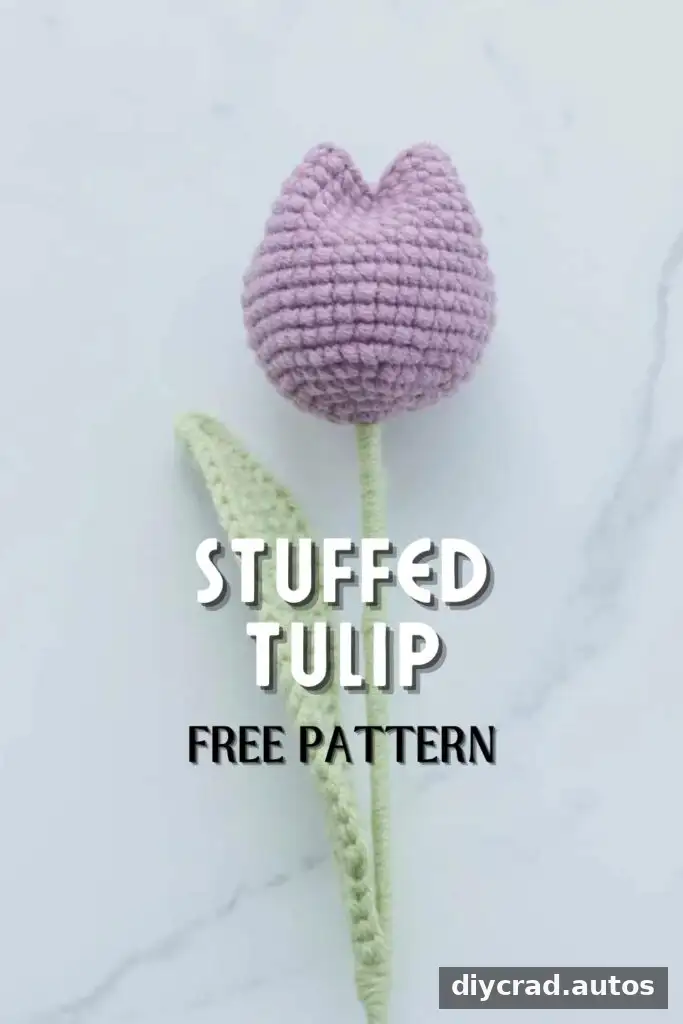
Tulips have a graceful shape and can be made as open flowers or as a stuffed version with a softer, rounded look. They can serve as the main flower or complement roses and filler blooms. Pink, yellow, and purple are options for a colorful arrangement; choose shades that work with the rest of the palette.
Dahlia
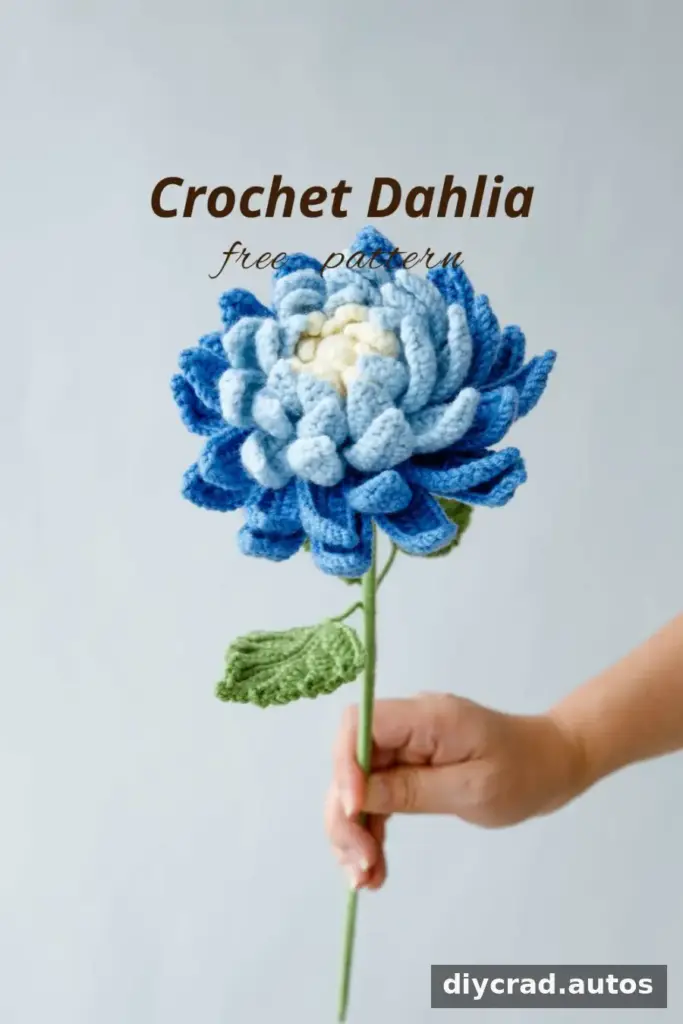
A dahlia has a full, multilayered appearance. The design is worked from a central core, with rows of petals added around it. Its rounded shape makes it suitable as a central focal bloom. To keep the layers distinct, avoid crowding it with flowers of the same size and visual density.
Anemone
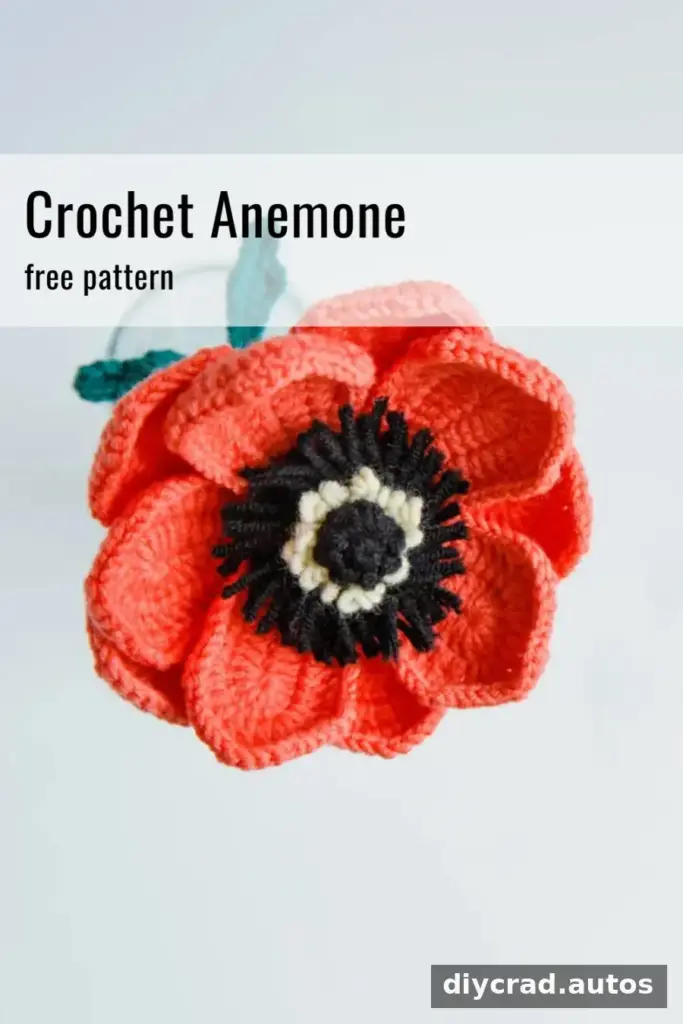
Anemones can make a striking focal flower. Their bold center and petals pair well with smaller roses, tulips, or other delicate flowers. Place the supporting blooms around the anemone rather than in front of it, so the center remains visible.
Water lily and lily
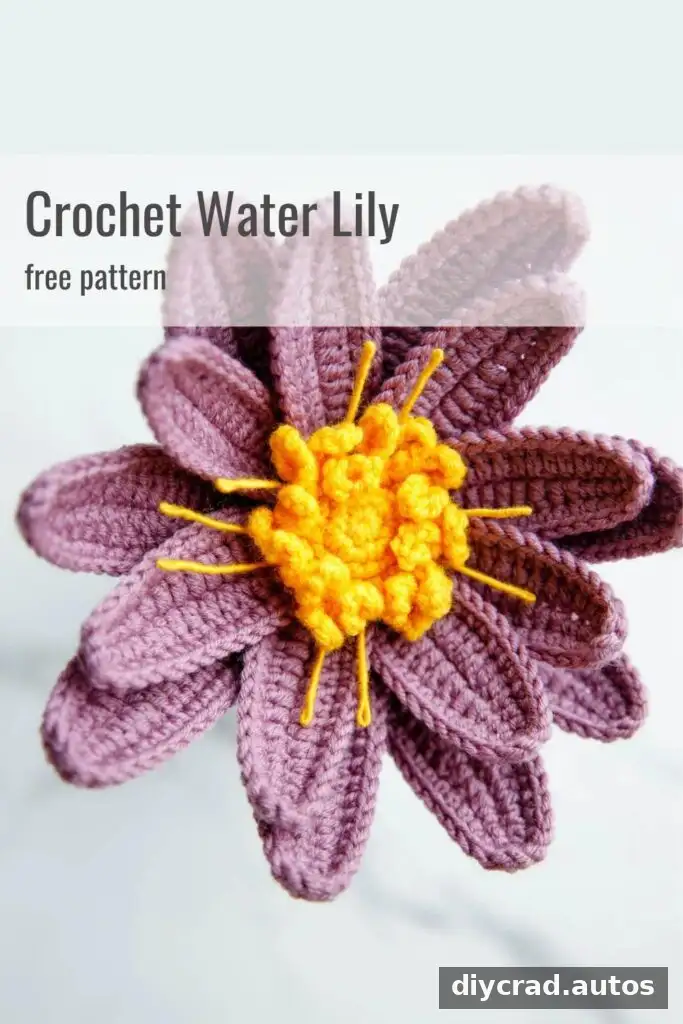
The crocheted water lily is around 15 cm in diameter and can be used as a distinctive centerpiece or displayed on its own. Its broad, rounded form gives an arrangement a different silhouette from upright flowers.
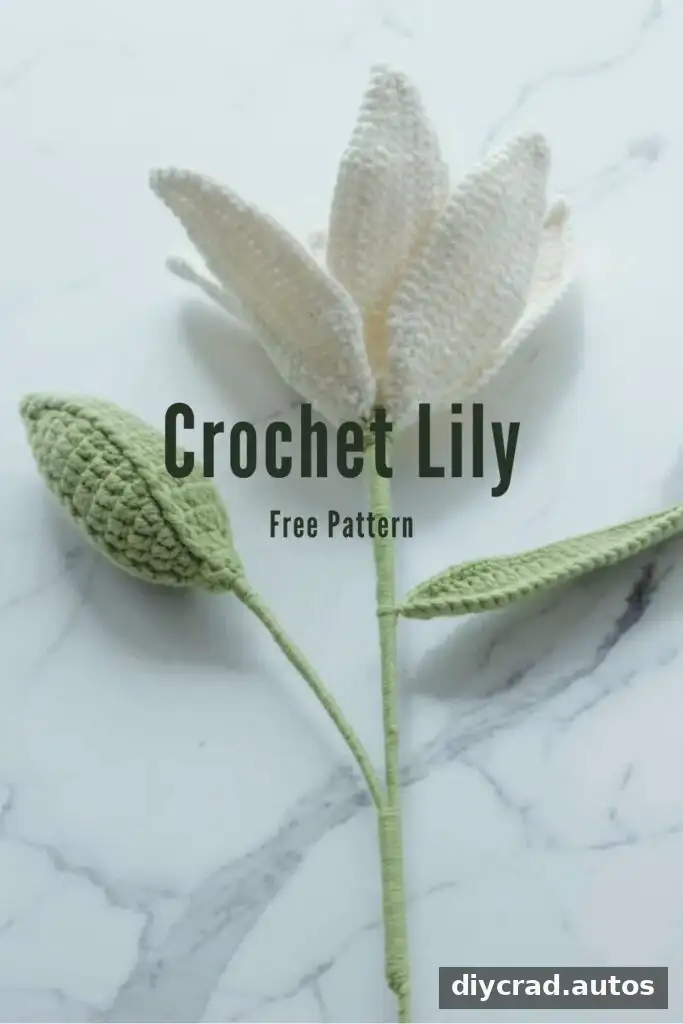
Lilies have an elegant, trumpet-like shape and can be combined with roses or other flowers for a more formal arrangement. Their long lines can help balance rounded blooms. Check that the stem is adequately supported before placing a larger lily among other flowers.
Corn poppy
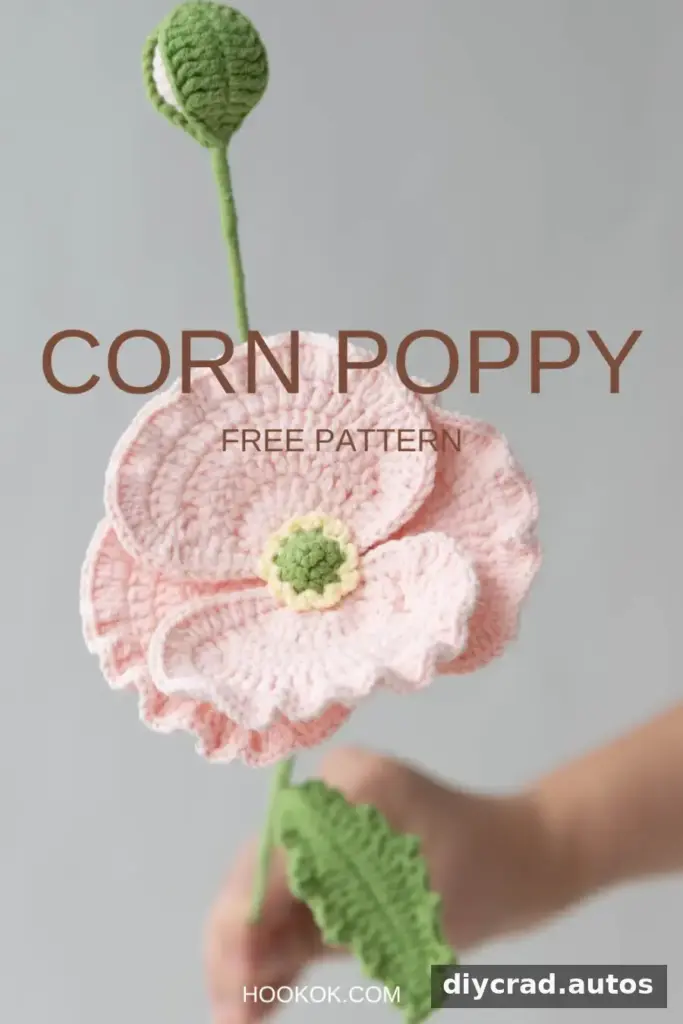
Corn poppies have four petals and are described as about 5–6 cm in diameter. They come in different colors, including white and pink. Use a few poppies as accents or group them with larger flowers to introduce a lighter, open shape.
Secondary and accent flowers
Secondary flowers add color and shape without competing with the focal blooms. Accent flowers can also help connect the palette across the bouquet. Mix sizes and forms, and leave enough space for each flower to remain visible.
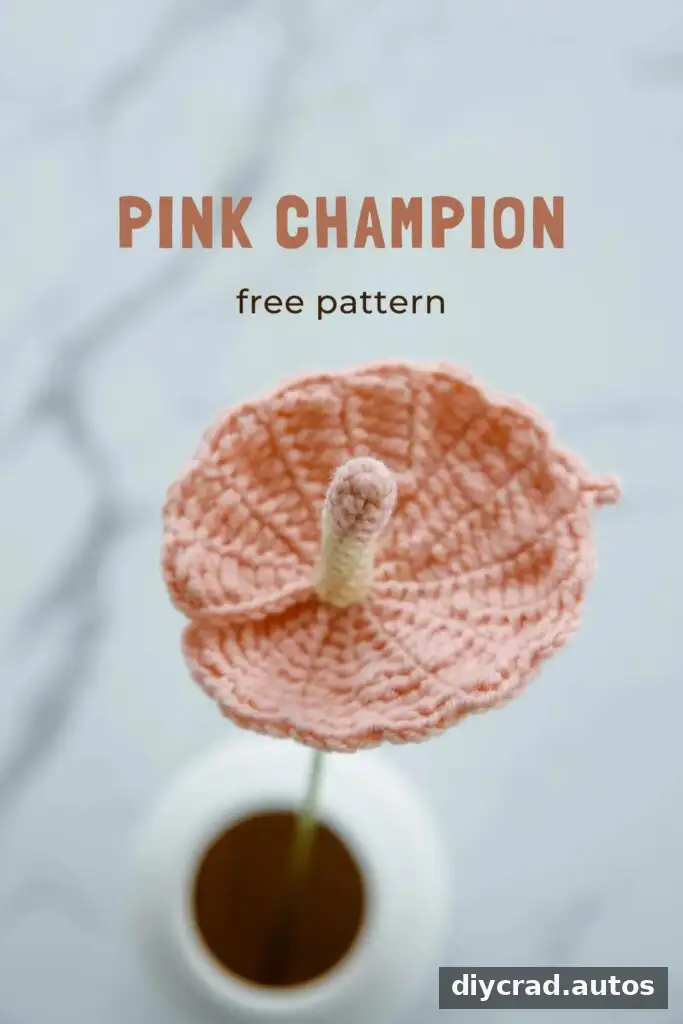
Pink Champion
The Pink Champion pattern creates a full bloom and uses Afghan stitch, worked in a forward pass and a return pass. Its rounded appearance can add texture among flatter or more open flowers.
Calla lily
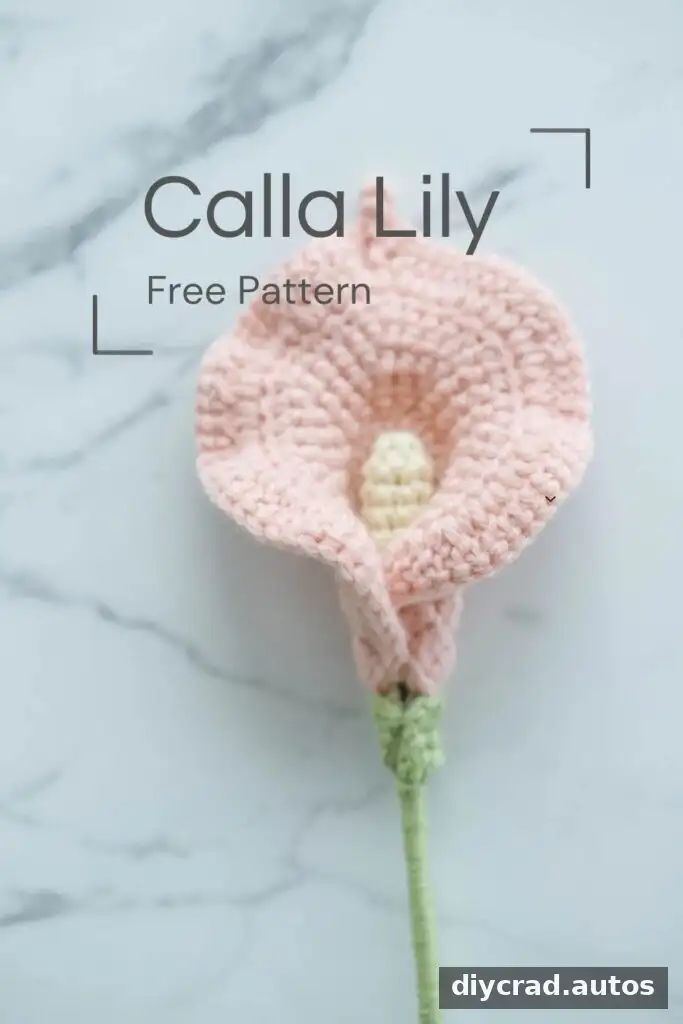
Calla lilies have a smooth, tubular shape that contrasts with layered roses and round flowers. Place them selectively through the bouquet to create visual movement and fill open areas. Their distinctive form is most effective when it is not hidden behind larger blooms.
Berries and fruit
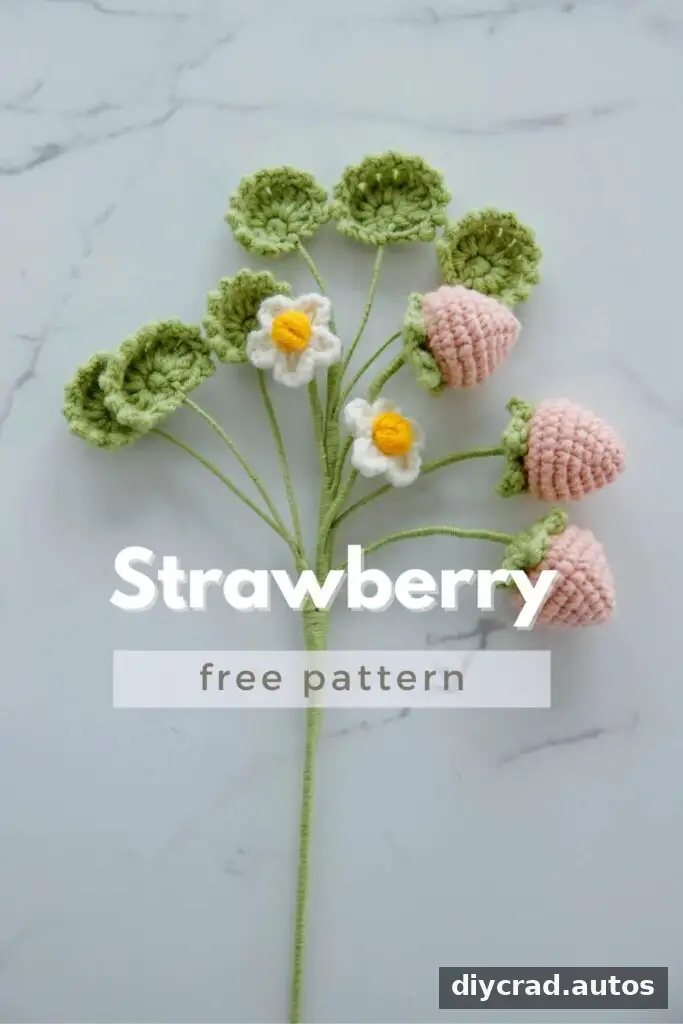
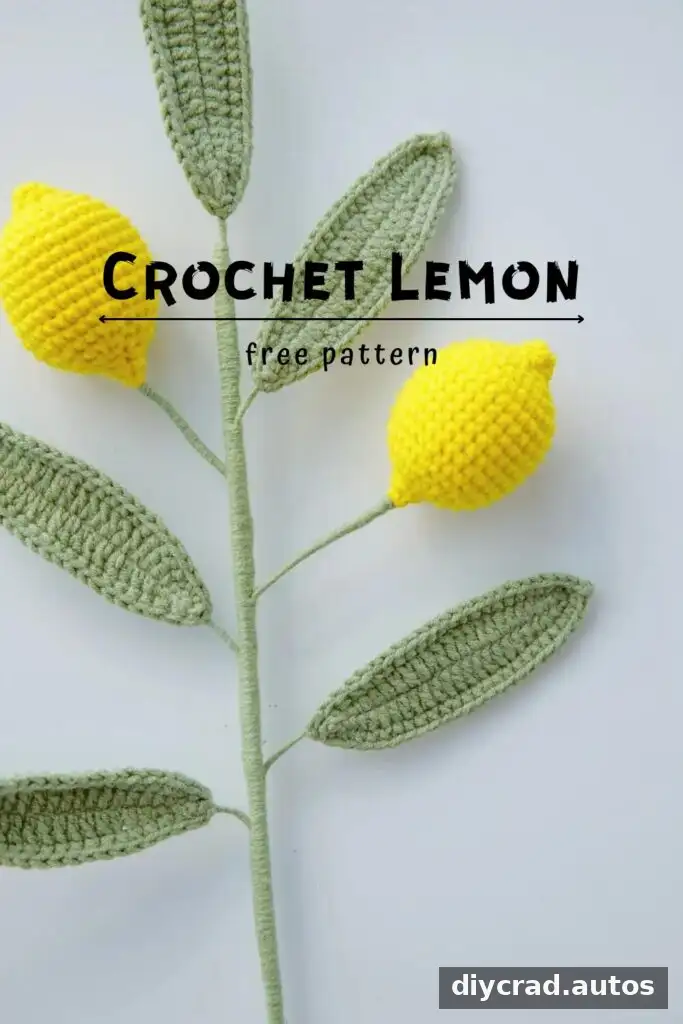
Small crocheted fruits can add an unexpected detail. Strawberries and lemons introduce rounded or bright accents that contrast with petals. Use them sparingly so the arrangement still reads as a flower bouquet.
Lavender and wild flowers
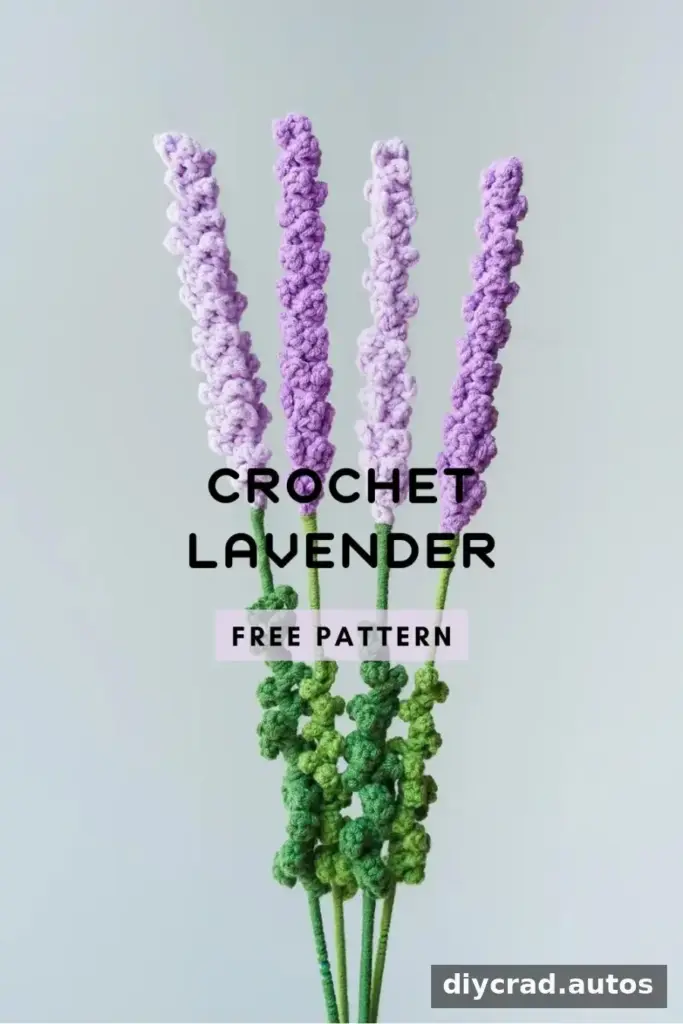
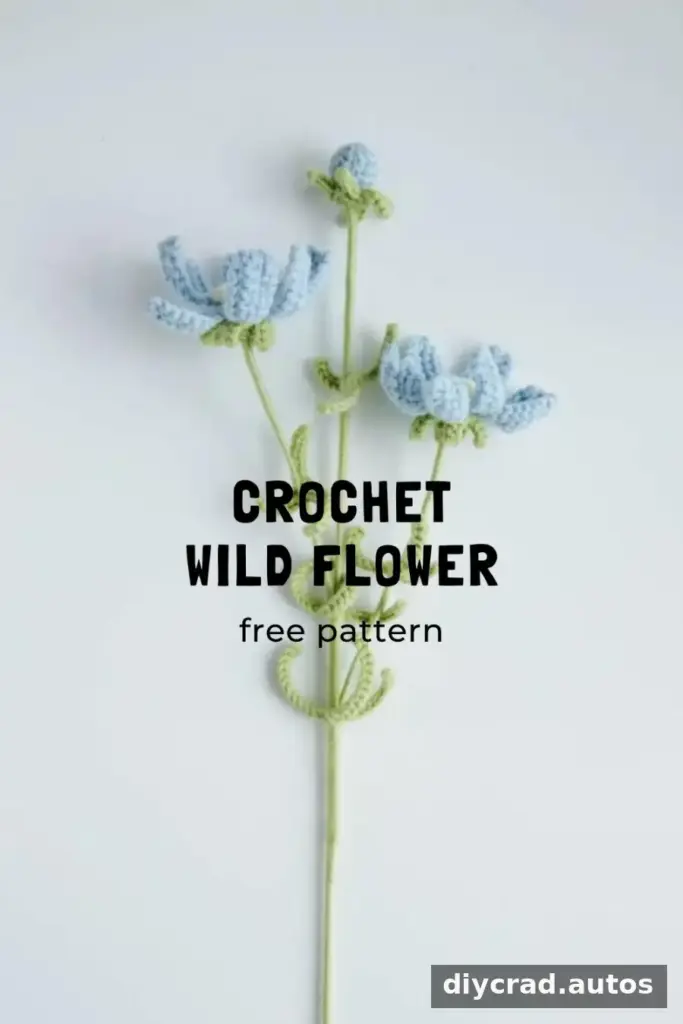
Lavender is a useful accent for purple and pink palettes and can be made as a beginner-friendly project. Its slim shape works well beside larger flowers. A wild-flower stem with two open blooms and a bud offers a lighter accent that can fill space without drawing attention away from the focal flower.
Pine cone and cotton flower
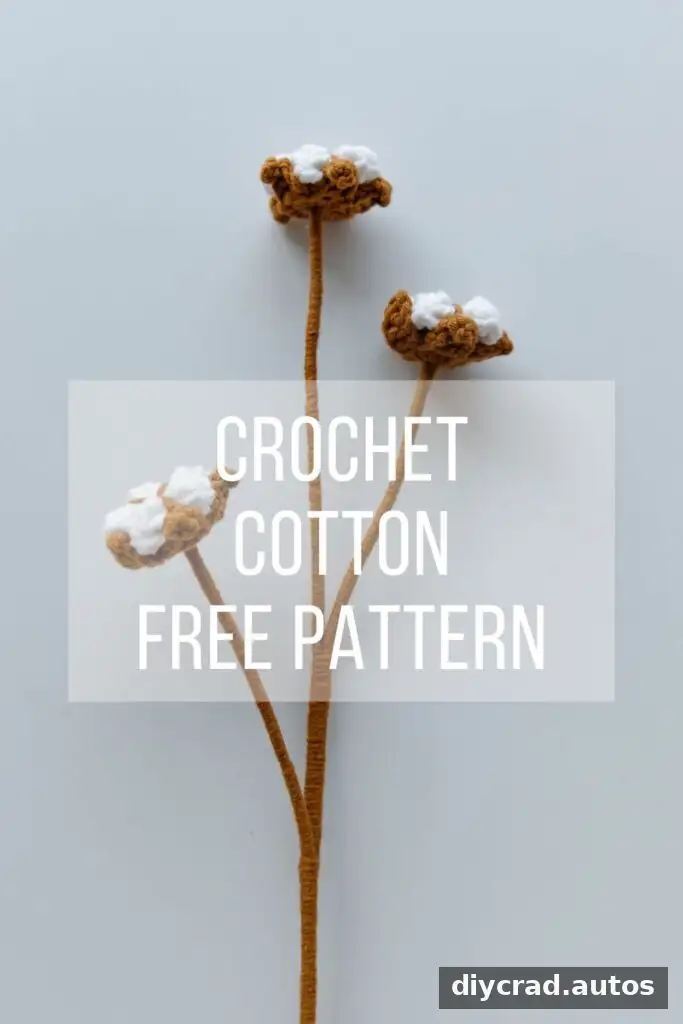
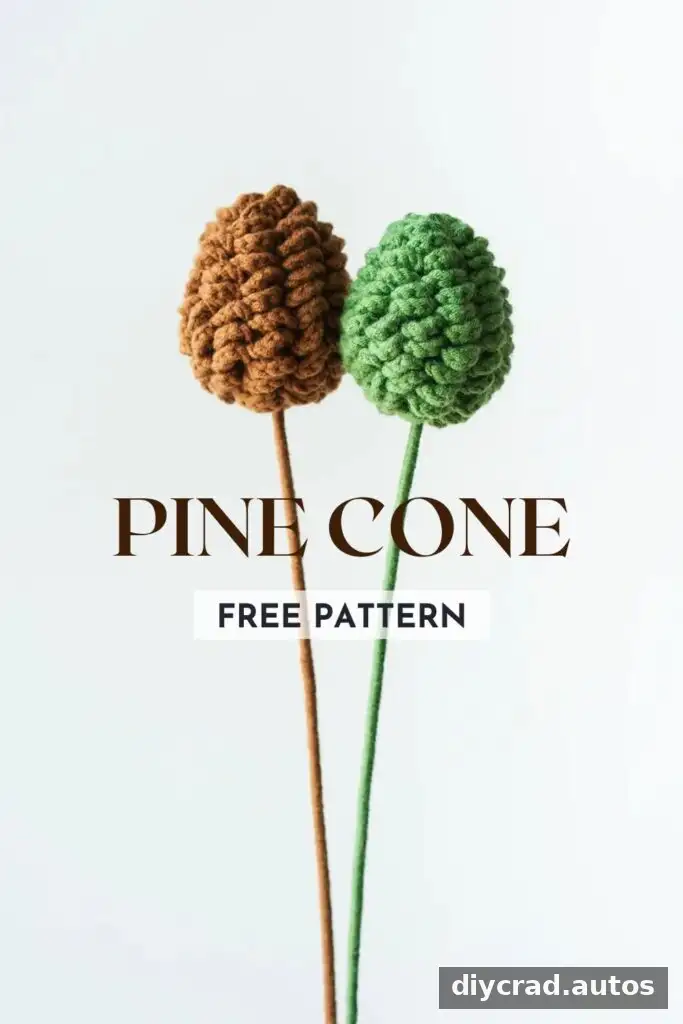
Pine cones can add a seasonal detail to winter or Christmas-inspired bouquets. Cotton flowers have a rounded shape and earthy colors that suit autumn and winter arrangements. Pair either design with greenery to create a natural-looking contrast.
Freesia and multi-head rose
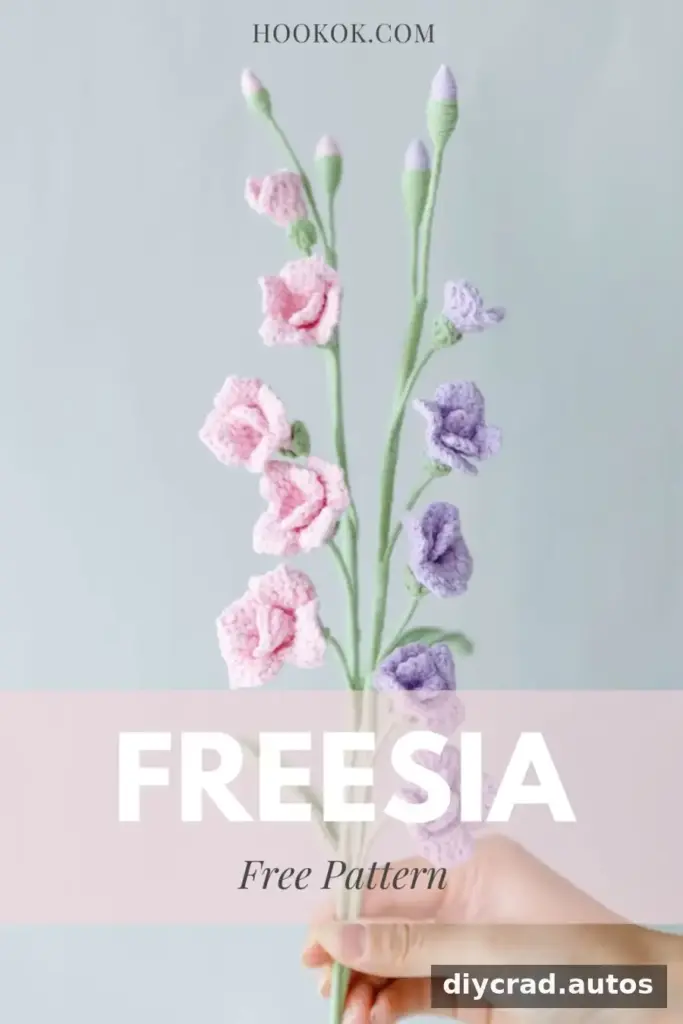
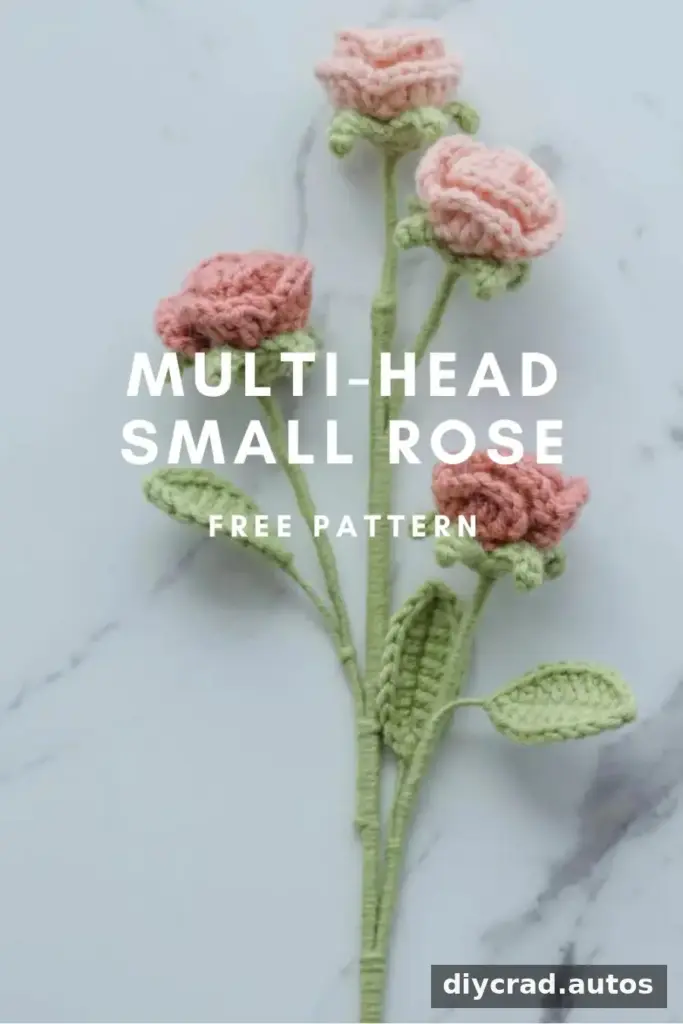
Freesia has trumpet-shaped blossoms arranged along a stem, giving a bouquet a vertical accent. The multi-head rose, also known as a baby rose in this pattern collection, can make an arrangement look fuller. Use several smaller blooms to fill spaces between larger flowers without covering their petals.
Small filler flowers
Fillers help connect the main blooms and soften gaps. They are often made in multiples, so make a few and test their placement before producing a larger batch.
Forget-me-not
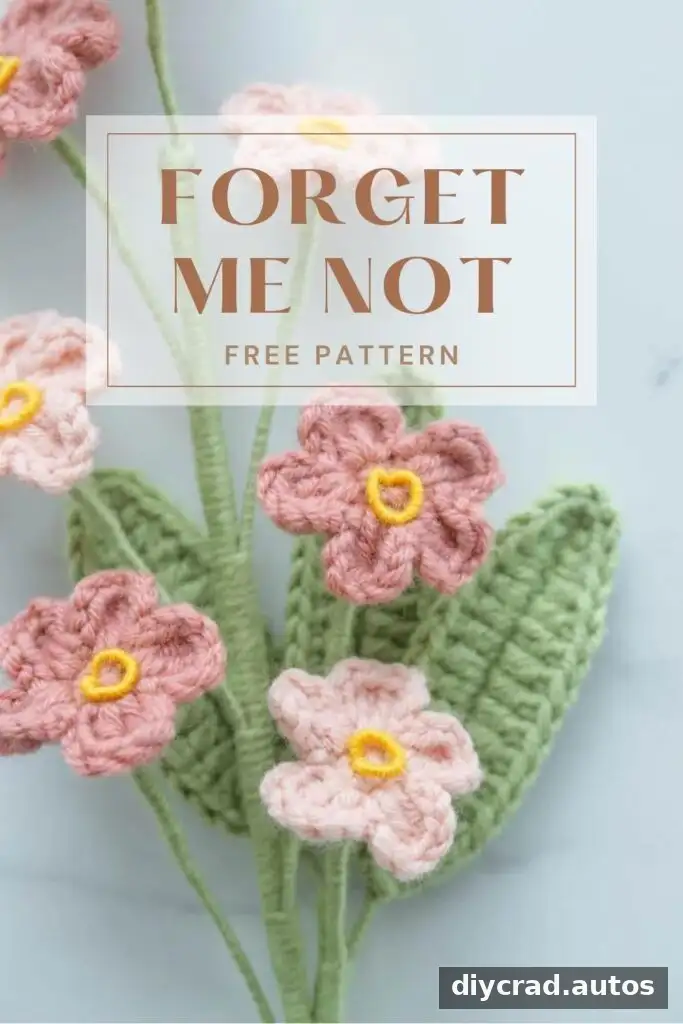
Forget-me-nots are small, beginner-friendly flowers that can be made in one color or mixed colors. Their size makes them useful for filling gaps around larger blooms. Keep the tails and joins tidy, particularly if the flowers will be placed near the front of the arrangement.
Baby’s breath
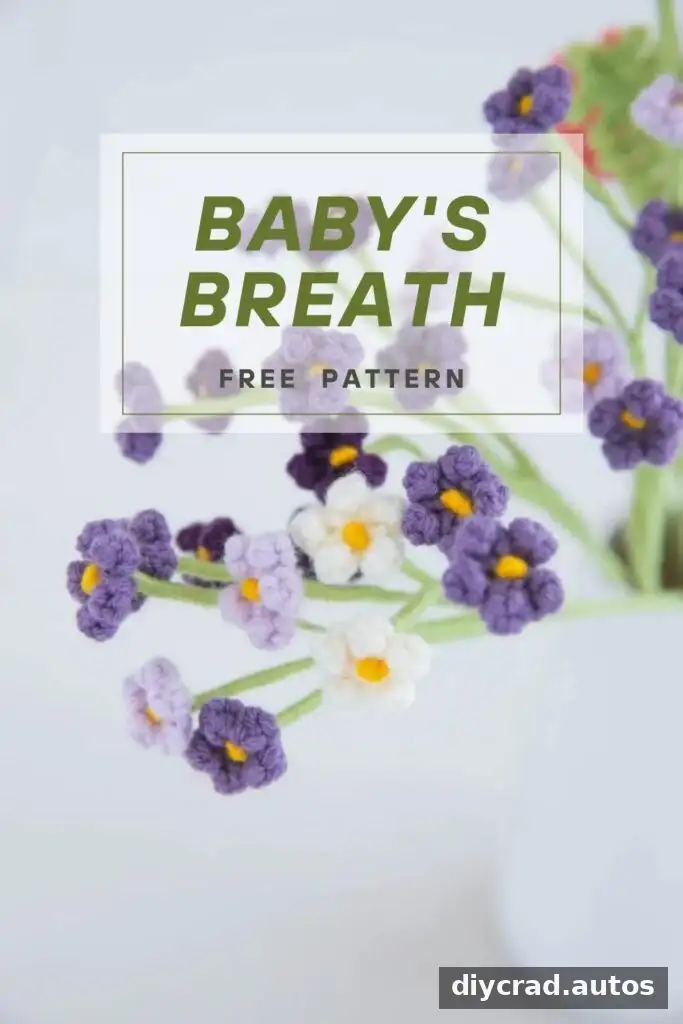
Baby’s breath is designed as several small flowers on branching stems. It can add a light, airy effect around larger flowers. Spread its stems through the bouquet rather than placing them all in one area.
Greenery and leaves
Greenery adds contrast and helps flowers look connected as an arrangement. Use leaves to cover small gaps, but avoid placing them so densely that the blooms are difficult to see.
Fern leaf
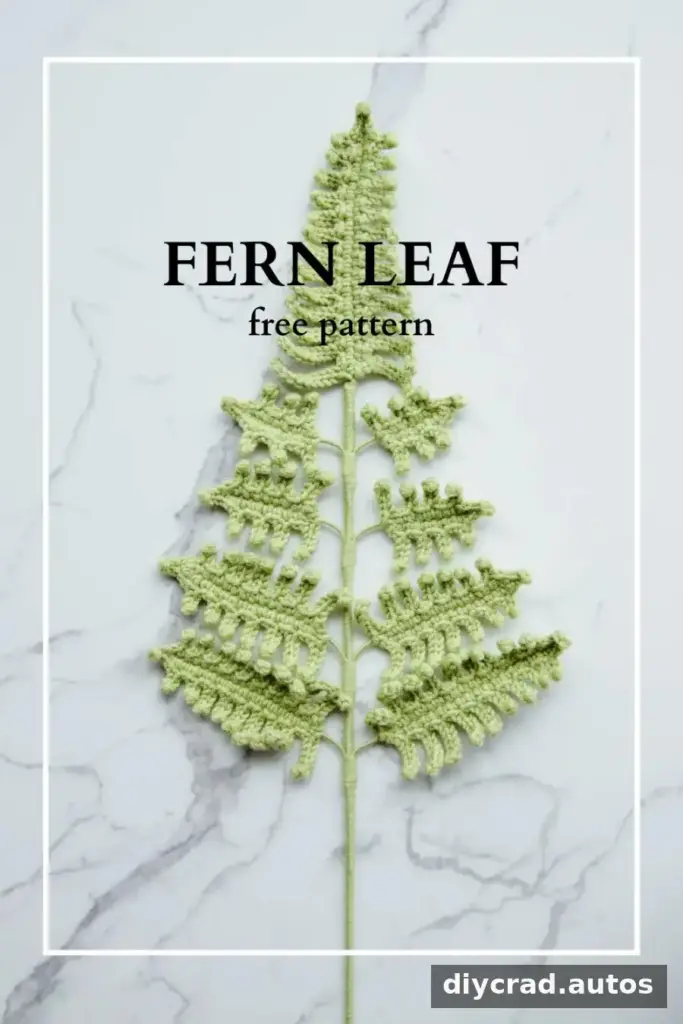
Fern leaves have a detailed appearance, but their construction uses repeated elements. Work each repeat consistently to keep the leaf balanced and even.
Big leaf
The big leaf pattern is based on a Musa basjoo leaf, with a broad, elongated shape. Its size can add scale to a bouquet, so place it behind or beside flowers rather than over the blooms.
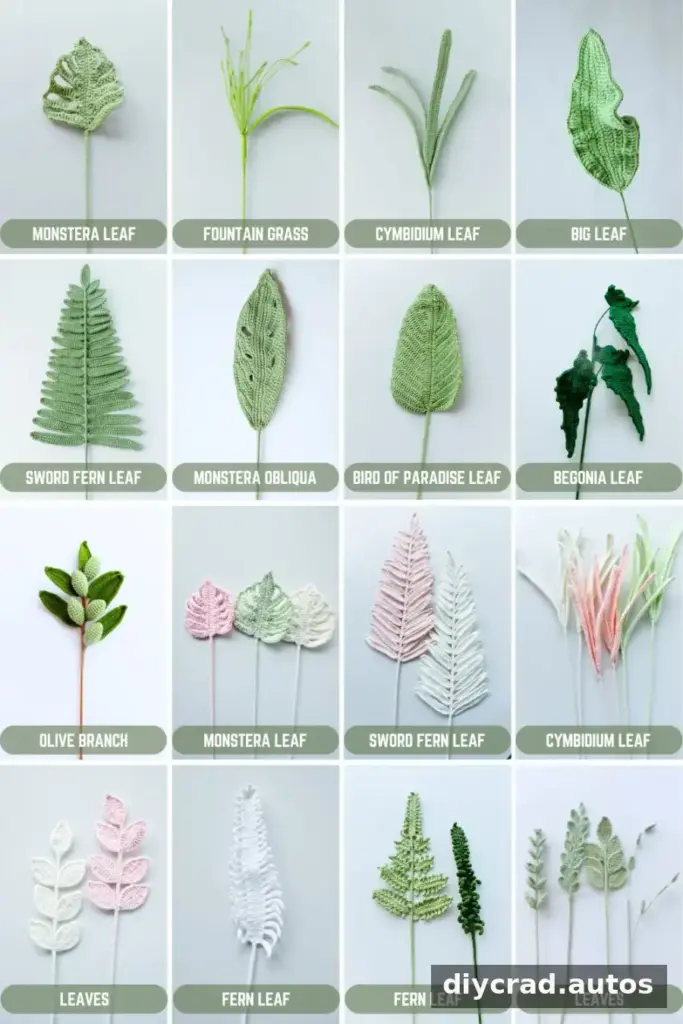
Other leaf designs can be made in different colors and sizes. Pink or white leaves can complement a pink bouquet, while green leaves provide a familiar natural contrast.
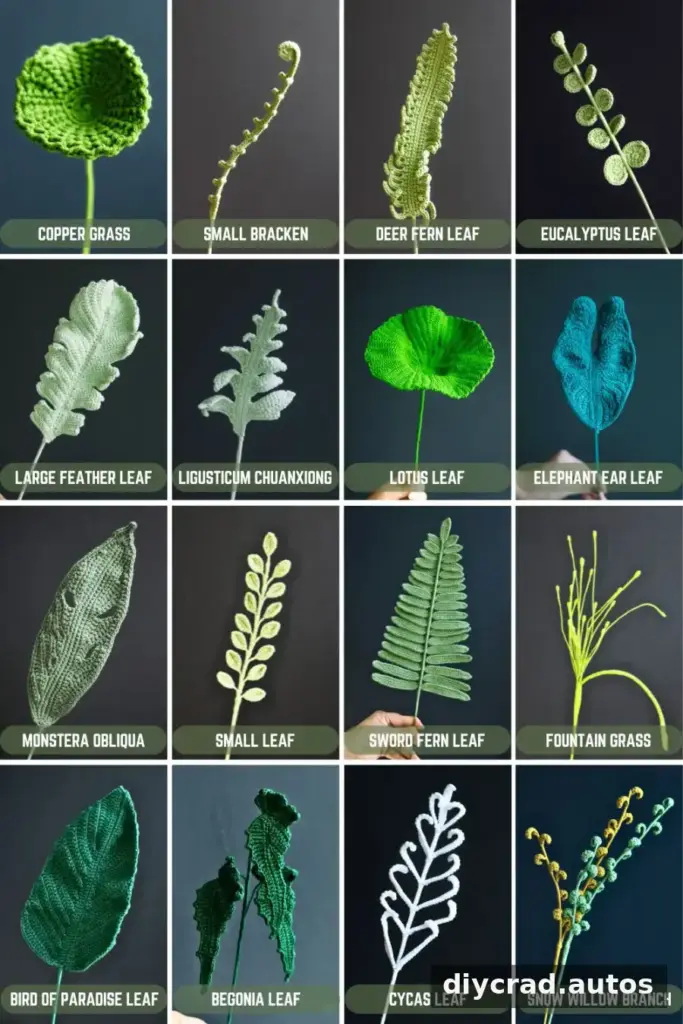
Specially shaped leaves can also make an arrangement look larger. Before attaching them, check how they change the outline of the bouquet and reposition them if they make one side look too heavy.
Additional leaf shapes can be used to vary the bouquet’s silhouette. Try arranging the flowers and foliage on a flat surface first, then secure the pieces once the overall shape looks balanced.
Tips for a balanced crochet flower bouquet
- Vary flower sizes and shapes to create depth and visual interest.
- Use a planned color palette, with a few contrasting shades to give the arrangement definition.
- Add leaves and greenery where needed to cover gaps and connect the blooms.
- Include a distinctive flower or shaped leaf if you want the bouquet to have a clear focal detail.
- Combine open and partly open flowers. For example, different rose shapes and a rosebud can create variety within one arrangement.
A practical way to assess balance is to view the bouquet from more than one side. If a flower is hidden, adjust the stem position before securing the arrangement.
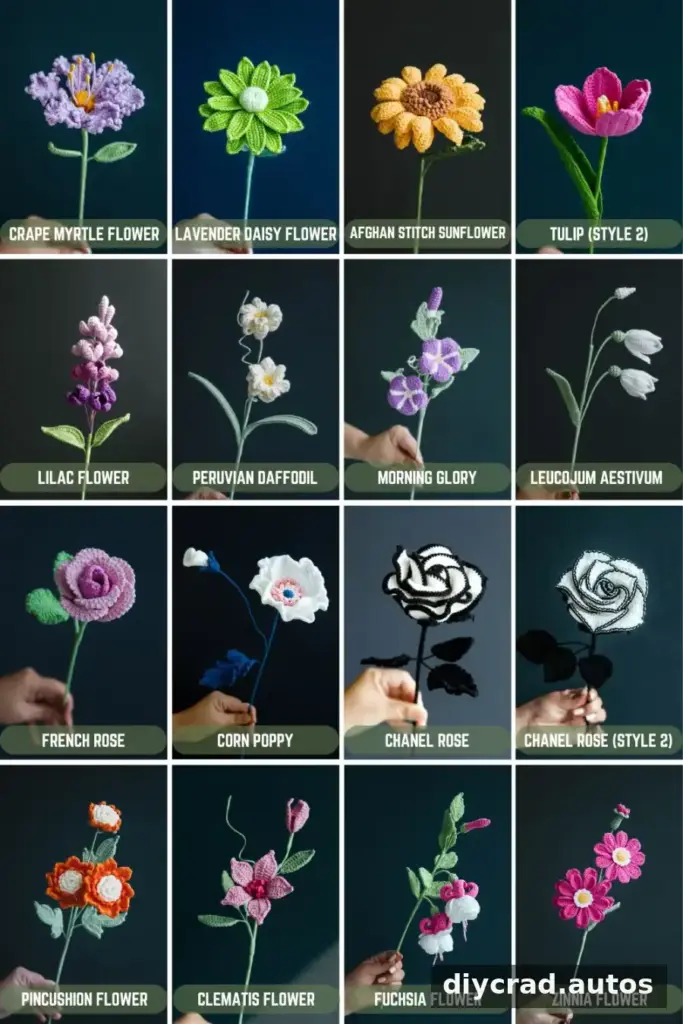
Caring for a crochet flower bouquet
Gentle care helps preserve the shape and color of handmade flowers. Keep the arrangement away from conditions that could crush, soil, or fade the yarn.
Remove dust carefully
Dust the flowers with a soft-bristled brush. Compressed air can also help remove loose debris; use it gently and follow the can’s instructions so delicate petals are not distorted.
Store it upright
Keep the bouquet in a vase or another container that supports the stems and prevents the flowers from becoming tangled. Avoid pressing or pulling the blooms, as this can bend stems or change their shape.
Limit direct sunlight
Prolonged direct sunlight can fade yarn colors. Display the bouquet away from strong sunlight and heat sources to help maintain its appearance.
Conclusion: choose crochet flower bouquet patterns for your project
With a focal flower, a few complementary accents, filler blooms, and greenery, you can build a bouquet that suits your colors and occasion. Start with a small arrangement if you are learning, and test the flower sizes and stem support before assembling everything. These crochet flower bouquet patterns offer options for simple, delicate designs as well as full, layered blooms. Arrange the pieces gradually, make adjustments before securing them, and store the finished bouquet with care.