


Family board games can turn a quiet evening into an easy opportunity to talk, laugh, and spend time together without screens. This list features 14 options for larger gatherings, smaller groups, and pairs, with player counts, suggested ages, and play times where provided. Check the details on the specific edition before playing, especially when choosing a game for younger children.

A regular game night does not need to take up an entire evening. Setting aside 30–45 minutes can make it easier to fit a shared activity into a busy family schedule. Choose a game that suits the time available and the group’s ages, and keep the rules handy for a smoother start.
The games below include quick card games, creative party activities, and strategy-focused choices. Some are designed for larger groups, while others work well with a few players or a pair. The best fit depends on your group’s size, preferred pace, and appetite for competition or cooperation.
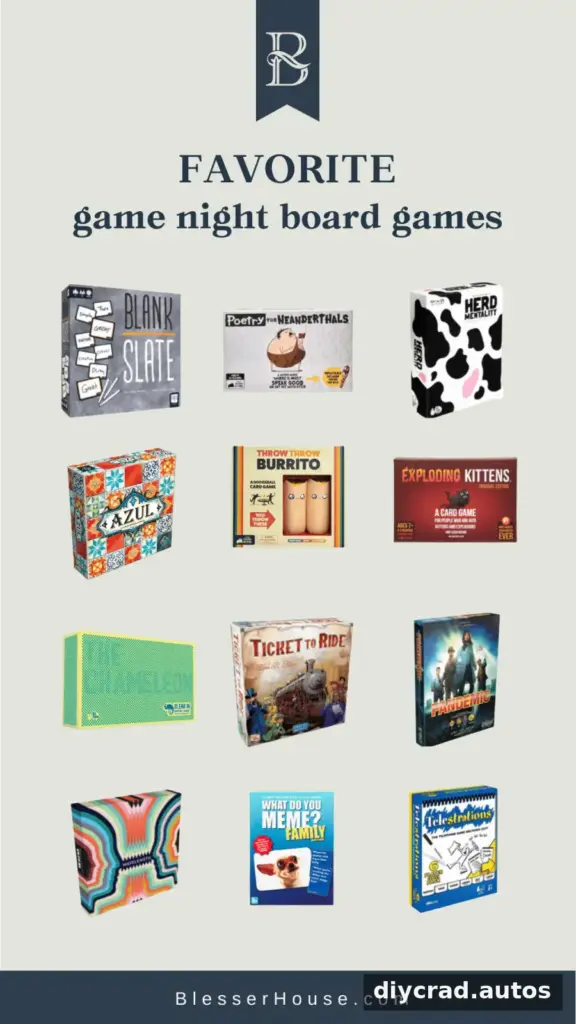
14 Family Board Games for Game Night
Here is a quick overview of the games covered in this guide. The detailed descriptions below explain the basic activity and what kind of gathering each game may suit.
- Blank Slate
- Poetry for Neanderthals
- Herd Mentality
- Azul
- Throw Throw Burrito
- Exploding Kittens
- The Chameleon
- Ticket To Ride
- Pandemic
- Wavelength
- What Do You Meme? Family Edition
- Telestrations
- Catan
- Sushi Go!
Player counts, age suggestions, and play times can vary by edition. When planning a game night, check the box and make sure there is enough space for any cards, boards, or other components.
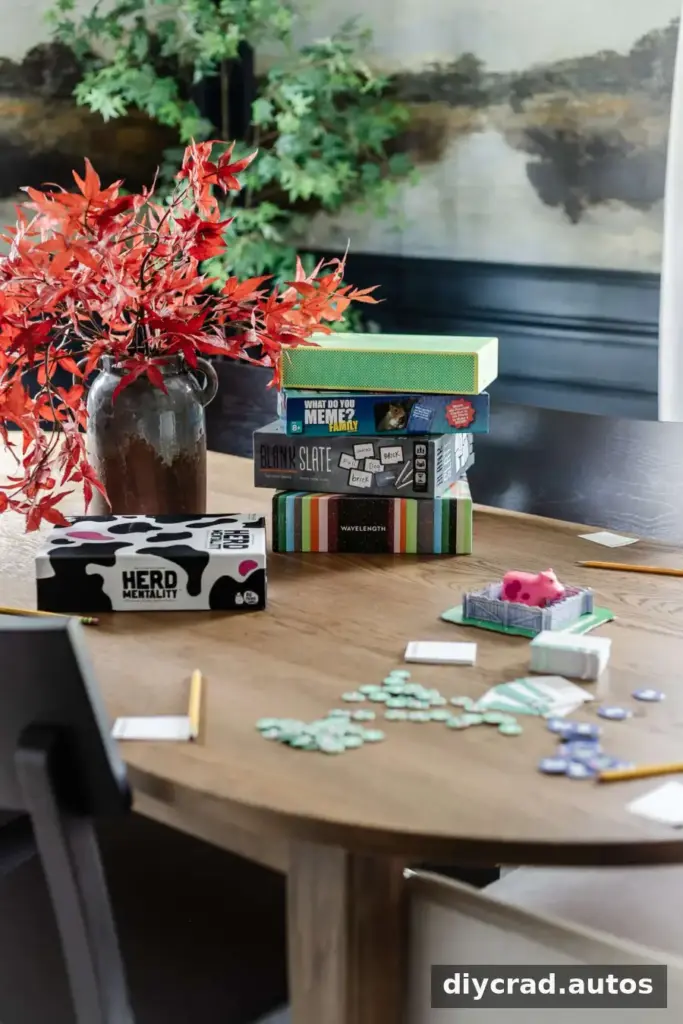
Family Board Games for Large Groups
These choices focus on wordplay, quick clues, and shared laughs, making them suitable for parties or gatherings with several players.
1. Blank Slate
Players: 3–8 | Ages: 8+ | Time: 30 minutes
Blank Slate is a word-association party game built around prompts with a missing word or phrase. Each player writes an answer and tries to match another player’s response. The fun comes from seeing which people make the same connection. Because the central idea is simple, it can be a useful ice-breaker for a group that includes players who have not met before.
2. Herd Mentality
Players: 4–20 | Ages: 10+
In Herd Mentality, players answer a prompt by guessing what most of the group is likely to say. Rather than aiming for the most unusual answer, players try to anticipate the majority view. It works best when everyone can hear the question and responses clearly, so agree on a turn-taking or answer-reveal method before starting with a large group.
3. The Chameleon
Players: 3–8 | Ages: 14+ | Time: 15 minutes
The Chameleon is a bluffing and deduction game. Most players know the secret word or topic and offer one-word clues, while one player—the Chameleon—does not know it and must try to blend in. The group then works out who seems out of step without making the secret word too obvious. Keep clues brief and specific enough to be useful, but not so revealing that the hidden player can identify the answer immediately.
4. What Do You Meme? Family Edition
Players: 3–20 | Ages: 8+ | Time: 30–90 minutes
What Do You Meme? Family Edition pairs humorous image cards with caption cards. Players choose captions from their hands, and the group compares the combinations for laughs. This edition is intended as a family-friendly version of a meme-based party game. As with any humor-focused game, adults may want to review the cards first if playing with children or a mixed-age group.
5. Wavelength
Players: 2–12 | Ages: 14+ | Time: 30–45 minutes
In Wavelength, one player acts as the “Psychic” and gives a clue connected to a point on a spectrum between two opposing ideas, such as “hot” and “cold.” The other players discuss where they think the clue belongs. The game encourages conversation and interpretation, so allow time for players to explain their reasoning rather than rushing to a decision.
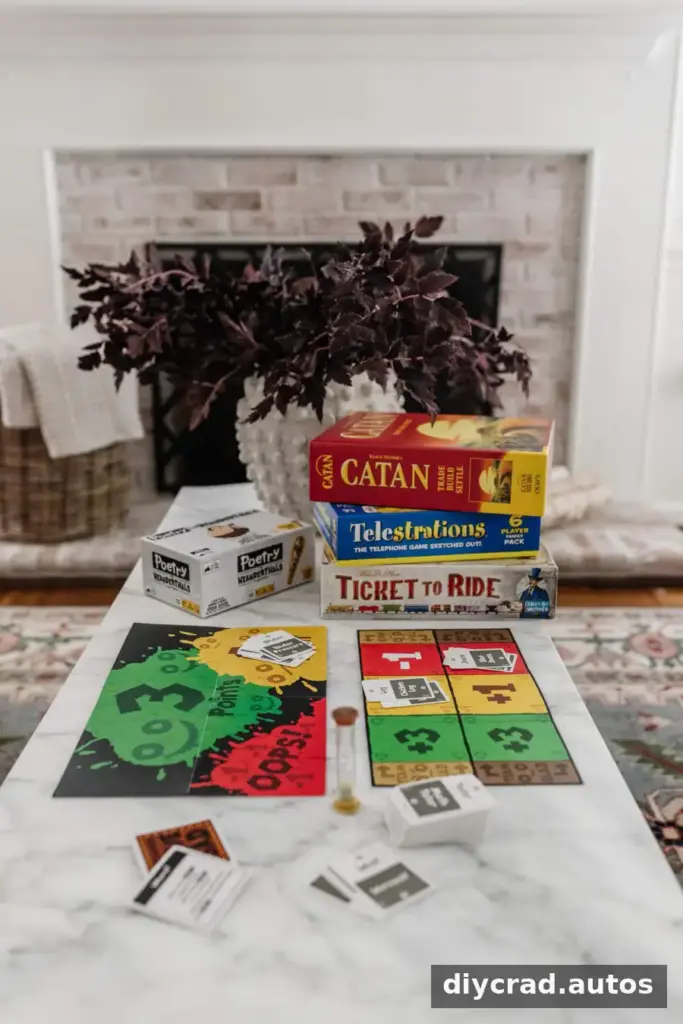
Family Board Games for Smaller Groups
These games can suit a household game night or a smaller gathering. Some involve quick thinking and drawing, while others offer a more strategic challenge.
1. Poetry for Neanderthals
Players: 2+ | Ages: 7+ | Time: 15 minutes
Poetry for Neanderthals challenges players to describe words or phrases using only one-syllable words. Players take turns giving clues, and using a word with multiple syllables—or getting stuck—can bring an inflatable club into the joke. Explain the one-syllable rule before the first turn, and make sure everyone understands that the inflatable club is part of the game’s humor.
2. Ticket To Ride
Players: 2–5 | Ages: 8+ | Time: 30–60 minutes
Ticket To Ride is a route-building strategy game in which players collect train cards and claim railway routes between cities. Completing destination tickets and planning which routes to pursue are central parts of play. A first game may take longer while everyone learns the rules, so leave extra time if the group is new to it.
3. Telestrations
Players: 4–6 | Ages: 12+
Telestrations combines drawing with a telephone-style chain of guesses. Players sketch a word or phrase, pass the drawing along, and let the next person interpret it. The process continues as guesses and drawings alternate, often leading to a surprising final result. Artistic skill is not the point, so this can be a good choice for groups that enjoy playful mistakes.
4. Catan
Players: 3–4 | Ages: 10+ | Time: 60 minutes

Catan is a strategy game centered on gathering and trading resources and using them to expand settlements and roads. Players must decide how to use what they collect and negotiate trades with others. Since the listed play time is 60 minutes, it may suit a longer game night; reviewing the rules and setup before inviting everyone to the table can help the game get underway more quickly.
Board Games for Two Players and Small Groups
The games in this section support two players or a small group, though the listed player counts differ. Check the recommended range for the edition you own before choosing one for a pair.
1. Azul
Players: 2–4 | Ages: 8+ | Time: 30–45 minutes
Azul is a tile-drafting game inspired by Portuguese tile artistry. Players select colored tiles from a shared display and arrange them on their own boards to create patterns and score points. The choices are easy to see but require planning, making it a quieter alternative to fast-paced party games. Keep the tiles organized between rounds so the shared display remains clear.
2. Throw Throw Burrito
Players: 2–6 | Ages: 7+ | Time: 15 minutes
Throw Throw Burrito combines card collecting with a light dodgeball-style element using soft foam burritos. Players try to collect matching sets, while certain moments can trigger a burrito battle. Clear a safe space before playing, move breakable items away, and remind players to throw only the soft game pieces.
3. Pandemic
Players: 2–4 | Ages: 8+ | Time: 45 minutes
Pandemic is a cooperative strategy game in which players work as a team to find cures for four diseases while managing outbreaks around the world. Each player has a role with specialized abilities, so sharing information and coordinating decisions are important. Since the group wins or loses together, it can be a good option for players who prefer collaboration over direct competition.
4. Exploding Kittens
Players: 2–5 | Ages: 7+ | Time: 15 minutes
In Exploding Kittens, players draw cards and try to avoid being eliminated by an “Exploding Kitten” card. Other cards can help players skip turns, defuse a kitten, or affect what happens next. Its short play time and straightforward objective can make it a convenient choice for a quick round. If using an expansion, check its instructions and confirm that its cards are compatible with the base game.
5. Sushi Go!
Players: 2–5 | Ages: 8+ | Time: 15 minutes
In Sushi Go!, players draft cards from a rotating hand and aim to collect combinations that score points. Different sushi cards have different scoring rules, so players must weigh their choices as the hands move around the table. The quick rounds make it easy to fit into a shorter game night; explaining the scoring before play can help new players make informed choices.

Choosing the Right Family Board Games
When selecting family board games, start with the number of players, the youngest player’s age, and the time available. A short word or card game can work well when the evening is busy, while a longer strategy game may be a better fit when everyone has more time. For a mixed-age group, choose rules that players can understand and check the contents of the specific edition in advance.
These 14 games offer a range of activities, from drawing and clue-giving to cooperative planning and route building. Consider rotating between different styles so game night stays fresh, and choose the game that best matches the group’s mood and schedule.

