This IKEA Domsjo farmhouse sink review covers everyday cleaning, dishwashing, durability, installation, and the points to consider before choosing a deep porcelain sink. The observations below reflect four months of use, including frequent washing of pots and pans, and can help you decide whether this style suits your kitchen.
IKEA Domsjo farmhouse sink: everyday use
A farmhouse sink’s wide, deep basin can make washing bulky cookware more comfortable than using a smaller or shallower sink. In this kitchen, the extra space made routine dishwashing easier, particularly when paired with a high-neck faucet that provided room to move larger items around.

The sink also has a spacious basin that can be useful for rinsing vegetables or handling larger kitchen tasks. Its depth is a practical advantage, but it is worth checking how the basin dimensions will fit your household’s usual dishes, cookware, and available counter space.
Cleaning and stain resistance
After four months of daily use, the sink had no reported scratches or stains, despite regular scrubbing of pots and pans. That experience is encouraging, but it does not guarantee that every sink will remain mark-free: results can depend on use, cleaning products, and the items placed in the basin.
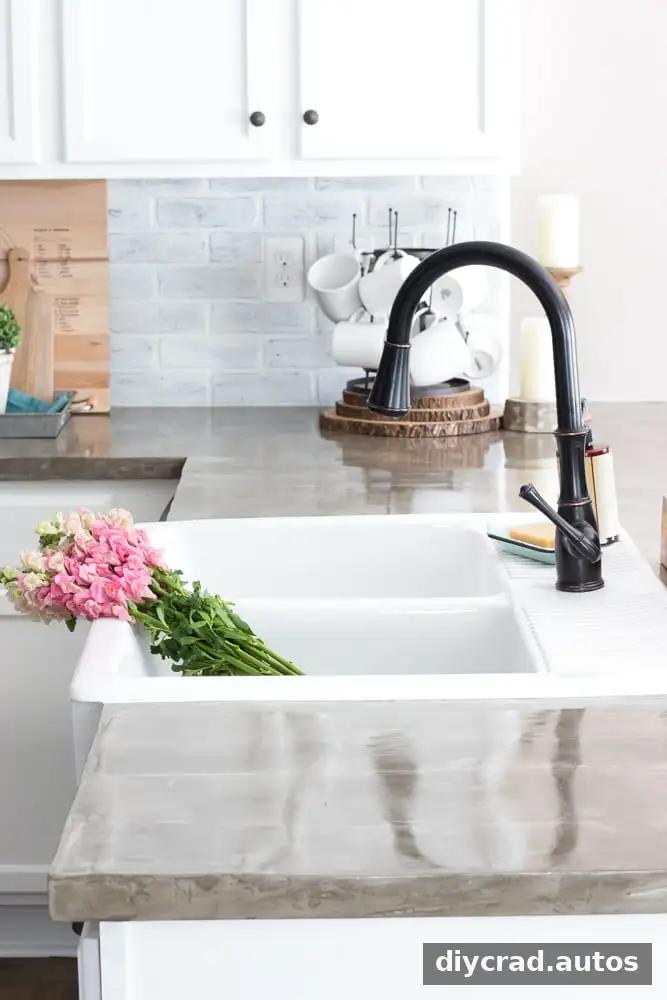
For routine upkeep, rinse away food and residue after use. The original owner found that a weekly cleaning with a suitable household cleaner kept the white surface bright, while ordinary rinsing was enough between deeper cleans. Always check the sink manufacturer’s care guidance before using an abrasive product, as cleaning recommendations can vary by finish and model.

Installation and fit
Installation was described as the most challenging part of the project. Fitting a farmhouse sink may require changes to the countertop and cabinetry, so it is important to confirm the exact dimensions and installation requirements before purchasing. Unlike a simple drop-in replacement, this style can involve careful cutting and support for the sink’s weight.
Before work begins, measure the cabinet opening, countertop, and sink, and check whether the existing cabinet can accommodate the basin. If the installation requires cutting stone or modifying cabinetry, consider getting help from a qualified installer. Planning these details in advance can help prevent costly fit problems.
Durability and potential drawbacks
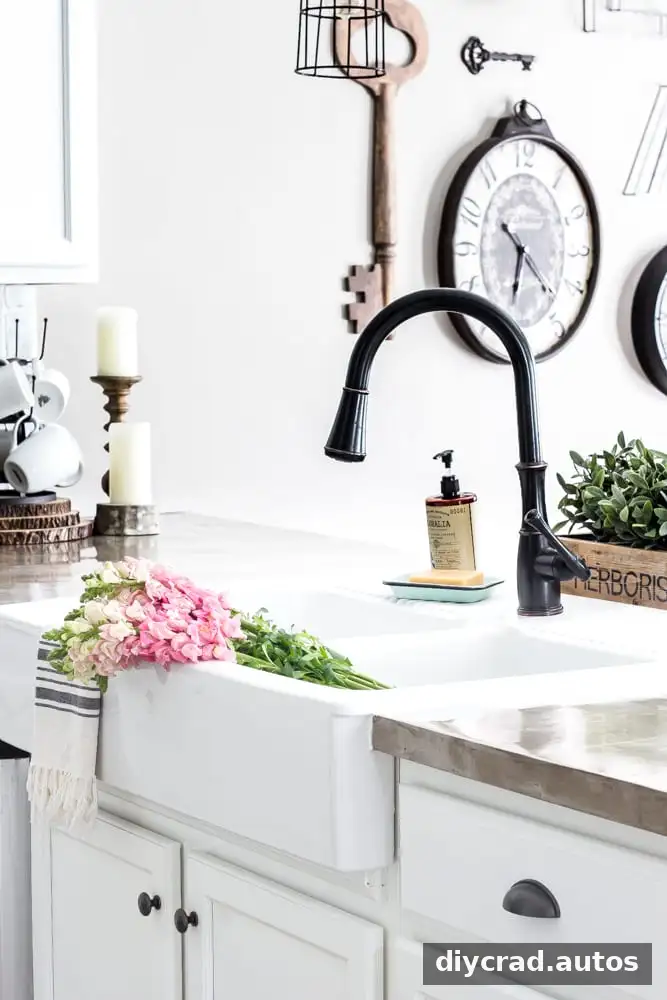
The sink discussed here was porcelain, and no cracking occurred during the first four months of use. Porcelain can crack if it receives a hard impact, however, so avoid dropping heavy cookware into the basin. Another practical drawback is that dishes may break more easily when they hit a hard sink surface than they might in a stainless-steel basin. Handle glassware and ceramic dishes carefully, especially when stacking or rinsing them.

Price and value
The sink was reported to cost $312 when the original review was written and was described as an affordable option compared with some farmhouse sinks at the time. Prices and product availability can change, so treat that figure as historical rather than a current quote. When comparing options, include installation and any required countertop or cabinet work in the total cost.
A deep basin may also be helpful for rinsing produce from a home garden or washing larger items. Consider how often you would use that extra space, and balance it against the potential for dishes to chip or break if they strike the porcelain.

Is the IKEA Domsjo farmhouse sink a good choice?
The four-month experience described here was strongly positive: the sink was spacious, straightforward to rinse between cleanings, and free of visible scratches or stains during that period. Its main considerations are the more involved installation, the care needed to avoid impact damage, and the possibility of breaking dishes in the hard basin.
Overall, this IKEA Domsjo farmhouse sink review suggests that the model may suit kitchens where a deep, wide basin is a priority. Before buying, verify current availability, measurements, cabinet compatibility, care instructions, and the complete installed cost. Those checks are essential because the original price and short-term use report do not establish today’s pricing or long-term performance.