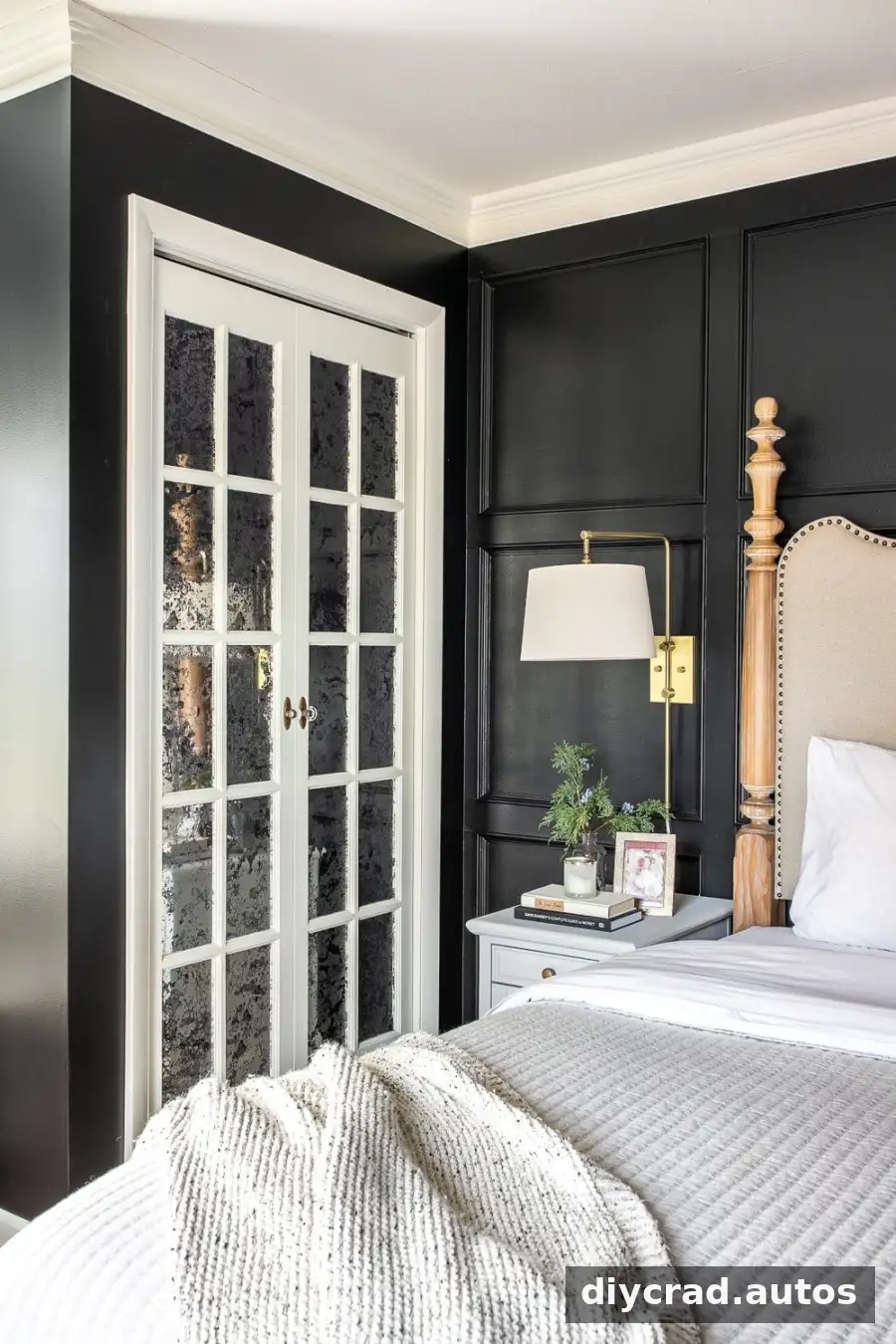
Mirrored French closet doors can give a bedroom a brighter, more polished look while helping conceal clothing behind glass panels. This beginner-friendly makeover uses glass-front bifold doors, fresh paint, decorative hardware, and antique mirror film—without requiring you to build doors from scratch.
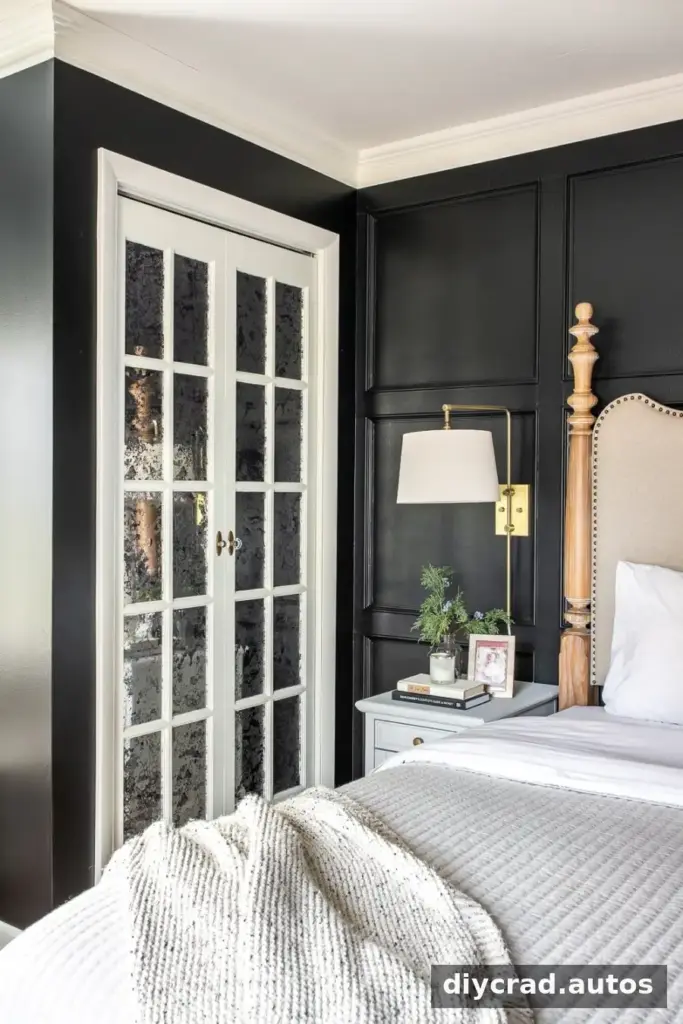
A Beginner-Friendly Mirrored French Closet Doors Makeover
Plain hollow-core bifold doors can feel out of place in a carefully designed room. Replacing them with glass-front French-style bifold doors creates a more detailed look, and mirror film adds a soft reflective finish while limiting the view into the closet.
Mirrored surfaces can help bounce light around a room, which may make a small bedroom feel more open. Keep in mind that decorative mirror film does not provide the same clear reflection as a conventional mirror. Its appearance and privacy effect can also vary with the light in the room.
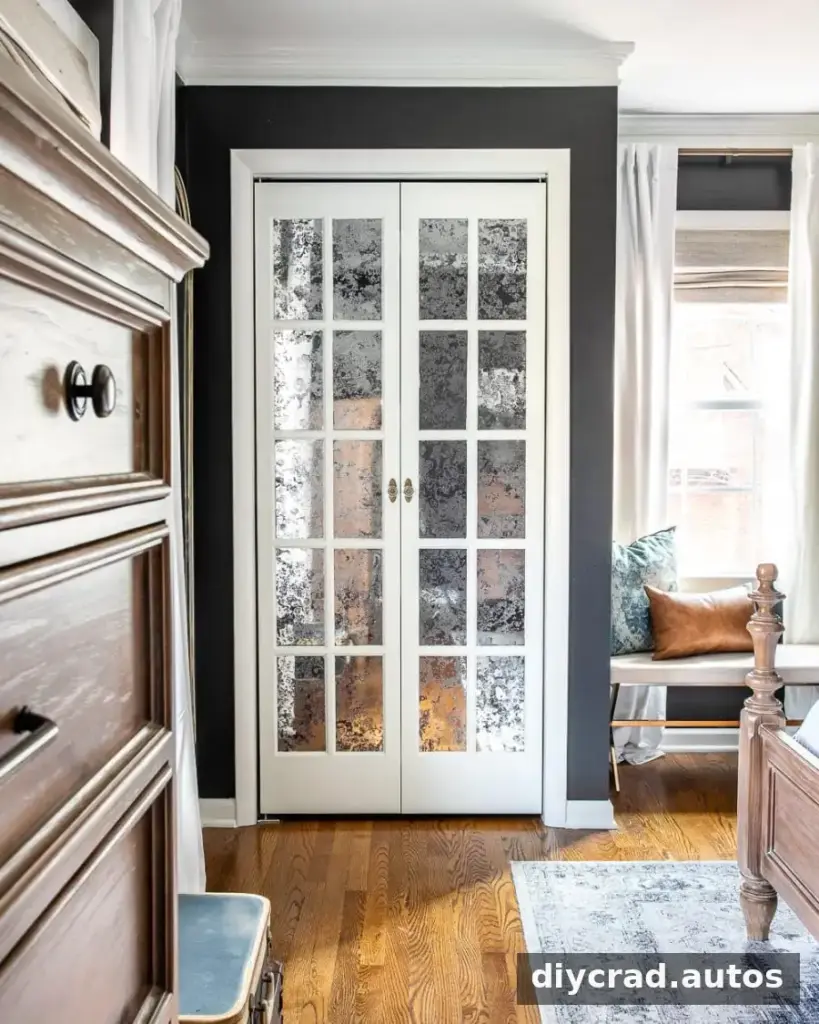
The project described here updates a pair of bedroom closet doors with a white finish, glass knobs, antique brass backplates, and mirror film. The existing dark walls provide contrast, while the light-colored doors help balance the room.
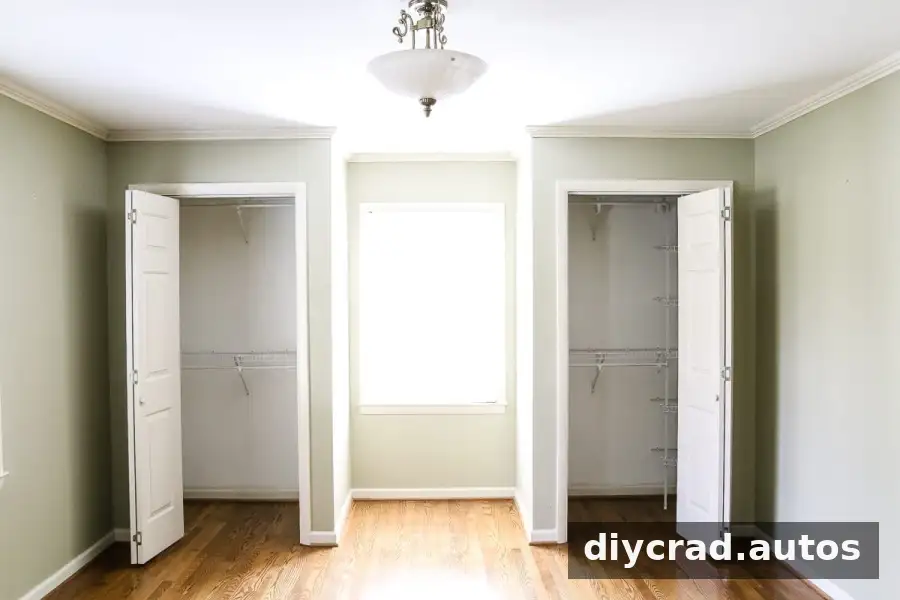
After an earlier paint update, the closet area still felt like it could use a more distinctive finish. Replacing the basic doors with glass-front bifold doors created the foundation for a vintage-inspired look.
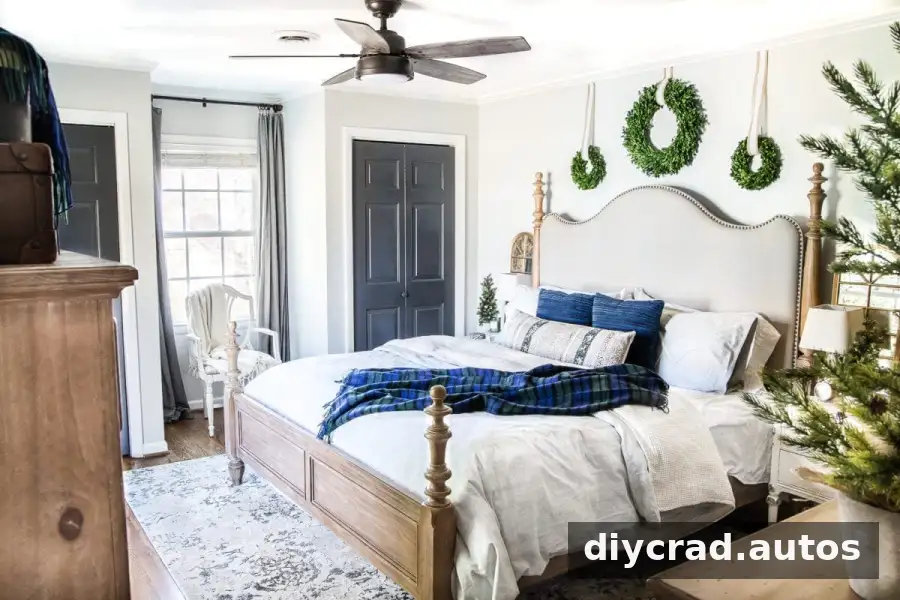
A second paint update helped the room feel more complete and made the contrast between the dark walls and lighter doors more noticeable.
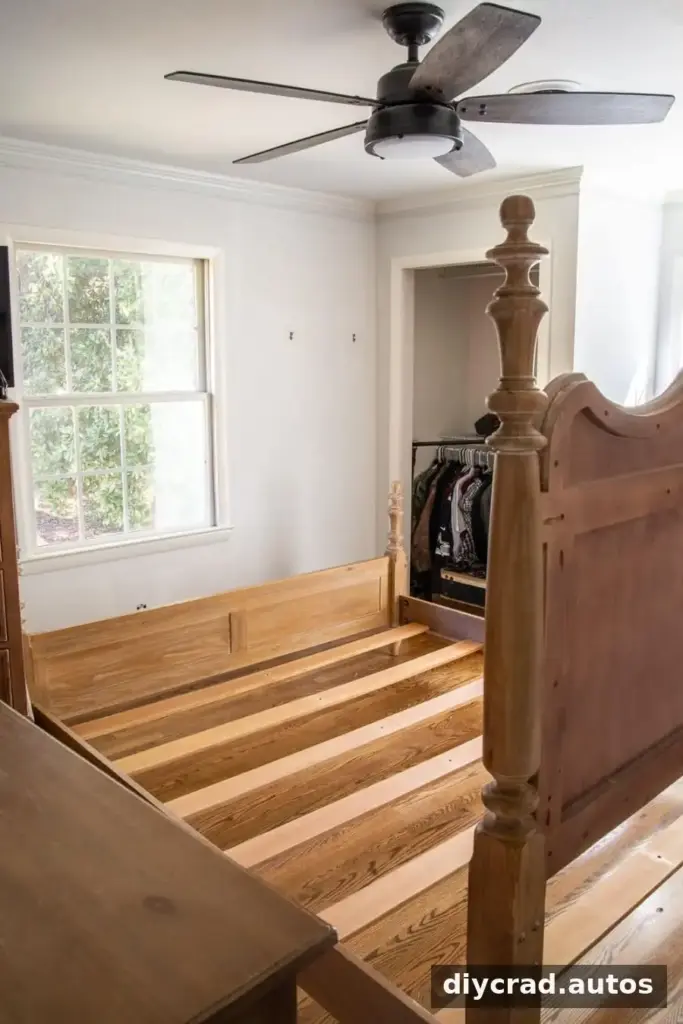
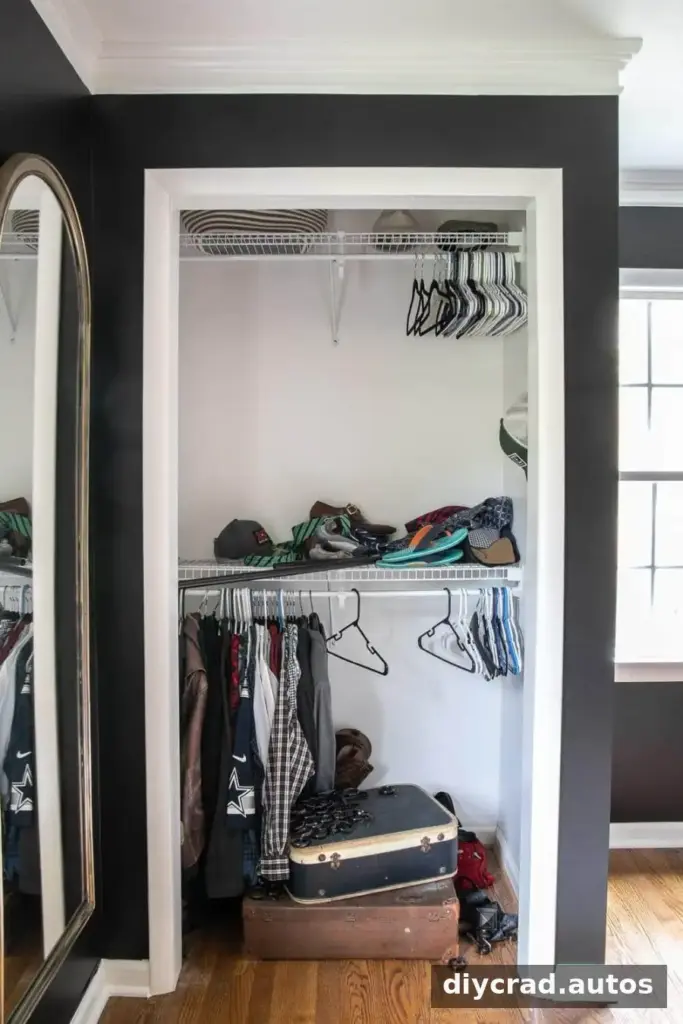
The original hollow-core doors had been painted dark charcoal, but the room called for a more decorative feature. Glass-front French bifold doors offered a way to add detail without building a new door design from the ground up.
Adding mirror film to the glass completed the look and helped reflect some of the room’s natural light.
Materials for Mirrored French Closet Doors
Gather the materials before starting so you can move from surface preparation to painting and film application without interruptions:
- Glass-front French bifold doors
- Primer
- Paint; the project used Simply White in a semigloss finish
- Paintbrush
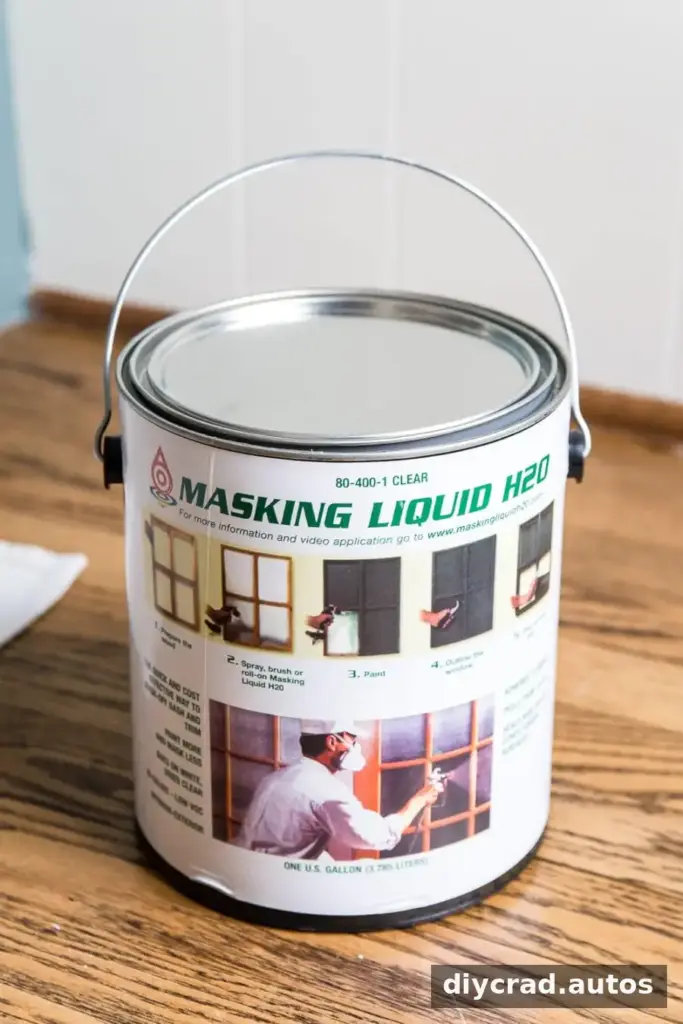
- Masking liquid
- Antique mirror film
- Spray bottle filled with water
- Sharp craft knife, such as an X-Acto knife
- Squeegee or an old credit card
- Glass knobs
- Antique brass backplates
Choose doors that fit the existing opening and confirm that their folding hardware is compatible with your setup. The glass-front bifold doors used for this makeover are available from a range of home-improvement suppliers. If you are replacing existing doors, check the opening measurements and installation instructions before purchasing.
Step 1: Protect the Glass with Masking Liquid
Brush masking liquid over the glass before painting. Once dry, it forms a removable layer that helps protect the glass from primer and paint. Painter’s tape can also be used, although applying it around every pane takes extra time.
Follow the product directions and allow the masking liquid to dry fully. The original project allowed several hours for drying before moving to the next step.
Step 2: Apply Primer
Apply primer to the door frames after the masking liquid has dried. In this project, an all-purpose primer was used. The primer can be brushed over the protected glass as well as the frame because the masking layer is removed later.
Use even coats and let the primer dry according to its label. Drying times can differ by product and conditions, so check the instructions rather than relying on a fixed wait time.
Step 3: Paint the Doors
Once the primer is dry, apply paint in the finish and color you have chosen. The doors in this makeover were painted Simply White in semigloss to coordinate with the home’s trim. One coat was enough for this particular project, but coverage varies depending on the surface and paint.
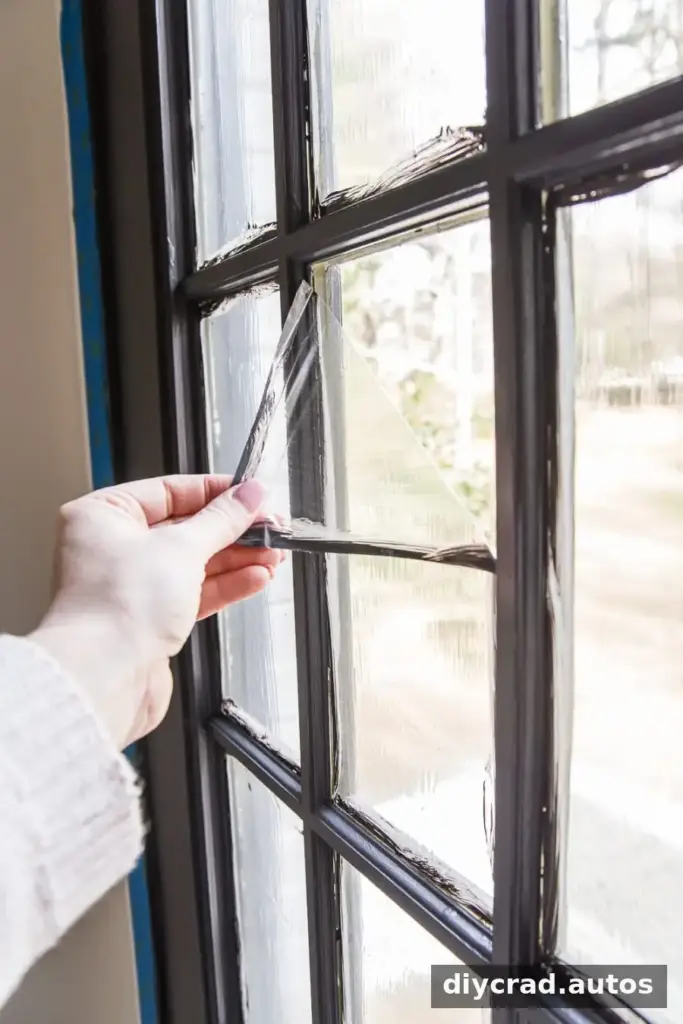
A brush was used for the finish. A paint sprayer is another option, while a self-leveling paint can help reduce visible brush marks. When the paint is dry, carefully score the edge of the masking liquid with a sharp utility knife, then peel it away from the glass.
Step 4: Install the Knobs and Backplates
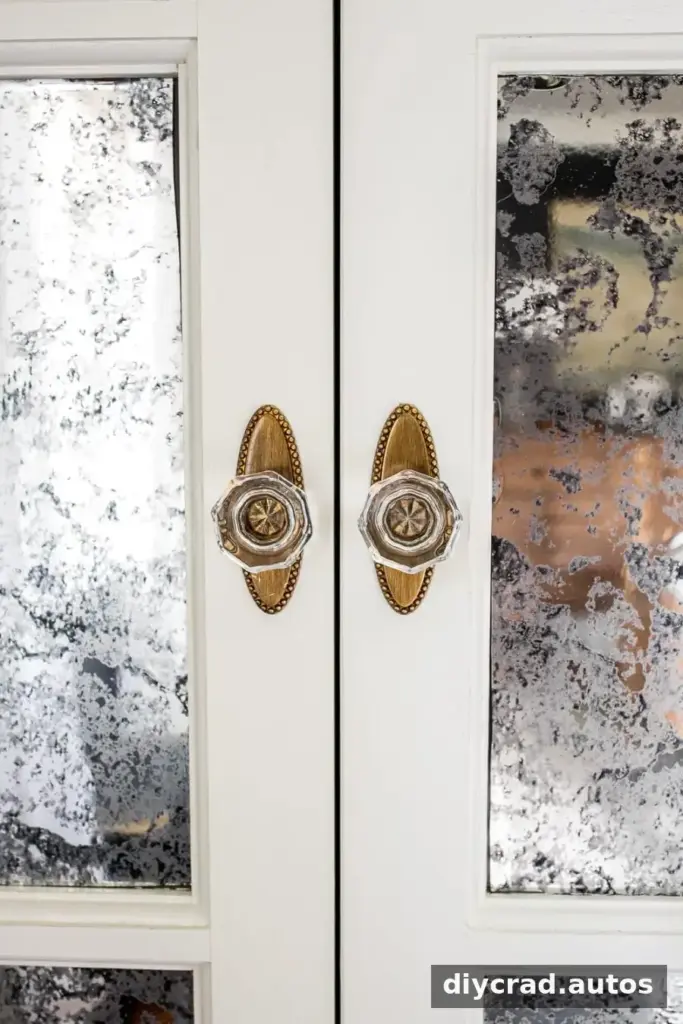
Fit the knobs and backplates after painting so the hardware adds a finishing detail without getting in the way during the paintwork. Glass knobs with antique brass backplates give these doors a vintage look. Choose hardware that suits your room and check that the mounting points work with the door construction.
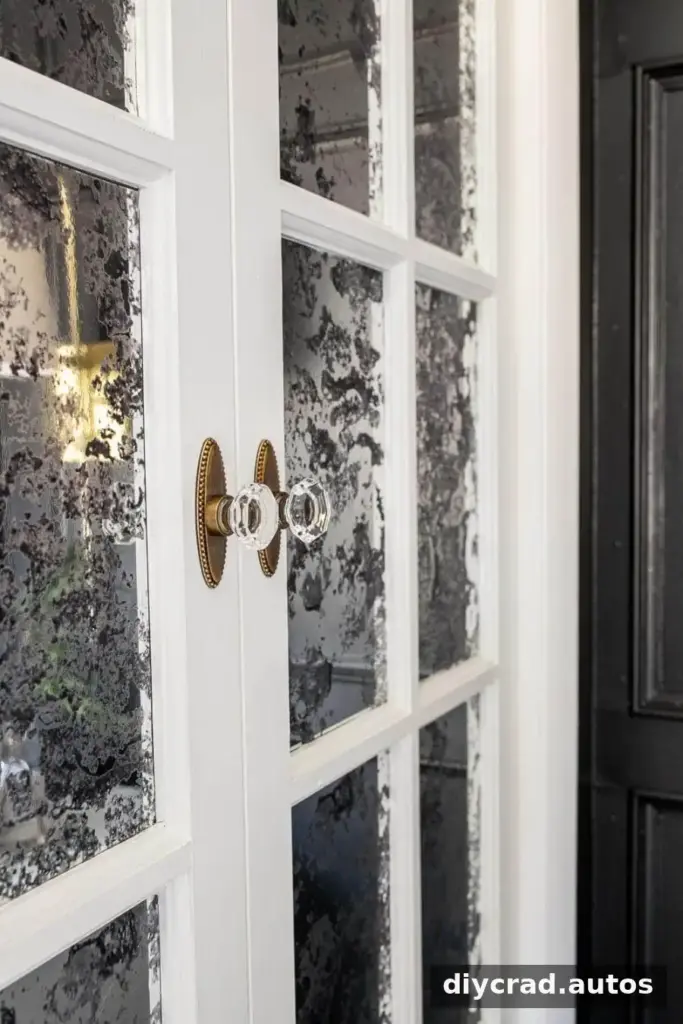
Step 5: Apply Antique Mirror Film
Measure each glass pane and cut the mirror film slightly larger than the area you need to cover. Working one pane at a time makes it easier to position the film and smooth it evenly.
- Spritz water onto the glass pane and the adhesive side of the film.
- Place the film against the wet glass and adjust its position before smoothing.
- Use a squeegee or an old credit card to push out air bubbles.
- Trim excess film carefully with a sharp craft knife, following the edges of the pane.
- Smooth out any remaining bubbles and allow the film to dry.
Take care when trimming near the door frame, and keep the blade sharp for a cleaner cut. The film is intended to create a decorative, softly reflective effect, not the crisp reflection of a standard mirror.
Finishing Tips and Alternatives
This makeover updates the look of bifold closet doors without requiring power tools for the steps described. If you prefer a different style, change the paint color or hardware while keeping the same basic process. You can also explore converting a bifold opening to two narrow swinging French doors, but that requires checking the opening, hinges, and door clearances before making changes.
If bifold doors are not right for your room, alternatives include a curtain, folding screen, room divider, sliding barn door, pocket door, or bookcase-style door. Sliding and pocket doors need adequate space and suitable installation conditions, so assess the wall and doorway before choosing one.
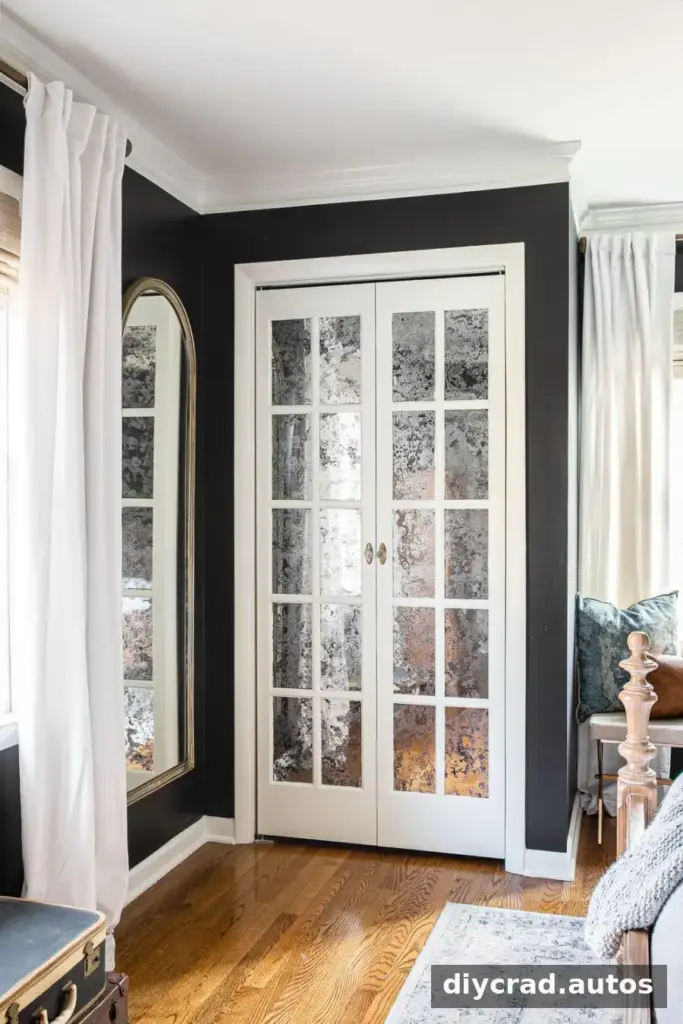
The finished design combines light-colored frames, glass panels, decorative knobs, and a subtle mirrored surface. After five years, this style had also been adapted for other spaces in the home, including an office and laundry room.
Frequently Asked Questions
Can a bifold door be turned into swinging French doors?
It may be possible to convert a bifold door into two narrow swinging doors. Before starting, assess the door opening, the weight and condition of the doors, hinge placement, and clearance for the doors to swing. The hardware and installation method need to suit the specific doorway.
What can I use instead of bifold closet doors?
A curtain, folding screen, or room divider can cover a closet with minimal construction. Sliding barn doors and pocket doors are other options, provided there is enough space and the opening can accommodate the required hardware. A bookcase-style door can disguise a closet, but it is a more involved installation.
Conclusion
Mirrored French closet doors are a practical way to refresh a bedroom with glass-front bifold doors, paint, new hardware, and decorative mirror film. Measure carefully, let each coating dry as directed, and smooth the film gradually to get a neat finish. For a softer reflection and a brighter-feeling room, this makeover offers a straightforward alternative to building custom doors.
More DIY Door Ideas
Other door projects include updating hinge colors, painting French doors, and refreshing interior doors with a new finish.
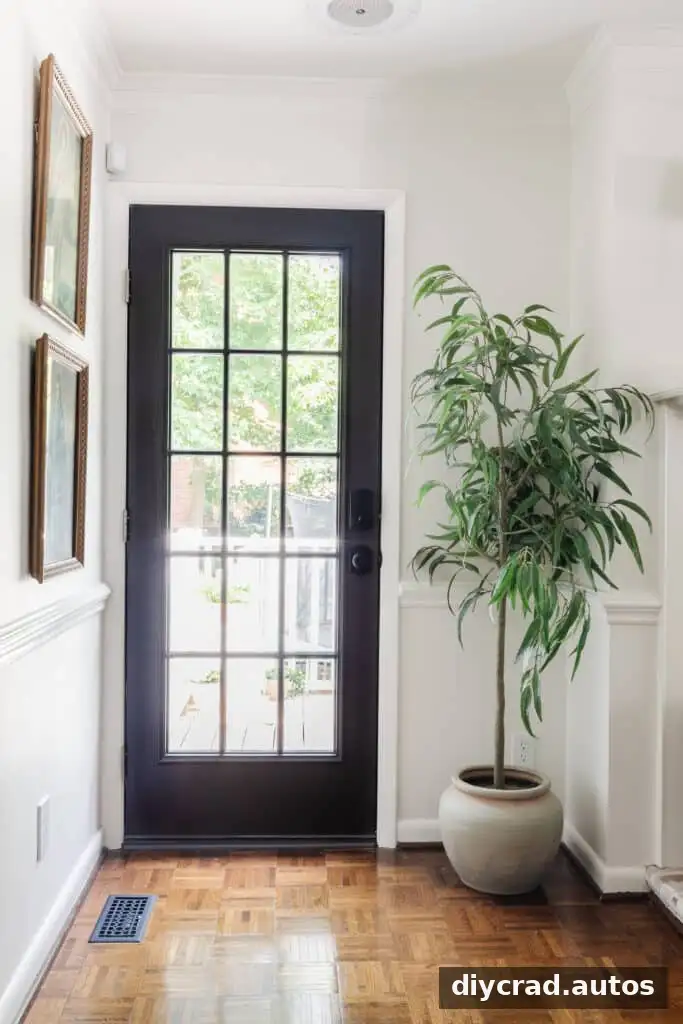
Painting interior doors is another option for improving a room without replacing the doors.