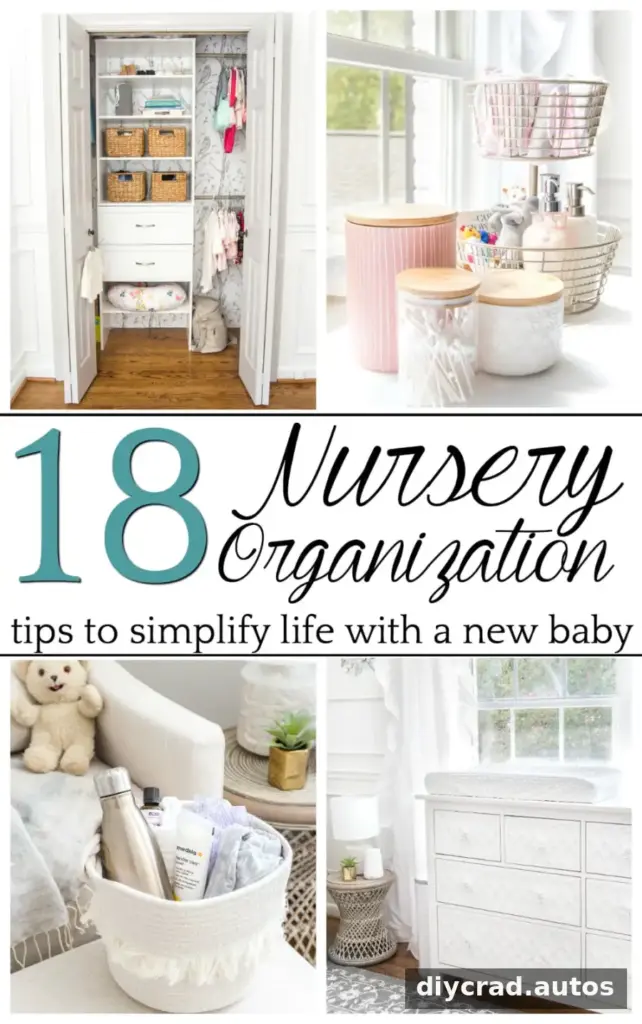
Thoughtful nursery organization makes everyday baby care easier by keeping diapers, clothes, feeding supplies, and small essentials simple to find. A few clear storage zones can save time during late-night changes and help caregivers know where things belong.
This room-by-room tour covers practical storage for a dresser, closet, changing area, and nursing chair. Adapt the setup to your space and routine: babies’ needs change quickly, so flexible baskets and drawer dividers can be more useful than a system that only works for one stage.

Nursery organization for everyday essentials
Start by grouping items according to when and where they are used. Keep changing supplies near the changing area, everyday clothes in easy-to-reach drawers, and less frequently used items on higher shelves. Store medicines and grooming tools securely and out of a child’s reach.
Laundry hamper
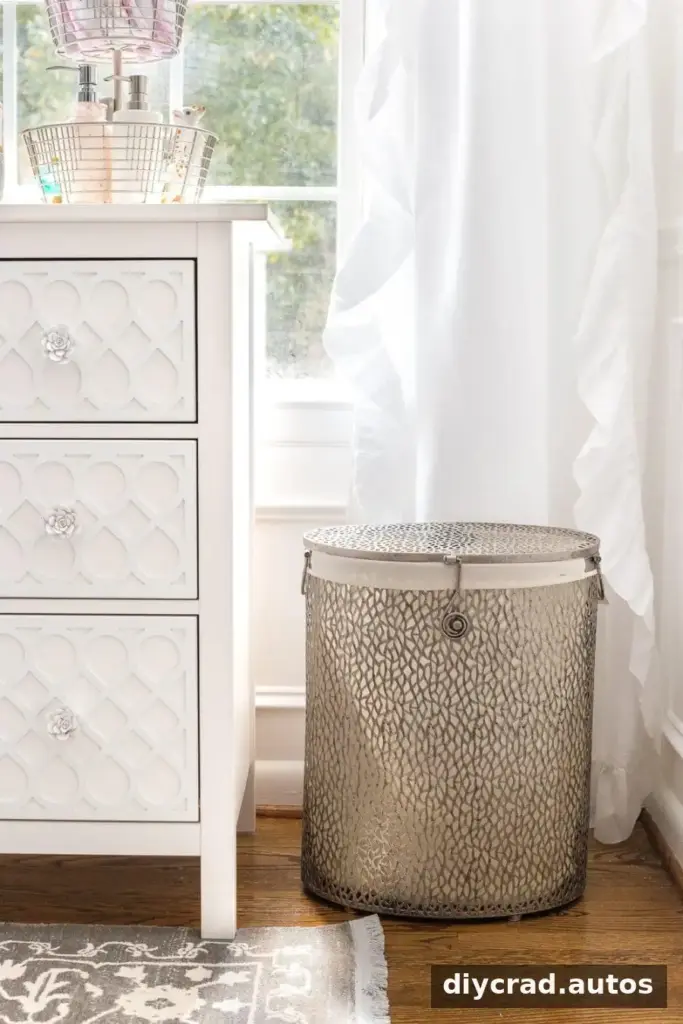
A lidded hamper with a washable liner keeps laundry contained and makes the liner easier to clean. Choose a location that is convenient for changes but does not block access to the crib or other furniture. Empty it regularly, especially when damp or soiled clothing is inside.
Small-item canisters
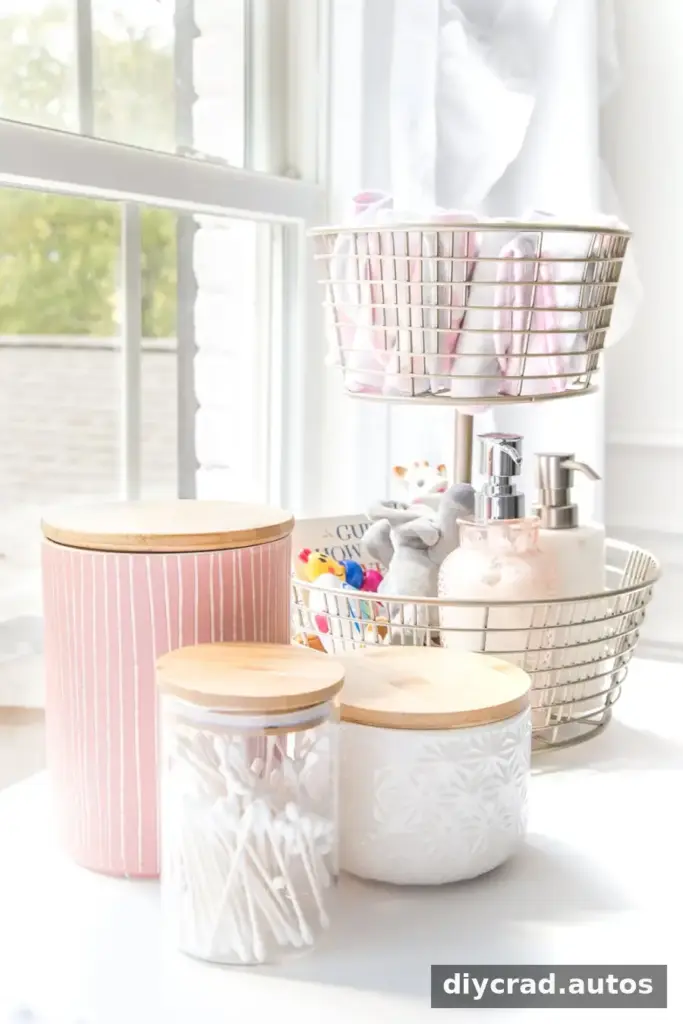
Lidded containers can help keep small accessories from getting lost in dresser drawers. In this nursery, a large container holds headbands and bows, while a medium one is used for pacifiers and clips. A smaller container stores cotton swabs.
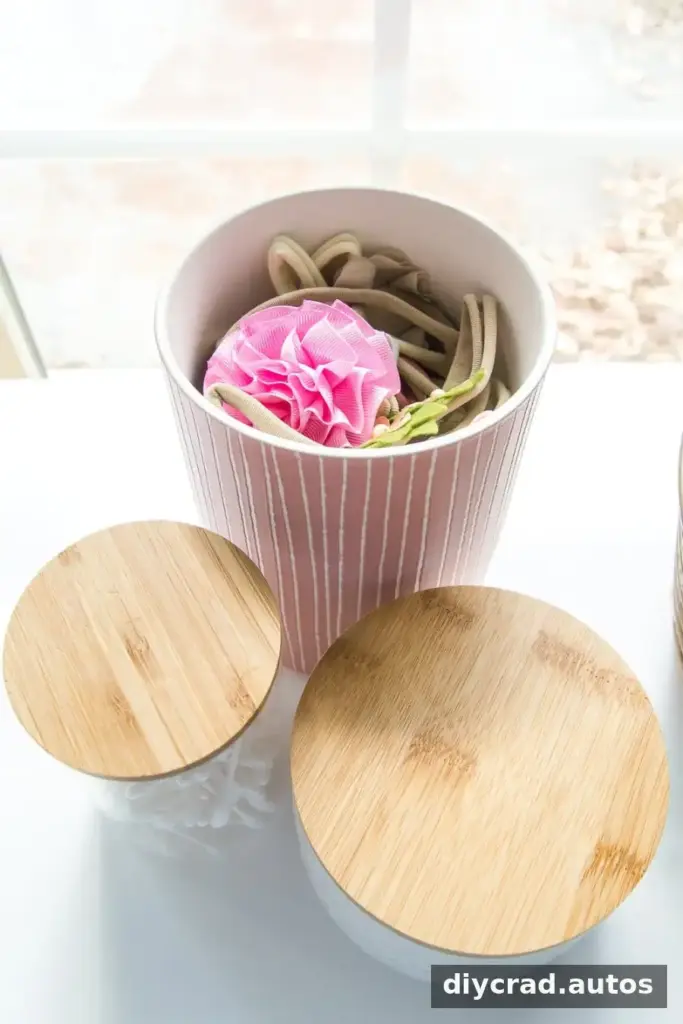
Keep small objects, including cotton swabs and pacifier clips, well out of a baby’s reach. Use containers only for items that suit their size and purpose, and check that lids and contents are stored safely.
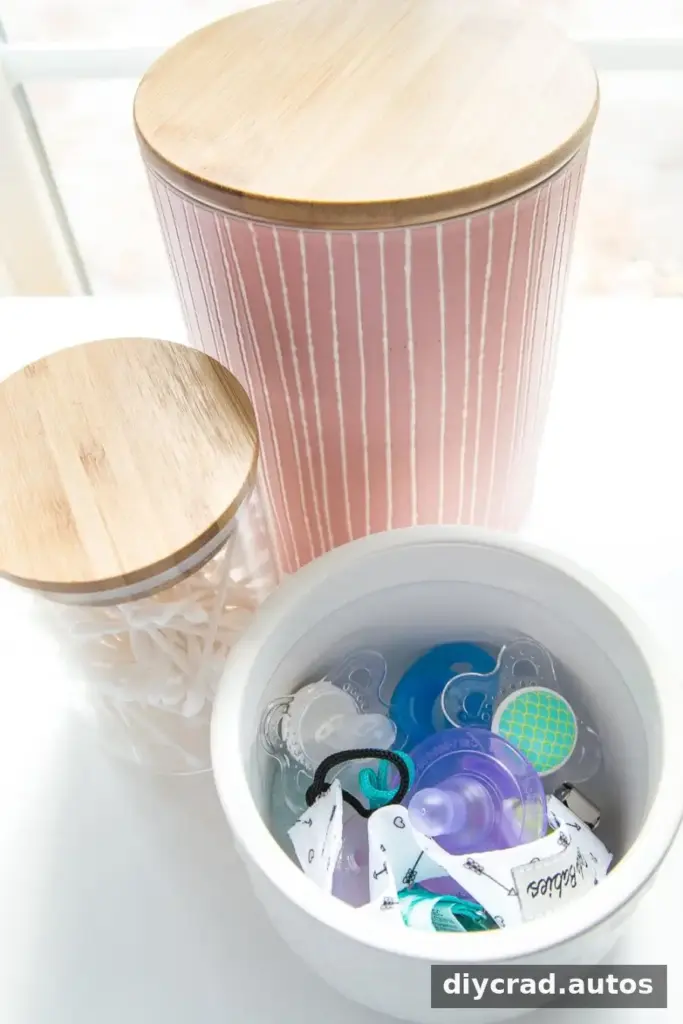
Separating accessories by type makes it easier to find what is needed without rummaging through a drawer. Wash pacifiers and other items according to their care instructions rather than relying on storage alone to keep them clean.
Tiered basket for changing-time supplies
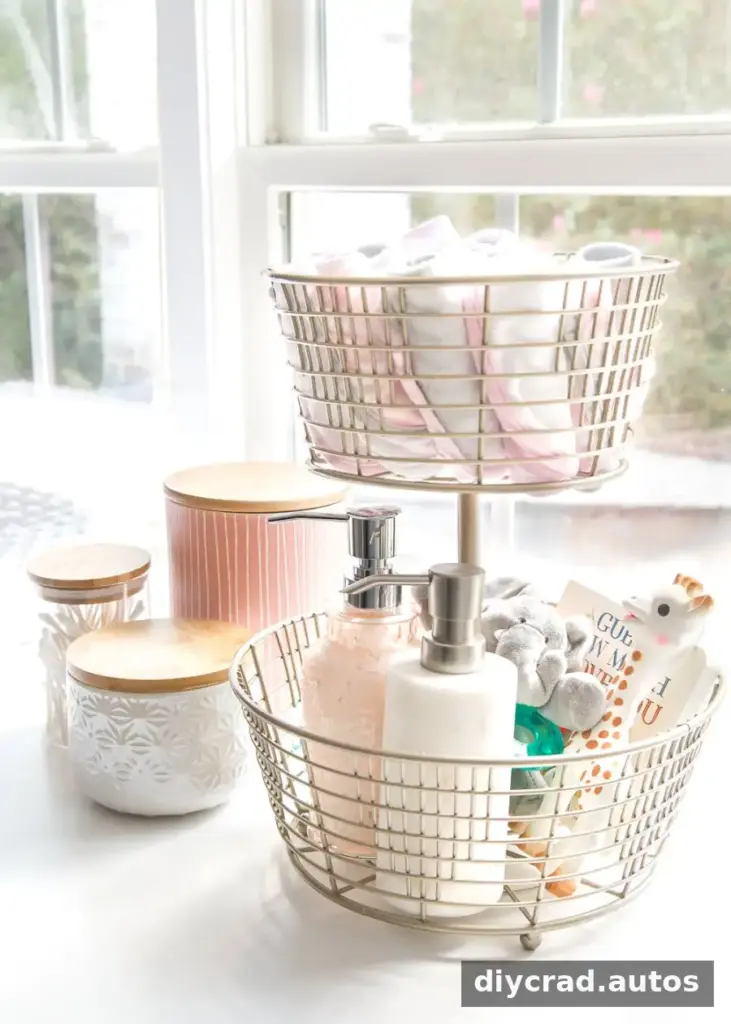
A tiered fruit basket keeps frequently used items visible and within an adult’s reach. It can hold washcloths, toys for brief distraction, and baby-care products such as lotion or hand sanitizer. Place it on a stable surface away from the baby’s reach, and return items after use.
Organizing the nursery dresser
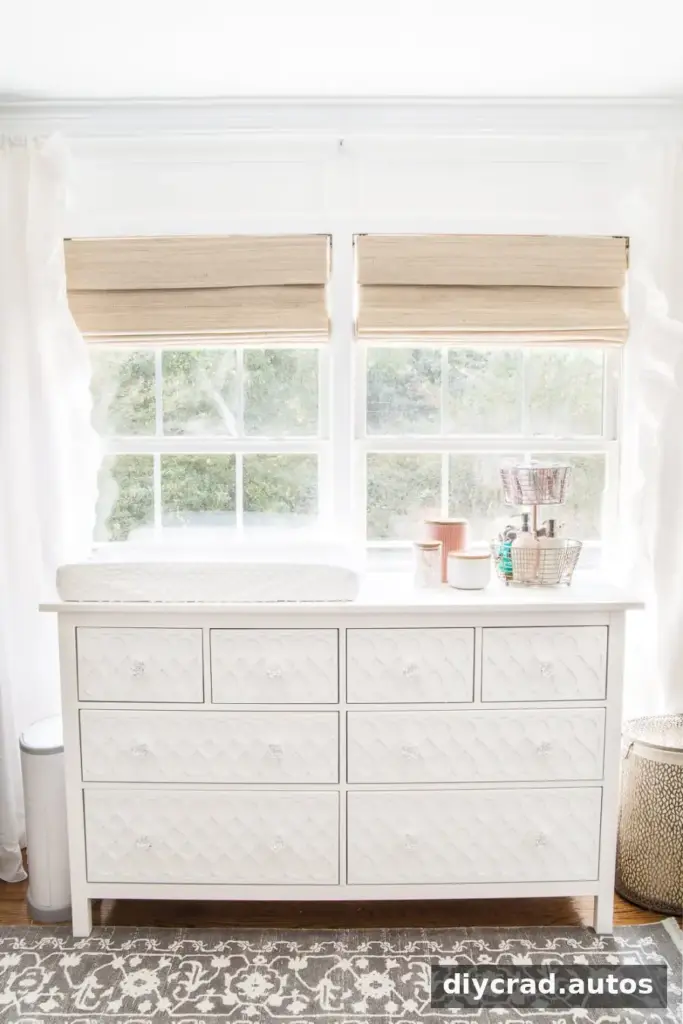
A dresser with drawer inserts can make it easier to create separate zones for diapers, accessories, and clothing. The IKEA Hemnes dresser in this room has multiple drawers, allowing supplies to be grouped by purpose and clothing size.
Changing and diaper supplies
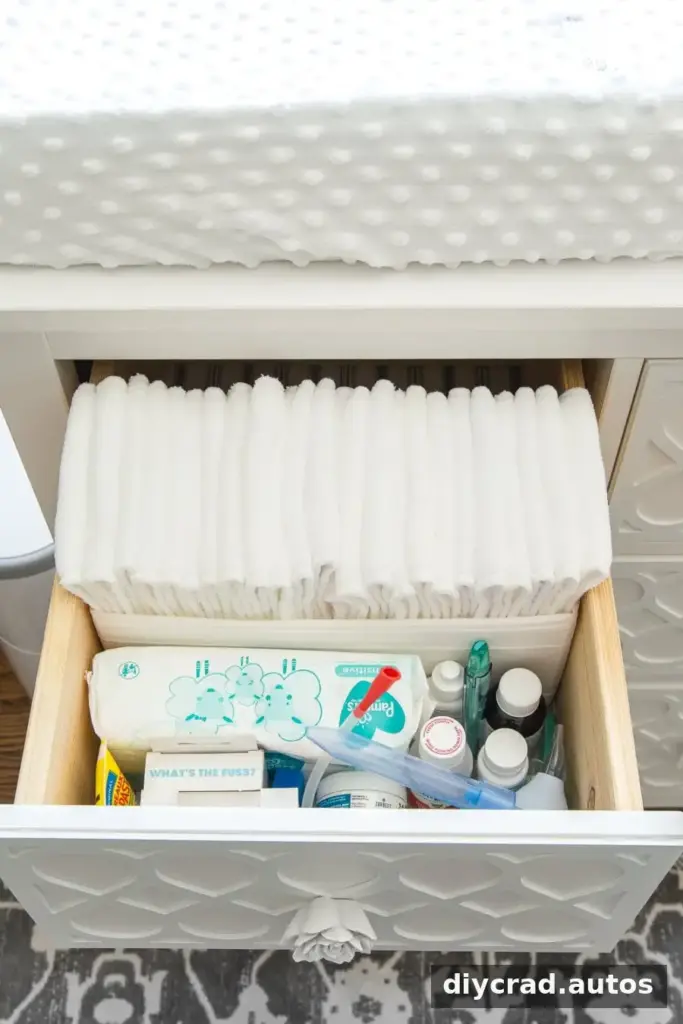
The first drawer holds cloth diaper liners, diaper cream, a thermometer, an aspirator, and disposable wipes for quick cleanups. Keep medicines and other potentially hazardous products in a secure place, not merely in a drawer a baby may eventually reach.
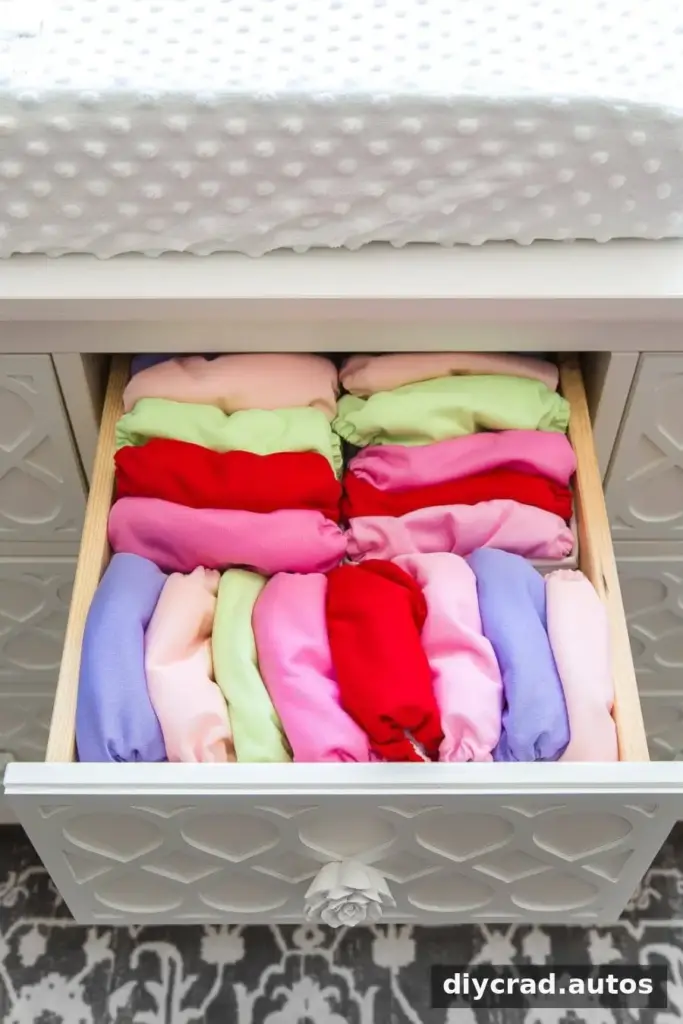
The second drawer contains 30 cloth diaper covers. The amount that works for a family depends on laundry routines and personal preference, so adjust the quantity to suit how often diapers are washed.
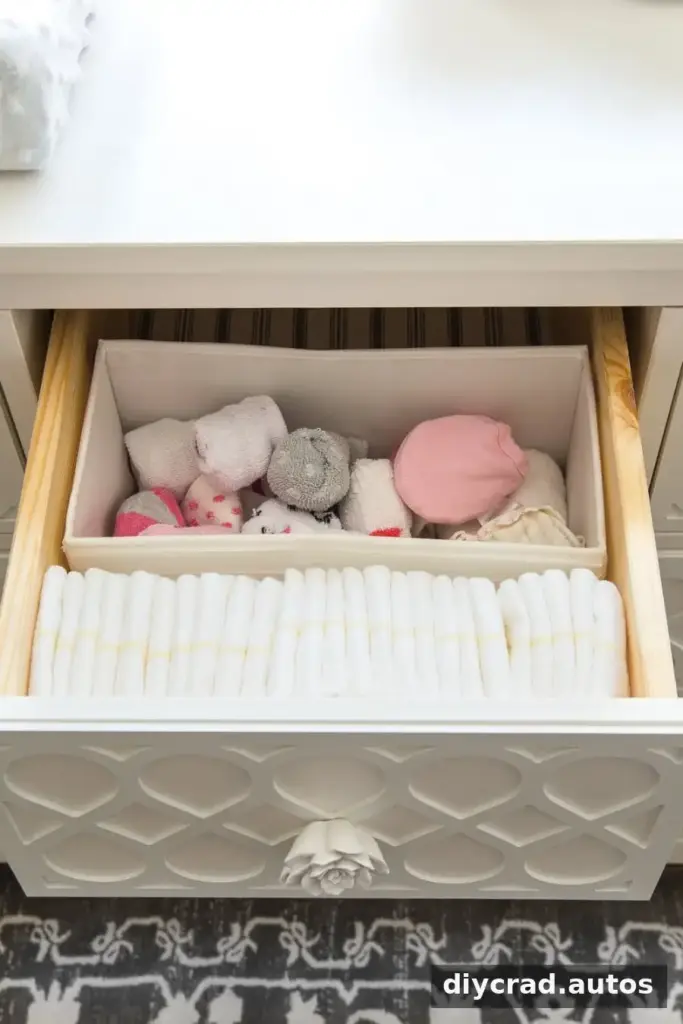
A few disposable diapers are stored in the third drawer for visiting caregivers who may be less familiar with cloth diapering. A drawer organizer keeps socks and mittens from becoming mixed in with them.
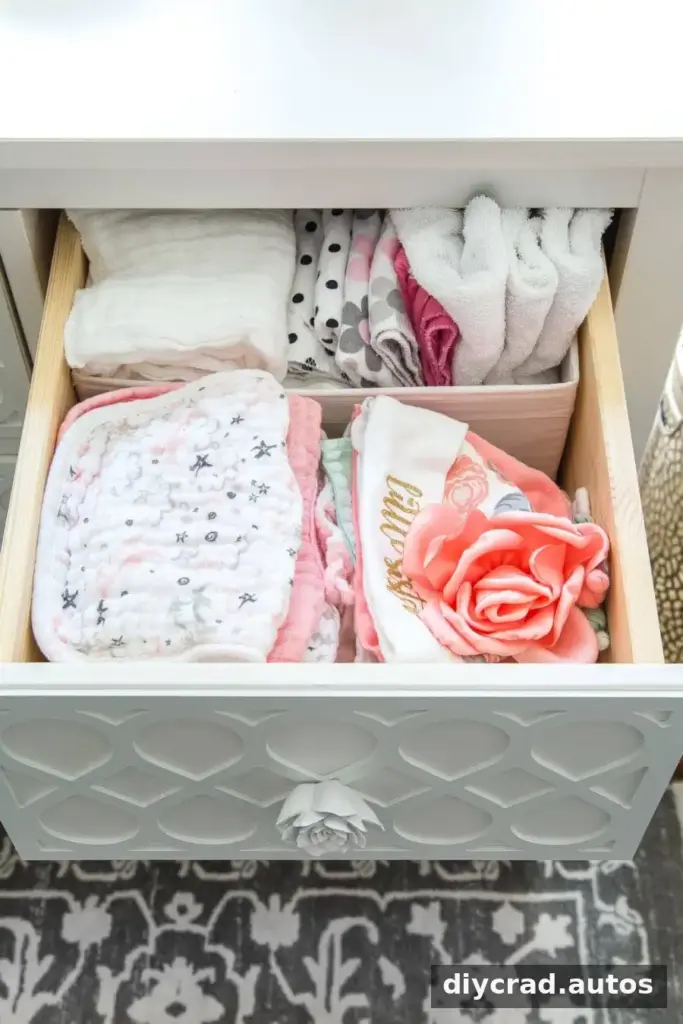
The fourth drawer is used for burp cloths, bibs, and hats. Grouping frequently used items together helps caregivers put clean supplies away in the same place.
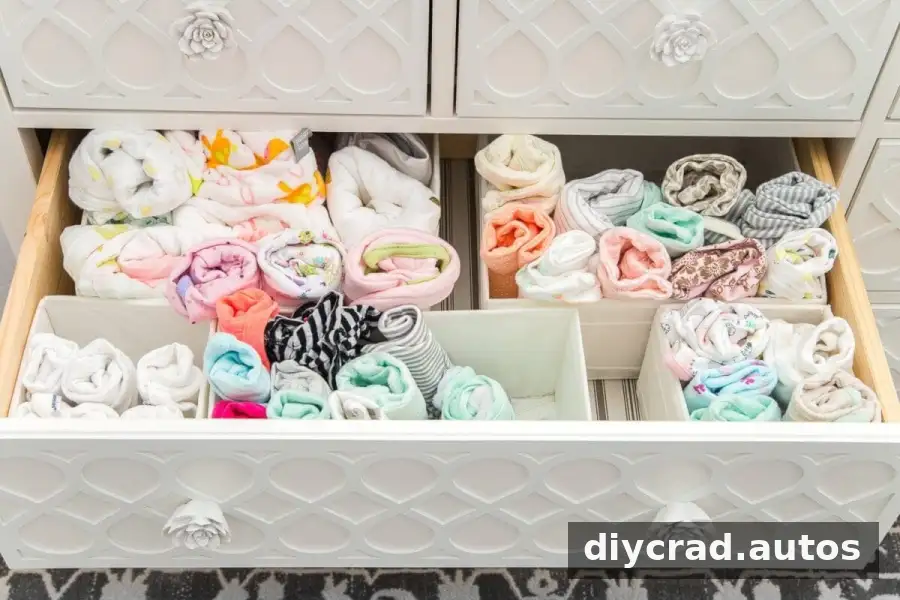
Swaddle blankets are rolled in the fifth drawer to save space and make them easy to pick up. This drawer also holds newborn and 0–3-month onesies, footed pajamas, and gowns.
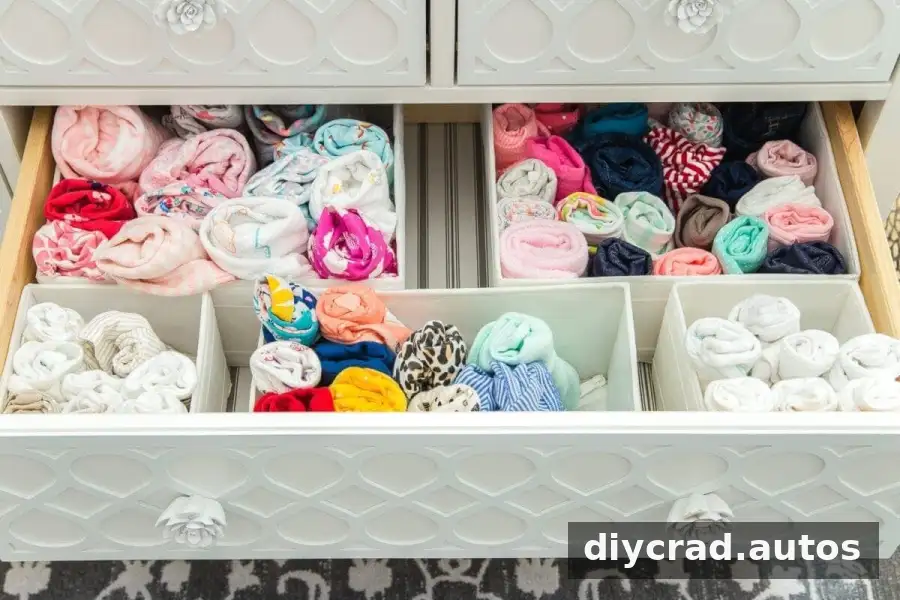
The sixth drawer is dedicated to 3–6-month pajamas, onesies, and pants. Keeping one size together makes it easier to see what fits and what may need to be moved into storage.
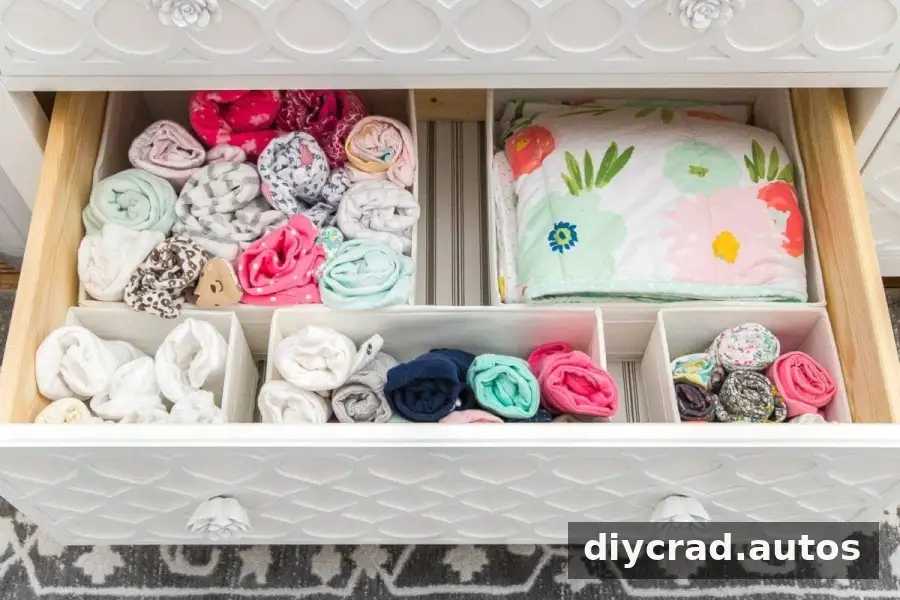
The seventh drawer holds 6–9-month clothes and a few security blankets. Check items periodically as a baby grows so that outgrown clothes do not crowd the everyday storage space.
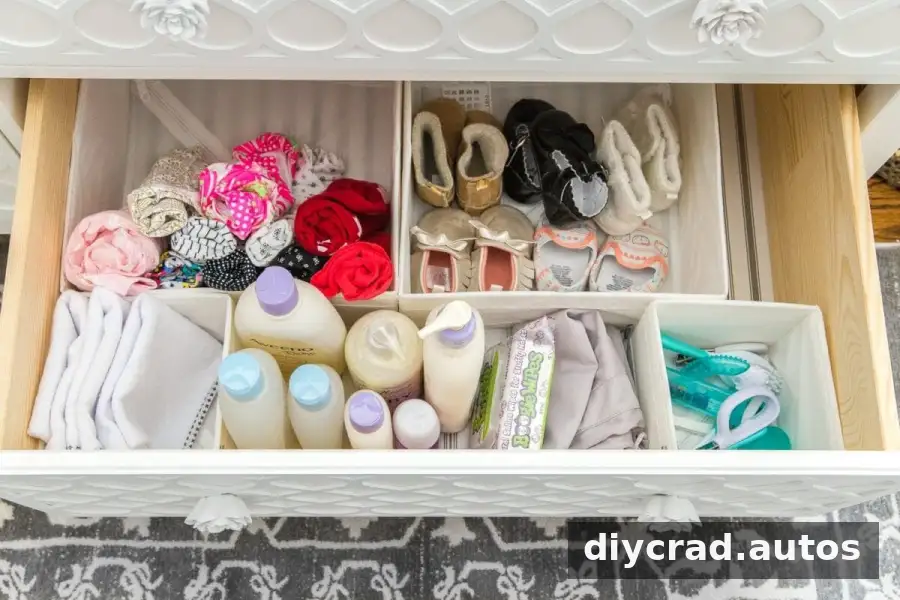
The eighth drawer contains 9–12-month clothes, bath wash, spare lotion, changing-pad protectors, extra Boppy covers, a travel wet bag, an additional washable wet bag for cloth diapers, Boogie wipes, and a grooming kit. If a drawer becomes difficult to close, move less-used items to a closet basket or shelf.
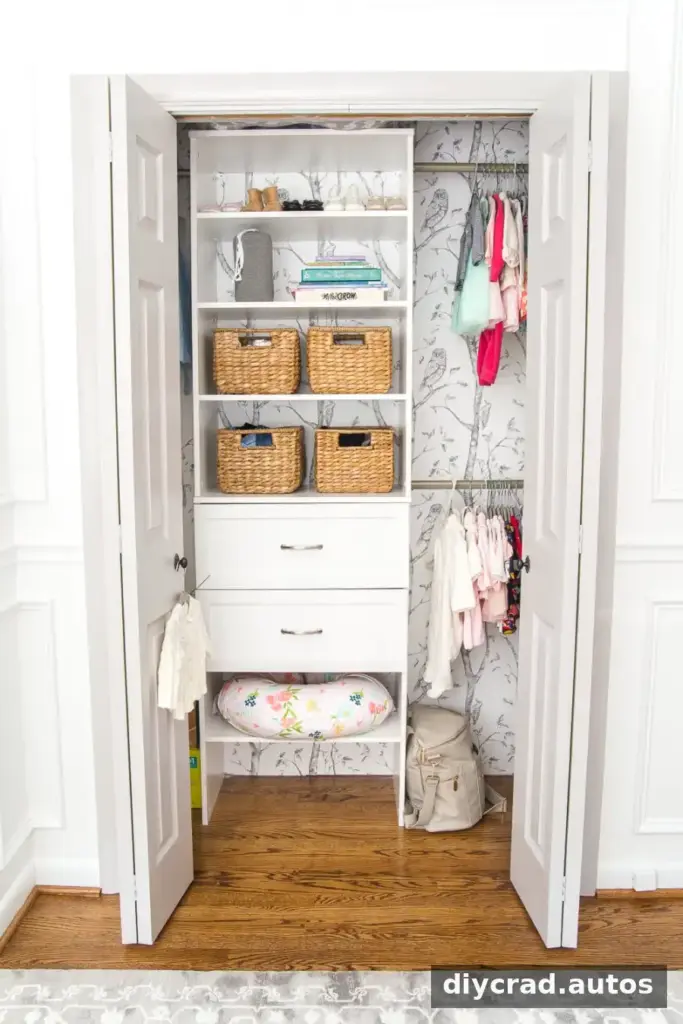
Closet storage and clothing sizes
Replacing wire shelving with solid shelves created room for drawers and baskets. Measure the closet before changing its layout, and keep frequently used items at a comfortable adult height. Baskets can be labeled by size so future clothes remain separate from the current wardrobe.
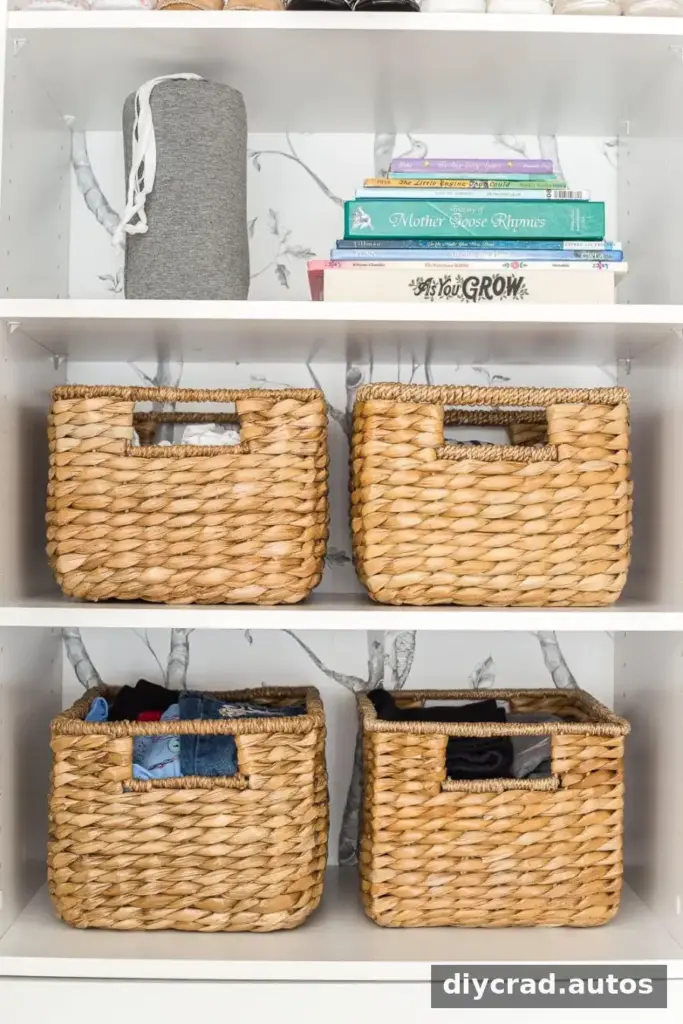
Closet baskets hold larger play clothes saved for later, including T-shirts, pants, and pajamas in 12-, 18-, and 24-month sizes. Store out-of-season or future-size clothing together, then move it to the dresser when it becomes useful.
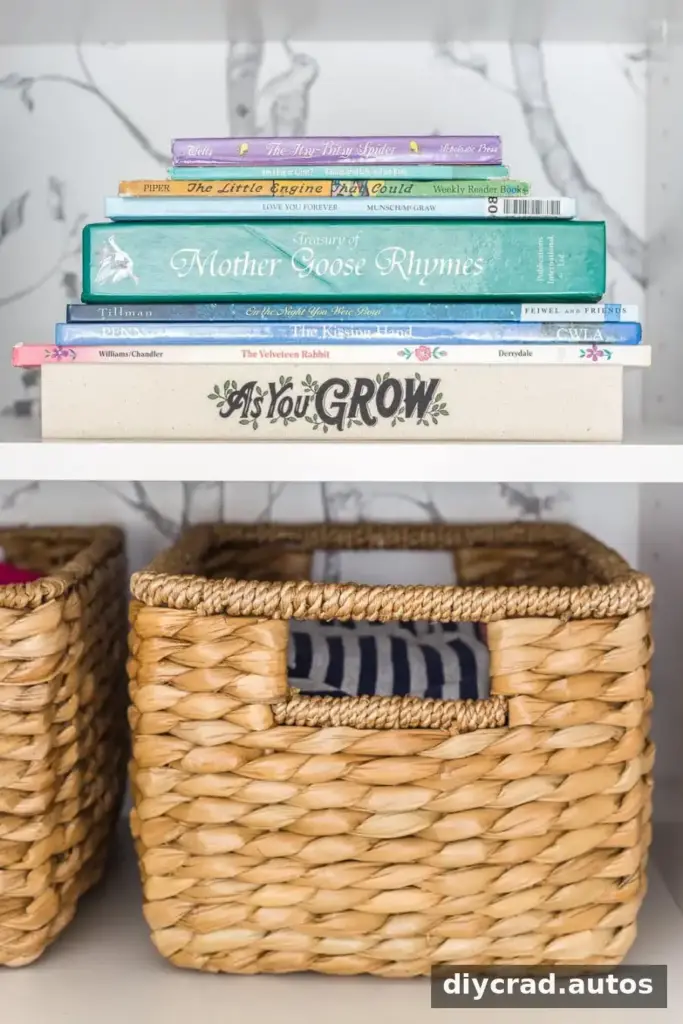
Books on an accessible shelf are ready for bedtime reading. Keeping the baby book nearby can also make it easier for caregivers to record milestones. Position books so they cannot fall into the crib or onto a child.

The first closet drawer stores spare disposable diapers and wipes for travel or visits with caregivers who prefer them. Keeping backup supplies together makes it easier to restock a travel bag.
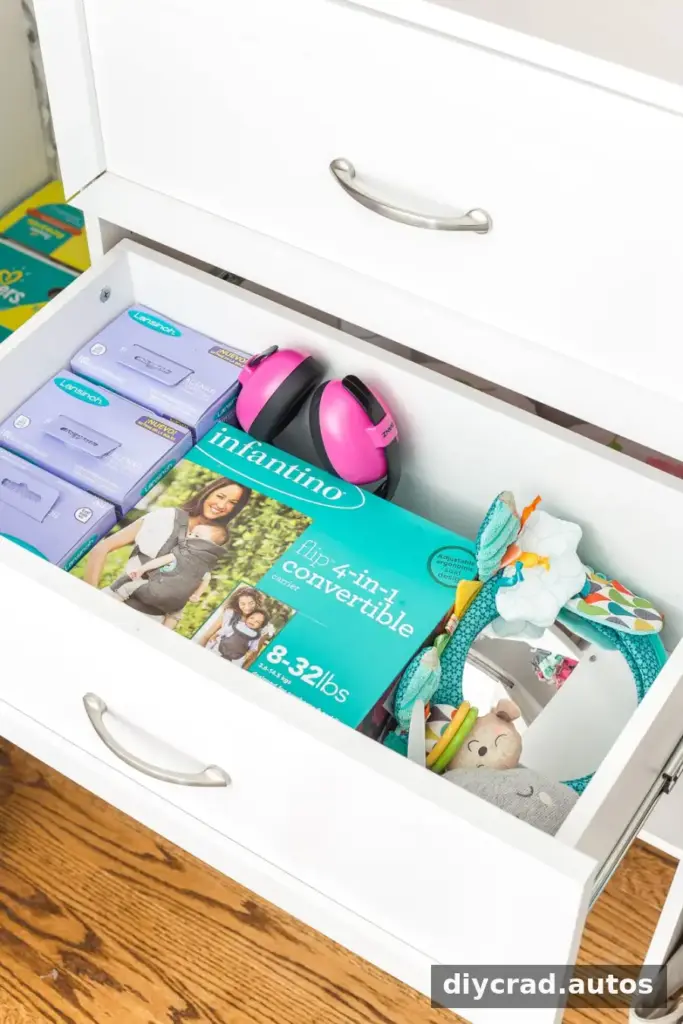
The second drawer serves as flexible storage for breast milk bags, a baby carrier, noise-reducing earmuffs, and tummy-time toys. Review this drawer regularly and remove anything that is no longer needed.
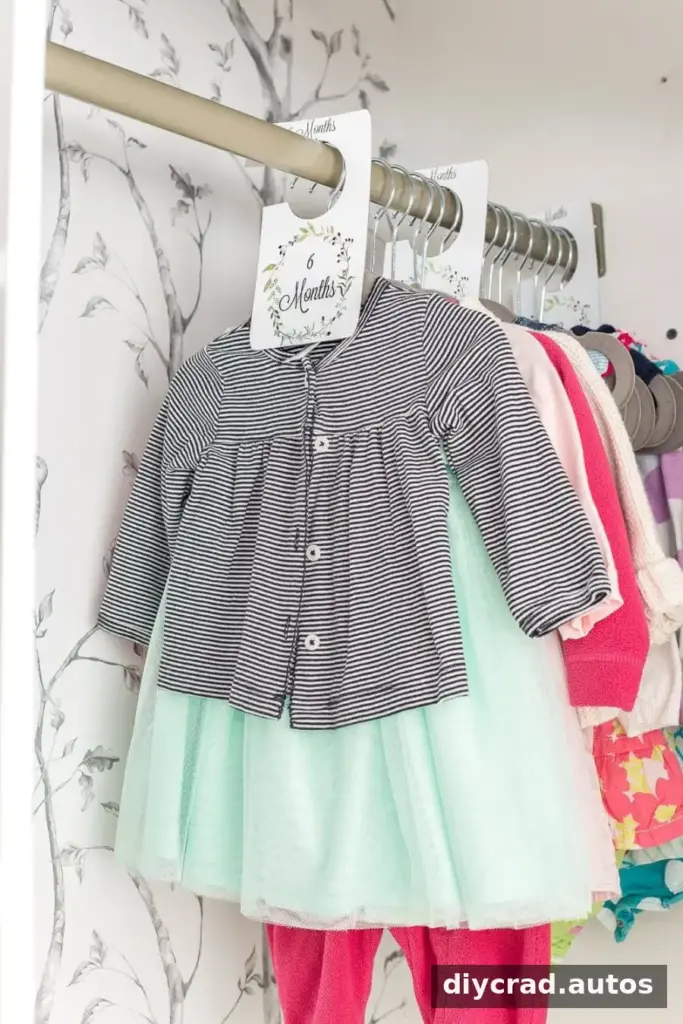
Printable dividers can separate hanging clothes by size. They are especially helpful when several sizes are stored together or when another caregiver is putting laundry away.


Keeping nursing and soothing supplies close
A nursing or rocking chair is more useful when everyday supplies are within an adult’s reach. Keep the chair area uncluttered and make sure cords, small objects, and containers stay away from the baby.

Side table and soft lighting
A side table provides a place for essentials during feeding sessions. The accent lamp uses a low-light bulb, and the sound machine offers six pre-programmed white-noise sounds. Follow the manufacturer’s instructions for lighting and sound-machine placement, and keep electrical cords secured away from the crib.
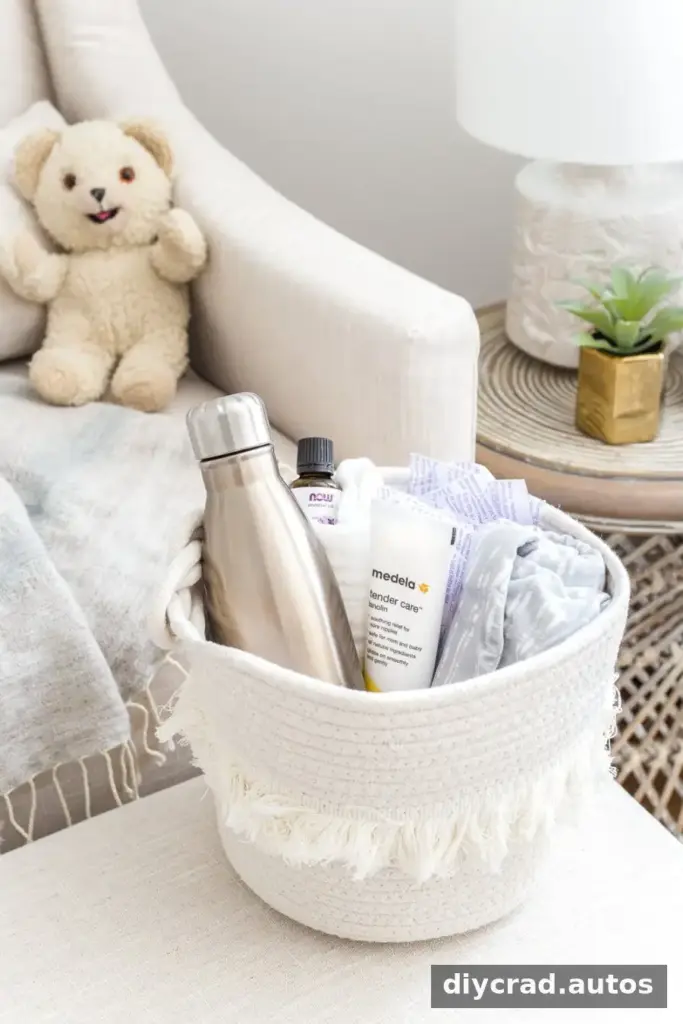
Nursing basket
A small basket beside the chair holds nursing pads, burp cloths, lanolin, and a bottle of water. Keeping these items together can reduce interruptions during feeding. If considering essential oils or other fragranced products around an infant, check with a qualified healthcare professional and follow appropriate product-safety guidance.
A useful nursery organization system is one that is easy to maintain and can change as a baby grows. Store daily essentials close to where they are used, label items that caregivers may not recognize, and regularly check that products and clothing are still appropriate for the child’s current stage.
With clear storage zones for diapers, clothes, and feeding supplies, nursery organization can make routines easier to navigate and help keep the room functional as needs change.