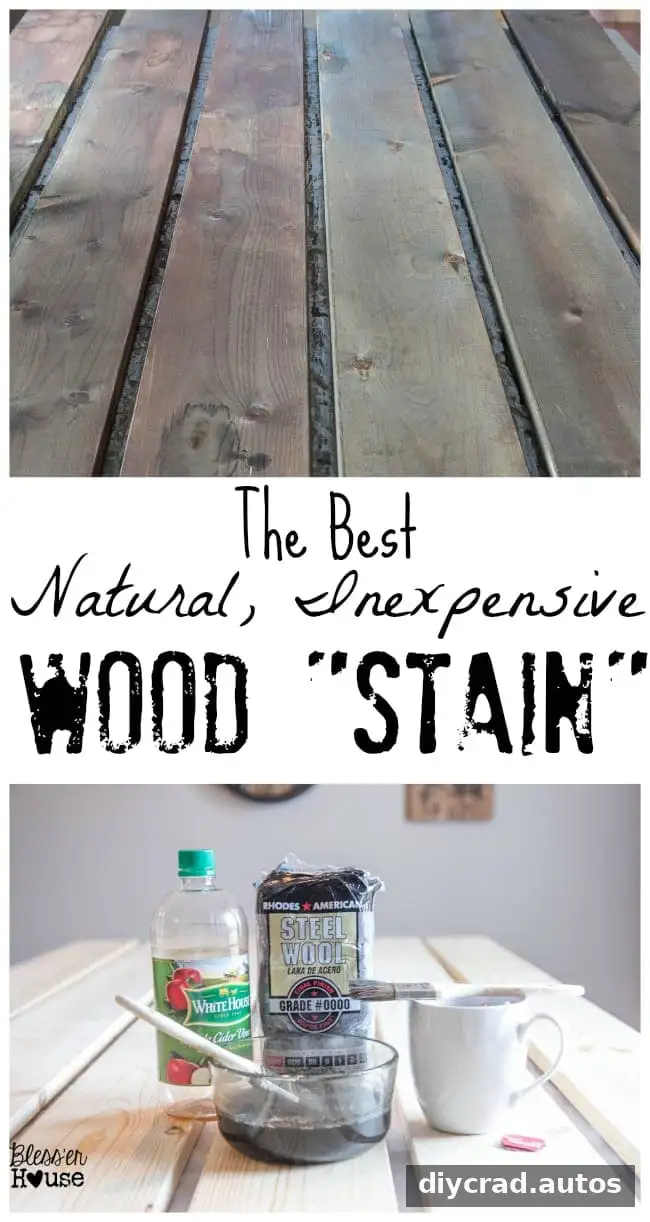
Vinegar and steel wool wood stain is a simple way to give unfinished wood a weathered, aged appearance using a vinegar solution and tannin-rich black tea. The finish develops through a reaction with tannins in the wood, so results can vary by wood type and board. Make a test sample first to see how the color develops before treating a larger project.
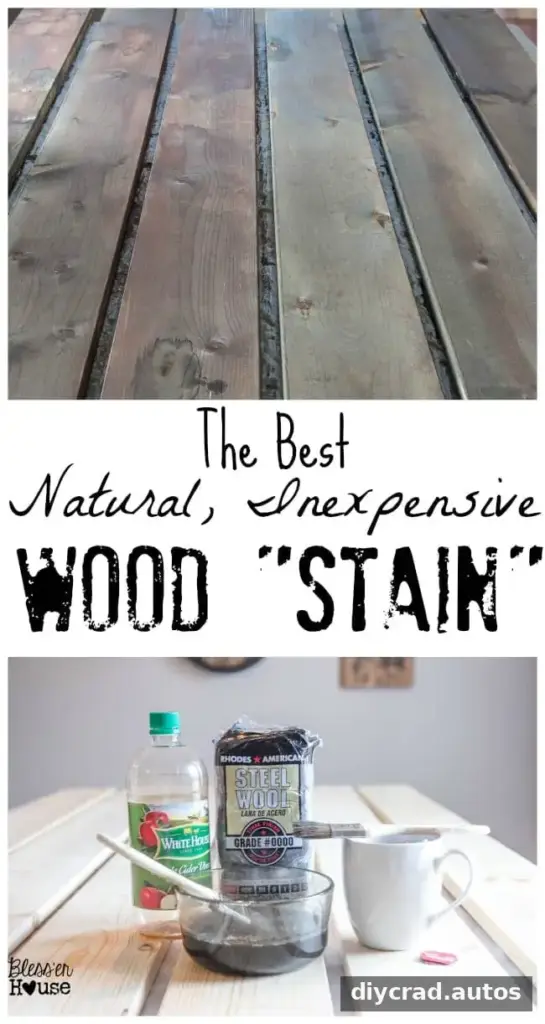
This method uses household supplies and took about 30 minutes of hands-on work in the original test, with the mixtures prepared in advance. The ingredients cost about $5 in that test. Allow enough time for the tea and vinegar mixtures to sit, and remember that the wood itself may continue changing color after application.
How Vinegar and Steel Wool Wood Stain Works
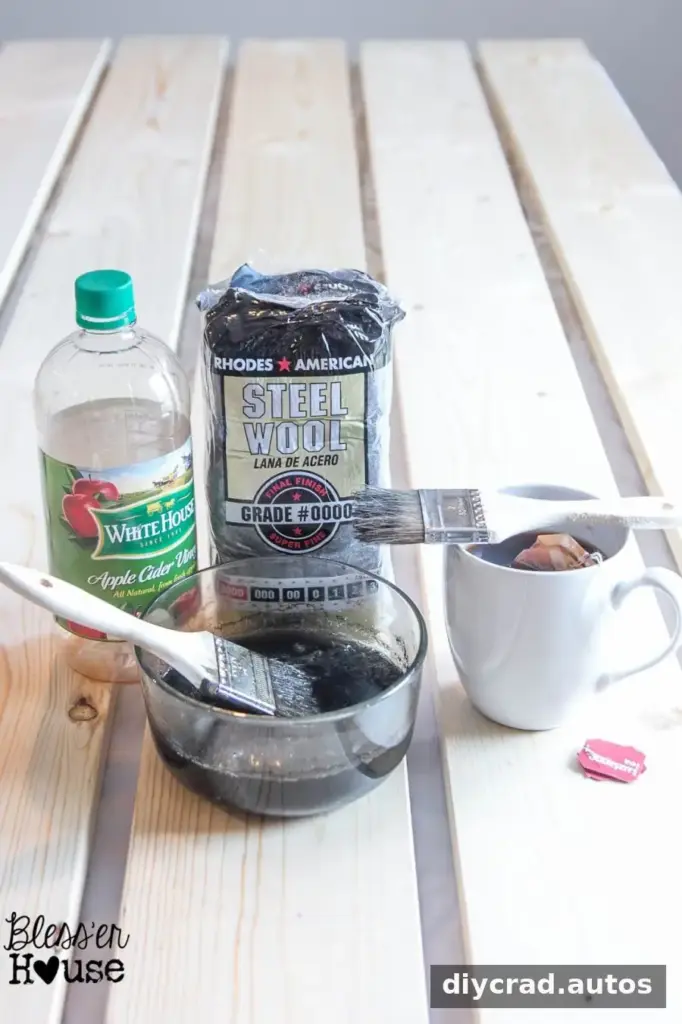
Steel wool left in vinegar creates an iron-rich solution. When brushed onto wood, it reacts with tannins and can darken the surface. Black tea adds tannins to the wood, which may make the reaction more noticeable. Woods with naturally higher tannin levels, such as oak or walnut, often darken more than lower-tannin woods such as pine or poplar.
The final shade depends on the wood, the preparation, and the mixture. Apple cider vinegar produced a grayer tone than white distilled vinegar in the test described here. Coffee tended to bring out browner tones, while black tea produced a grayer effect. For the most useful comparison, test the same combination on offcuts from your project rather than relying on a sample made from a different wood.
Choosing the Wood and Testing the Color
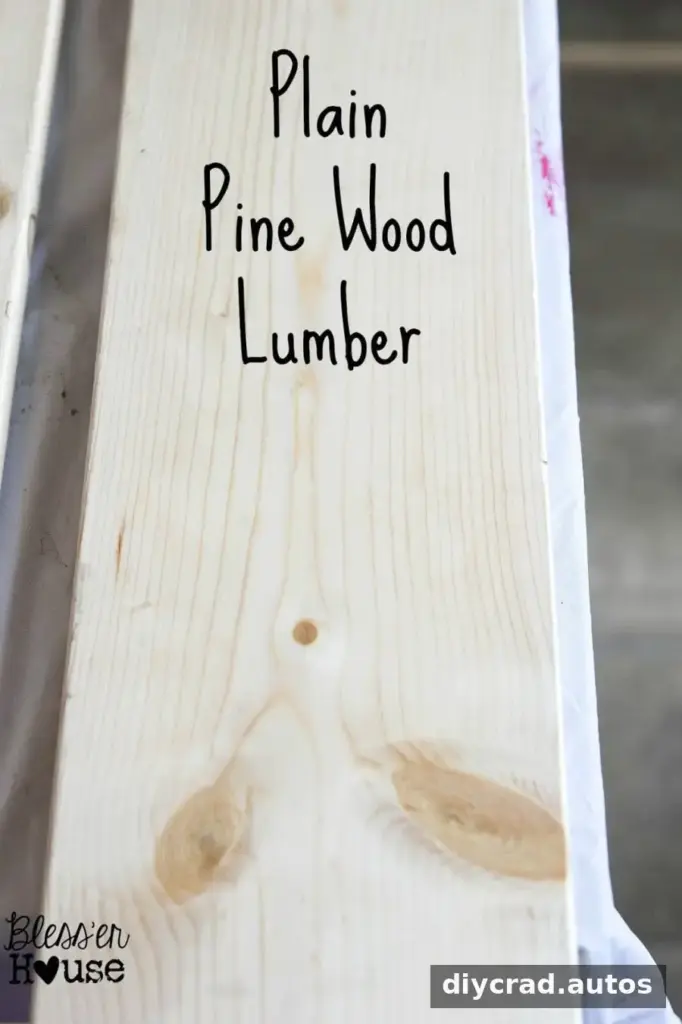
Use clean, unfinished wood for the most predictable reaction. Existing paint, stain, finishes, or residue can prevent the solution from contacting the wood evenly. Sand a small scrap in the same way you plan to sand the final piece, then apply the tea and vinegar mixture using the steps below.
Test different vinegar types if you want to compare tones. White vinegar, red wine vinegar, apple cider vinegar, and balsamic vinegar may produce different results. The recipe below uses apple cider vinegar; changing the vinegar or wood can change the finished color.
Ingredients and Supplies
- 2 cups of boiling water
- 4 family-size black tea bags
- 1 real steel wool pad, 0000 grade
- 2 cups of vinegar
- 2 inexpensive chip brushes or a foam brush
- A glass jar
- Medium-grit sandpaper
- Unfinished wood pieces, such as pallet wood
Wear gloves and protect the work surface with a waterproof drop cloth. Work in a well-ventilated area, and keep the mixtures away from children and pets. The vinegar-and-steel-wool jar must not be sealed: gas may form as the mixture sits.

How to Make and Apply the Stain
1. Sand the Wood
Lightly sand the surface with medium-grit sandpaper, then remove the dust. A clean, evenly sanded surface helps the liquid spread more consistently. Avoid skipping the test patch, especially when working with boards that differ in grain or color.
2. Brew the Tea
Pour 2 cups of boiling water over 4 black tea bags. Let the tea steep for 24 hours, leaving the bags in the water during that time. The result is a concentrated tea solution to brush onto the wood before the vinegar mixture.
3. Prepare the Vinegar and Steel Wool Mixture
Place the 0000-grade steel wool pad and 2 cups of vinegar in a large glass jar. Let the mixture sit for 24 hours. Keep the jar uncovered while it rests; do not close it with an airtight lid. Follow the same precautions when handling and applying the solution.
4. Apply the Tea
After the tea has steeped, brush it over the prepared wood and allow the surface to sit for one hour. Apply it evenly and give the boards time to absorb the tea before moving on to the vinegar mixture.

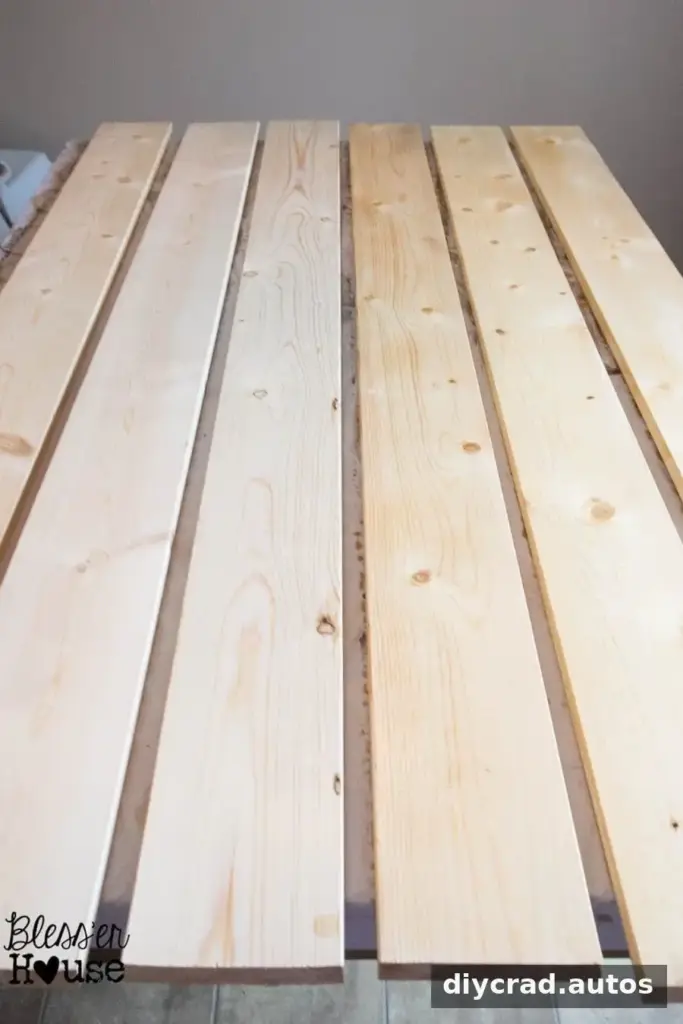
The three untreated planks on the left are shown beside three planks brushed with tea on the right.
5. Brush on the Vinegar Solution
After the hour has passed, brush the vinegar-and-steel-wool mixture onto the tea-treated wood. The surface may begin to turn gray quickly. Color can deepen over time: in the test, changes were visible after 5 minutes, 15 minutes, 30 minutes, and one hour.
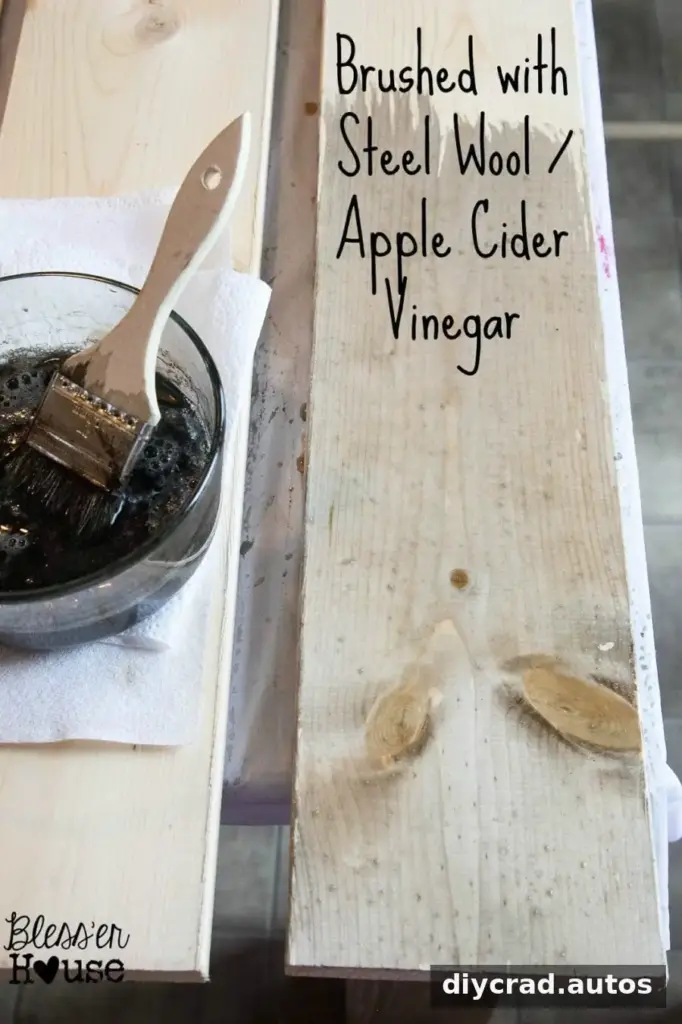
After about 5 minutes, the color had deepened.
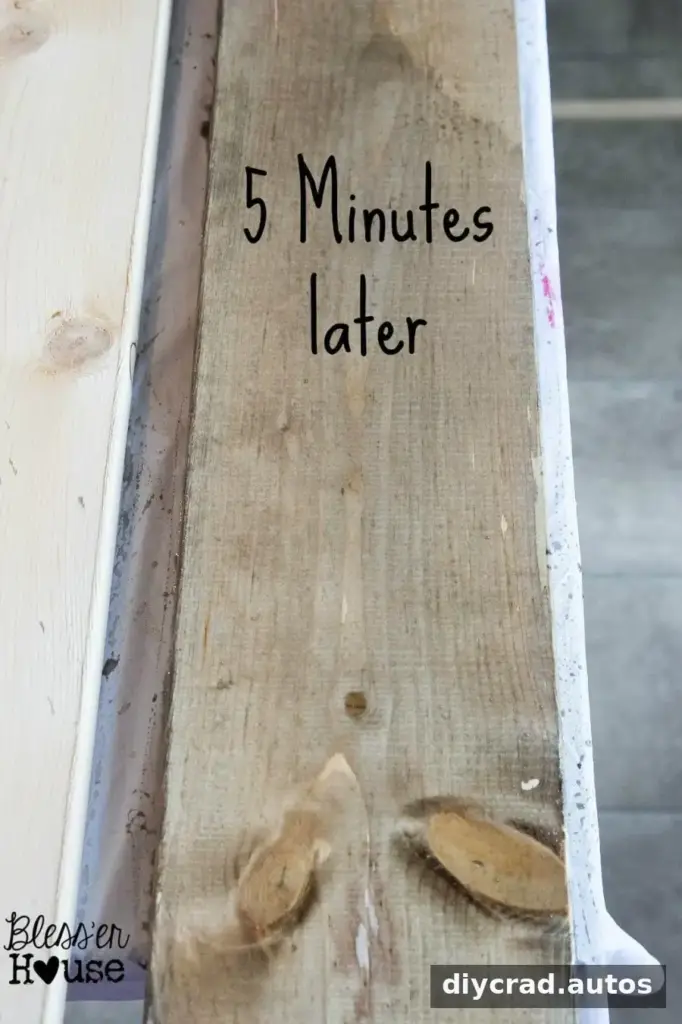
Shown after 15 minutes.
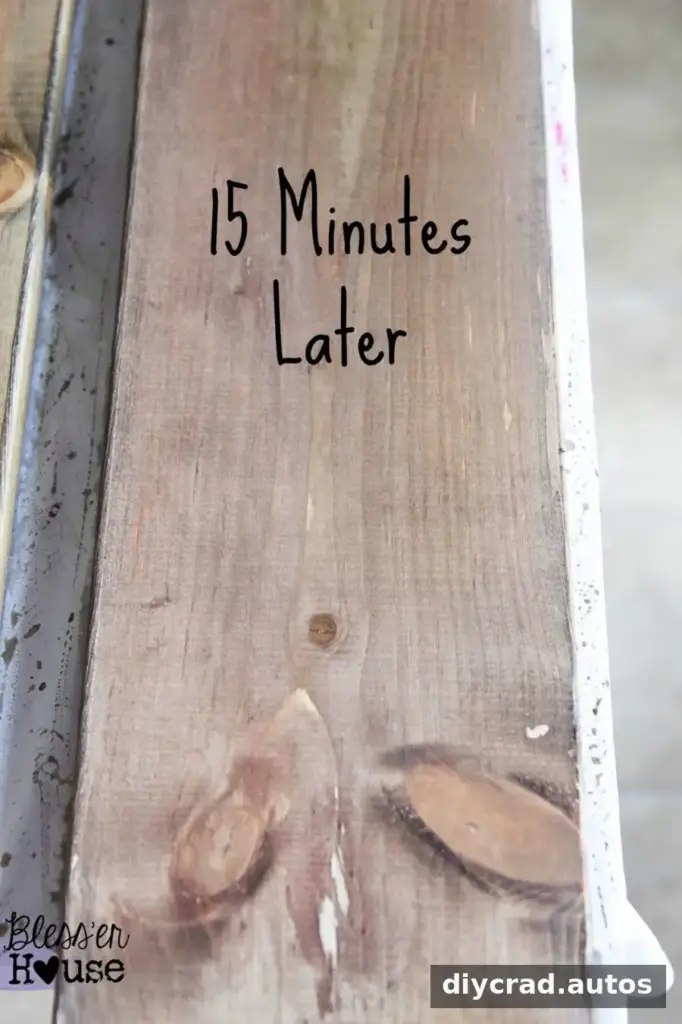
Shown after 30 minutes.
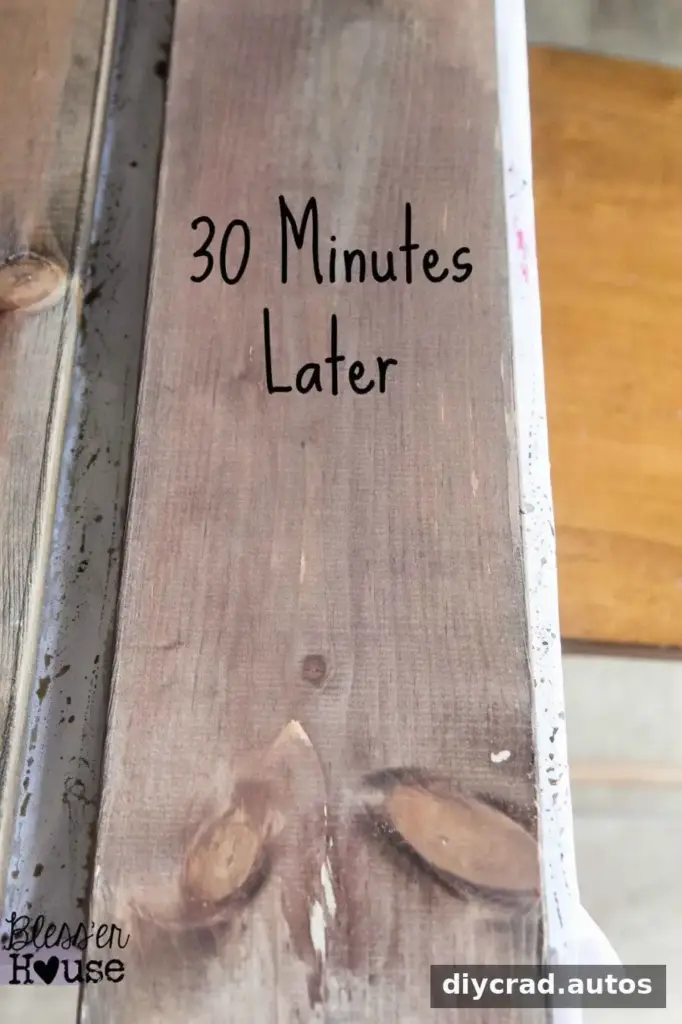
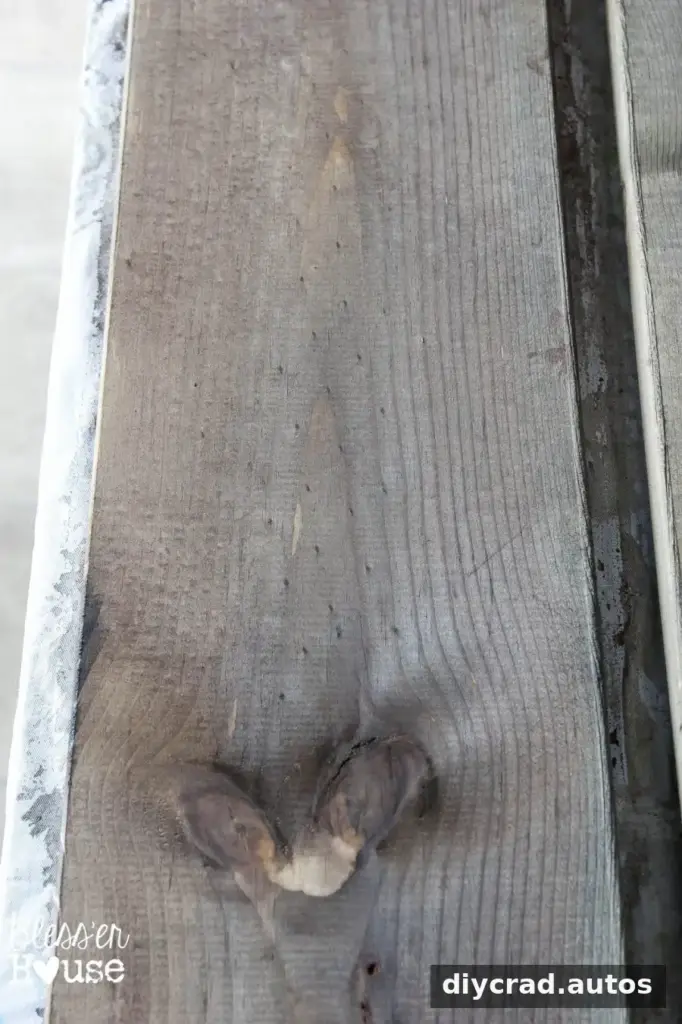
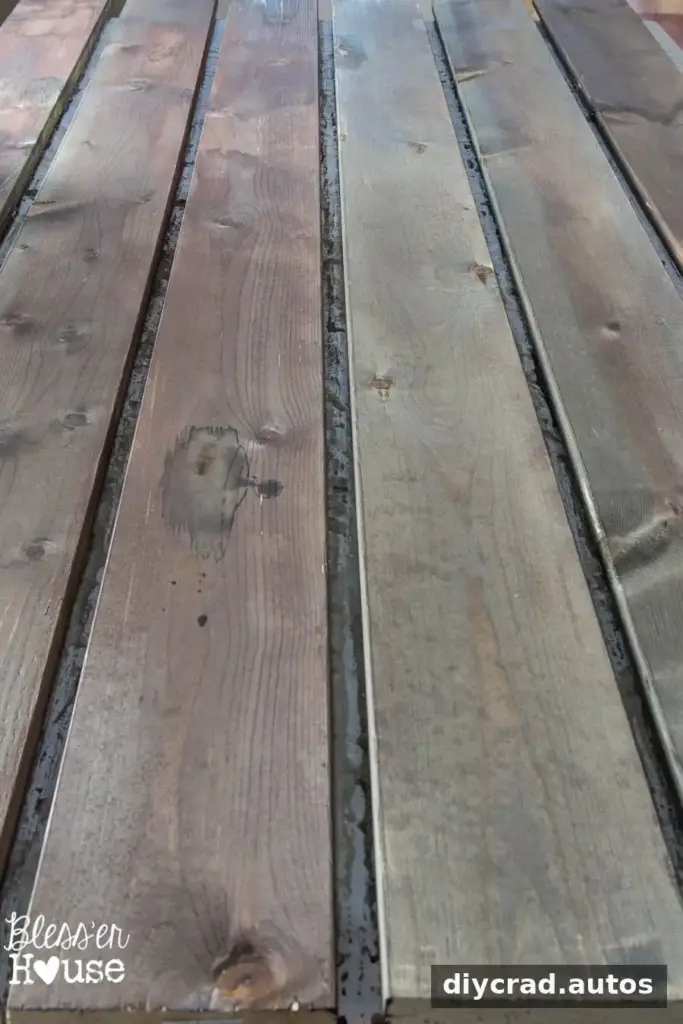
After about one hour, the boards had developed an aged appearance. Each board may finish differently because the reaction depends on its tannin content and other characteristics. A commercial stain may provide a more uniform color, while this method naturally produces variation. If some areas look too light, apply a little more solution carefully; uneven patches can also be lightly sanded to soften the contrast.
A second coat may not be necessary for a dark finish. If you want the wood darker, test an additional coat on a sample first, then apply it to the project only if you like the result. Let the surface dry fully before deciding whether another coat is needed.
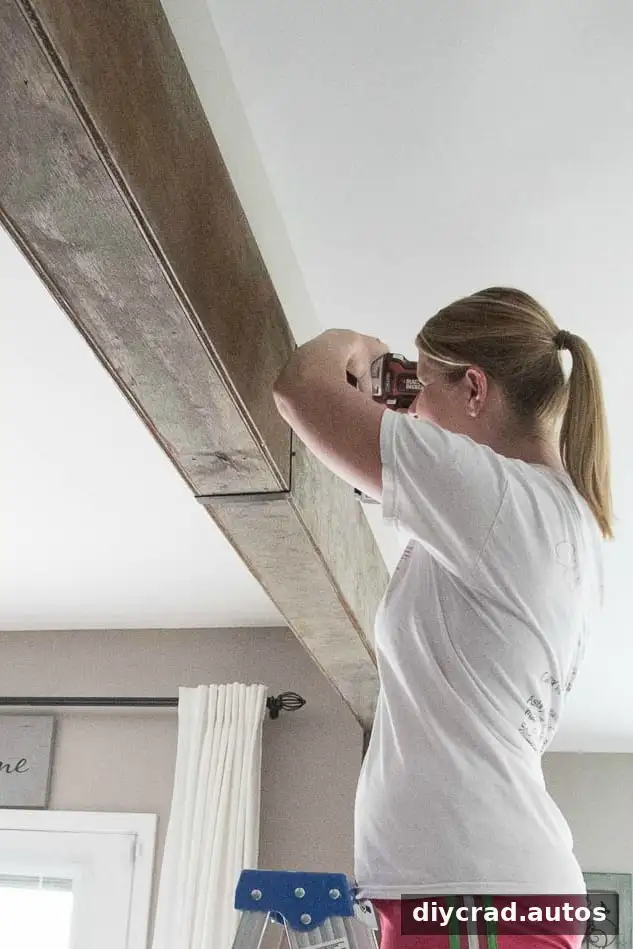
6. Seal the Finished Wood
Once the color is dry and satisfactory, protect it with a clear finish. Options mentioned for this project include clear wax applied with a lint-free cloth, or a coat of polycrylic or polyurethane. Sealing is especially useful for surfaces such as dining or coffee tables and for wood used in humid areas such as bathrooms. Follow the product label for application, drying time, and ventilation instructions.
Store the vinegar-and-steel-wool solution only for a limited time. It works best within 1–2 weeks and may become less effective if kept longer. Prepare a fresh batch when needed, and keep it clearly labeled and out of reach of children and pets.

This DIY finish is best suited to projects where natural variation is welcome. Test first, apply the tea and solution in sequence, and seal the surface according to how the wood will be used. With those precautions, vinegar and steel wool wood stain can create an aged look without relying on a uniform, factory-made color.