

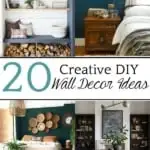
Blank walls can be tricky to decorate, especially when you want a room to feel personal without spending a lot. These DIY wall decor ideas offer options for different styles, budgets, and spaces—from simple framed displays to practical organizers. Choose one statement piece or combine a few complementary elements to give an empty wall a more finished look.
28 DIY Wall Decor Ideas for Blank Walls
Before starting, consider the wall’s size, the room’s purpose, and what you already own. Test an arrangement on the floor first, and use suitable hanging hardware for the weight of each item. The ideas below can be adapted to fit a hallway, living room, kitchen, bedroom, or other space.
1. Gallery Wall Frames
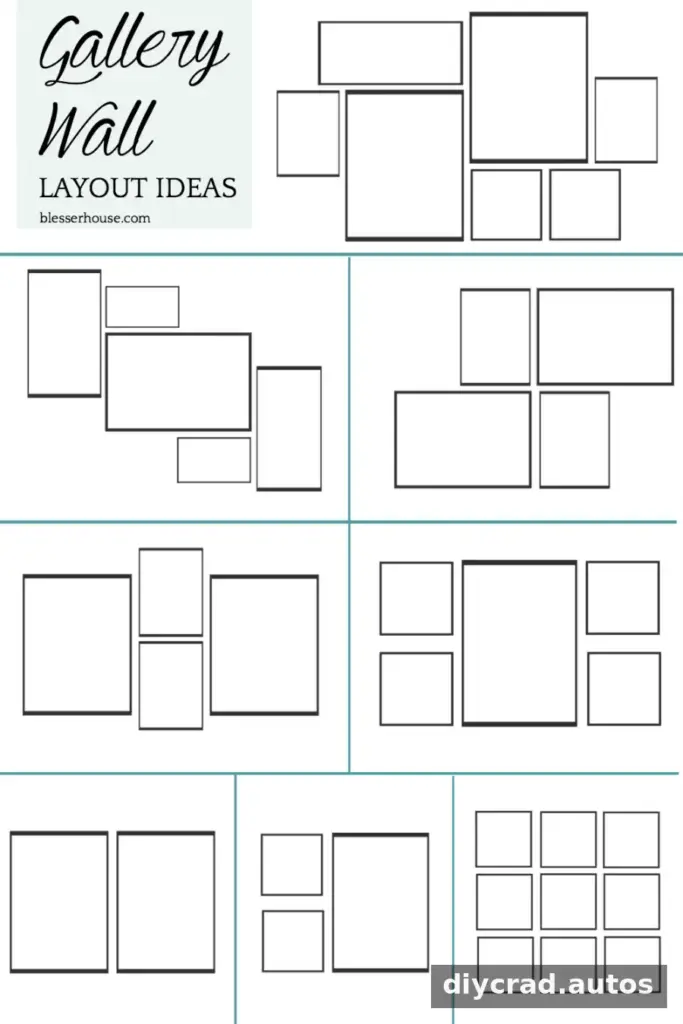
Arrange framed photos or artwork in a planned grouping rather than placing pieces at random. Black-and-white images or art in a shared color palette create a cohesive effect; varying colors and frame sizes can make the display feel more eclectic. Gallery walls work well in stairways, hallways, and living rooms.
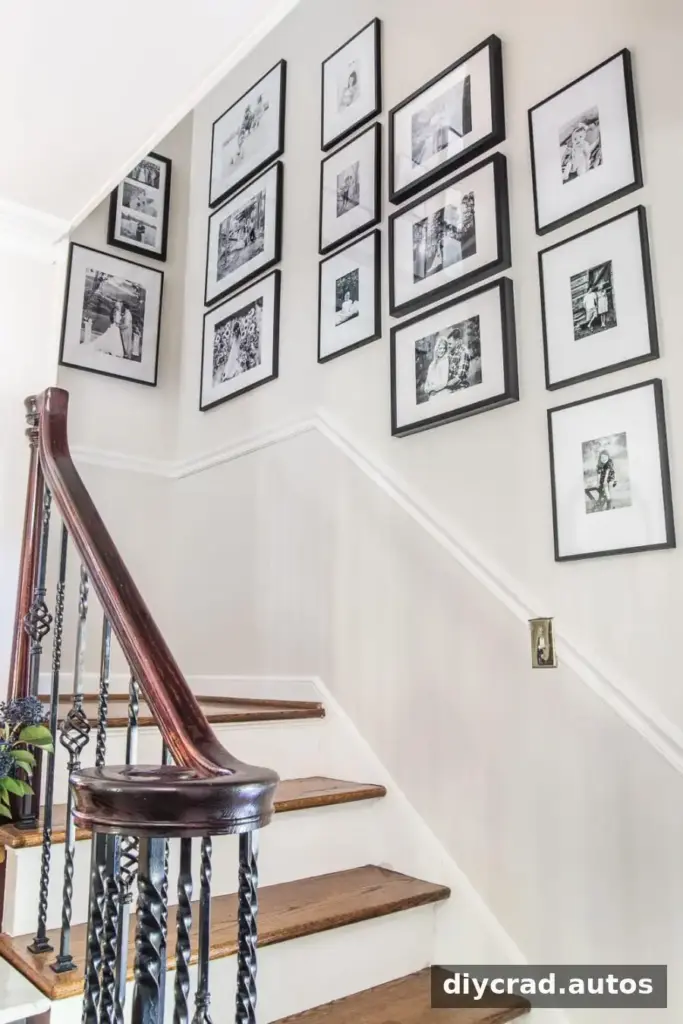
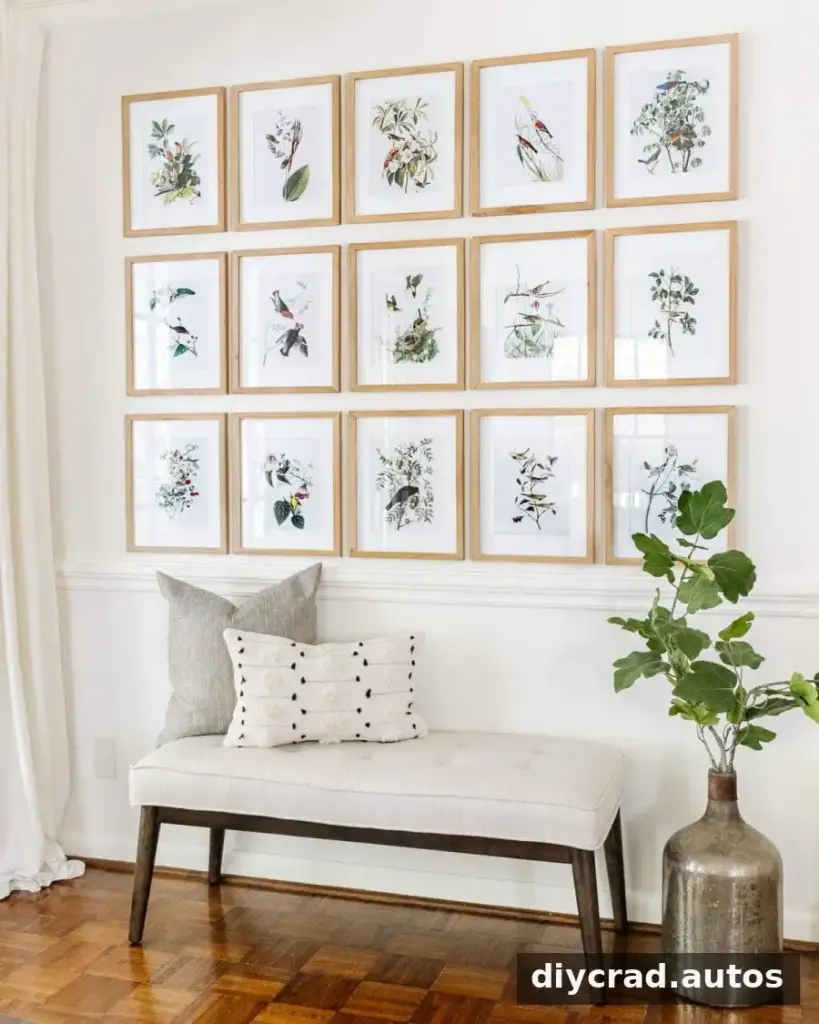
For a unified arrangement, leave roughly 2–6 inches between frames. Lay out the composition before hanging and measure carefully to reduce unnecessary holes in the wall.
2. Mirrors
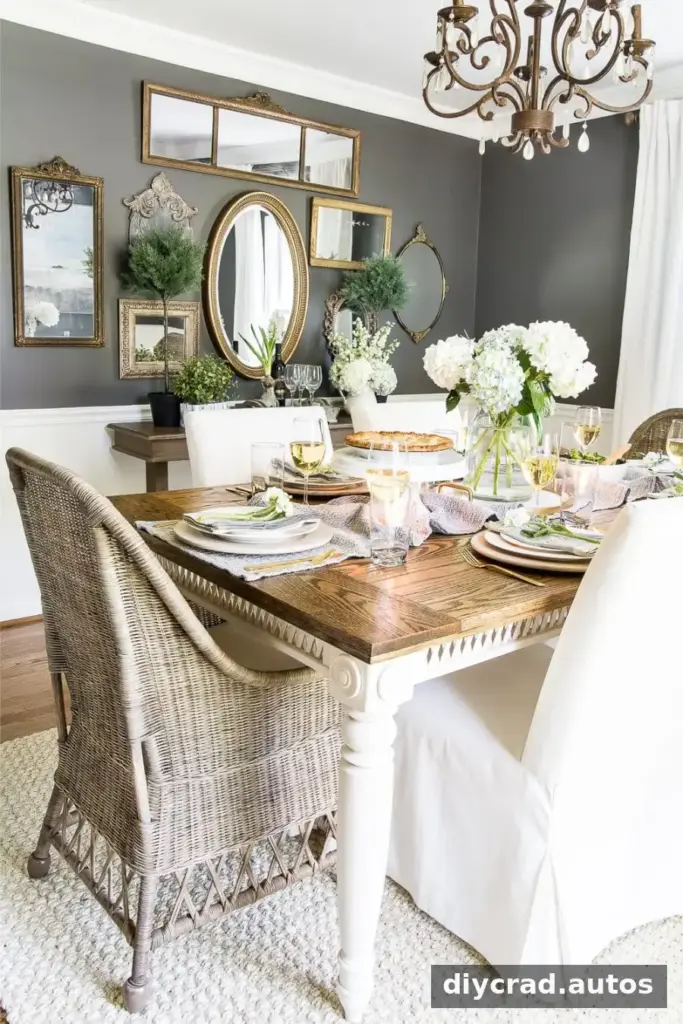
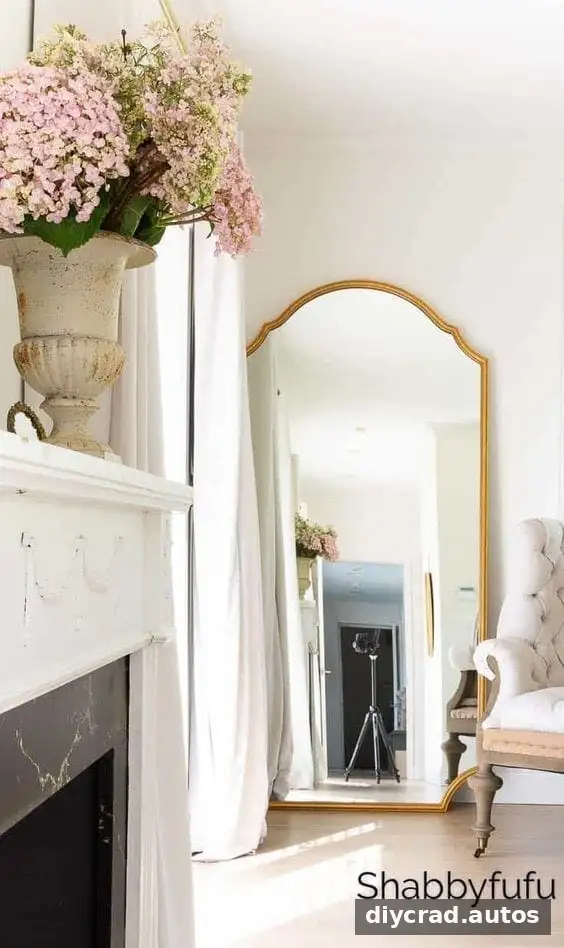
Group several mirrors together or use one large mirror as a focal point. Mirrors can reflect available light and help a small room feel more open. If painting a frame, protect the mirror surface and allow the finish to dry fully before hanging.
Source: Shabbyfufu
3. Oversized Map
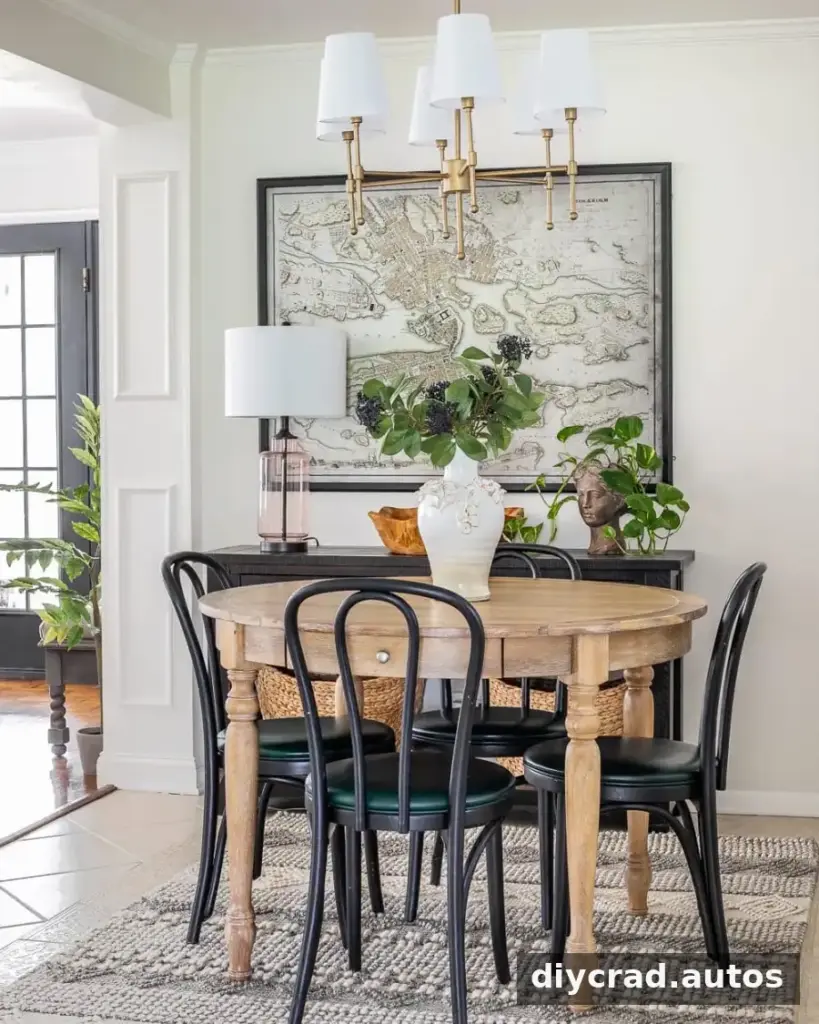
Choose a map connected to a meaningful place, such as a hometown, a current city, or a family’s heritage. Check image permissions before printing a map found online, and select a size that suits the wall.
4. Hats
Hats bring shape and texture to a wall and can be an affordable secondhand find. Use discreet hooks or supports that hold each piece securely without crushing its brim.
Source: Wildflower Home
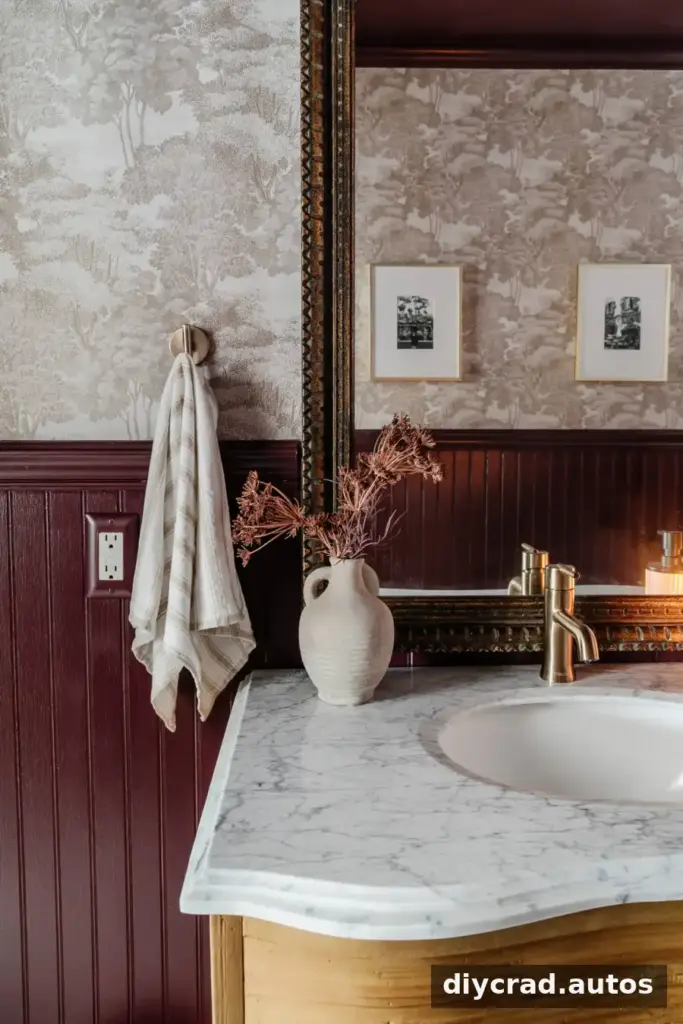
5. Wallpaper
A patterned wallpaper can make a wall the room’s main feature without needing additional artwork. Measure the surface before buying materials, and follow the product instructions for preparation and installation.
6. Decorative Plates
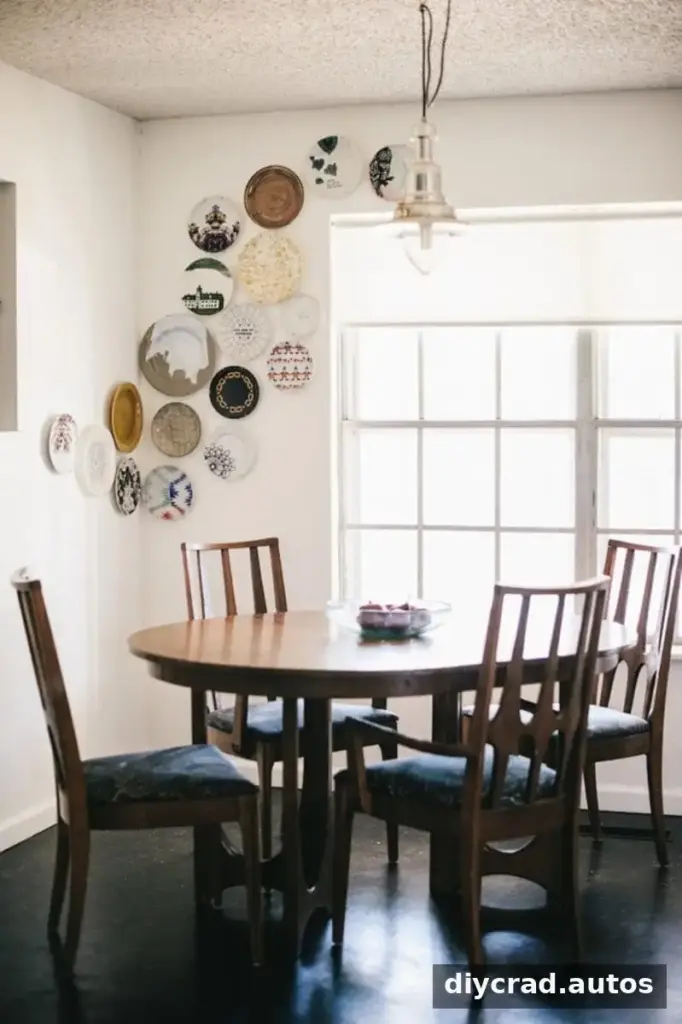
Vintage or secondhand plates can add color and pattern to a kitchen or dining area. Use plate hangers designed for display, and check that each plate is secure before positioning it above furniture or a walkway.
Source: Design Sponge
7. Wall Molding
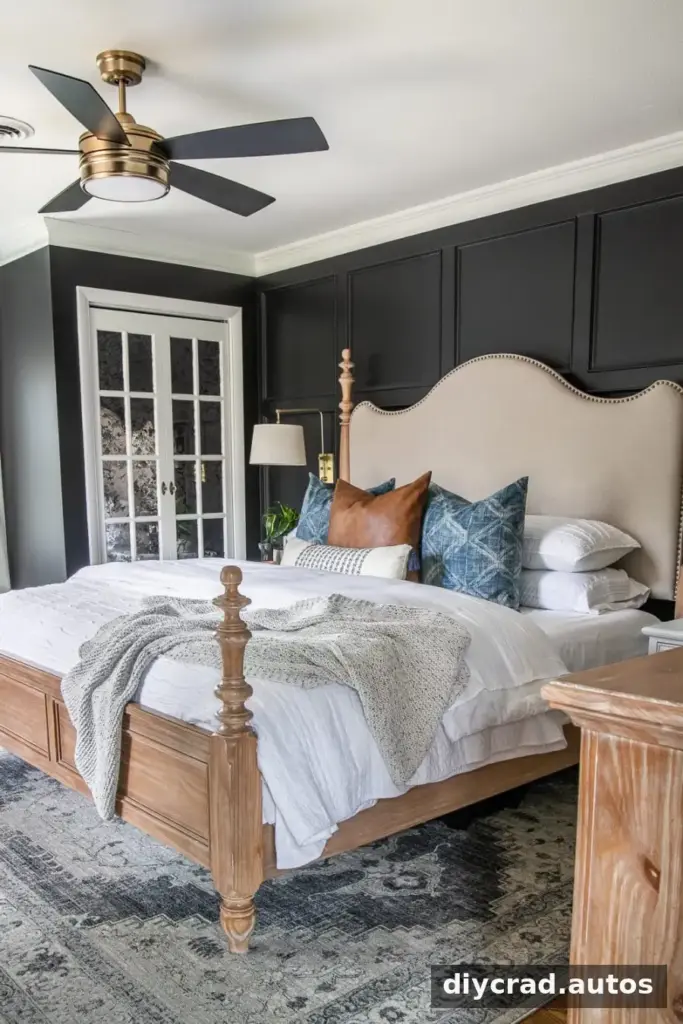
Decorative molding adds architectural detail and may be enough to give a wall character on its own. Possible styles include traditional grid molding, picture-frame molding, board and batten, shiplap, and stained plank walls. Plan the layout before installation so the spacing looks balanced.
- Traditional style grid molding
- Picture-frame molding
- Board and batten
- Shiplap
- Stained plank wall
8. Floating Shelves
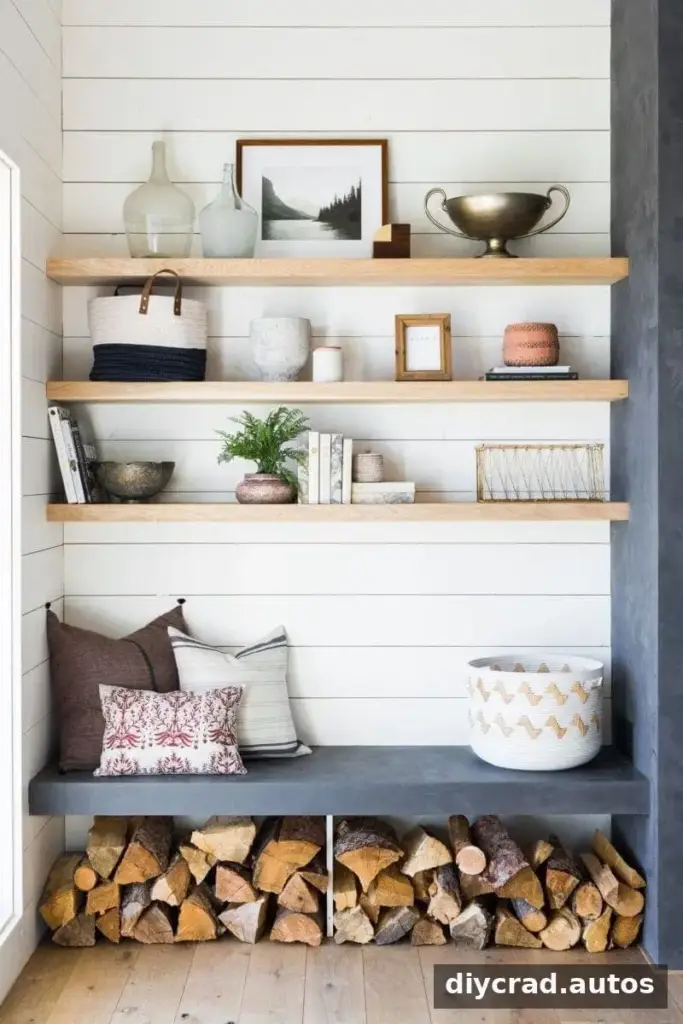
Floating shelves create room to display books, art, and small objects while adding depth to a wall. Keep heavier items within the shelf’s weight limit, and attach the shelves to appropriate wall supports.
Source: McGee & Co.
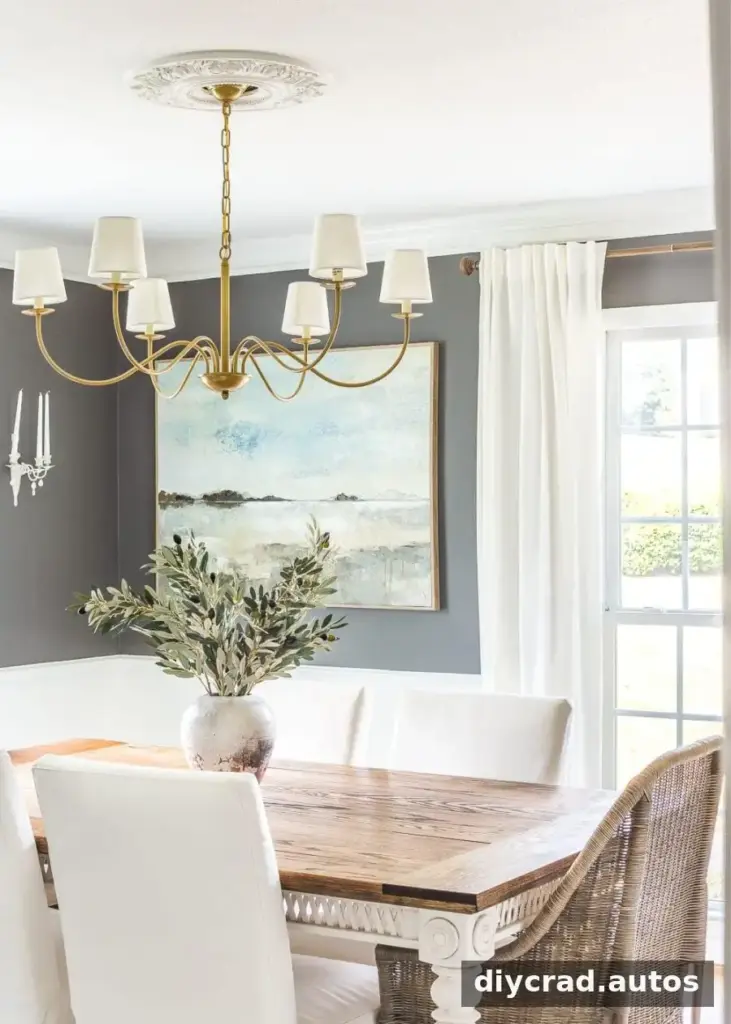
9. An Oversized Painting
One large artwork can act as a clear focal point and simplify decorating a broad wall. To make your own large-scale art, a poster-sized print can be mounted or framed. Check the dimensions before printing so the finished piece fits the space.
Project idea: Create large-scale art using an engineering print.
10. Painted Brushstrokes
Painted brushstrokes can create a simple, wallpaper-like pattern at a lower cost. Try the design on a sample surface first, and use a light pencil guide if you want more consistent spacing.
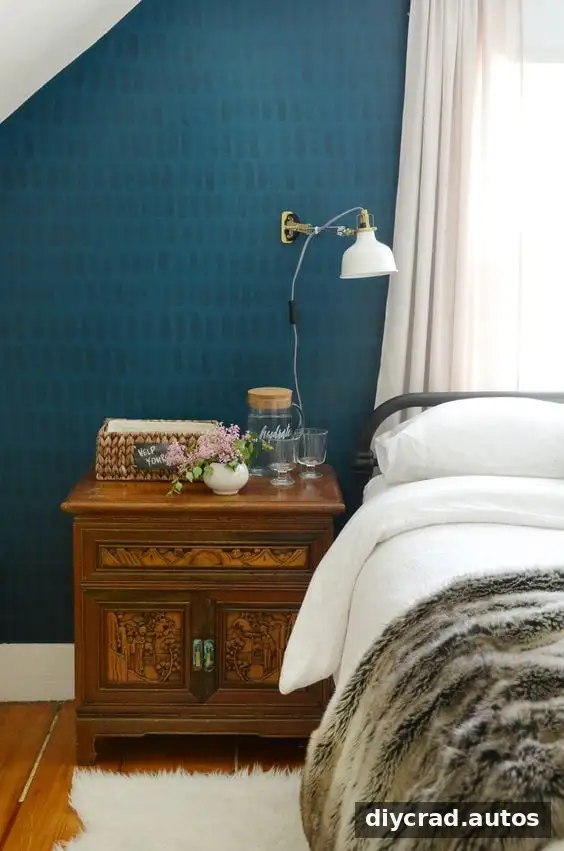
Source: Curbly
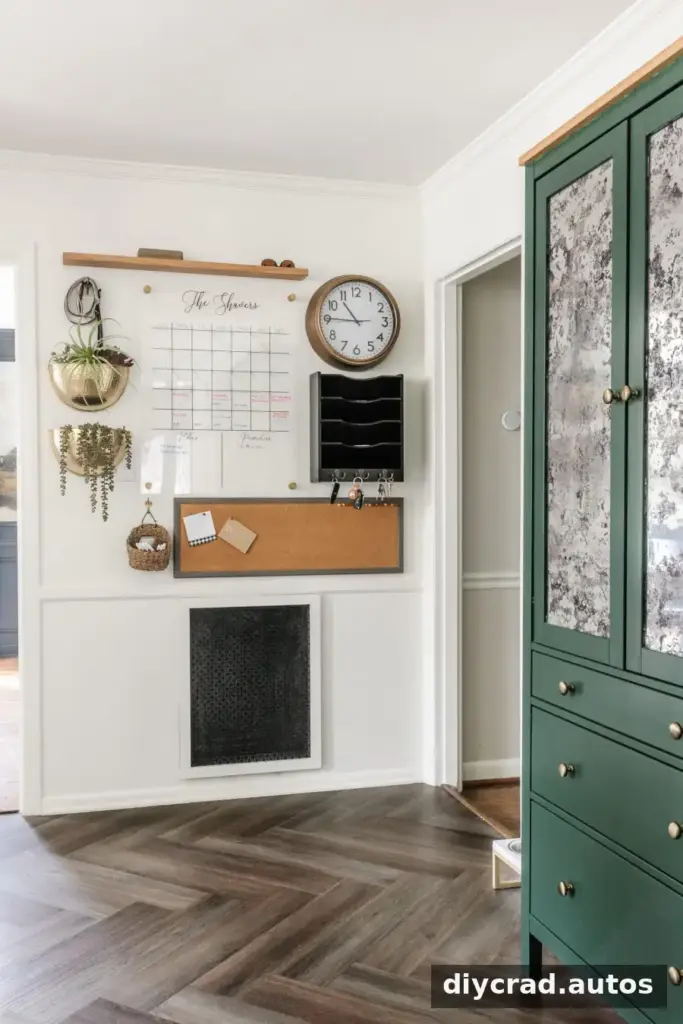
11. A Family Command Center
Make a wall useful with a place for calendars, notes, and everyday reminders. Keep frequently used items easy to reach, and organize the display so important information is easy to spot.
Project idea: Create an organized family command center.
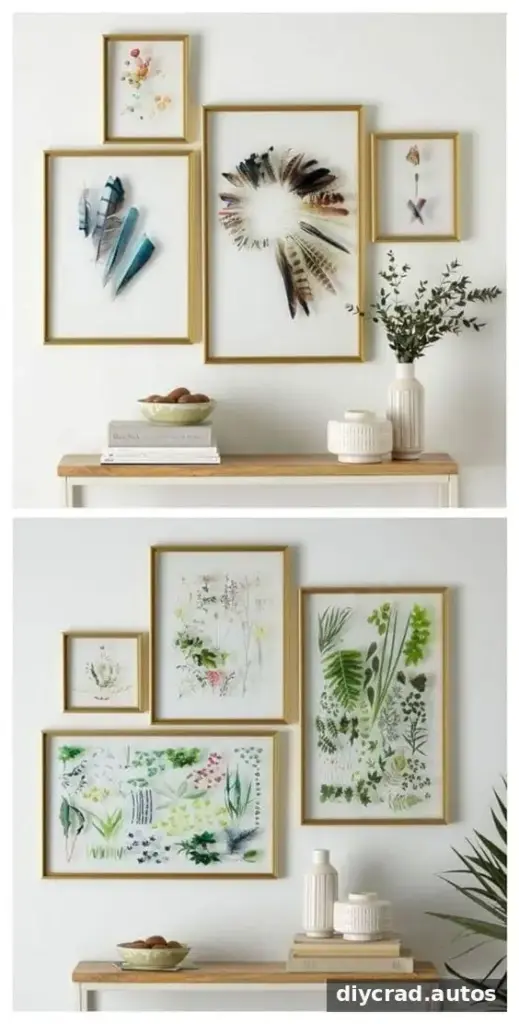
12. Pressed Flowers and Feathers
Press flowers, leaves, or naturally shed feathers and display them in a floating frame. Make sure plant material is fully dry before framing to help prevent moisture from being trapped inside.
Source
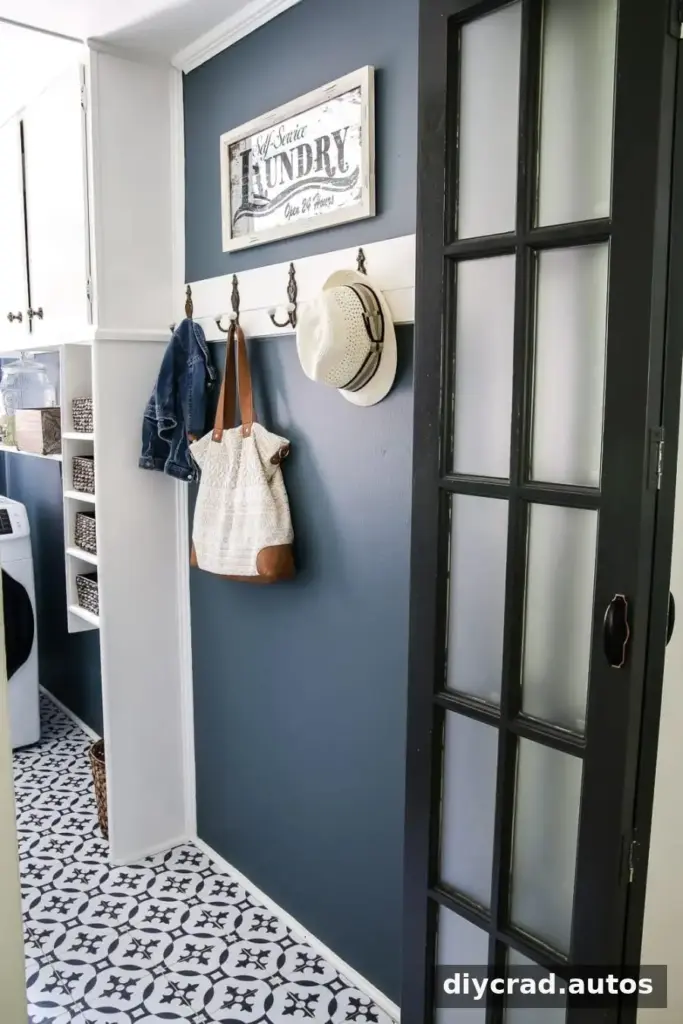
13. Decorative Hooks
Hooks can serve as both wall decor and useful storage for items such as hats or bags. Choose a style that suits the room, and install each hook with hardware appropriate for the wall and intended load.
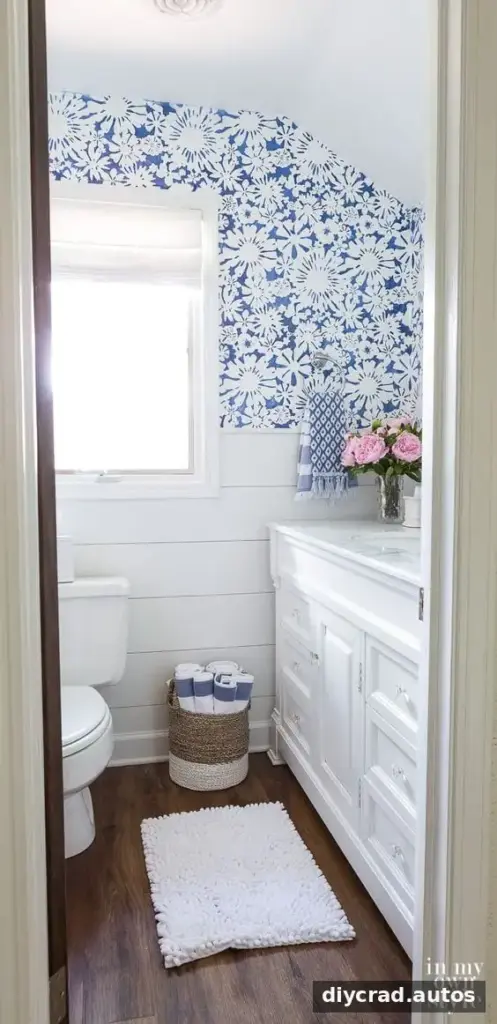
14. Stenciled Wall Pattern
A stencil is an alternative to wallpaper when you want a repeating pattern painted directly on the wall. Secure the stencil and use a small amount of paint at a time to help limit smudges.
Source: In My Own Style
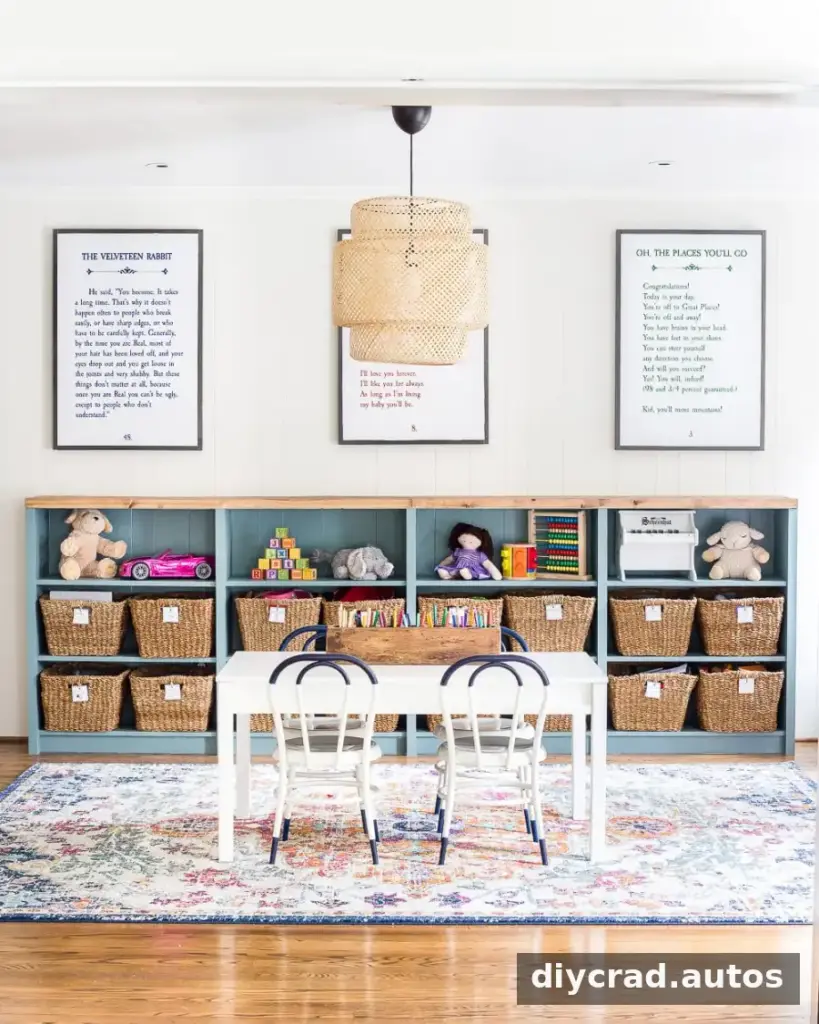
15. Typography Prints
Turn a favorite quote, song lyric, or line of literature into a print. Check usage permissions for copyrighted text, and choose a font and paper size that remain readable from across the room.
Project idea: Make storybook-inspired wall art.
16. Chalkboard
A chalkboard can be decorative on its own or used for changing notes and drawings. Place it where writing is comfortable, and choose a frame that coordinates with nearby finishes.
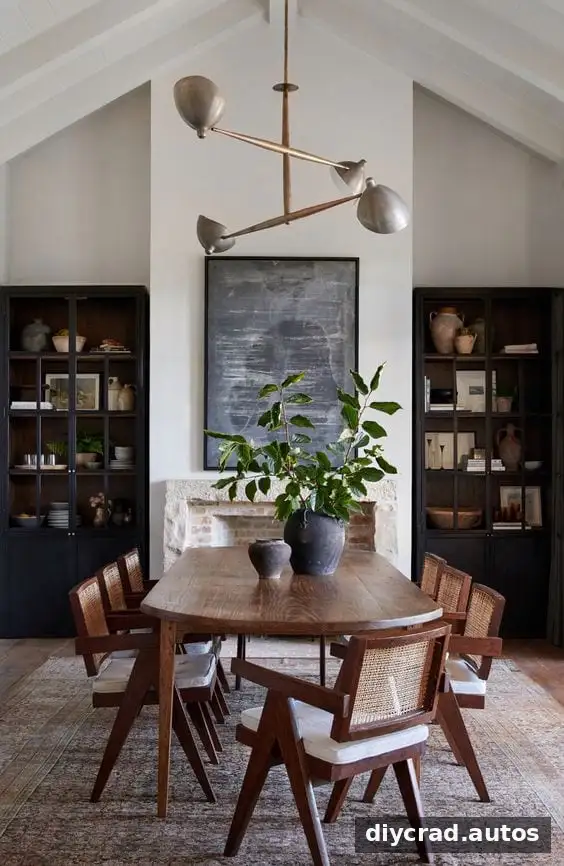
Source: Amber Interiors
17. An Old Window Frame
An old window frame can suggest the shape of a window in a room without one. Check reclaimed frames for loose parts, sharp edges, or flaking paint before displaying them.
Source: Kate Marker Interiors
18. Woven Baskets
Hang baskets to bring woven texture and dimensional interest to an empty wall. Varying sizes can create a relaxed arrangement; use secure hanging points that support each basket.
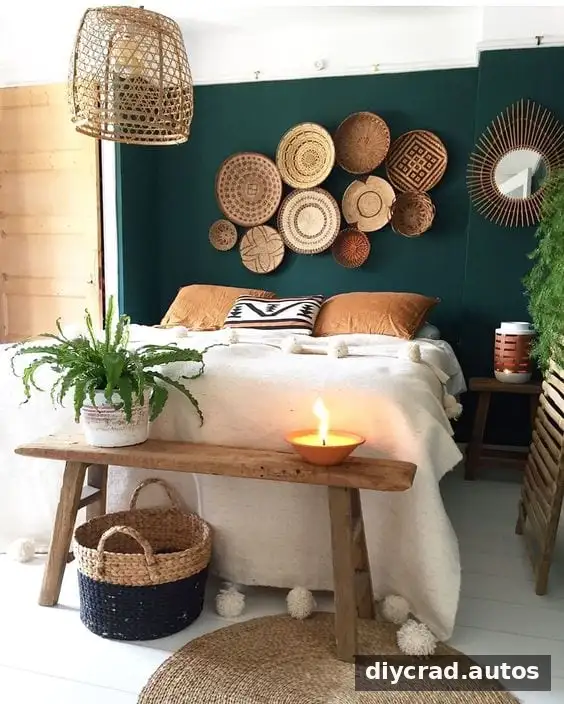
Source
19. Cutting Boards
Decorative cutting boards make a natural fit for kitchen walls. Display clean, dry boards, and keep the arrangement away from areas where cooking splashes or heat could affect them.
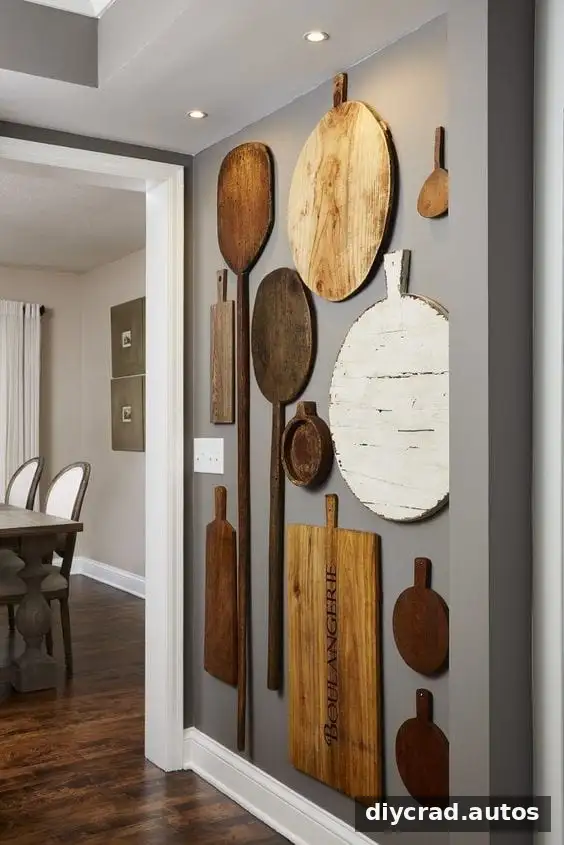
Source
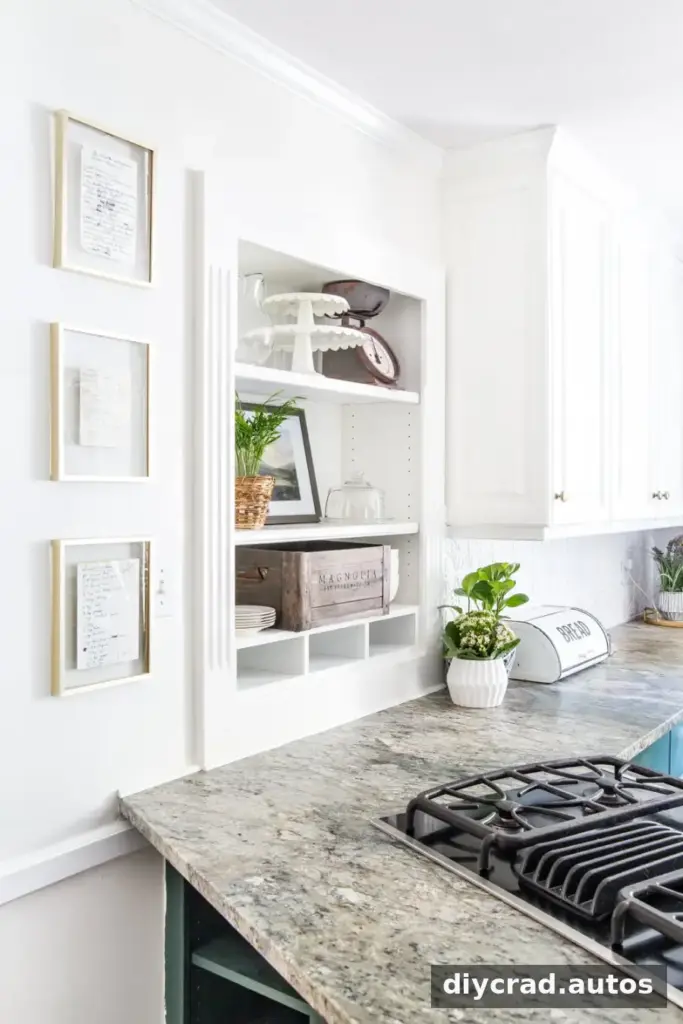
20. Framed Recipes and Letters
Handwritten recipes and letters can turn family keepsakes into personal wall art. Use archival materials where possible and consider UV-protective glazing to help limit light damage. Avoid placing treasured paper in direct sunlight.
Project idea: Preserve and frame handwritten letters and recipes.
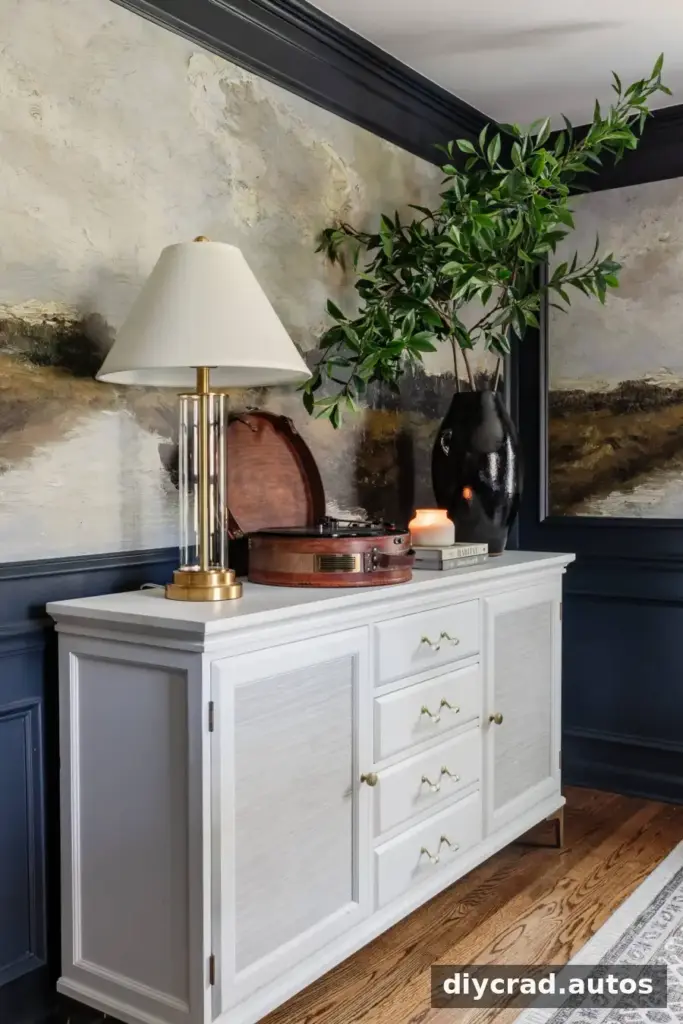
21. Peel-and-Stick Mural
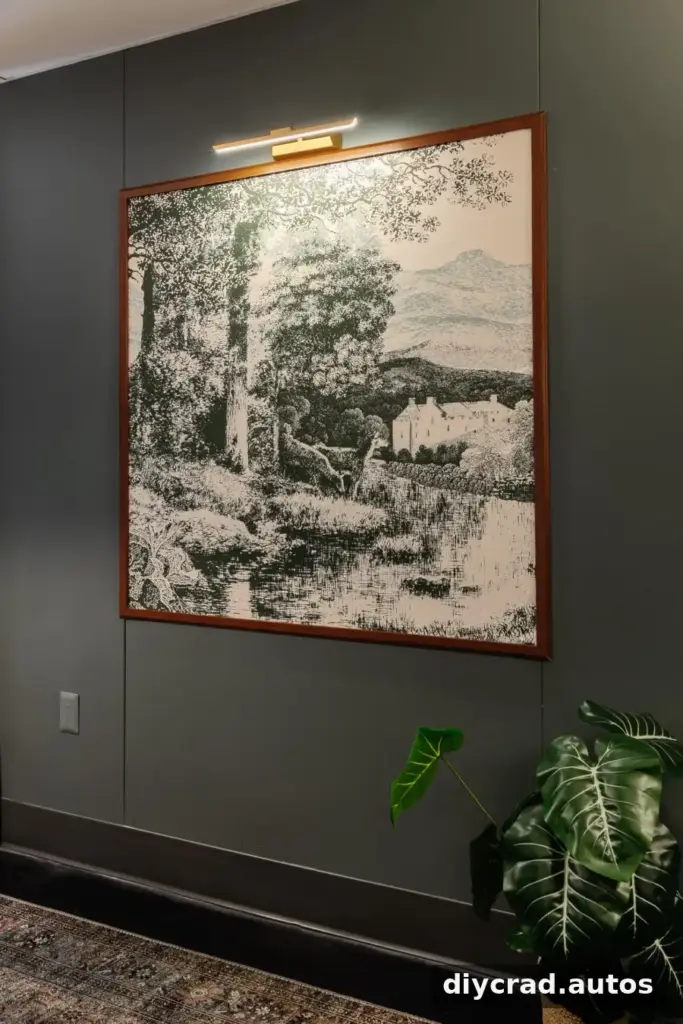
A peel-and-stick mural offers a way to introduce a large-scale scene without painting it by hand. Follow the manufacturer’s guidance for wall preparation and removal. Adding box molding around the mural can give the display a more structured look.
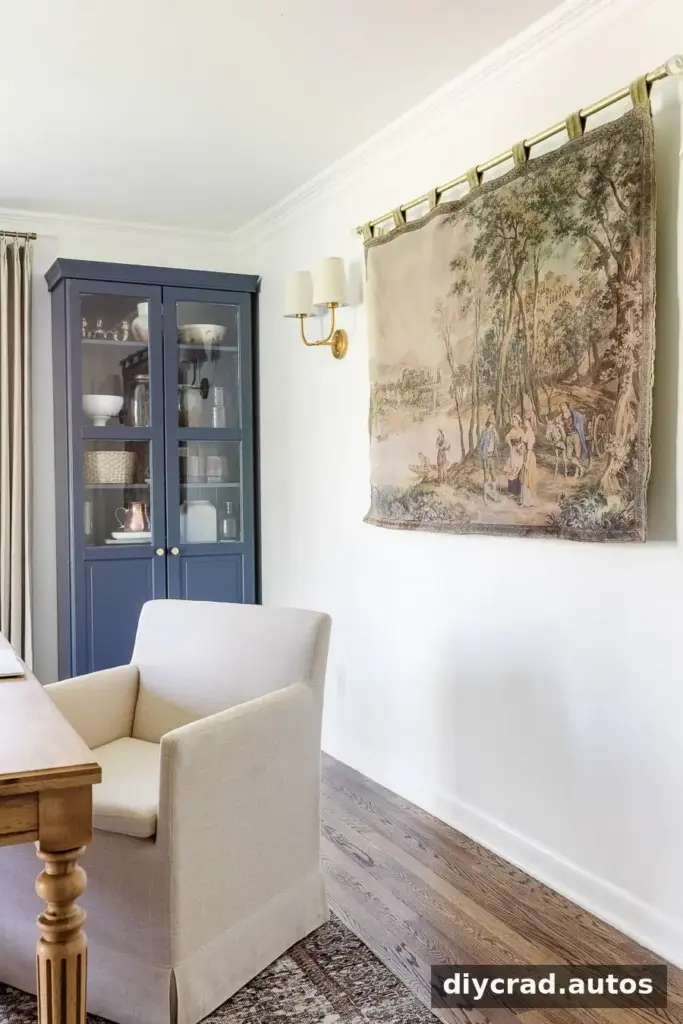
22. Tapestry
A secondhand tapestry can add color, pattern, and softness to a large blank wall. Inspect vintage textiles for damage and clean them according to their care requirements. Choose a hanging method that distributes the fabric’s weight evenly.
Project idea: Explore simple ways to hang a wall tapestry.
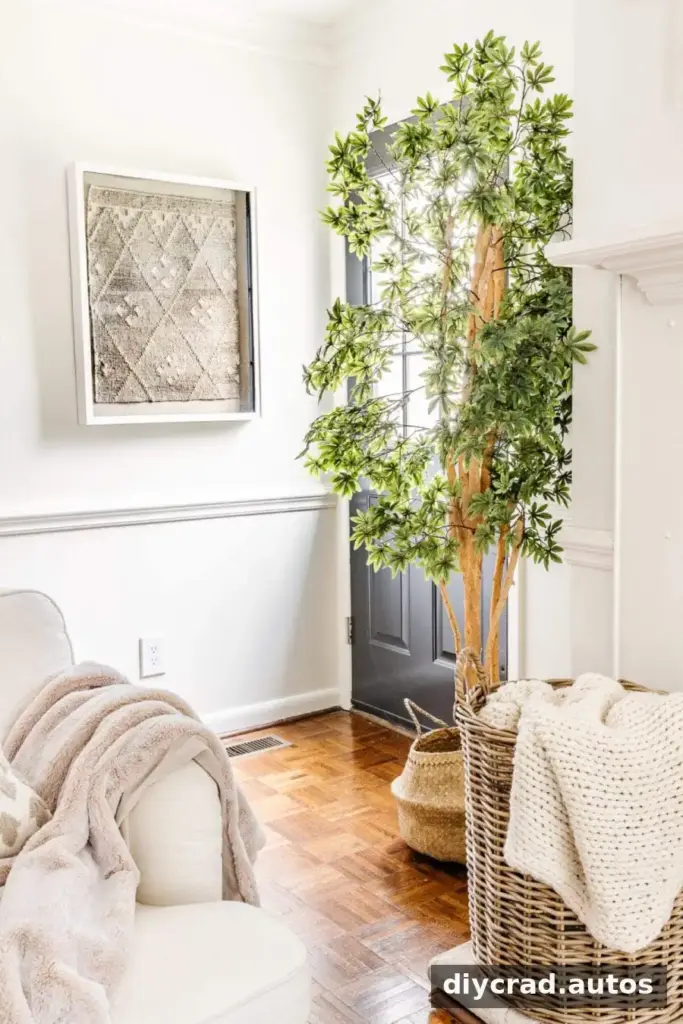
23. Textile Art
Repurpose a section of an old rug by displaying it in a shadowbox frame. Confirm that the frame is deep enough for the textile, and avoid cutting a rug that has significant sentimental or financial value.
Project idea: Make textile art from a recycled rug.
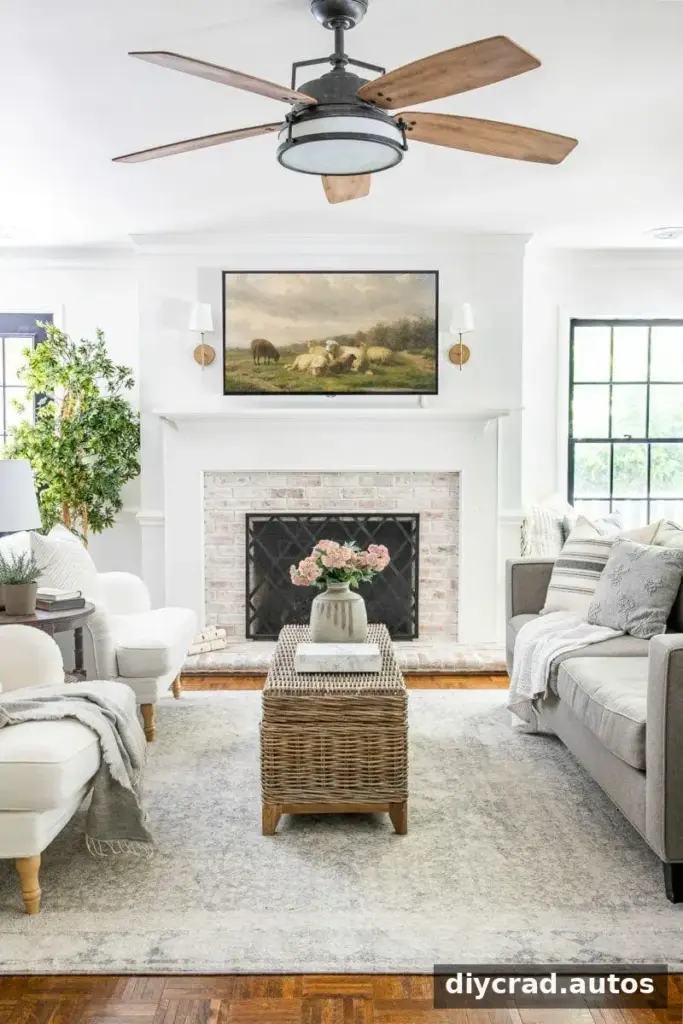
24. Art on a Television Screen
Some smart televisions can display artwork when not in use, creating a decorative effect. Check your screen’s settings and follow its care guidance to avoid leaving a static image displayed longer than recommended.
Project idea: Display artwork on a compatible smart television.
25. Magnetic Art Memo Board
A framed metal sheet can function as both wall art and a family memo board. Use magnets that suit the surface, and secure the frame properly, especially if it will be used often.
Project idea: Make a large magnetic memo board.
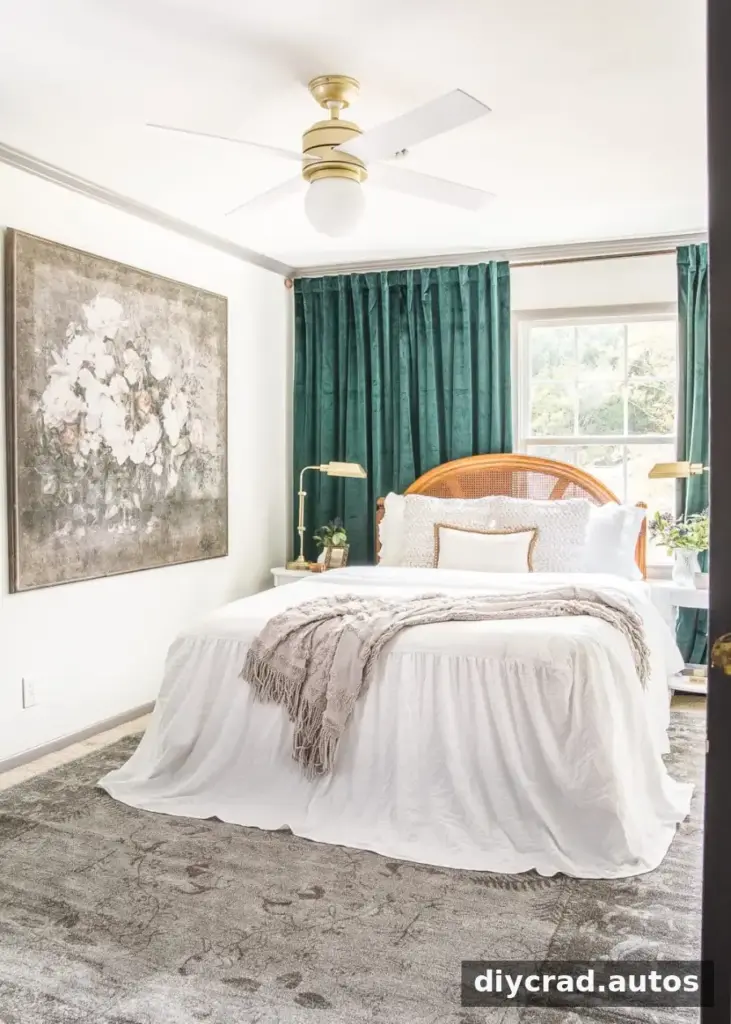
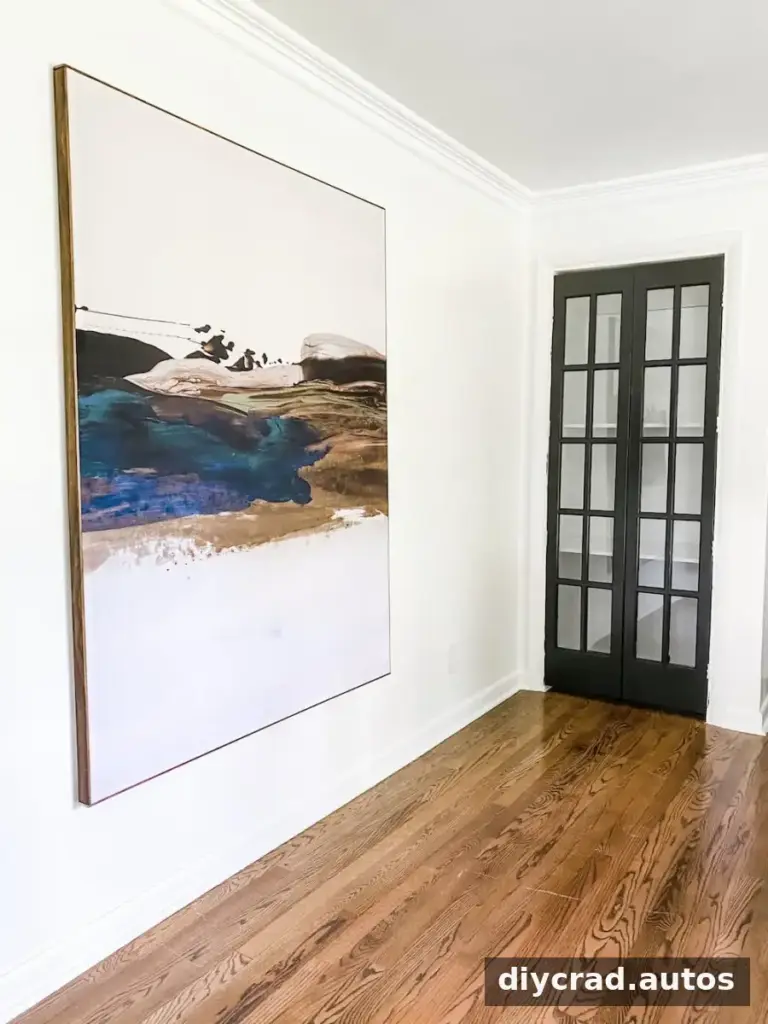
26. Shower Curtain Art
Stretch a shower curtain over a wooden frame to create an oversized piece of wall art. Select a design that works with the room’s colors, and pull the material evenly to avoid wrinkles.
Project idea: Create large-scale art from a shower curtain.
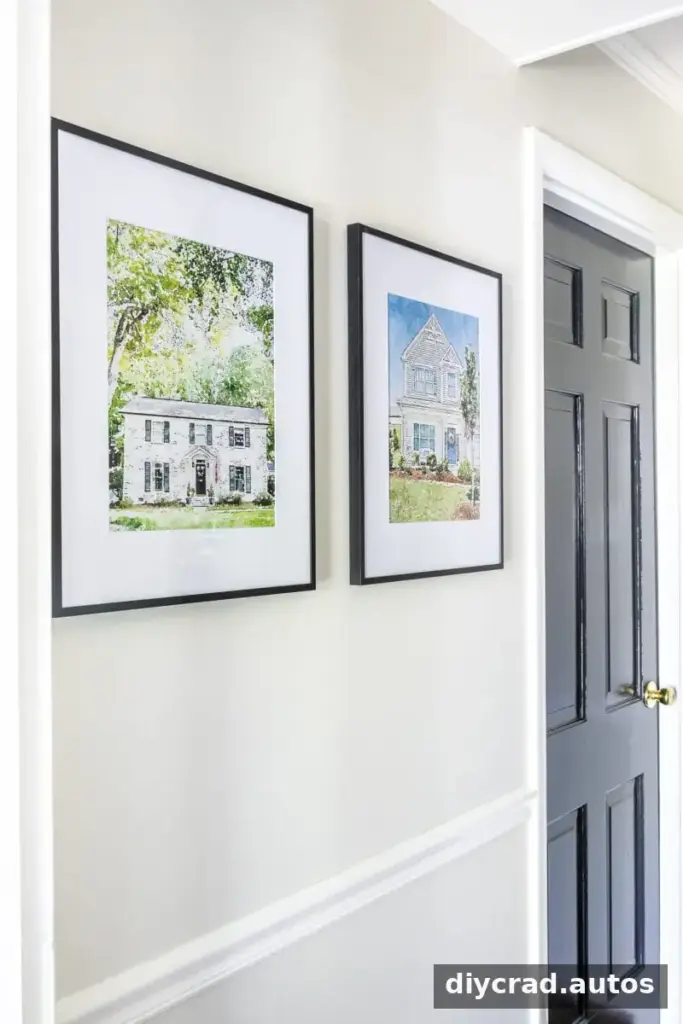
27. House Portraits
Use a photo-editing or painting app to give a picture of your home an illustrated appearance, then print and frame the result. Choose a clear, well-lit photo for a sharper finished image.
Project idea: Turn a home photo into a painting-style image.
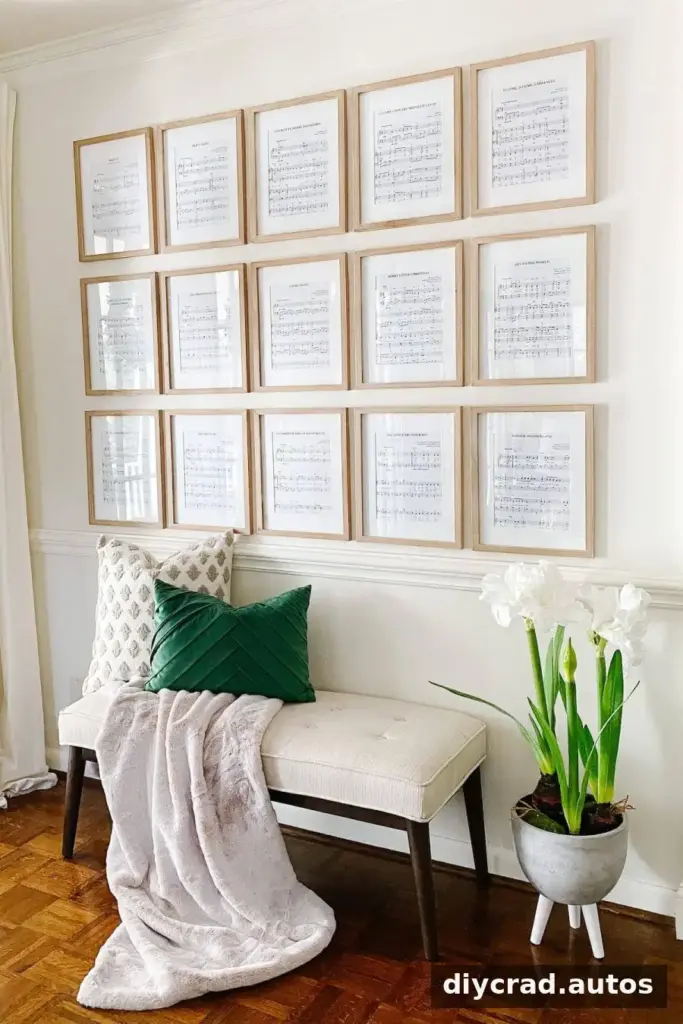
28. Framed Sheet Music
Sheet music can add a simple, classic look to a gallery wall. Use pages you have permission to display, and arrange them in frames that protect the paper from dust and handling.
Project idea: Create a sheet music art gallery wall.
How to Choose the Right DIY Wall Decor
Start with the scale of the wall: a large surface may need one oversized piece or a well-spaced grouping, while a smaller area can suit a mirror, shelf, or framed print. Repeat a color, material, or shape from elsewhere in the room to make the display feel connected. Before drilling, check for wires or pipes and use suitable anchors for the wall type.
Frequently Asked Questions
How high should you hang a picture?
A common starting point is to place the center of the picture about 60–63 inches above the floor. Adjust for ceiling height and, when hanging art above furniture, consider the relationship between the frame and the furniture below it.
How far apart should frames be in a gallery wall?
Leave about 3–6 inches between artworks in a grouping. Consistent spacing helps the arrangement look intentional; test the layout before hanging to find the balance that suits your wall.
With a little planning, DIY wall decor ideas can help turn a bare surface into a useful or personal part of your home. Pick a project that fits the room, your budget, and the time you have available, then measure and secure each piece carefully.

