



Choosing an exterior stain color can be surprisingly difficult: the same shade may look different on a sample, on an older deck, and in changing daylight. A neutral driftwood deck stain can offer a light, weathered-wood appearance while helping tone down yellow in the boards. In this project, a Taupe semi-transparent waterproofing stain and sealer gave an aging porch a softer, more neutral finish.
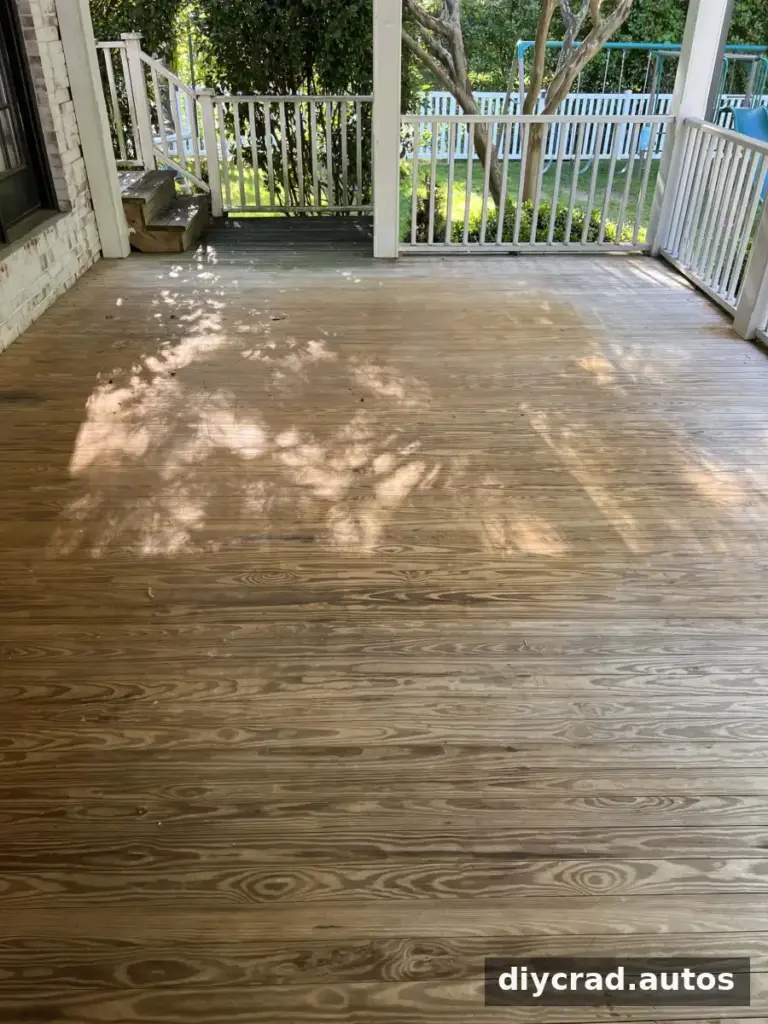
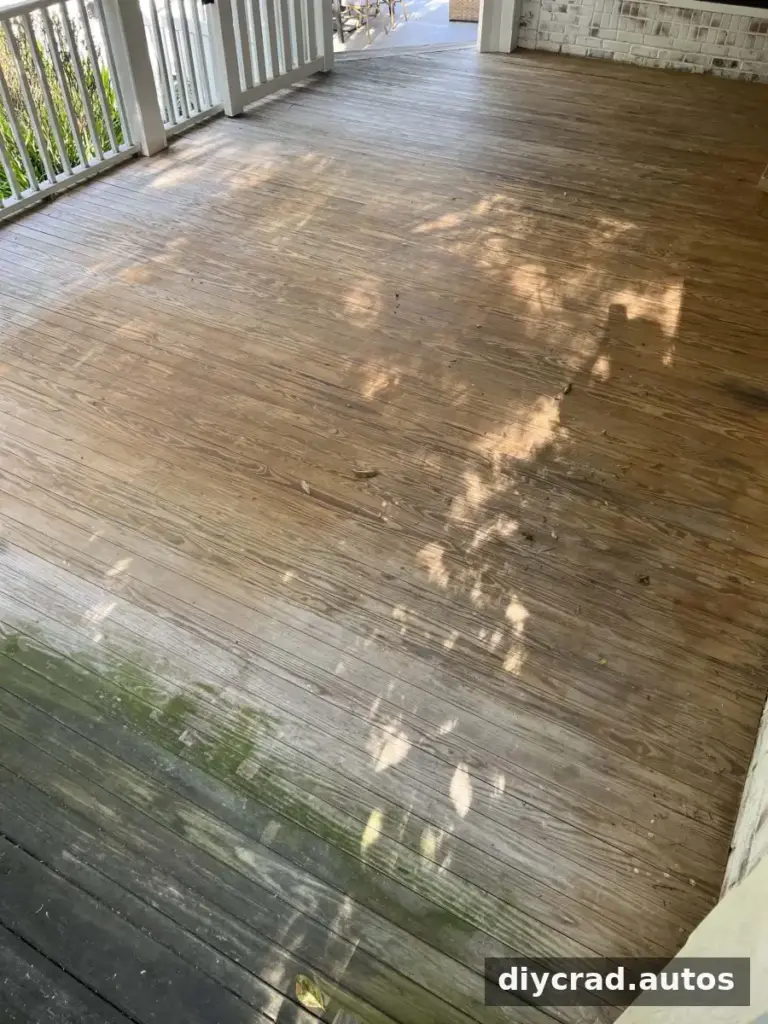
The back porch had been in place for well over a decade and had only been pressure-washed, not stained or sealed, during the six years the homeowners had lived there. The results show why preparation and a small color test are important before refinishing an entire deck.
How Often Should You Stain a Wood Deck?
Deck maintenance depends on exposure, foot traffic, the wood’s condition, and the product used. As a general guideline, reapply a wood sealer at least every three years. A deck exposed to strong sun or heavy use may need attention more often—sometimes annually. Check the product label for its recommended maintenance schedule, and inspect the boards regularly for worn or unprotected areas.
Stain and sealer help protect decking from weathering, but they do not eliminate the need for upkeep. Leaving wood untreated for long periods can contribute to deterioration and costly repairs. Cleaning and recoating when needed may help extend the life of the boards.
Deck Refinishing Cost and Preparation
Some damaged boards were patched before refinishing. An orbital floor sander was rented for $67 for the day, helping prepare a clean surface for the new finish. The porch received its first coat of stain and sealer within four hours. In total, equipment rental, wood patch, stain and sealer, and supplies cost $307.
Use the right preparation for the condition of your deck. Pressure washing and a degreaser detergent helped clean these boards, while sanding provided a smoother surface. Allow the wood to dry as directed by the stain manufacturer before applying any finish.

Choosing a Neutral Driftwood Deck Stain
The selected color was Taupe in a semi-transparent waterproofing stain and sealer. It created a light, neutral driftwood tone that reduced the yellow appearance of the wood without an obvious blue undertone. Because stain color is affected by the surface beneath it, the same shade may look different on another deck.

A solid Taupe stain may be a useful option when older boards have prominent marks that need more coverage. A semi-transparent finish, by contrast, allows more of the wood grain to remain visible. Consider how much of the existing grain and variation you want to show before choosing a finish type.
A similar stain used on other backyard projects had held up well in harsh weather over two years. Weather exposure and results can vary, so follow the product directions and check the finish periodically.
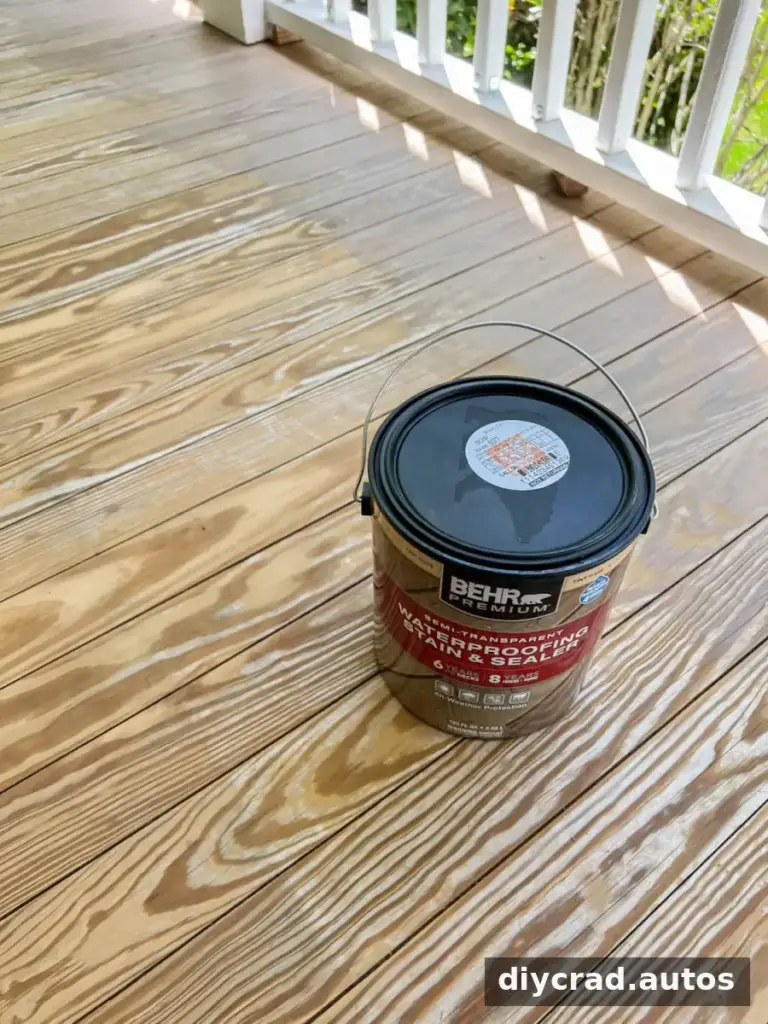
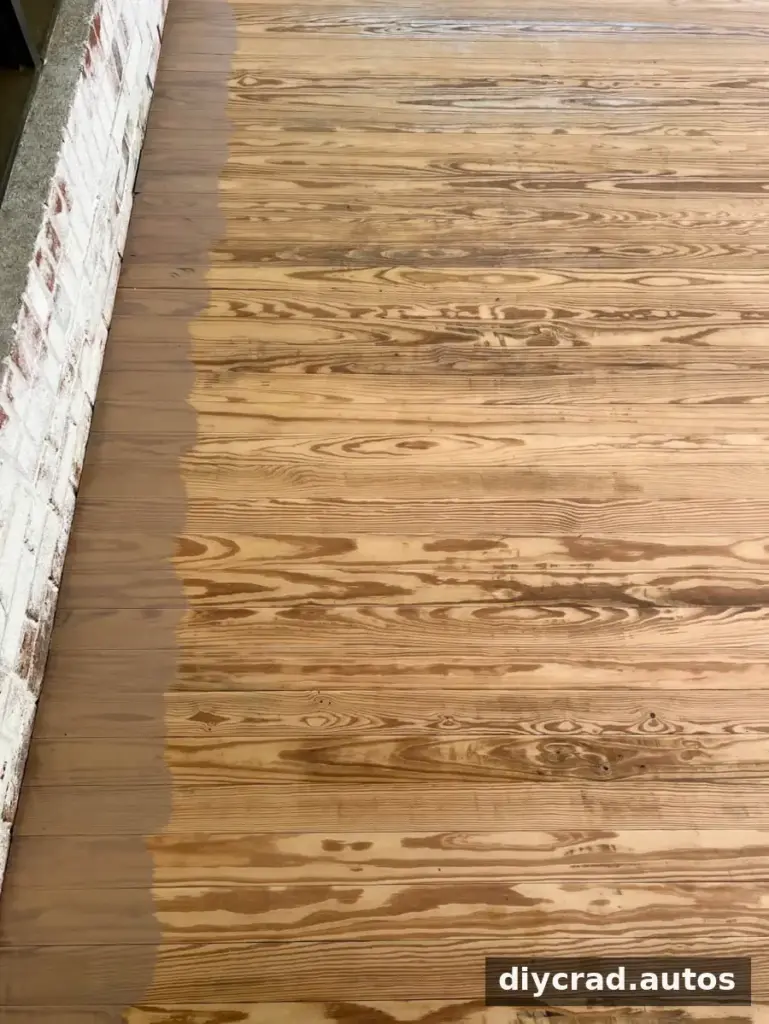
This image shows the Taupe stain brushed around the deck’s edges. Applying a small amount in a less noticeable area first can help you judge the color and finish before treating a larger surface.
How Driftwood Stain Looks in Different Lighting
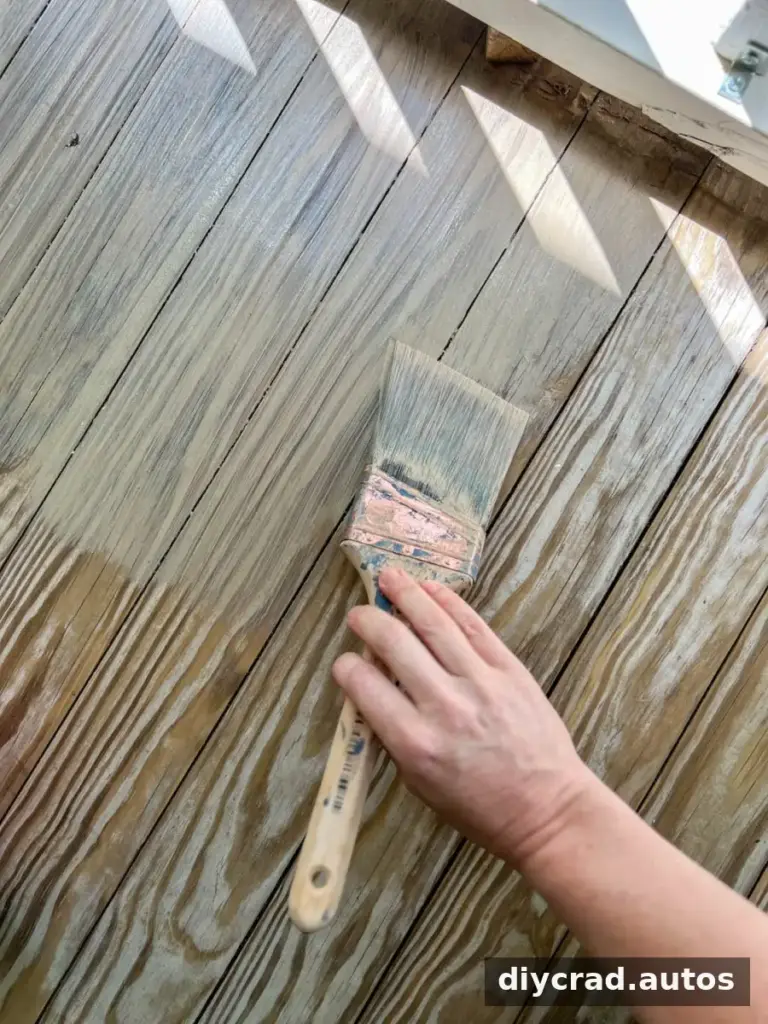
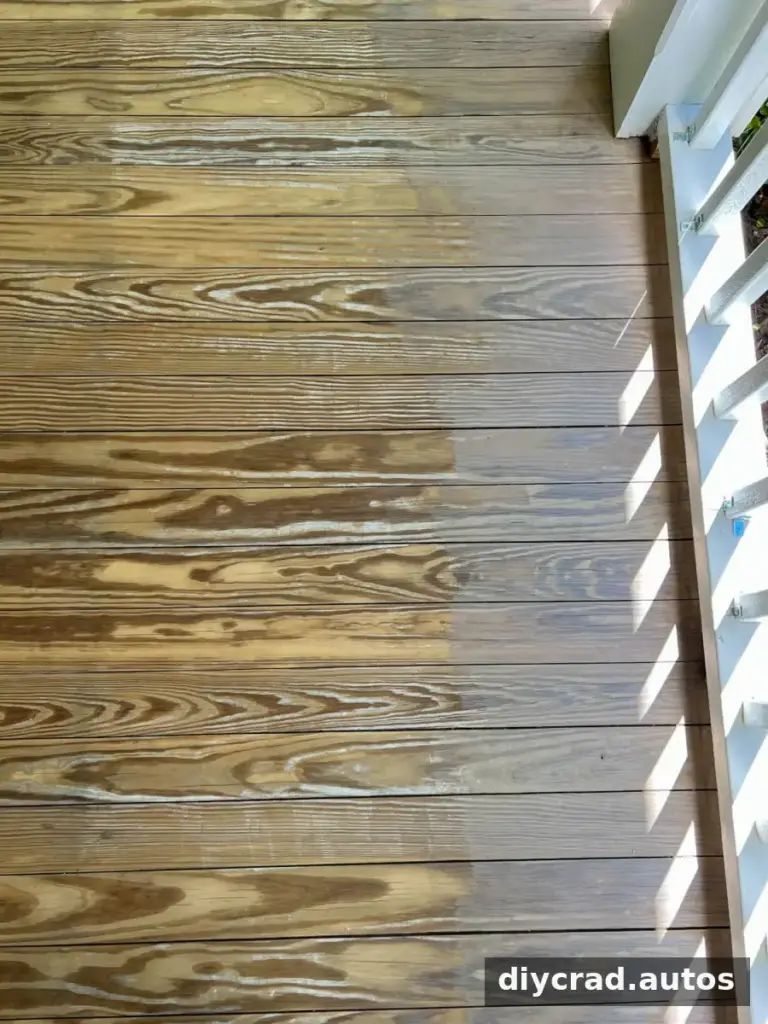
The stain was tested around the perimeter of the porch over yellowish wood. In direct sunlight, the color appeared slightly blue in one photograph, but it looked neutral in person, without a noticeable blue or purple cast. Photos can be helpful, but they cannot fully represent how a finish will look on your own deck.
For a more reliable comparison, view your sample in both sun and shade and at different times of day. The surrounding brick, nearby plants, and other exterior finishes can also affect how a color is perceived.
Why You Should Test Deck Stain Colors First
Testing before committing to a full deck helps prevent surprises, such as a light brown sample turning out darker, redder, or more yellow than expected. Try the stain on a spare piece of the same wood or in a discreet spot on the deck. Let the sample dry according to the product instructions before assessing its final appearance.
Wood Species
Different wood species can absorb stain differently, changing the finished color. Whenever possible, test on the same type of wood used for the deck rather than relying only on a color chart.
Wood Age and Condition
Clean away dirt and grime before testing, since residue can affect the appearance of the finish. Older wood may look darker after staining than new wood. Weathering, previous coatings, and repairs may also create variation across the boards.
Lighting Conditions
Check a sample in changing light before starting the project. Sun, cloud cover, and shade can make the same stain appear different. Looking at the test area at several times of day can help you decide whether the color works with the rest of the outdoor space.
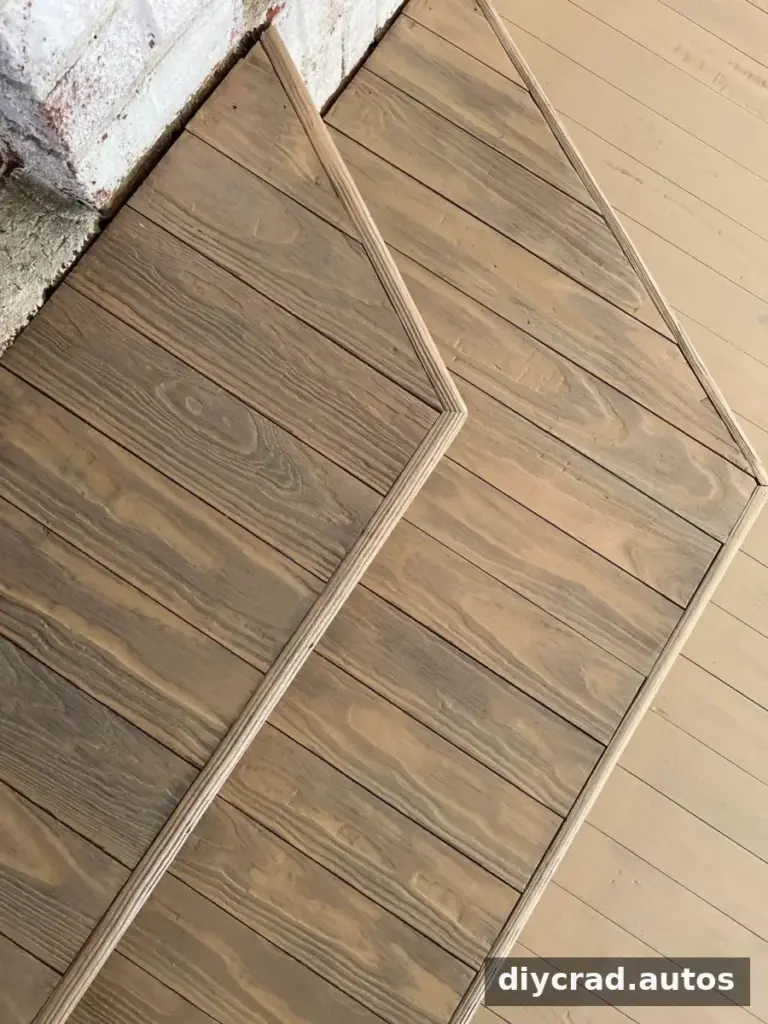
The Taupe stain was also tried on a pine porch floor and pressure-treated deck steps. Rolling the stain onto the large porch area resulted in a finish that looked slightly less transparent. The hand-brushed stairs retained a more noticeable semi-transparent appearance.
Application method can affect the look, so test your chosen method on a small area first. Brushing or spraying may help retain more visible grain in some situations; follow the product’s instructions and use a consistent approach across the surface.
The Finished Deck in Taupe Stain
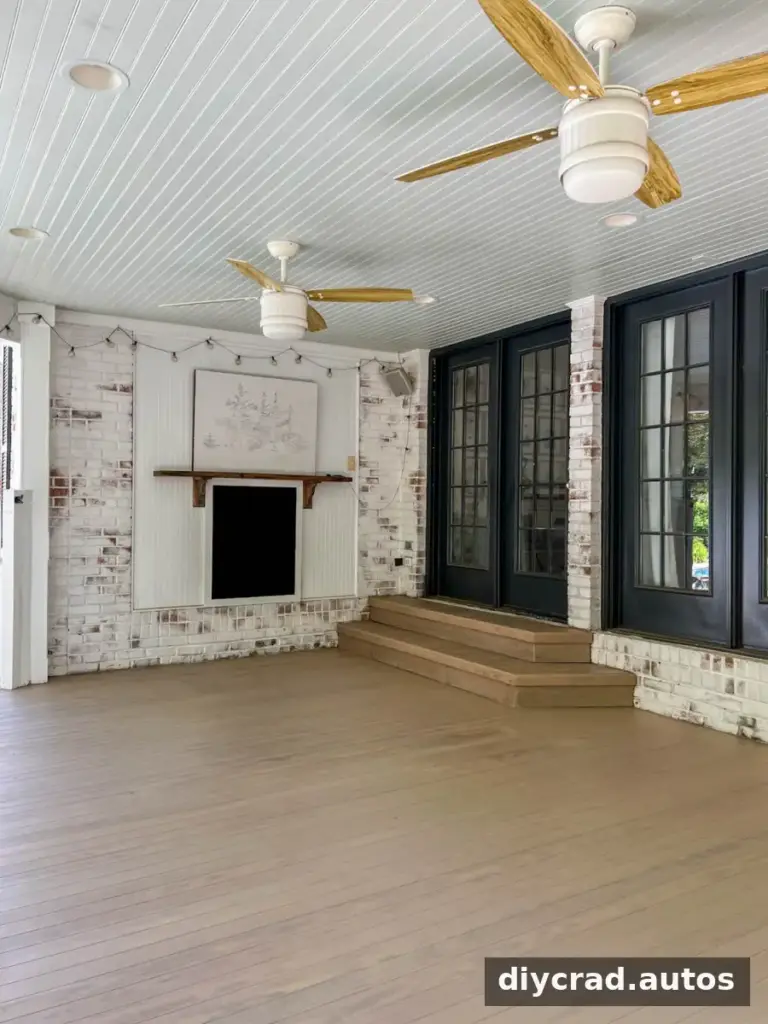
The refinished porch had a light, airy look, and the neutral tone paired well with the outdoor setting. Wood patio furniture can complement a driftwood-inspired deck if you want a relaxed, coastal feel, but choose materials and colors that suit your climate and maintenance preferences.
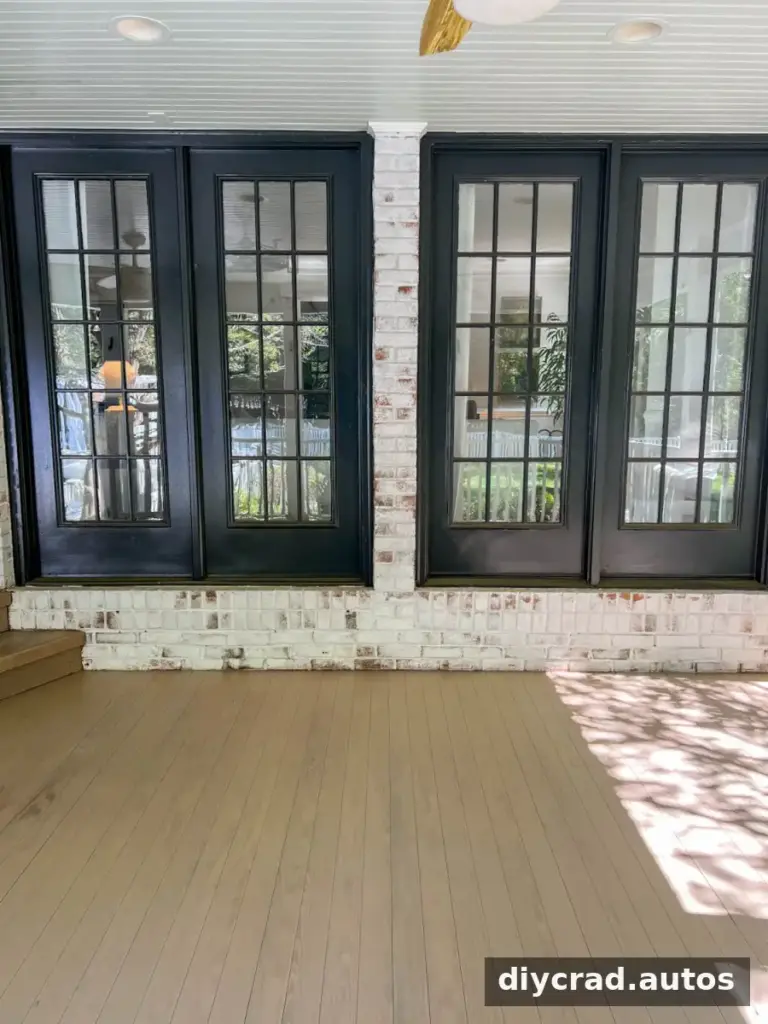
Although the exact age of the decking was unknown, it had been in place for well over a decade. Cleaning and sanding helped prepare the older boards, and the finished surface showed that a carefully chosen stain can refresh weathered wood without hiding all of its character.
Before and After: Preparing the Wood Deck
The change from the unrefinished deck came from more than the color alone. Pressure washing, degreaser detergent, and sanding were important steps in preparing the surface. Skipping preparation can leave dirt or uneven areas under the finish, so assess the wood and follow the stain manufacturer’s cleaning and drying directions before applying a new coat.
After refinishing, the back porch was ready for summer use. Regular inspection can help identify areas where the finish is wearing, making it easier to plan maintenance before more extensive repairs are needed.

The connected side deck and other outdoor features still required maintenance, including speaker updates and fresh paint. Decks and porches need periodic care, but good preparation and a suitable finish can make the space more inviting and help protect the wood.
Final Tips for a Neutral Driftwood Deck Stain
A neutral driftwood deck stain is worth considering if you want to soften yellow tones while keeping a natural-looking surface. Test the color on your own wood, check it in different lighting, and compare application methods before covering the full deck. For this project, Taupe semi-transparent stain produced the desired light, neutral finish, while the preparation work helped the older porch look refreshed.

