

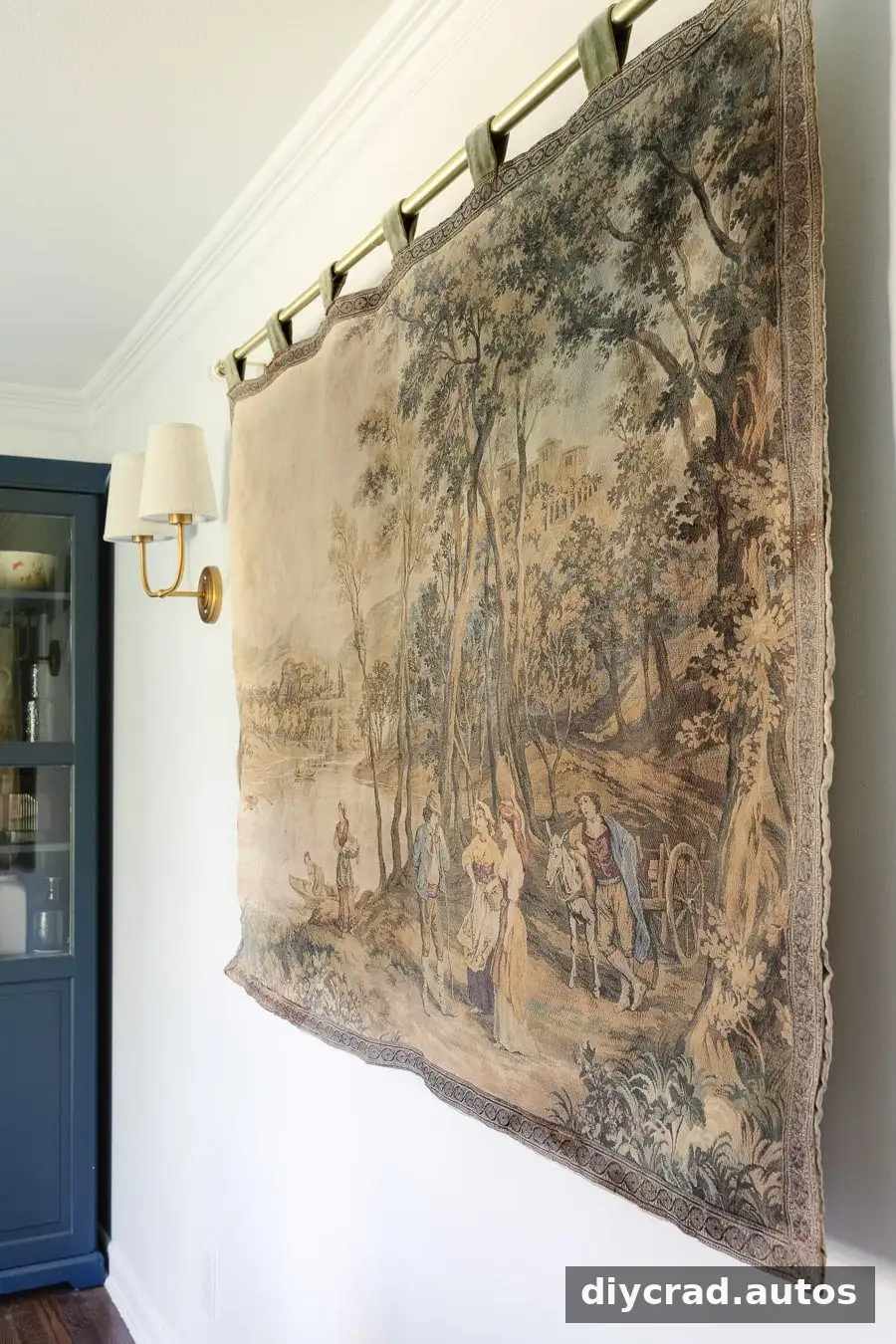
Knowing how to hang a wall tapestry can help you add color, texture, and a focal point to a room without making the fabric the center of a complicated project. The right method depends on the tapestry’s weight, whether it has a rod pocket or hanging tabs, and whether you can make holes in the wall. These seven options range from sturdy, permanent installations to simpler solutions for lightweight textiles and rental spaces.
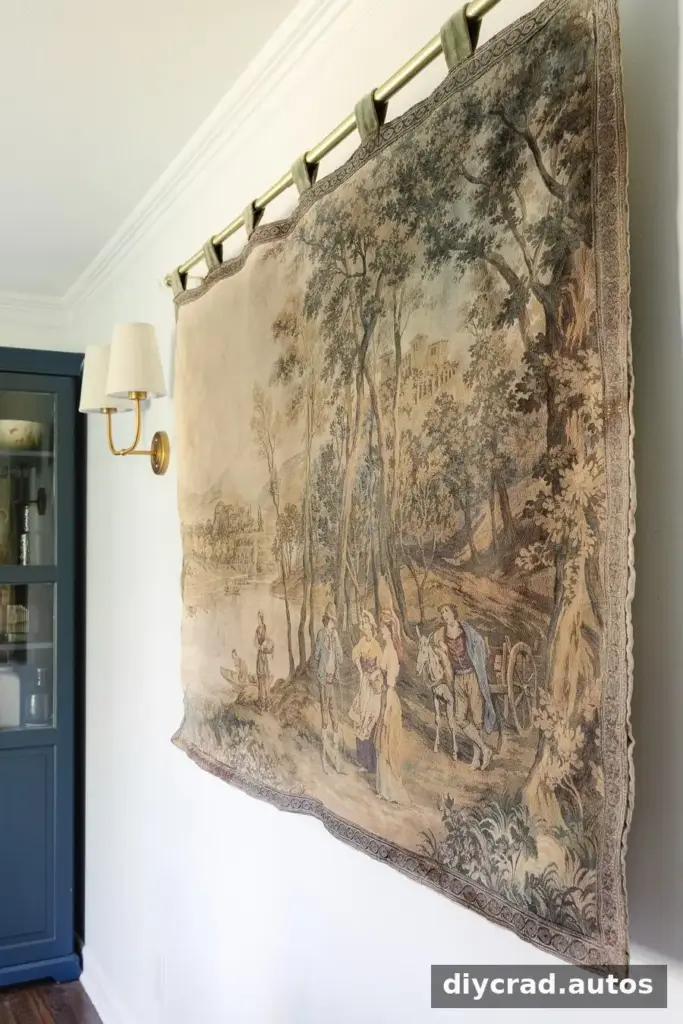
How to Hang a Wall Tapestry with a Curtain Rod
A standard curtain rod can support many tapestries, so a specialized tapestry rod is not essential. This option also leaves a little space between the fabric and the wall, which can be useful if you want to cover an unattractive wall fixture or cable without pressing the textile against it.
Secure the rod brackets to wall studs where possible. If the brackets cannot line up with studs, choose wall anchors suitable for the combined weight of the rod and tapestry. Check the hardware’s weight rating before installation. If the textile has no rod pocket or hanging tabs, clip curtain rings can attach it to the rod.

A simple rod can suit both vintage and contemporary textiles. Before hanging, measure the tapestry and position the brackets so the fabric will sit level and have enough support across its width.
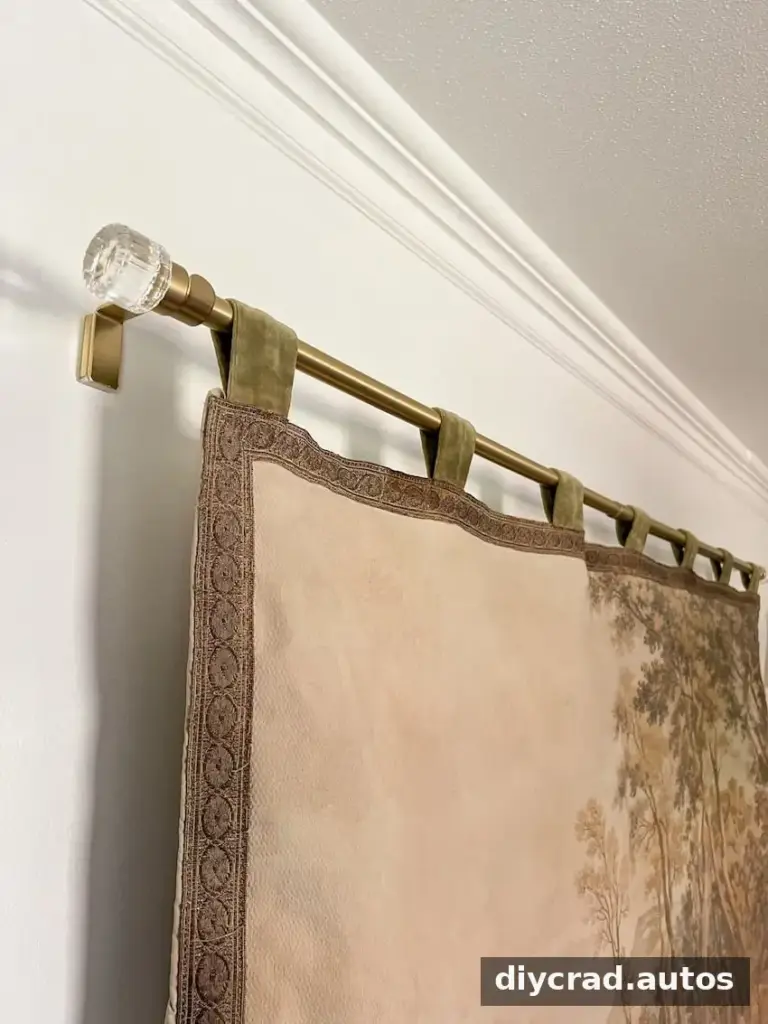
Hang a Rod from Adhesive Hooks
For a rental home or a wall where you would rather not drill, heavy-duty adhesive hooks may hold a lightweight rod. This method is not suitable for every tapestry, especially heavier pieces. Check the product’s weight limit and make sure the wall surface is compatible.
- Attach the adhesive strips to the hooks as directed on the package, pressing firmly for about 30 seconds.
- Press each hook onto the wall for about 30 seconds.
- Leave the hooks unloaded for one hour so the adhesive can set.
- Place the rod and tapestry on the hooks, then check that the setup is stable.
Follow the manufacturer’s instructions if they differ, and avoid using adhesive hooks on unsuitable or delicate wall finishes.
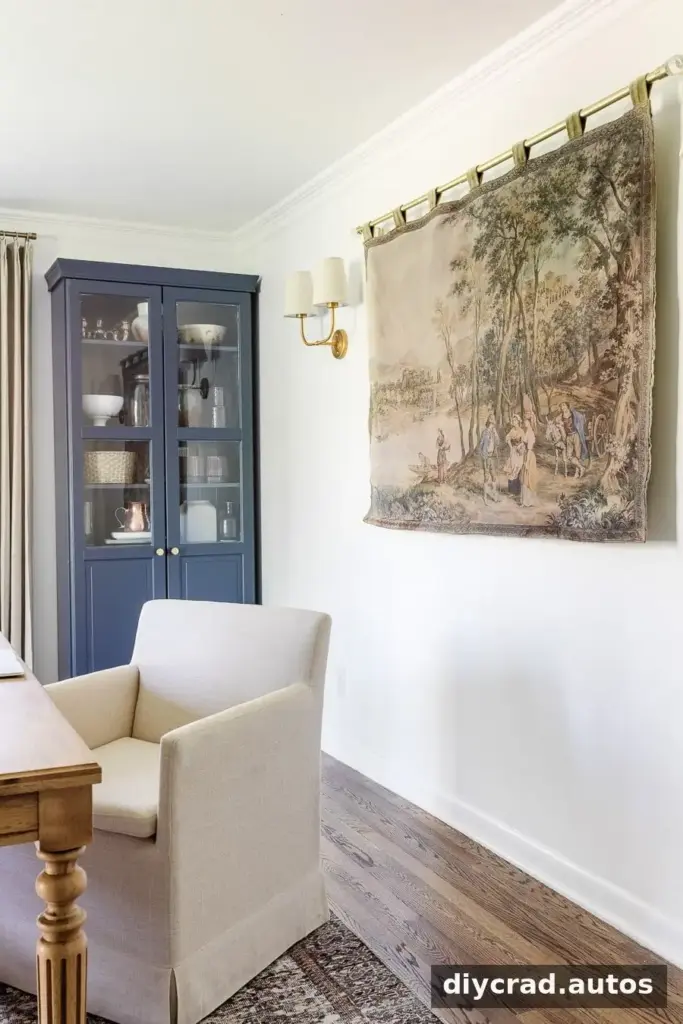
Use a Banner Pole or Poster Hanger
A banner pole can be an alternative to a curtain rod. Some poles adjust to different widths and hang from a central line, reducing the number of wall attachment points. Poster hangers can also work for textiles that are light enough for their clamps. Confirm that the clips grip the fabric securely without damaging it.
Stretch the Tapestry over a Frame
A wooden frame gives a tapestry a finished, canvas-like appearance. This approach also works with other fabric, such as a shower curtain, provided the material can be stretched safely.
- Build a frame from 1×2 boards sized to the textile.
- Lay the fabric over the frame and pull it evenly across each side.
- Staple the fabric to the back or edges of the frame, keeping the tension consistent.
- For a more finished look, add lattice strips around the edges.
Work gradually around the frame to prevent wrinkles and avoid pulling the textile so tightly that it distorts.

Display a Small Piece in a Shadow Box
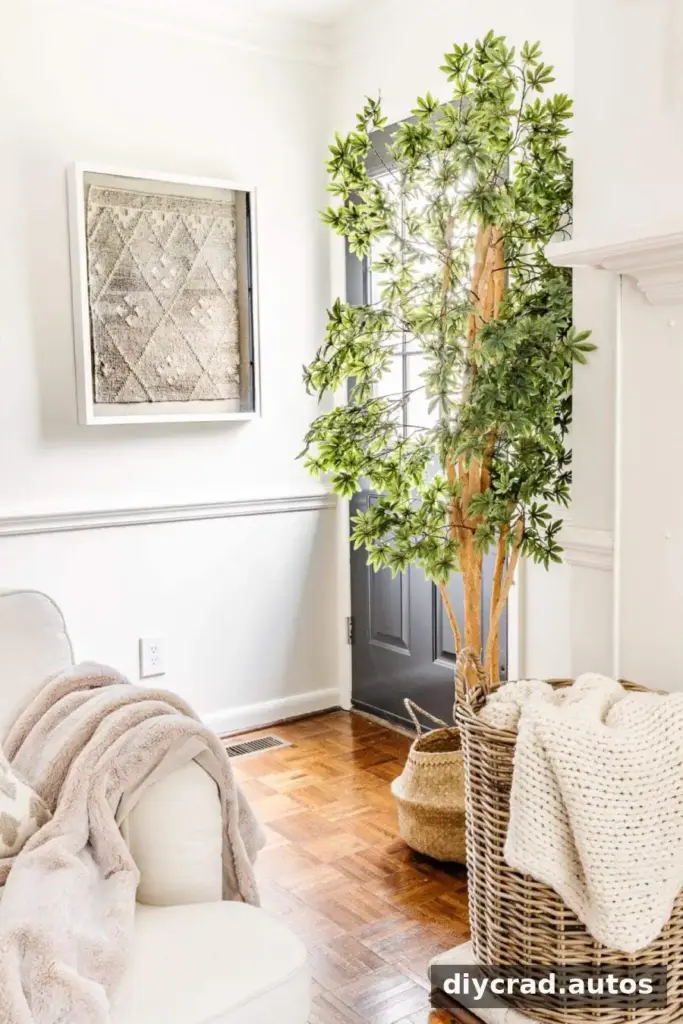
A shadow box is a useful choice for a small tapestry or a piece of rug. Position the textile inside the box and secure it in a way that suits its material, then hang the frame using hardware rated for its weight. In a rental, removable picture-hanging strips may be an option if the frame is within their stated limits and the wall surface is appropriate.
Use Quilt Hanger Clips
Wooden quilt hanger clips can hold a textile along its top edge without a rod or full frame. They are also convenient if you expect to switch the tapestry later. Space the clips evenly and make sure they grip securely without leaving marks or creases in delicate fabric.
Use Push Pins, Nails, or Staples
For a lightweight tapestry, push pins or nails placed along the top edge can provide a simple, direct hanging method. A staple gun is another option when attaching the fabric to a suitable surface. These methods leave holes in the wall or textile, so avoid them for valuable, fragile, or heirloom pieces.
Use enough fasteners to distribute the weight and prevent the fabric from sagging. This approach is often better suited to lightweight textiles in casual spaces such as a dorm room or playroom.

Frequently Asked Questions
Where can you find a woven tapestry?
Look for woven textiles at secondhand shops, local resale marketplaces, home decor retailers, craft marketplaces, and online marketplaces. Availability, size, and condition can vary, so inspect a secondhand piece for stains, loose threads, and damage before buying.
How do you choose the best hanging method?
Start by checking the tapestry’s weight and construction. A rod, frame, or suitable quilt hanger can support and display many textiles, while adhesive hooks and push pins are generally better for lighter pieces. Always match the wall fasteners to the wall type and the total load.
Choose the Right Way to Hang a Wall Tapestry
The best way to hang a wall tapestry is the one that supports its weight, suits the fabric, and works with your wall. A curtain rod or framed display can provide a more structured finish, while adhesive hooks or clips may be convenient for lighter pieces. Measure before installing, check hardware limits, and choose a method that will not damage a valuable textile.

