Learning how to mix and match throw pillows can make a sofa or bed feel more considered without requiring a complete room makeover. A useful starting point is to combine different pattern scales and textures, then tie the pillows together with a small, coordinated color palette. These ideas are flexible guidelines—not strict decorating rules—so adjust them to suit your furniture and taste.
How to Mix and Match Throw Pillows
A simple formula can help when you are unsure whether a group of pillows works together: pair one complex pattern or print, one geometric print, and one solid or textured fabric. The contrast gives each pillow a distinct role while helping the arrangement feel balanced.
You can also build the palette around one main color, one accent color, and one neutral. Repeating a color in more than one pillow is an easy way to create a visual connection, while the neutral gives the combination room to breathe. If you already own a patterned pillow you love, use its colors as a guide for choosing the other pieces.

Try the Formula with Different Patterns and Textures
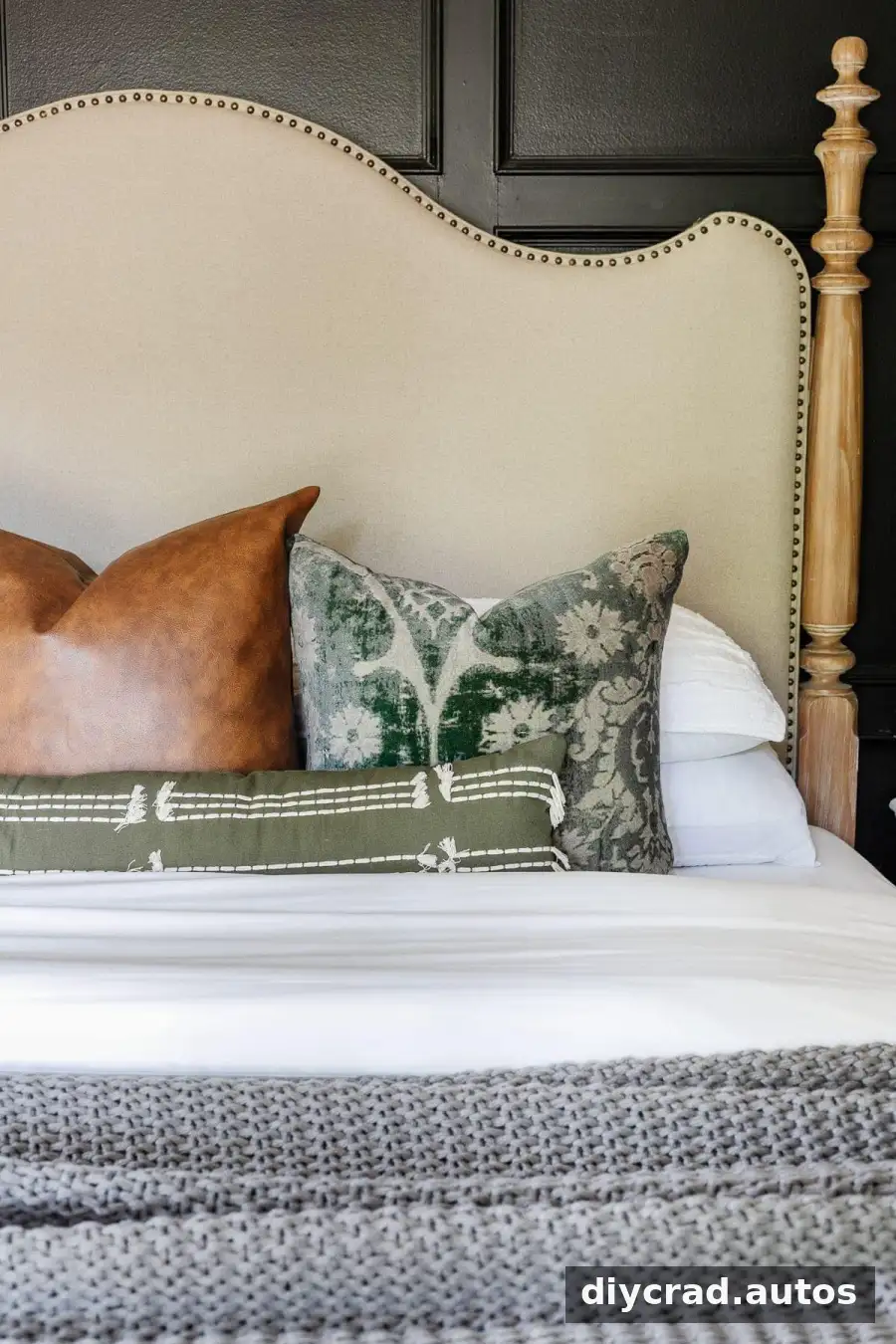
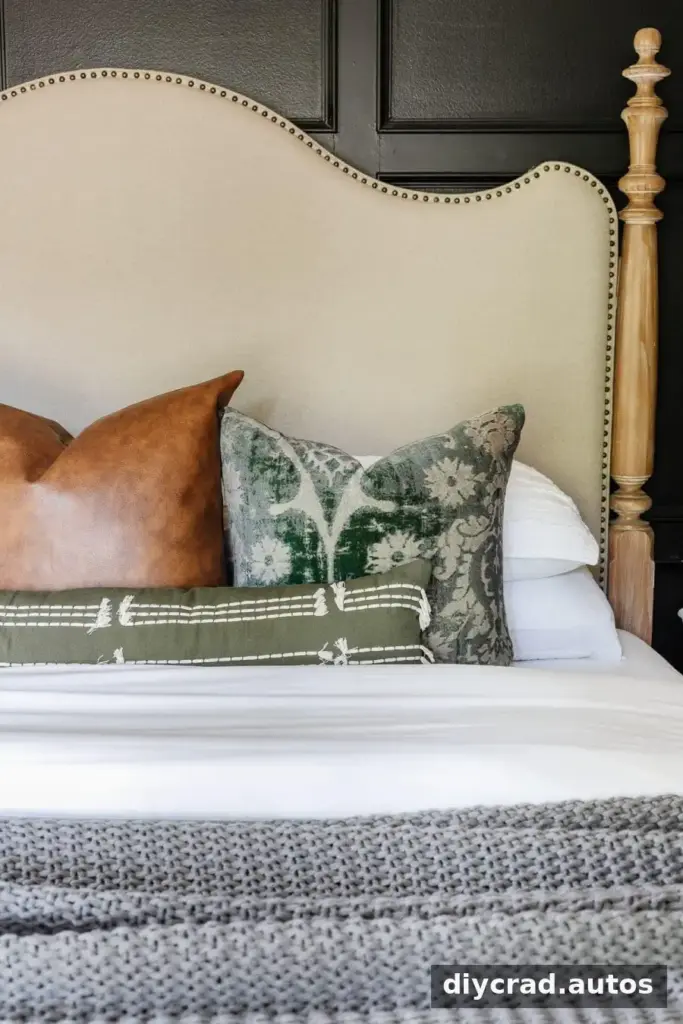
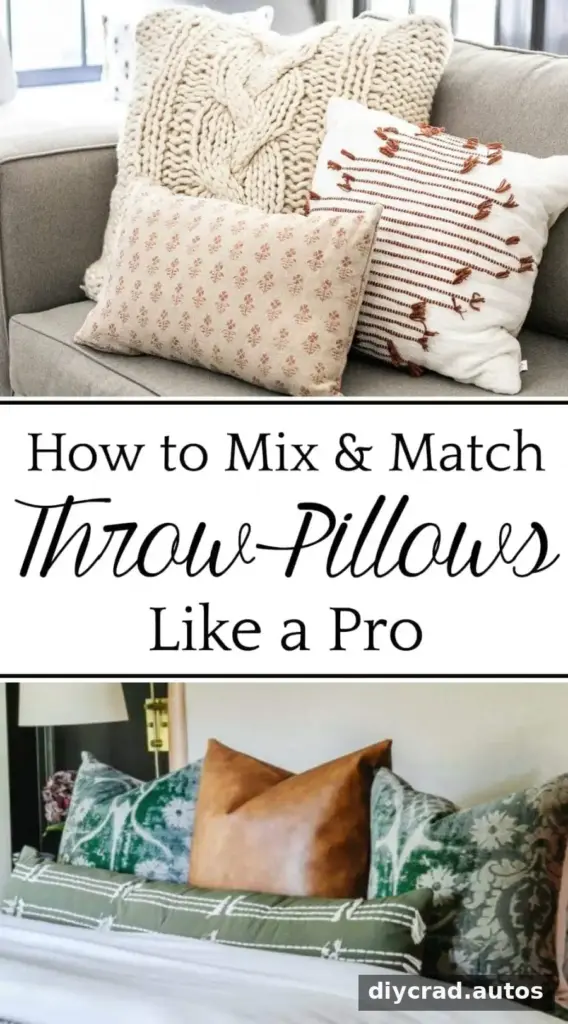
For a bedroom arrangement, one example combines a complex antique jade print, a geometric stitched olive lumbar pillow, and a faux leather pillow. The prints provide visual interest, while the contrasting materials add texture. When arranging a similar group, place the strongest pattern where it can be seen and use simpler pieces to balance it.
Choose Pillow Sizes for Sofas and Beds
Varying pillow sizes helps an arrangement look layered rather than like a row of identical cushions. The dimensions below are helpful starting preferences; furniture size and depth may affect what looks best in your room.
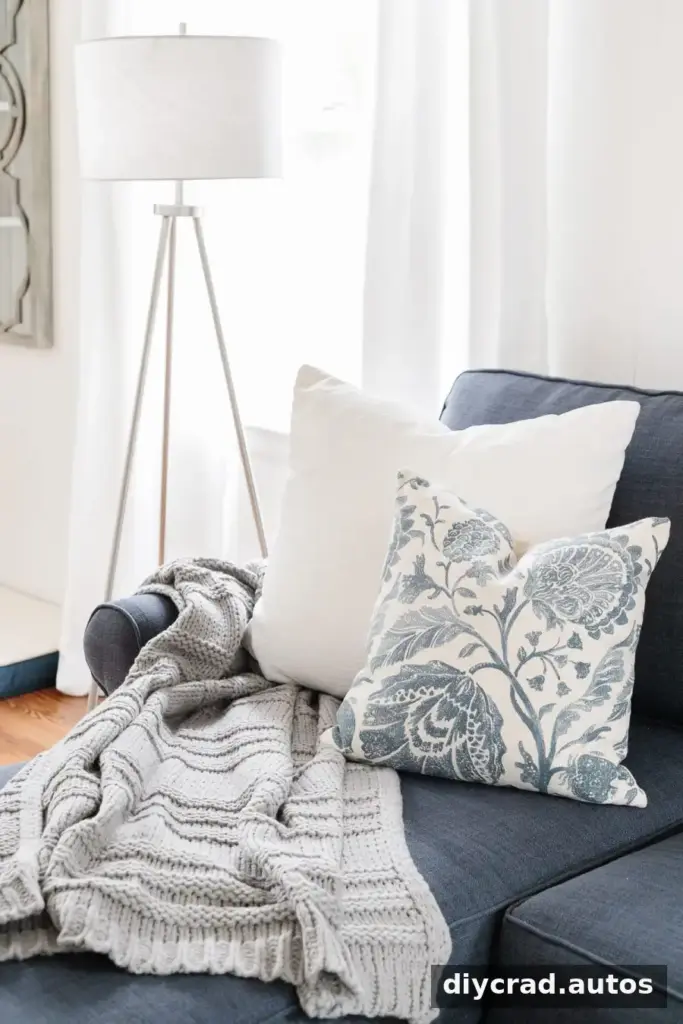
- For sofas: Try 20″–24″ throw pillows at the ends, with a smaller 18″–22″ pillow next to each one. If the sofa is deep enough, add a small lumbar pillow in front.
- For beds: Start with 24″–26″ euro pillows, add 22″–24″ pillows on either side, and finish with a long lumbar pillow at the front.
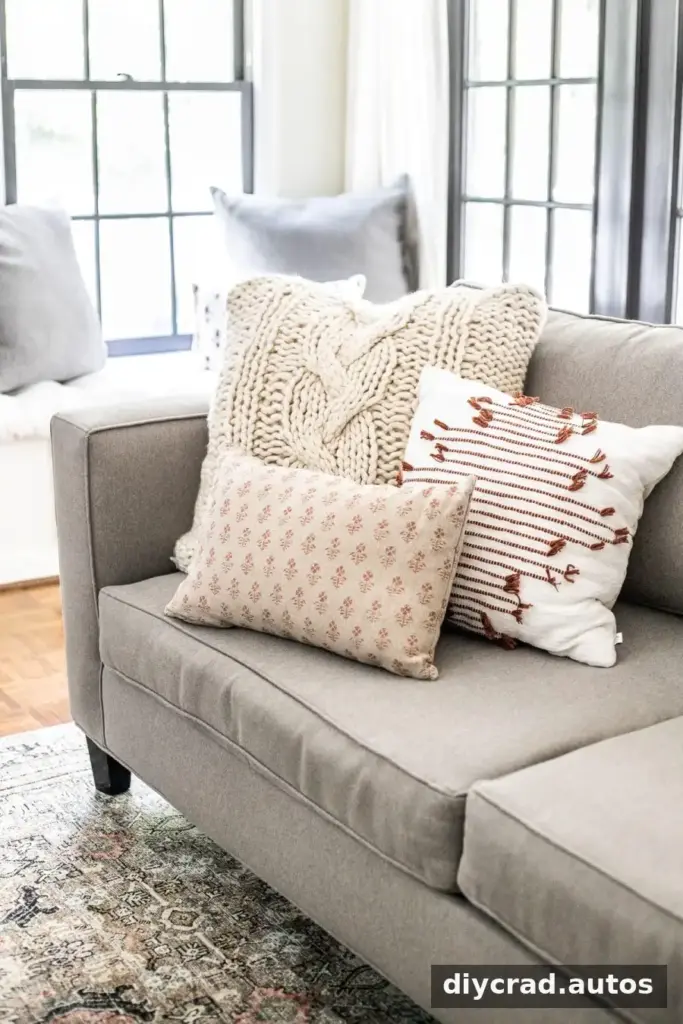
On a sofa, a 12″ × 20″ coral floral block-print lumbar pillow, an 18″ rust geometric stitched pillow, and a 24″ ivory cable-knit pillow offer a mix of shape, color, pattern, and texture. Before buying, measure the furniture and check that the pillows will leave enough room for comfortable seating.
Practical Tips for Buying Throw Pillows
- Consider buying covers separately. Pillow covers are easier to store when you want to change your room’s look. Check the care instructions and dimensions before purchasing.
- Choose a suitable insert. Down or down-alternative inserts are options to consider. An insert about 2″ larger than its cover can create a fuller appearance, but check the cover’s construction and fit.
- Look for a zipper if buying a complete pillow. A removable cover makes it easier to clean or replace the insert later.
- Think beyond one season. A cable-knit pillow can work through winter and may also suit the colder months of fall. A highly seasonal design may have a shorter window of use.
These preferences are not requirements. A pillow can still be a good choice simply because its color, pattern, or feel suits your space. For more options, compare home-goods retailers, independent makers, and secondhand shops, keeping the dimensions and fabric care in mind.
Make the Arrangement Your Own
When you are deciding how to mix and match throw pillows, use pattern, color, texture, and size as a framework—not a checklist. Start with one pillow you want to keep, choose coordinating pieces that vary in scale, and step back to see how the group looks with the rest of the room. You can always remove or rearrange a pillow until the combination feels comfortable and balanced.