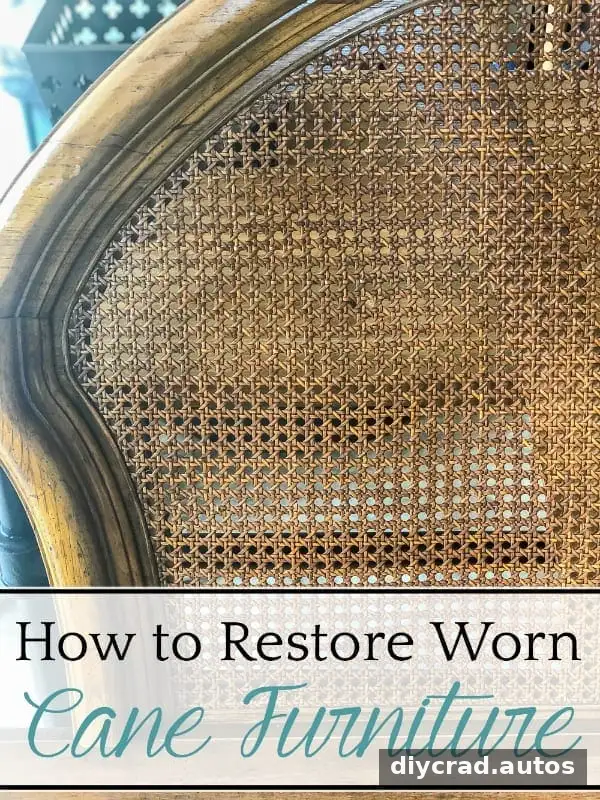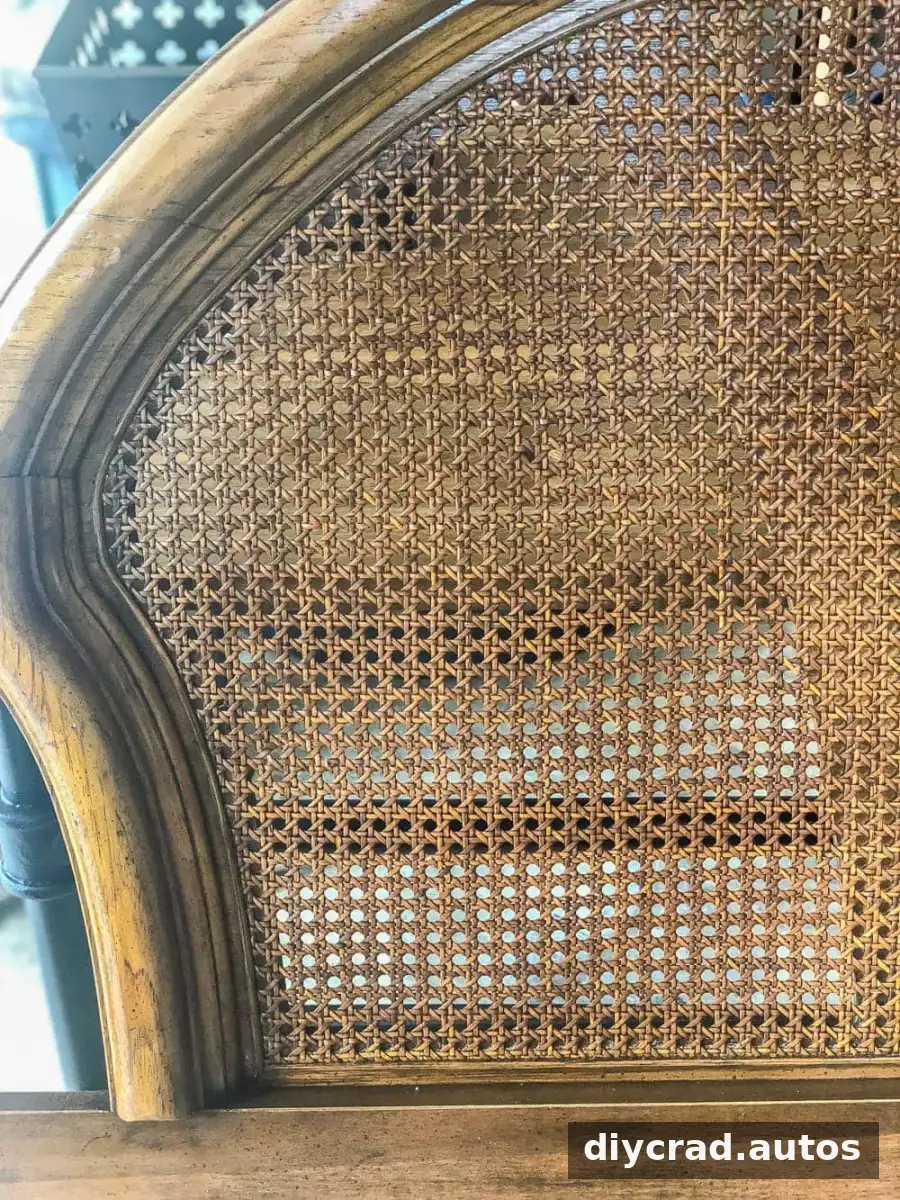
Worn cane furniture can often look fresher with a careful clean and a small amount of finish touch-up. When you restore worn cane furniture, first check whether the weave is simply dirty or faded, or whether strands are loose, split, or missing. Surface marks may respond to gentle cleaning, but damaged cane needs a different repair approach.
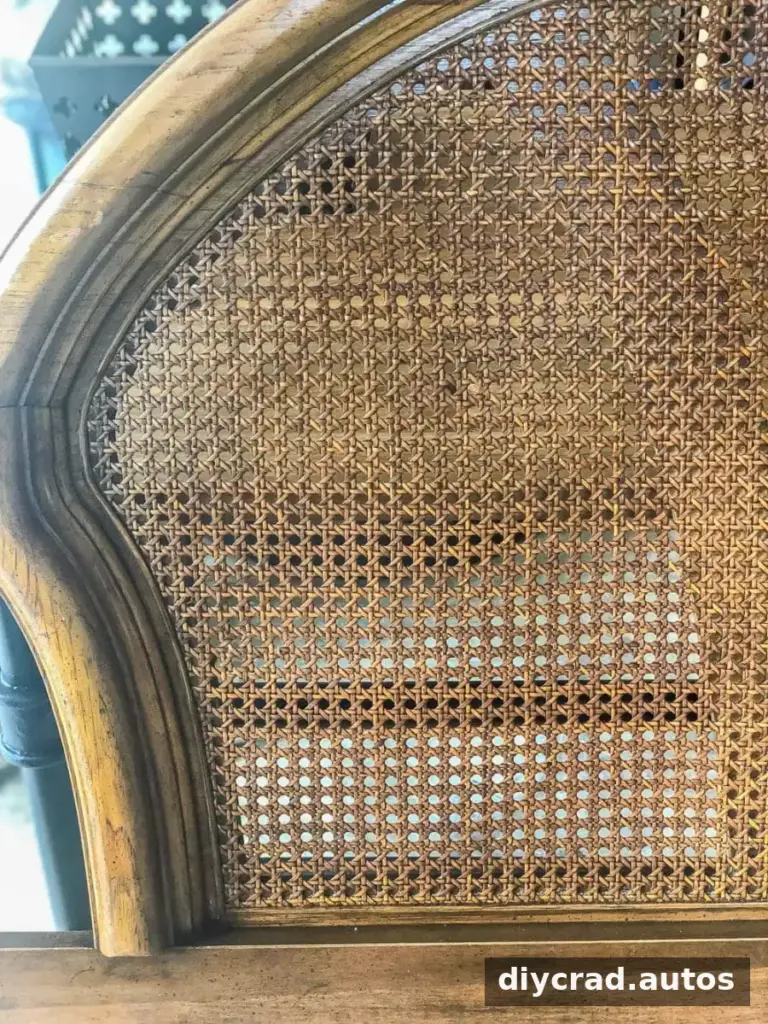
How to restore worn cane furniture safely
Before using a cleaner or polish, examine the furniture in good light. Look across the cane for broken strands, sagging areas, and loose edges. If the weave is structurally damaged, a surface treatment will not make it strong again; avoid putting weight on that section until it can be repaired.
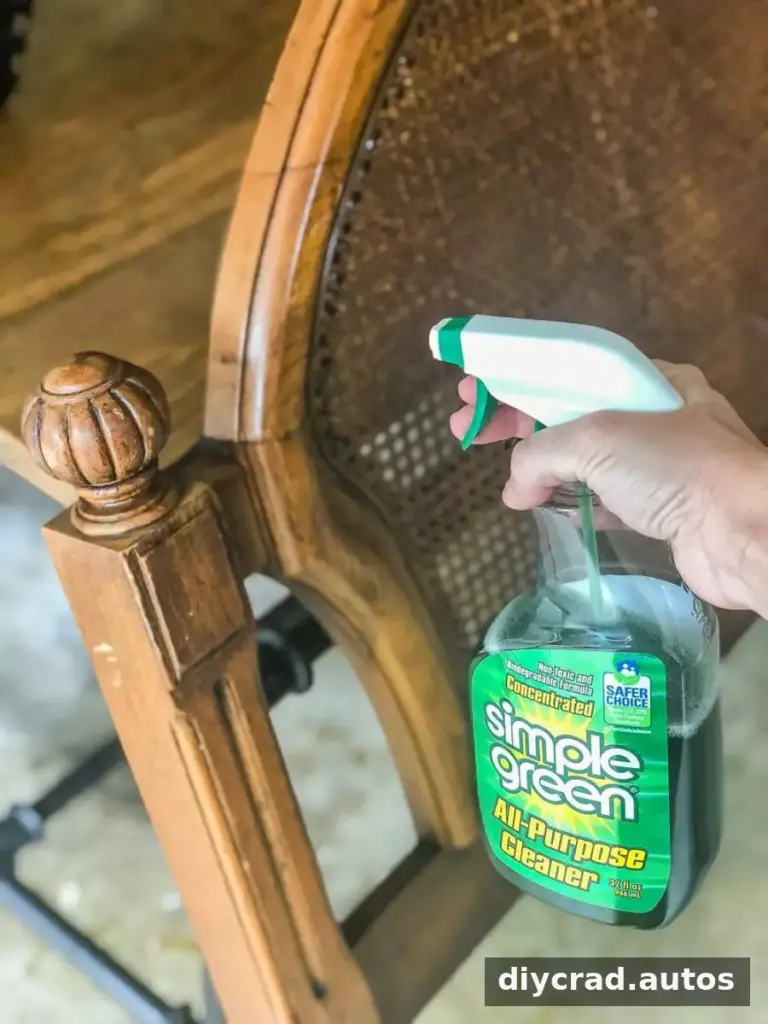
For a piece with surface dirt or smoke residue, begin with the least aggressive cleaning method. Use a soft cloth and a cleaner that is suitable for the furniture’s materials, following the product label. Test it on a small, hidden area first. Cane can be sensitive to excess moisture, so avoid saturating the weave or allowing cleaner to pool in its openings.
Clean away residue and stale odors
A vintage cane headboard in this room makeover had a strong stale cigarette odor and visible brown-yellow residue. It was treated with a household cleaner in three light applications. For any similar project, check that the cleaner is appropriate for both the cane and the frame, and let the surface dry between applications if its instructions call for it.
Work in a well-ventilated space and use protective equipment recommended on the label. Do not mix cleaning products. If an odor remains after cleaning and thorough airing, repeating the same treatment may not solve the underlying problem; residue can linger in porous materials and hard-to-reach areas.
Refresh the appearance of worn areas
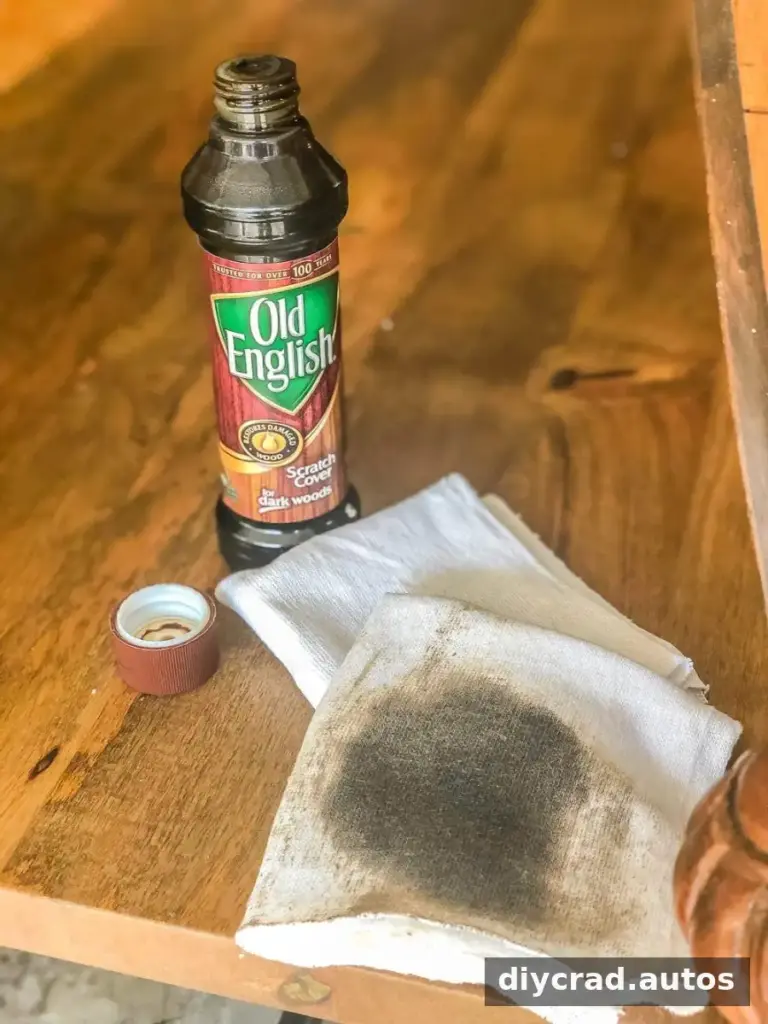
Once the furniture is clean and completely dry, a scratch-cover product made for the frame’s finish may help disguise minor marks. Apply a small amount with a soft cloth and test it in an inconspicuous spot before treating a visible area. The headboard’s worn-looking areas were refreshed with a scratch-cover treatment, which can also be used on suitable wood surfaces according to its label.
Use restraint: a finish product may improve the appearance of surface wear, but it does not mend broken cane, restore strength, or replace professional repair. Keep polish off sections where it is not intended, and remove any excess product as directed.
When cleaning is not enough
Stop if the cane starts to fray, lift, or change noticeably during cleaning. Loose or snapped strands, deep sagging, and damage around the frame may require repair rather than additional cleaner or polish. Avoid pulling on loose strands, since that can worsen the weave.
- For light dirt: Use a soft cloth and a suitable cleaner, testing first.
- For stale odors: Clean gently, allow the piece to dry fully, and air it in a ventilated area.
- For surface scratches: Use a finish product only if it is compatible with the frame and follow its directions.
- For broken or sagging cane: Seek a repair solution instead of relying on cosmetic treatment.
Allow the furniture to dry completely before placing bedding or other items against it. This practical pause helps prevent trapped moisture and makes it easier to check whether the finish looks even.

Finishing a guest-room update
A refreshed cane headboard can help a guest room feel more complete, but the rest of the room does not need to be finished all at once. In this makeover, artwork and a rug were still planned, while the room already had painted walls, curtains, bedding, bedside tables, lamps, and a ceiling fan. When choosing nearby textiles, leave enough space around the headboard to inspect the cane and keep it from being pressed or rubbed unnecessarily.

A guest room can also be made more useful with practical details such as a clearly displayed Wi-Fi password and a comfortable place to set personal items. Keep the cane headboard dry and avoid leaning heavy objects against its woven sections.

Conclusion: restore worn cane furniture with care
To restore worn cane furniture, assess the weave first, clean gently, treat odors with a suitable cleaner, and test any scratch-cover product before applying it more broadly. Cosmetic care can improve the look of a vintage piece, but broken or sagging cane needs proper repair. Patience, light applications, and complete drying help protect the furniture while you refresh it.