

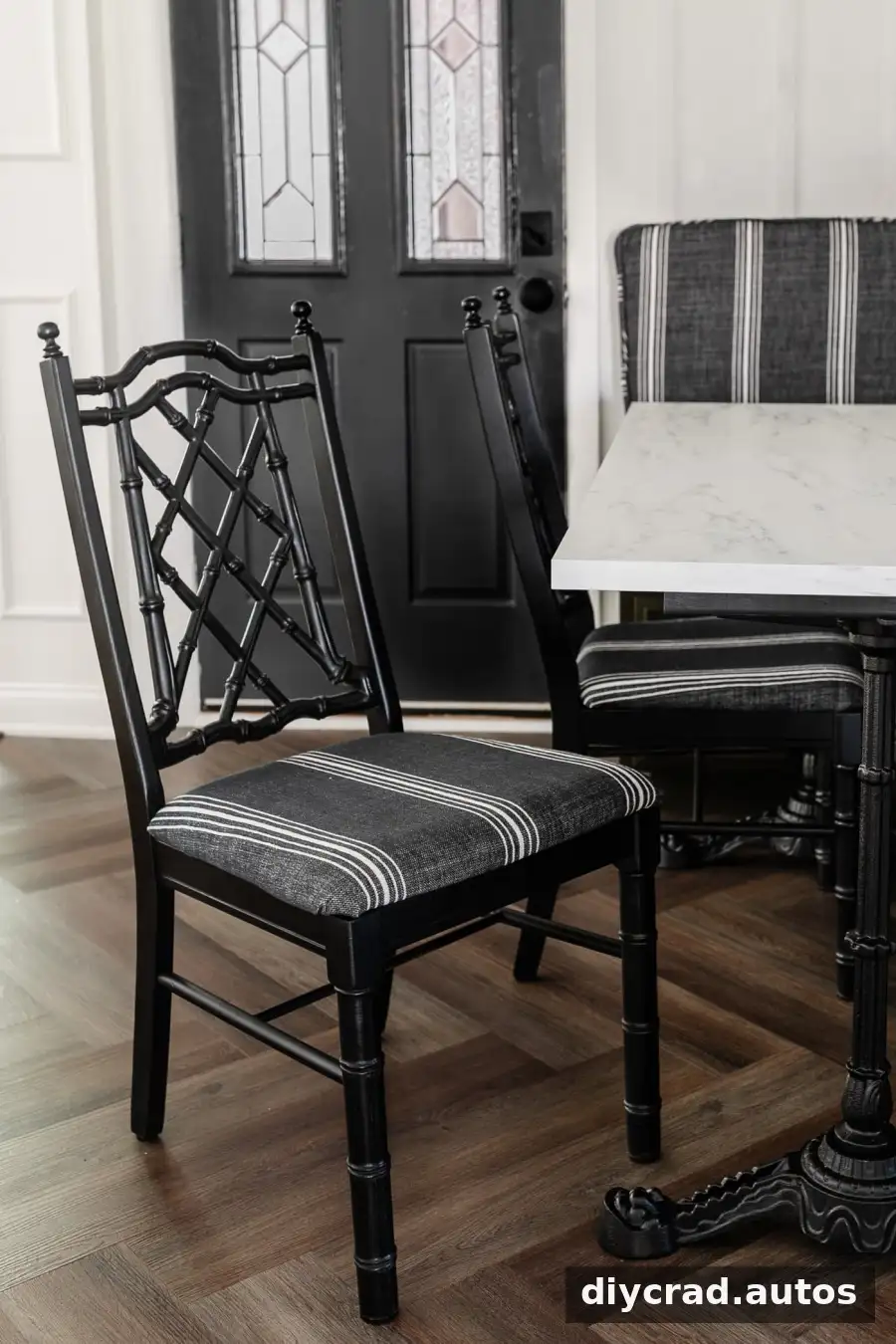
Learning how to reupholster dining chair seats is a practical way to refresh secondhand furniture without needing advanced sewing skills. With a staple gun, suitable fabric, and a few basic tools, you can update a chair seat while keeping its existing foam and batting in place. This project also works well alongside a simple frame makeover.
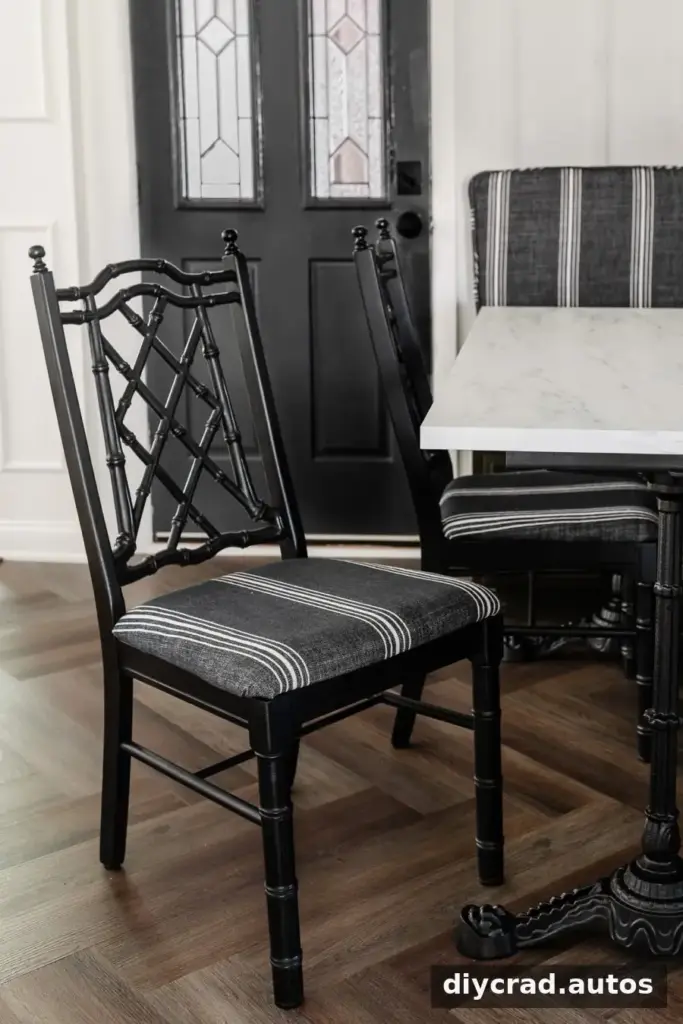
Classic faux bamboo chairs can be sturdy and full of character, even when their upholstery or finish looks dated. A secondhand set purchased for about $50 per chair became a breakfast nook feature after its seats were recovered and the frames were repainted. Before starting, check that each chair is structurally sound and that the seat padding is still in good condition.
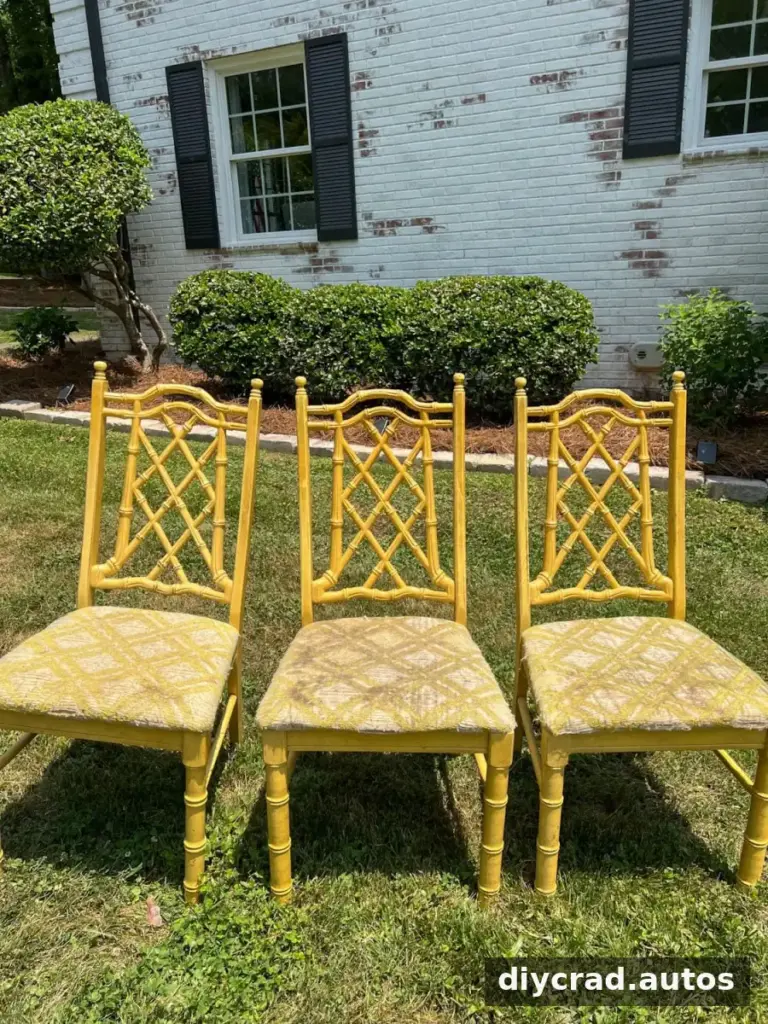
How to Reupholster Dining Chair Seats
The instructions below cover adding new fabric over existing upholstery, foam, and batting that are still in usable condition. If the padding is lumpy, damaged, or has an unpleasant odor, remove the old covering and assess the seat before proceeding. Replacing foam or batting requires additional materials and steps.
Supplies
- Screwdriver or drill
- Staple gun and staples
- Upholstery fabric
- Fabric scissors
- Spray primer, if changing the frame color
- Spray paint, if changing the frame color
A stain-resistant upholstery fabric can be a practical choice for a dining area, where spills and frequent use are common. Check the fabric’s care instructions before buying, and consider how its pattern will sit on the finished seat.
Steps for Reupholstering Dining Room Chairs
1. Remove the seat
Turn the chair over and use a screwdriver or drill to remove the screws holding the seat to the frame. Keep the screws together so they are ready for reassembly. If you plan to paint the frame, separating the seat first helps keep paint off the fabric.
2. Cut the fabric
Place the seat on the fabric with the finished side facing down. If the fabric has stripes or another directional pattern, position it carefully before cutting. For a striped design, align a stripe with the center of the seat to create a balanced look.
Cut around the seat, leaving approximately 3–4 inches of extra fabric on each side, depending on the seat’s thickness. It is easier to trim excess fabric later than to work with pieces that are too small.
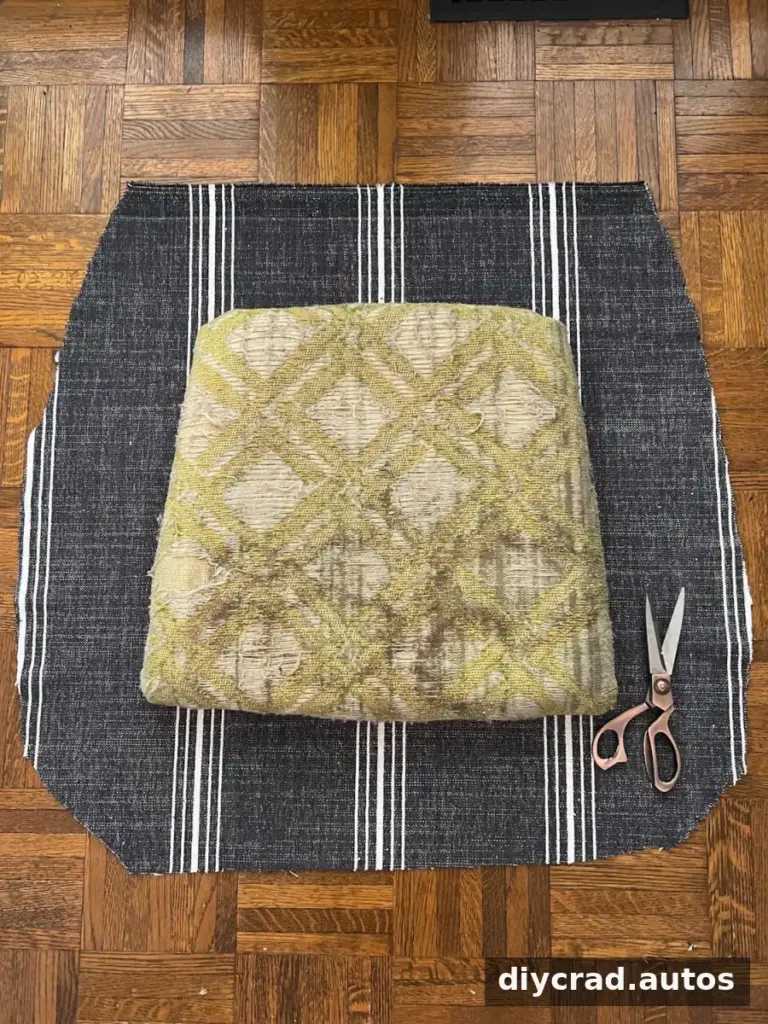
3. Staple the front and back
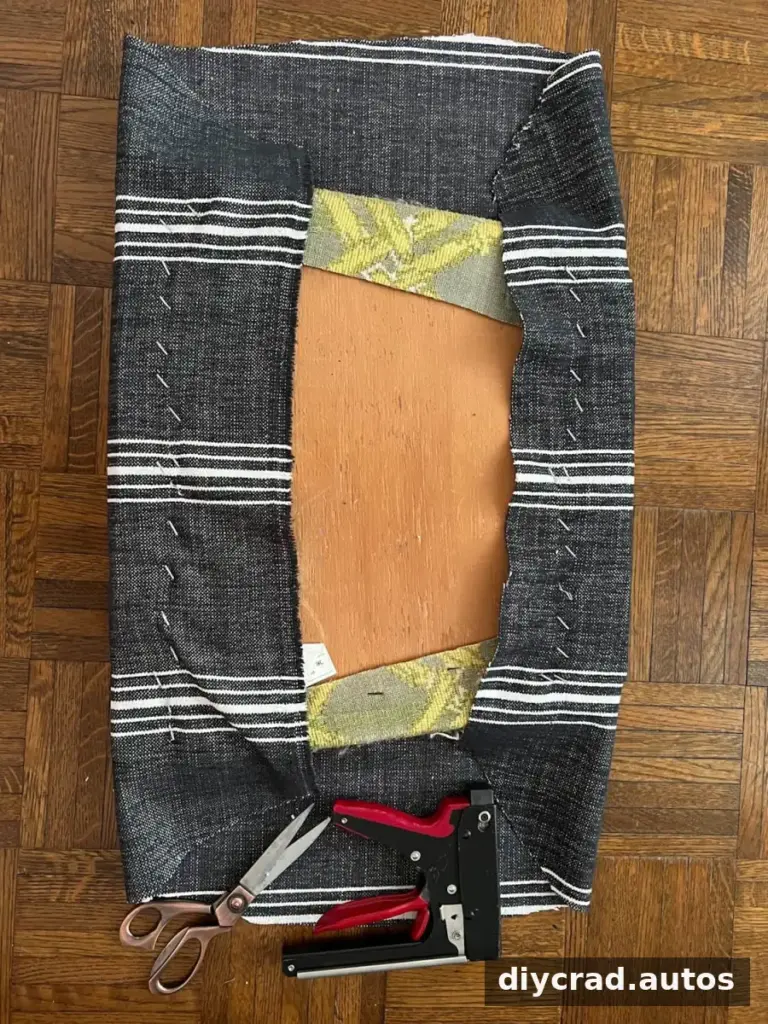
Think of the process as wrapping a package. Place the seat upside down on the cut fabric, then pull one edge over the underside. Keep the fabric smooth along the seat edge and staple it in place. Repeat on the opposite side, pulling the material gently so it is taut without stretching it excessively.
4. Fold and staple the corners
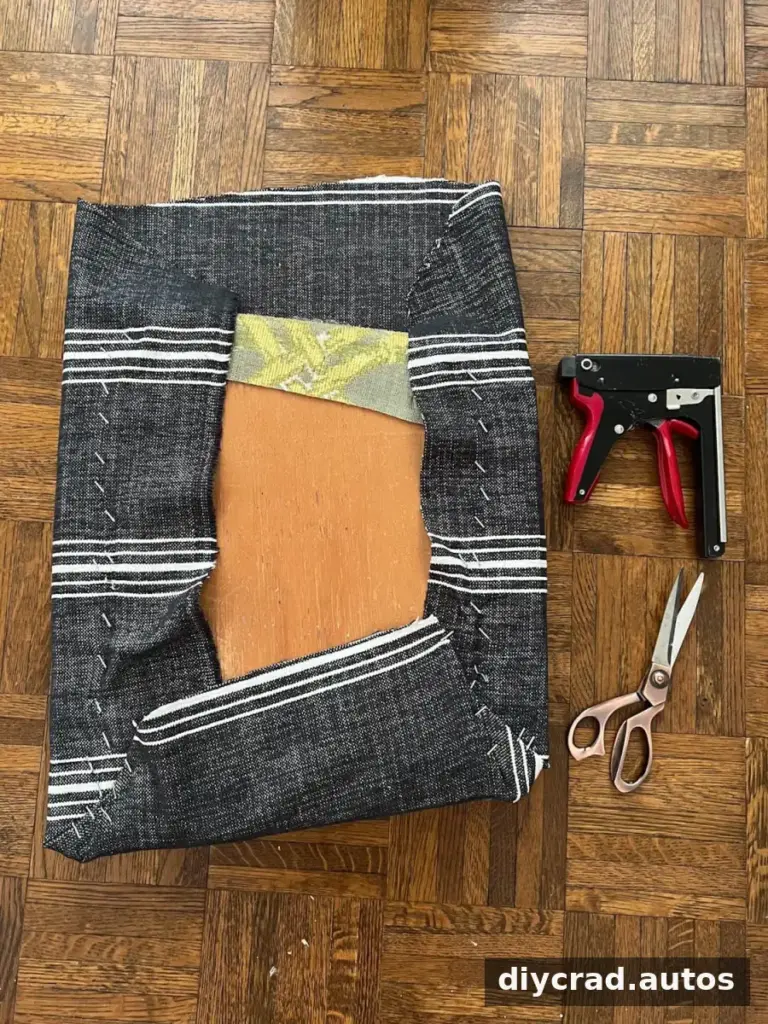
At each corner, fold the fabric into a neat triangular shape and staple it to the underside. Work gradually and keep the folds tidy so the fabric does not bunch around the seat edge. Pull the remaining fabric along that side smooth, then staple it in place.
5. Finish the final side
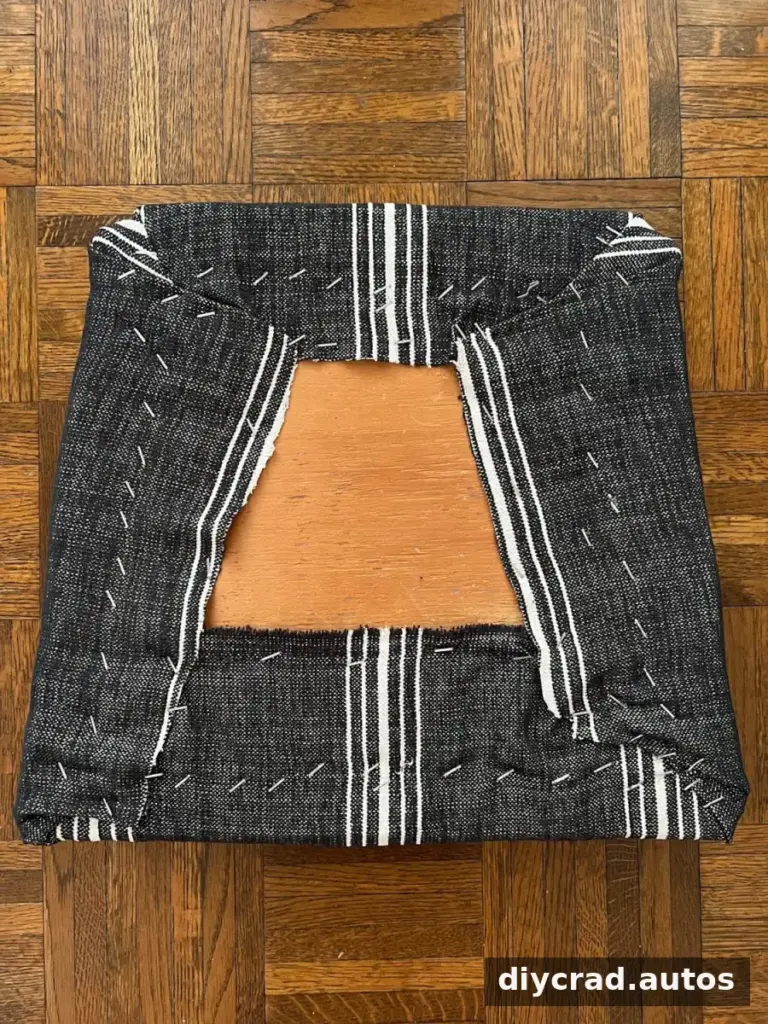
Repeat the same folding and stapling method on the last edge. Check the top of the seat as you work. If you notice a wrinkle or puckered area, remove the nearby staples and adjust the tension before continuing.
6. Trim loose fabric
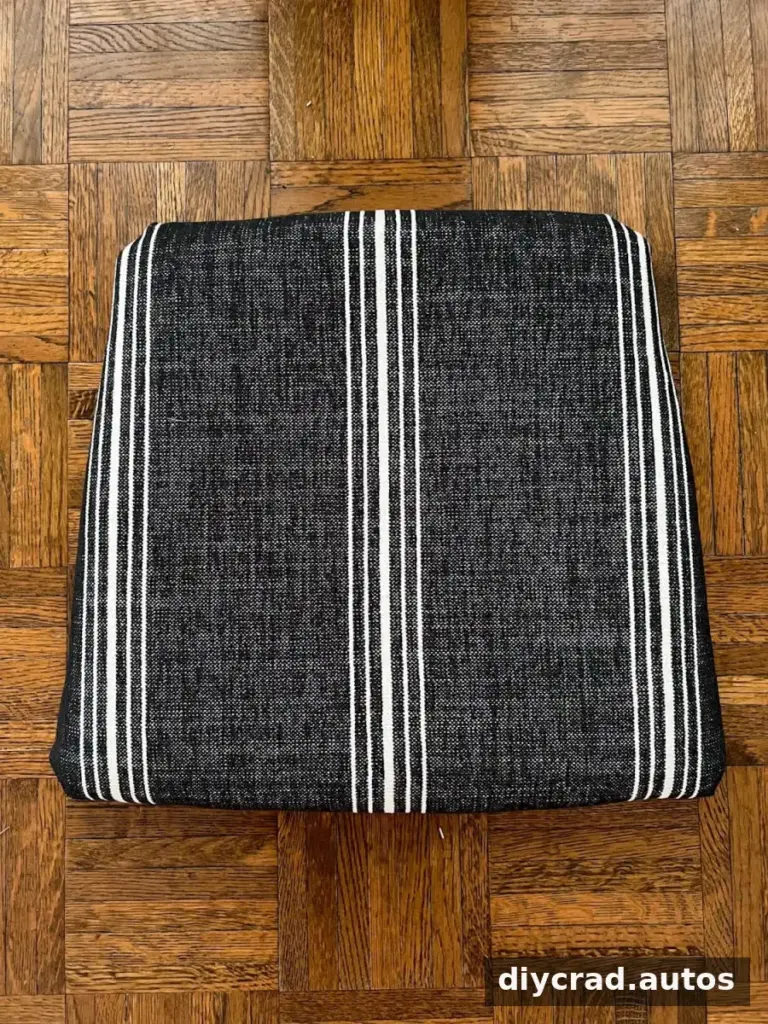
Trim excess material with fabric scissors, or staple any loose sections securely to the underside. Avoid leaving fabric hanging below the seat, where it could catch on the chair frame or become visible when the chair is in use.
Optional: Refresh the chair frame
7. Prime the frame
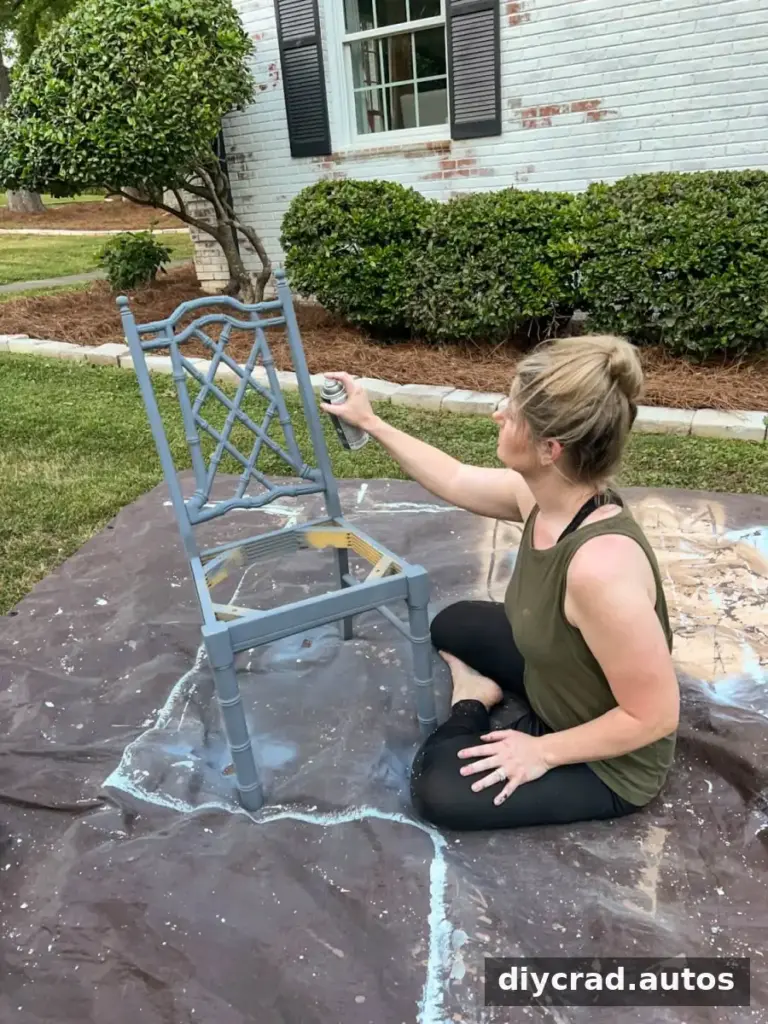
If you are changing the frame color, apply primer before painting and let it dry according to the product instructions. Chairs are handled often, so preparing the surface can help create a more durable finish. When painting a dark color, a gray primer may help reduce the number of paint coats needed.
Use spray products in a well-ventilated area and follow the safety directions on the label. Protect nearby surfaces and keep the seat separate while the frame is being painted.
8. Paint the frame
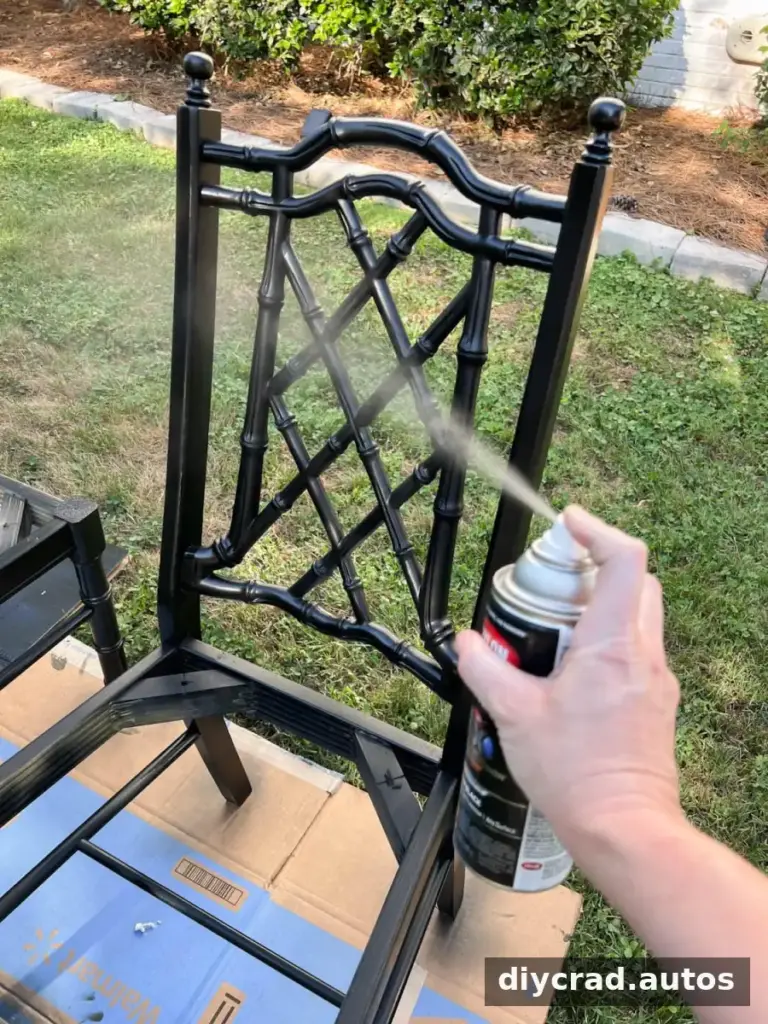
Spray paint can make it easier to cover chairs with spindles and detailed shapes. Apply 2–3 thin, even coats using steady sweeping passes rather than one heavy coat. Allow each coat to dry as directed; thin layers help reduce drips and uneven patches.
9. Reattach the seat
Once the frame finish is fully dry and the newly covered seat is ready, line the seat up with its original position. Reuse the saved screws and tighten them securely without forcing them. Check that the seat is stable before putting the chair back into regular use.
Finished Faux Bamboo Chairs
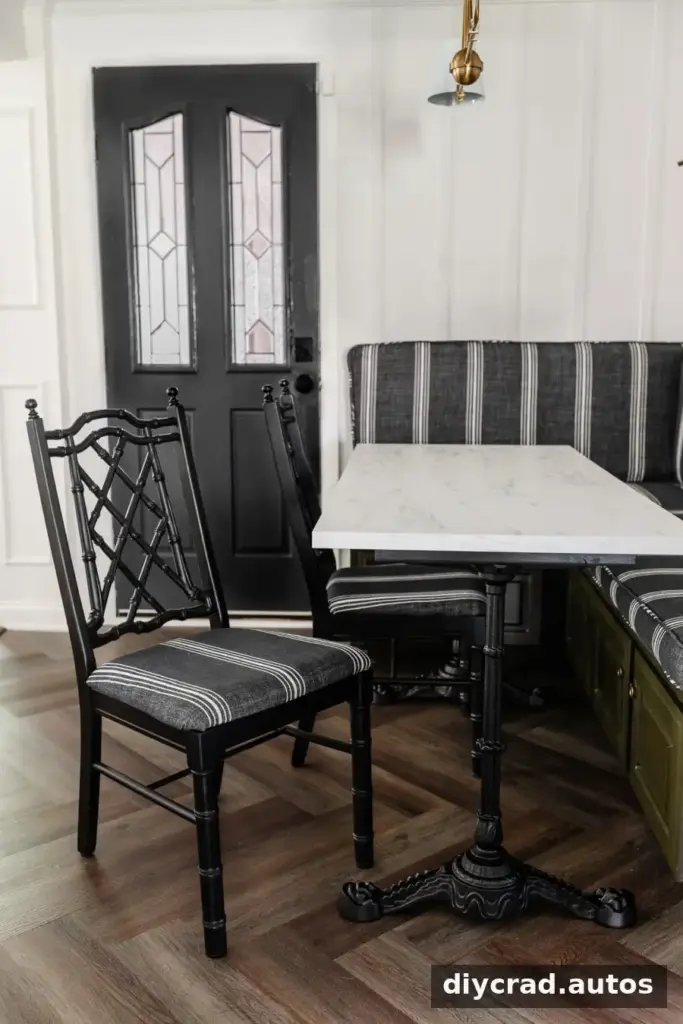
Recovering the seats and refreshing the finish can give older faux bamboo chairs a more tailored look while preserving their original shape. In this makeover, the chairs cost about $50 each secondhand, and the total for each chair—including fabric and paint—came to $60. Centering the stripes helped the recovered seats look balanced beside the banquette.
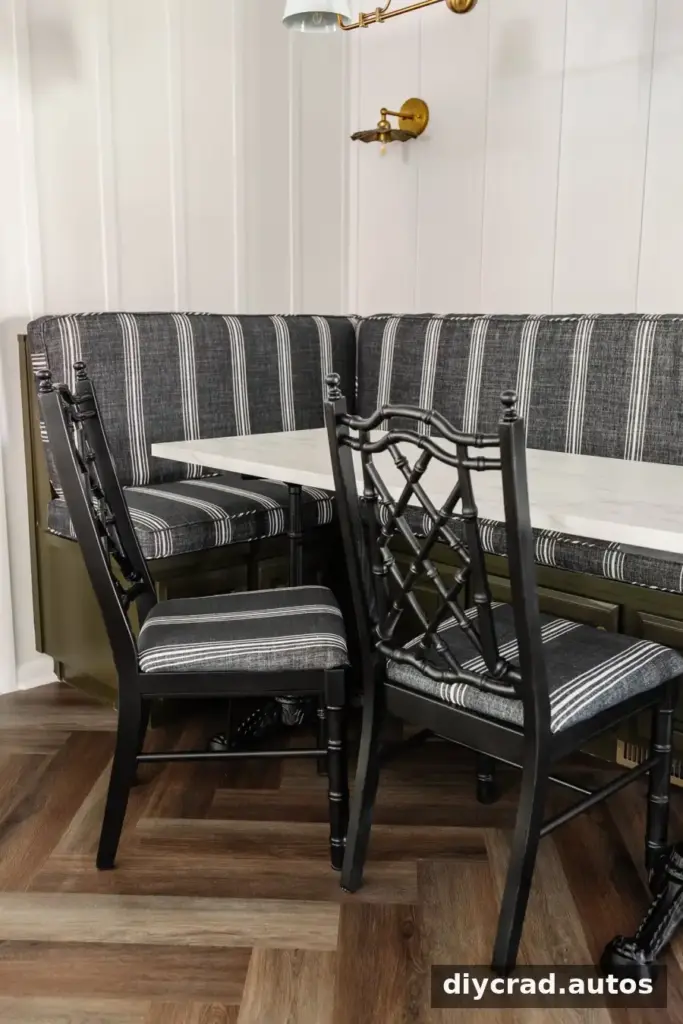
When planning a similar project, compare the cost of fabric, paint, and supplies with the condition and price of the chairs. A sound frame and usable seat padding make the work simpler; loose joints or damaged padding may require repairs before the chairs are ready for everyday use.

Ideas for a Dining Nook
Reupholstered chairs can be one part of a larger dining nook update. Flooring, a corner banquette, a wall treatment, or a refreshed dining table can help the space feel coordinated. Consider completing dusty or paint-heavy work before bringing freshly upholstered seats back into the room.
- Install a floating floor over tile
- Update a corner banquette and plan around air vents
- Create a batten wall with lattice strips
- Refresh a dining table with a faux marble finish
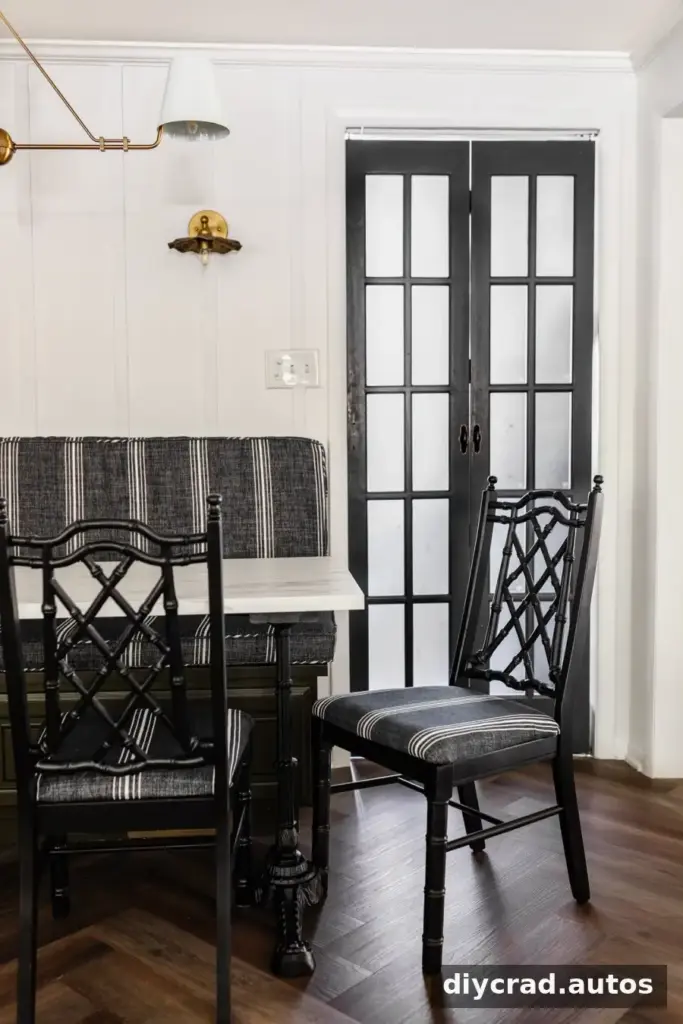
With careful fabric placement, even tension, and patient finishing, it is possible to give sturdy secondhand chairs a new look without sewing. For anyone learning how to reupholster dining chair seats, the key is to work evenly, check for wrinkles as you staple, and make sure the frame and padding are suitable for reuse.

