

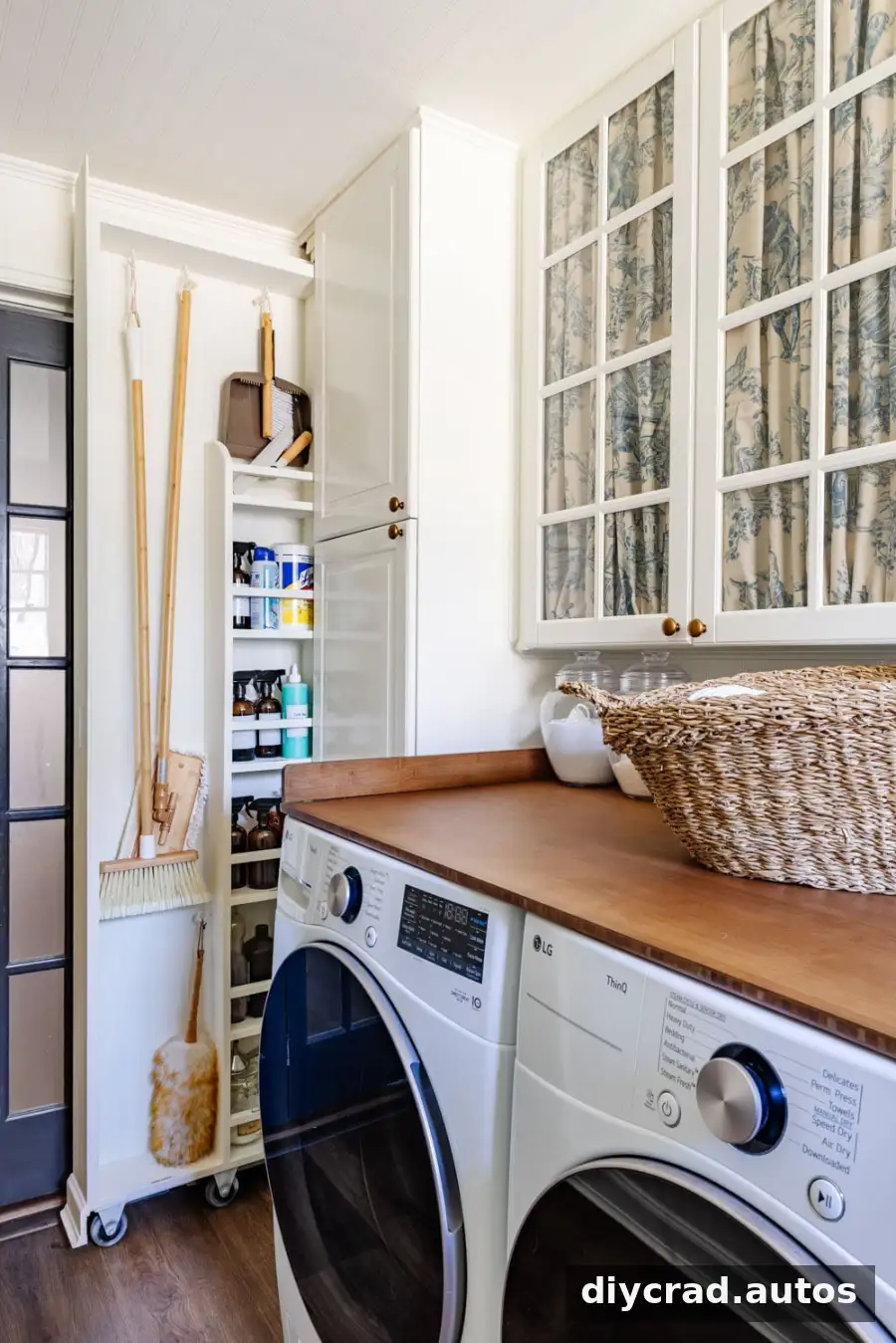
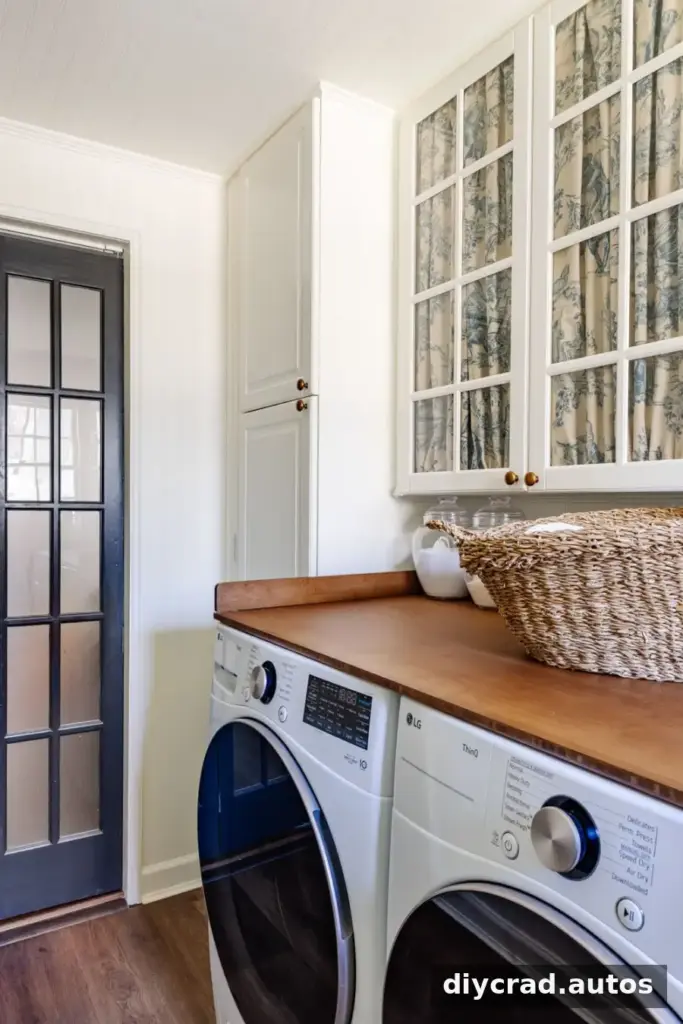
A hidden broom cupboard can turn an awkward gap into useful storage without taking up room for a separate utility closet. In this laundry room, a narrow 6″ space between the cabinet and the wall became a slim pull-out cabinet for a broom, mop, and cleaning supplies. When closed, its beadboard front blends with the wall; when needed, the cupboard rolls out for easy access.
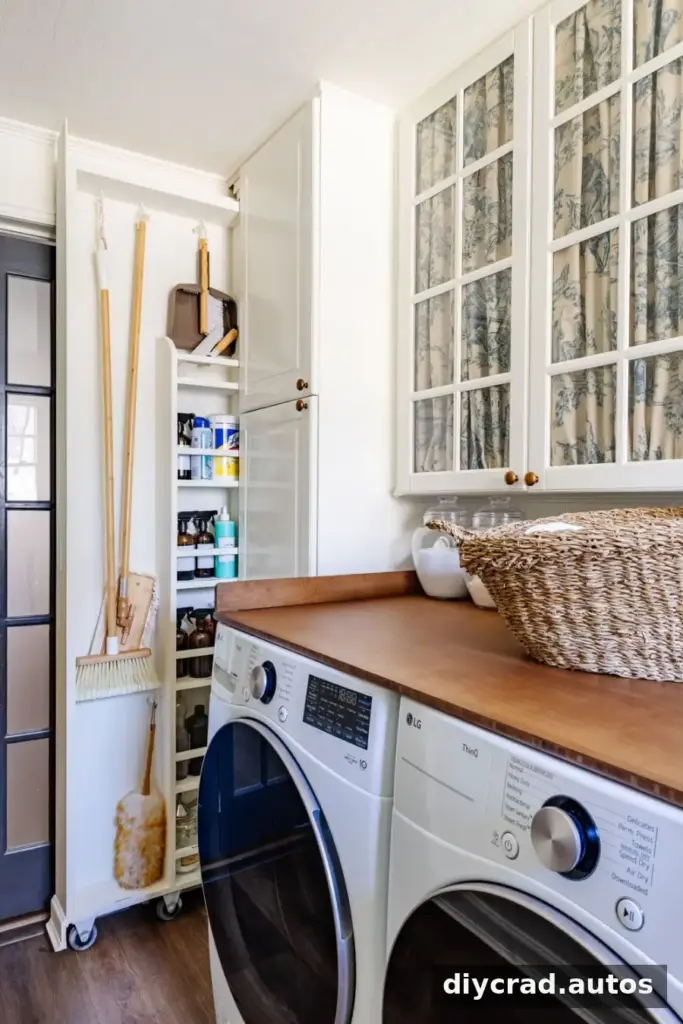
The project was adapted to work around cabinets that were already installed. Instead of a wall-mounted track, the design uses casters under the frame and a custom guide attached at the ceiling. Careful measuring and a finished front help the narrow storage unit fit into the room without looking like an add-on.
Why Build a Hidden Broom Cupboard?
Cleaning tools can be awkward to store, especially in a narrow laundry room. A pull-out cupboard makes use of a slim gap and keeps everyday items accessible but out of sight.
- It keeps brooms and mops from leaning in a corner.
- It uses an otherwise overlooked space instead of requiring a bulky utility closet.
- It gives cleaning tools a designated storage spot.
- With a coordinated front and trim, it can look like part of the room.
Before building, check that the gap is deep and wide enough for the tools you plan to store, and that the pull-out unit will not block cabinet doors or walkways.
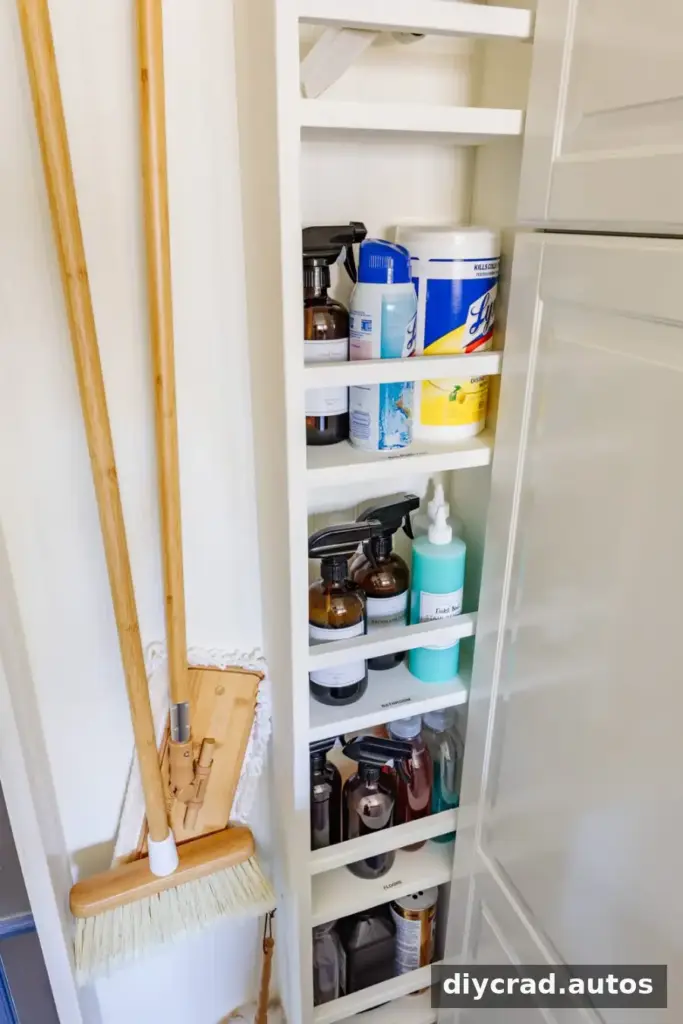
How This Hidden Broom Cupboard Was Adapted
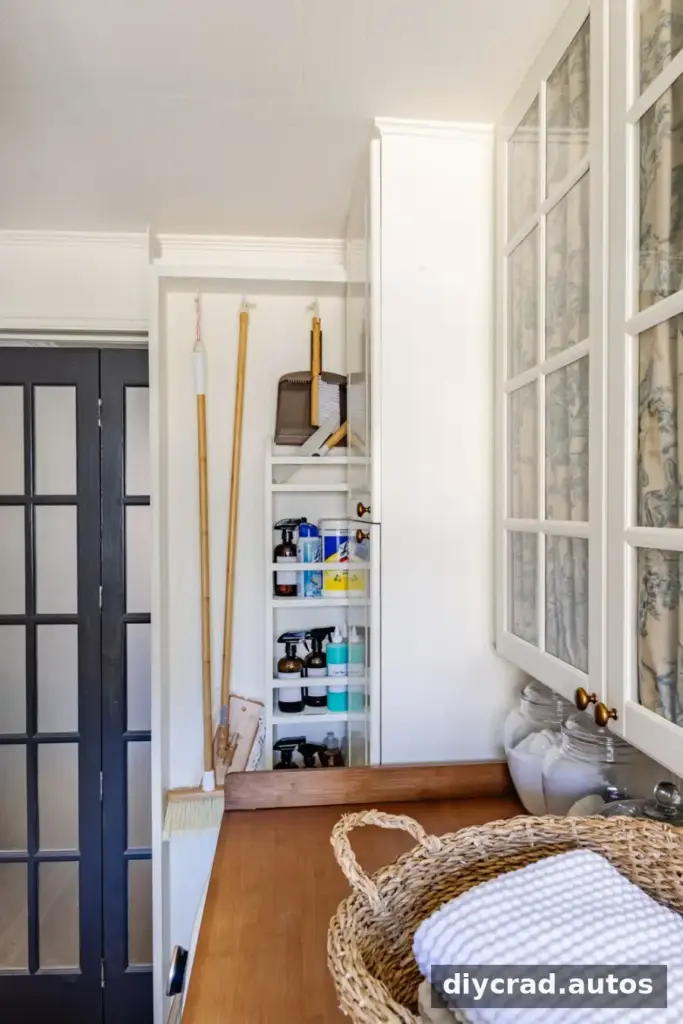
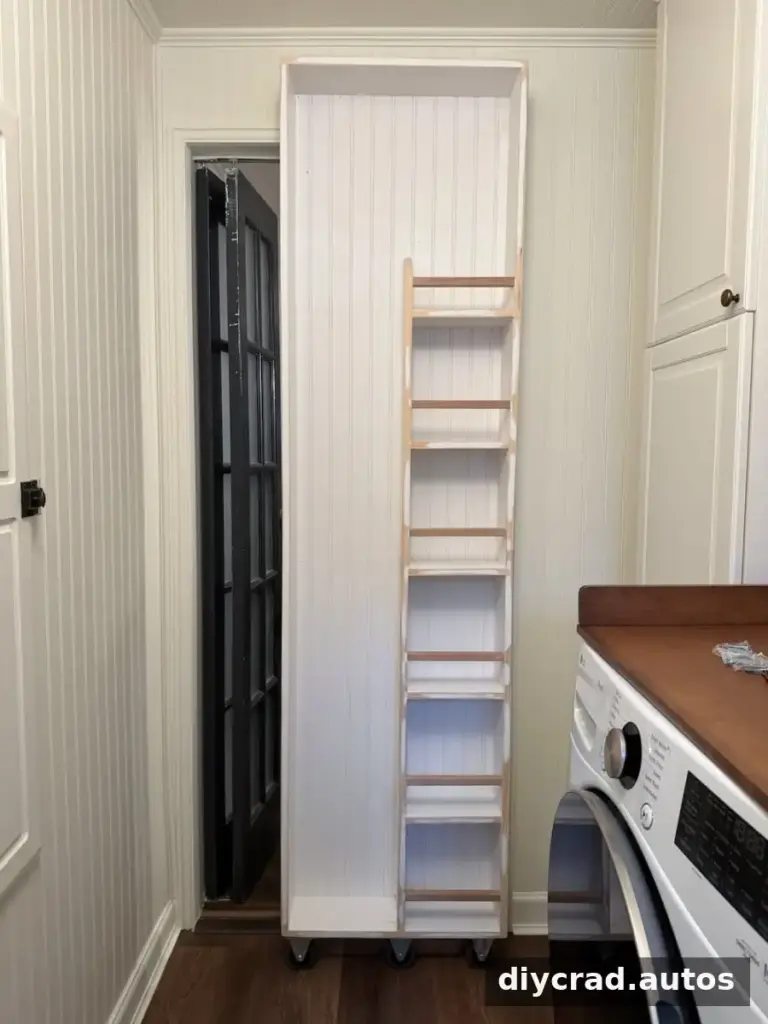
Because the laundry room cabinets were already secured in place, a wall-mounted track was not suitable for this installation. The cupboard was instead built with a rolling base and a ceiling-mounted guide to keep it moving straight in the 6″ gap.
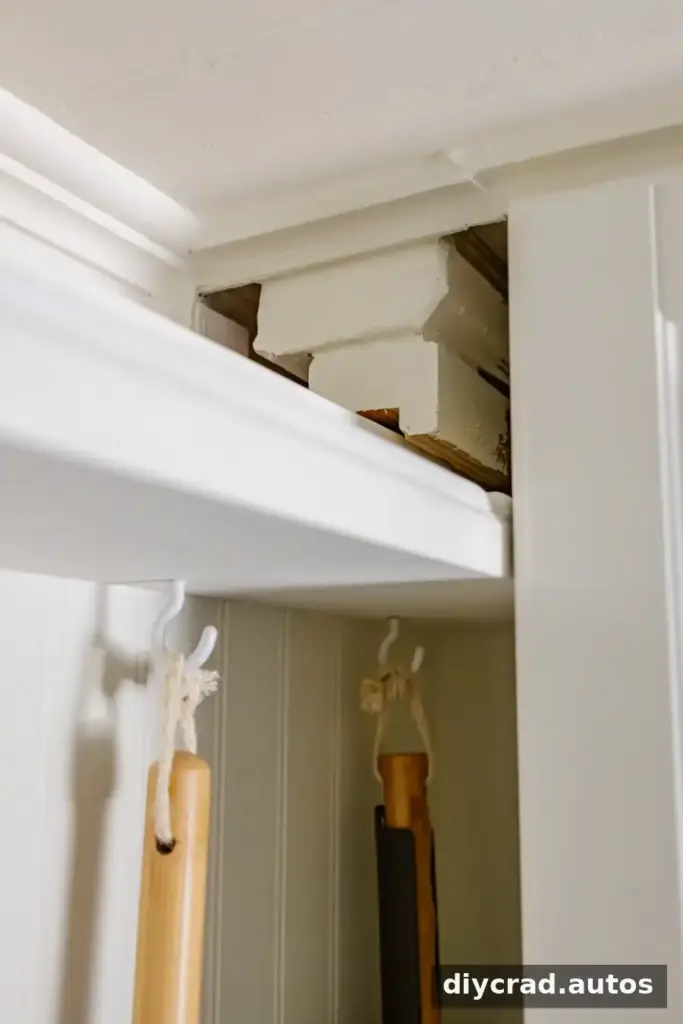
- A custom ceiling guide was made using scrap wood from an old pallet.
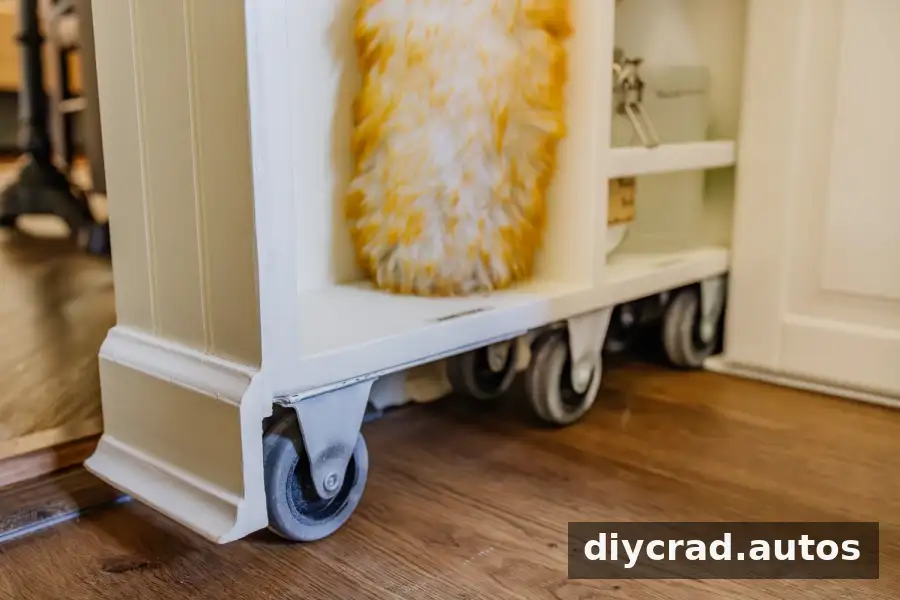
- Casters were fitted to the bottom of the cupboard frame.
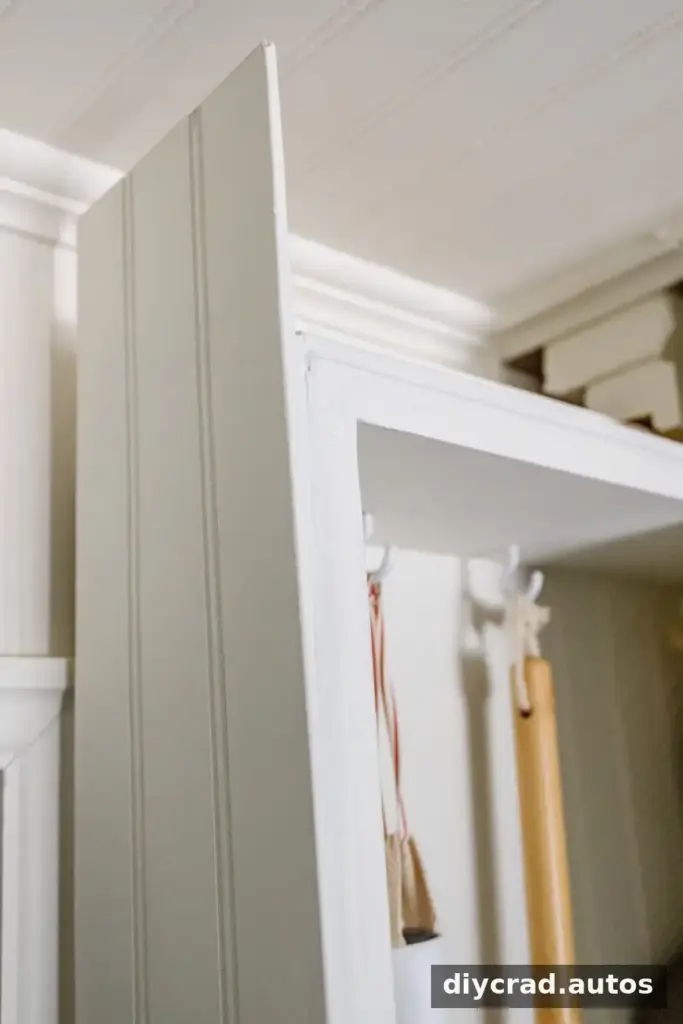
- Beadboard was added to the front to match the wall finish.
- Baseboard trim was used to conceal the caster wheels.
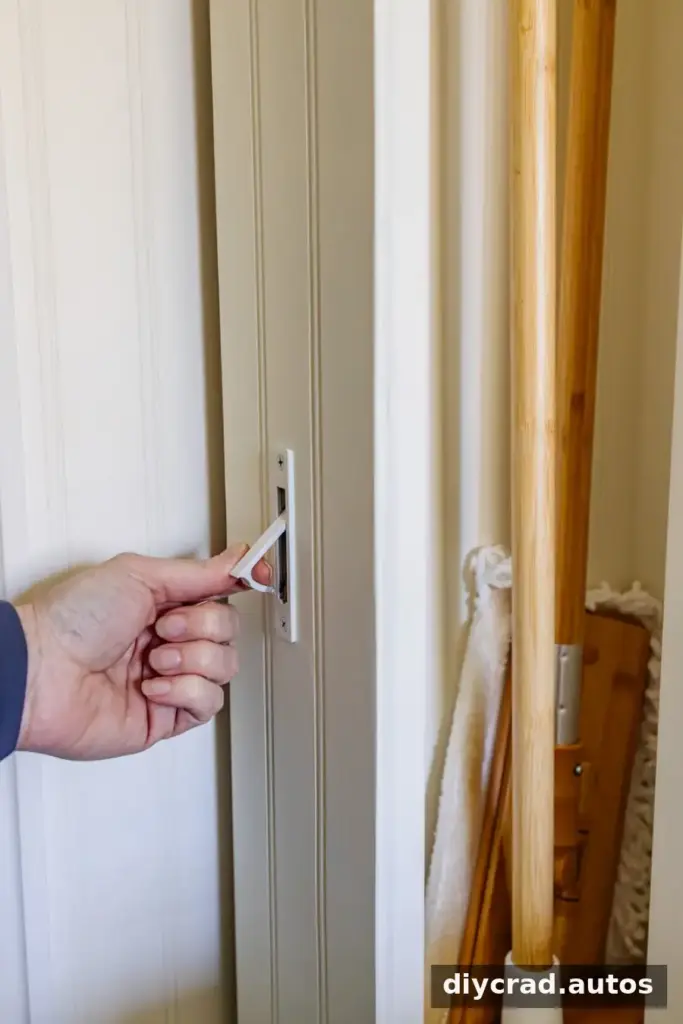
- A flush pocket door pull kept the front free of a prominent knob.
Adapt the details to the construction and clearances in your own room. In particular, confirm that the guide and frame can be securely installed before finishing the front.
How to Build a Hidden Broom Cupboard
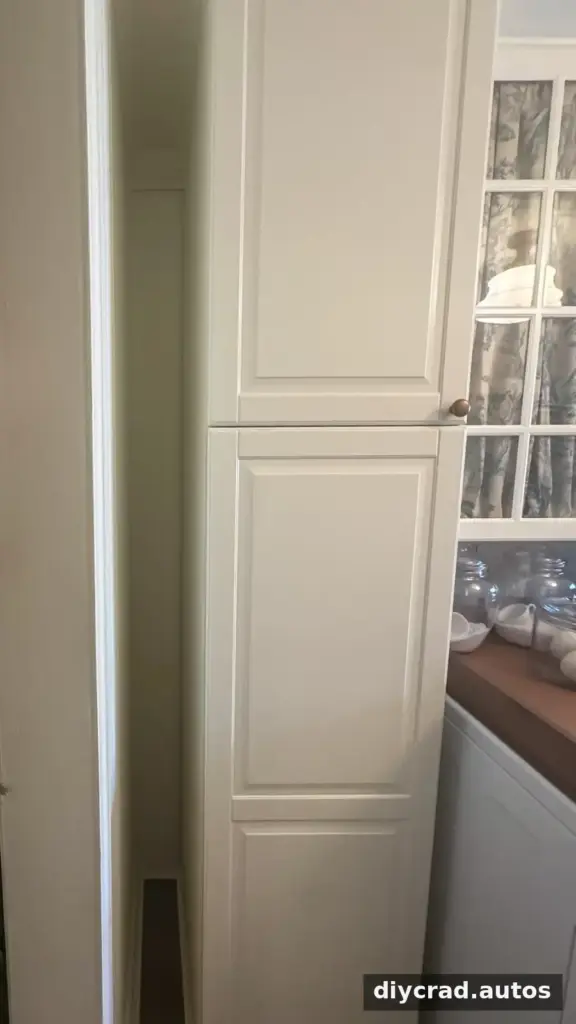
1. Measure the Space Carefully
Measure the width of the gap between the cabinet and wall, the available depth, and the ceiling height. Also check the clearance around nearby cabinet doors and the space needed for the cupboard to roll out. Measure more than once: even a small error can prevent a narrow unit from moving freely.
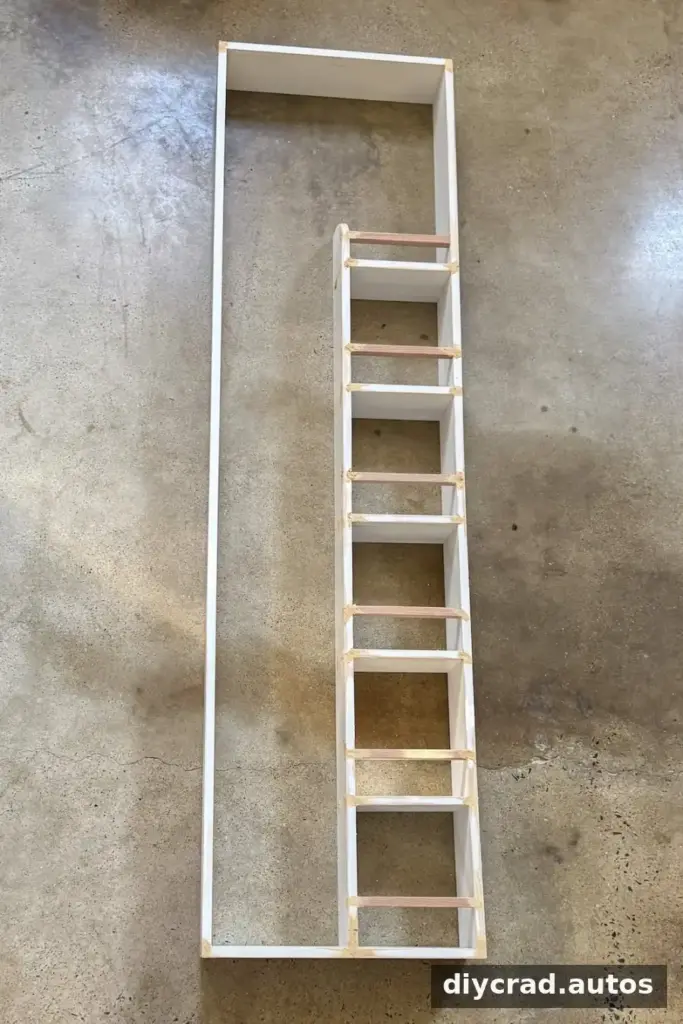
2. Build the Narrow Frame
Construct a tall, rectangular frame sized for the measured opening. Add horizontal supports to help keep it stable, and leave enough open interior space for the broom, mop, and duster. Check that the frame fits the gap before adding the front finish.
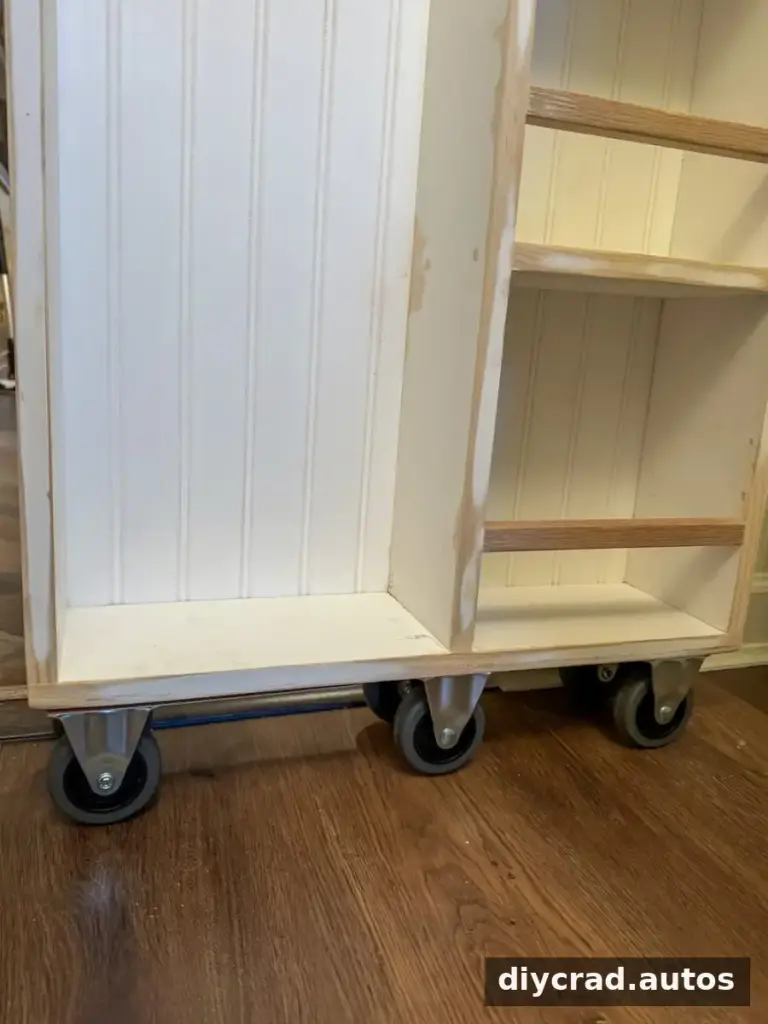
3. Attach Casters to the Base
Fit casters to the bottom of the frame so the cupboard can roll out. Make sure they are positioned securely and the unit moves smoothly without catching on the floor. Test the movement before installing the beadboard or trim, while adjustments are still easier to make.
4. Add a Ceiling-Mounted Guide
A guide at the ceiling helps limit wobbling and keeps the cupboard aligned as it moves in and out. In this project, a custom track was installed in the 6″ gap. Make sure the guide is securely attached and does not interfere with the cupboard’s travel or nearby fixtures.
5. Finish the Front With Beadboard
Attach beadboard to the front so it visually relates to the laundry room wall. Once painted to suit the surrounding finish, the panel can read as wall treatment rather than a conventional cabinet door. Check that the added panel does not make the unit too wide for the opening.
6. Conceal the Casters With Baseboard
Attach baseboard trim to the front of the cupboard to hide the caster wheels and align the lower edge with the existing room trim. Keep the trim clear of the floor so it does not drag as the unit rolls.
7. Add a Flush Pull
A pocket door pull provides a place to grip the cupboard without adding a protruding knob. Position it where it is comfortable to reach and confirm that it sits flush enough to maintain the clean, unobtrusive front.
The Finished Hidden Broom Cupboard
With the frame, guide, beadboard, trim, and pull in place, the cupboard slides out when needed and blends into the laundry room when closed. Brooms can be stored upright, and cleaning supplies have a designated place without occupying a separate closet.
Before regular use, test the unit several times while it is empty, then check its movement with the intended tools inside. If it catches, wobbles, or obstructs another door, adjust the fit before relying on it for daily storage.
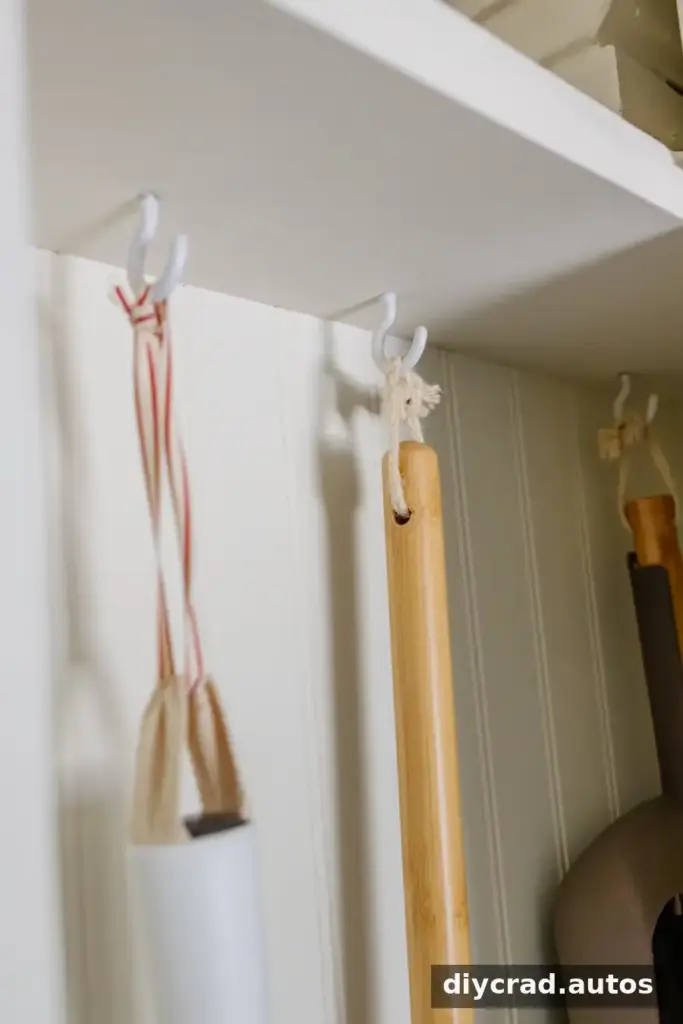
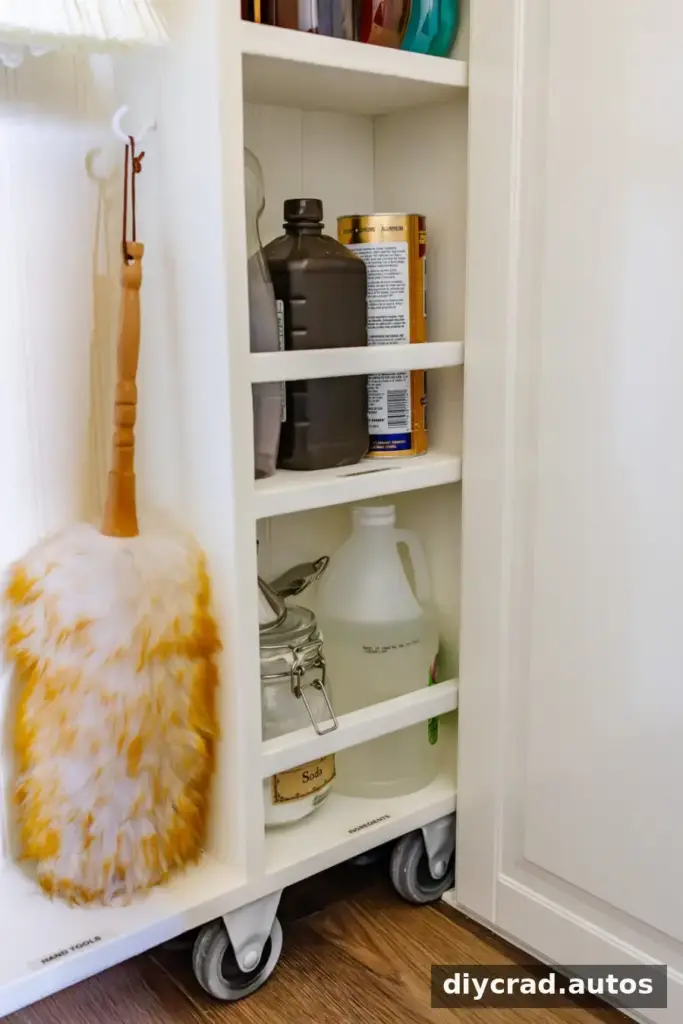
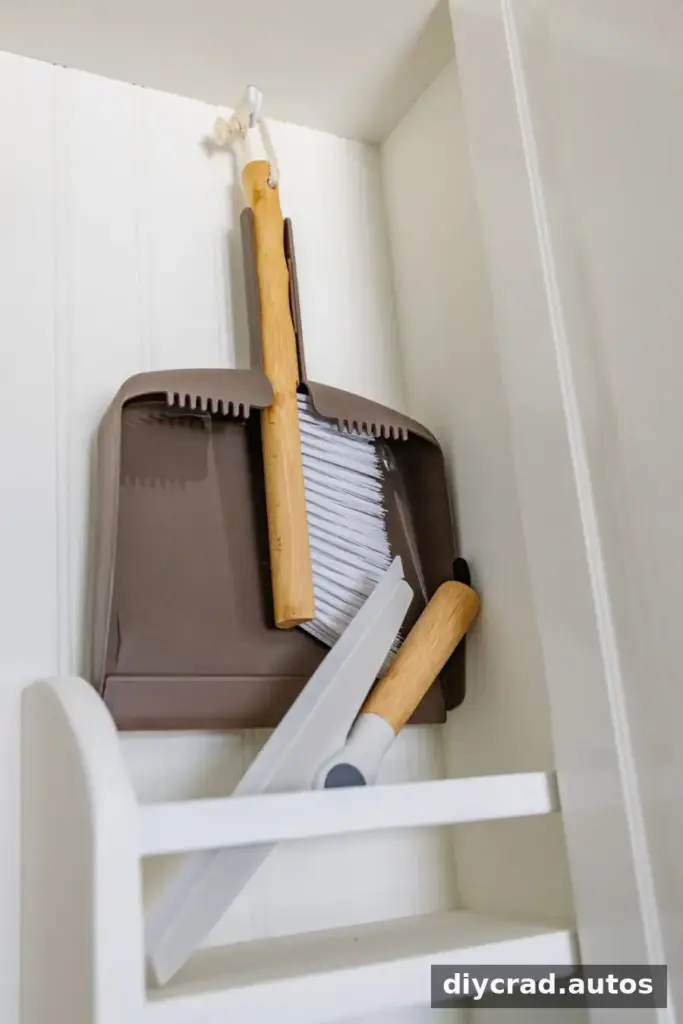
A narrow unused gap can become practical storage when the frame, rolling base, and guide are planned around the room’s existing layout. For a hidden broom cupboard, accurate measurements and a coordinated front are key to making the most of the space while keeping cleaning tools easy to reach.

