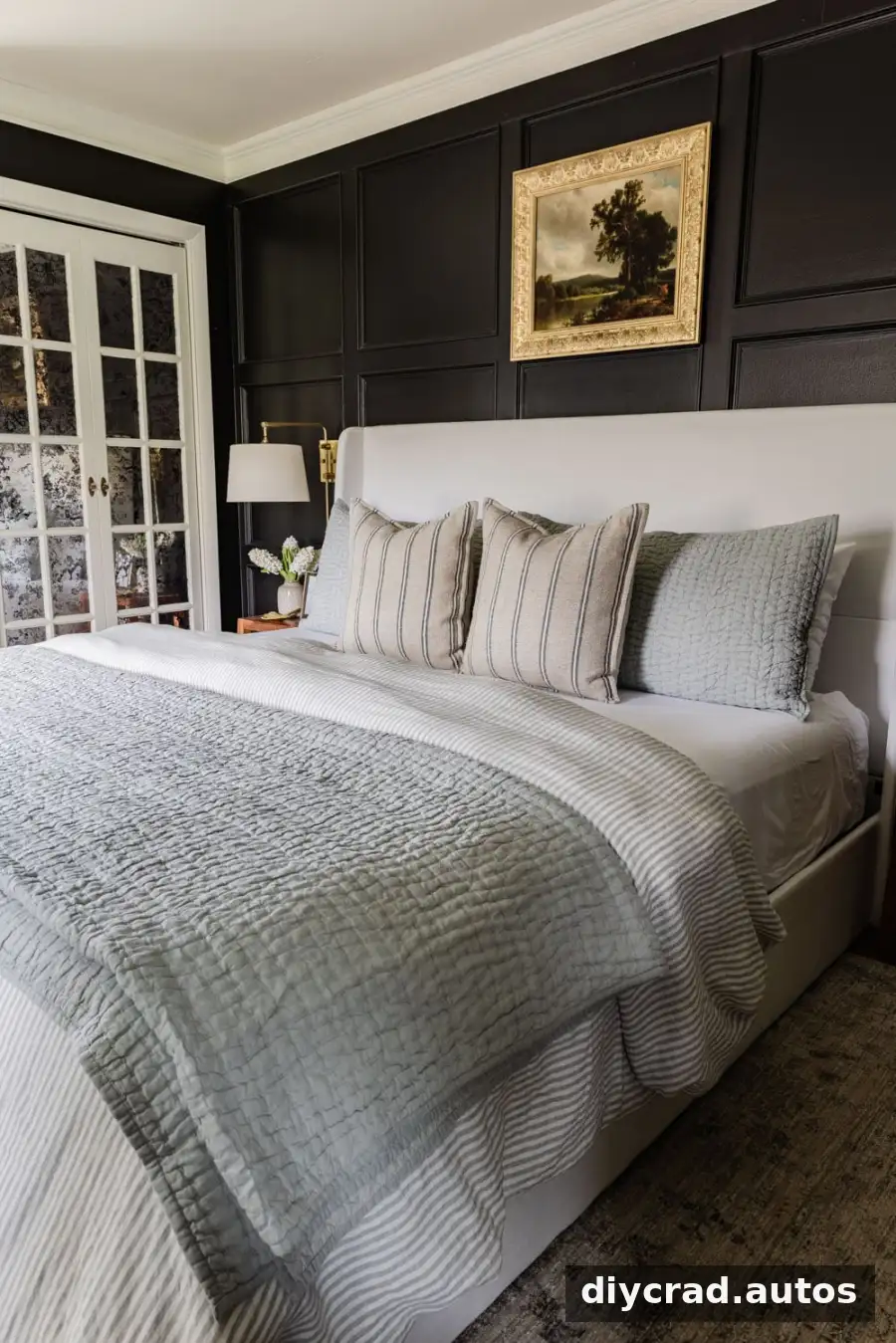
ChatGPT bedroom design can help turn decorating ideas into a room concept you can review before buying paint or moving furniture. For this primary bedroom, the plan centers on an earthy olive green palette, color-drenched walls and trim, and a new ceiling light. An AI-generated room visual can be a useful starting point, but it works best alongside measurements, paint samples, and your own judgment.
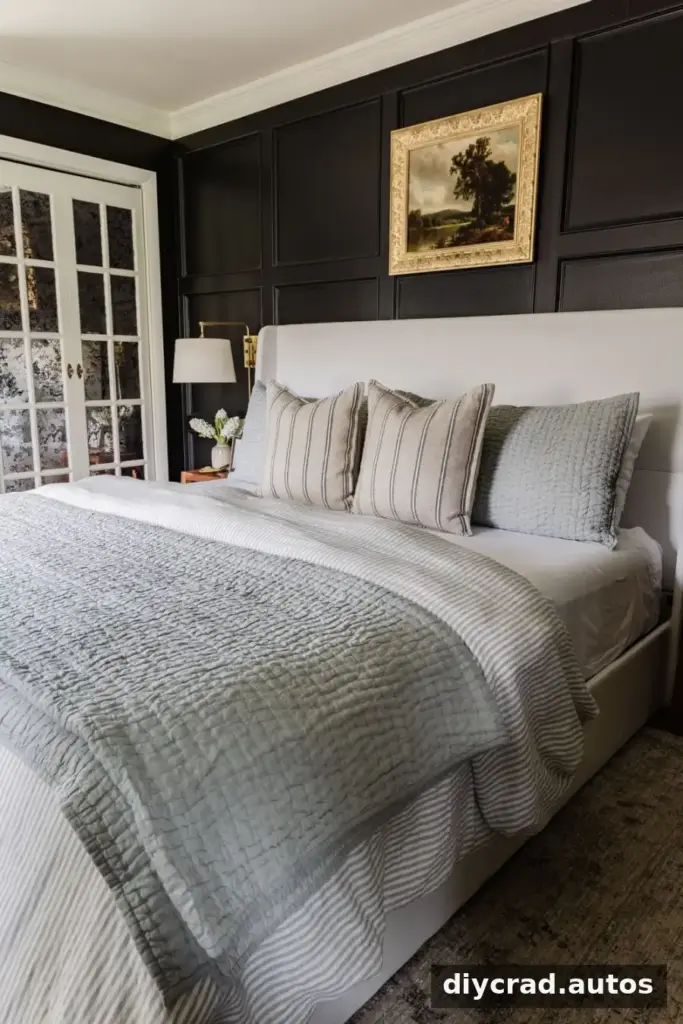
The goal is a small, affordable refresh with a cozy, more dramatic feel. Rather than changing every item in the room, the proposed updates focus on a few visible choices: the paint treatment, the ceiling fixture, and whether an existing dresser still fits the intended style.
ChatGPT Bedroom Design Plans
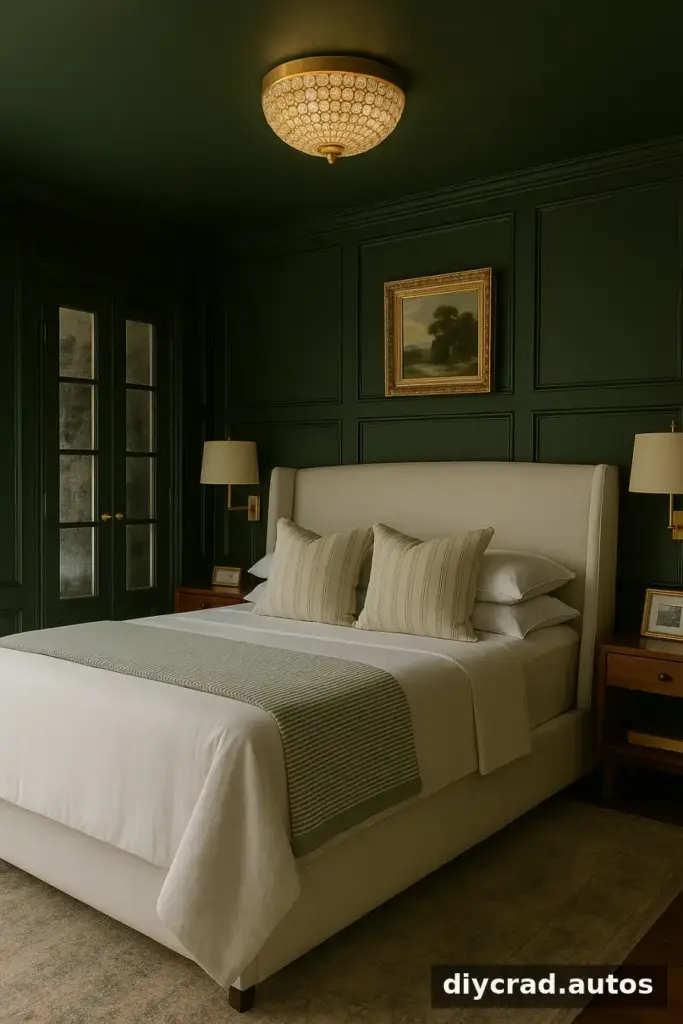
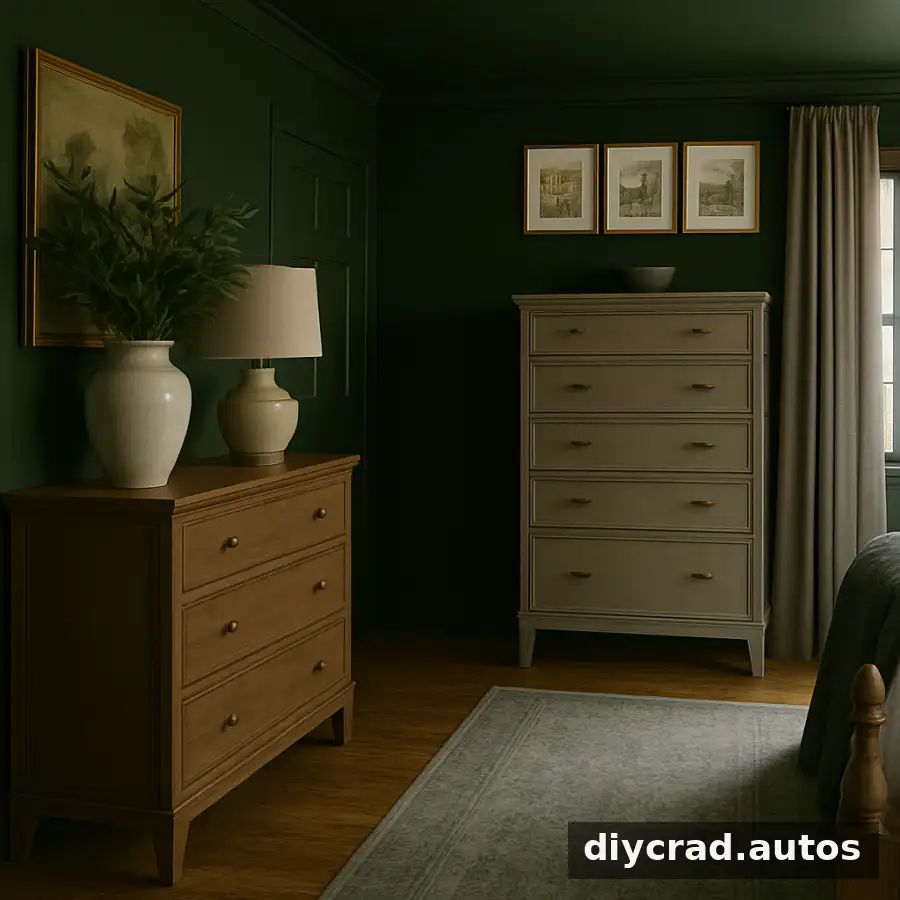
One idea is to use color drenching: painting the walls, trim, doors, and ceiling the same earthy olive tone. Carrying one color across these surfaces can create a more unified look and make architectural details feel less visually divided. The precise effect depends on the room’s light, proportions, and the paint finish, so an image should be treated as a preview rather than a guarantee.
Before choosing a shade, compare paint samples in the bedroom at different times of day. Natural and artificial light can change how green appears. If possible, view larger sample areas on more than one wall, and check the color beside the flooring, bedding, and furniture already in the room.
The lighting plan includes replacing the current ceiling fan with a gold crystal dome fandelier. Before selecting a fixture, check the room’s ceiling height, the fixture’s dimensions, and the existing electrical setup. A visual rendering can suggest a style, but it cannot confirm that a fixture will fit or be suitable for the space.
How to Visualize Furniture Changes
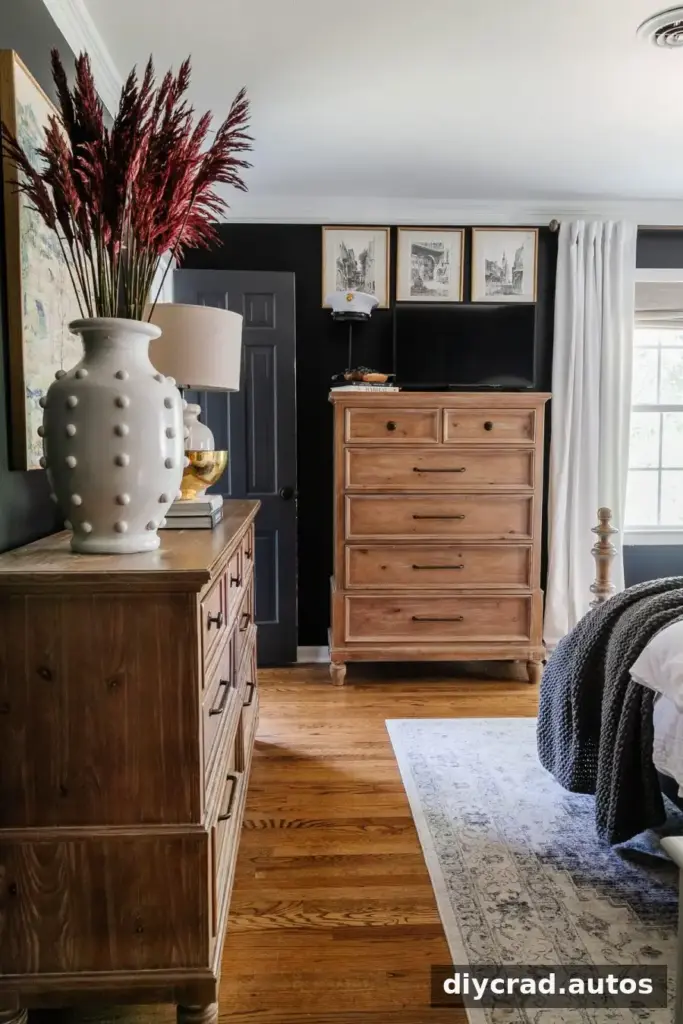
An older farmhouse-style dresser is another decision point. Keeping it could provide contrast against a more modern-traditional direction; updating it could help it feel more coordinated with the new palette. There is no single right answer. Consider the dresser’s condition, storage needs, and how its finish looks beside the proposed wall color before deciding whether to leave it as it is or make a change.
The room concept generated from a prompt can help make an idea easier to discuss and compare. It may not reproduce the space accurately, and details such as artwork or light fixtures can appear in impractical locations. Use the image to explore mood, color relationships, and broad furniture placement—not as a construction plan or an exact product preview.
Getting Better Results from an AI Room Visualizer
Useful results start with clear information. Describe the room’s purpose, the existing furniture you want to keep, the changes you are considering, and the atmosphere you want to create. Include measurements and a description of doors, windows, and fixed features when available. You can also ask for several variations—for example, one that keeps the dresser unchanged and another that updates it.
A practical prompt framework might read: “Create a concept for a cozy primary bedroom with earthy olive green on the walls, trim, doors, and ceiling. Keep the existing farmhouse-style dresser and show a gold crystal dome fandelier. Preserve the room’s layout and clearly distinguish proposed changes from items that should remain.” Adjust the details to match the actual room; this is a starting structure, not a substitute for checking measurements and products in person.
For clearer comparisons, change one major element at a time. If the paint, lighting, and furniture all change between images, it can be difficult to tell which choice is working. Save the options you like and compare them with real samples and the room’s dimensions.
Using a Room Rendering as a Starting Point
An AI rendering can help homeowners explain a design direction to someone who finds visual references more useful than verbal descriptions. It can also make an early decorating plan feel more manageable by showing how a few choices might work together. Still, it does not replace a professional interior designer, especially when a project involves technical requirements, accessibility needs, or complex layout decisions.
Keep the planning grounded in practical questions: Will the furniture fit? Are walkways clear? Does the proposed light work with the ceiling and electrical setup? Does the paint look right in the actual room? Answering these questions helps turn an appealing image into a more workable plan.
Conclusion: ChatGPT Bedroom Design as a Planning Tool
ChatGPT bedroom design can help organize ideas for an olive green bedroom refresh, from color drenching to a possible fandelier and dresser update. Treat the visualization as an idea generator, then verify colors, dimensions, placement, and fixture requirements before making purchases or starting work. That combination makes it easier to move from an imagined room to a plan that suits the space and the people who use it.