A butterfly bedroom makeover can make a child’s room feel playful and personal while still leaving room for changing tastes. This finished room combines butterfly details with comfortable bedding, flexible furniture and space for reading, dancing and imaginative play. The result is designed to feel cheerful now and adaptable as its young occupant grows.
Planning a butterfly bedroom makeover
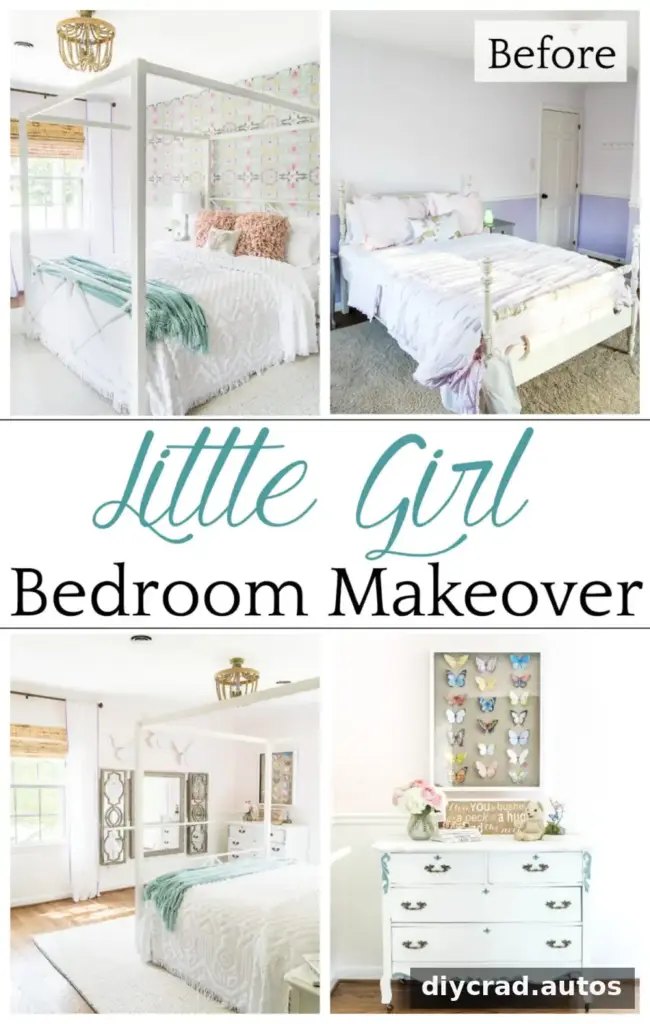
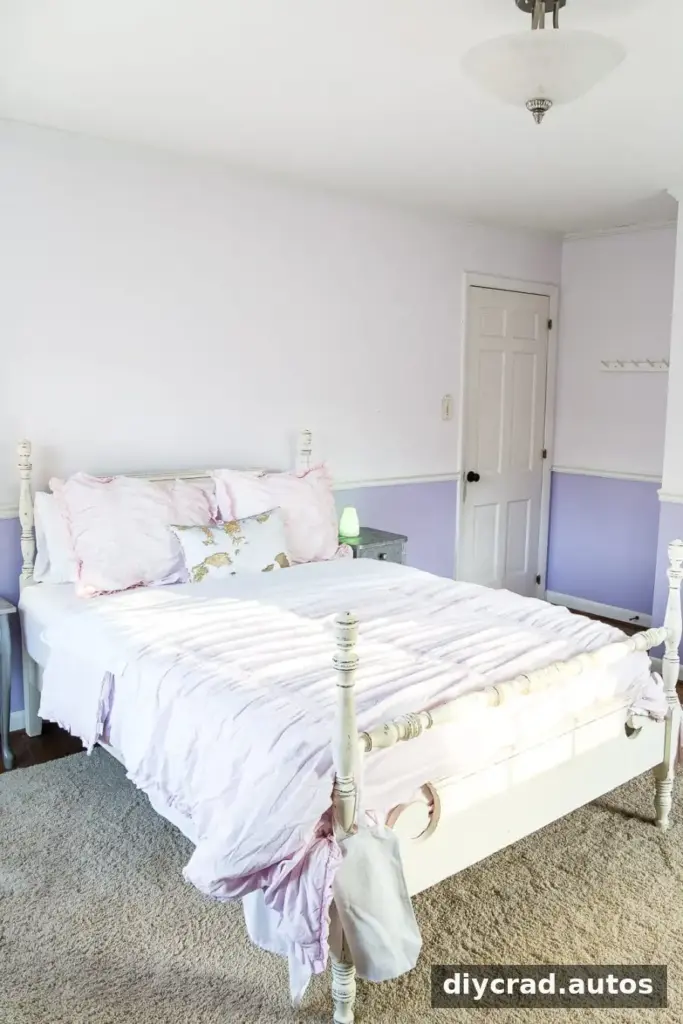
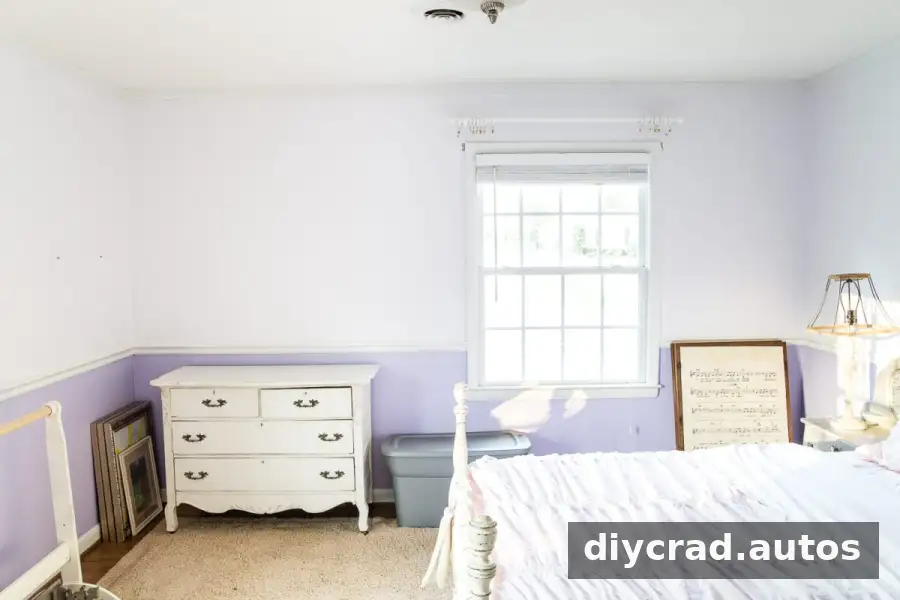
Before the makeover, the room had purple walls, an unstable secondhand bed and a stained rug. The family also found that belongings had accumulated after moving into the house, making the space feel more crowded than it needed to be. Updating the room was an opportunity to improve both its appearance and its everyday function.
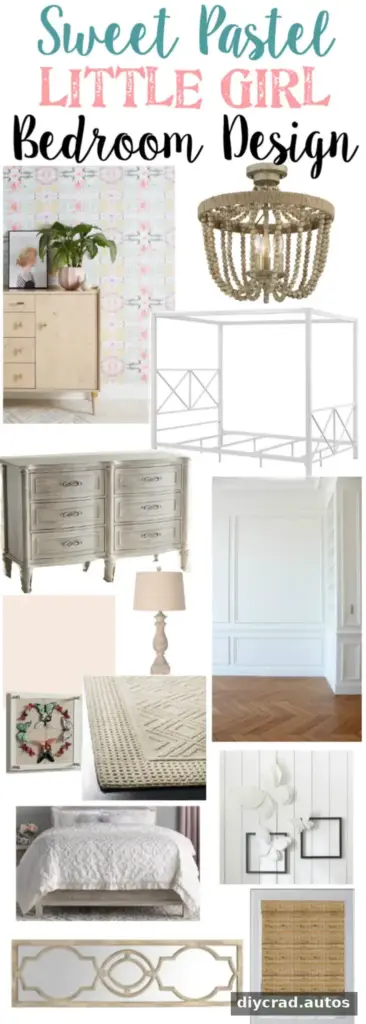
The original plan helped guide the project, even though the finished room did not follow it exactly. That flexibility can be useful in a child’s bedroom: begin with a general direction, then adjust details as you learn which items your child actually uses and loves.
The purple walls had been a favorite for a while, so the makeover worked around the room’s existing character before giving it a fresh update. Clearing out unused items also made space for the new furniture and activities. When sorting a child’s belongings, separate everyday favorites from things that can be stored, donated or sold.
Choosing decor that can grow with a child
The design takes a slightly more grown-up approach so the room can remain useful for several years. A durable base of furniture and bedding can outlast a short-lived theme, while smaller decorative accents are easier to change. This can help avoid replacing major pieces every time a child’s interests shift.
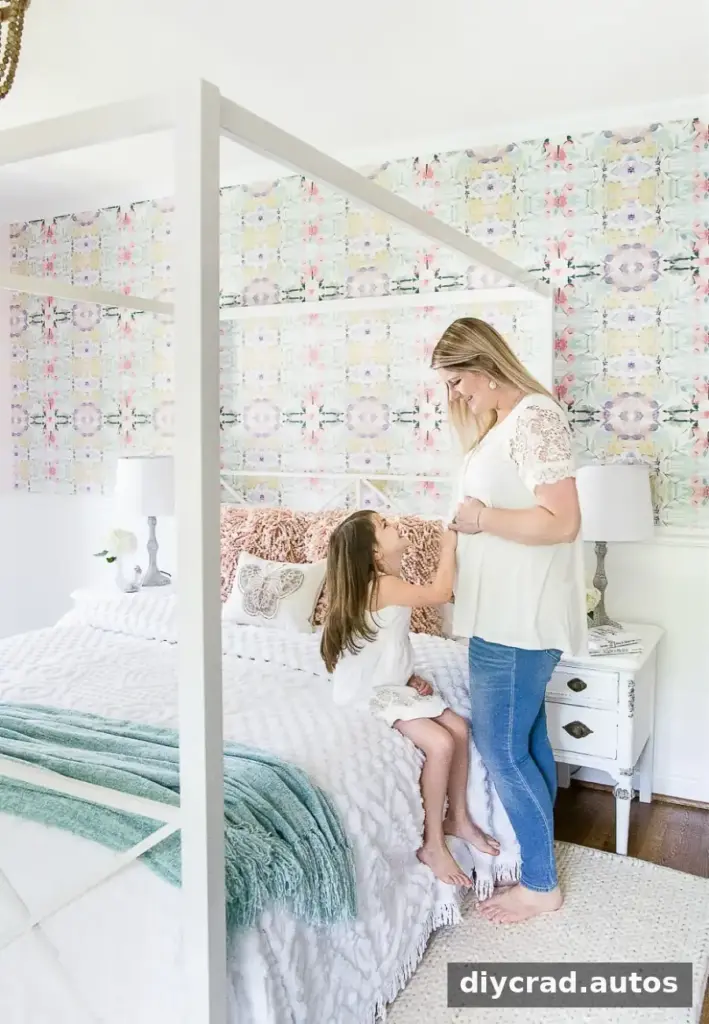
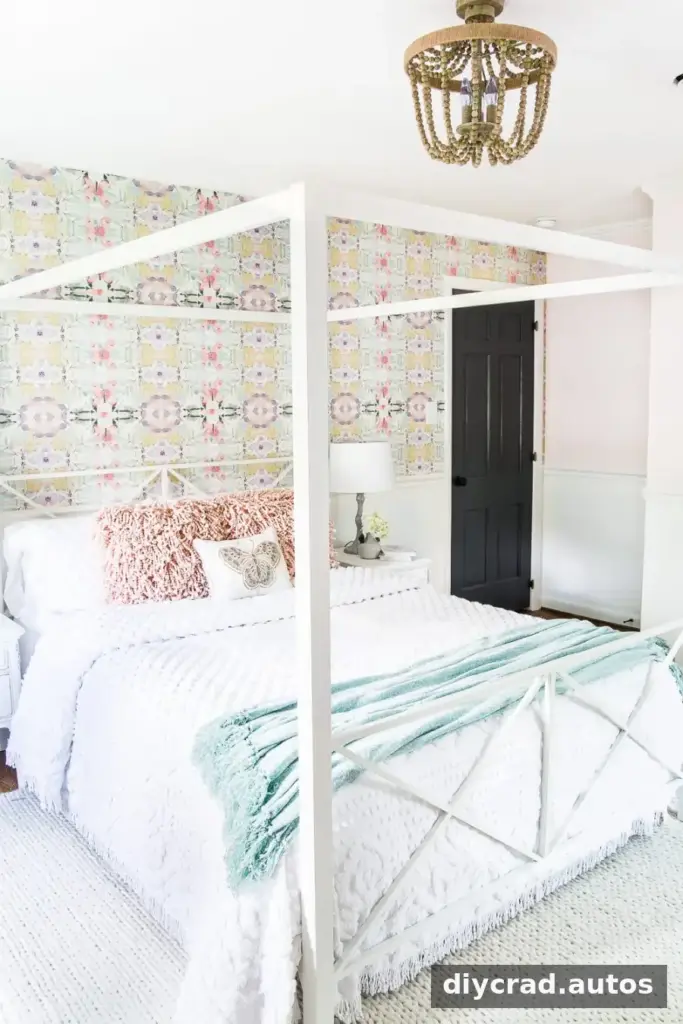
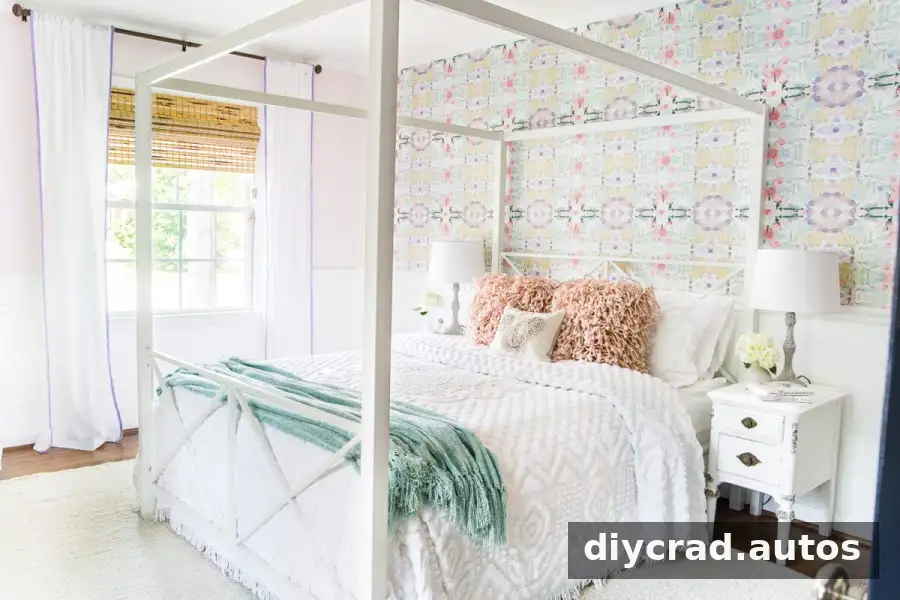
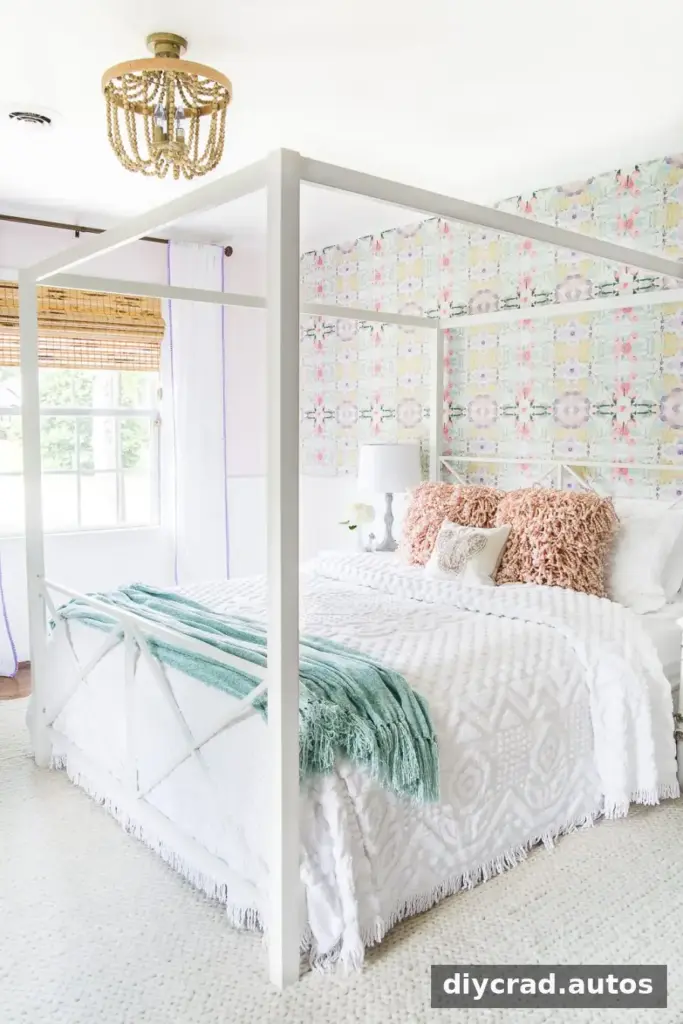
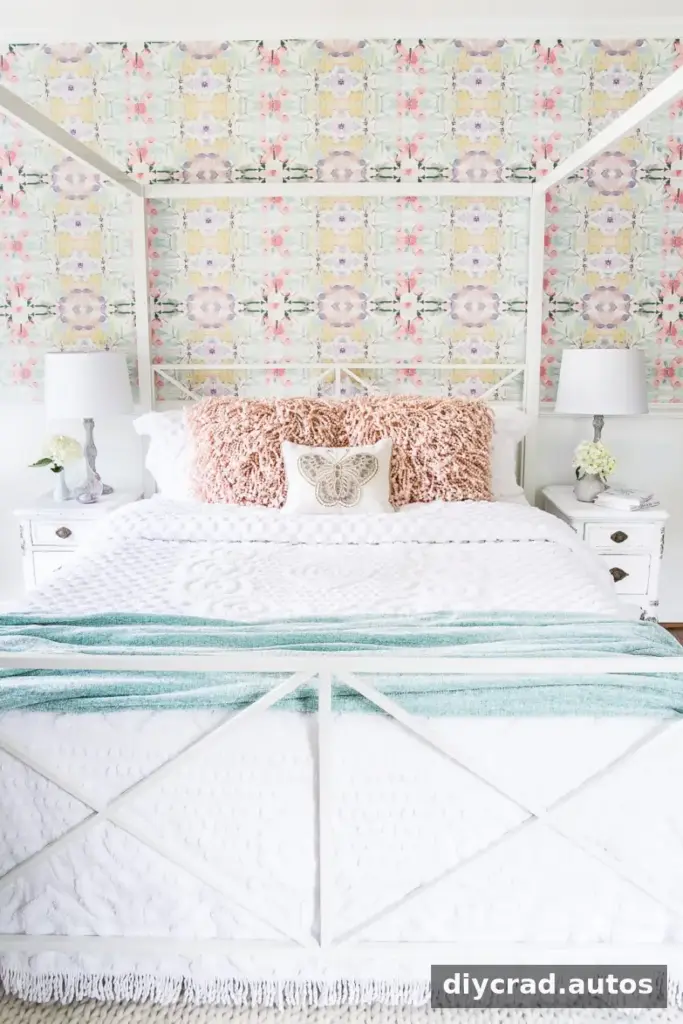
Butterflies were the key theme requested for the room. A patterned wallpaper with butterflies worked as a focal wall, bringing color and detail into the space without requiring every surface to follow the same motif. If using a busy wallpaper, keep nearby bedding and larger furnishings relatively simple so the patterns do not compete.
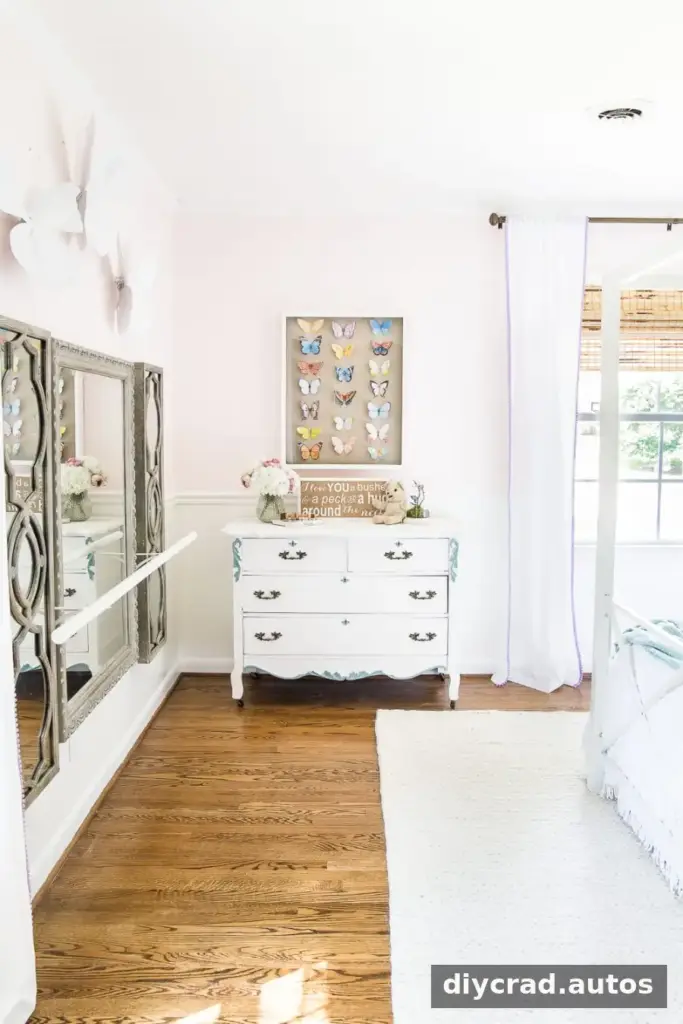
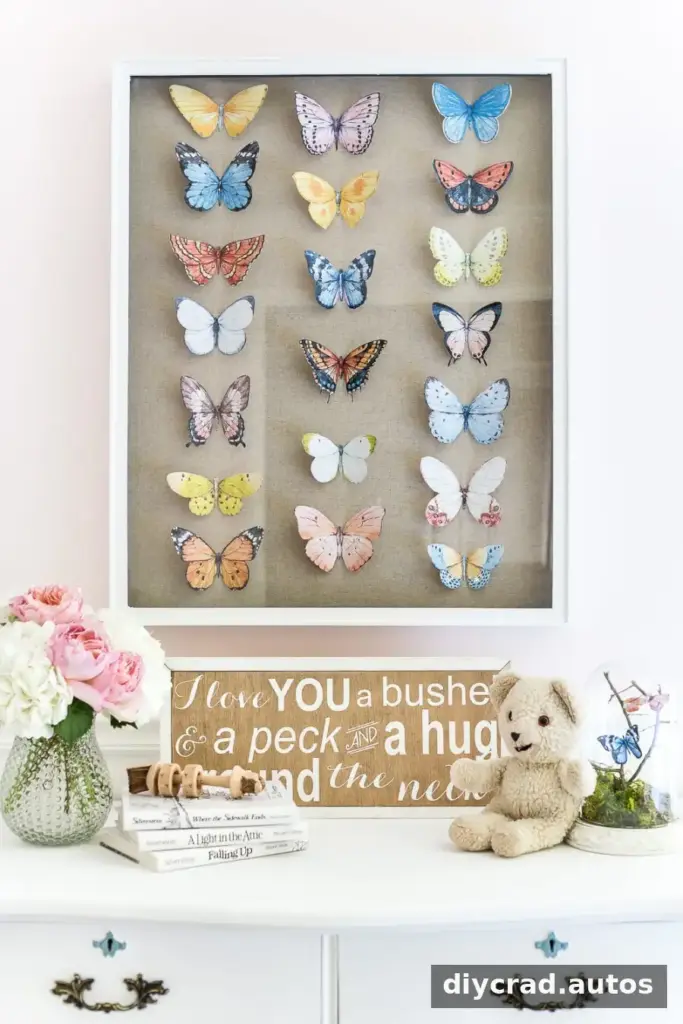
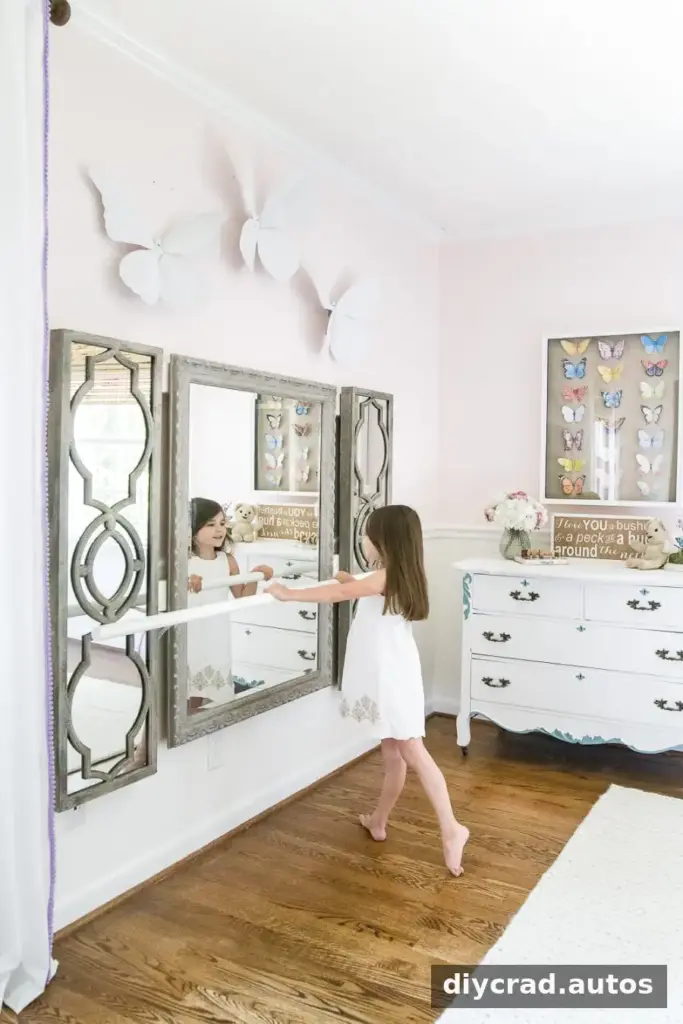
A secondhand dresser was refreshed and paired with a butterfly shadow box above it. For a similar craft, paper butterflies can be printed, cut out and arranged inside a deep frame. Leave enough space between the pieces and the frame’s front so the display has depth, and use materials suitable for the frame and its location.
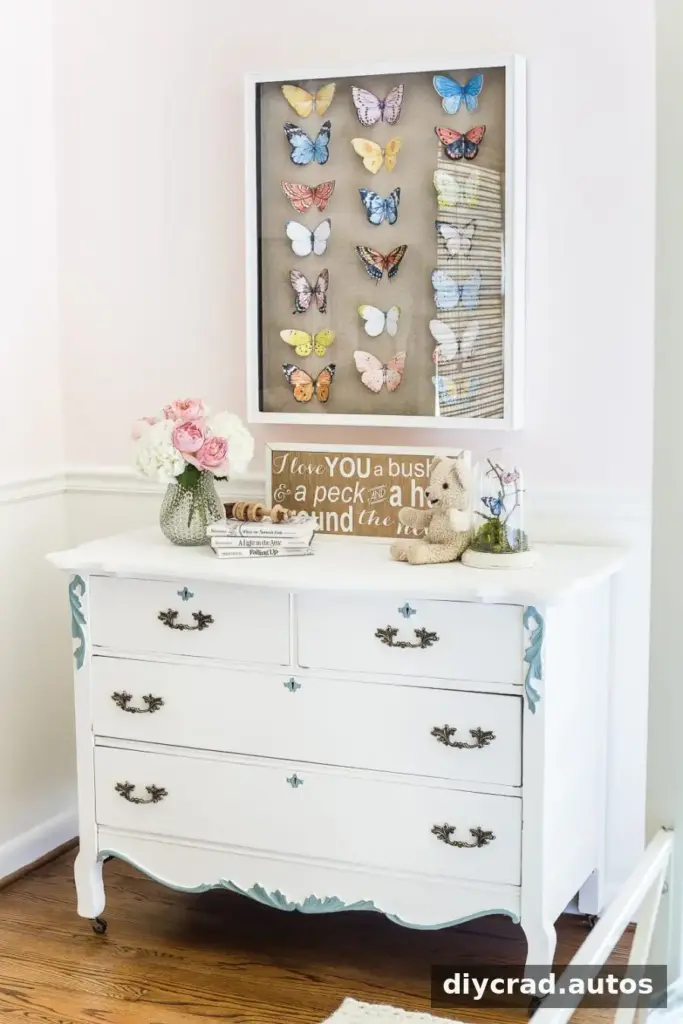
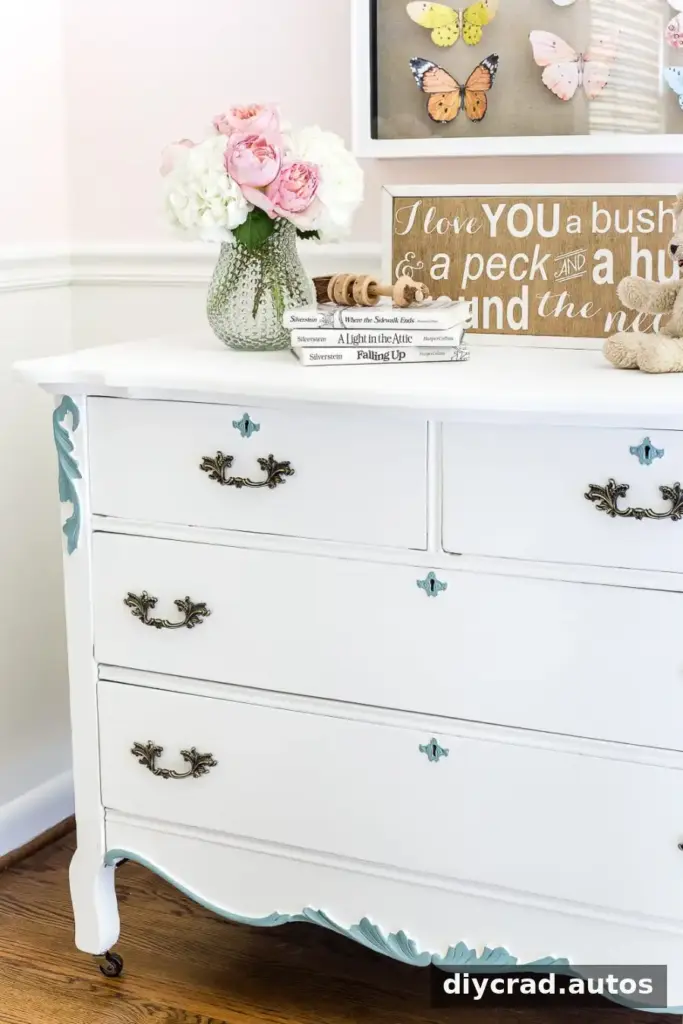
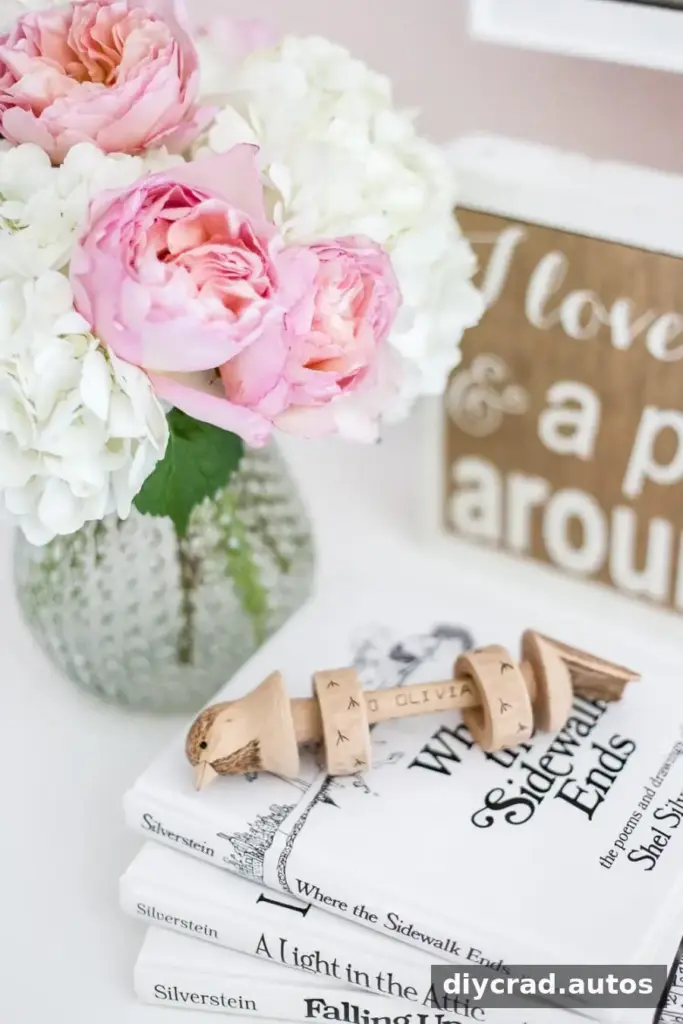
The shadow box also sits alongside meaningful keepsakes: a rattle carved by the child’s grandfather, a first teddy bear and a much-loved poetry collection. Combining handmade decor with personal objects gives a room character without relying only on new purchases.
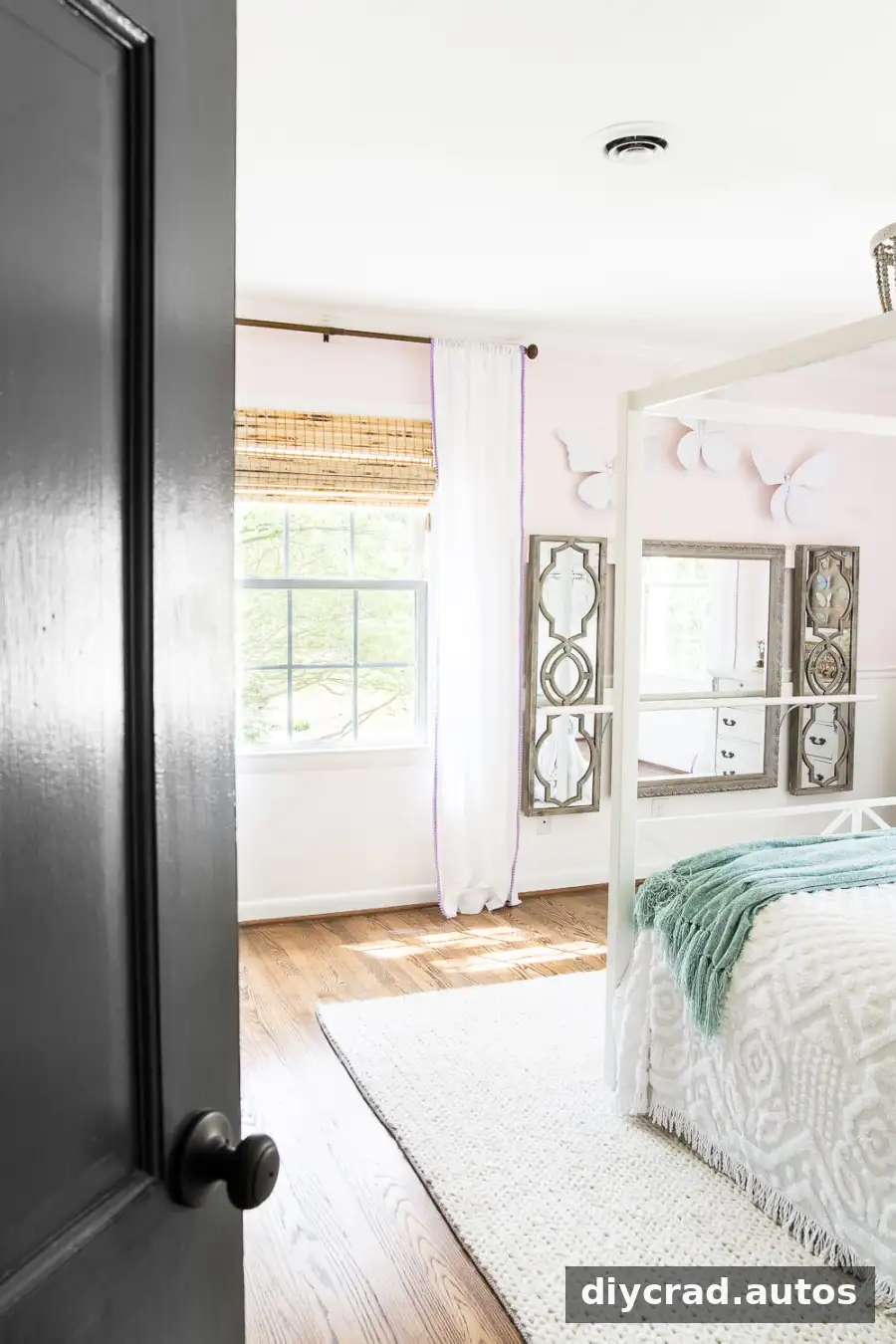
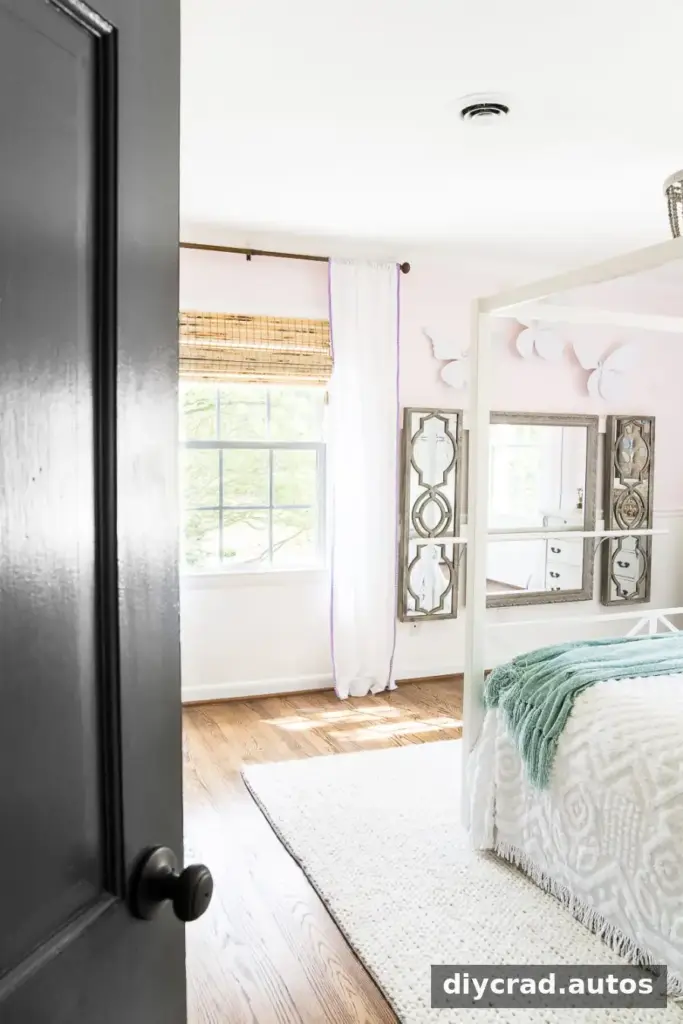
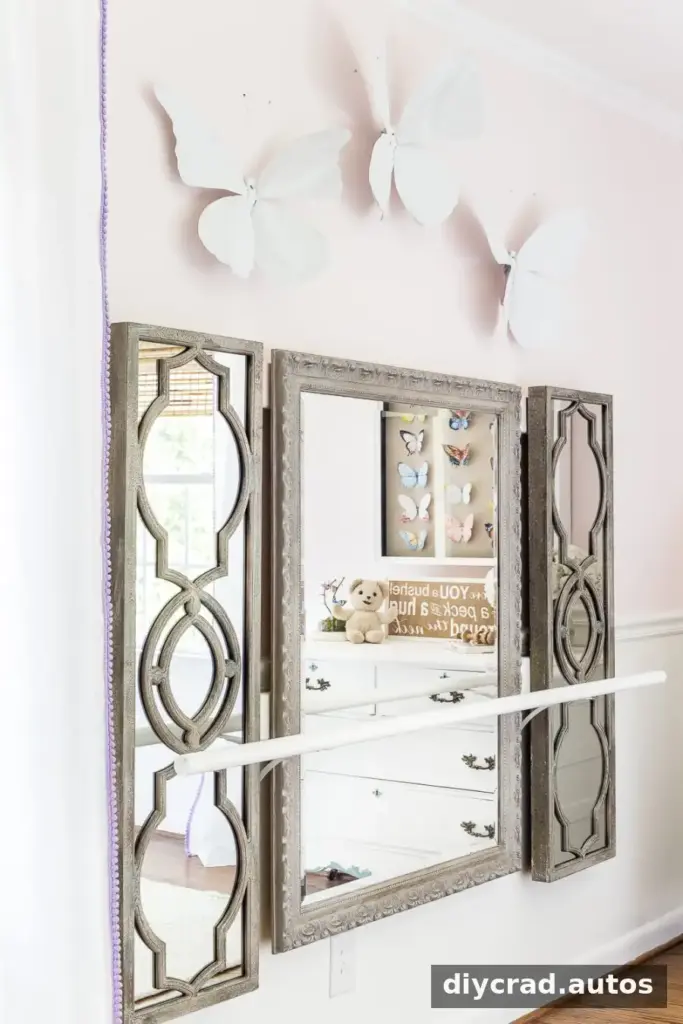
A DIY ballet barre was another requested feature, carried over from the child’s previous bedroom. It creates a dedicated spot for dancing and movement. Before installing a barre, check that it is securely attached to an appropriate surface and positioned at a height suitable for its intended user.
Comfortable furniture and practical details
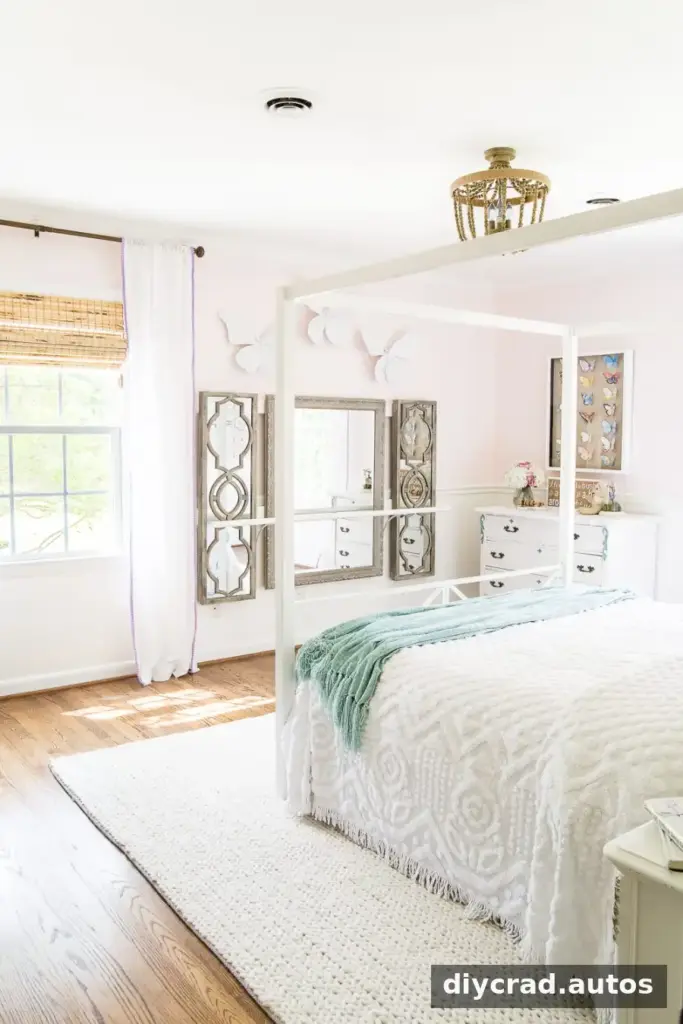
A beaded semi-flush light fixture replaced the old ceiling light and suited the room’s eight-foot ceilings. For a lower ceiling, a close-to-ceiling fixture can help preserve headroom. Always choose lighting rated for the location and have electrical work handled safely.
The unstable bed was replaced with a metal canopy bed purchased on sale for $200. Its frame also makes it possible to build a simple indoor fort by draping quilts over the top and securing sheets along the sides. Keep fabric clear of lights and other heat sources, and make sure the bed remains easy to exit.
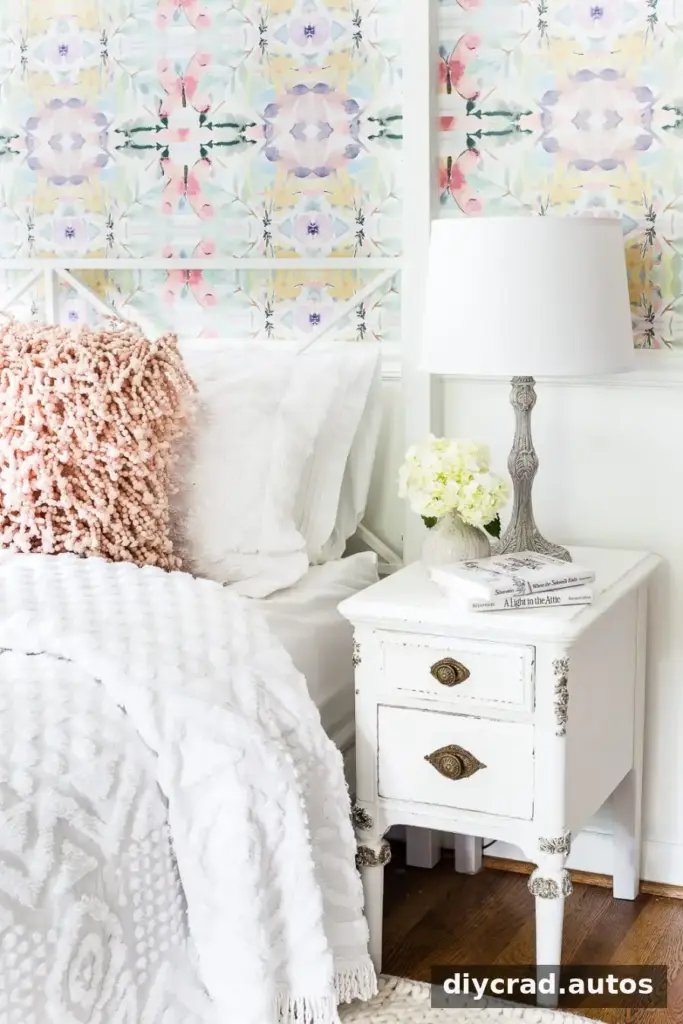
A chenille bedspread adds texture over the existing duvet without overwhelming the patterned wall. Blush-colored pillows and a beaded butterfly pillow bring in softer color and repeat the theme in smaller doses. Layering a few textures can make a bed feel inviting while keeping the overall look balanced.
Nightstands from another room were reused beside the bed and coordinated with the refreshed dresser. The lamps were also secondhand finds that received simple updates. Reusing furniture is a practical way to control costs; check secondhand pieces for stability and repair any damage before putting them into daily use.
With a barre in the room and open floor space for play, the bedroom can serve more than one purpose. Keeping a clear route around the bed and furniture makes it easier to move safely, especially during active play.
Room colors and finishing touches
The room’s listed paint colors are My Sweetheart for the walls, Simply White for the trim and ceiling, and Wrought Iron for the door. The finishing details include a wool knit rug, bamboo Roman shades, pom-pom curtains, mirrors, decorative butterflies and a small vase. Before buying paint or window treatments, measure the surfaces and windows carefully, and check that the selected products suit the room.
Other project elements included the canopy bed, chenille bedspread, throw blanket, curtain hardware, ballet barre, nightstands, lamps, dresser, butterfly shadow box and a butterfly terrarium. The room’s source list also included makeover and project tutorials for several of these handmade or refreshed pieces.
Completing one room can also make it easier to plan the next home project. For a nursery or another child’s space, it helps to begin with the essentials, establish a realistic budget and leave room for adjustments as needs become clearer.
Making a butterfly bedroom makeover last
The strongest parts of this butterfly bedroom makeover are the balance between theme and flexibility: butterflies appear in the wallpaper and small accessories, while useful furniture and comfortable basics can stay in place as tastes change. A personal keepsake display, a reading-friendly bed and an activity area make the room feel tailored to its occupant.
For a similar project, start by decluttering, identify one or two features your child most wants, and choose a focal point before adding accents. Prioritize safe, stable furniture and lighting, then use affordable crafts or reused pieces to make the room feel individual. That approach can create a space that is welcoming today and practical for years to come.