

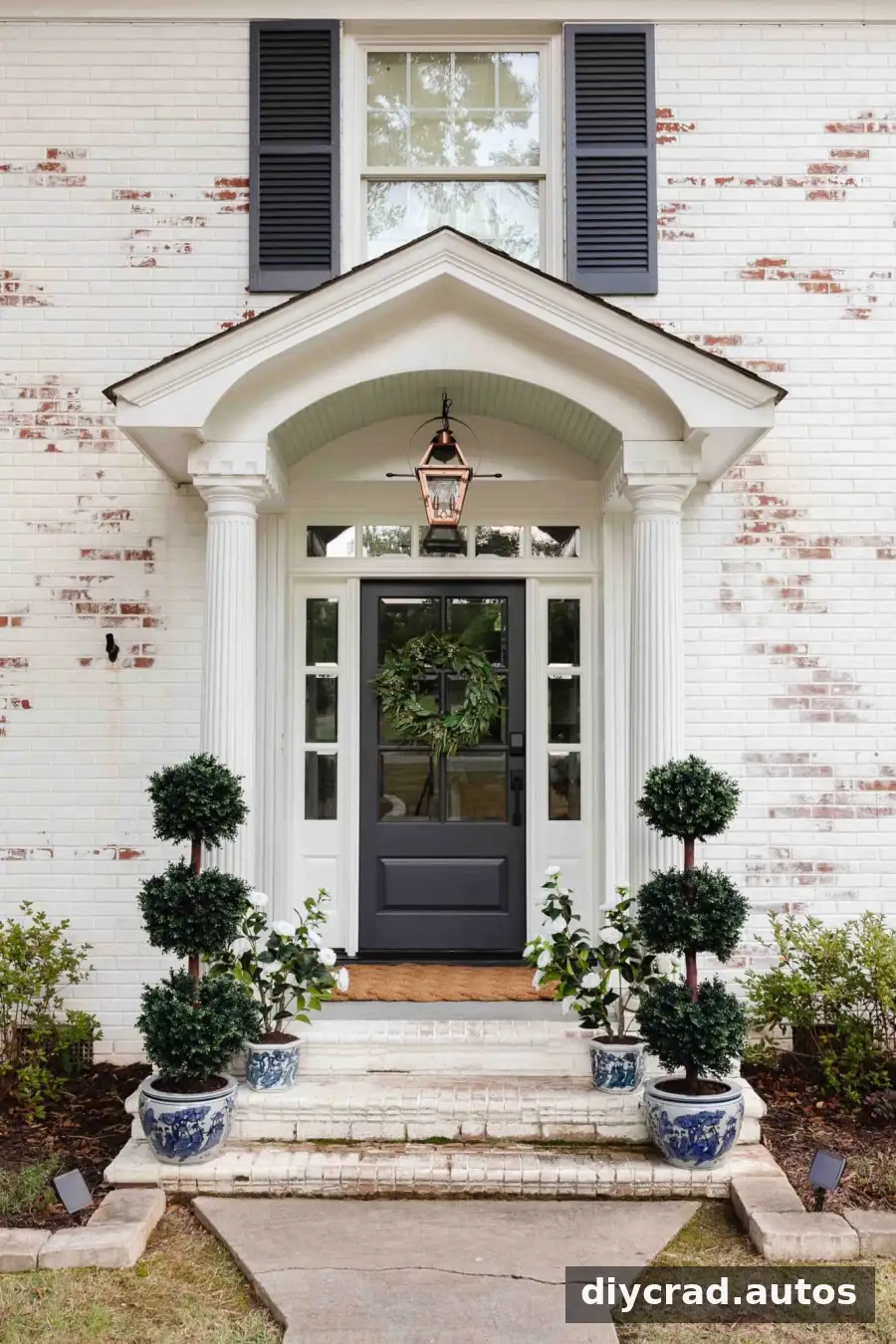
A colonial front door makeover can refresh curb appeal and make an entry feel brighter and more welcoming. This porch update combines a locally made wooden door with classic black-and-white details, blue-and-white planters, and a copper-look lantern inspired by Charleston style. The result shows how a few coordinated improvements can bring new life to a traditional exterior.
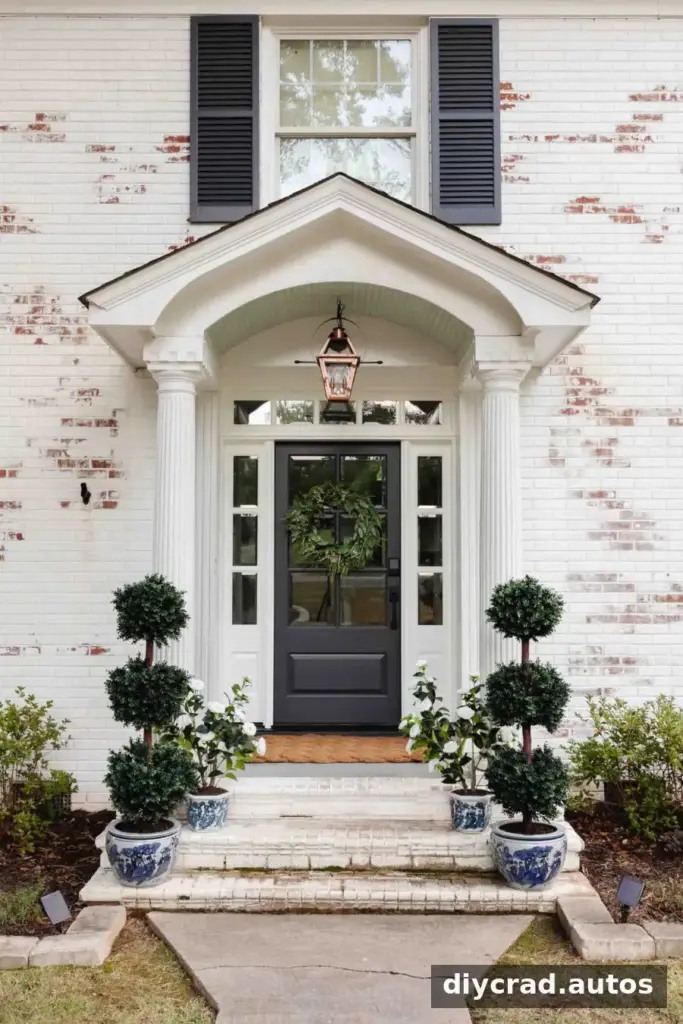
Planning a Colonial Front Door Makeover
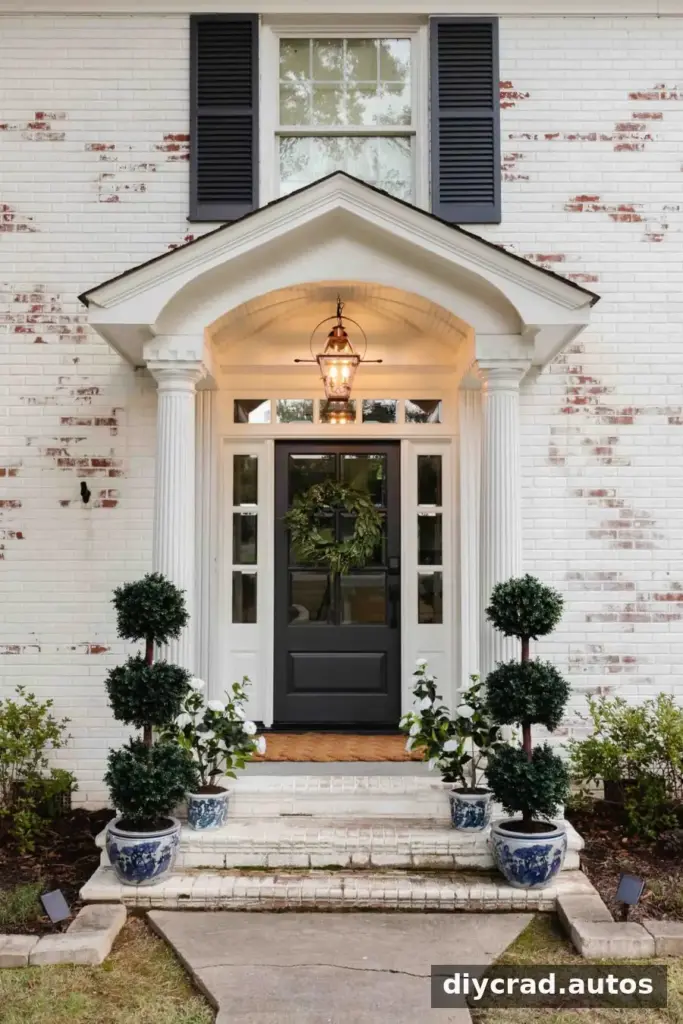
The previous door had warped and lacked energy efficiency, making replacement a practical as well as visual improvement. The new wooden door includes sidelights and a transom, which allow more natural light into the front entry. Glazing can make an entrance feel brighter, but consider how the glass placement may affect privacy. Before choosing a door, review the layout of the entry and decide which areas should admit light while remaining less exposed to view.
After considering whether to stain or paint the door, a simple black-and-white palette was selected to complement the home’s shutters. Coordinating a new door with existing exterior colors helps it feel like part of the architecture. If you are comparing finishes, look at them alongside the shutters, trim, and porch flooring in daylight, since colors can appear different under changing light.
The porch had already been painted, including its haint-blue ceiling, so the finishing details were chosen to build on those established features. Before shopping for accessories, make a note of permanent elements such as the door, shutters, ceiling, and floor. Using these details as a starting point can help keep the overall design cohesive and prevent the porch from feeling crowded with competing colors.
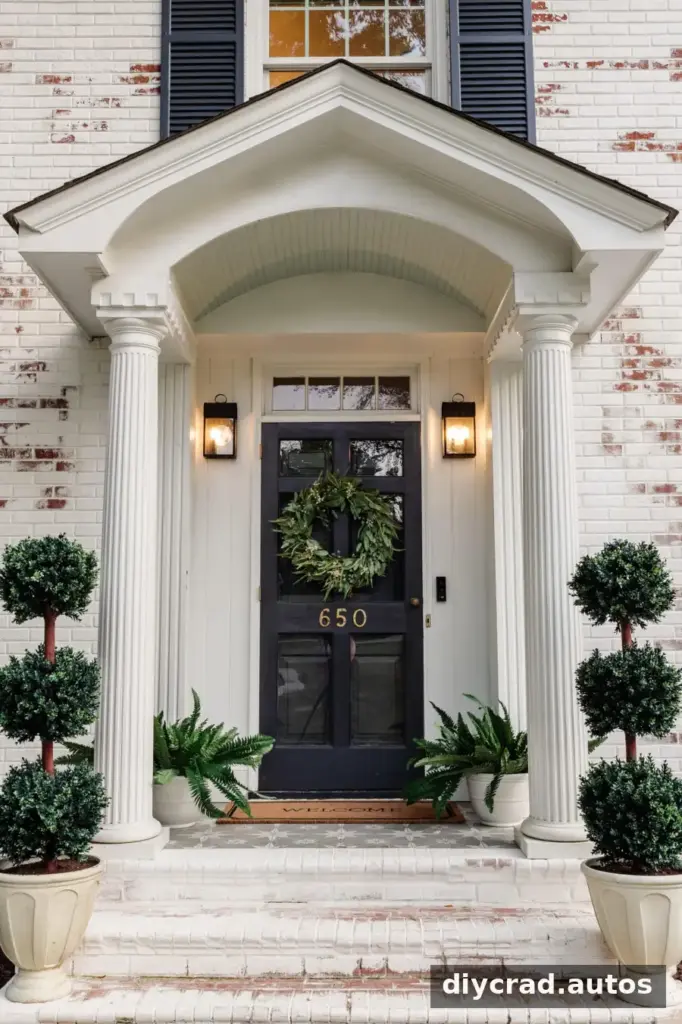
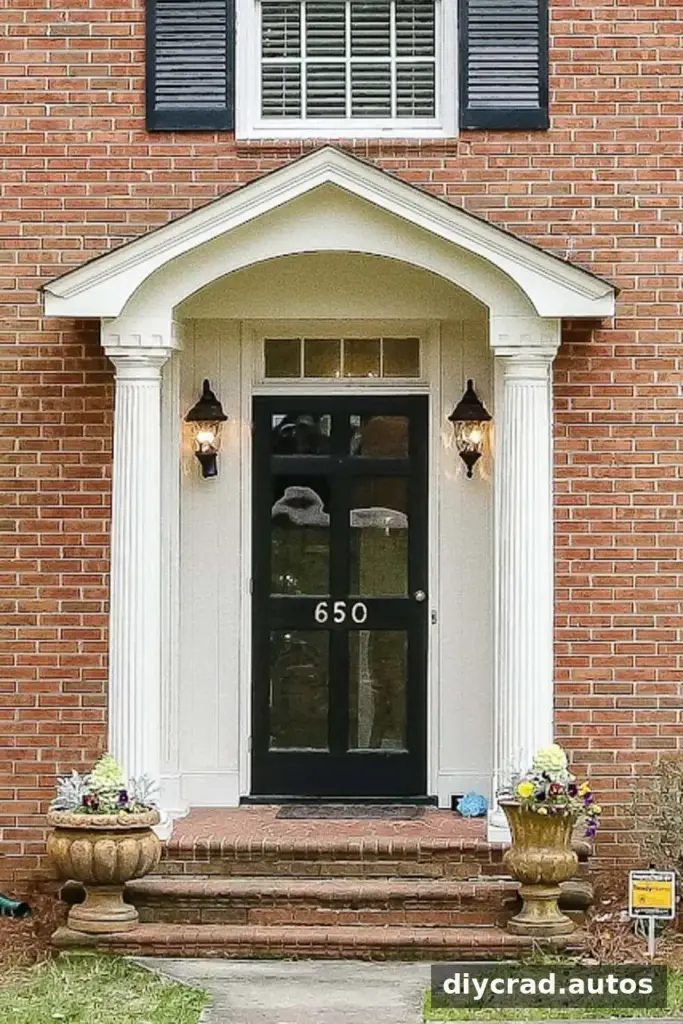
Before the Door Replacement
Earlier views of the porch show the old door before the update, as well as the entry when the home was first occupied. Comparing these stages can help clarify which changes made the biggest difference: the replacement door added light, while the coordinated colors and accessories completed the look.
Blue-and-White Chinoiserie Planters
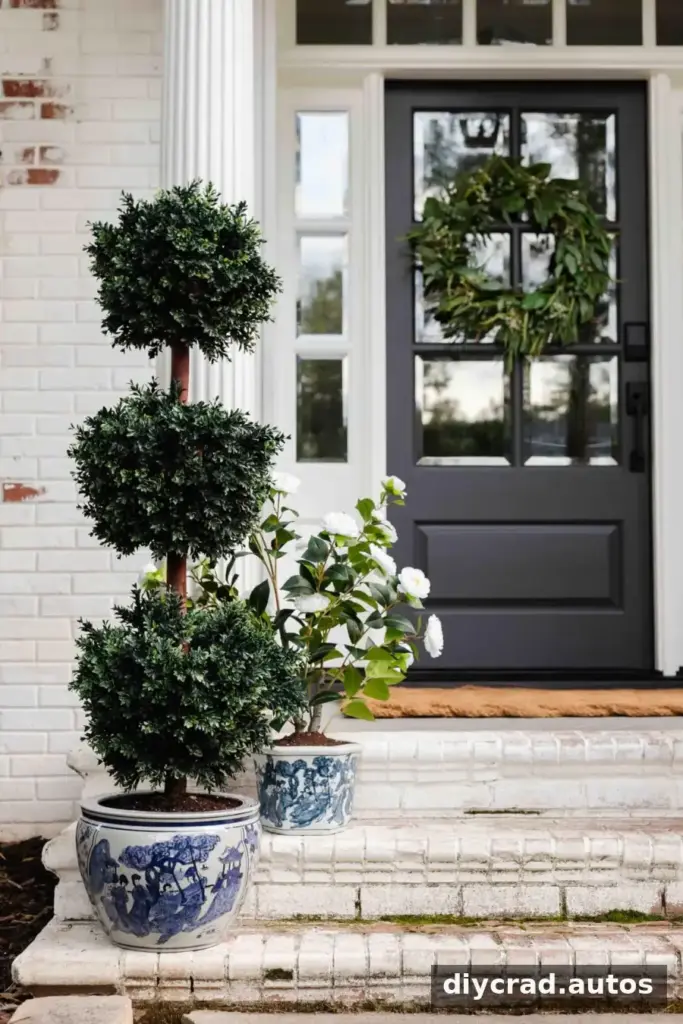
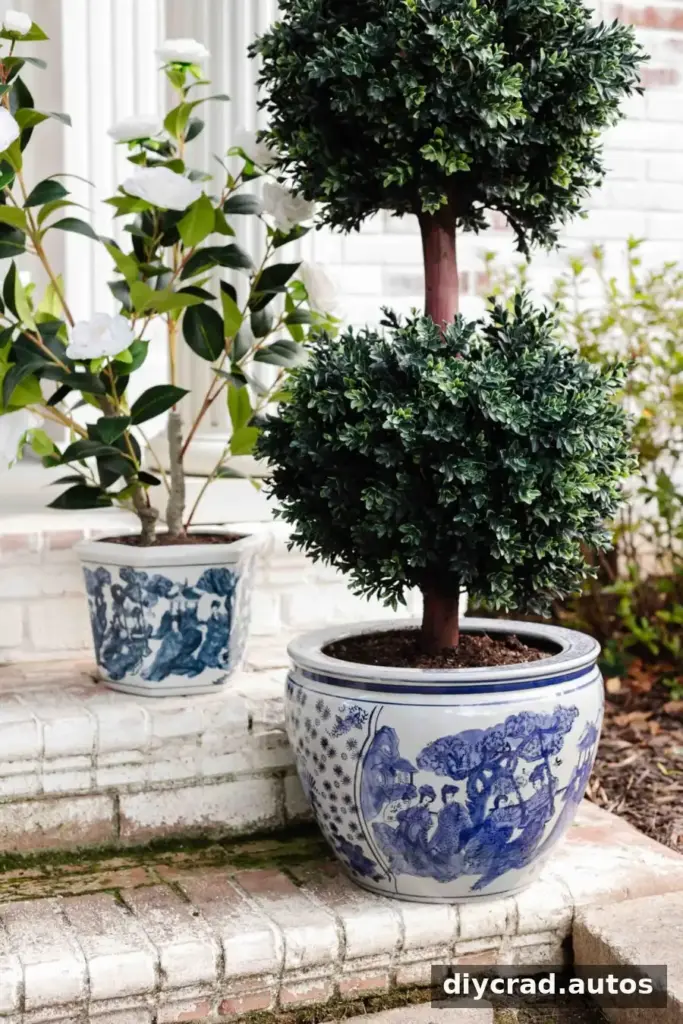
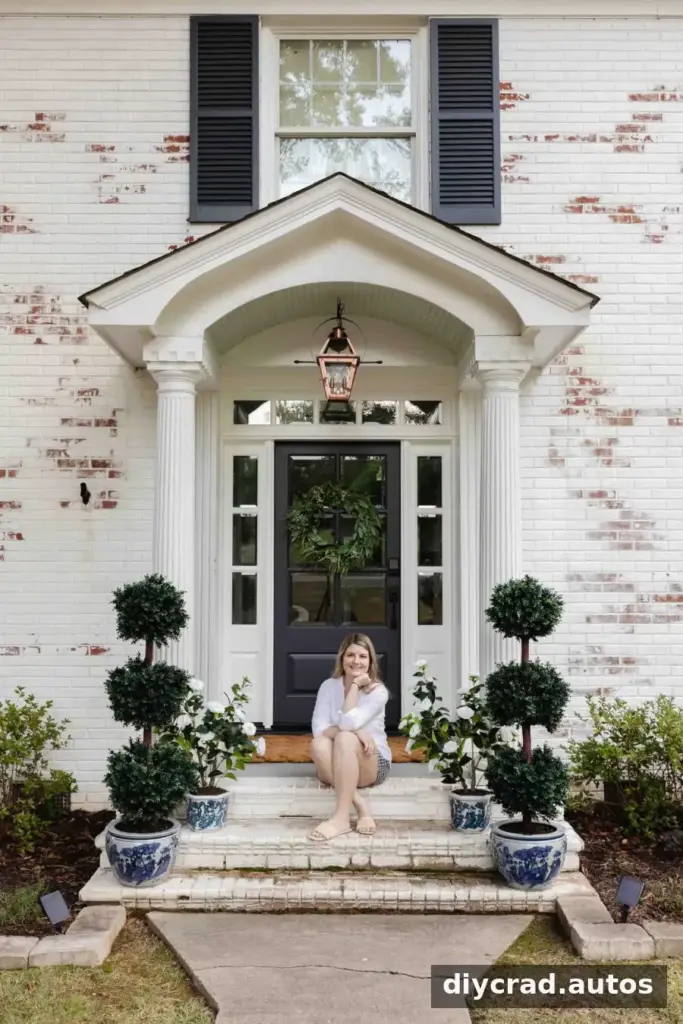
Blue-and-white chinoiserie is a timeless way to add pattern and color to a front porch. A large planter paired with a smaller matching one gives the entrance visual interest without changing the restrained black-and-white palette of the door. The blue also relates to the navy-blue dining room just inside, creating a gentle visual connection between the exterior and interior.
When arranging planters, consider the width of the doorway and the path people use to reach it. Leave enough clear space to open the door and walk comfortably. A pair of pots does not need to be perfectly symmetrical, but keeping their scale and placement balanced can make the entrance feel considered.
Making Faux Plants Look More Natural
Faux boxwood topiaries have been used on the porch for several years and remain in good condition. Adding real soil to the pots helps conceal the artificial base and gives the arrangement a more natural appearance. The same technique was used with smaller camellia trees in the blue-and-white planters.
For a similar finish, secure the plant in the pot and cover the visible base with soil. Check that the arrangement is stable, particularly in an exposed location where wind could shift a lightweight pot or plant. Choose a pot size that supports the plant without making the entry difficult to navigate.
A Copper Lantern for Charleston-Inspired Style
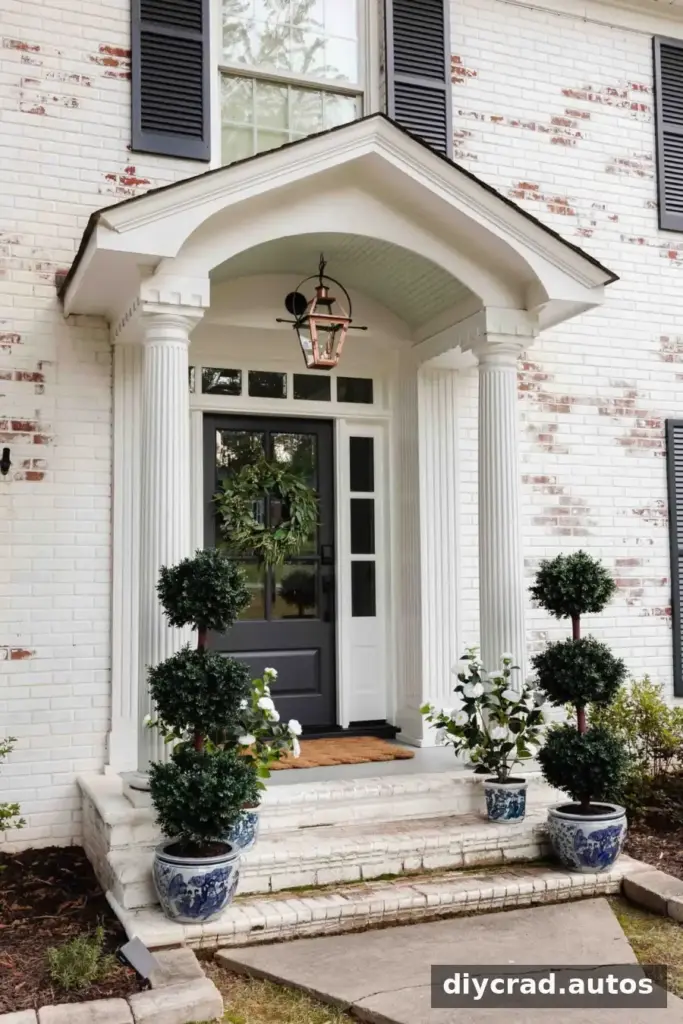
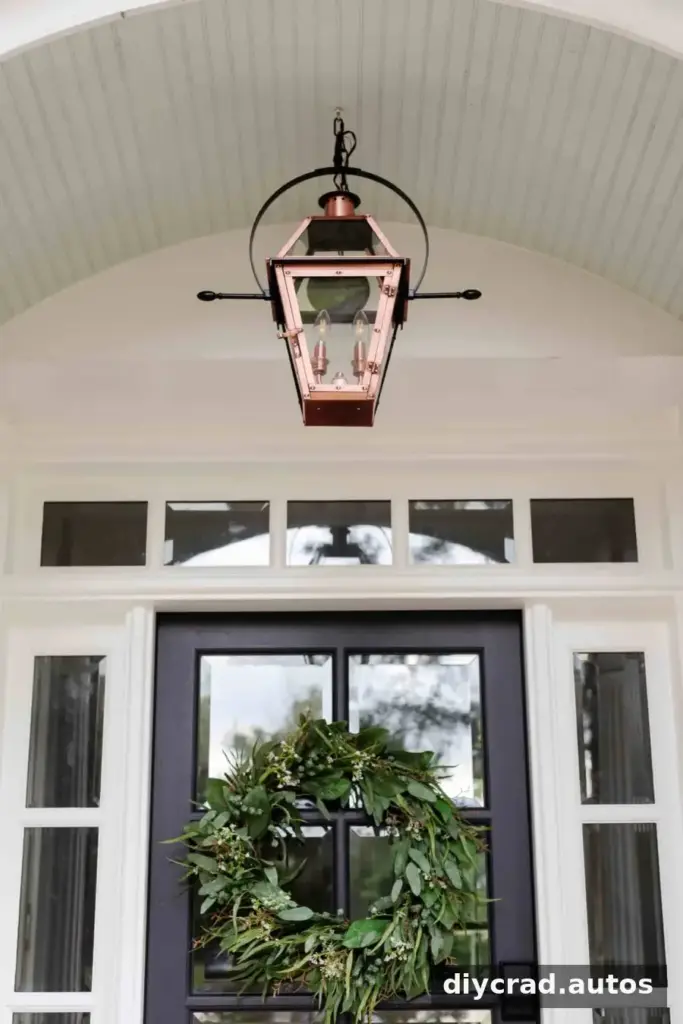
Copper gas lanterns are a familiar detail in Charleston architecture, but adding a gas line was not included in this porch project. An electric outdoor copper lantern was chosen to create a related traditional look without requiring a gas connection. Its finish also works with the porch’s classic details.
A flame-like bulb was still under consideration for the fixture. Before selecting a bulb, check its compatibility with the lantern and confirm that it is rated for outdoor use and the specific fixture. Follow the manufacturer’s installation guidance, and use a qualified professional when electrical work requires one.
Reuse a Front Door Wreath
The wreath from the previous year remained in good condition, so it was reused rather than replaced. Keeping seasonal decor that is still presentable can finish an entry without adding an unnecessary purchase. A wreath also provides a simple way to introduce texture or a seasonal accent without changing permanent features.
If choosing a new wreath, compare its size with the door and consider how its colors stand out against the paint. A shape and palette that relate to nearby planters can help the arrangement feel balanced. Make sure the hanging method is suitable for the door’s finish and does not interfere with opening or closing it.
Colonial Porch Project Elements
The porch update included the door replacement, brick limewash, and porch floor paint, along with smaller finishing pieces for the entry. When planning a similar project, separate necessary repairs from decorative additions and check that products are suitable for their intended outdoor surfaces and conditions.
- Copper outdoor pendant lantern
- Large blue-and-white planter
- Small blue-and-white planter
- Braided welcome mat
- Faux topiaries
- Wreath in a similar style
- Front door replacement
- Brick limewash
- Porch floor paint
Final Thoughts on This Colonial Front Door Makeover
This colonial front door makeover brings together a brighter entry, a coordinated color palette, and traditional decorative details. The cracked concrete walkway remains a possible future project, but the completed changes give the entrance a more finished appearance. A porch refresh does not have to happen all at once: prioritize necessary repairs first, then choose lighting and decor that suit the home’s existing architecture. Considering daylight, privacy, safe access, and weather suitability can help each improvement work well as part of the overall design.

