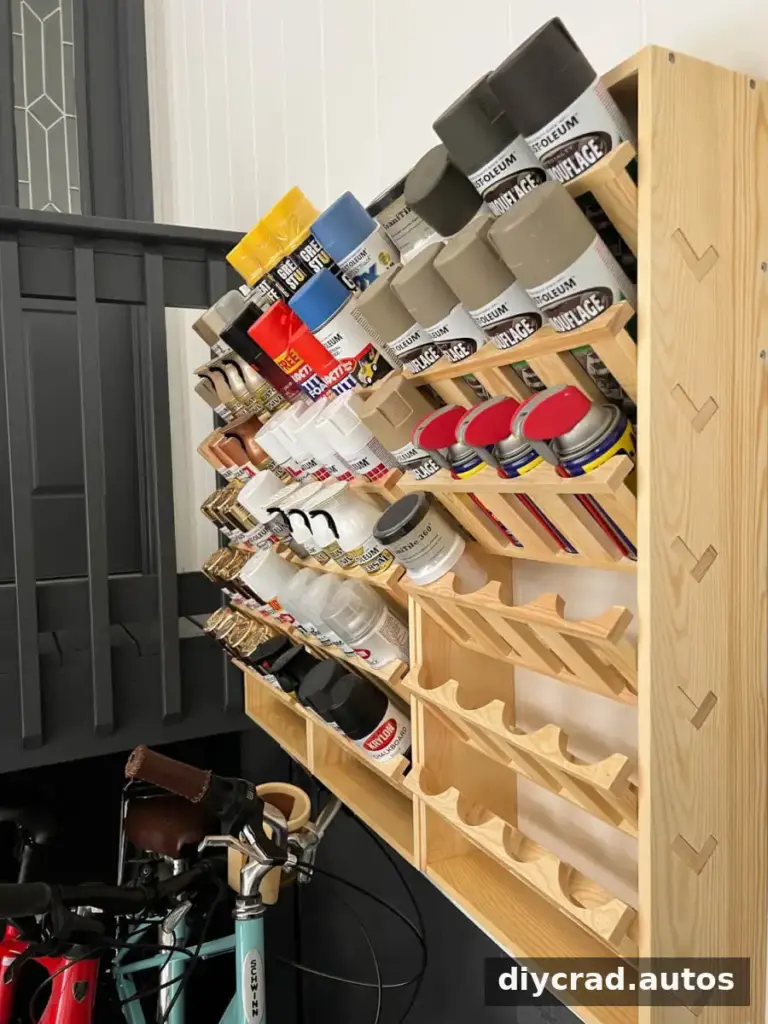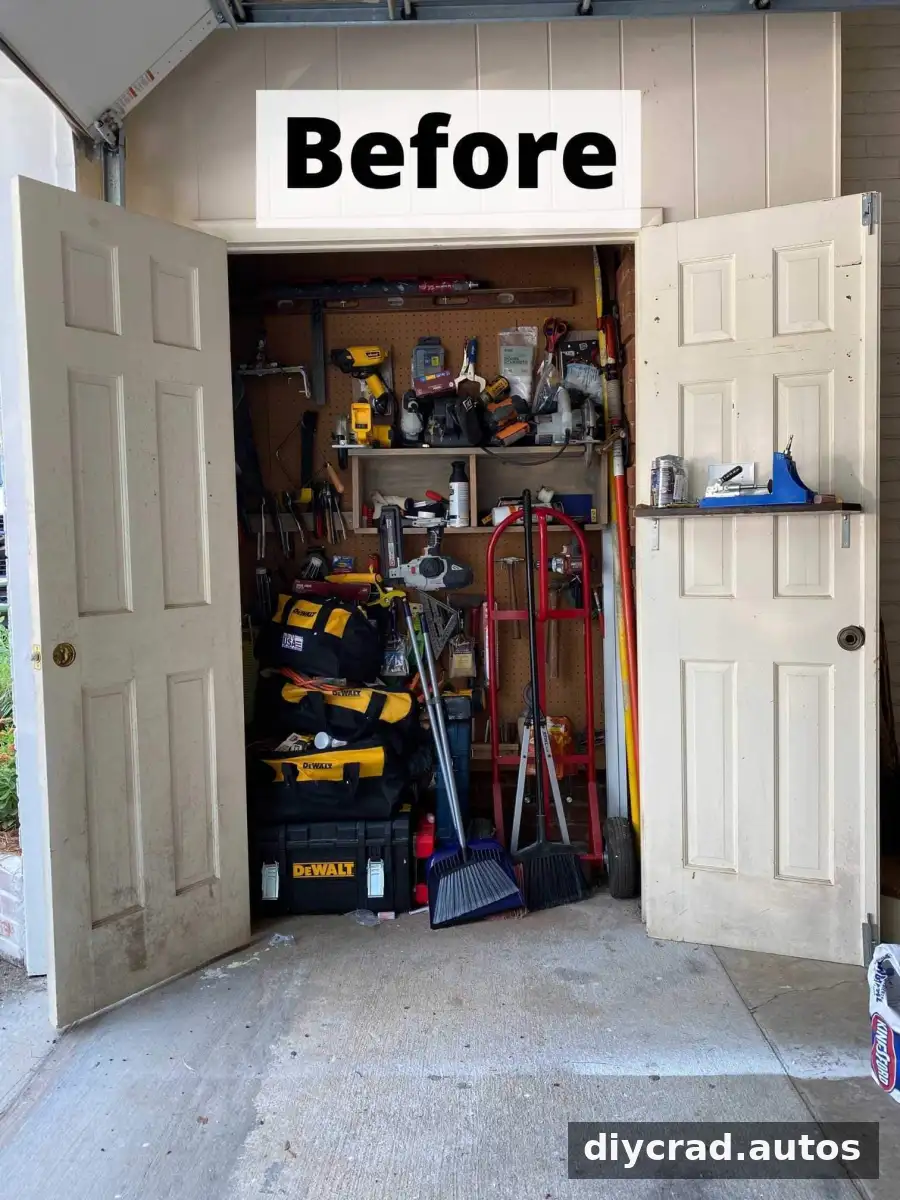
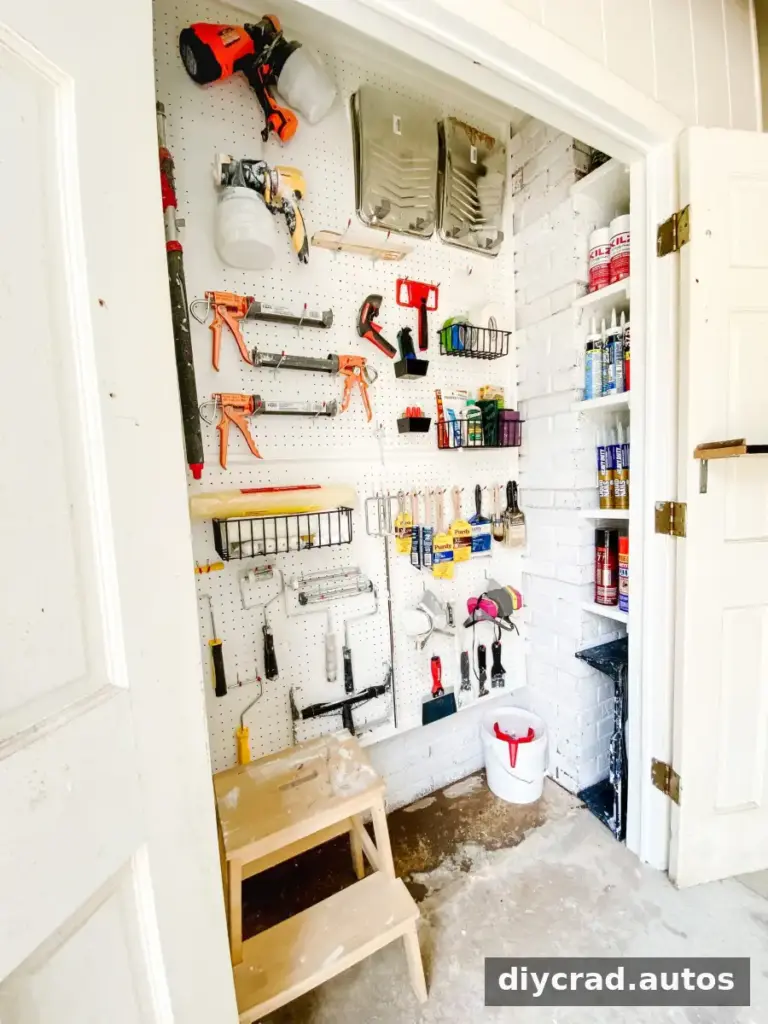
A well-planned paint storage closet can make home projects easier by keeping paint, preparation supplies, and tools organized in one place. With basic DIY shelves and a pegboard organizer, even a compact garage closet can use its available space more effectively. The setup below uses leftover materials and flexible storage zones that can be adjusted as your supplies change.
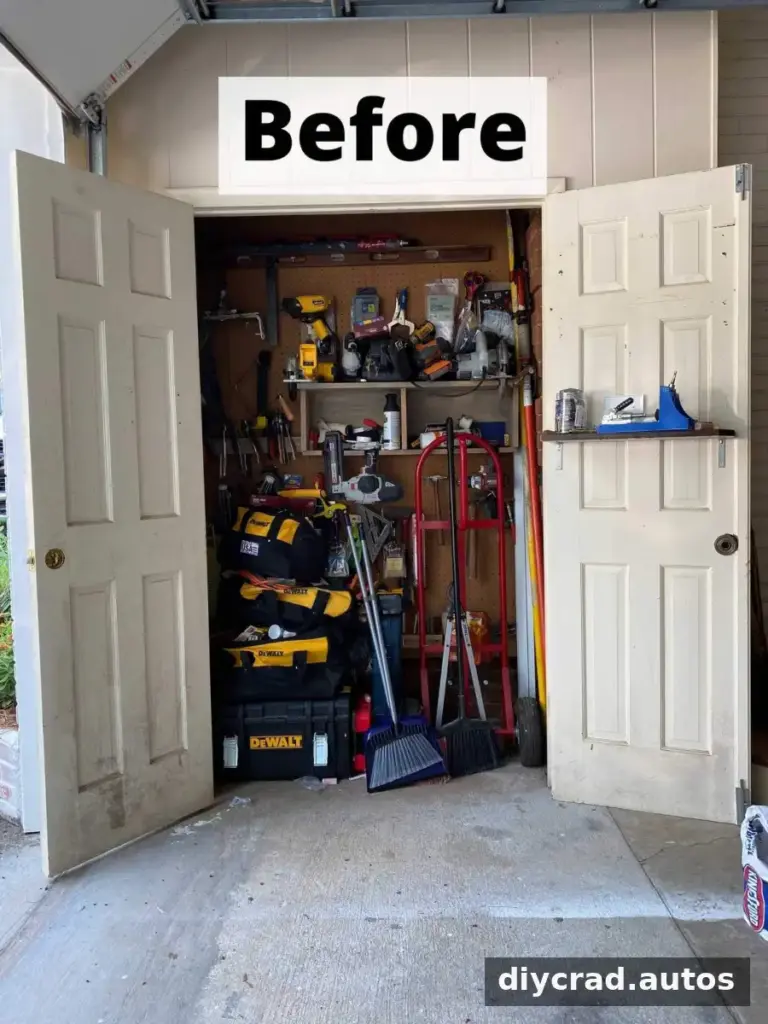
When renovation work and everyday projects leave paint cans and tools scattered around the garage, it becomes difficult to find what you need and see what you already own. Turning an existing utility closet into a dedicated paint area gives supplies a clear home and helps prevent useful items from getting buried.
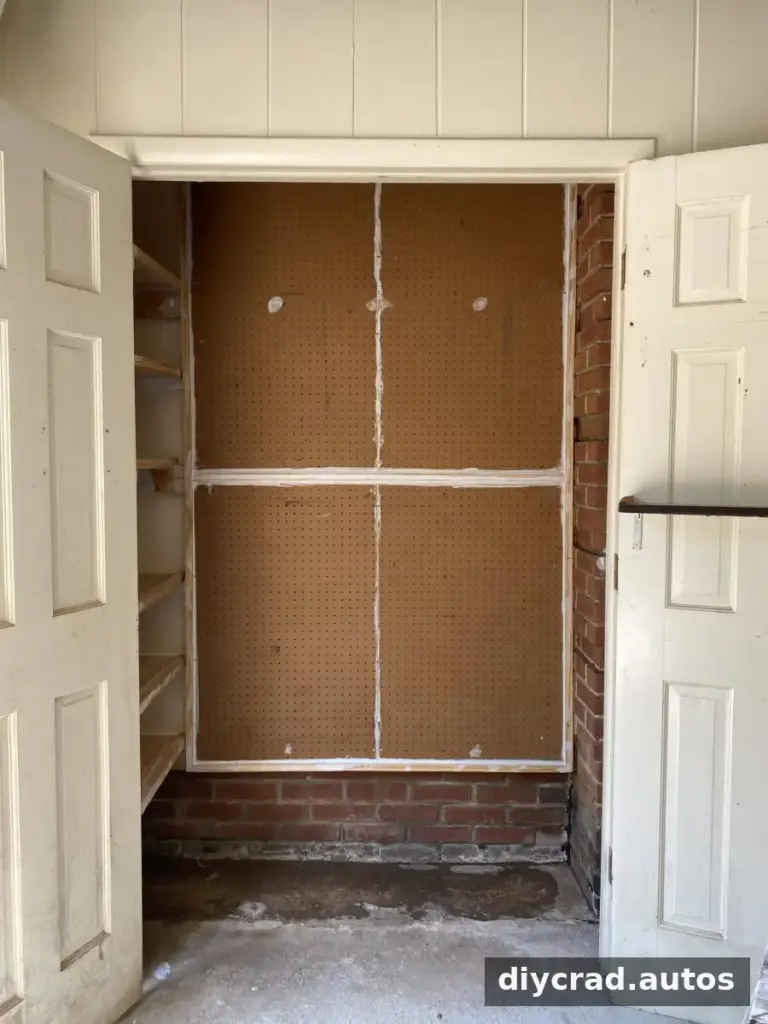
A garage closet can work well as a central storage spot for paint and related materials, especially in a household that regularly takes on painting projects. Before organizing, remove items you no longer need and check that the closet is suitable for storing the products you plan to keep. Always follow each product’s label for storage and safety instructions.
Paint Storage Closet Supplies
This project used a small collection of basic materials:
- Leftover white paint
- Wood scraps for building compact shelves beside the doorway
- A pegboard organizer kit
- Pegboard baskets
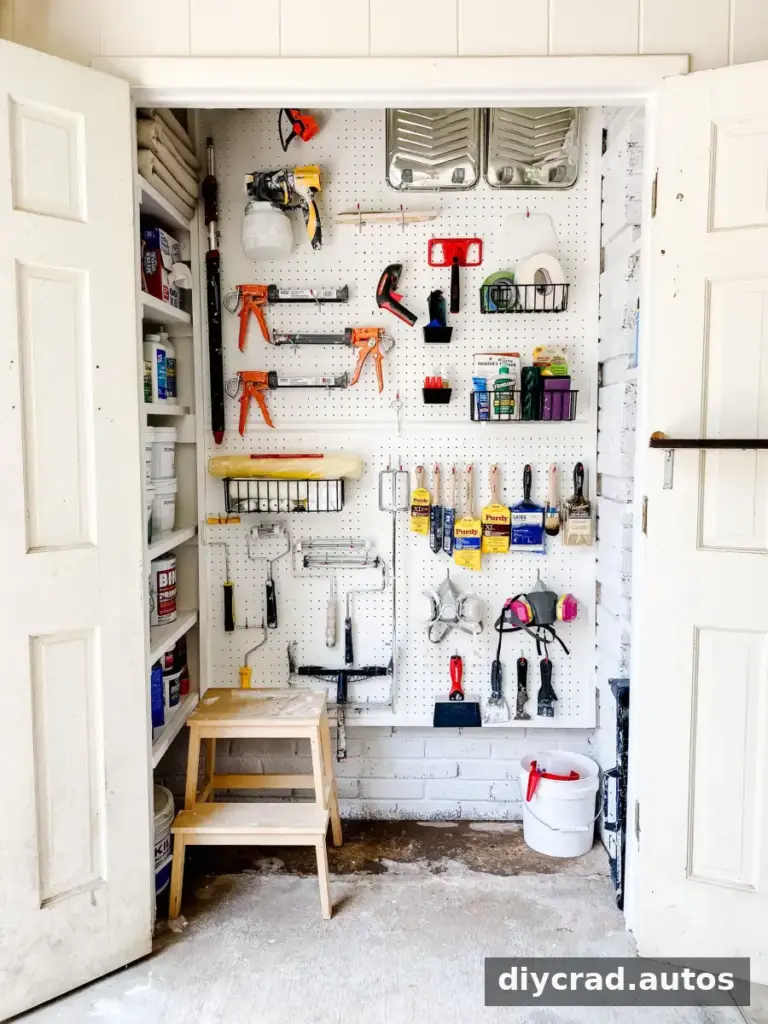
The closet already had pegboard, which was reinforced with construction adhesive and painted. If your closet does not have pegboard, you can add a suitable panel and secure it according to the manufacturer’s directions. Check that the wall and mounting points can support the weight of the tools you plan to hang.
Organize Paint Supplies by Category
Divide the closet into simple work zones so supplies are easier to locate before, during, and after a project. For example, create areas for:
- Surface preparation
- Paint
- Finishing products
- Hand tools
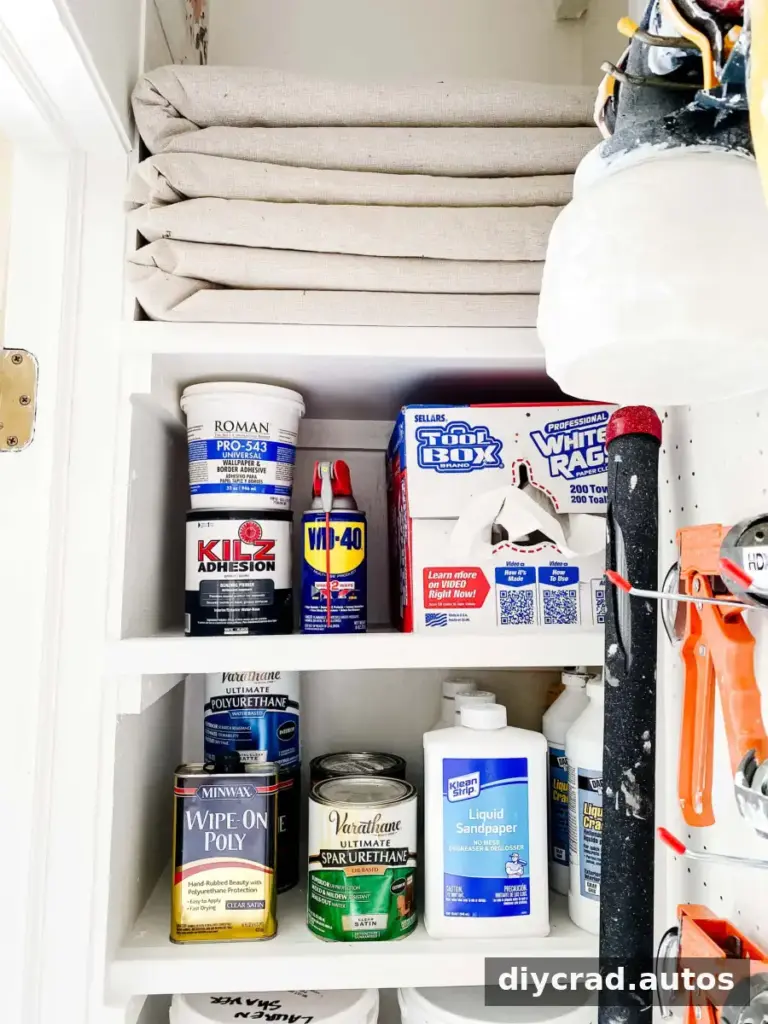
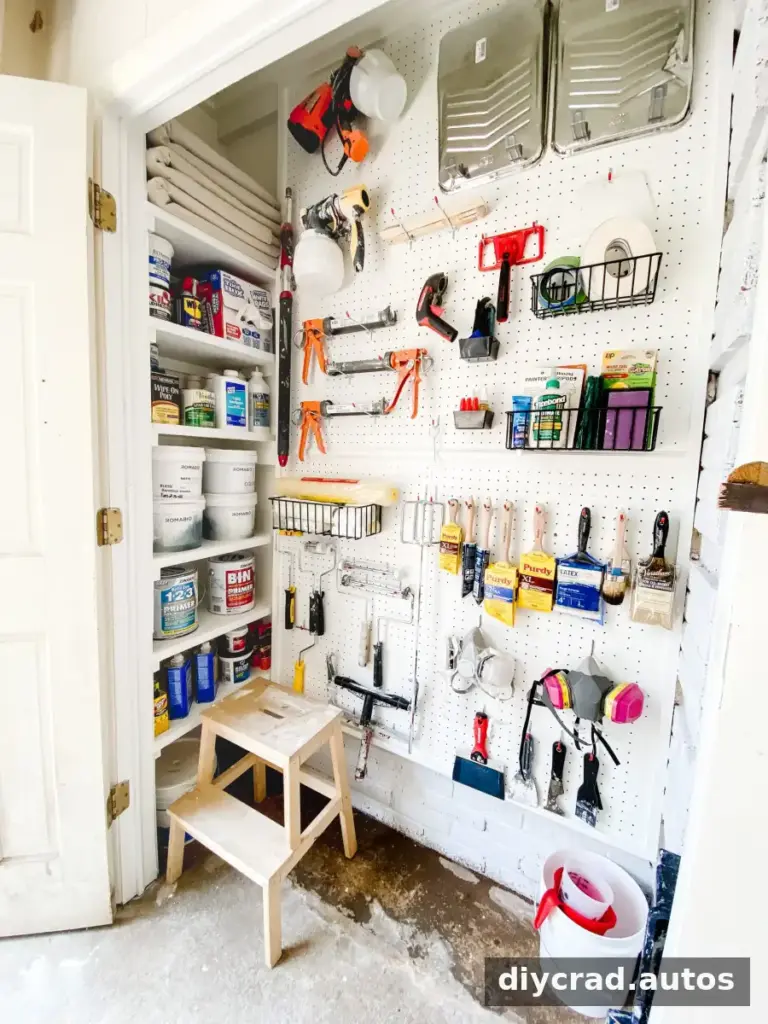
Shelves can hold drop cloths, rags, spackle, liquid sandpaper, primer, wallpaper paste, paint cans, and polyurethane. Grouping similar products together helps you take stock quickly and return each item to the right place. Keep containers upright and arrange frequently used supplies where they are easy to reach.
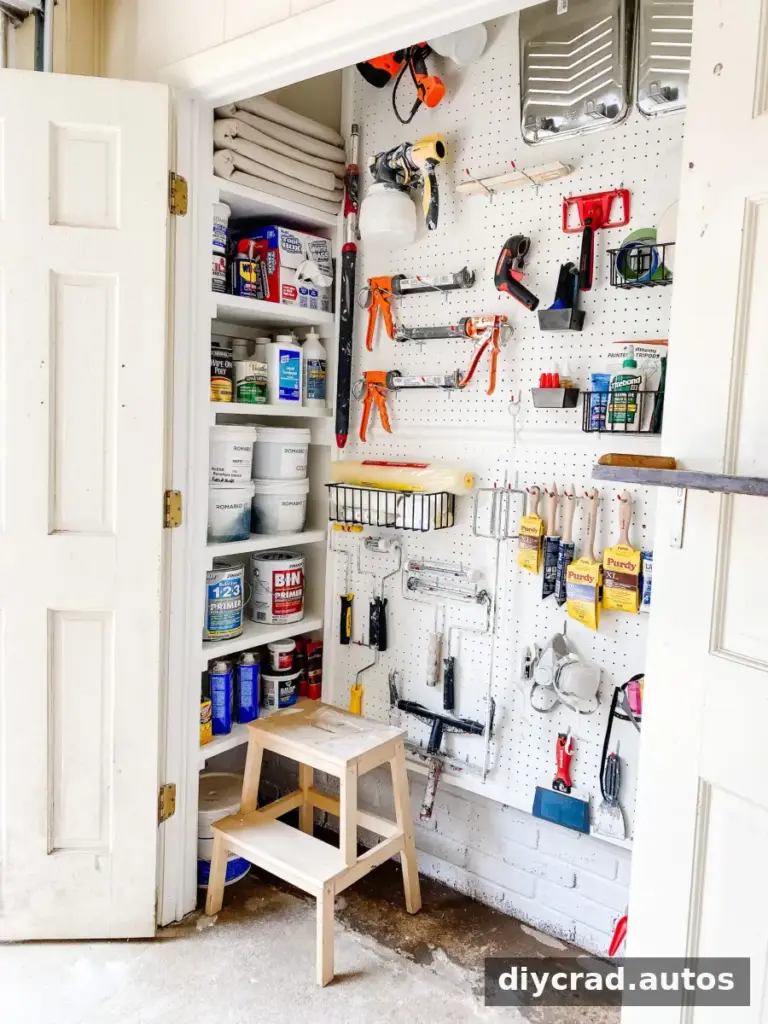
Labels are optional. Leaving shelves unlabelled makes it easier to change the layout when your project needs or inventory shift. If you do label containers or shelves, use clear descriptions and update them whenever the contents move. Labels on paint should include useful details such as the room, color, and finish when known.
Tips for Storing Old Paint
Keep only paint you are likely to use
It can be useful to keep small amounts of common colors and finishes for future touch-ups. However, storing many partly used cans that are unlikely to be needed takes up valuable space. Review your paint periodically and set aside usable surplus for a local reuse or donation program, if it accepts that type of paint. Follow local rules for disposing of paint that cannot be reused.
Save a small amount for touch-ups
Before recycling or disposing of a larger container, consider keeping a modest amount for future repairs. Use a container designed to hold paint, close it securely, and label it with the color and room. This can be more convenient than keeping several bulky cans, but check the container’s instructions and make sure it seals properly.
Build DIY Paint Storage Shelves
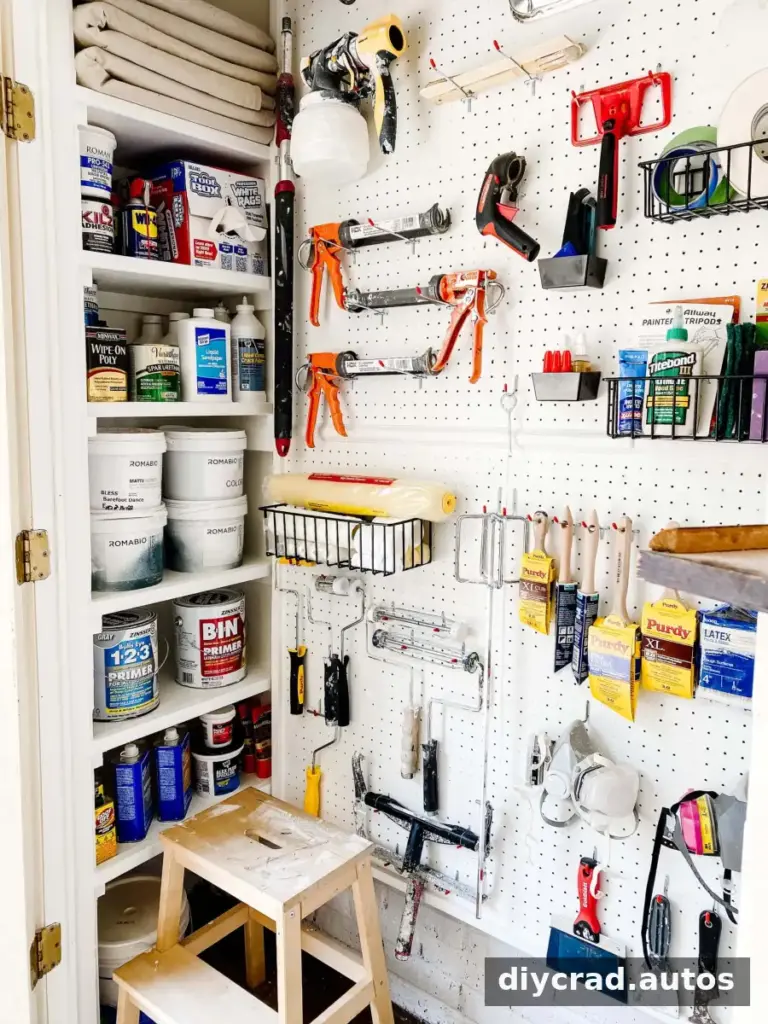
Scrap 1x2s and plywood can be used to build compact shelves beside a door frame. This approach makes use of narrow spaces that might otherwise remain empty. Measure the available area before cutting materials, and make sure each shelf is securely supported and appropriate for the weight of the items it will hold.
A slim shelving section can store spray paint, caulk tubes, and similar supplies. In this layout, separate shelves were assigned to spray paint, spray primer, caulk, construction adhesive, and spray adhesive. Keeping these products apart makes it easier to spot what is running low and return items after use.
Use Pegboard for Paint Tools
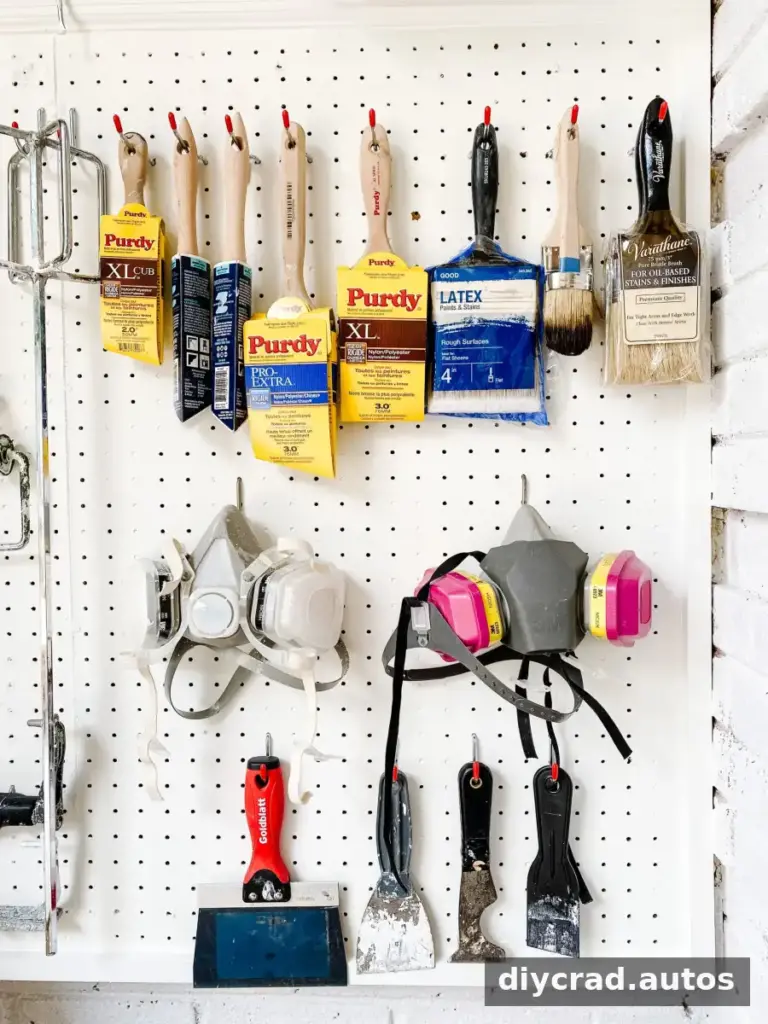
A pegboard organizer and baskets can make brushes, rollers, painter’s tape, trays, a sprayer, caulk guns, and putty knives easier to access. Place smaller items such as sanding pads, tape, and caulking tools in baskets. Use hooks for larger tools, and choose pegboard accessories that fit the panel securely.
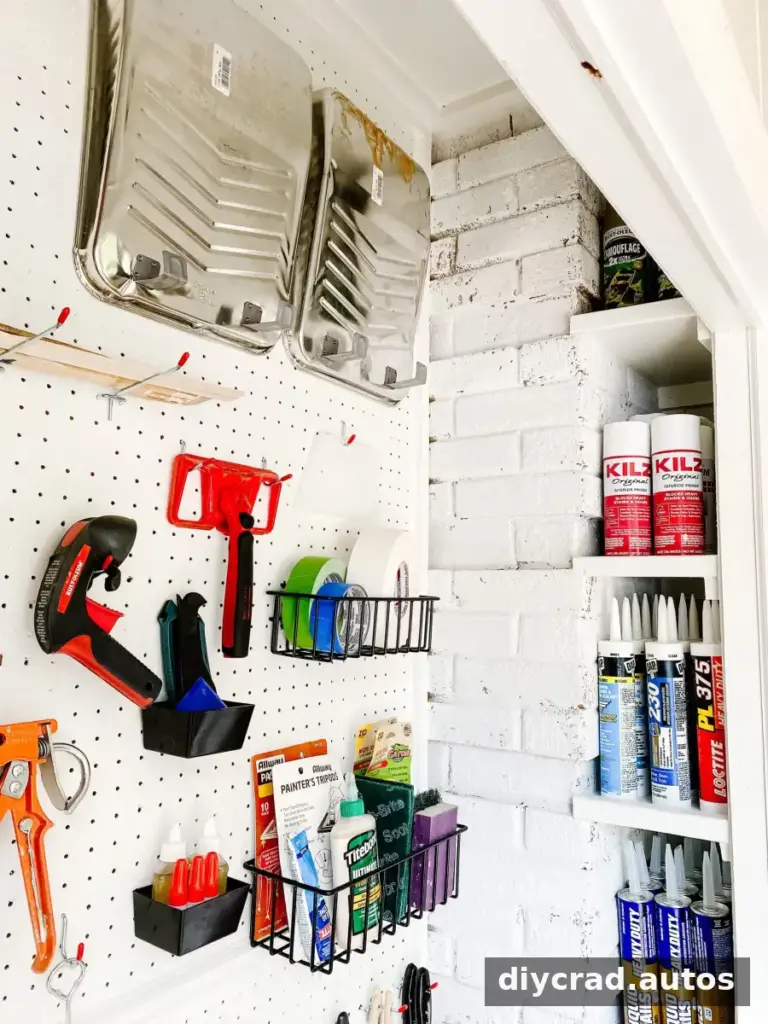
Arrange tools by type or by the stage of a project so that preparation items are easy to find before painting begins. Avoid overcrowding hooks and baskets; a little open space makes it easier to return equipment without disturbing the rest of the setup.
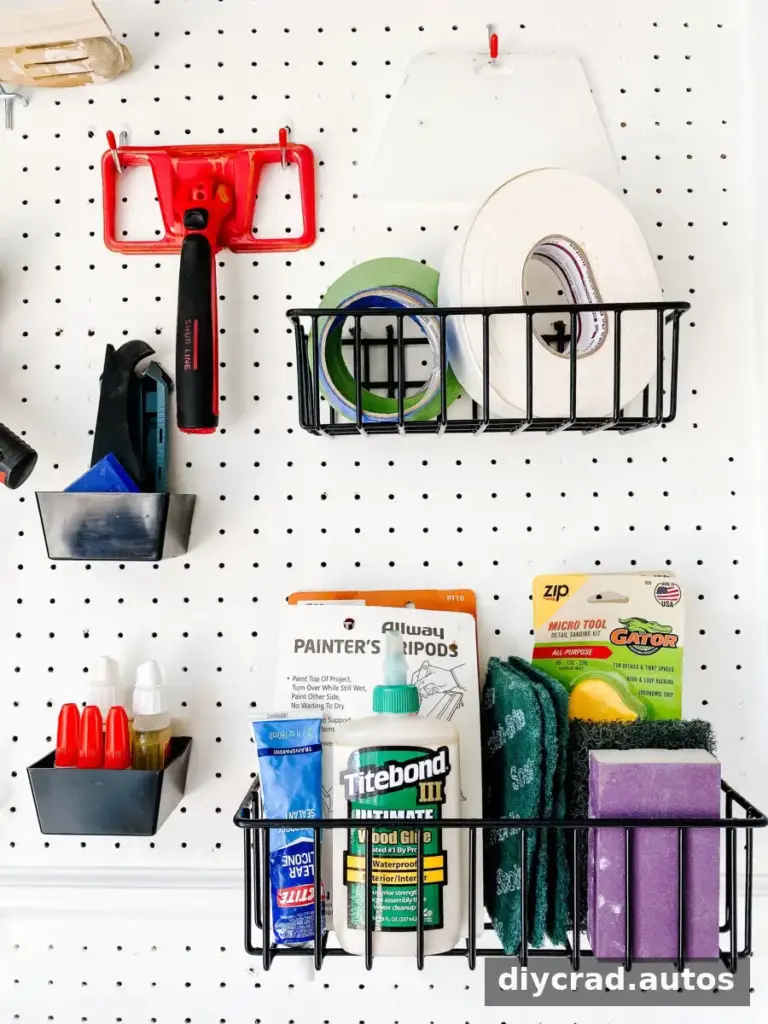
After washing paint brushes, they can be hung bristles down to dry so moisture drains away from the handle. Make sure brushes are supported securely and can dry without touching other tools or stored products. Follow the brush manufacturer’s cleaning and care guidance.
Bulky items such as buckets and a step stool can stay on the closet floor if they do not block access to shelves or create a tripping hazard. Keep the floor area as clear as possible so supplies can be removed safely.
Make the Closet Work for Your Space
An effective storage system does not need elaborate labels or custom cabinetry. Start with broad categories, use vertical space for tools, and reserve shelves for containers and larger supplies. Revisit the arrangement after a few projects and move items that are difficult to reach or often misplaced.
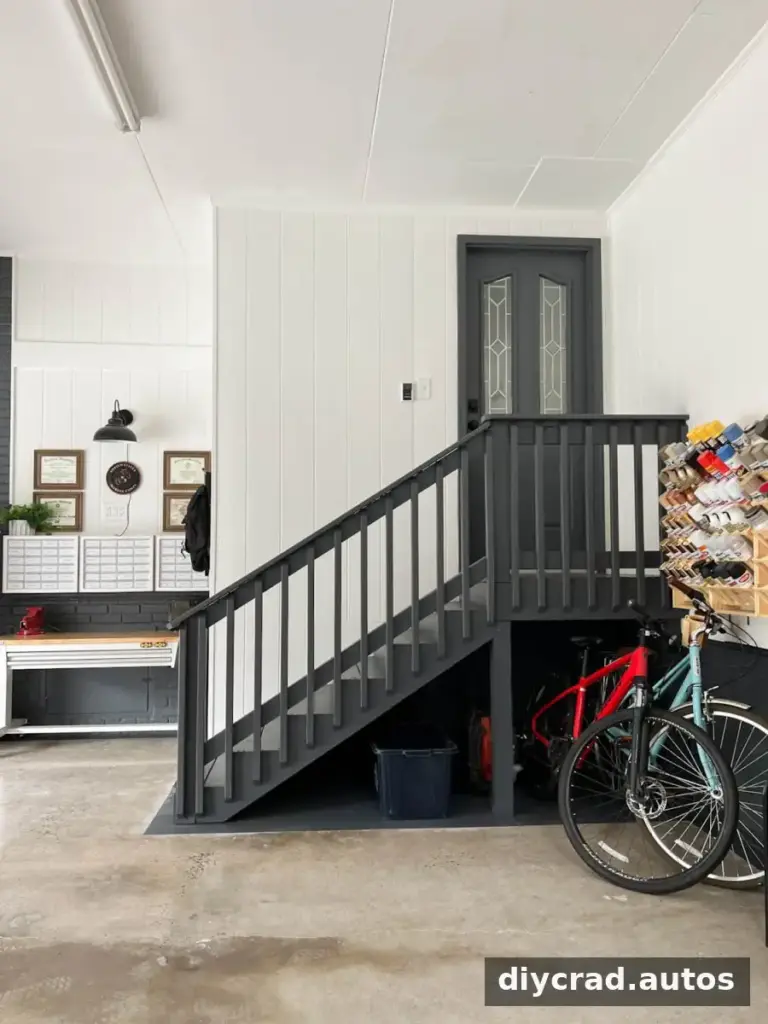
If the closet’s available space changes, adjust the system rather than trying to preserve a layout that no longer works. A spray-paint rack can also help store caulk tubes, adhesive, and craft paint tubes while keeping them accessible. If a water heater or another fixed appliance takes up part of the closet, keep the required clearance and access areas unobstructed, following its manufacturer’s instructions and applicable safety requirements.
For any paint storage closet, prioritize safe, practical access over fitting in every container. Keep products in their original, clearly identified containers whenever possible, store them as directed on their labels, and keep them away from children and ignition sources where required. A few sensible categories, DIY shelves, and pegboard hooks can turn a cluttered utility space into a useful home project station.