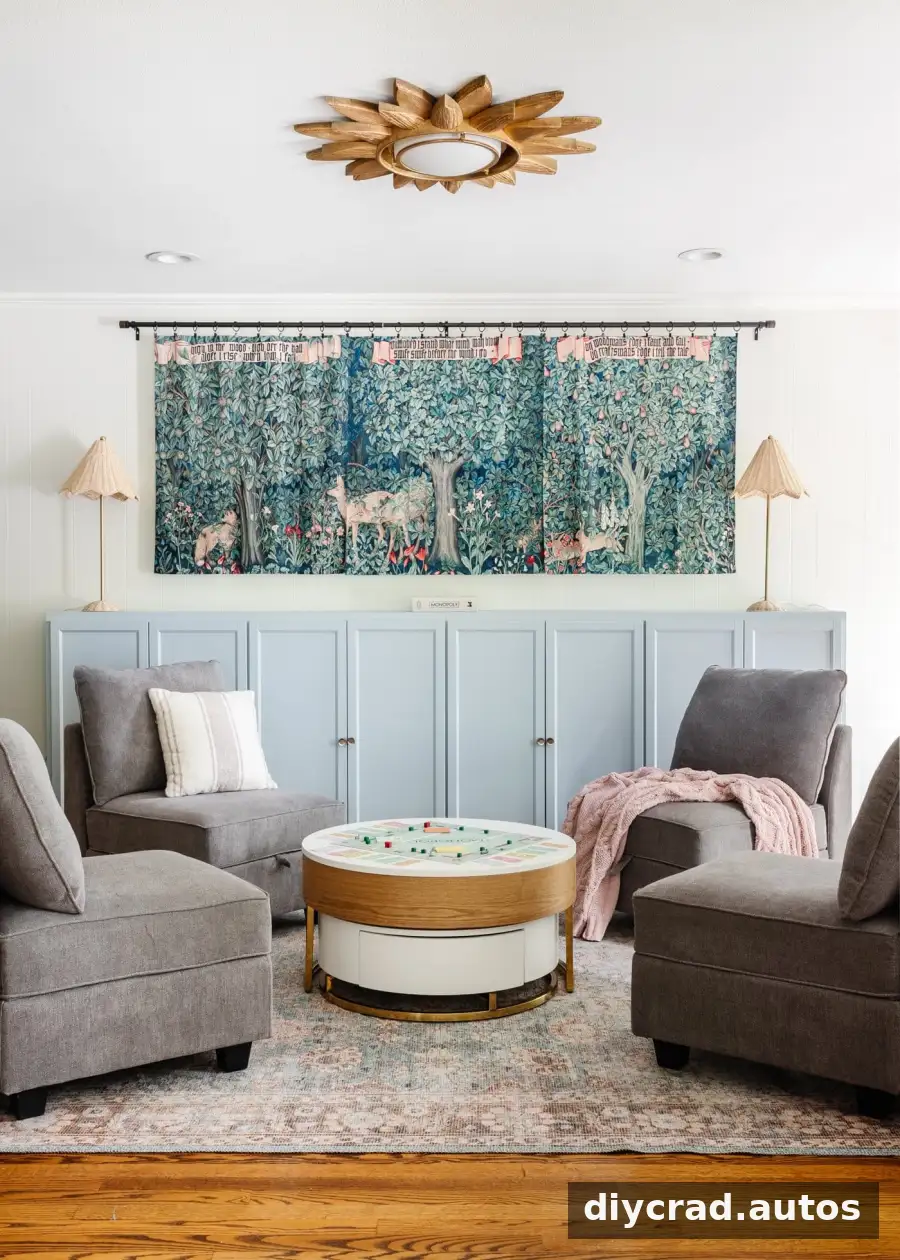
Playroom toy storage can make a busy family room easier to use without sacrificing comfortable seating or a polished look. With furniture that serves more than one purpose, toys and games can be put away quickly while the room stays ready for reading, crafts, and movie nights.
A playroom does not need to stay perfectly organized all day to work well. A practical goal is to make it easy to return loose toys to concealed storage at the end of a play session. Storage furniture that doubles as a table, seat, or shelf can make the most of available space.
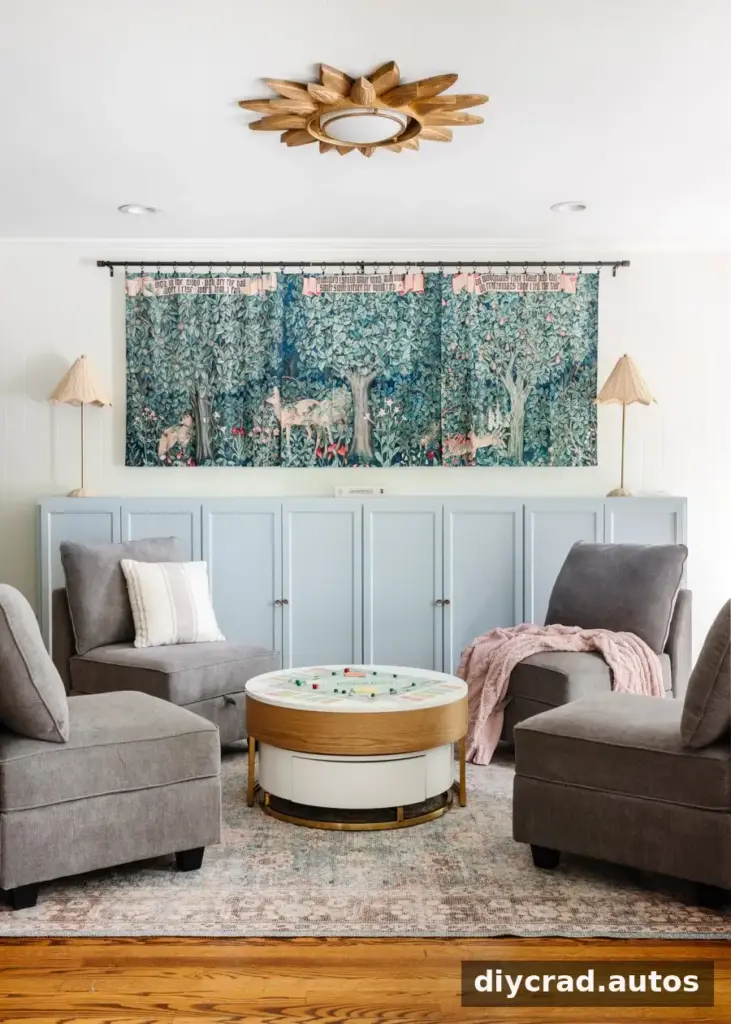
Combining hidden compartments, adaptable seating, and built-in shelving creates useful storage without relying on furniture designed only for children. Choose pieces that suit the room’s scale and leave enough clear floor space for play.
Modular chairs with hidden compartments | Nesting coffee table with lift top and drawer base | Washable rug | Built-in cabinets | Tapestries | Sunburst light | Rattan lamps
Playroom Toy Storage Furniture Ideas
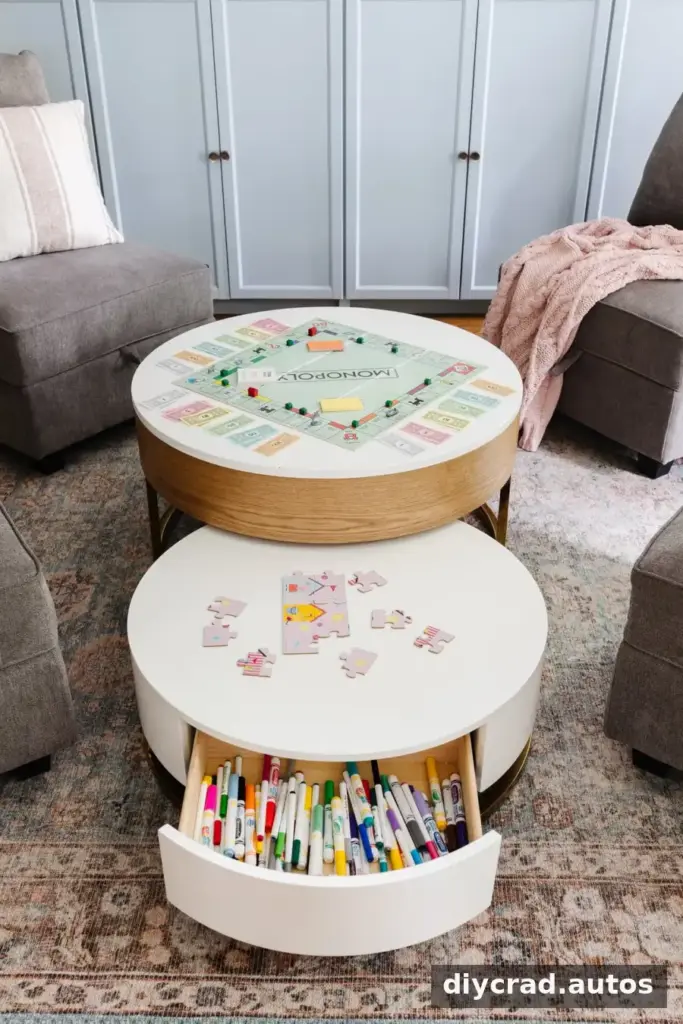
A nesting coffee table with a lift top and drawer base can serve several purposes in a playroom. The storage area can hold art supplies, while the raised surface offers a place for drawing or puzzles. When it is not being used for activities, the table can work as a regular coffee table.
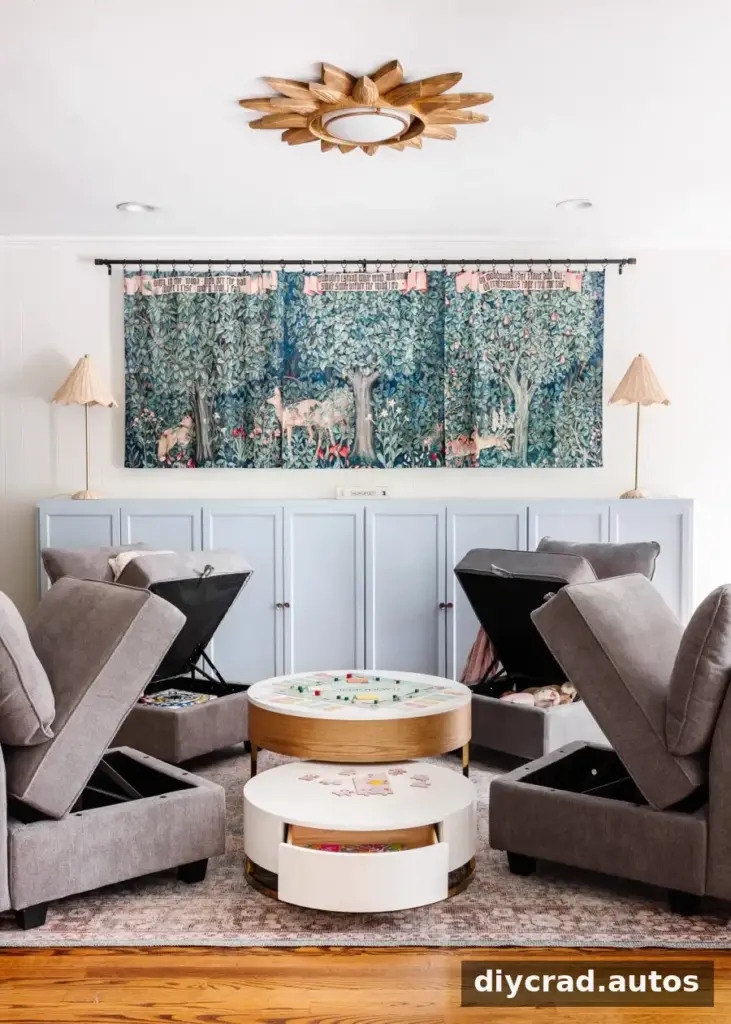
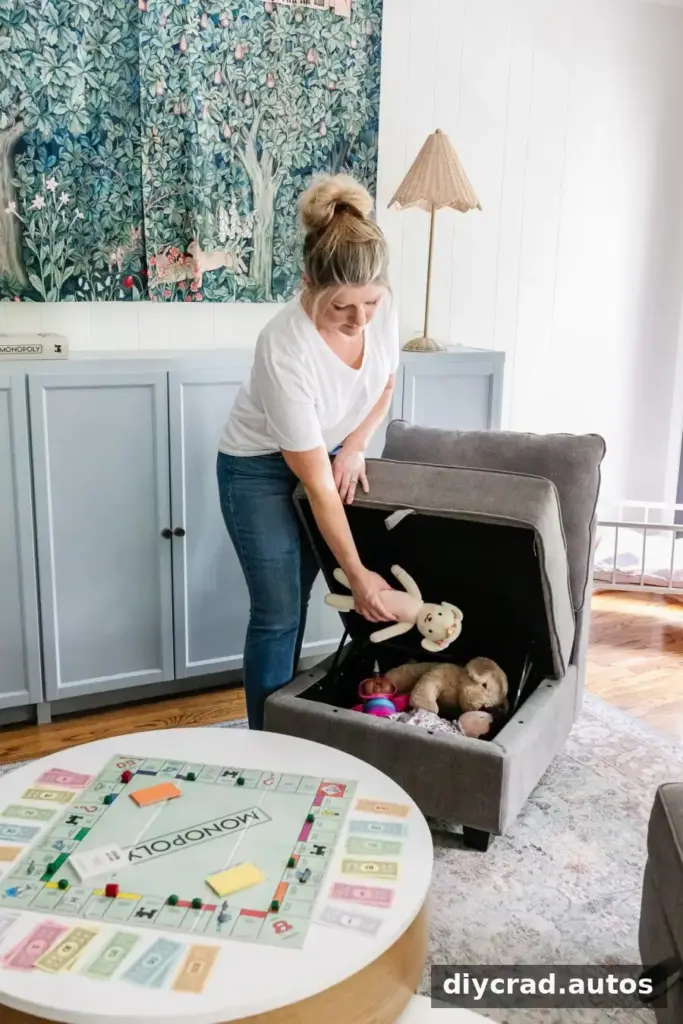
Chairs with compartments beneath the seats offer another place to tuck away toys, books, or games. Pairing these with shelving gives children accessible spots for frequently used items and makes it easier to clear the floor quickly.
Built-in cabinets and bookcase-style shelving can use wall space efficiently. For everyday tidying, keep commonly used toys within reach and reserve higher shelves or closed cabinets for items that are used less often.
Practical Toy Storage Tips for a Less Cluttered Home
A simple system is easier to maintain than one that requires every item to be arranged perfectly. These habits can help keep toys manageable while making cleanup more straightforward.
1. Edit the Toy Collection Regularly
Every three to six months, review which toys are being used and which have been outgrown or forgotten. Discard broken items and consider donating toys that are still in good condition. A review before birthdays, holidays, or summer can also help make room for new things.
Practical tip: Involve children in choosing a few toys to pass on, while handling broken or incomplete items separately.
2. Rotate Some Toys Out of Sight
Too many choices can make it harder for children to decide what to play with and can leave more items scattered around. Store some toys in a separate bin and bring them back into circulation when interest in the current selection starts to fade. Rotation can make familiar toys feel fresh again.
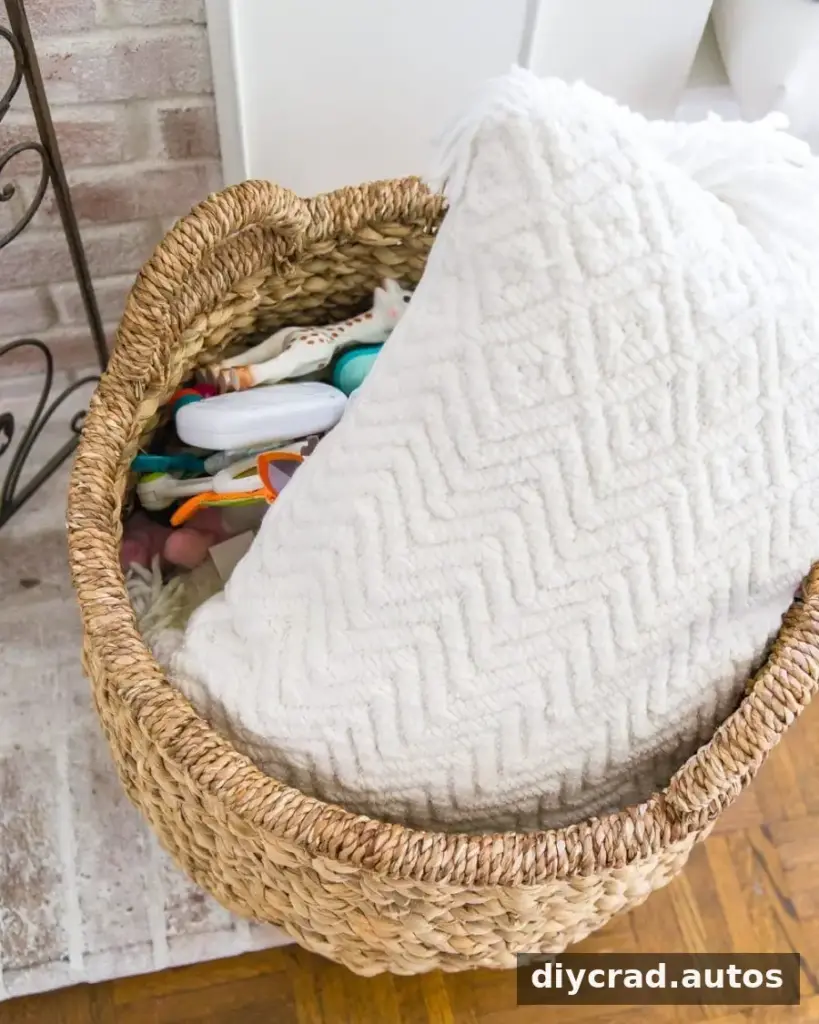
3. Store Toys in Space-Efficient Containers
Bulky retail packaging can take up valuable shelf space. Group similar toys in containers sized to fit the shelves, and keep small pieces from games or building sets together in clearly identified bags or boxes. Check that containers are appropriate for the items and easy for children to open safely.
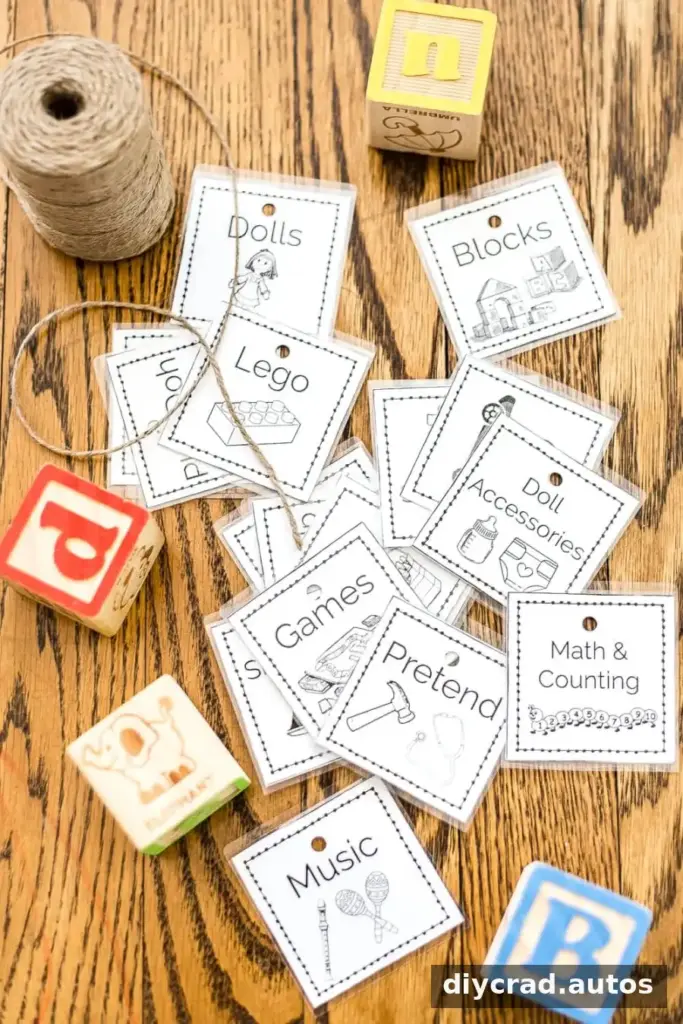
4. Add Picture Labels
Labels with both words and pictures can help children who are not yet reading identify where items belong. Use simple images that match the contents, such as blocks, dolls, or art materials. Keep labels at a height children can see and reach.
Choose Storage Furniture That Grows with Your Home
Furniture does not have to be marketed specifically for children to work well for toy storage. A storage ottoman, woven trunk, or cabinet can hold playthings now and serve another purpose later. This approach can help a room feel cohesive while reducing the need to replace furniture as children grow.
Before choosing a piece, check its dimensions, storage access, and how it will fit alongside existing furniture. Lift-top surfaces, drawers, and removable bins can each be useful, depending on what needs to be stored and how often it is used.
Stylish Storage Furniture for Other Rooms
Many storage pieces can move beyond the playroom. A shoe cabinet may help organize an entryway, while an upholstered storage cube can provide extra seating in a bedroom or living room. A bench with drawers can keep everyday items close at hand, and a desk with concealed storage can help make a home office feel less cluttered.
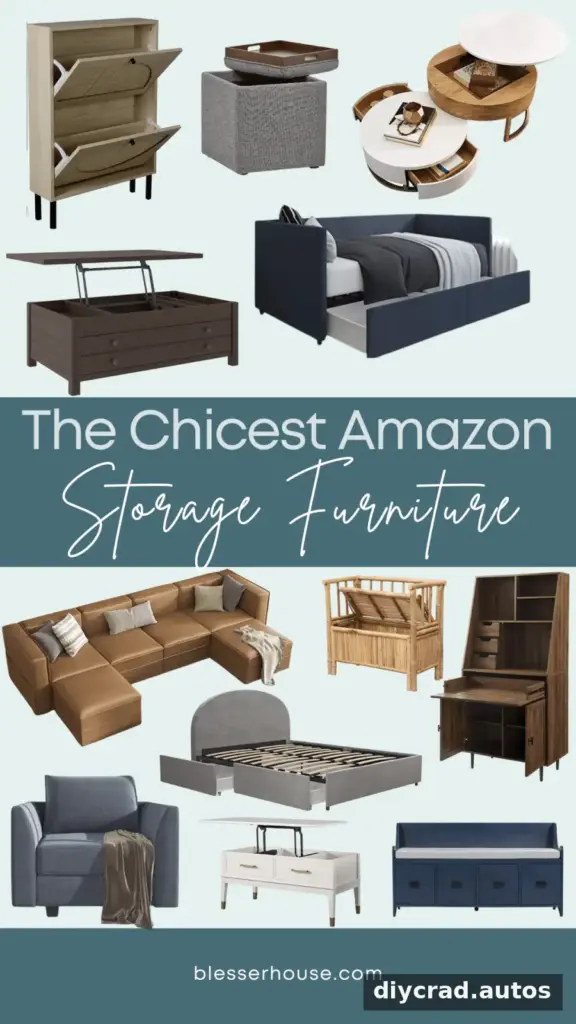
Rattan shoe storage cabinet | Tweed storage cube ottoman | Nesting coffee table with drawers | Wood lift-top coffee table | Daybed with drawers | Sectional with hidden storage compartments | Bamboo storage bench | Folding secretary desk | Bed with storage drawers | Armchair with hidden compartment | White lift-top coffee table | Entryway bench with drawers
Flexible Seating for a Playroom
Modular chairs with hidden compartments can be rearranged to suit different activities. This flexibility helps a playroom adapt without needing separate seating for every occasion.
Arrange the Chairs as a Sectional
Place the chairs together to create a larger seating area for watching a film or reading as a group. This arrangement also keeps the seats gathered in one part of the room when floor space is needed elsewhere.
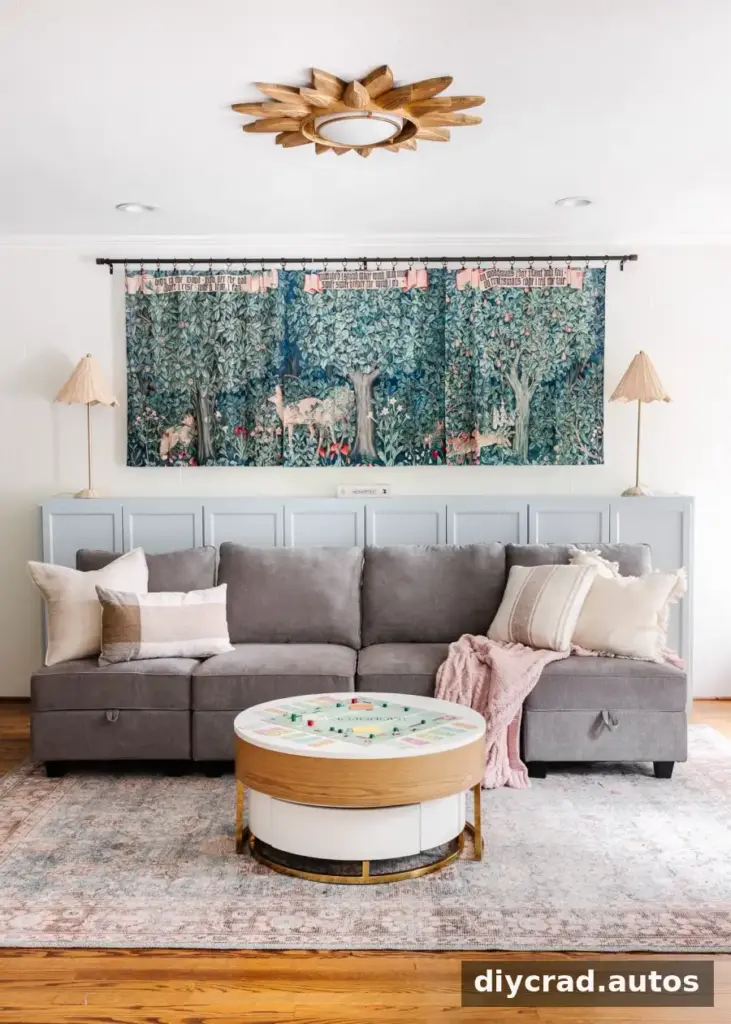
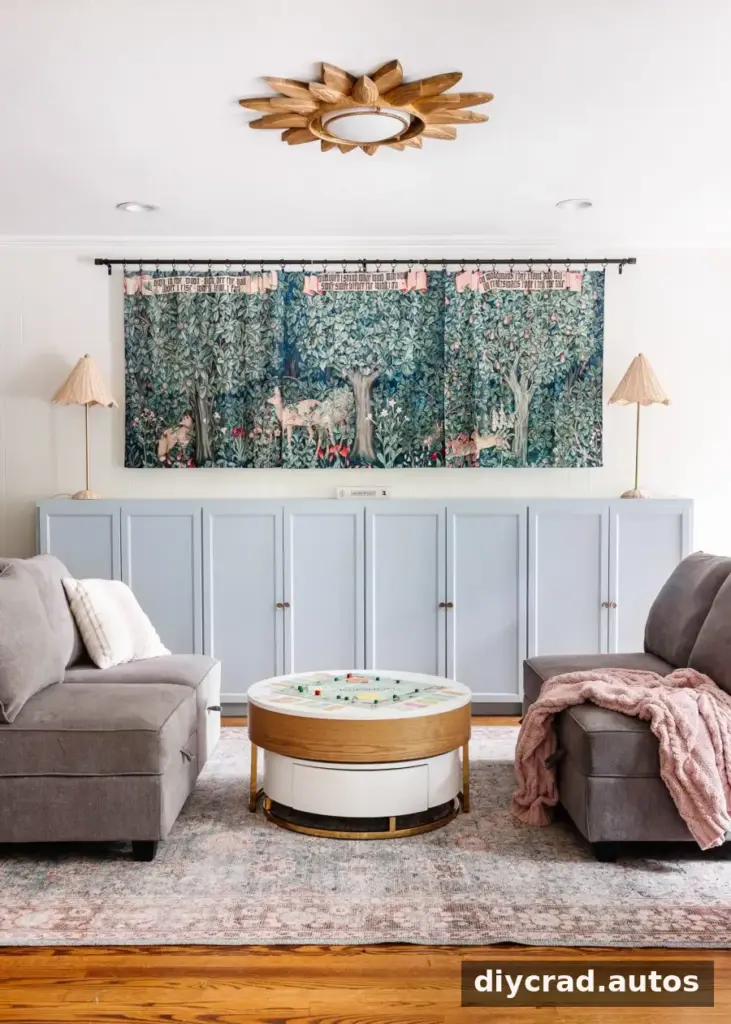
Separate Them into Two Loveseats
Two pairs of chairs can form separate seating areas for games or conversations. Leave enough space between them for children to move comfortably around the room.
Set Up Individual Chairs Around a Table
Move the chairs around a central table for puzzles, board games, or crafts. When the activity is finished, small supplies can be returned to the table’s storage or nearby bins.
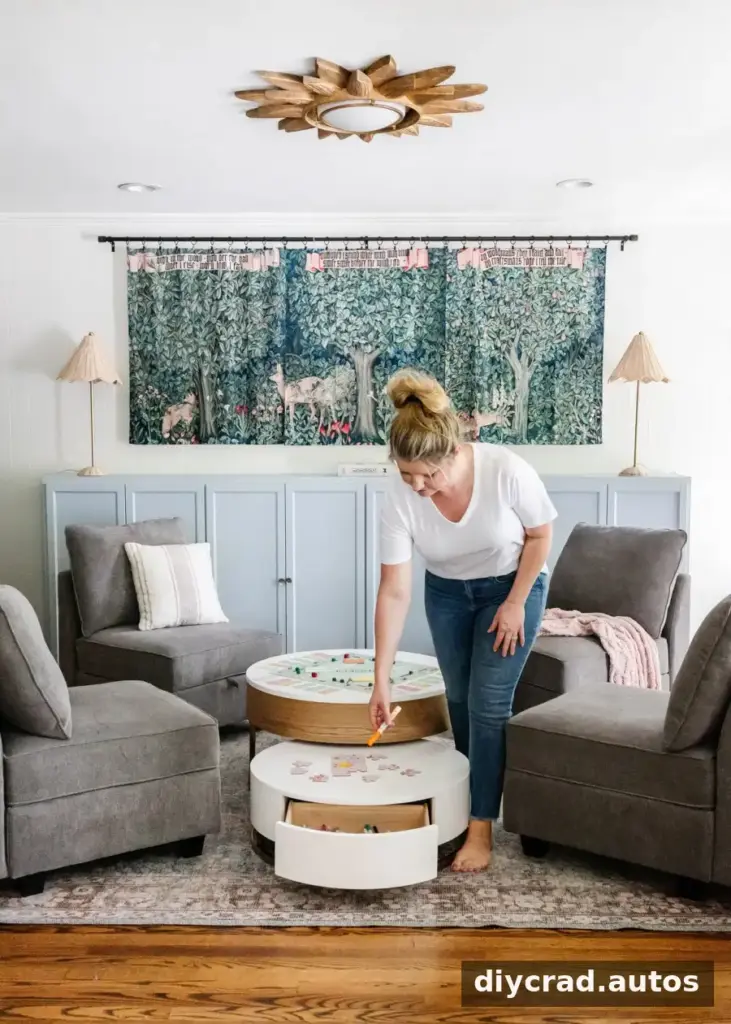
Modular chairs with hidden compartments | Nesting coffee table with lift top and drawer base | Washable rug | Built-in cabinets | Tapestries | Sunburst light | Rattan lamps
The chairs can also be pushed together for a cozy reading spot or arranged to create a simple blanket fort. Before building forts, make sure that furniture is stable and that pathways and exits remain clear.
Ultimately, effective playroom toy storage is about making everyday routines easier. Choose furniture that fits the room, give toys an obvious home, and keep the storage system simple enough for the whole family to use. With flexible seating and useful concealed storage, a playroom can stay ready for both play and downtime.
More Kids’ Storage and Decor Ideas
- Washable rug ideas for playrooms
- Printable toy labels and playroom storage
- Built-in bookcase ideas for a playroom
- Shared bedroom ideas for older children
- A wardrobe-inspired reading nook
- Ideas for a children’s ballet barre and wall decor