

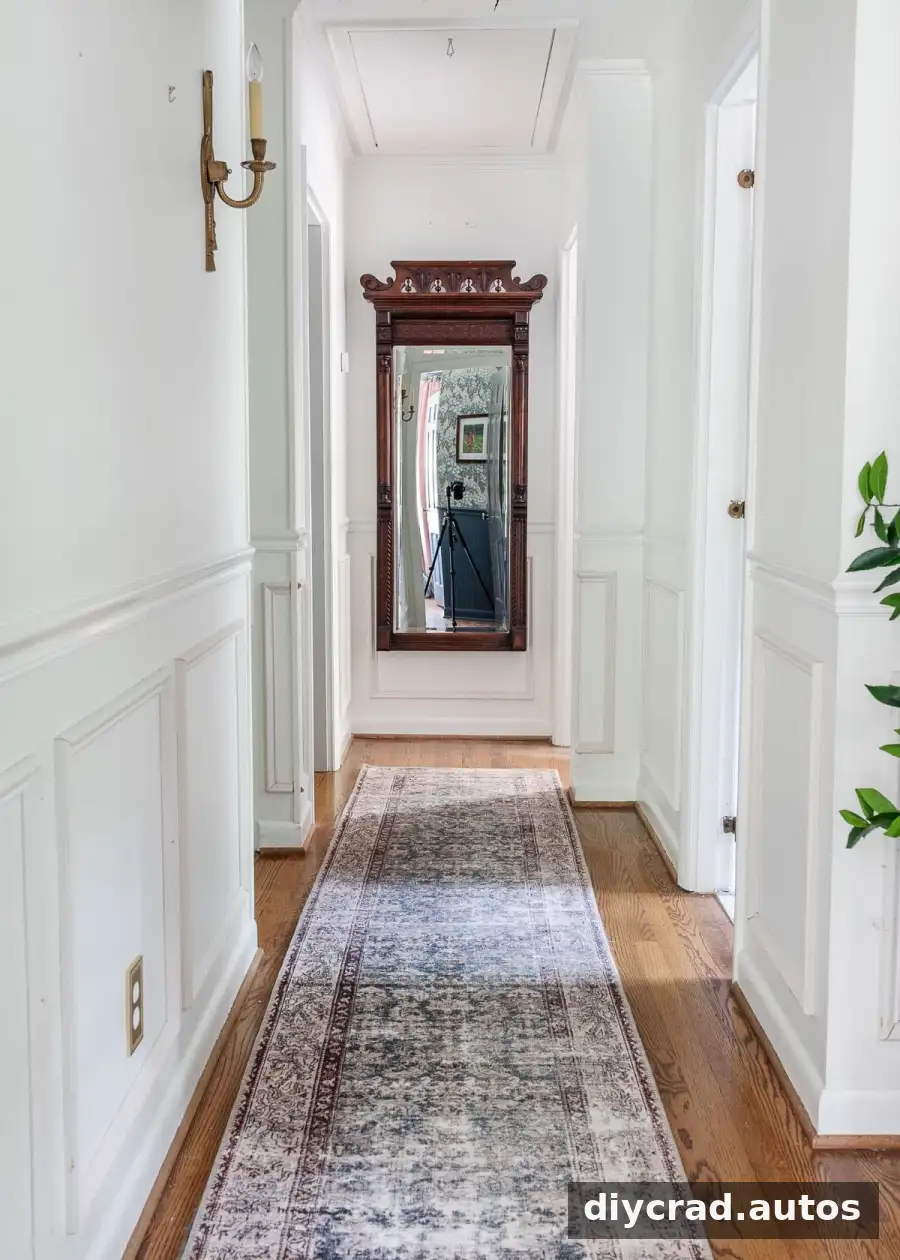
Learning how to hide a thermostat without interfering with its operation starts with one important rule: keep the unit uncovered and able to sense the room. A decorative frame or small gallery wall can help it blend into your decor while leaving the thermostat open to the surrounding air. This approach works especially well in a hallway, where the control is often visible but there may be little space to disguise it.
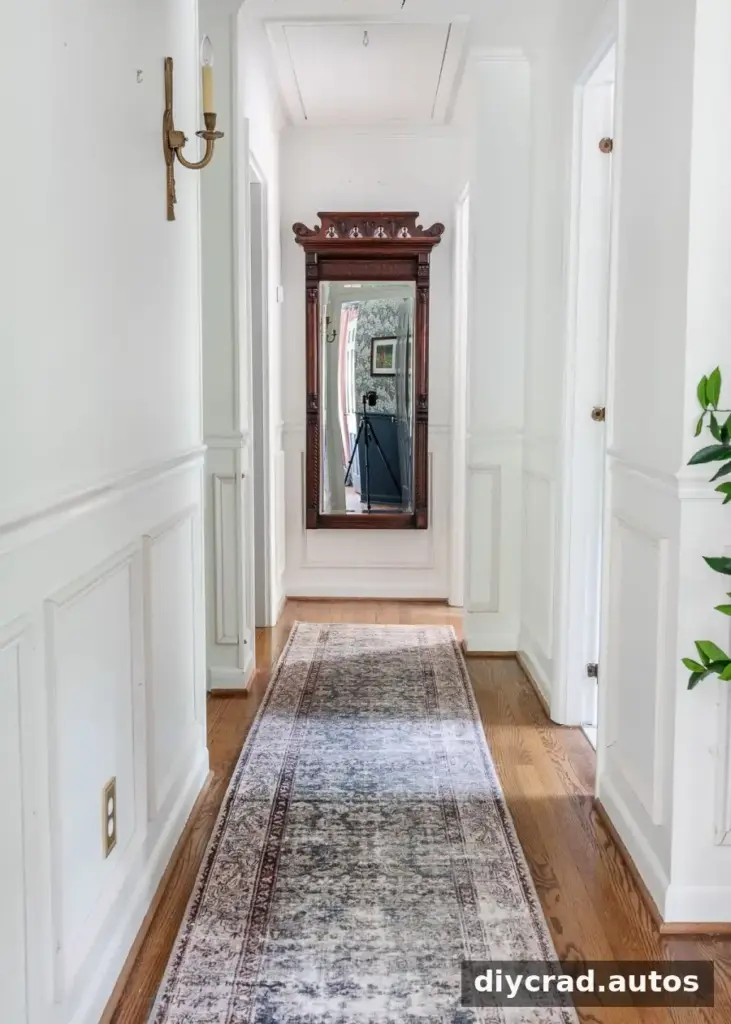
In this hallway, the surrounding decor was still being planned, including a ceiling treatment and box-molding wainscoting in a contrasting trim color. An antique mirror was also added to help the small space feel larger, which meant relocating the thermostat to an adjoining wall. Once it was in a new position, a simple decorative detail helped it feel more intentional.
How to Hide a Thermostat Without Affecting Performance
A thermostat should not be completely covered by artwork, a solid panel, or a closed cabinet. Blocking it can prevent the device from sensing the room temperature accurately. If it cannot detect the surrounding air properly, the heating or cooling system may not respond as expected.
Before decorating around a thermostat, check its manufacturer’s guidance for clearance and placement. Keep nearby vents, sensors, and controls unobstructed, and avoid positioning decorative items where they could trap warm or cool air around the unit. Direct sunlight and nearby heat sources may also affect temperature readings, so consider those factors when choosing a location.
Choose an Open Frame That Fits the Thermostat
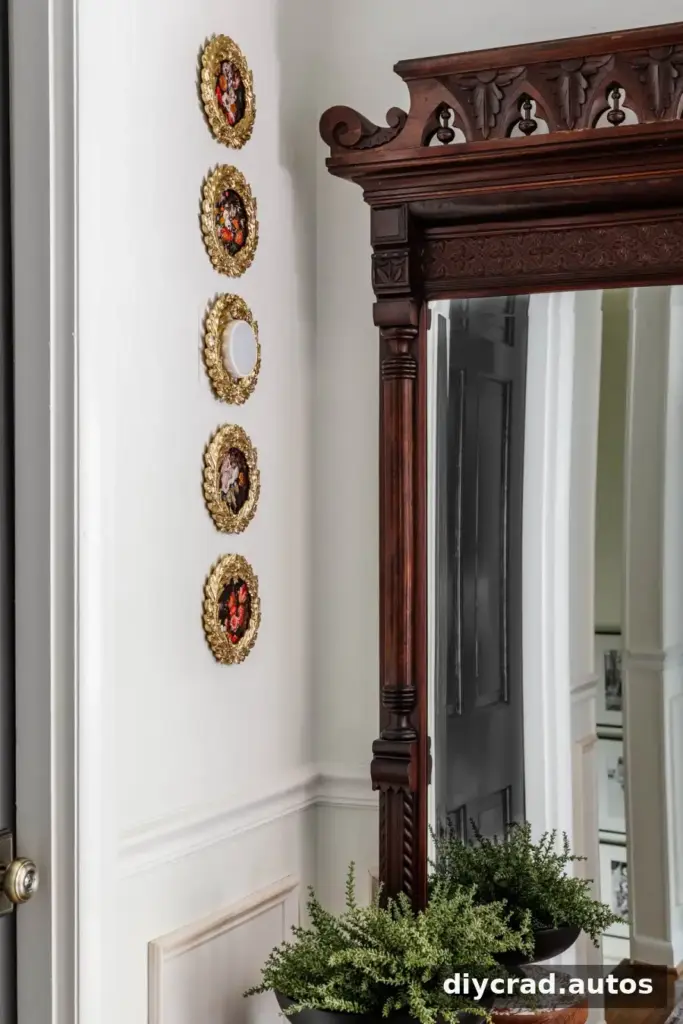
A round, ornate gold picture frame offered a decorative way to draw attention away from the thermostat without covering it. The frame was slightly larger than the unit, and its glass was removed so air could circulate freely. The thermostat remained accessible and visible inside the opening.
For another thermostat shape or size, measure the unit before selecting a frame. Choose an opening that leaves the entire thermostat exposed, including any vents or sensing areas. Remove the frame’s glass and backing if they would block airflow, and make sure the frame can be secured without pressing against the thermostat or its controls.
This is a simple decorating adjustment rather than a way to conceal the device completely. The goal is to make it feel like part of the wall design while preserving access for temperature changes and maintenance.
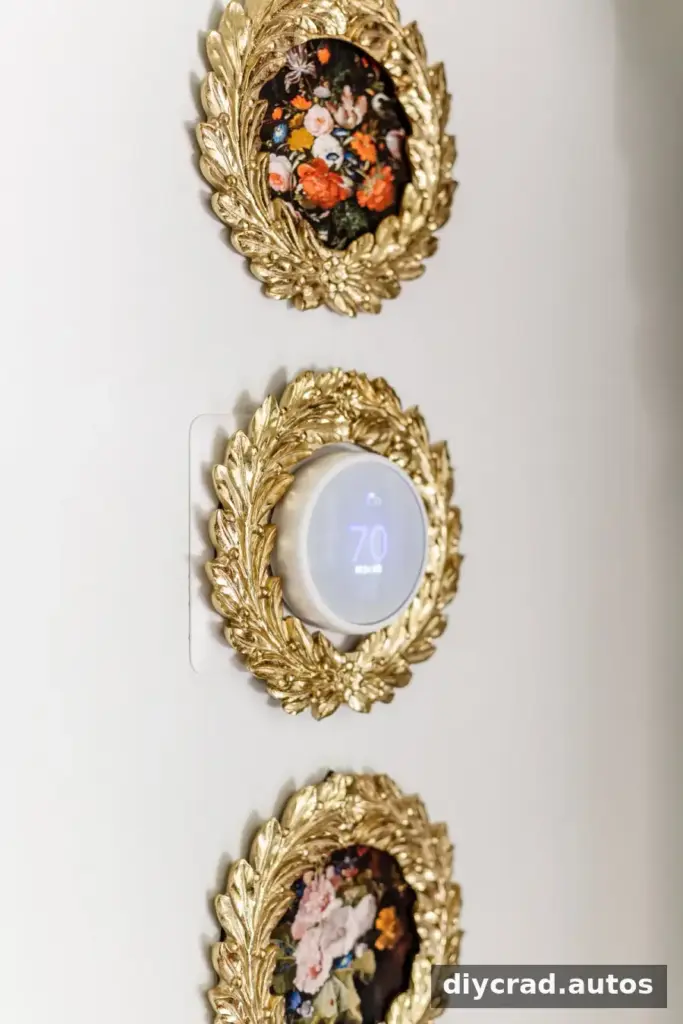
A thermostat that remains uncovered may be more noticeable than a fully concealed one, but it can function as intended. Keeping it unobstructed can also help avoid unnecessary heating or cooling caused by inaccurate readings. After installing a frame, check that the display and buttons remain easy to use.
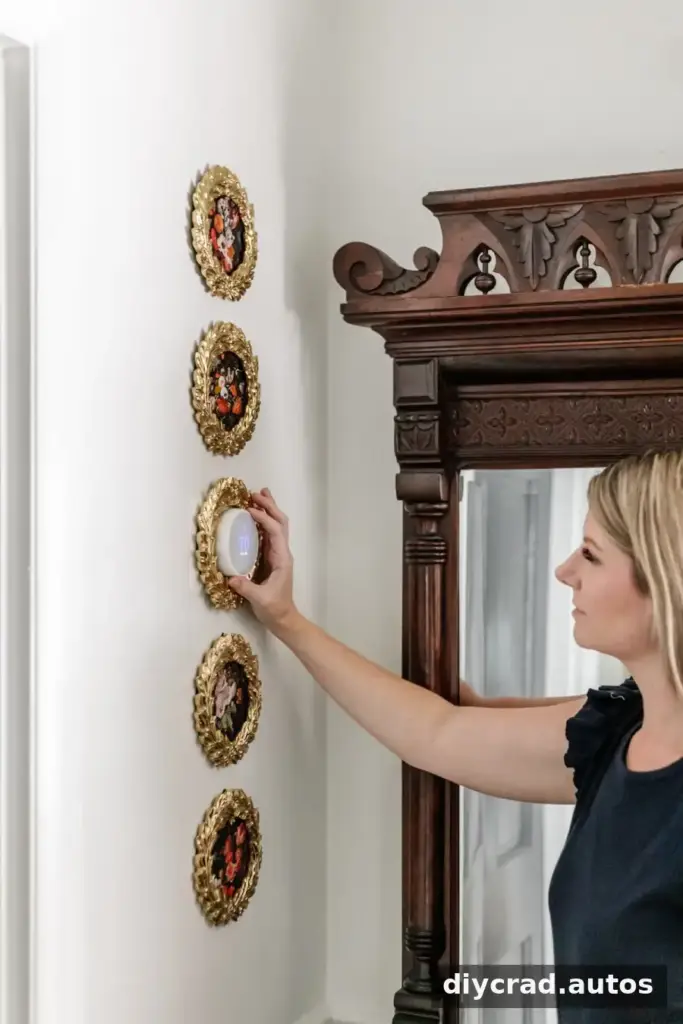
Make a Thermostat Blend Into a Gallery Wall
To make the arrangement feel cohesive, add smaller pictures above and below the thermostat. In this hallway, four additional frames were arranged around the decorative frame to create a compact gallery wall. Using a consistent color palette or related frame styles can help the thermostat look like a planned part of the display.
Keep enough open space around the thermostat so that nearby frames do not block airflow or make the controls difficult to reach. Before hanging the rest of the artwork, lay out the arrangement on the floor or use paper templates on the wall. This makes it easier to adjust spacing and keep the thermostat centered in the display.
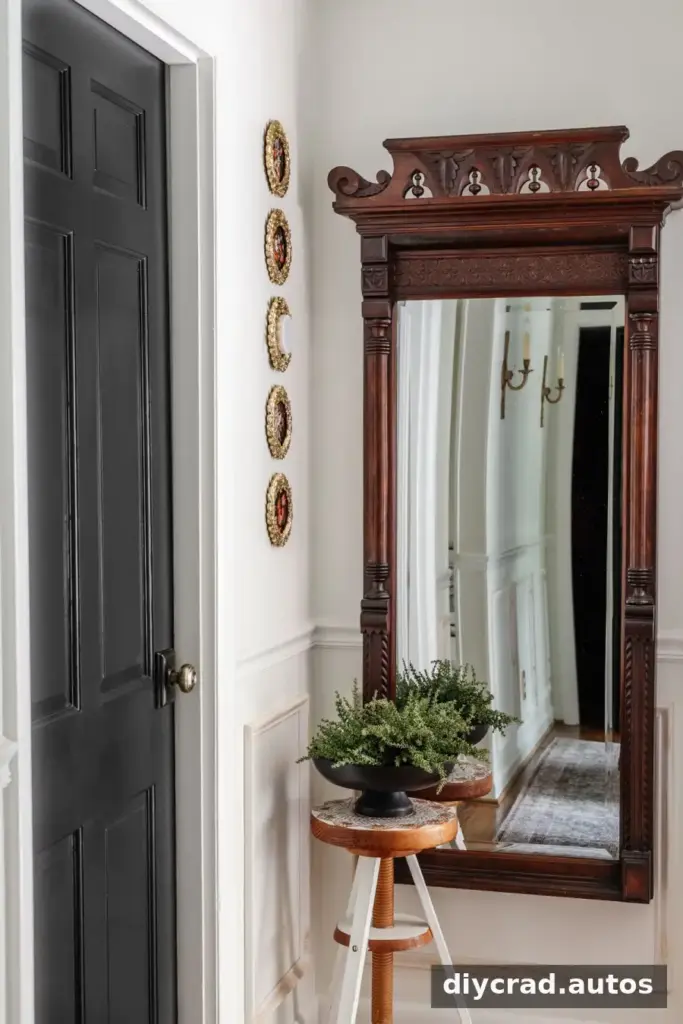
Use Artwork to Complete the Display
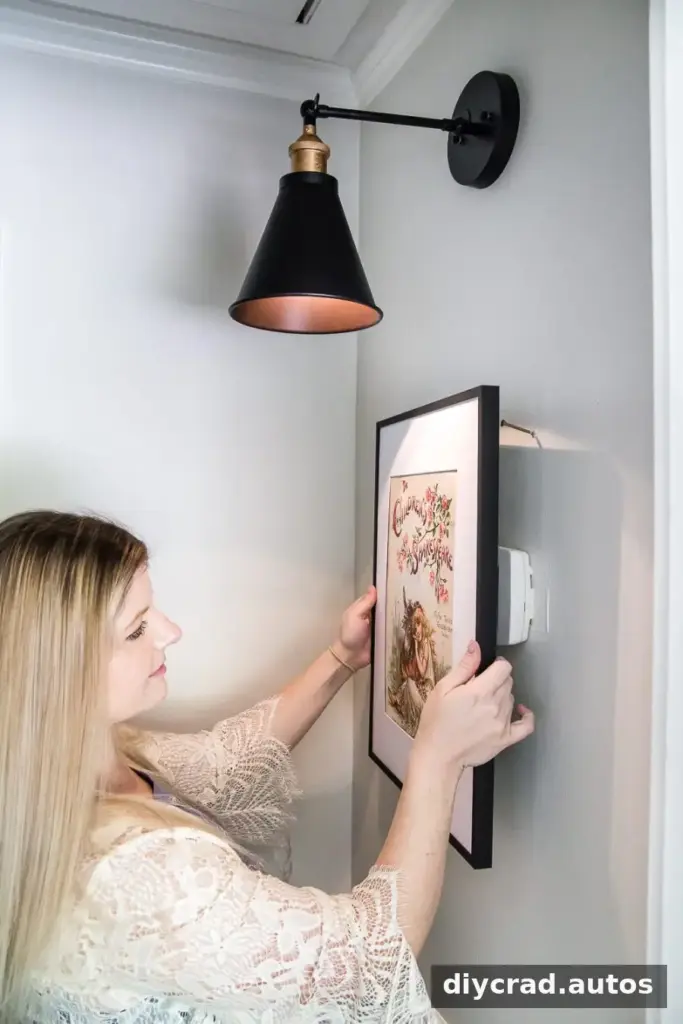
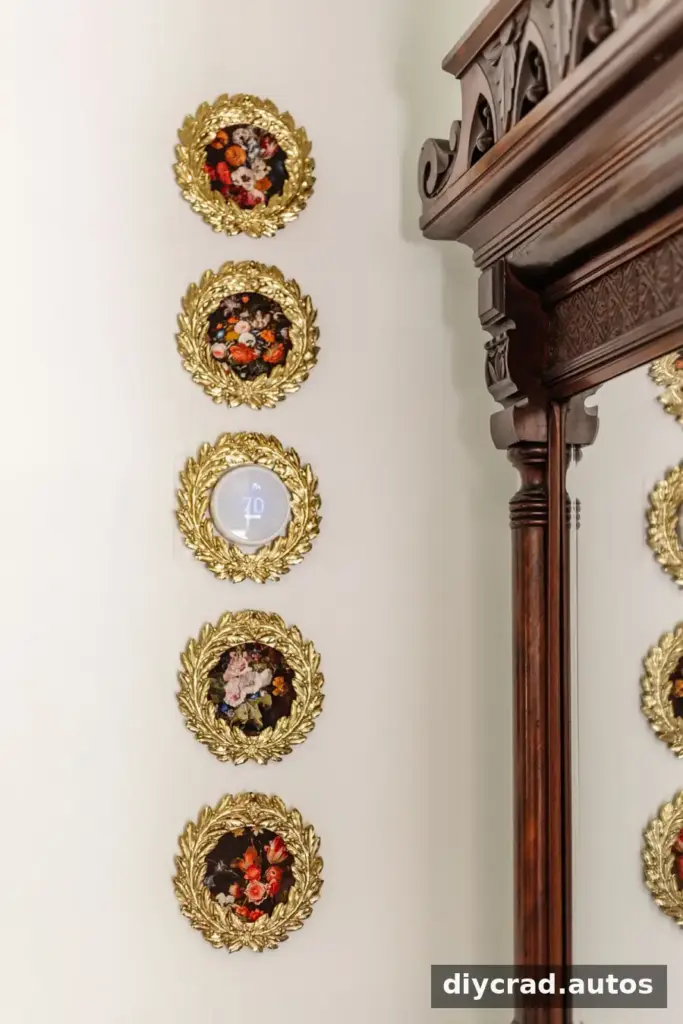
Vintage floral still-life prints can add color and detail to a small gallery wall. Six coordinating images can be printed in different sizes to suit the available wall space. For a compact arrangement, 4×6 prints can be trimmed to fit smaller frames; larger prints can be used when the wall needs a more substantial display.
Measure each frame before printing or trimming artwork, especially when using round frames. Leave the thermostat itself open rather than placing a print, mat, or glass over it. This keeps the decorative elements separate from the temperature control and makes future adjustments straightforward.
Final Tips for Hiding a Thermostat in Plain Sight
- Use an open frame with no glass or backing over the thermostat.
- Keep the display, controls, sensors, and surrounding airflow unobstructed.
- Measure the thermostat and frame opening before hanging anything.
- Follow the manufacturer’s placement and clearance recommendations.
- Check that the thermostat remains easy to read and adjust after decorating.
Decorating around a thermostat is a practical alternative to covering it. When considering how to hide a thermostat, use an open frame or gallery wall to help it blend into the room while keeping it accessible and able to sense the indoor temperature accurately.

