

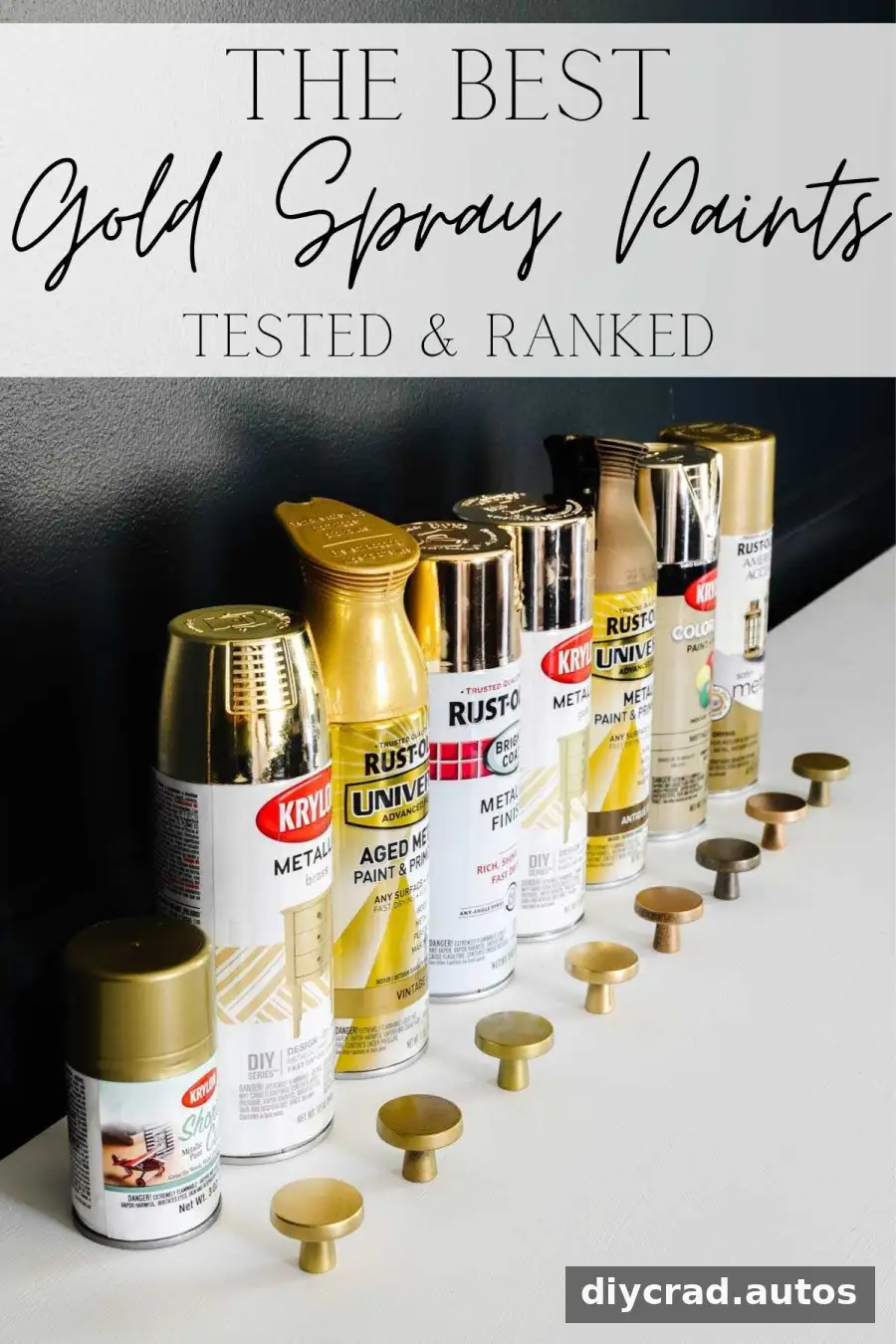
Choosing a convincing gold spray paint can be harder than it looks: shades that appear similar on the can may dry with very different tones, sheen and coverage. In a comparison of eight brass- and gold-finish spray paints, the finishes were assessed for application, appearance beside real hardware and overall visual appeal. The results can help narrow down options for decorative projects, including furniture pulls, light fixtures and figurines.
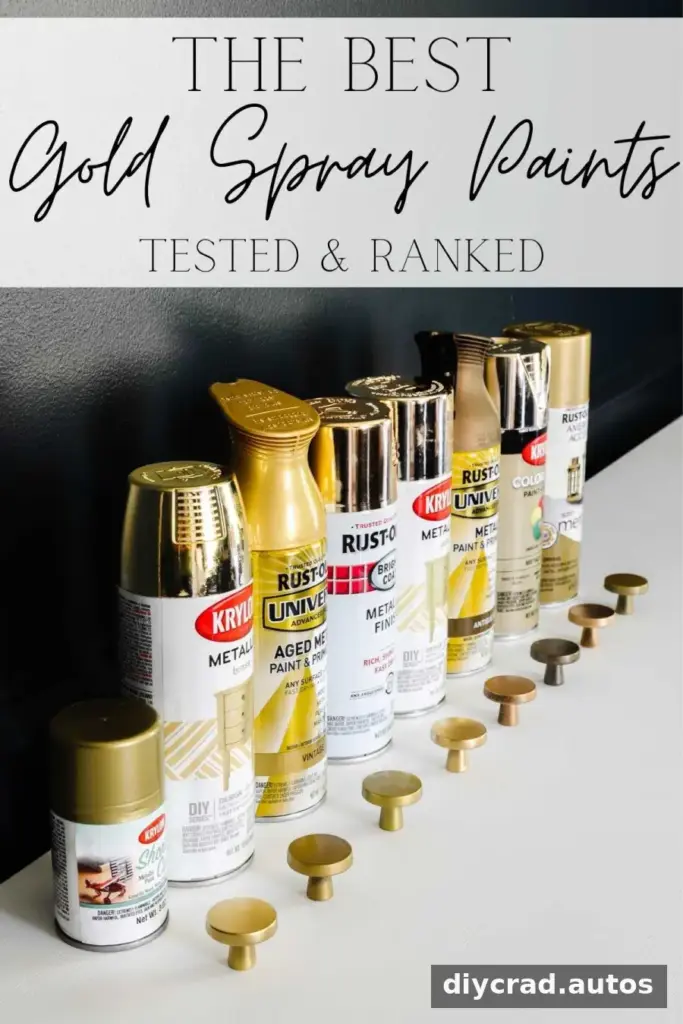
Why Gold Spray Paint Finishes Differ
Gold paints vary in their undertones, metallic particles and gloss level. A finish that looks warm and refined on a sample may appear overly yellow, shiny or artificial when placed next to actual hardware. Testing a small area before painting an entire item is a practical way to check the color in the room where it will be used.
The comparison included eight spray paints with gold or brass-style finishes, along with two examples of real hardware. The hardware samples were brushed gold and unlacquered brass. Results reflect the tested products and the visual preferences used in this comparison, so another surface, lighting condition or project may produce a different impression.
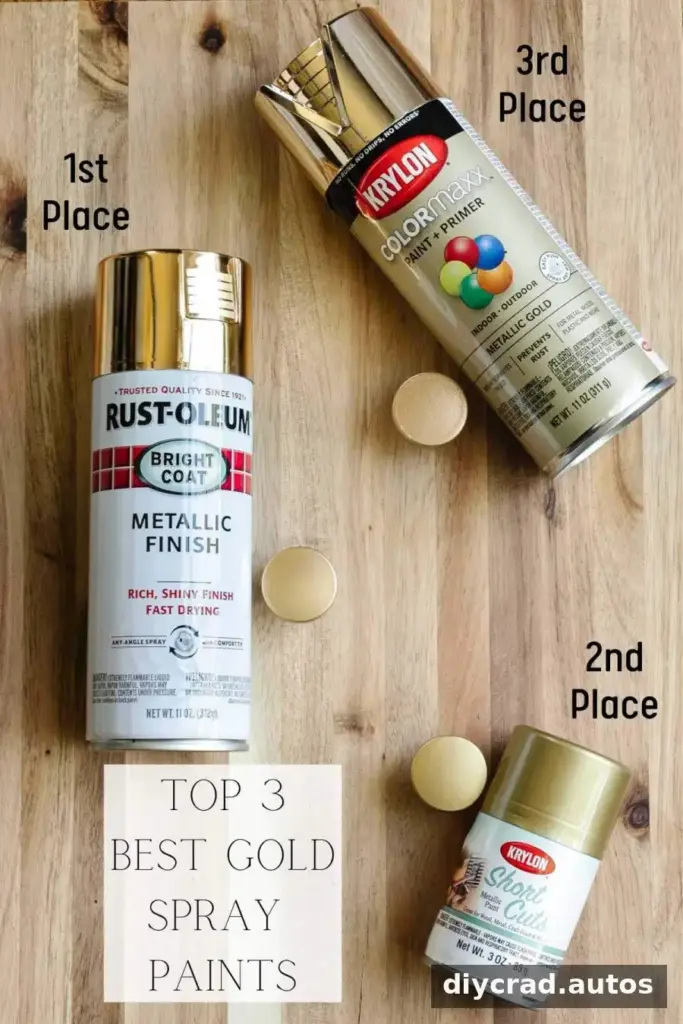
Top three finishes: first place, second place and third place.
How the Gold Spray Paints Were Ranked
Each product was considered using three practical criteria:
- Application and coverage: Whether the paint covered evenly, showed splotches or had problems with a clogged nozzle.
- Match to existing hardware: How convincing the painted surface looked beside commercially available gold and brass hardware.
- Overall appearance: The final visual impression, including the color and sheen.
For a fair comparison on your own project, test paint on a similar material and let it dry fully before judging the shade. Metallic finishes can look different while wet than they do after drying.
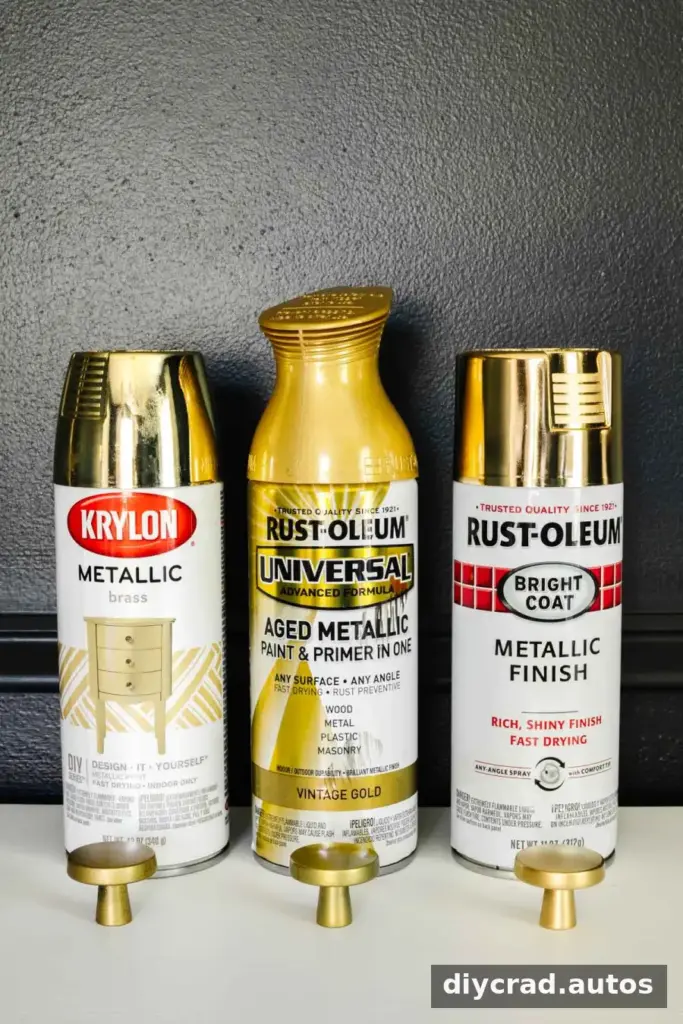
Best Gold Spray Paint for Application and Coverage
In this test, the standard cans without trigger grips performed best for coverage and produced little to no splattering. The tested paint from the second manufacturer landed in the middle: it generally applied evenly but often needed an additional coat compared with the leading standard cans. The trigger-grip cans from the first manufacturer had the most splattering and were more prone to clogging.
- First place: Standard cans without trigger grips, for strong coverage and minimal splatter.
- Second place: The other manufacturer’s tested paint, for even application, although it often needed another coat.
- Third place: Trigger-grip cans, which splattered more and were more likely to clog.
Regardless of the can style, use light, even passes rather than trying to cover the surface in one heavy coat. Follow the label for shaking, application distance and drying time.
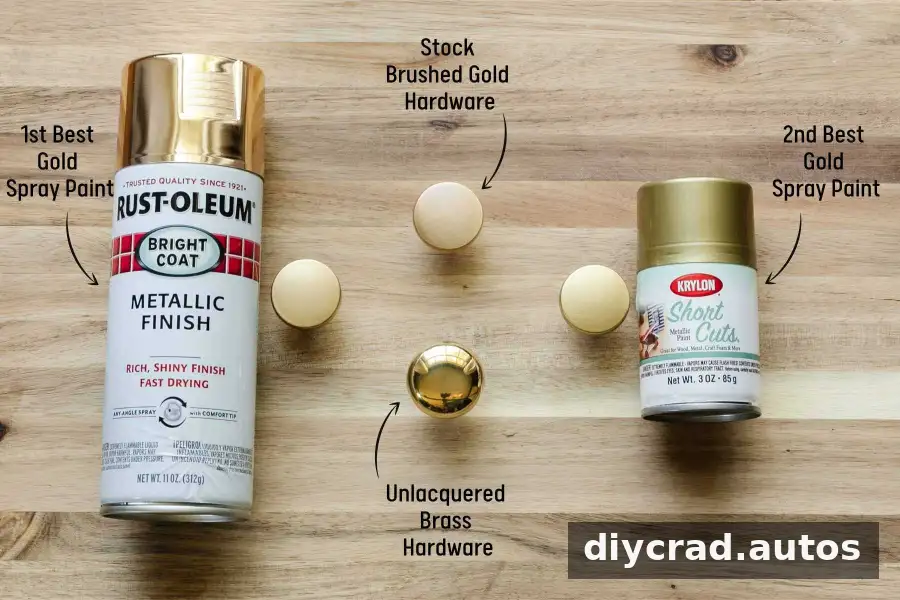
Best overall application and runner-up.
Which Gold Spray Paint Looked Most Like Real Hardware?
The painted knobs were compared with brushed-gold hardware and unlacquered brass. The metallic-finish gold paint was the closest visual match to commercially available brushed-gold hardware. A gold-leaf finish came just behind it.
None of the eight paints closely matched the unlacquered brass sample. That distinction matters when matching existing fittings: a spray-painted gold surface may coordinate with brass without reproducing its exact color or natural appearance. If a precise match is important, compare a sample directly with the hardware under the lighting where both will be seen.
Best Gold Spray Paint Overall
The overall top choice in this comparison was the metallic-finish gold paint. It had the strongest coverage among the tested options and dried to an even finish without noticeable splattering. Its tone and sheen also looked convincing beside brushed-gold hardware, without an obvious unwanted undertone.
The ranking of all eight paints is shown below. Keep in mind that the best option for a decorative object may not be appropriate for a frequently handled or moisture-exposed surface. Check the paint label for suitable materials and intended use before starting.
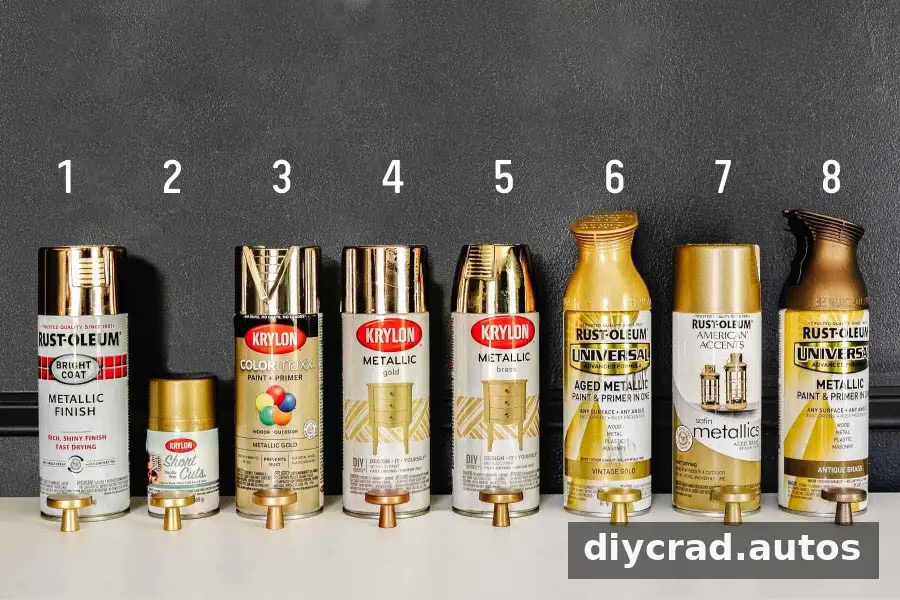
Overall ranking: first through eighth place.
How to Get a More Convincing Gold Finish
For extra depth, the comparison’s suggested approach is to apply one or two coats of metallic-finish gold spray paint, allow it to dry, then add an antique-gold finishing wax. Use the wax sparingly and test the combination on a hidden area or sample first; layering products can change the color and sheen.
Frequently Asked Questions About Gold Spray Paint
How can I make a painted item look more like real gold?
Start with thin coats of a metallic-gold spray paint and let each coat dry according to the product directions. An antique-gold finishing wax can add variation and depth, but test it first to make sure the result suits the item.
How should I apply spray paint?
Work in a well-ventilated area and protect nearby surfaces from overspray. Apply a thin, even coat of spray primer if appropriate for the material, then follow the label’s drying instructions. Apply two or three light coats of paint using a steady, sweeping motion, keeping the can about 12–18 inches from the object. Several thin coats are generally less likely to drip or form splotches than one thick coat.
Is primer necessary for gold spray paint?
Primer can help paint adhere, particularly on metal, but the right preparation depends on the surface and paint formulation. Even products labeled as paint-and-primer combinations may benefit from a separate primer. Check both product labels and prepare the surface as directed to help reduce peeling or chipping.
Gold spray paint is most useful when its shade and durability suit the project, not just when the can looks promising. In this eight-product comparison, the metallic-finish gold option ranked highest for coverage and resemblance to brushed-gold hardware, while none of the paints closely matched unlacquered brass.

