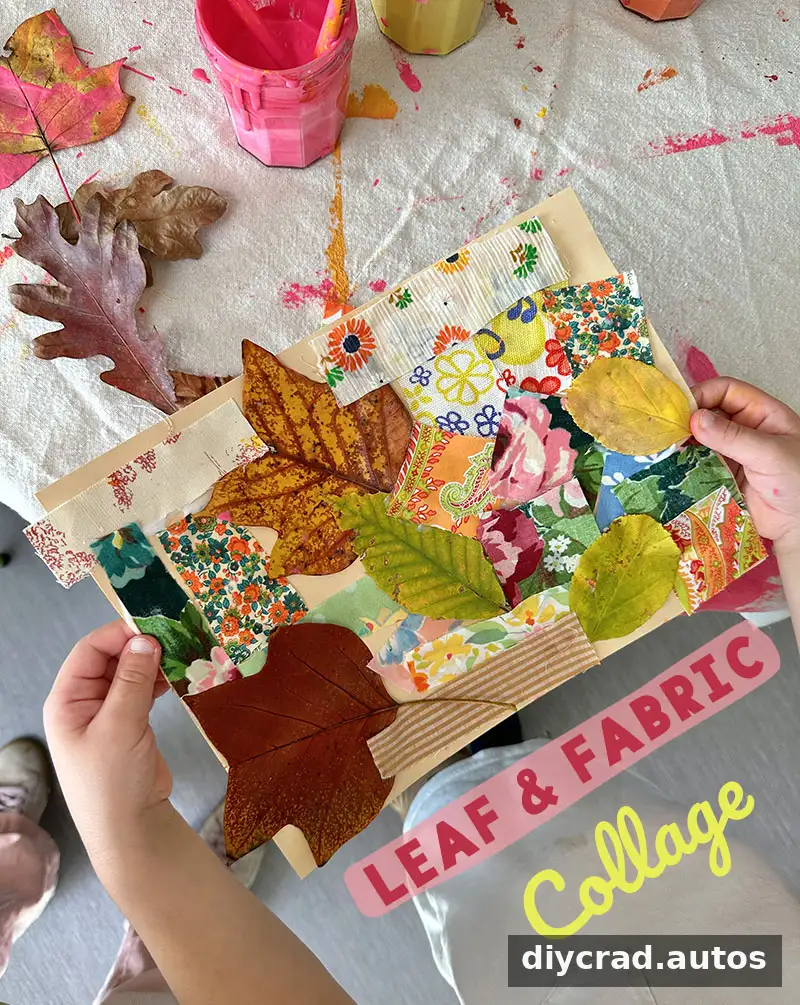
A leaf and fabric collage is an easy, open-ended art activity that lets children explore color, texture, and composition in their own way. With fresh leaves, fabric scraps, paint, paper, and glue, you can create a welcoming art table for a group or set up the project at home. Children can follow a loose prompt or simply choose how and when to use each material.
Materials for a Leaf and Fabric Collage
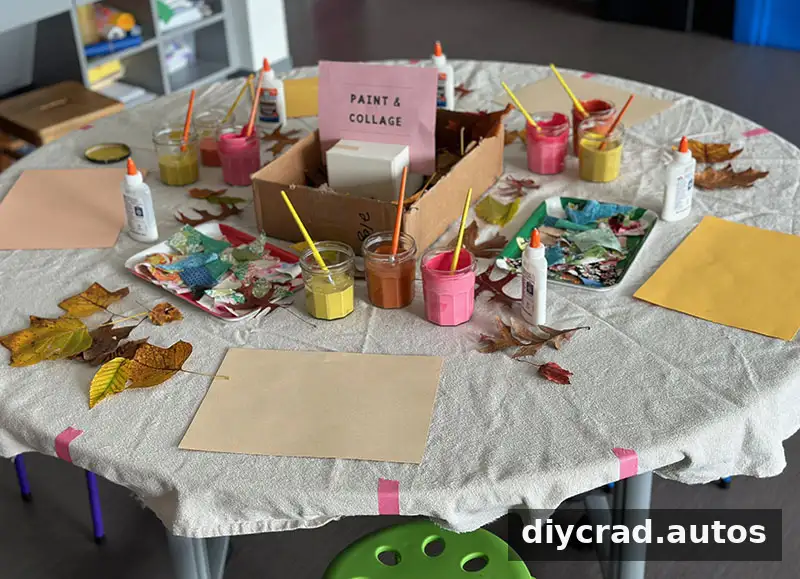
Prepare the materials before inviting children to begin. For a community table, arrange supplies so they are easy to reach and replenish.
- Drop cloth or butcher paper to protect the table
- Colored construction paper; almond, pink, and gold sulphite paper were used for this activity
- Tempera paint in warm colors, such as muted yellow, deep orange, and bright pink
- Paintbrushes
- Fabric scraps, including pieces cut from donated fabric or old clothing
- Fresh leaves, collected on the day of the activity
- Glue
Choose paper colors that work well with the leaves and paint. A soft or warm-colored background can make a simple arrangement feel finished, even when a child uses only a few materials.
How to Set Up the Art Table
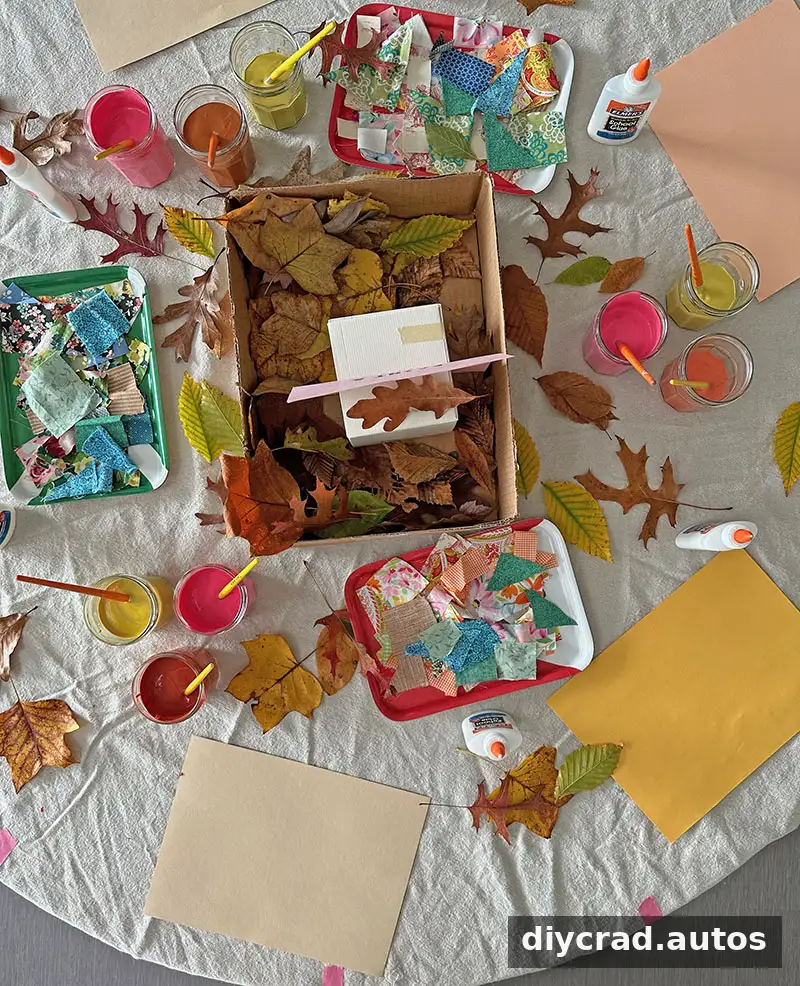
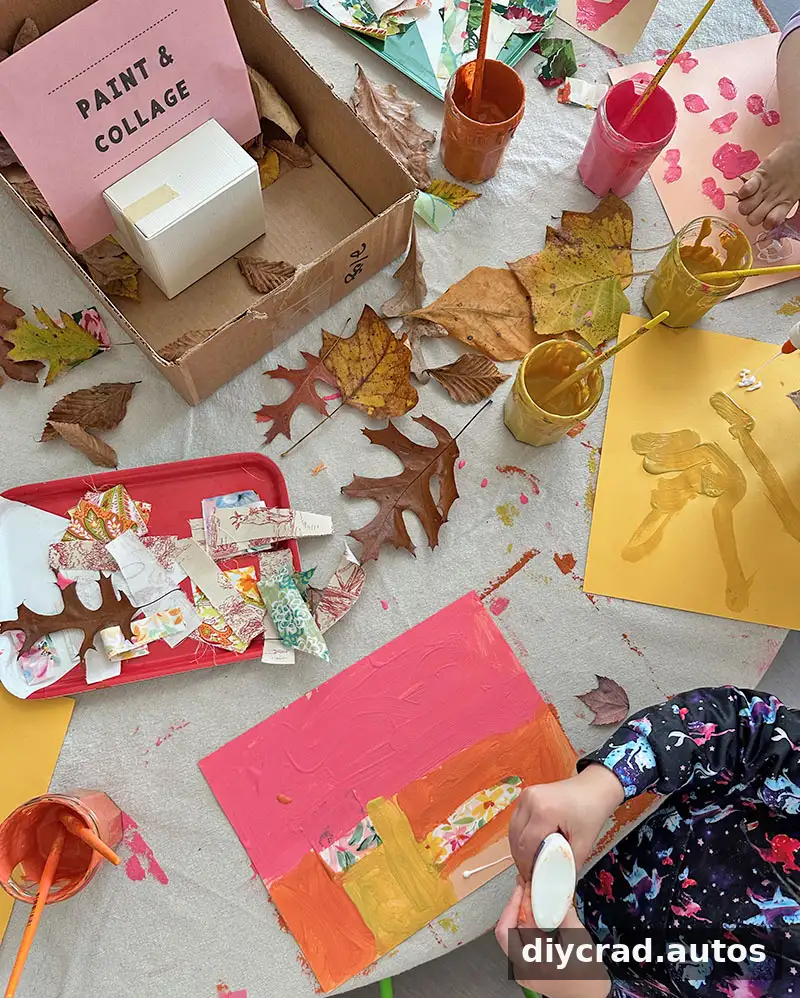
Cover the work surface first. A reusable drop cloth can catch spills, absorb some paint, and reduce the need for disposable paper. If you are setting up a round table, make several supply stations around it so children do not have to reach across one another.
- Prepare the paint. Mix warm shades in jars or containers and add a brush to each. For a softer yellow, mix in white and a small amount of purple. To make a burnt orange, add a little blue and white; a touch of red is another option. Add white to bright pink to soften it.
- Arrange the collage materials. Place leaves in a box and fabric scraps in shallow trays. Set out glue bottles and check that they are working before the activity begins.
- Keep the layout accessible. Put paper and commonly used supplies within easy reach, while leaving enough clear space for children to work.
Let Children Explore the Materials
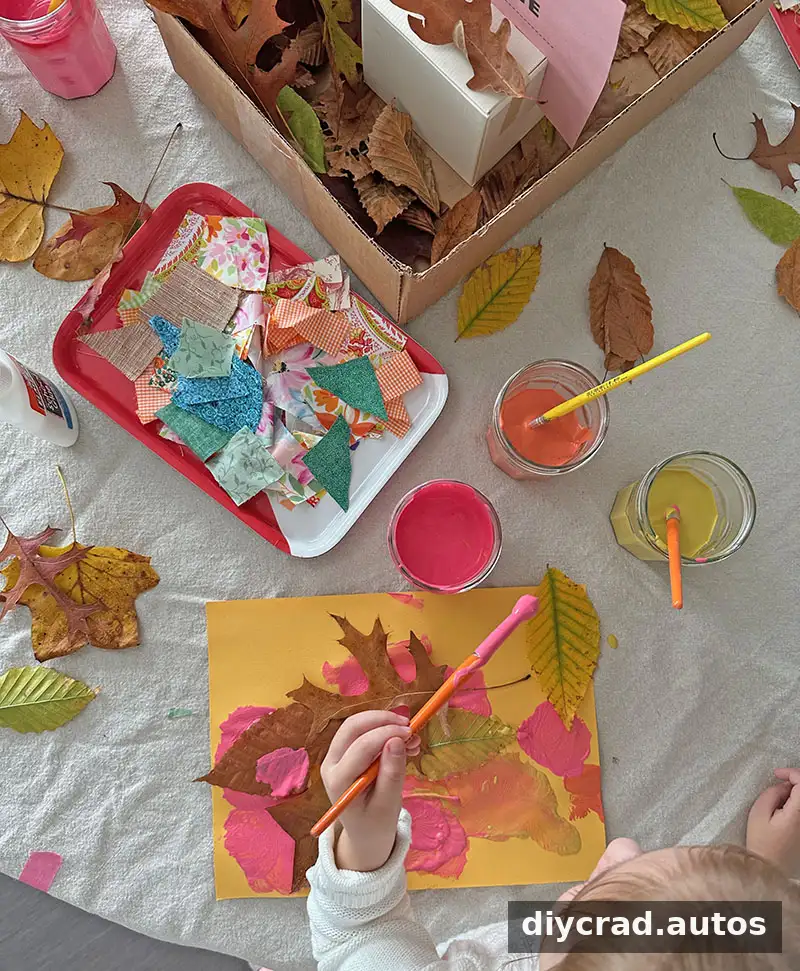
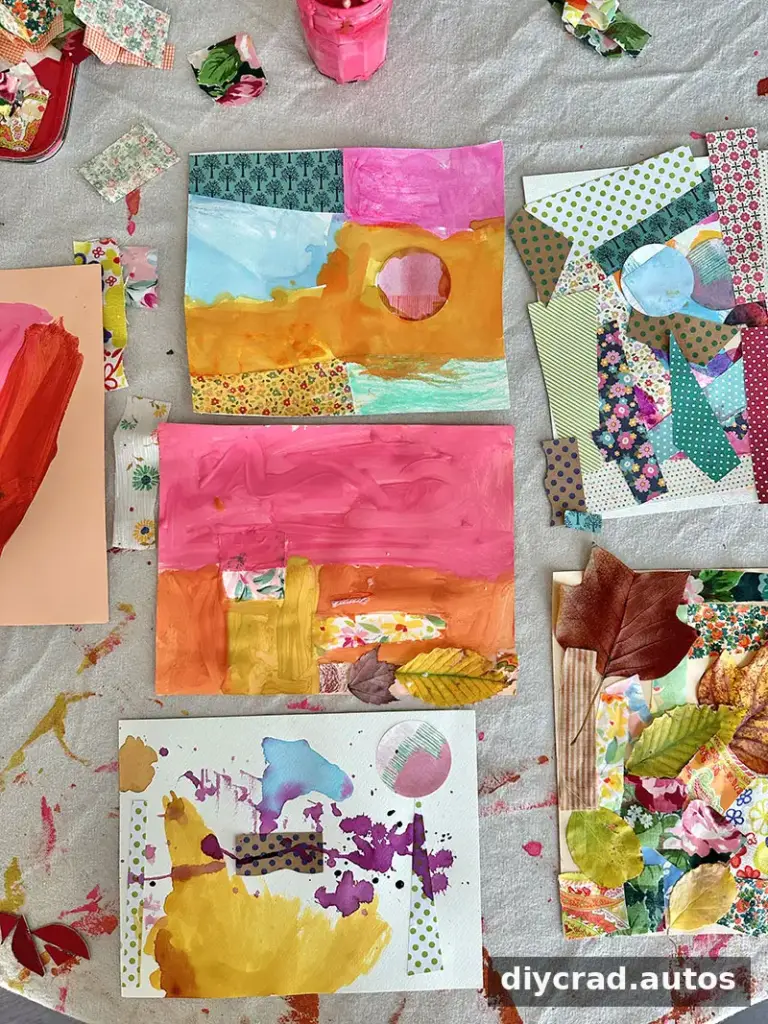
One advantage of a self-serve art table is that children can decide what to use first. Some may begin by painting a leaf, while others may arrange fabric on the paper before adding paint. Keeping the materials available at the same time gives participants more control over the order and direction of their work.
For a class with a set time limit, you could introduce collage and paint in separate stages. At a busy community event, however, having all supplies ready at once can make the activity easier to manage. This approach also suits groups where families arrive and leave at different times. In one community session, as many as 75 people were in the room across three art tables.
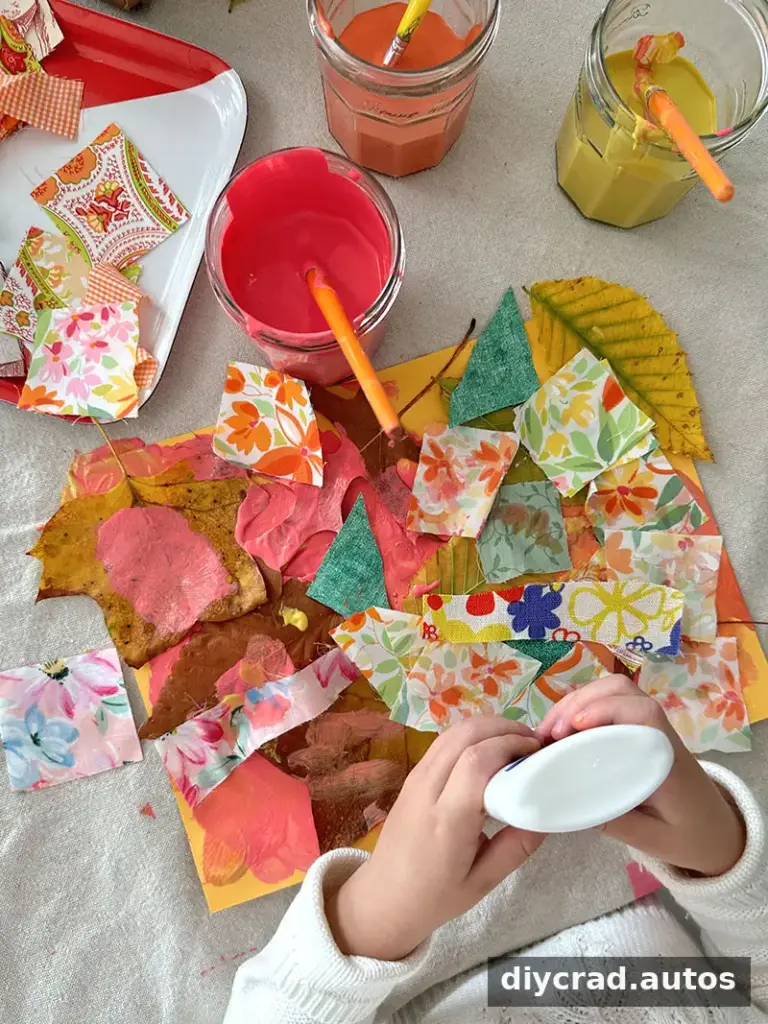
During the activity, focus on simple maintenance: refill fabric trays, check glue, and replace used paper when needed. At one session, the paint lasted for two hours without needing a refill. Your own supply needs will depend on the group size and how much paint is provided, so keep extra materials nearby if available.
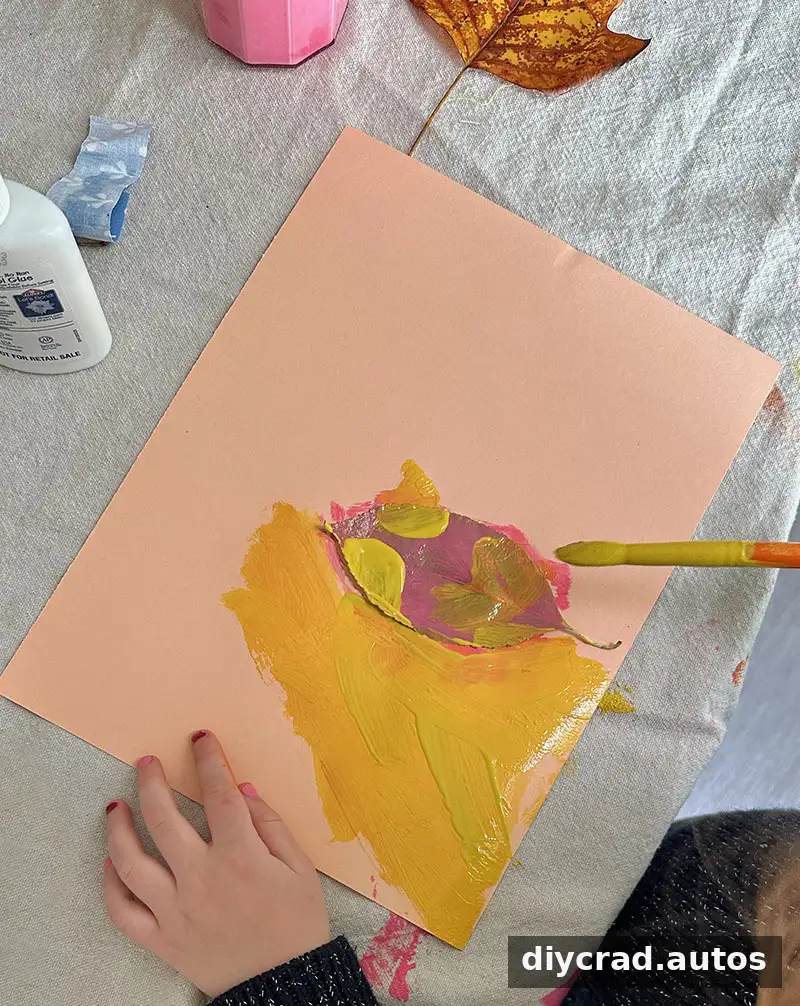
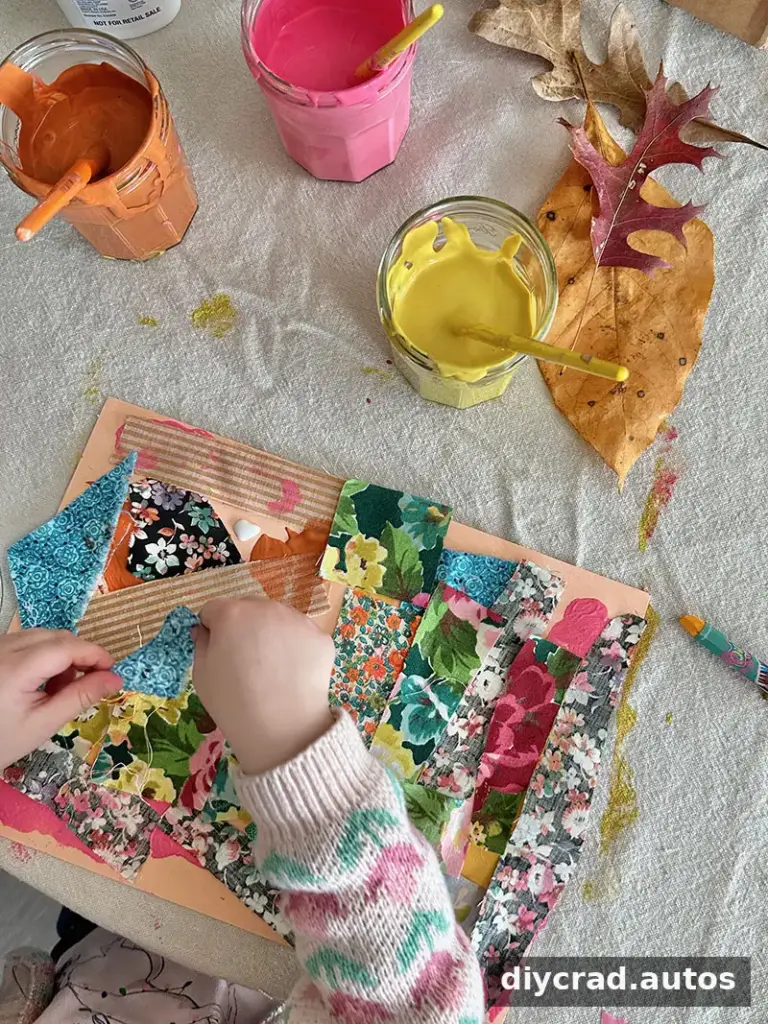
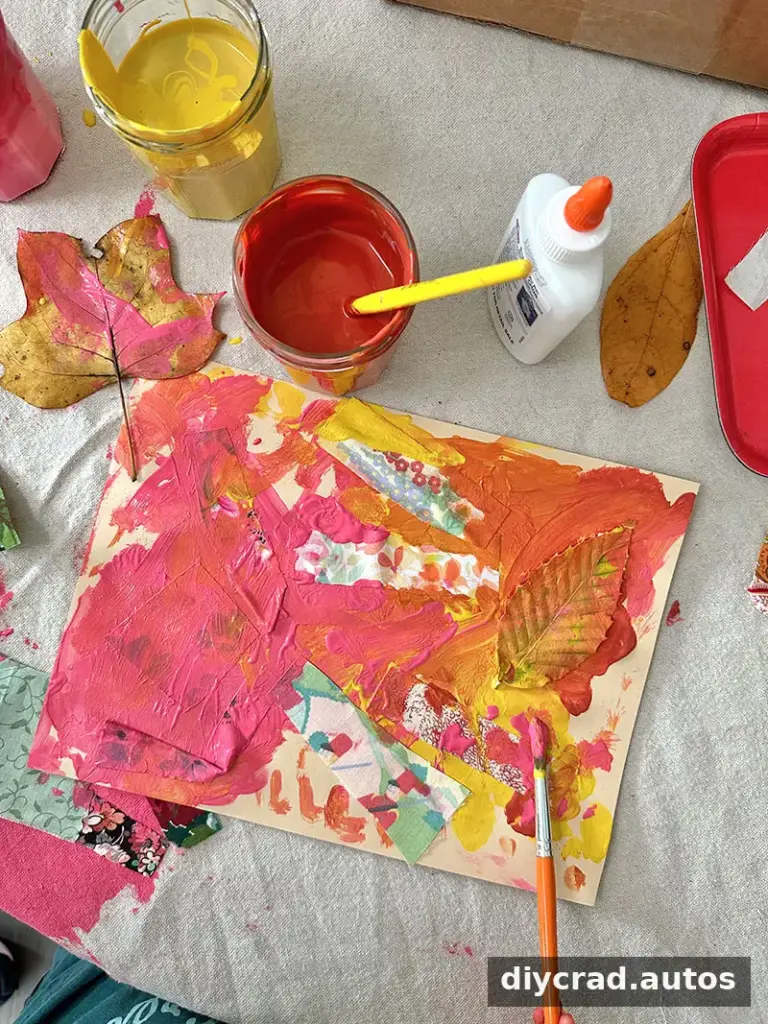
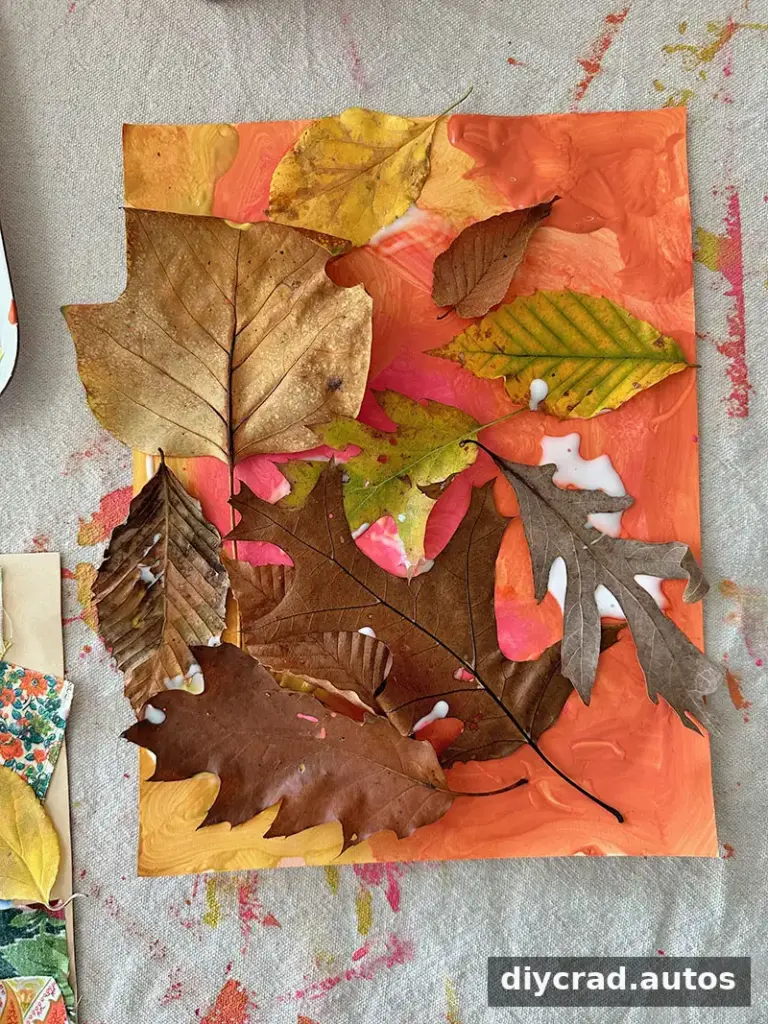
Open-ended materials can lead to very different outcomes. One child arranged yellow paint around a leaf, then painted over the shape for a more monochromatic result. Later, the child added another color and used fabric to create details and a border. Giving children time to change their minds encourages experimentation without requiring a fixed final design.
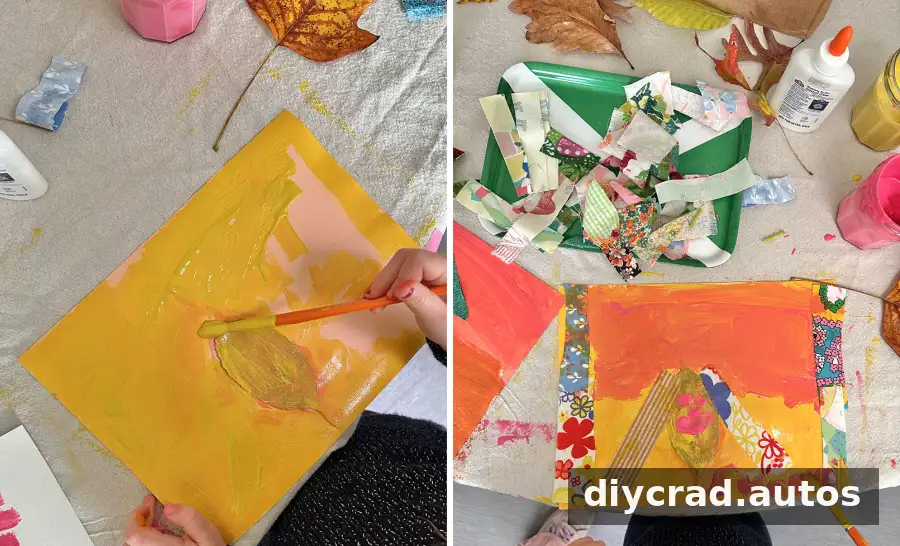
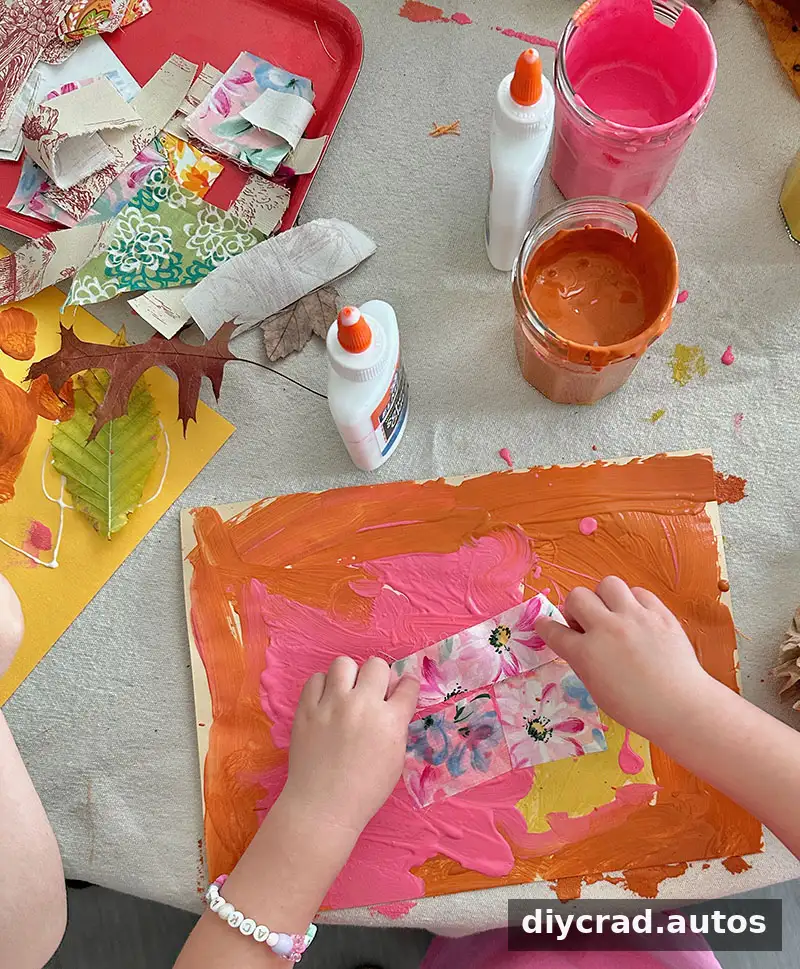
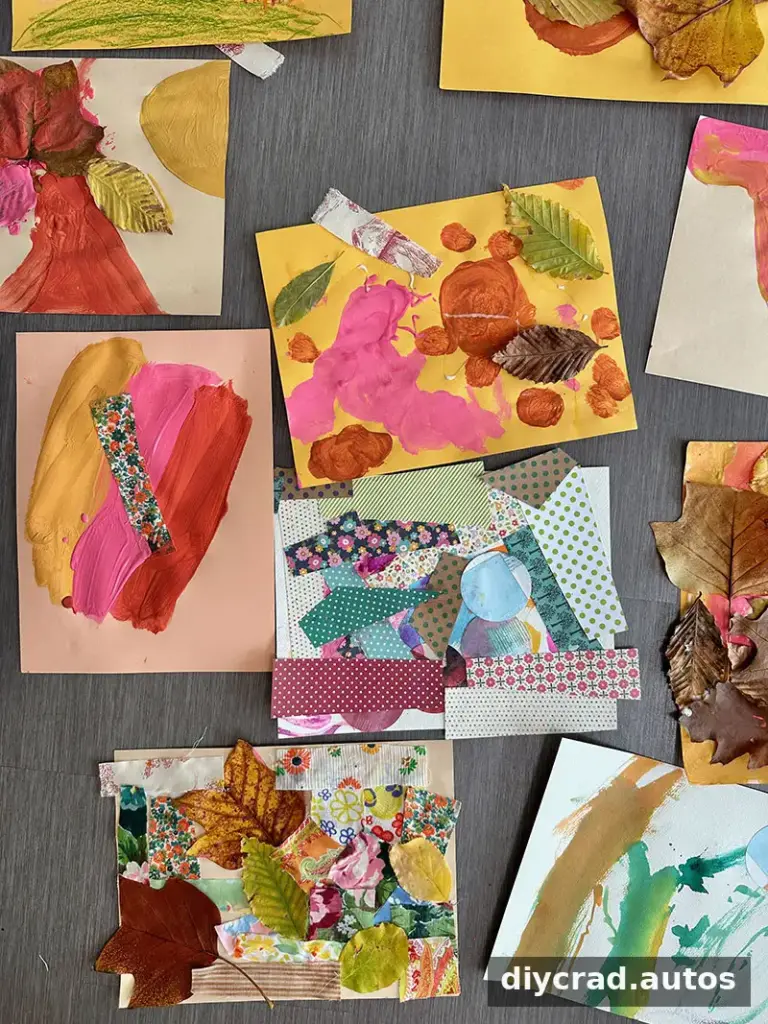
Some children may prefer a minimal composition, while others build up layers of paint and collage. Younger children can also take part when a supervising adult is nearby. Keep small or loose materials under appropriate supervision, and let each child work at a pace suited to their age and abilities.
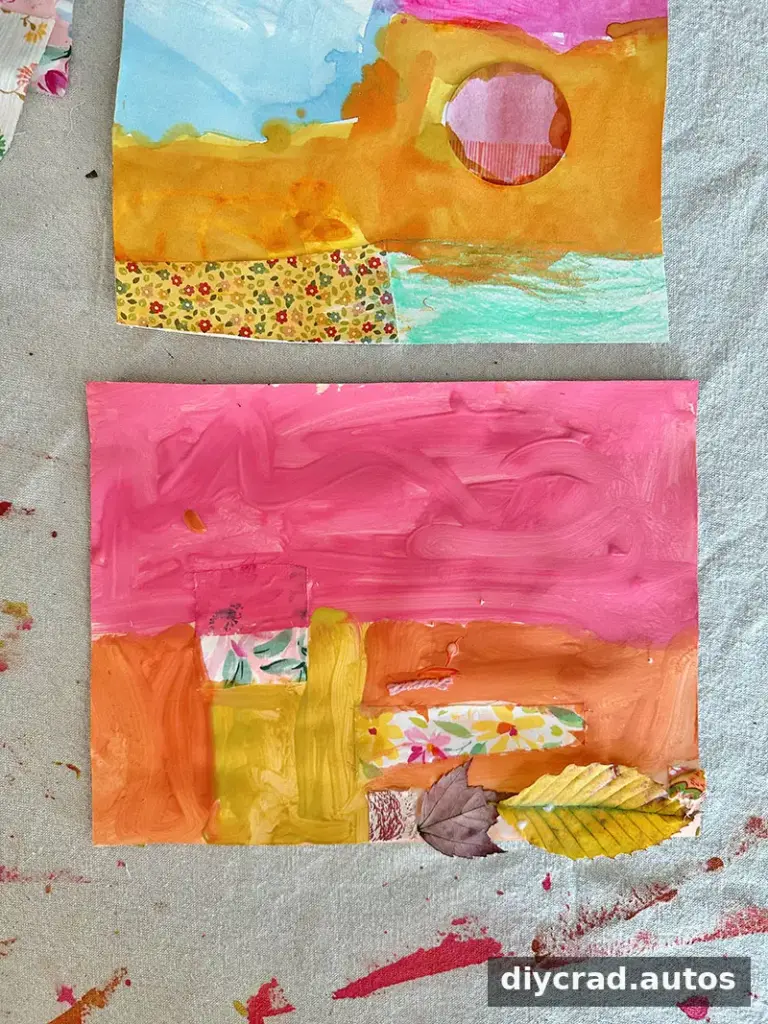
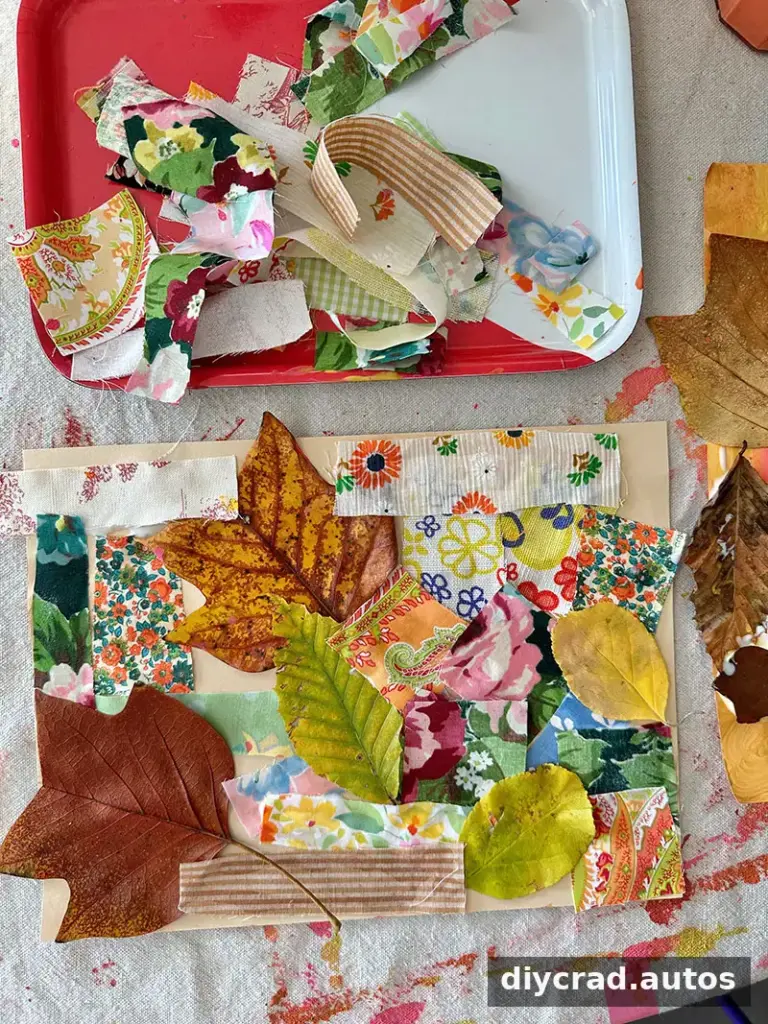
Fabric brings a tactile quality that paint alone cannot provide. Children who are drawn to texture may choose to make a collage without adding paint; that is a complete and valid way to use the materials. There is no need for every participant to follow the same process or produce a particular kind of artwork.
Drying and Clean-Up Tips
Set aside a nearby drying area before the table gets busy. A floor space was used for drying in this activity, but any stable, protected area can work. For especially wet paintings, place a flat piece of scrap cardboard underneath so the artwork can be carried home with less mess.
Allow paintings to dry before stacking or transporting them. If several children are working at once, label the drying area or leave enough space between pieces to help prevent wet paint from transferring.
What Children Can Learn Through Collage
As children combine leaves, paint, paper, and fabric, they explore design ideas through hands-on choices. They experiment with color, texture, space, shape, mark-making, and composition—often without needing formal instruction. The process also gives them the freedom to observe, revise, and decide when their artwork feels complete.
A leaf and fabric collage works well as a flexible group activity because the materials support many different approaches. Prepare an accessible table, provide a drying spot, and let children make their own decisions about the process.