
To add fringe trim to a sofa is a simple way to give a familiar piece of furniture a more decorative, traditional look. Bullion fringe can bring character to sofas and chairs, especially in grandmillennial or “grandma core” interiors. The trim can also change the feel of a piece without replacing it, and a pin-on installation makes it easier to remove later.

Before starting, check the sofa’s construction and upholstery. Pins or staples may leave holes or marks, so test an inconspicuous area first. If you are unsure whether the fabric can handle them, consult an upholstery professional before attaching trim.
In this example, the sofa legs measure 9 inches, and the project uses 9-inch bullion fringe. An 84-inch sofa required 5 yards of trim. The installation took about 15 minutes, although your timing will depend on the furniture’s shape and how carefully you work.

Supplies for Adding Fringe Trim to a Sofa
- A sofa or chair
- A tape measure
- Bullion fringe in a suitable length
- Fabric scissors
- Straight pins for a removable attachment, or an upholstery staple gun for a more permanent one
- Fabric fray sealant
Choose a trim color that works with the upholstery and the room. Before buying, measure the furniture rather than estimating from its width alone; the trim needs to follow the full perimeter of the base.
What Is Bullion Fringe?
Bullion fringe is a decorative trim with twisted yarns that hang from a fabric heading. It was popular during the Victorian era, when elaborate ornamental details were common, and appeared again in the early 20th-century Art Deco and Hollywood Regency movements.
Because its texture and movement draw the eye, bullion fringe makes a strong style statement. It is a useful option when a room needs a more formal or dramatic detail, but it may not suit every furniture style. Consider the overall look before choosing a dense or contrasting trim.
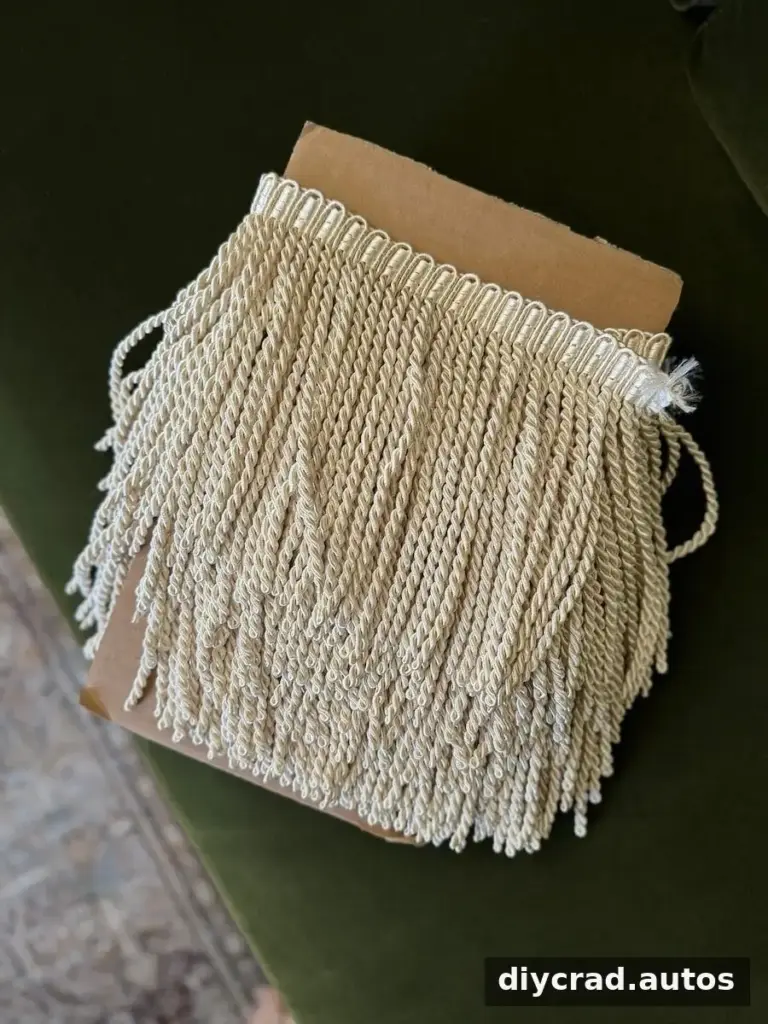
How to Add Fringe Trim to a Sofa or Chair
1. Measure the furniture and choose the trim
Measure from the base of the sofa to the floor to determine the fringe length. The trim should come close to the floor without dragging or pooling. If it is too short, it can look out of proportion; if it is too long, it may catch underfoot or collect dirt.
Next, measure around the entire base to calculate how much trim to buy. For reference, the 84-inch sofa in this project used 5 yards. Furniture shape affects the total, so follow the perimeter closely and allow enough length to finish the ends neatly.
2. Attach the fringe
For a removable installation, begin at one corner and secure the top of the fringe with straight pins. Push each pin into the upholstery at an angle to help keep it in place. Continue around the base, keeping the trim aligned and checking its height as you go.
The example installation used about 100 pins. The exact number depends on the sofa and how closely you space them. Keep pins out of sight where possible, and do not force them through delicate or tightly woven fabric. A pin-on method can be removed later, but always check for marks when testing the upholstery.
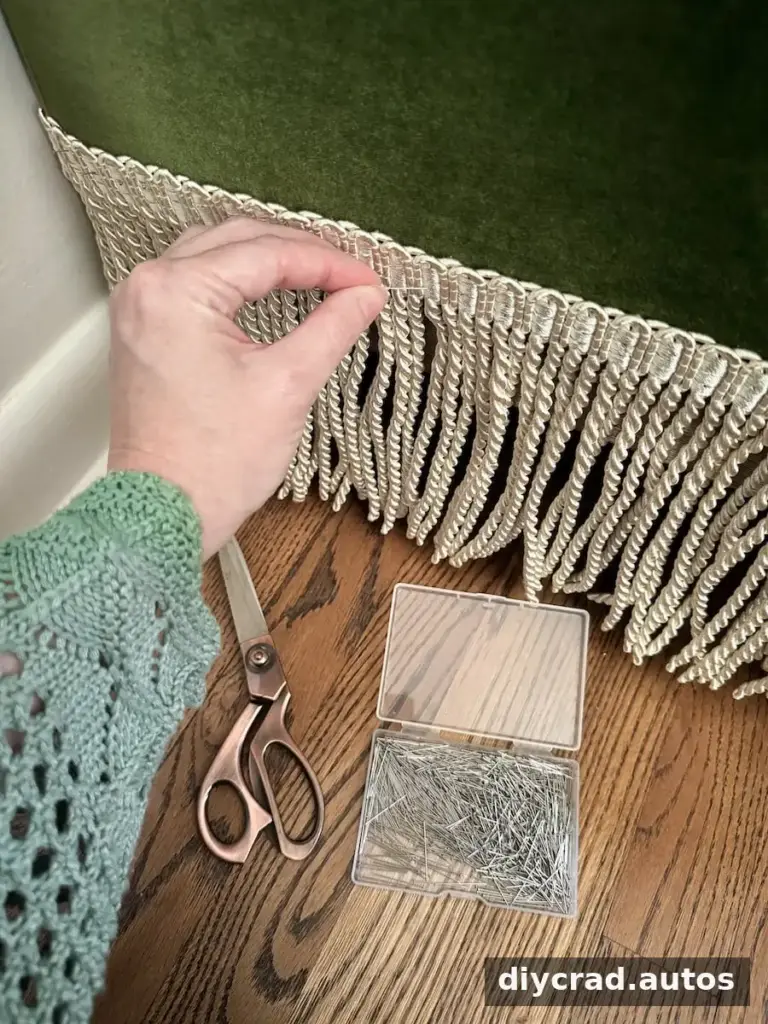
3. Cut and finish the edge
Once the trim reaches the starting point, cut it with fabric scissors. Apply fabric fray sealant to the cut edge according to its instructions, then turn the rough end under and pin it in place. This creates a neater join and helps limit loose threads.
A More Permanent Attachment
For a lasting installation, secure the fringe around the sofa base with an upholstery staple gun, provided the furniture’s frame and upholstery allow it. Take care not to staple into visible fabric or areas that could be damaged. Upholstery glue is another possible method, but it can be messy and difficult to remove, so test compatibility and placement before applying it.

Finishing Tips
- Check the fringe’s clearance from the floor all around the furniture before finishing.
- Keep the trim straight, particularly at corners and along curved sections.
- Use the removable pin method if you want to try the look before making a permanent change.
- For chairs, measure the complete base perimeter and the distance from the seat base to the floor; do not assume the sofa measurements will apply.
Adding fringe can refresh a sofa or chair without changing its upholstery. With careful measuring, a suitable trim length and a secure finish, this small project can create a distinctly more ornamental look. If you want to add fringe trim to a sofa, start with a removable attachment and test the fit before committing to a permanent finish.