

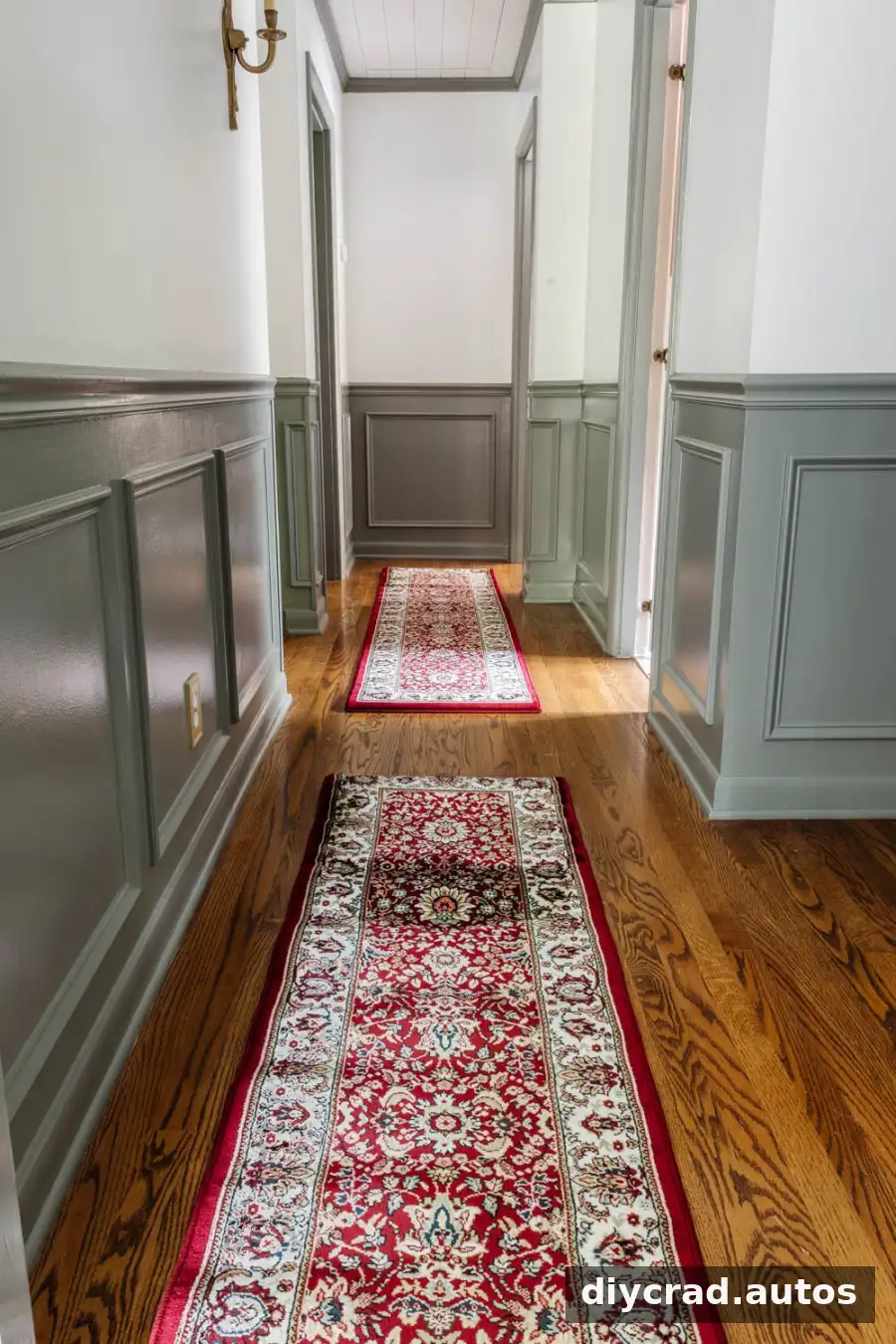
Finding a rug that matches your preferred color, pattern, material, and dimensions can be difficult. When the right style is available but not long enough for your space, you may be able to combine small rugs to make a large rug that fits more closely—without paying for a custom-sized piece.
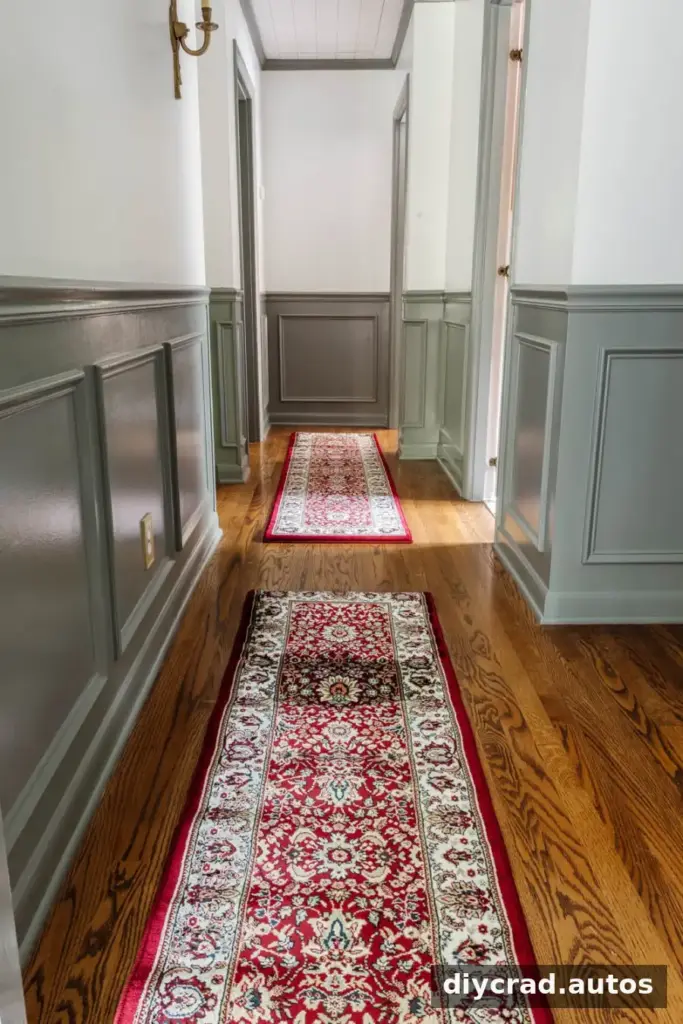
For a hallway makeover, a red vintage-style runner was an appealing choice. It cost $69, but it was about five feet too short. Rather than settle for a poor fit or keep searching, two matching runners were joined to create one longer rug.
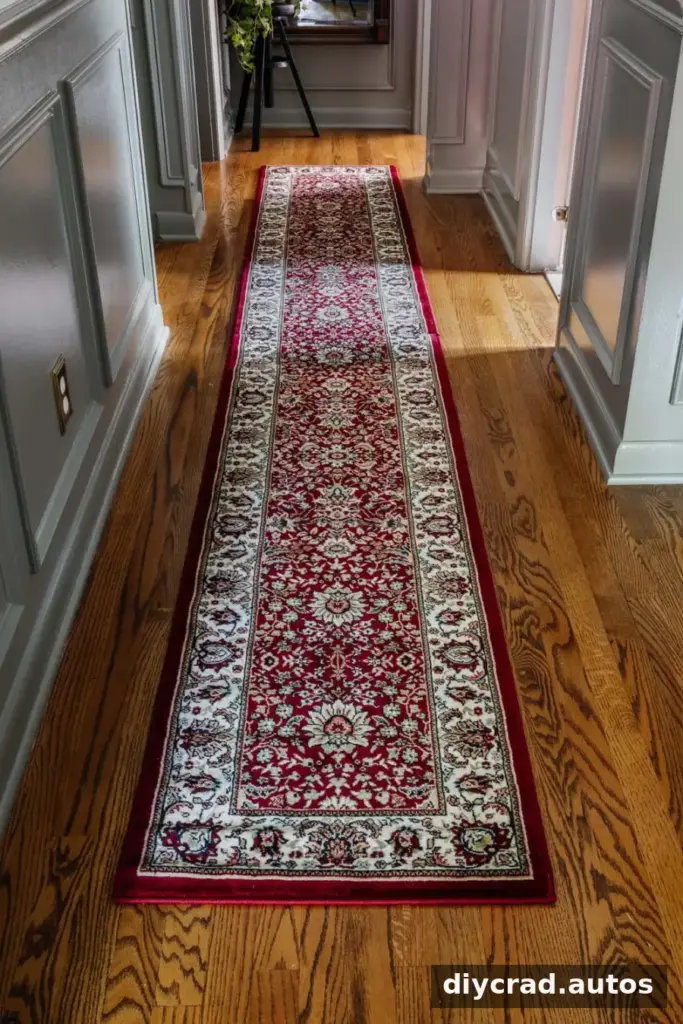
This approach works best when both rugs are identical or have a pattern that can be aligned convincingly. The seam may still be visible on close inspection, so take time to plan the pattern and check the cut before securing the pieces.
How to Combine Small Rugs to Make a Large Rug
Joining two rugs is a straightforward project, but careful measuring and cutting make a noticeable difference. Work on a flat surface and protect the floor before using a knife.
Supplies you’ll need
- Two identical rugs; repeating geometric or symmetrical patterns are generally easier to match
- A marker, such as a Sharpie
- A straight edge, such as a yardstick, ruler, or level
- A utility knife or carpet cutter with a sharp blade
- Heavy cardboard or plywood to protect the floor while cutting
- Single-sided carpet tape
- A vacuum, if needed, to collect loose fibers after cutting
1. Find a suitable pattern repeat
Lay the rugs side by side and study how their designs meet. Look for a repeated shape, border, or color arrangement that can create the least noticeable transition. With a simple or symmetrical pattern, it may be easier to find two sections that line up cleanly.
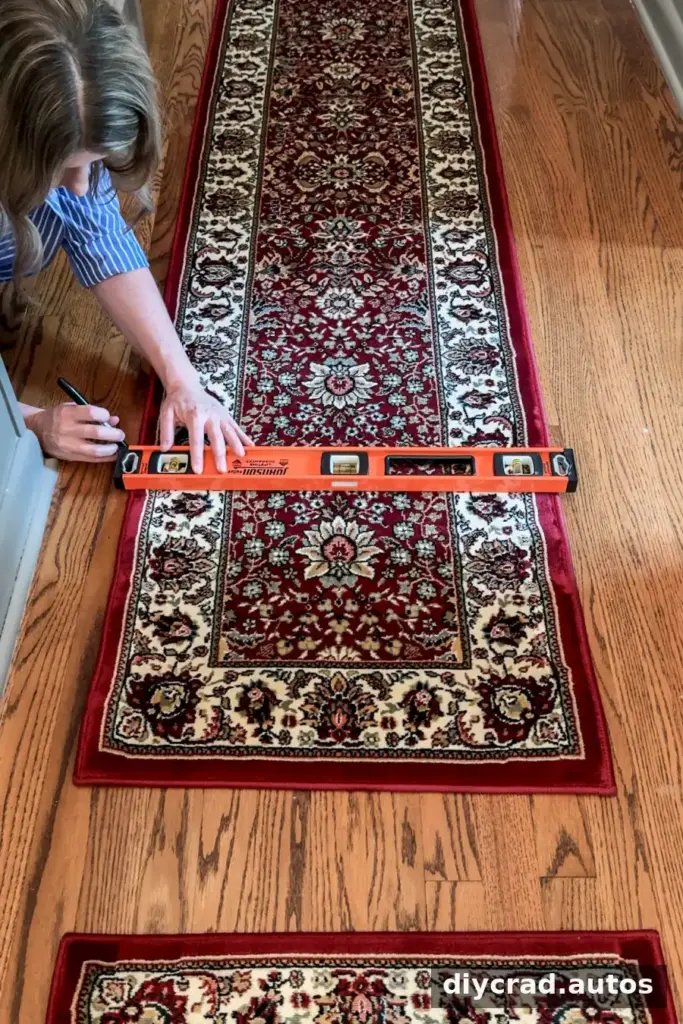
2. Mark the cut lines
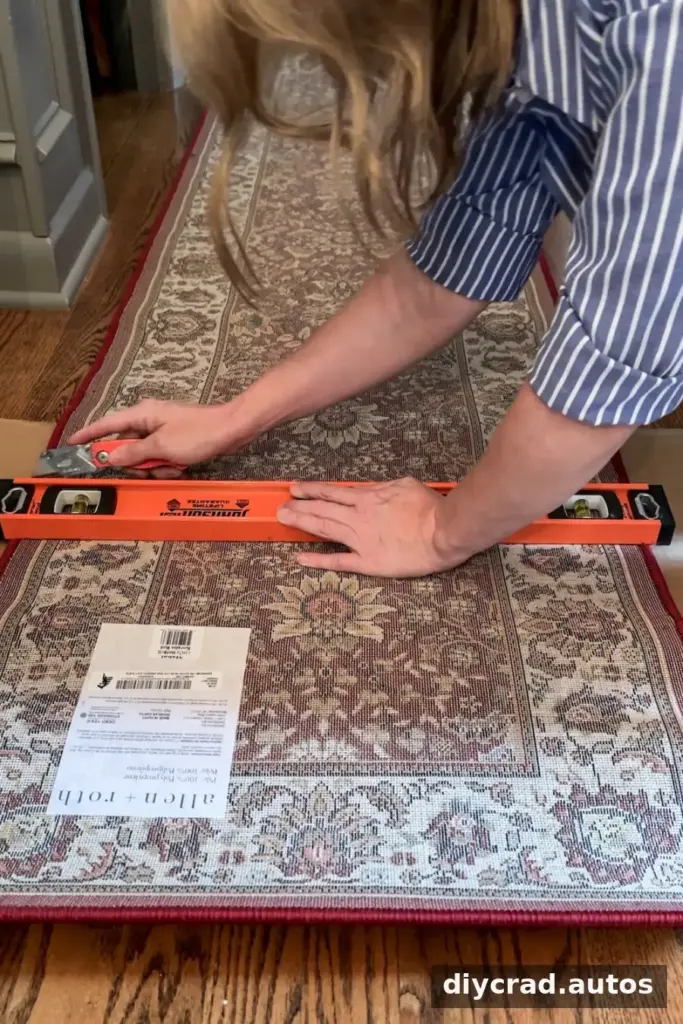
Make a small mark at the edges where the pattern should meet. Turn the rugs over, then use a straight edge to draw a cut line on the backing. Check that the line is straight and positioned so the visible pattern will align when the pieces are placed together.
3. Cut the rugs carefully
Put heavy cardboard or plywood beneath the cutting area to shield the floor. Use a sharp utility knife or carpet cutter and follow the marked line. Keep your hands clear of the blade, and make controlled cuts rather than forcing the knife through the rug.
4. Test the fit before taping
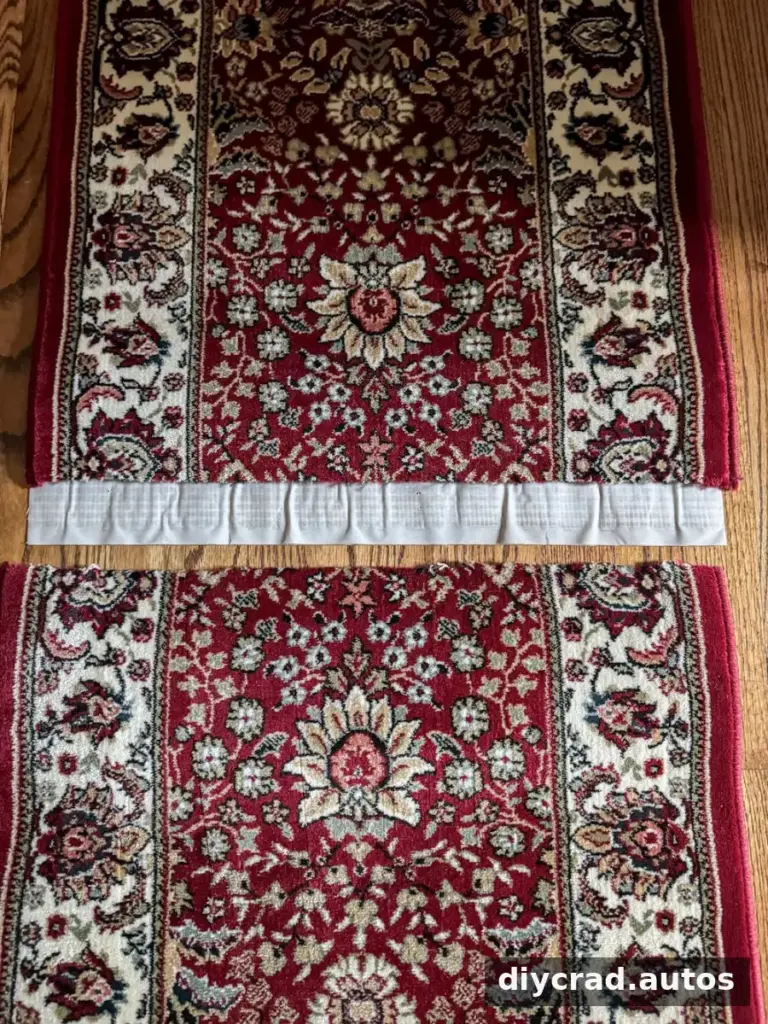
Place the cut edges next to each other and check the pattern, seam, and overall length. If the edges do not meet evenly, adjust them before applying tape. Remove loose fibers so they do not interfere with the join.
5. Secure the join with carpet tape
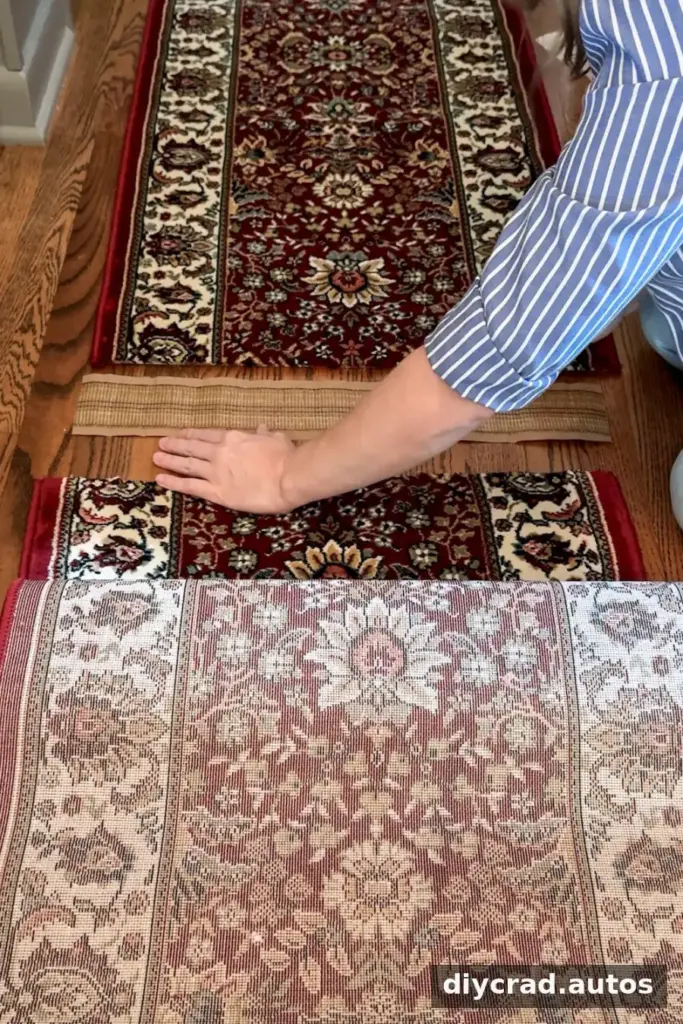
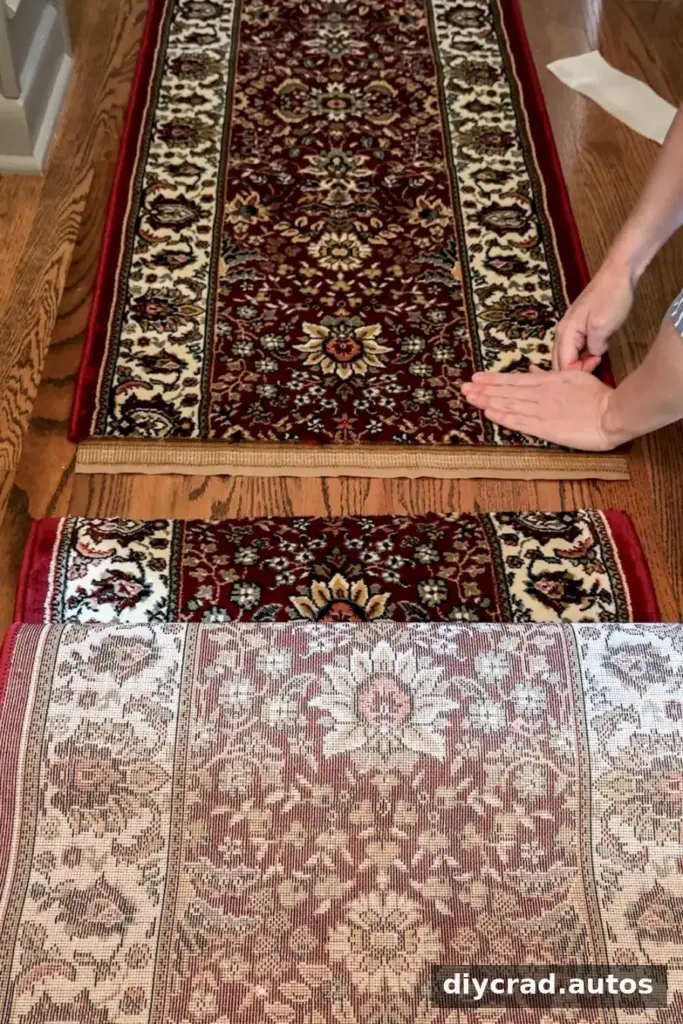
Position a long strip of single-sided carpet tape on the floor beneath the area where the rug ends meet. Follow the tape packaging instructions, peel away the backing, and press both rug edges down firmly. Align the pattern as closely as possible before applying pressure along the seam.
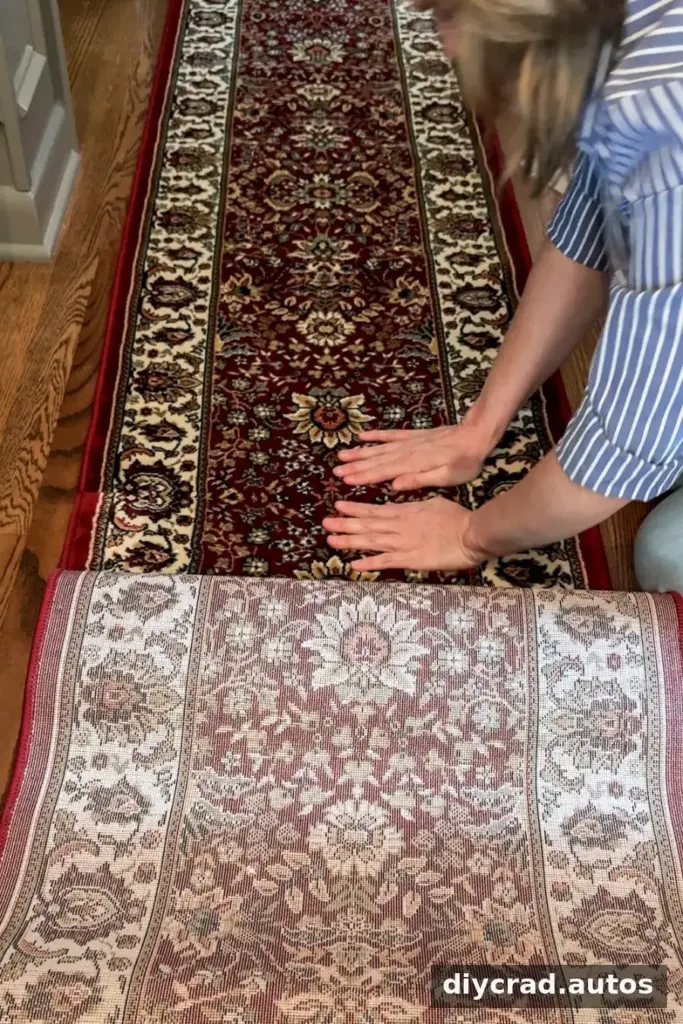
Once the pieces are secured, smooth the joined area and check that the rug lies flat. If the tape or rug manufacturer provides specific care or placement instructions, follow them. The finished piece is now a longer rug made from two smaller ones.
When This Budget-Friendly Rug Method Works Best
Combining rugs can be useful in a hallway, a galley kitchen, or another long, narrow area where a standard runner is too short. Smaller accent rugs can also be arranged to cover a larger area, although joining multiple pieces may create more seams and make pattern alignment more challenging.
Choose rugs with matching dimensions, construction, and backing whenever possible. Rugs that differ in thickness or texture may not sit evenly beside one another. Before cutting, consider the finished placement and make sure the rug will not obstruct a doorway or create an uneven edge in a walkway.
In the hallway example, the red oriental-style pattern adds color and visual interest, while two shorter runners provide the length the space needs. The pair cost less than a long runner in the same style, making the project a practical alternative to ordering a custom rug.
Final tips for combining small rugs
Measure the space first, then compare that measurement with the combined length of the rugs. Take extra time to match repeating details and test the seam before taping; those steps help the finished piece look more cohesive. With suitable rugs and careful preparation, you can combine small rugs to make a large rug that better fits your room and budget.

