

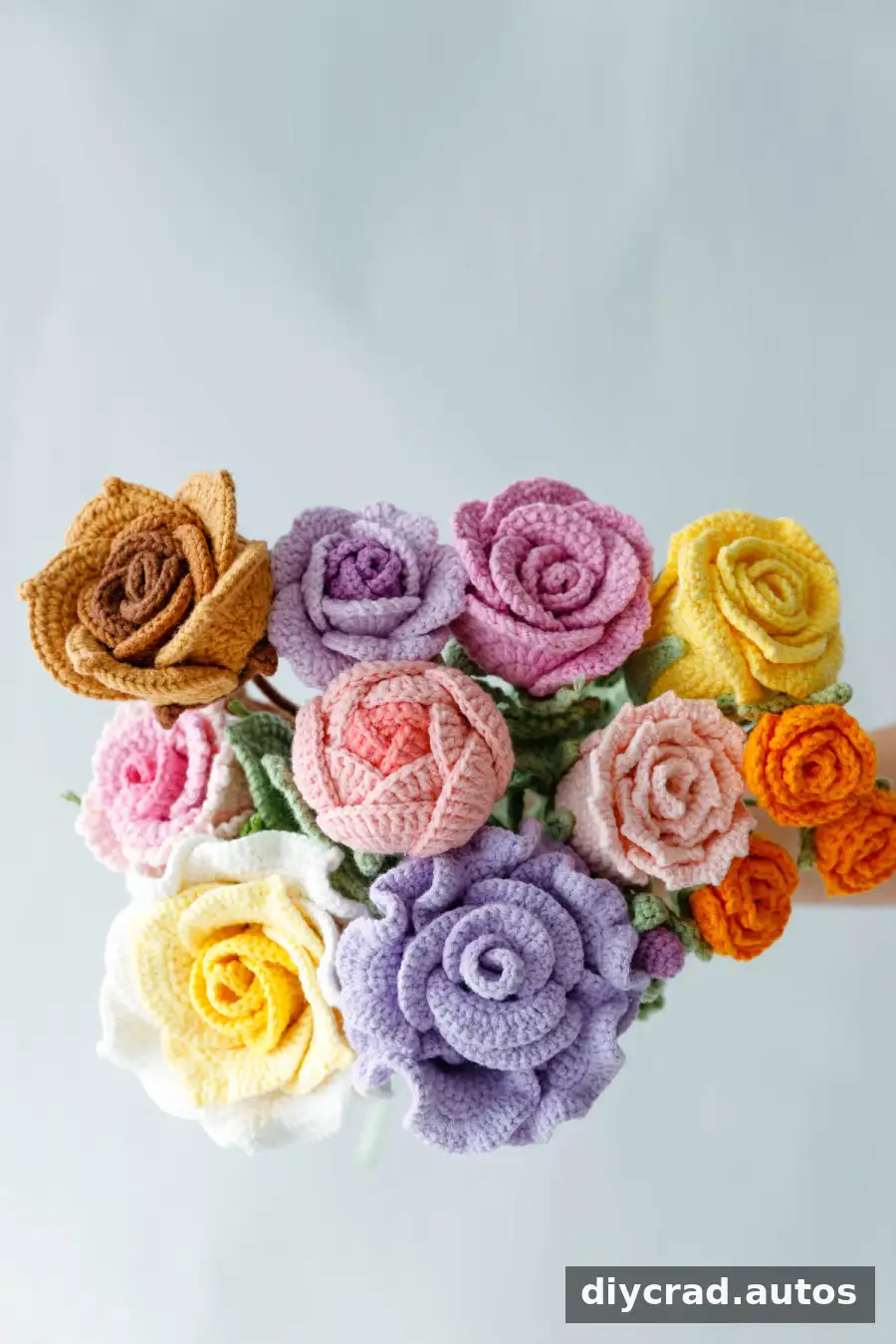
Crochet rose patterns can help you make everything from a simple rolled flower to a layered bloom for a bouquet. The designs below include options for different styles and skill levels, along with an easy rose tutorial, a materials checklist, and ideas for using your finished flowers.
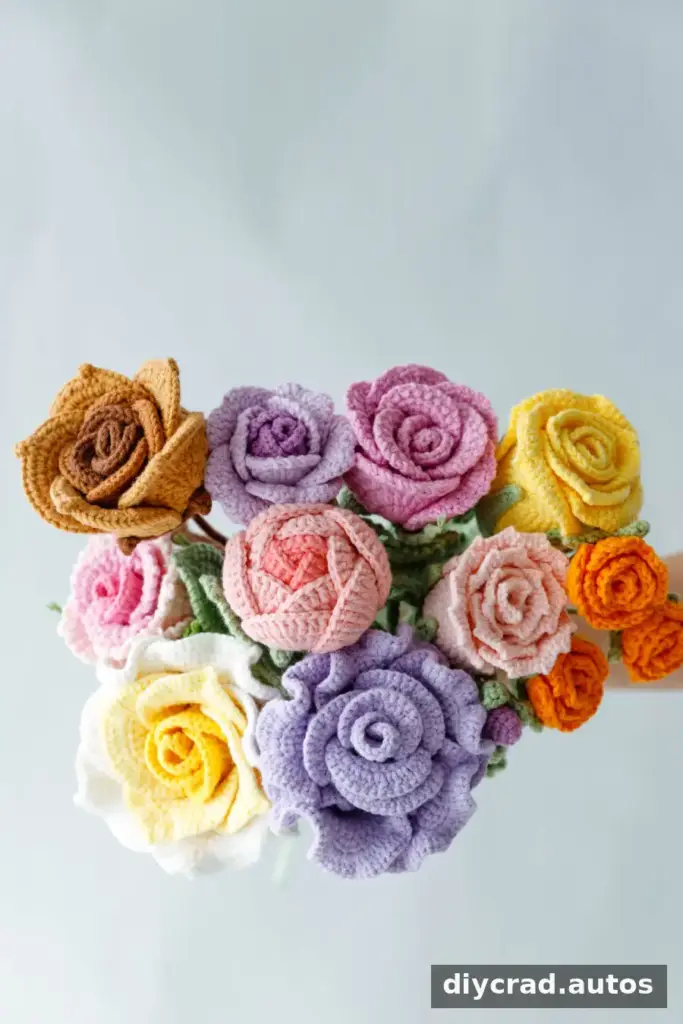
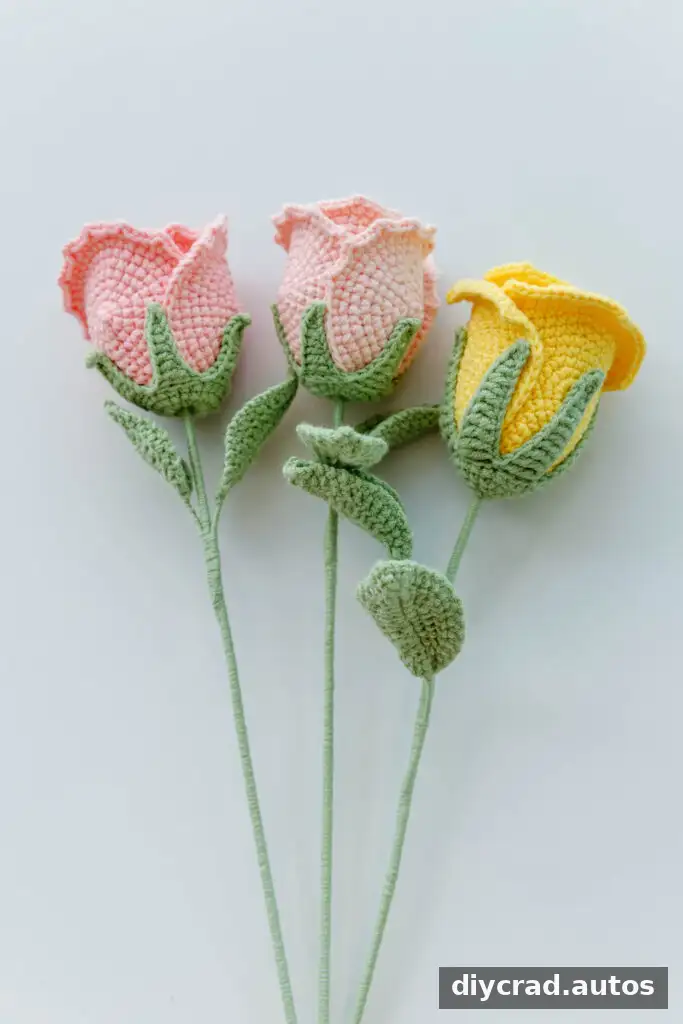
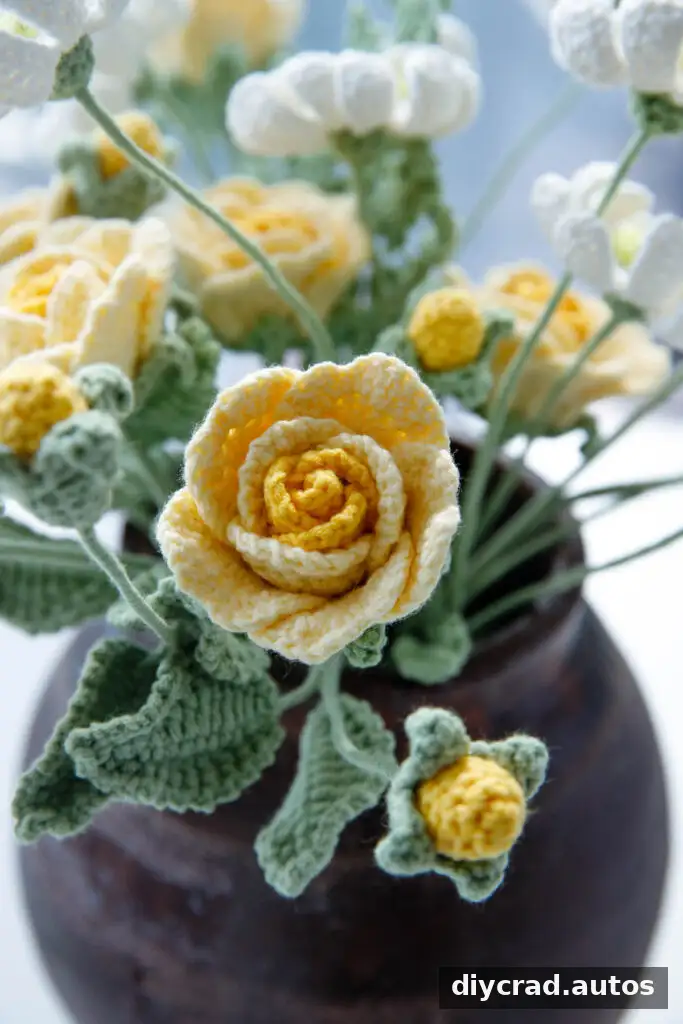
Crocheted roses can be used as home décor, accessories, or thoughtful handmade gifts. Choose colors and flower shapes to suit your project: a classic rose can be a focal flower, while smaller or more open blooms can add variety to an arrangement.
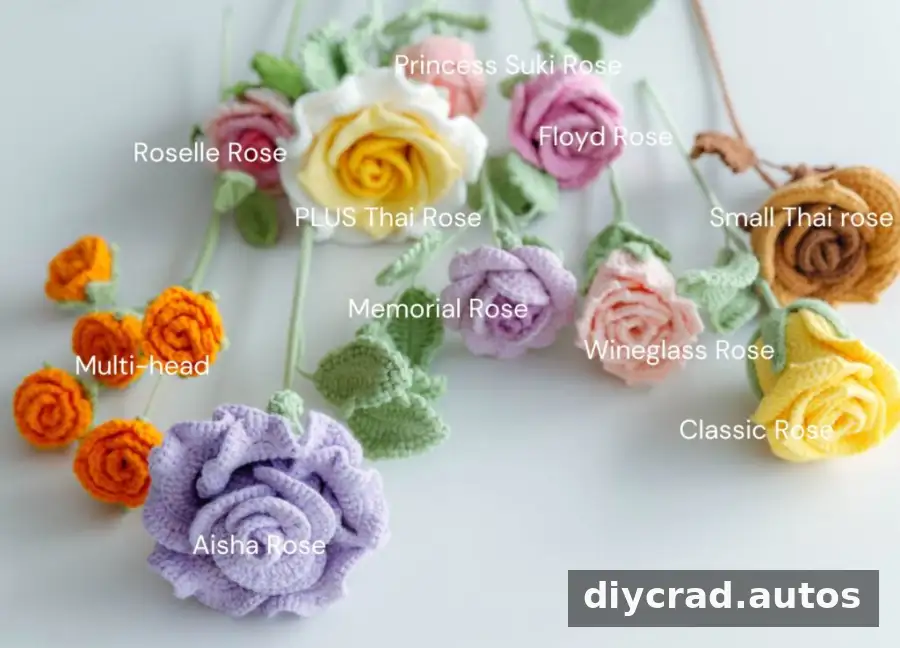
The pattern list includes several rose styles, from beginner-friendly designs to layered flowers. Pattern access may vary: the original listing marks Wineglass Rose and Roselle Rose as paid PDF patterns, while its Floyd Rose description says the pattern is no longer offered free, despite the table listing it as free. Check the terms provided with each pattern before starting.
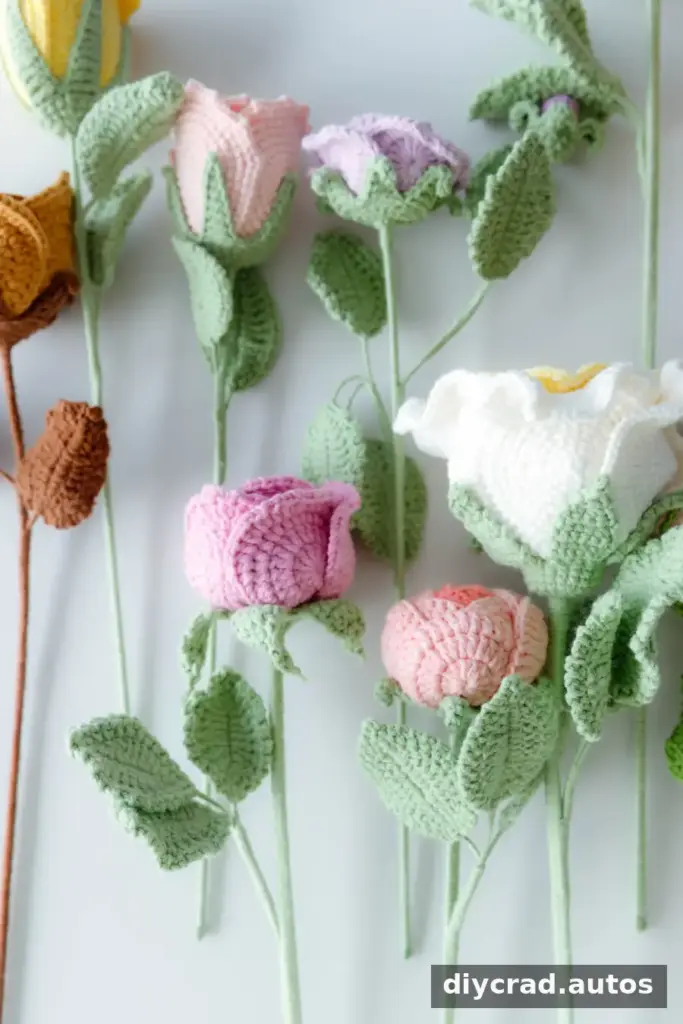
Crochet Rose Patterns at a Glance
| Pattern | Style or bouquet role | Access noted in the listing |
|---|---|---|
| Glass Rose | Classic, layered main flower | Free |
| Thai Rose | Open bloom, main flower | Free |
| Multi-head Rose | Small filler flower | Free |
| Cappuccino Rose | Layered main flower | Free |
| Wild Rose | Memorial-style main flower | Free |
| Aisha Rose | Large main flower | Free |
| Floyd Rose | Classic-shaped main flower | Availability is inconsistent in the listing |
| Easy Rose | Rolled flower, main flower | Free video pattern |
| Big Thai Rose | Larger, open main flower | Free |
| Princess Suki Rose | Inward-wrapping secondary flower | Free |
| Wineglass Rose | Classic main flower | Paid PDF pattern |
| Roselle Rose | Three-tone flower with jagged edges | Paid PDF pattern |
For a balanced bouquet, combine a few larger blooms with smaller filler flowers. Before committing to a color scheme, place yarn shades side by side; contrasting tones can make layered petals easier to distinguish.
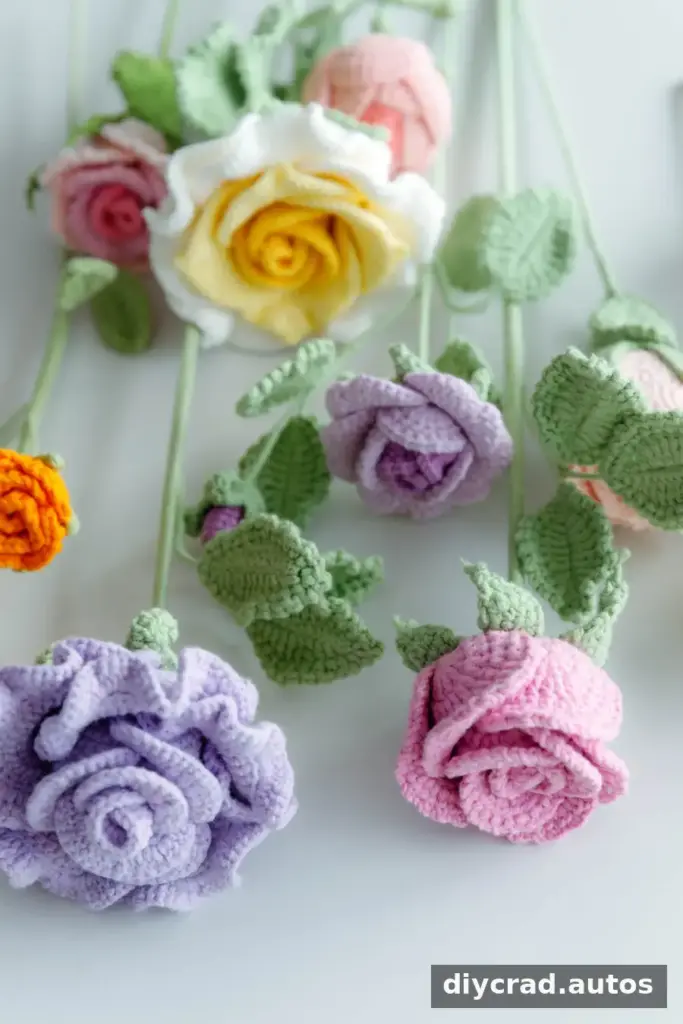
Choosing Crochet Rose Patterns
Rose patterns vary in petal shape, size, and construction. Consider the intended use before choosing: a compact rose may suit a headband or brooch, while a larger flower with a stem can work well in a vase or bouquet.
1. Glass Rose
This layered design has a classic rose appearance and is intended to work as a bouquet’s main flower. It can be made in a range of colors, including gradient shades. For a natural-looking arrangement, use one color family with subtle changes in tone.
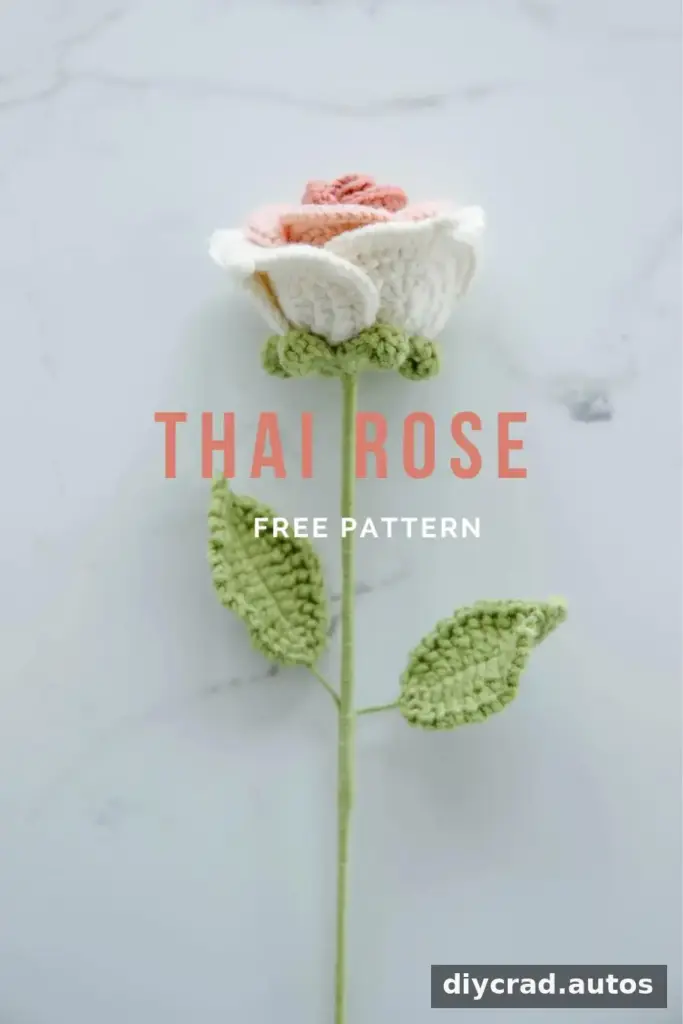
2. Thai Rose
The Thai Rose has a more open shape than a classic rose. Its petals can transition from dark in the center to lighter shades on the outside, giving the flower a vivid, colorful look. Try it alongside tighter blooms to add contrast to a bouquet.
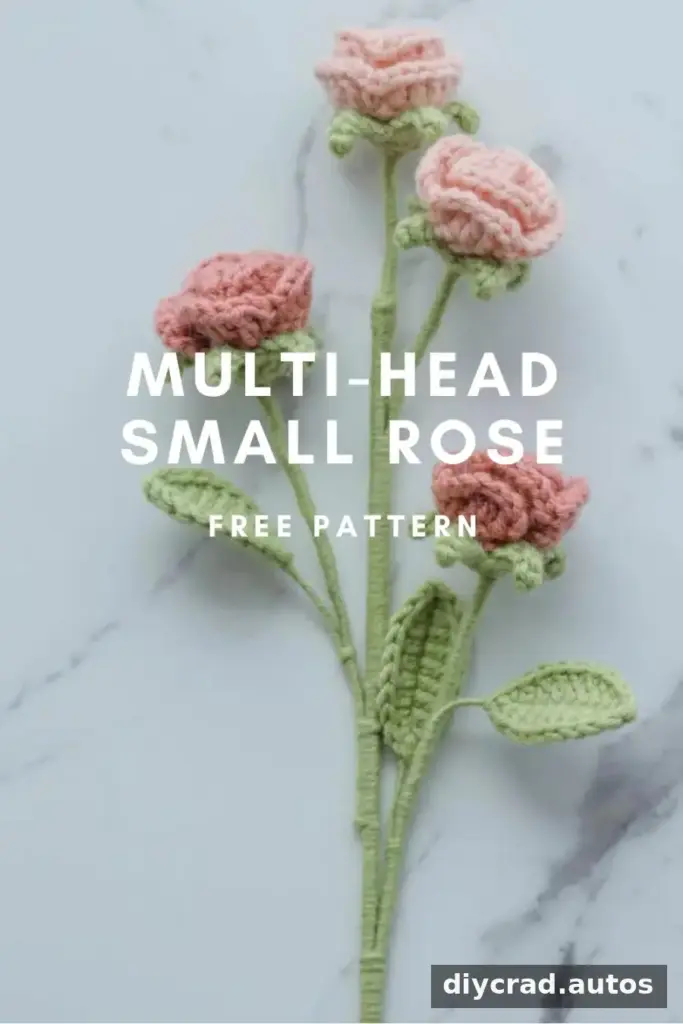
3. Multi-head Rose
This small rose style is described as a multiflora or baby rose and is suited to use as a secondary flower. Add several around larger blooms to make an arrangement look fuller without making every flower the same size.
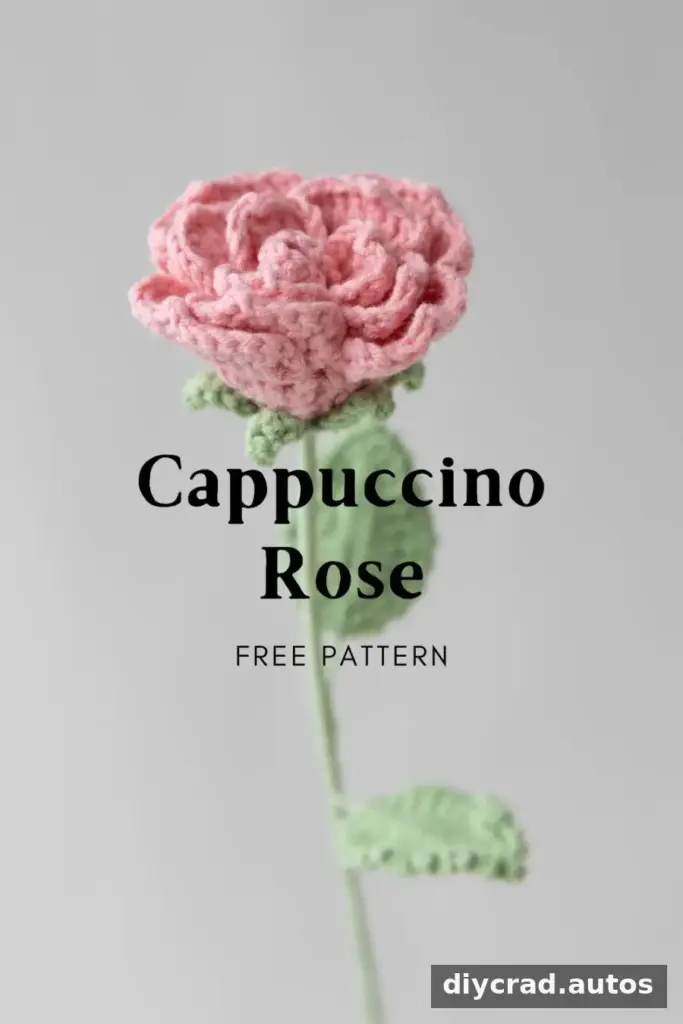
4. Cappuccino Rose
The Cappuccino Rose uses coffee-inspired colors and layered petals for a soft, vintage look. It can complement light-brown wrapping paper or a vase arrangement. A warm neutral palette is a practical choice when you want the petals to remain the focus.
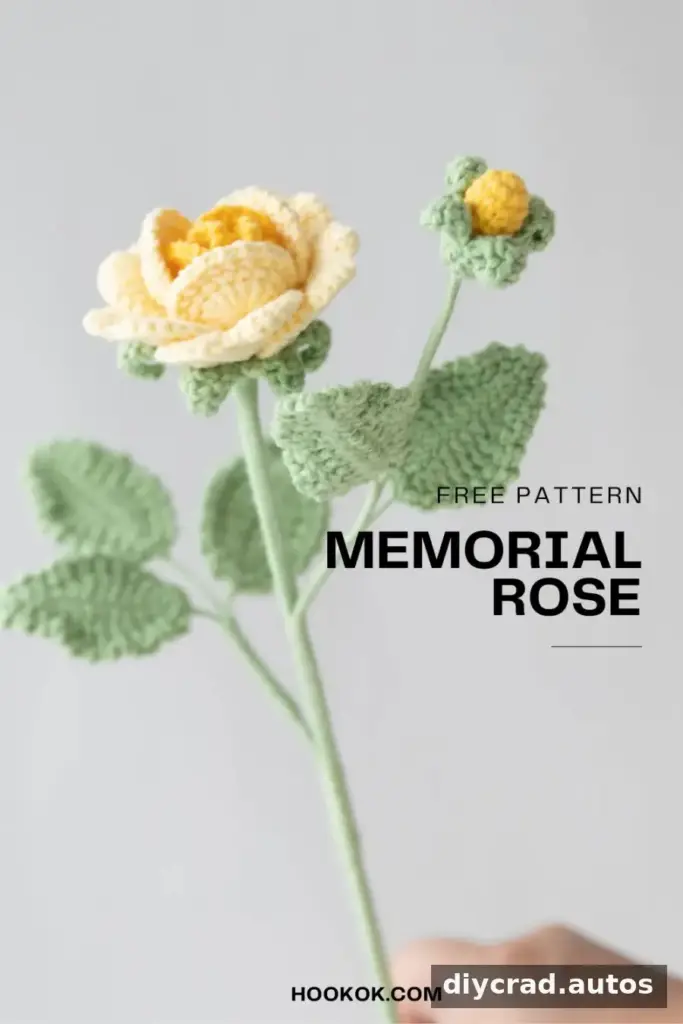
5. Wild Rose
Also called a memorial rose in the listing, this flower is associated with love and beauty. Wild roses can also represent resilience and strength in some cultures. Its name and symbolism may make it suitable for a remembrance arrangement or a meaningful handmade gift.
6. Aisha Rose
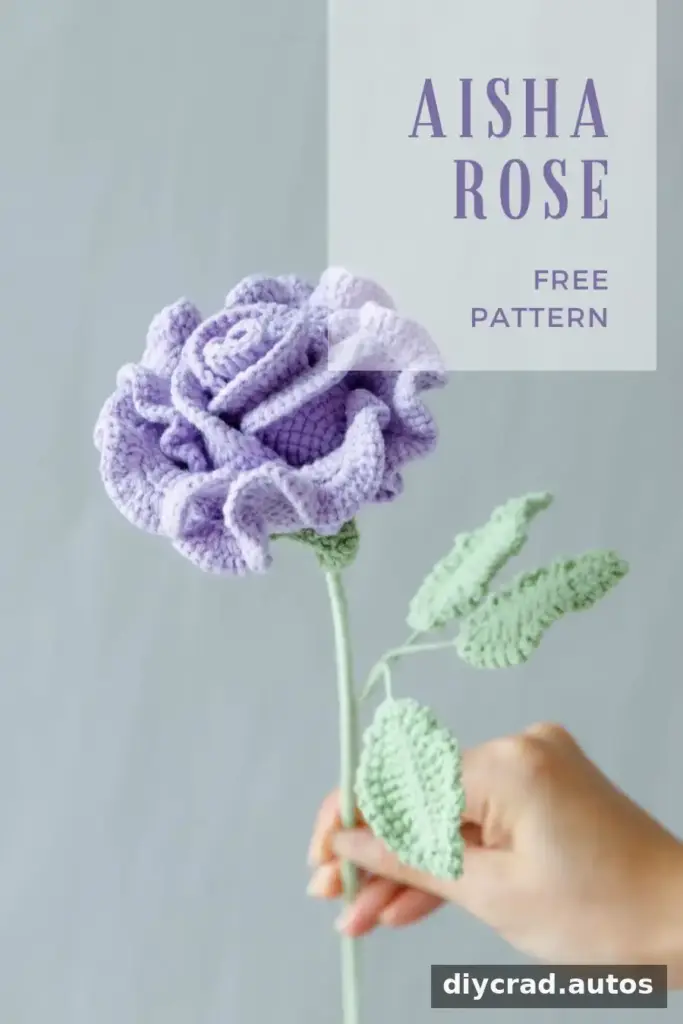
The Aisha Rose is described as a plump, brightly colored flower with a thick, straight stem. It is larger than some other crochet roses, making it a strong choice as the main bloom in a bouquet or as a standalone vase decoration.
7. Floyd Rose
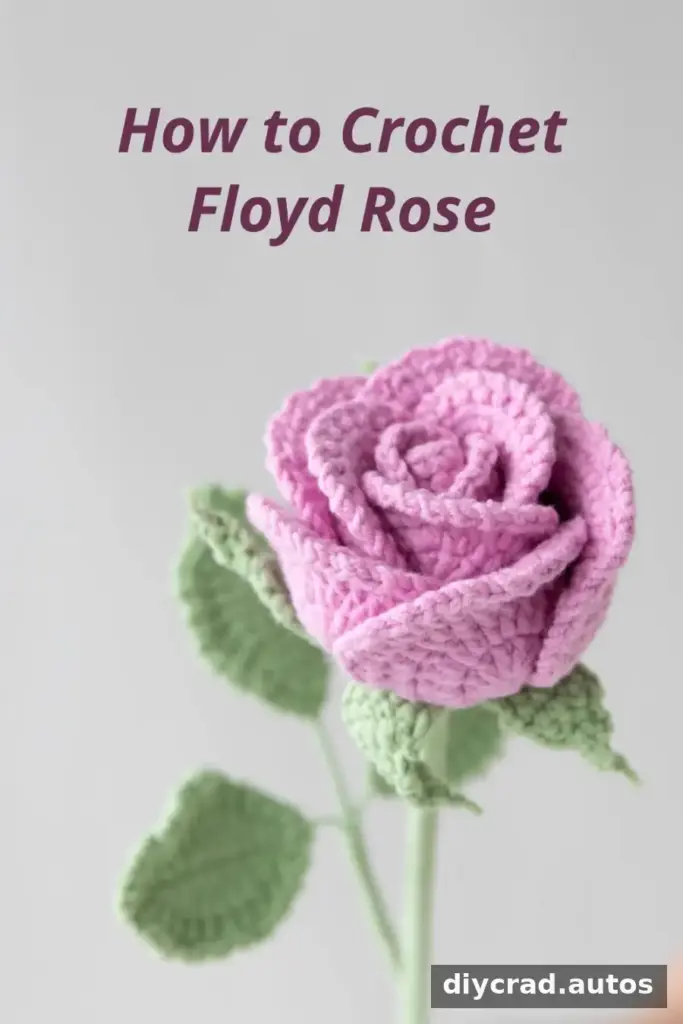
The Floyd Rose resembles the Glass Rose but has differences in its construction and appearance. The listing’s table and description disagree about whether this pattern is free; confirm the current pattern terms before beginning. This is especially useful if you are planning a project around a specific tutorial or material set.
8. Easy Rose
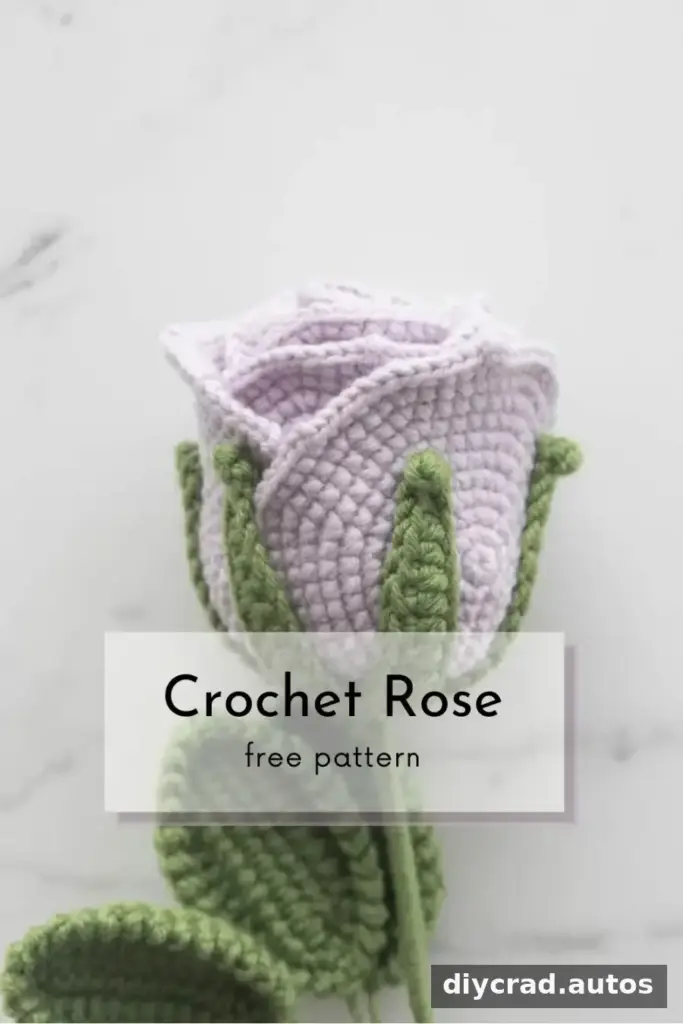
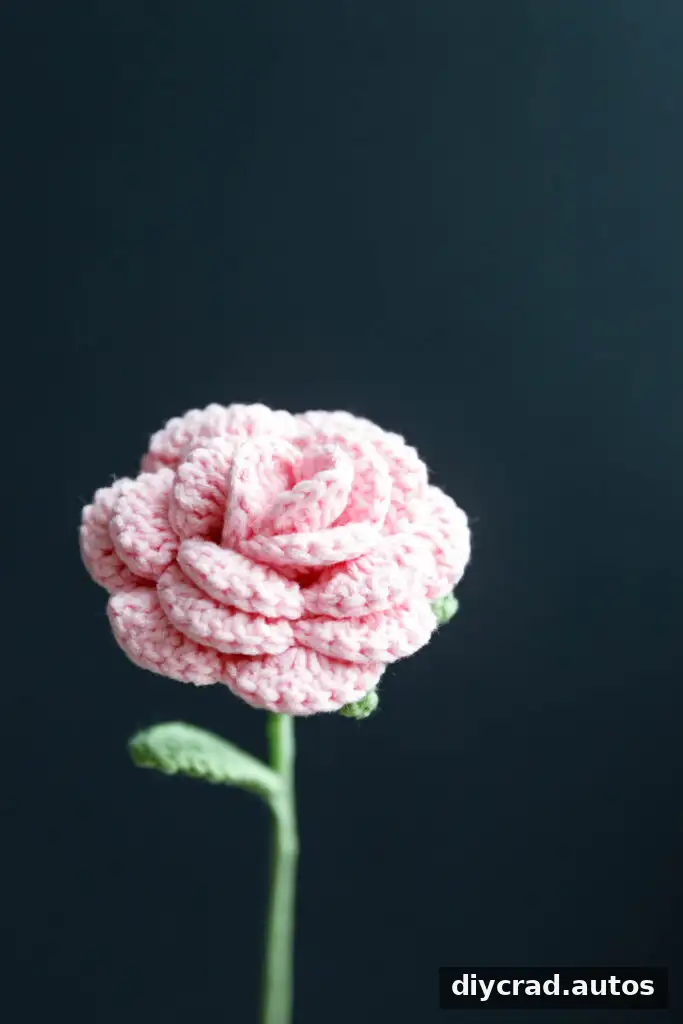
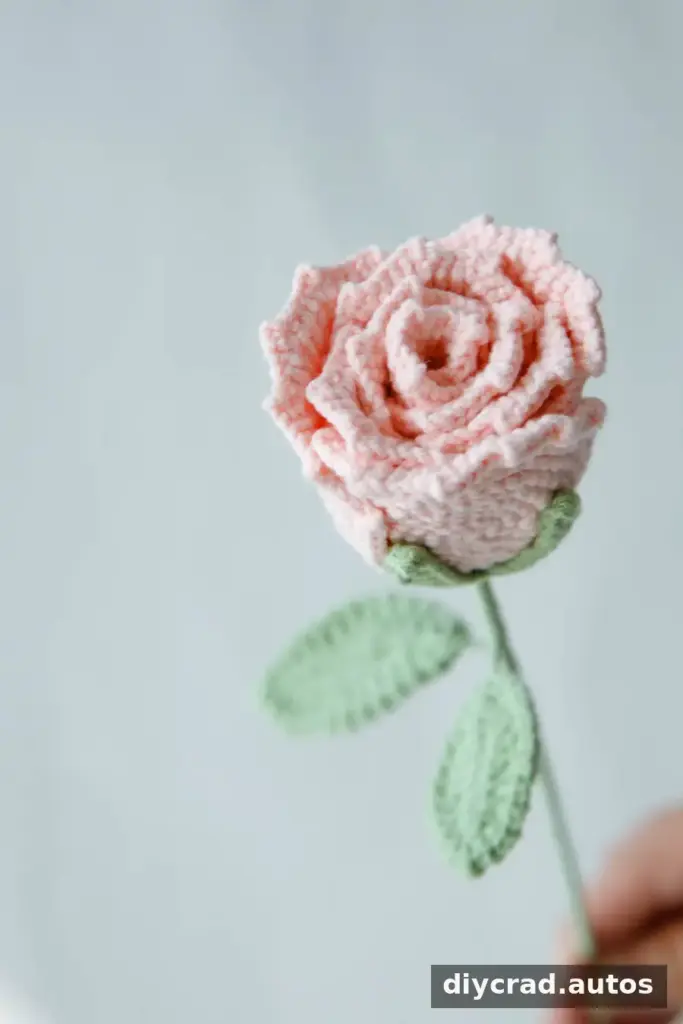
This beginner-friendly design is made by crocheting a flower strip and rolling it into a rose. Its straightforward construction makes it a good first project and a versatile choice for bouquets. Keep the roll even as you assemble it so the petals sit neatly.
Easy Crochet Rose Pattern
This easy pattern creates a rolled rose with separate sepals and a leaf. The listed difficulty is easy, and the pattern specifies a 2.0 mm crochet hook. Stitch abbreviations are retained as written; if your pattern uses a different terminology system, check its stitch guide before working.
Equipment
- 2.0 mm crochet hook
- Scissors
- Stitch marker
- Darning needle
- Iron wire
- Flower rod
- Hot-melt glue
Yarn
- Pink yarn
- Green yarn
Flower
- Make a foundation chain of 53 ch.
- R1: Starting in the 2nd st from the hook, work 52 sc.
- R2: Ch 5 and turn. Work 1 dc, then repeat the following 17 times: skip 2 sts, then work (1 dc, 2 ch, 1 dc) in the same st.
- R3: Ch 3 and turn. In the skipped-stitch hole from the previous row, repeat (2 dc, 2 ch, 2 dc) 18 times.
- R4: Turn. Repeat 18 times: ch 1, work 8 dc in the previous row’s hole, then work 1 ss in the middle gap of the previous row of dc. Work 1 ch, cut the yarn, and hide the tail.
Flower Sepals
- Begin with a magic ring.
- R1: Work 10 sc in the ring. Join with 1 ss in the first st, then ch 1.
- R2: Work 2 sc in each st, repeating 10 times. Join with 1 ss in the first st.
- R3: Repeat 5 times: ch 9; starting in the 2nd st from the hook, work 2 sc, 2 hdc, 2 dc, and 2 tr; skip 3 sts and work 1 ss in the next st. Ch 1, cut the yarn, and hide the tail.
Leaf
- Make a foundation chain of 13 ch.
- R1: Add wire. Starting in the 2nd st from the hook, work 1 sc, 1 hdc, 7 dc, 1 hdc, and 1 sc. Work 3 sc in the same st, then work 1 sc, 1 hdc, 7 dc, 1 hdc, and 1 sc along the other side. Join with 1 ss in the first st. Cut the yarn and wrap the tail around the wire.
Assembly
- Bend one end of a flower rod, insert the end through the bottom of the flower piece, and tighten it.
- Apply hot-melt glue to the flower piece and roll it up to form the rose.
- Place the sepals over the middle of the flower and secure them with hot-melt glue.
- Wrap the stem with green yarn, add the leaf, continue wrapping to the end, and secure with hot-melt glue.
Use care when handling hot-melt glue and wire. Allow glued parts to set before adjusting the flower, and keep sharp wire ends covered.
9. Big Thai Rose
This larger Thai Rose has a more open, lifelike bloom. The petals are described as fading from dark at the center to light on the outside. It can add height and visual emphasis to a bouquet.
10. Princess Suki Rose
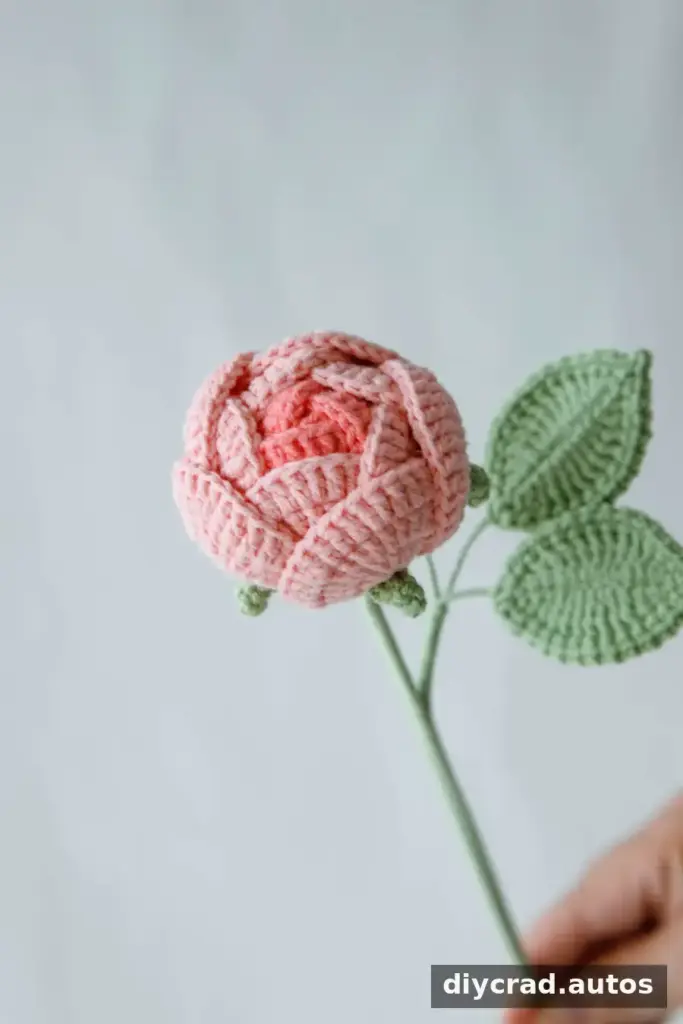
Unlike roses with petals that spread outward, the Princess Suki Rose wraps inward to create a compact, cute shape. Use it as a smaller accent flower alongside more open blooms.
11. Wineglass Rose
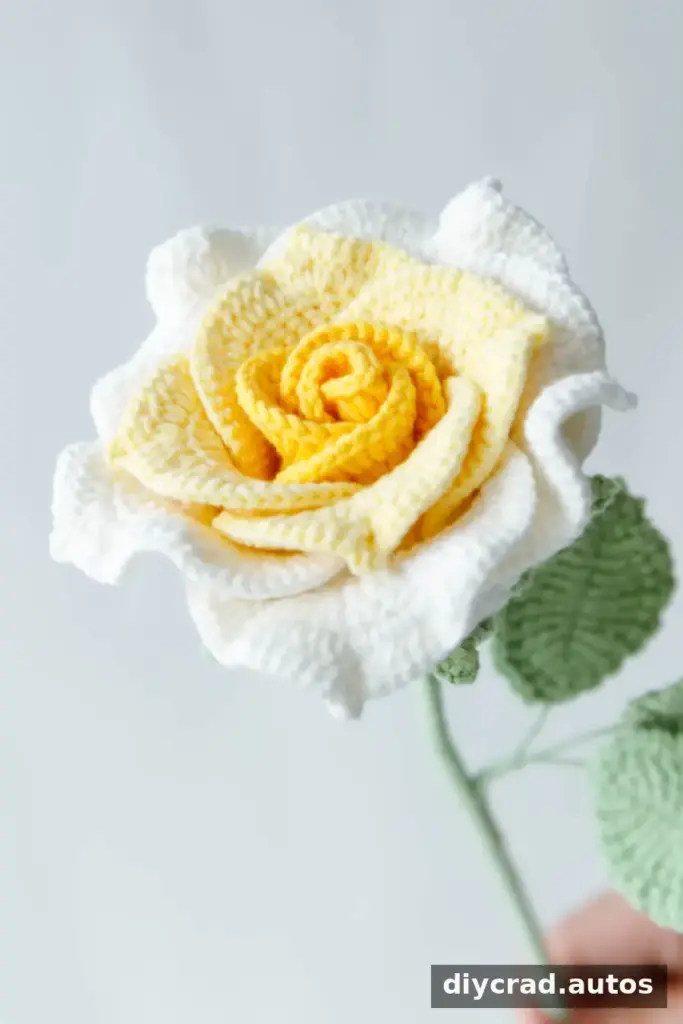
The Wineglass Rose has similarities to the Glass Rose and is described as a classic crochet flower suitable for different arrangements, including wedding bouquets. The listing identifies its pattern as a paid PDF, so check the pattern details before planning your project.
12. Roselle Rose
The Roselle Rose has petals in three shades with jagged edges, creating a lively, distinctive appearance. Its contrasting colors can stand out in a mixed bouquet or decorative arrangement. The listing identifies this as a paid PDF pattern.
Materials for Crochet Roses
Gathering supplies before you begin makes it easier to follow a pattern and assemble the finished flower. The materials you need depend on whether the rose will be flat, attached to an item, or built with a stem.
- Crochet hook: The source recommends a 2.0 mm hook for lightweight cotton yarn, or a 2.5 mm hook for lightweight cotton yarn. Follow the specific pattern’s hook recommendation where it differs.
- Yarn: Lightweight yarn can create delicate-looking flowers. Choose colors that work together, especially if you are making layered or gradient petals.
- Scissors: Use these to cut yarn and tidy the finished ends.
- Tapestry needle: Useful for weaving in yarn tails and finishing some flowers.
- Stitch marker: Optional, but helpful for keeping track of stitches and rounds.
- Flower stem: The listed stem lengths are 30 cm or 40 cm, depending on the intended bouquet. Some flowers, such as the Big Thai Rose, may require 2 flower stems per flower.
- Hot-melt glue: Used to secure crocheted pieces during assembly. Handle carefully and let the glue set before moving the flower.
- Iron wire: Helps support and shape the flower and leaf.
Check the pattern’s supply list before starting, since not every rose needs a stem, wire, or adhesive. If you are new to crochet, practice the basic stitches with a small swatch first; it can help you check your tension before making the petals.
Project Ideas for Crochet Roses
Crochet roses can decorate items around the home or be added to wearable projects. For items that will be handled often, sew the flower securely in place rather than relying only on adhesive.
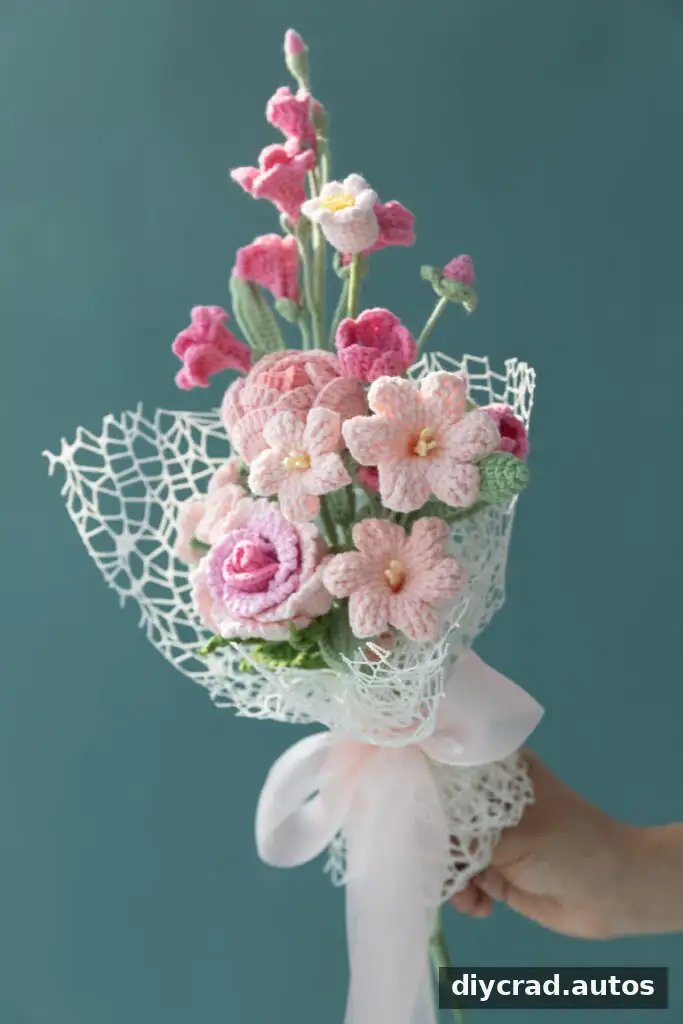
- Arrange stemmed roses in a handmade bouquet or vase.
- Add flat roses to garlands, granny squares, or blankets.
- Decorate headbands, brooches, and crochet hats.
- Use flowers to personalize tote bags or gift wrapping.
- Combine roses with other crocheted flowers for wedding or party décor.
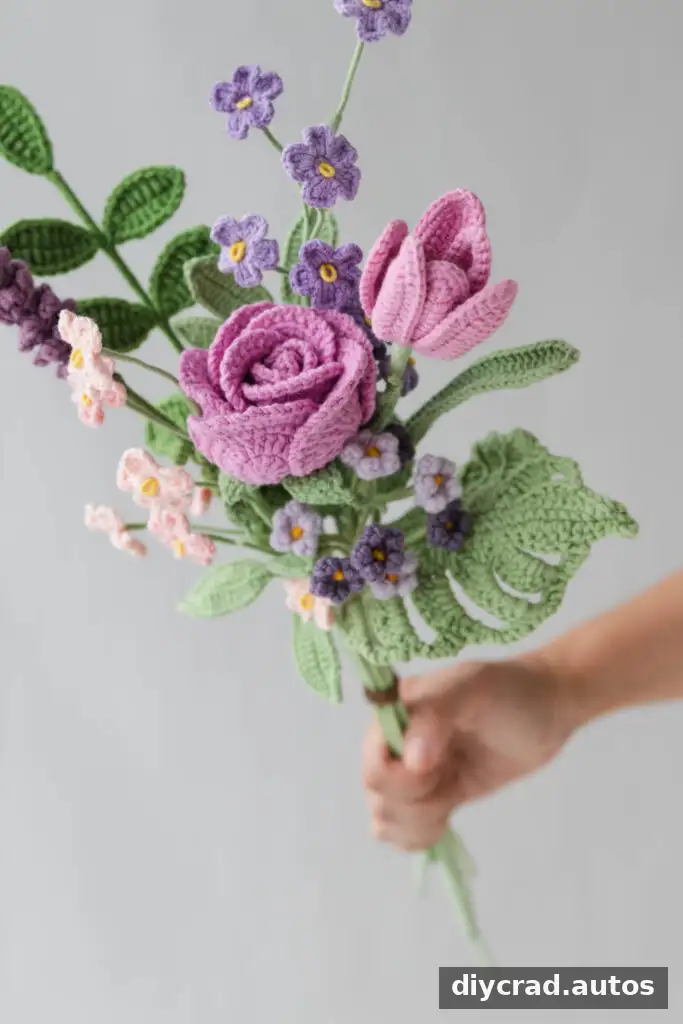
Gift and Event Decorations
A crocheted rose can personalize a tote bag or add a handmade detail to event décor. For wedding decorations, consider the weight and attachment method before adding flowers to an altar display or reception table. Make a sample first if the decoration needs to be secured to fabric or a larger arrangement.
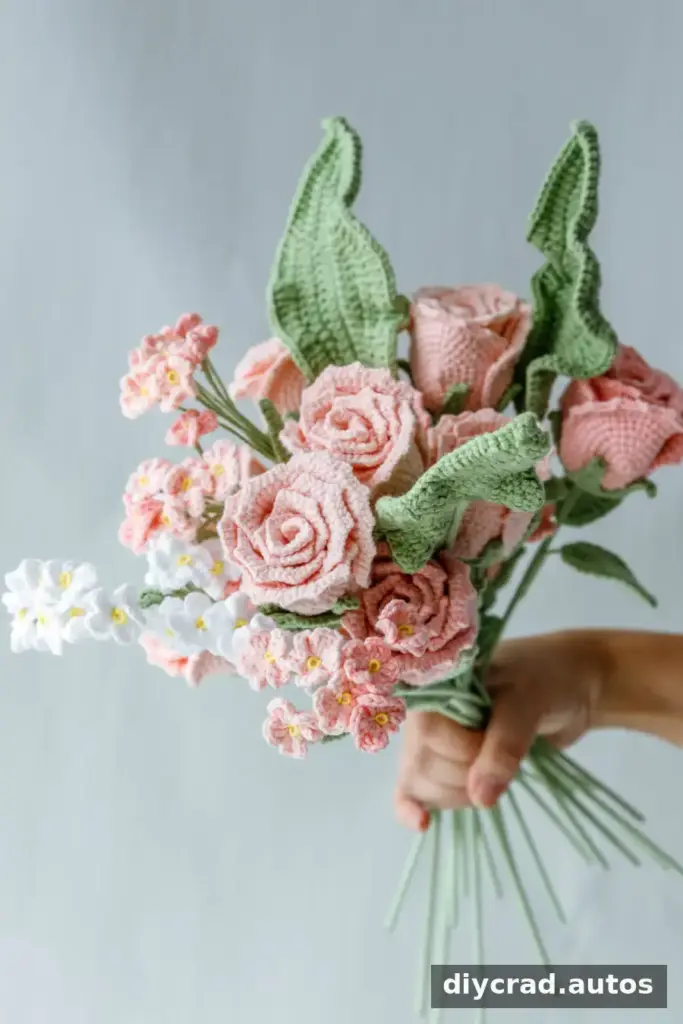
Tips for Beginners Making Crochet Roses
Choose a Suitable Difficulty
Start with a pattern labeled easy or beginner-friendly if you are still learning basic stitches. Simpler designs often use fewer steps and can make it easier to understand how a flat crocheted piece becomes a flower. Read the entire pattern before beginning so you can prepare the required supplies.
Check Gauge and Tension
Gauge affects the finished size and shape of a flower. Use the hook and yarn recommended by the pattern, and work a small practice piece when gauge is provided. Try a few rows of single crochet to get comfortable with your tension before moving on to the rose.
Keep the Assembly Neat
Roll the flower strip gradually and adjust the petals as you go. Avoid pulling yarn too tightly, which can make the petals stiff, or too loosely, which may leave the flower uneven. Weave in ends carefully and secure stems or leaves firmly if the finished rose will be displayed upright.
Conclusion
These crochet rose patterns offer a range of shapes, sizes, and uses, from a simple rolled flower to layered bouquet blooms. Choose a design that suits your skill level, gather the listed materials, and follow the pattern’s stitch and assembly instructions. With a suitable pattern and careful finishing, crochet roses can brighten bouquets, accessories, gifts, and home décor.

