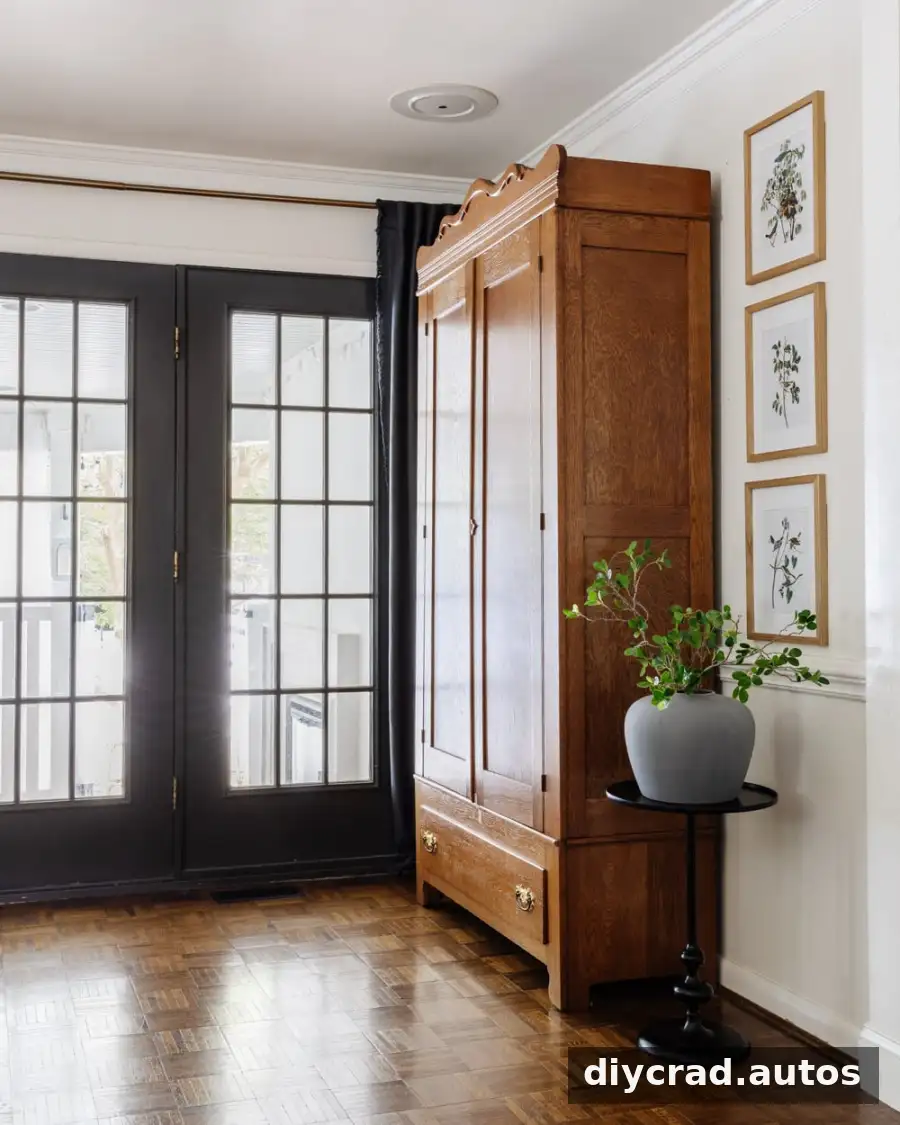
An entryway does not need a dedicated mudroom to keep coats, shoes, bags, and everyday essentials organized. A freestanding armoire can create useful entryway storage without a mudroom, especially when the door opens directly into a living area or breakfast nook. With baskets, hooks, and simple drawer dividers, an unused piece of furniture can become a family drop zone while still looking at home in the room.
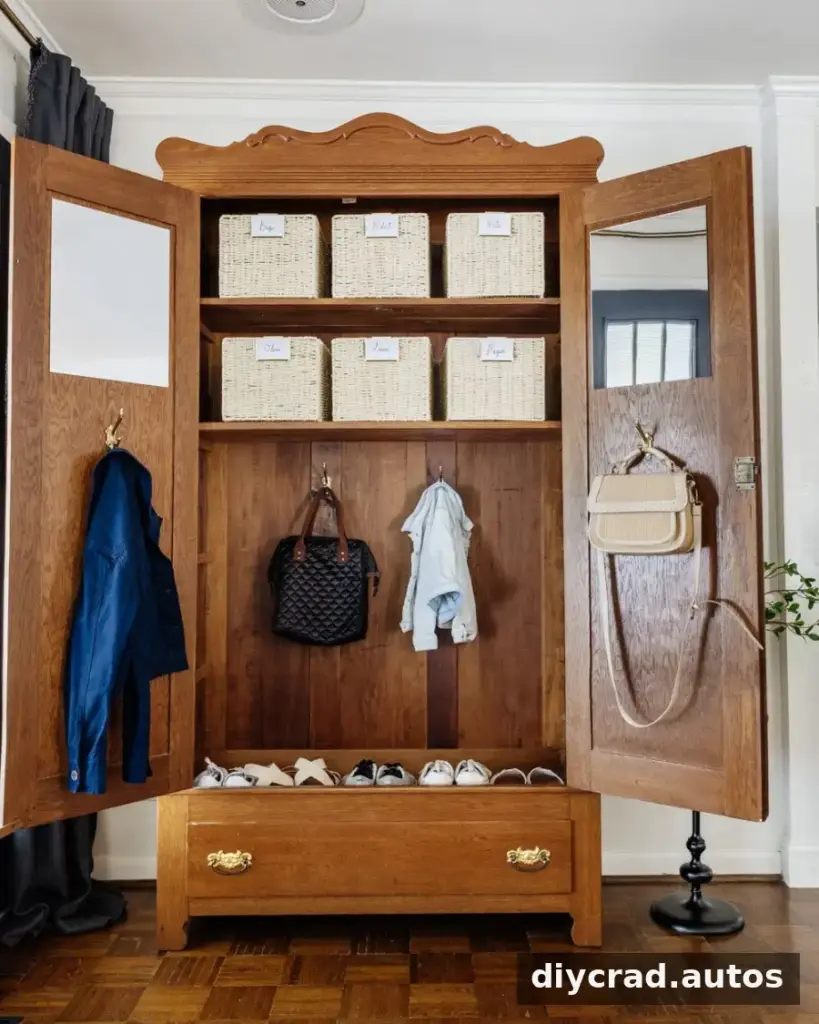
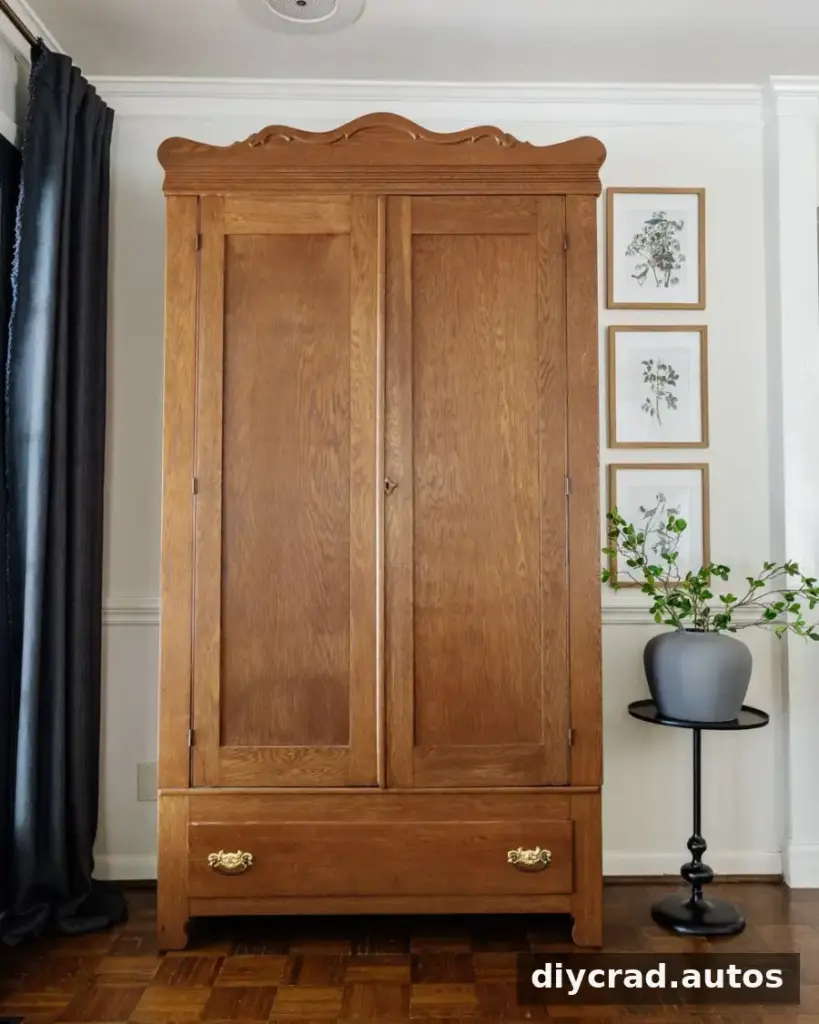
In this project, an antique knockdown armoire purchased for $300 was repurposed to manage the belongings that tended to collect near the garage entrance. The makeover is still in progress, but the storage works as a practical first step.
Make Use of an Unused Wall
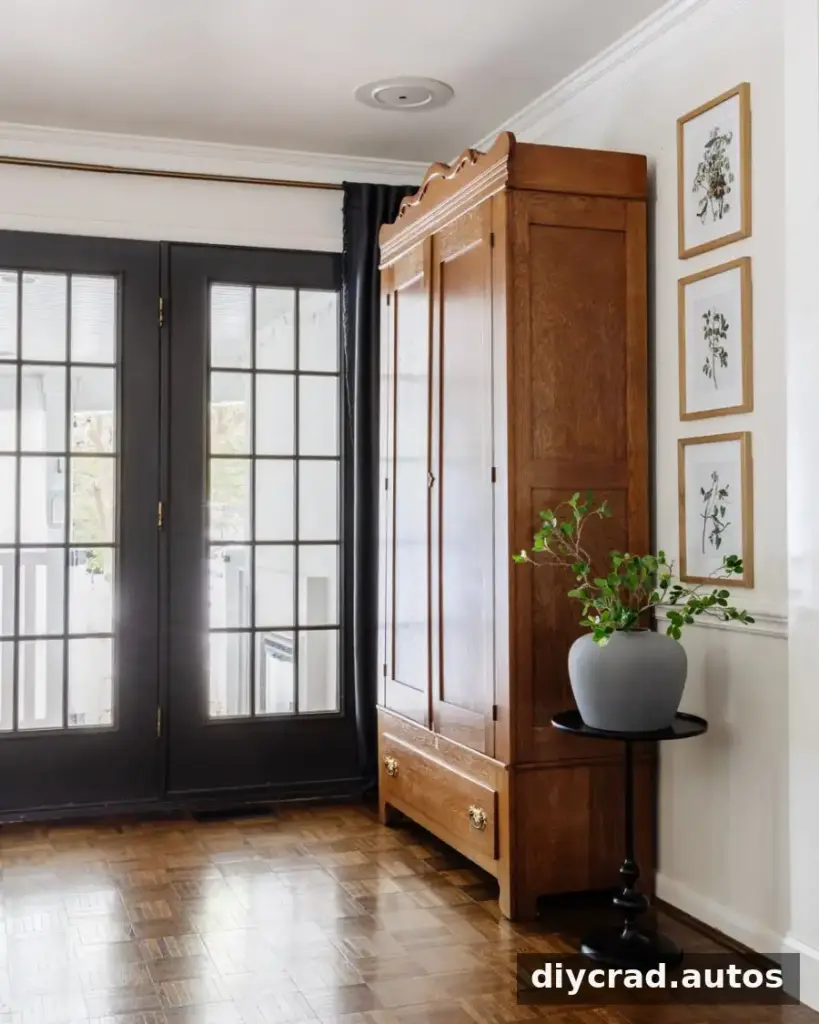
A blank wall near the entrance can provide a convenient place for storage, even if it is not part of a formal foyer. Before choosing a cabinet, measure the available width, height, and depth. Also check that doors and drawers can open without blocking a walkway or nearby furniture.
The armoire in this space sits at the back of the living room, close to the door from the garage. It offers a defined place for family items without requiring built-in cabinetry or changes to the room’s layout. When shopping secondhand, inspect the furniture’s condition and measure the route into the home as well as the final location.
The cabinet’s orange-toned finish may eventually be changed with a whitewash, blackwash, paint, or gel stain. For now, keeping the piece functional takes priority over finishing decisions. If you plan to refinish an older cabinet, test the chosen product on a small, inconspicuous area first to see how it affects the wood and its existing finish.
How to Turn an Armoire Into Entryway Storage Without a Mudroom
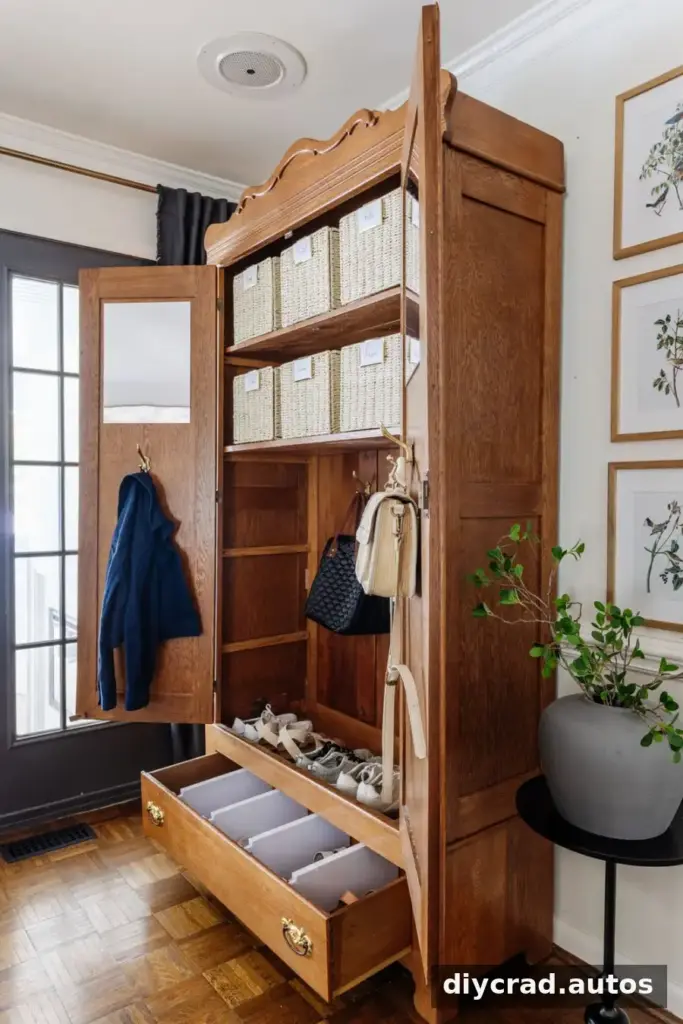
Organizing the inside by category makes it easier for everyone in the household to put items away and find them again. This armoire uses a combination of baskets, hooks, drawer dividers, and small mirrors.
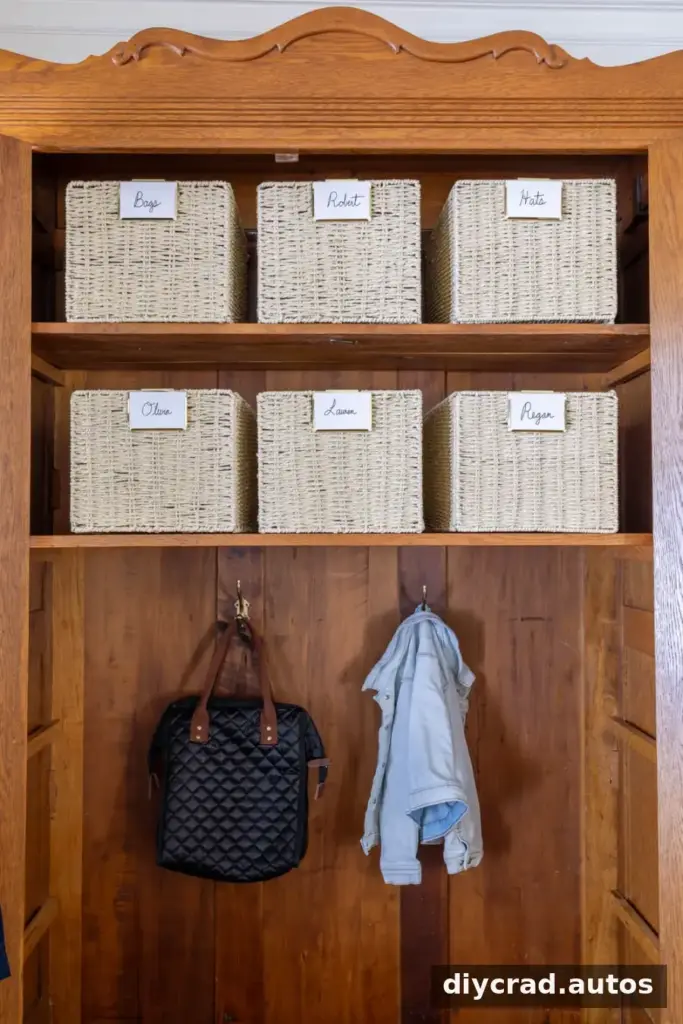
- Give each person a labeled basket: Individual baskets can hold small items such as keys, sunglasses, school papers, or other things that need to leave the house. Clip-on label holders make the baskets easy to identify. Separate baskets can be assigned to shared categories such as hats and tote bags.
- Use hooks for frequently carried items: Hooks fitted inside the armoire and on its doors provide a place for jackets, backpacks, and scarves. Put everyday items within easy reach, and avoid overloading hooks or placing them where they prevent the doors from closing.
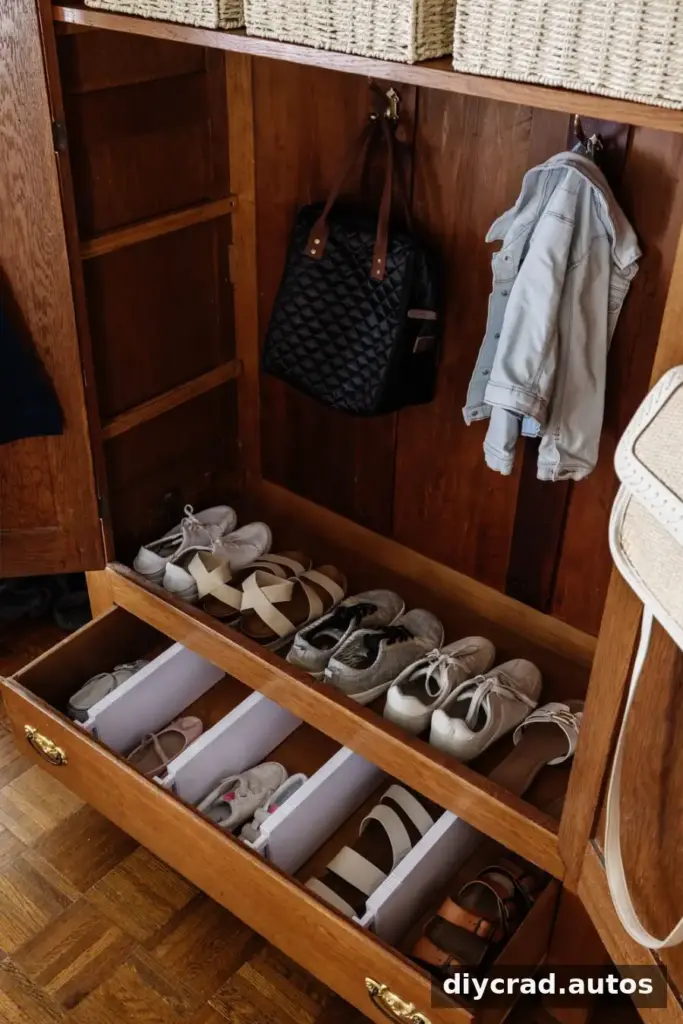
- Divide the bottom drawer for shoes: Simple drawer dividers can create separate shoe spaces and make the drawer easier to sort. Check the drawer’s depth and height before adding dividers, particularly if it needs to hold larger footwear.
- Add small mirrors inside the doors: Mirrors can make a quick final check possible before leaving. Position them so they do not interfere with the cabinet’s hardware or door movement.
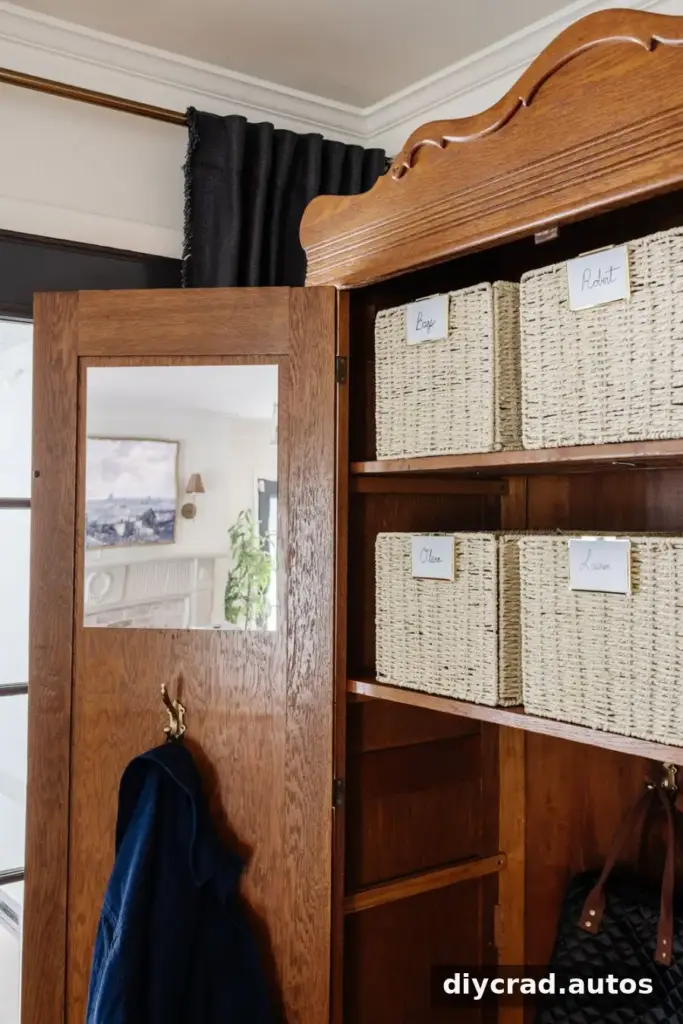
Closed storage can be especially useful in a shared living area. Baskets help group belongings inside the cabinet, while the doors conceal the contents when the space is busy. This does not eliminate the need to sort items regularly, but it can make everyday clutter less visible and keep the floor clearer.
For safety, check the armoire’s stability and follow appropriate guidance for securing tall furniture, especially in a home with children. Make sure hooks and other hardware are firmly attached and suited to the items they will hold.
Practical Tips for a Mudroom-Free Entry
A storage cabinet works best when its location and organization match the household’s routine. Keep the most-used items near the door, and give less frequently needed belongings a separate place. A quick weekly reset can help return stray items to their baskets and prevent the drop zone from becoming another cluttered surface.
- Measure the cabinet and the available space before buying.
- Choose baskets that fit the shelves and are easy to remove.
- Use labels that are clear to everyone in the household.
- Leave enough room for doors and drawers to open fully.
- Review the contents regularly and remove items that no longer belong there.
Choosing an Armoire or Storage Cabinet
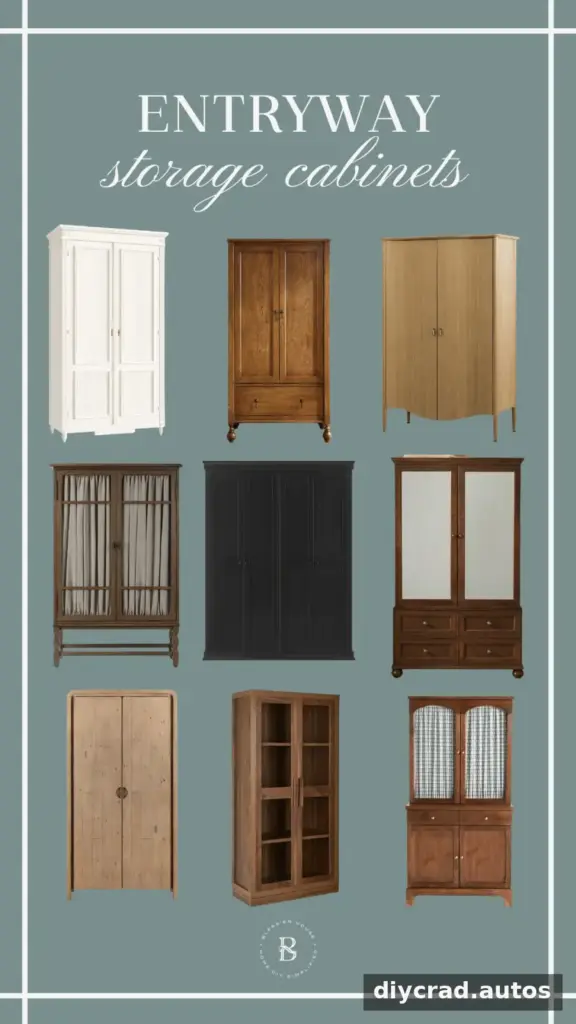
Secondhand furniture can be a useful option when the right size and style are available, and it may help extend the life of an existing piece. New armoires and storage cabinets are another choice if you need a particular dimension, finish, or interior layout. Compare measurements and storage features rather than choosing by appearance alone: shelves, drawers, and door space should suit the items you plan to store.
Whether you choose an antique armoire or a newer cabinet, the goal is to make everyday routines easier. Thoughtful placement and simple organization can provide entryway storage without a mudroom, keeping coats, shoes, and bags together without a renovation.