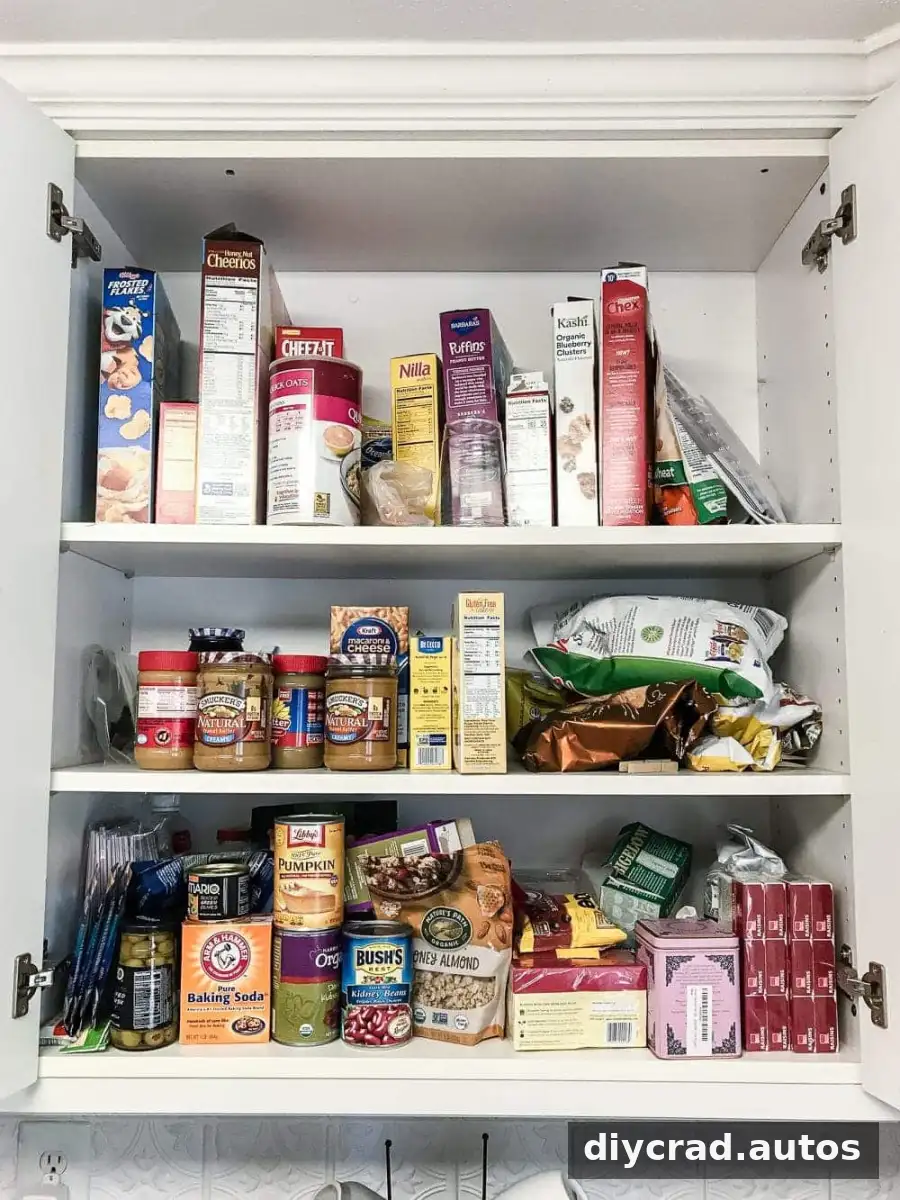
Pantry cabinet organization can make a compact kitchen easier to use, especially when there is no walk-in pantry or ample shelf space. Grouping food, storing dry ingredients in jars, and keeping frequently used tools within reach can reduce daily searching and make it easier to notice when supplies run low. This setup combines practical storage with printable labels and simple additions such as baskets and hooks.
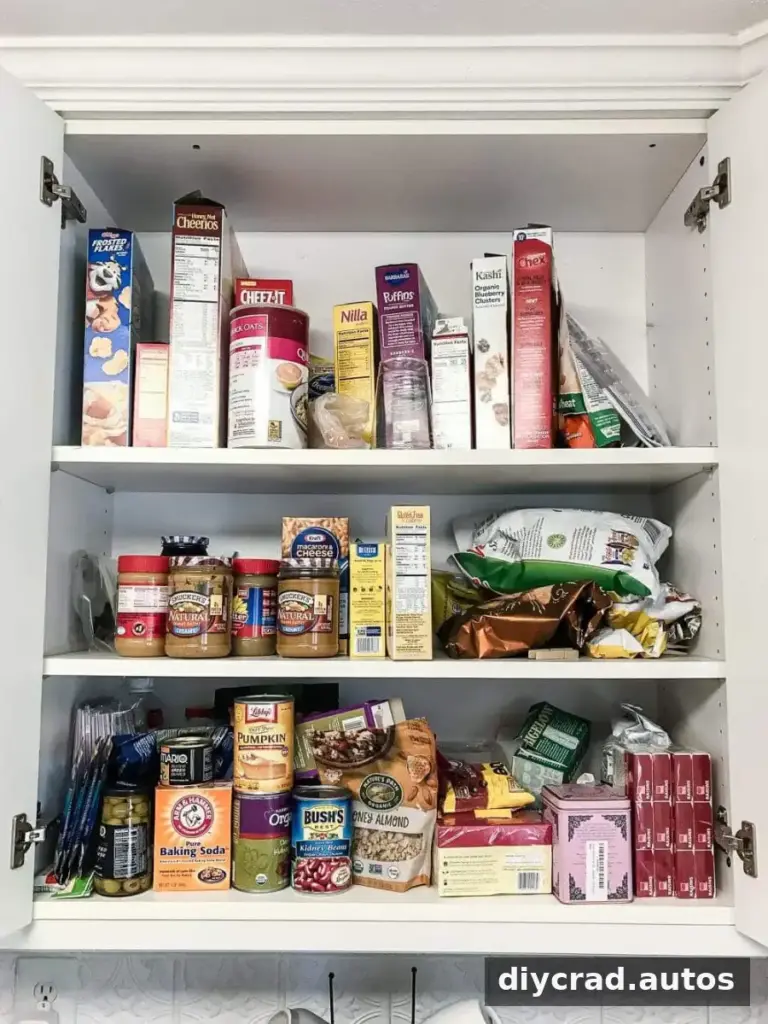
Pantry Cabinet Organization for a Smaller Kitchen
When a home has limited pantry storage, the main kitchen cabinet may need to hold everyday packaged foods and dry ingredients, while less-used supplies are stored elsewhere. The first step is to decide which items belong in the cabinet most often. Keep regularly used foods at an easy-to-reach height, and reserve harder-to-access areas for items used less frequently.
Before arranging the shelves, take everything out and group similar items together. This makes it easier to see what needs a container, what can remain in its original packaging, and whether any items are duplicates. A quick shelf measurement can also help ensure that jars and baskets fit without wasting vertical space.
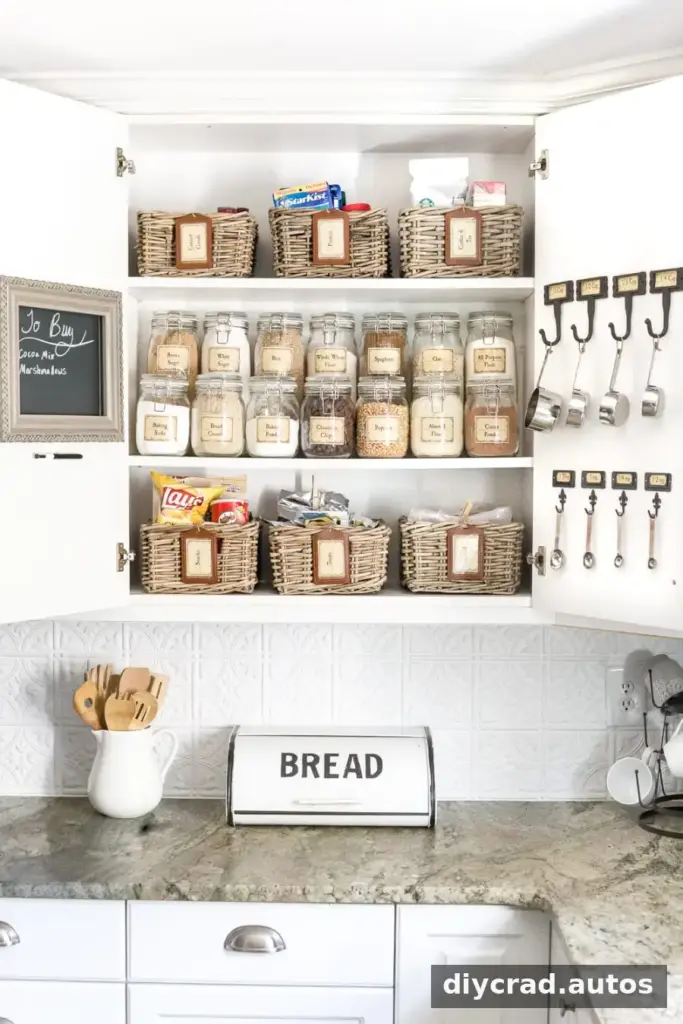
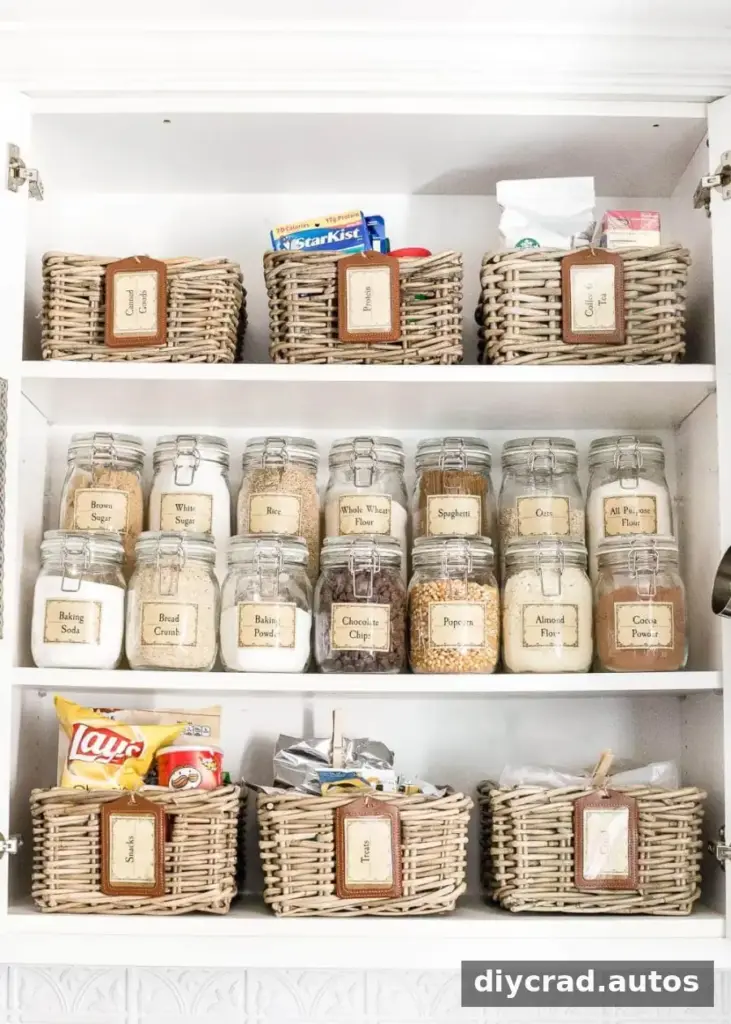
This cabinet uses a mix of glass jars, baskets, hooks, and label holders. The combination separates loose dry ingredients from packaged foods while making smaller items easier to find. Choose containers that suit the quantities typically used at home, and avoid decanting foods into containers that are difficult to clean or clearly identify.
Materials and Supplies
- Large and small glass storage jars
- Woven storage baskets
- Vintage-style label holders and hooks
- Leather luggage-tag-style labels and twine
- Adhesive picture-hanging strips
- A hot glue gun and glue sticks
- Chalkboard contact paper and a chalk marker
- A photo frame with its glass and backing removed
- Measuring cups and measuring spoons
Use baskets for flexible categories such as snack packets or small bags. A basket is especially useful when several items are similar in size, but keep it light enough to pull out safely. For jars, leave room to lift each container off the shelf without shifting the others.
Make Frequently Used Tools Easy to Reach
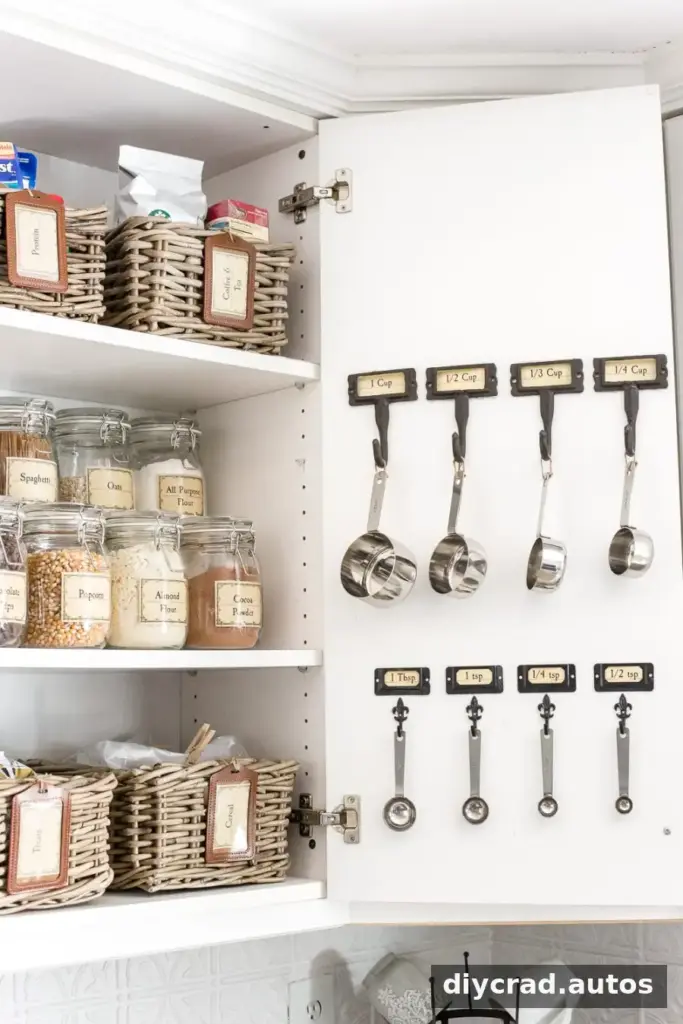
Measuring cups and spoons can take up drawer space and become difficult to locate when mixed with other utensils. Hanging them inside a cabinet door keeps them accessible while leaving the work surface and drawers available for other kitchen tools.
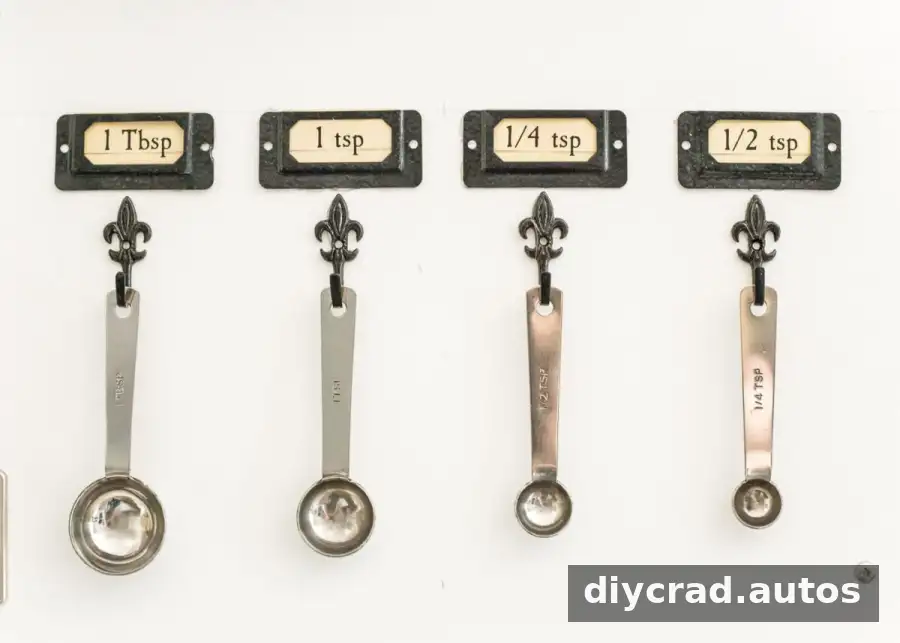
Small hooks or holders can help keep measuring tools together. Before attaching anything to a cabinet door, check that the door closes properly and that the tools will not knock against shelves or stored items. If using adhesive, follow the product instructions and consider testing it in an inconspicuous spot first.
Label holders can also be attached to a cabinet door to keep small notes or labels visible. A removable attachment method may be useful for renters or anyone who wants to avoid making holes. Allow adhesives or glue to set fully before putting the door back into regular use.
Keep a Simple Pantry Inventory
A small inventory board near the pantry can make grocery planning more straightforward. Write down items as they run out, then check the list before shopping. This can help prevent commonly used ingredients from being overlooked and reduce the need to search through the cabinet when planning a grocery trip.
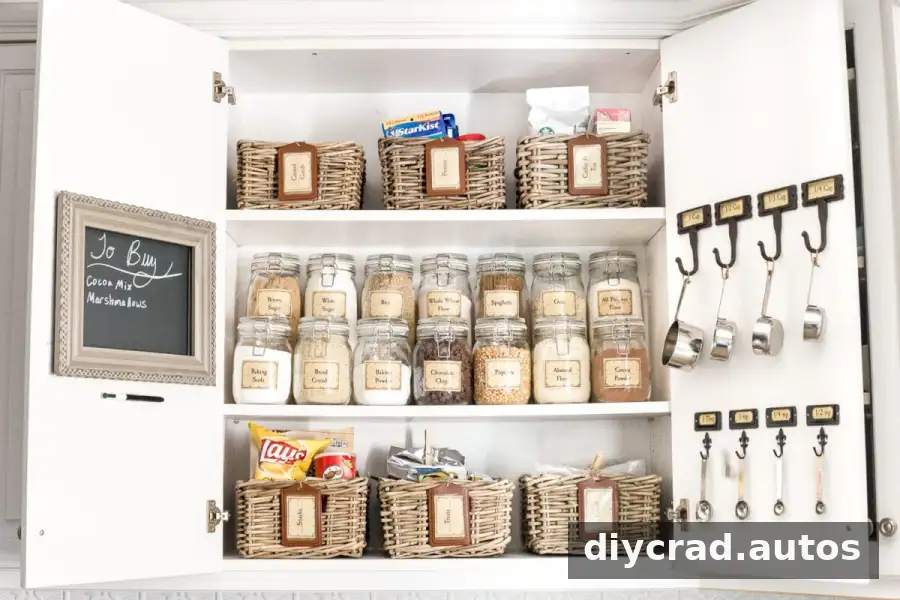
To make a framed inventory board, chalkboard contact paper can be placed inside a frame, with the frame secured near the pantry using suitable picture-hanging strips. Use a marker designed for the writing surface and test that it erases cleanly before relying on the board. Keep the list brief and update it as soon as an item is finished.
Store Packaged Foods and Dry Ingredients
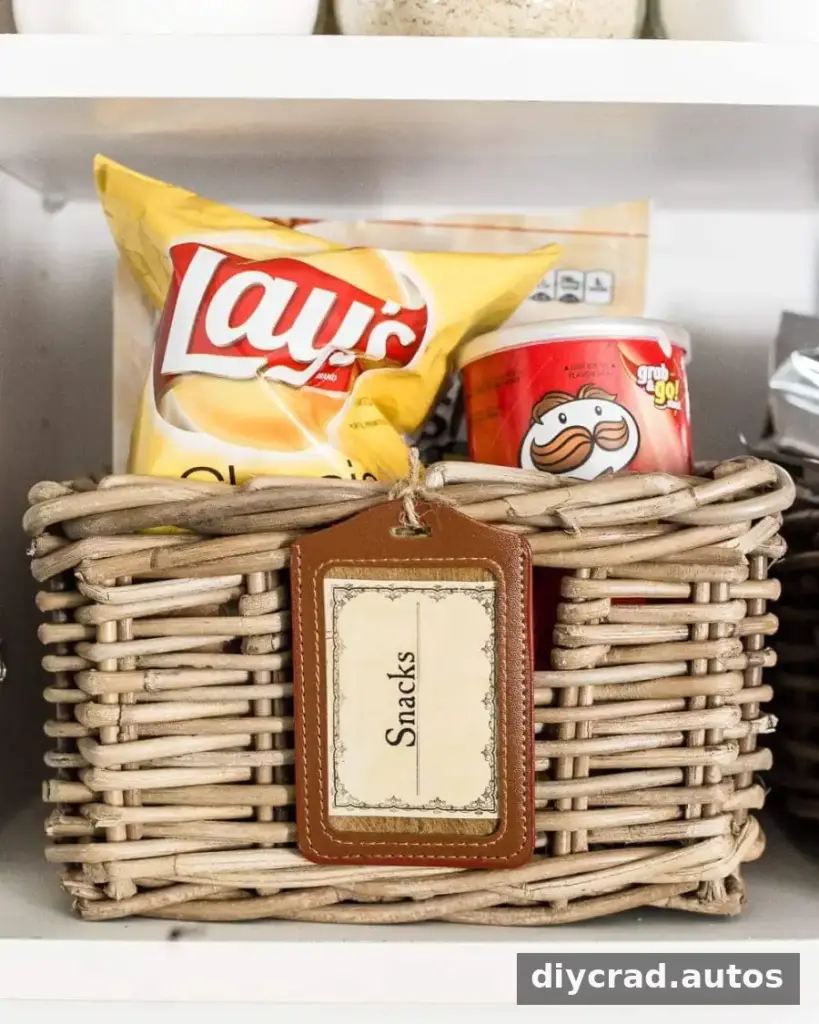
Packaged foods can be grouped by type in baskets or arranged together on a shelf. Keeping similar products in one place makes it easier to see what is available. If packets are stored upright, place them in a container that prevents them from slumping and becoming hard to browse.
Use Jars and Printable Labels
Jars are useful for dry ingredients when they are clean, dry, and easy to open. Select a size that fits the amount normally kept on hand, and leave enough room to scoop or pour without spilling. Labels help identify ingredients at a glance, particularly when several foods look alike. A printable label set can provide a consistent look across the containers.
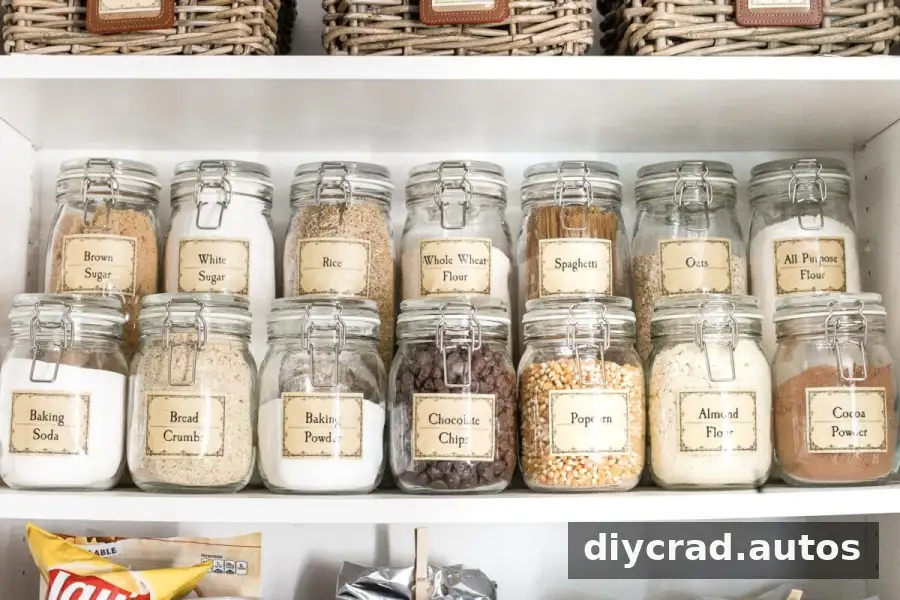
For useful labels, choose wording that clearly identifies the contents. If an ingredient is transferred from its original package, check the package for relevant storage or preparation information before discarding it. Labels should be placed where they remain visible when the jars are lined up on a shelf.
Printable labels are most effective when paired with a storage routine: return ingredients to their assigned containers, wipe up spills promptly, and check the cabinet periodically for items that need replenishing. The appearance of the setup can help make it inviting, but simple categories and easy access are what make it practical over time.

Maintain the Organization
After arranging the cabinet, give each category a clear home and let everyone who uses the kitchen know where items belong. A brief reset after grocery shopping can prevent packages from being pushed into the nearest open space. Reassess the layout if the cabinet becomes crowded or if frequently used items are difficult to reach.
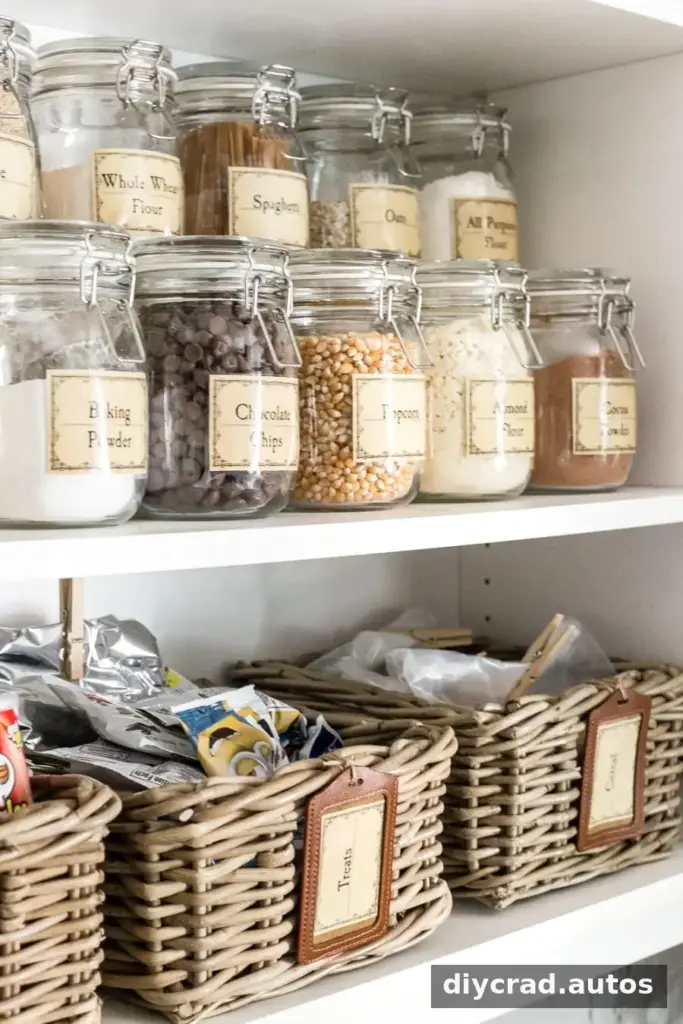
Start with one cabinet rather than trying to reorganize every storage area at once. A focused project makes it easier to test whether the jars, baskets, and labels suit the household’s routine before applying the same approach elsewhere.
Conclusion: A Practical Pantry Cabinet Organization Plan
Effective pantry cabinet organization does not require a large pantry or complicated storage system. Group packaged foods, use appropriately sized jars for dry ingredients, keep measuring tools accessible, and maintain a short inventory list. Printable labels can make contents easier to identify, while a simple reset routine helps the arrangement stay useful after the initial organizing is done.