

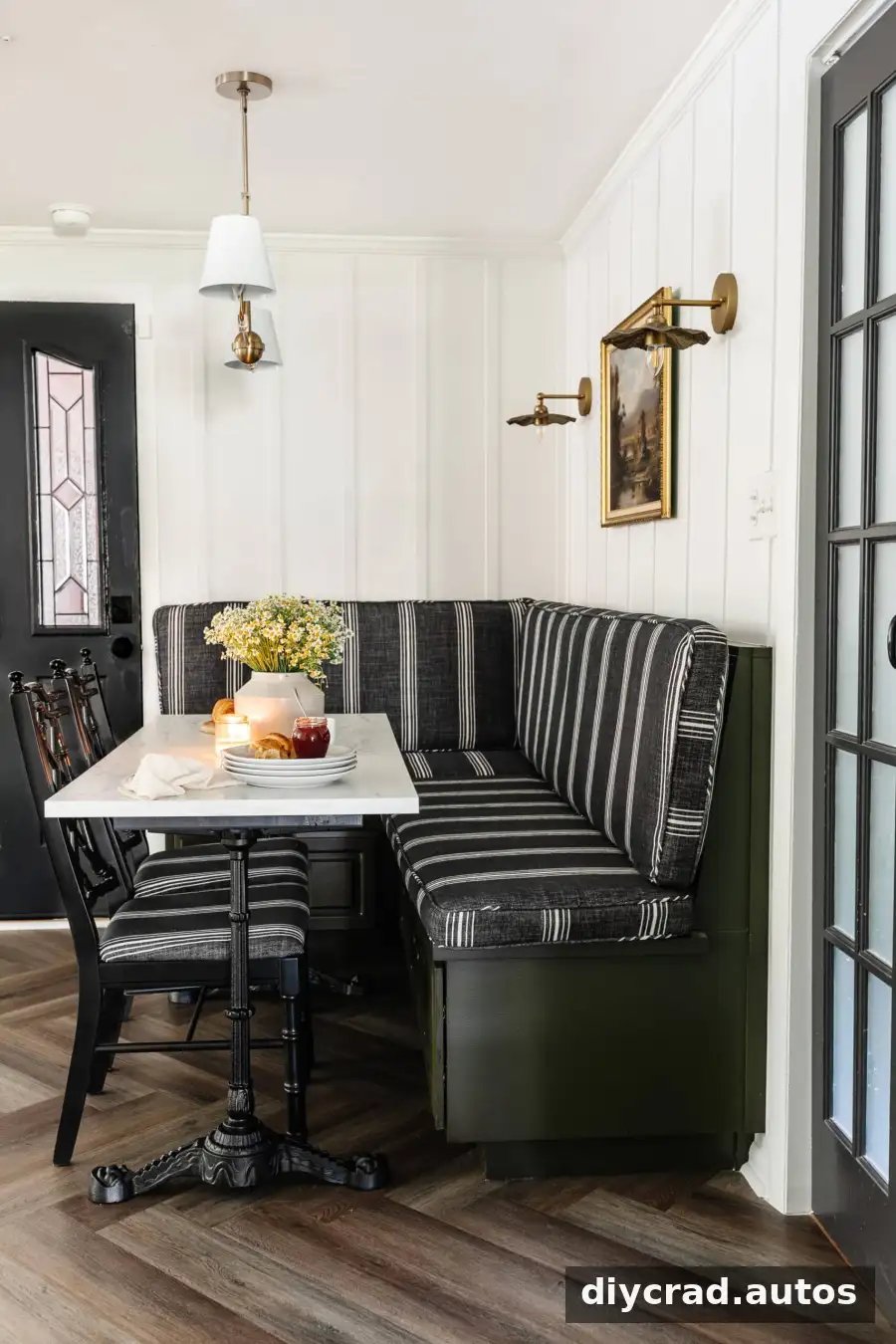
A Parisian bistro breakfast nook can feel inviting and thoughtfully designed, even in a small, windowless corner. This makeover combines a built-in banquette, striped upholstery, herringbone flooring, warm brass lighting, and a DIY pedestal table to create a cozy dining area. The project also shows how secondhand furniture and carefully chosen DIY details can shape a distinctive look while keeping the costs visible.
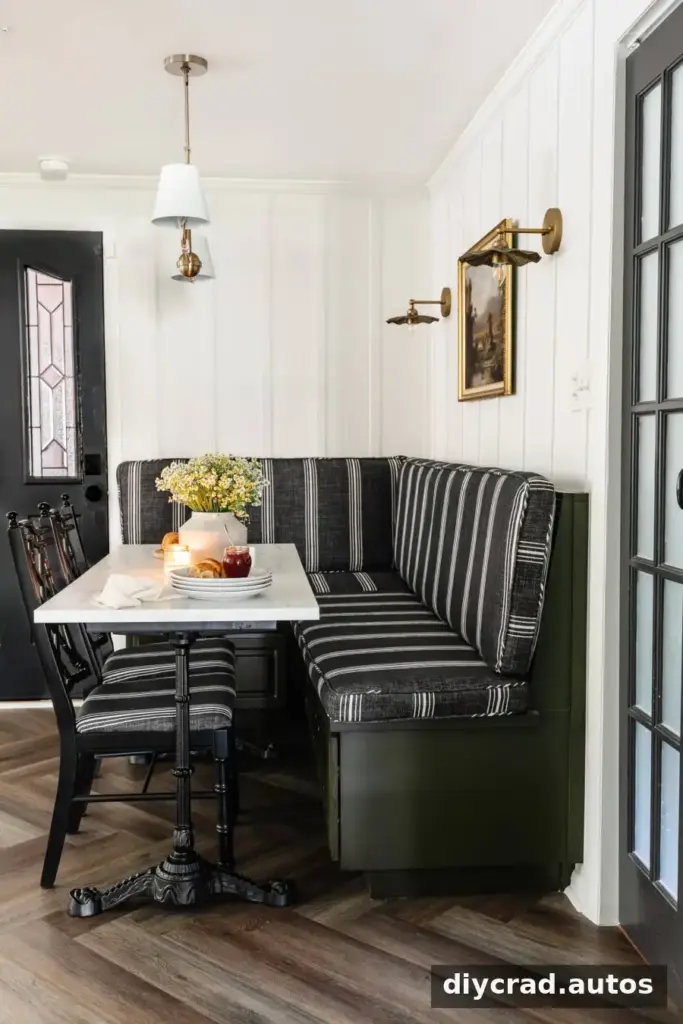
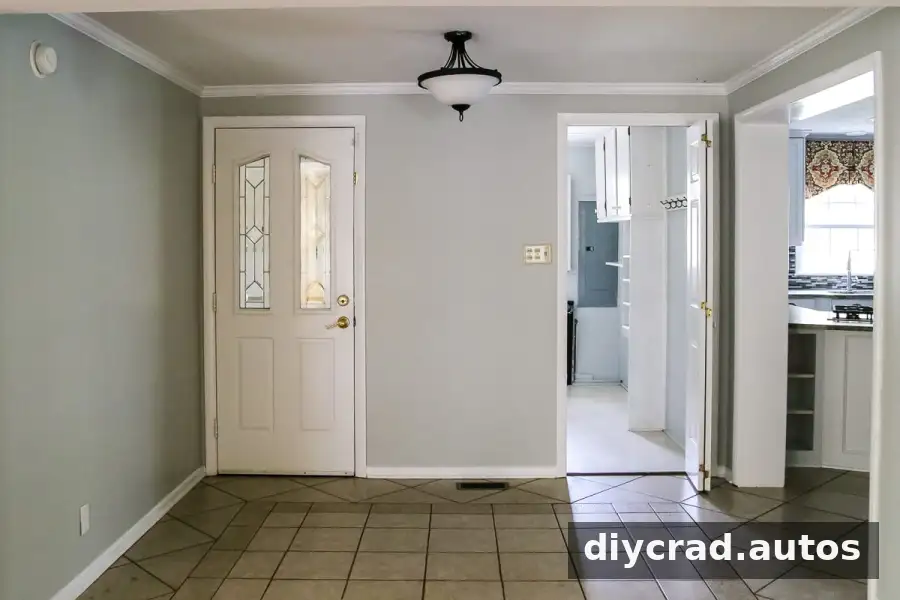
Parisian Bistro Breakfast Nook Before and After
The finished nook brings together several elements commonly associated with a relaxed French bistro: patterned flooring, a narrow dining table, classic-looking chairs, and layered lighting. Rather than relying on a single decorative feature, the design uses a mix of textures and finishes to make the small corner feel cohesive.
For a similar update, start by measuring the available floor area and planning how people will move around the table. In a narrow room, furniture proportions matter as much as color choices.
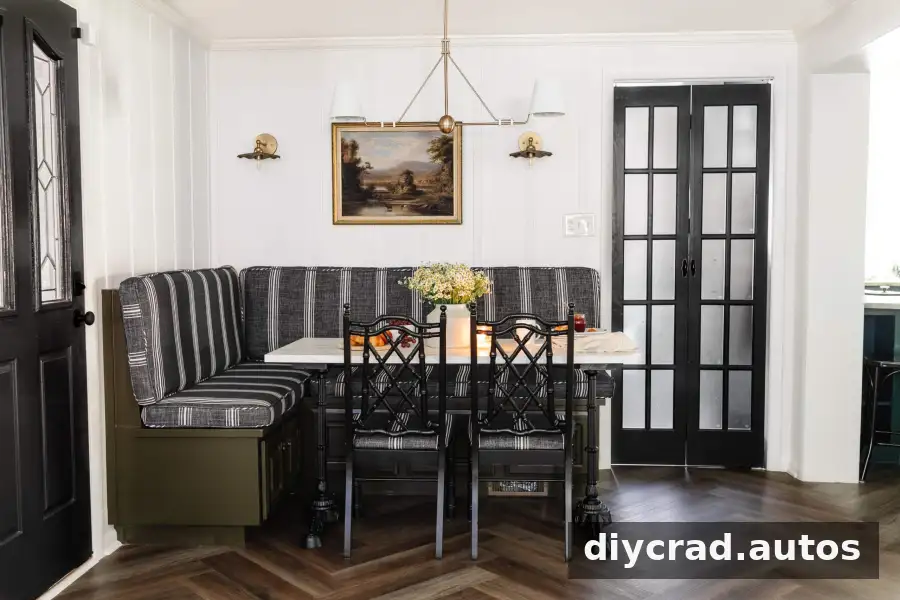
Parisian Bistro Breakfast Nook Decor Sources
The main components of this makeover include a floating vinyl floor, a secondhand banquette, refreshed dining chairs, a custom-sized table, layered lighting, wall art, and simple wall molding. The sections below describe the materials and decisions behind each feature.
Herringbone Vinyl Flooring
The existing tile could not be removed before a future kitchen renovation, so herringbone vinyl flooring was installed as a floating floor over it. The installation took about four days, and the flooring cost $325.94 for the breakfast nook area.
Before choosing a floating floor, check the product requirements and confirm that the existing surface is suitable. A clean, stable base and careful measurements help avoid problems with fit and transitions.
Banquette Bench
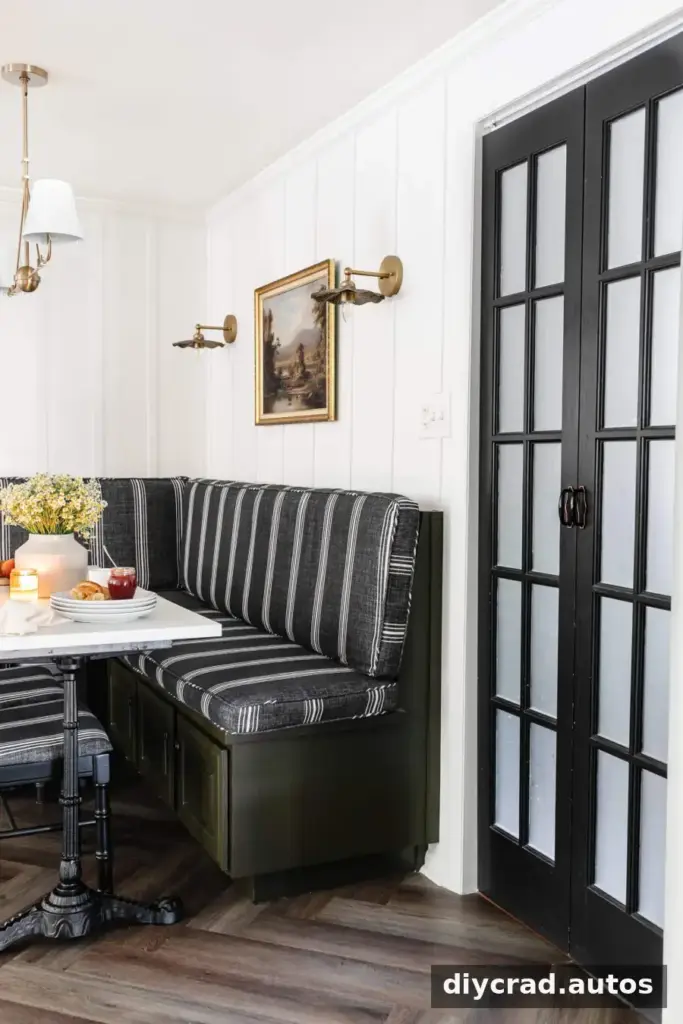
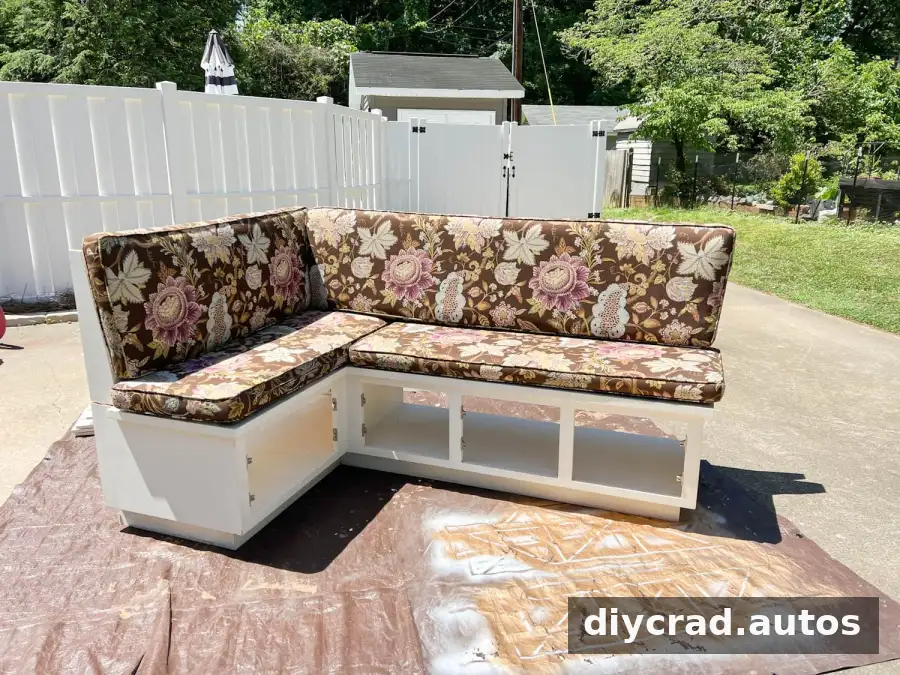
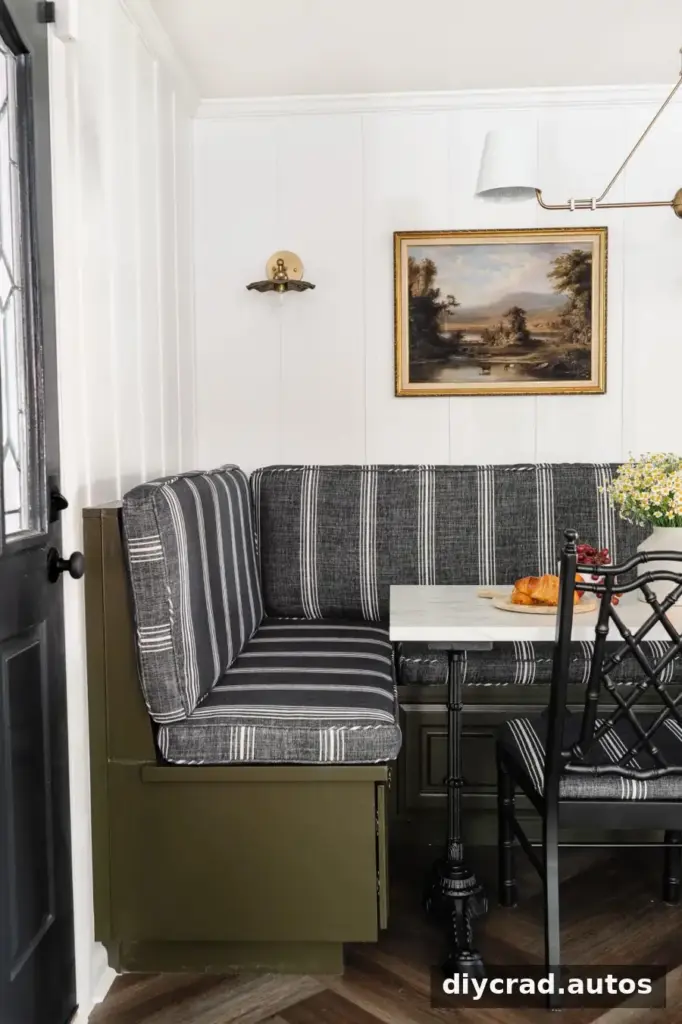
A secondhand corner banquette with custom cushions cost $350. Its dimensions fit the nook with only a small amount of clearance, giving the space a built-in appearance without commissioning a new bench.
The cushions were recovered in charcoal striped, stain-resistant fabric. A local upholstery shop charged $300 for the work. Professional upholstery can be a practical option when cushions are an unusual size or sewing skills and equipment are limited. For family dining areas, durable, easy-to-clean fabric is worth considering.
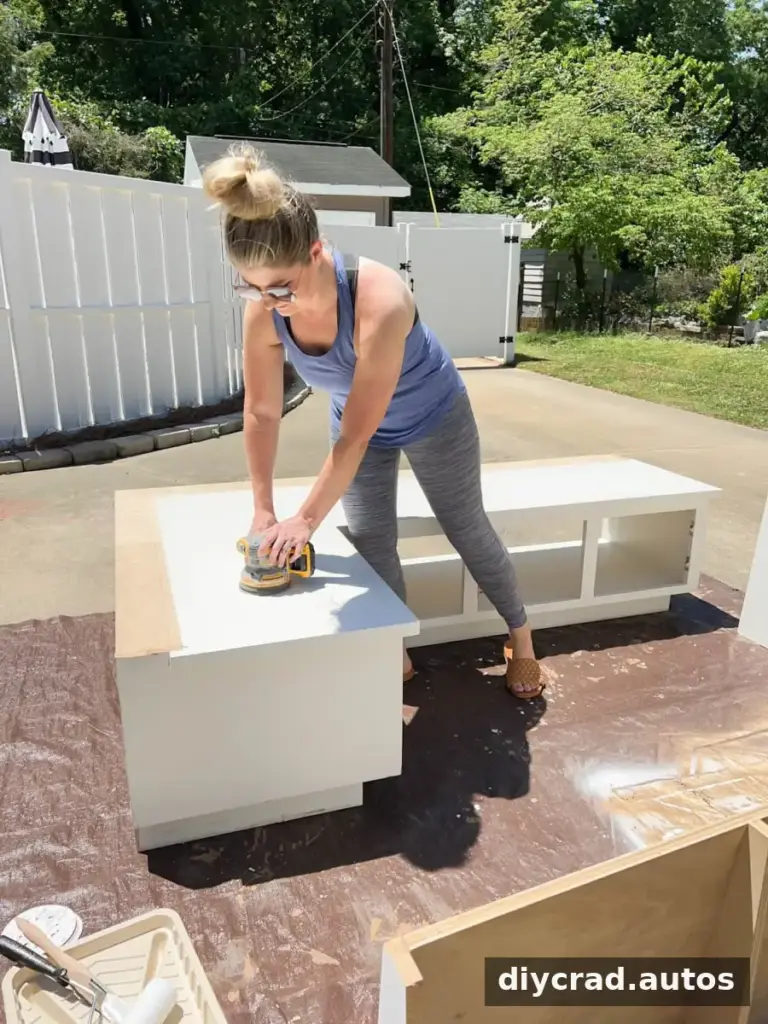
The full banquette category in the project budget—including the bench, cushions, fabric, upholstery labor, paint, and supplies—was $977.50.
Bamboo Dining Chairs
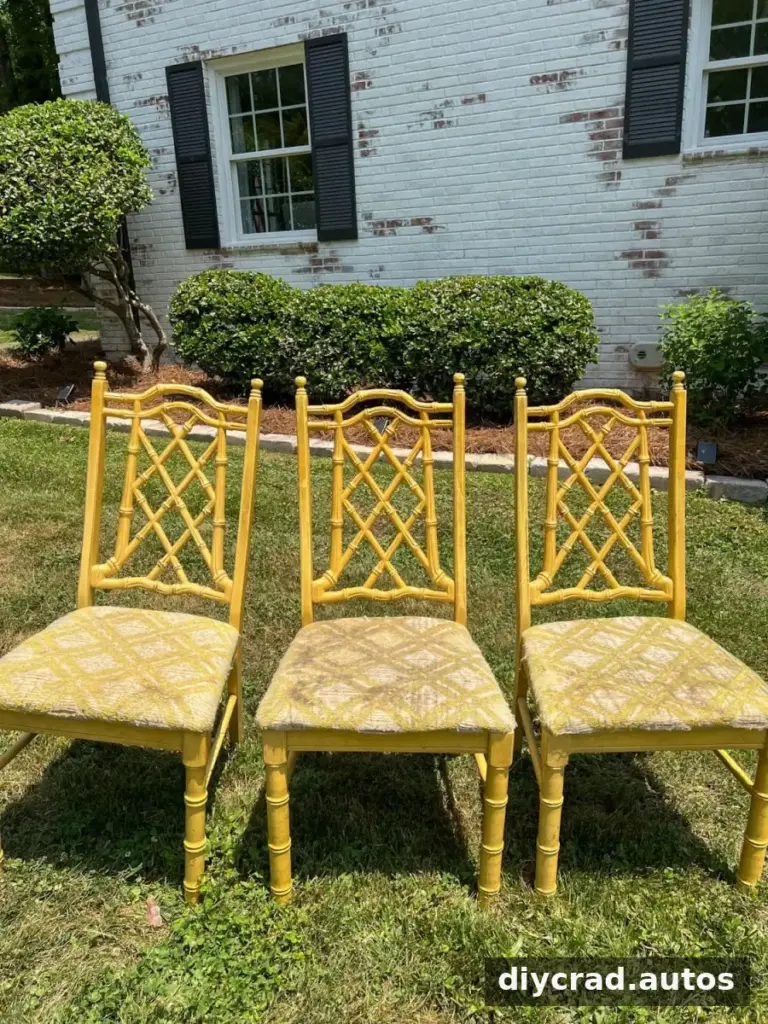
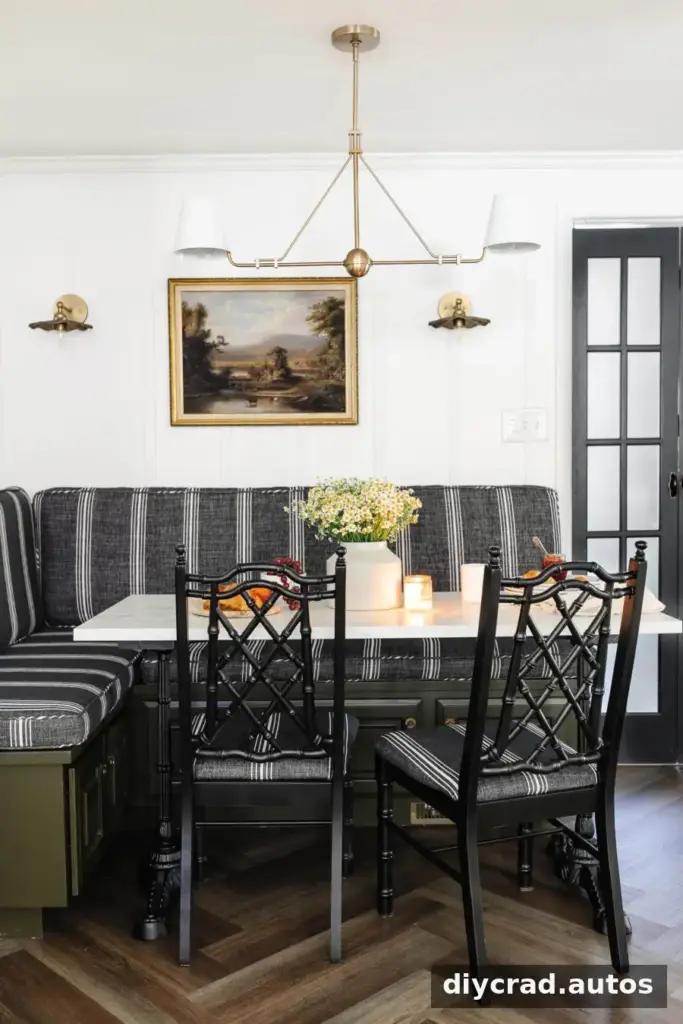
Two bamboo chairs were sourced secondhand for about $50 each. Their seats were reupholstered with leftover banquette fabric, and the frames were spray-painted. With fabric and paint included, the chairs came to about $60 each, or $120 in the budget.
Using the same fabric on the bench and chairs helps connect separate pieces of furniture. Test paint on an inconspicuous area first, and follow the product directions for surface preparation and drying time.
DIY Parisian Bistro Pedestal Table
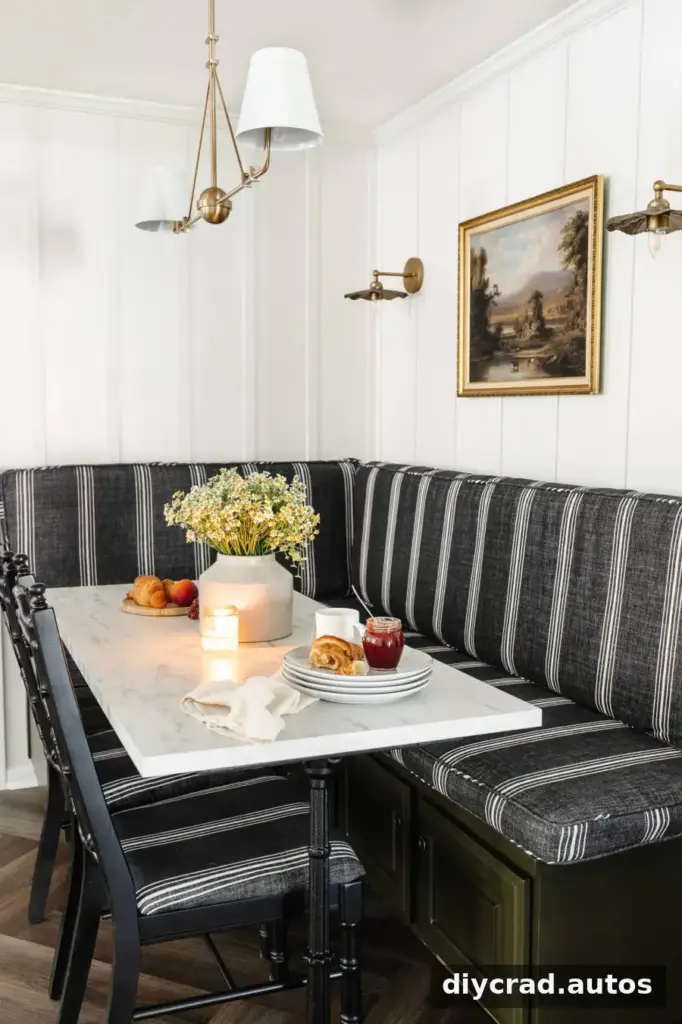
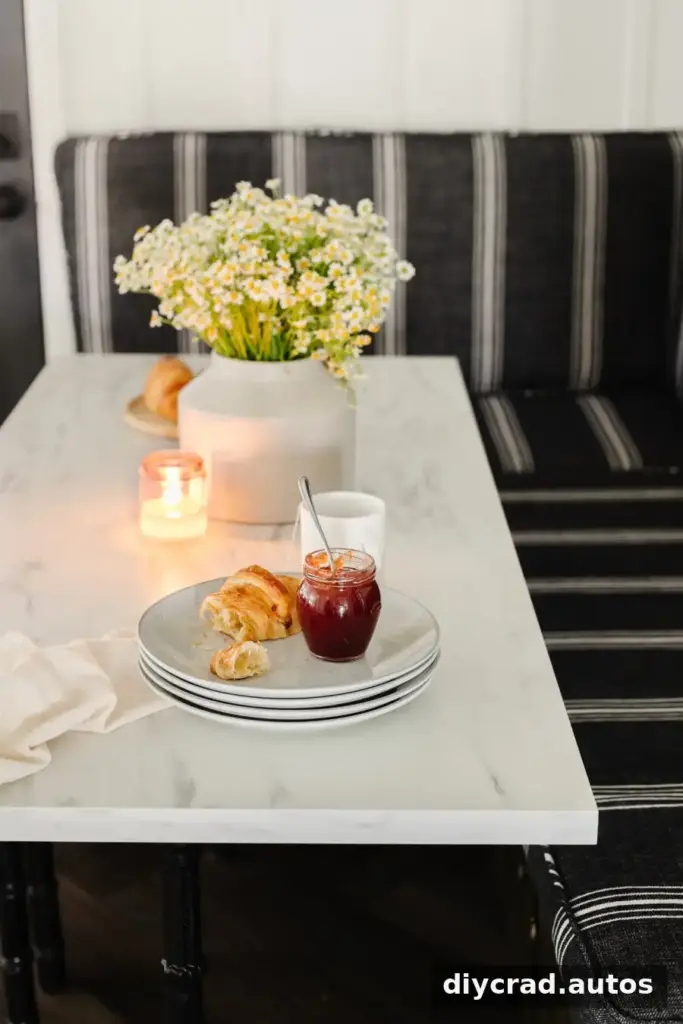
Finding a ready-made table to suit the nook’s long, narrow layout proved difficult, so a countertop and cast-iron table legs were combined to make a pedestal-style dining table. The materials and paint cost $385, compared with $3,400 for a table with a similar look.
The laminate tabletop offers a practical alternative to real marble in a busy family dining area because it avoids concerns about marble staining or etching. Before building a table, check that the top and base are compatible and that the finished height works with the chairs.
Lighting for a Windowless Nook
Because the nook has no windows, the lighting plan uses more than one source. A linear chandelier suits the long, narrow table, while vintage-style brass wall sconces add light near the artwork and help create a softer atmosphere.
Layering overhead and wall lighting can make a windowless dining area more comfortable to use. Have electrical work, including moving a chandelier box or wiring sconce boxes, handled by a qualified professional when the work requires it.
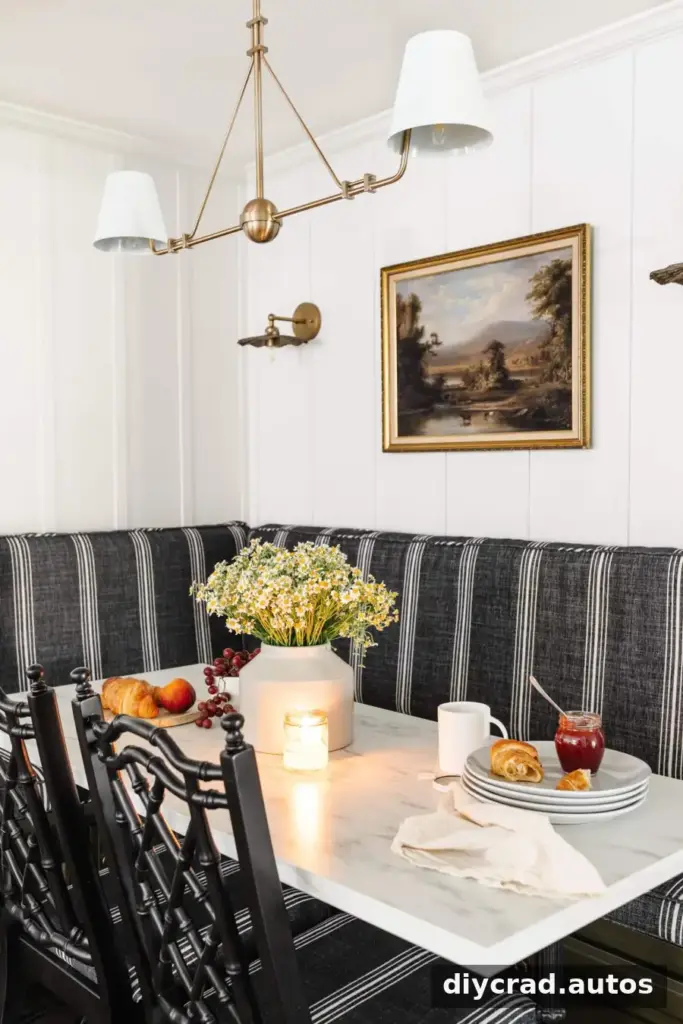
Affordable Wall Art
Public-domain archives can be a useful place to look for artwork that fits a room’s color palette. In this project, an antique oil painting image was printed on matte poster paper for $19.99, mounted on foam poster board, and placed in a secondhand gold frame that cost $4.99.
Check the usage terms for an image before printing it, and measure the frame so the finished artwork fits without unnecessary trimming.
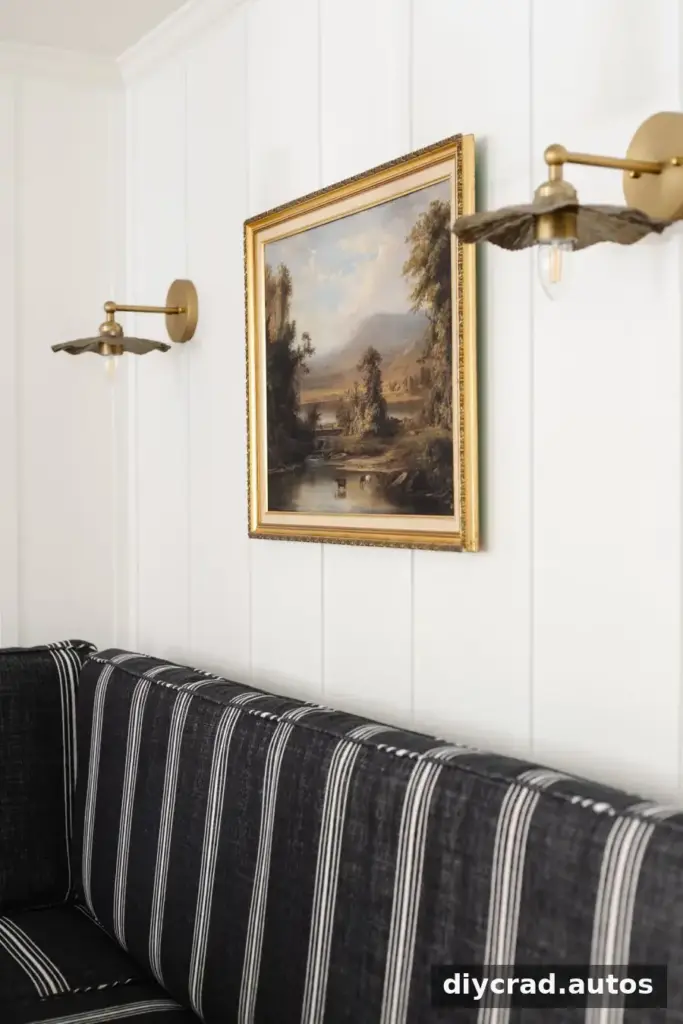
Batten Wall Molding
Lattice strips were used to add simple batten-style detail to the nook’s two walls. The molding materials cost $85, creating a noticeable change in wall texture without the expense of a more elaborate treatment.
Plan the spacing before attaching the strips, especially around corners, outlets, and trim. Measuring and marking the layout first can help the finished lines look balanced.
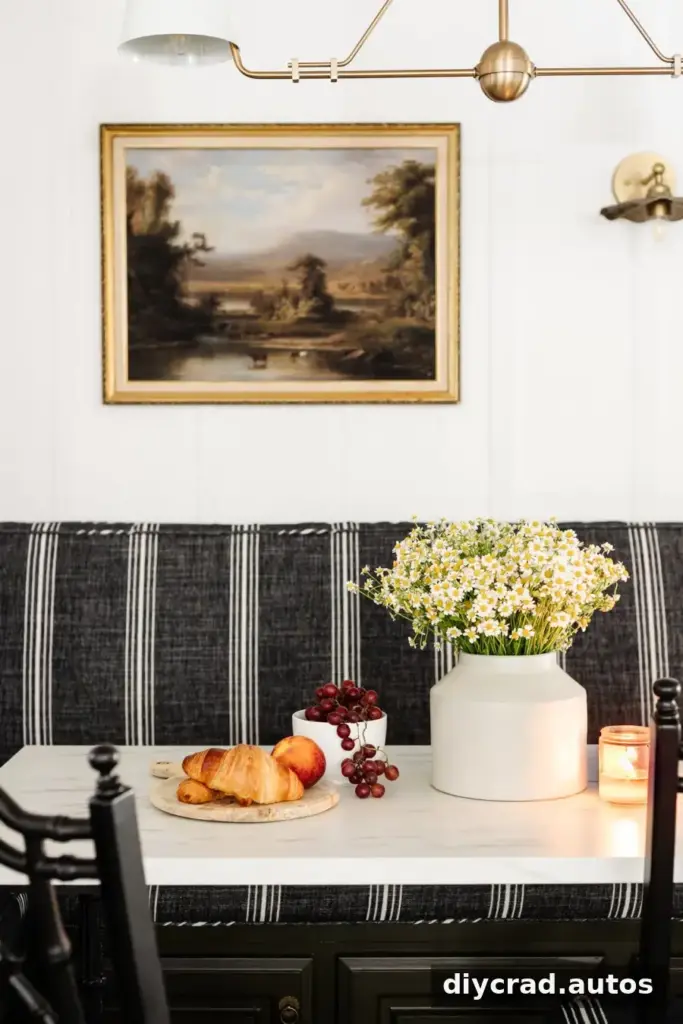
Breakfast Nook Budget Breakdown
The total project cost was $3,970.22. The itemized budget is listed below; costs reflect this project and may vary with location, materials, and labor rates.
- Contracted carpentry labor to move the door: $550
- Contracted electrical labor to wire sconce boxes and move the chandelier box: $694.66
- Banquette, including bench, cushions, fabric, upholstery labor, paint, and supplies: $977.50
- Dining chairs, fabric, and paint: $120
- Bistro table, including countertop, legs, and paint: $385
- Herringbone floor for the breakfast nook area: $325.94
- Chandelier: $220
- Wall sconces: $59.99
- Batten walls: $85
- Wall and trim paint, Chantilly Lace: $69.99
- Door paint, Celtic Stone: $30.97
- French bifold door: $398.19
- Art printing: $19.99
- Picture frame: $4.99
- Vase: $28
Total: $3,970.22
Moving the door and completing the electrical work accounted for $1,244.66 in contracted labor. These jobs were assigned to professionals rather than treated as DIY tasks. When budgeting a renovation, include labor and materials together, and consider which tasks require specialist skills or permitted electrical work.
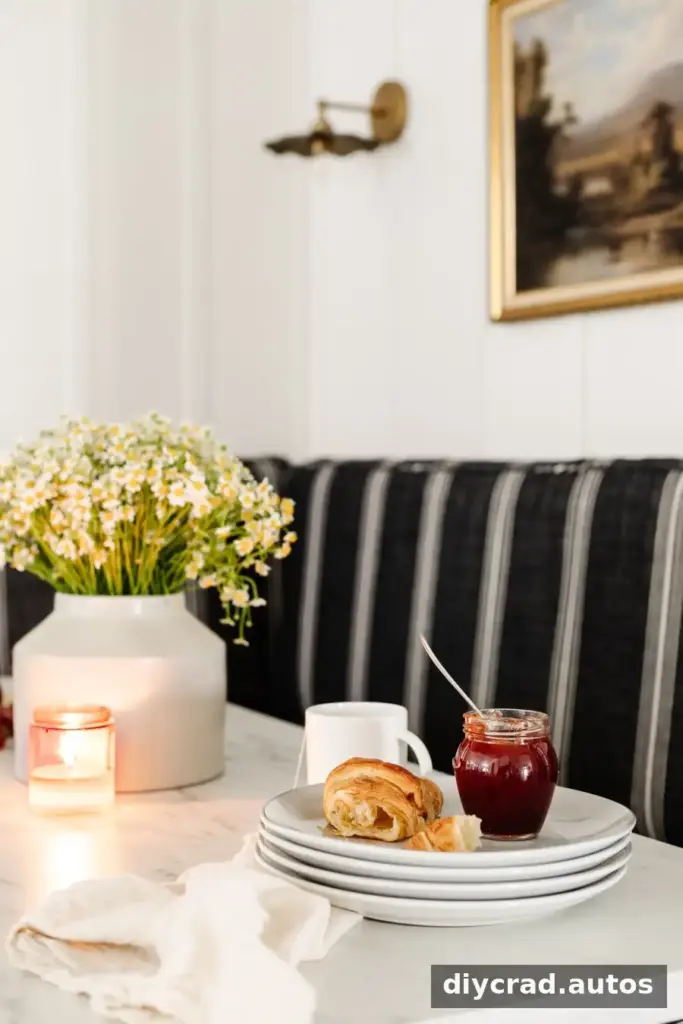
The Finished Breakfast Nook
The completed dining area can seat six to eight people, compared with four before the changes. The banquette adds storage underneath, and the revised layout provides more room to move around the table.
A banquette can make efficient use of a corner, but allow enough space to pull out chairs and pass through the room comfortably. Measure the full layout, including chair clearance, before buying or building furniture.
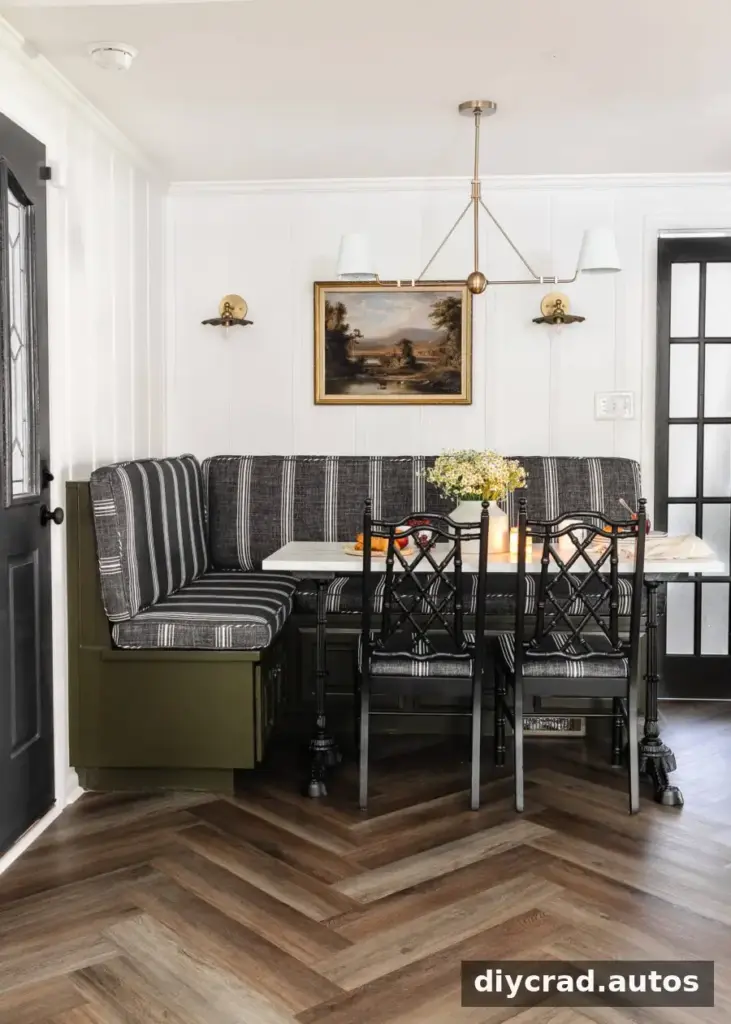
A Breakfast Nook That Evolved Over Five Years
The nook changed styles several times over five years, moving through shabby farmhouse, modern rustic, transitional minimalist, and finally a Parisian bistro-inspired look. The gradual process reflects how a room can change as household needs, available time, and budgets evolve.
It is not necessary to complete every detail at once. Planning a project in stages can make it easier to compare options, save for larger expenses, and learn which changes work best in the space.
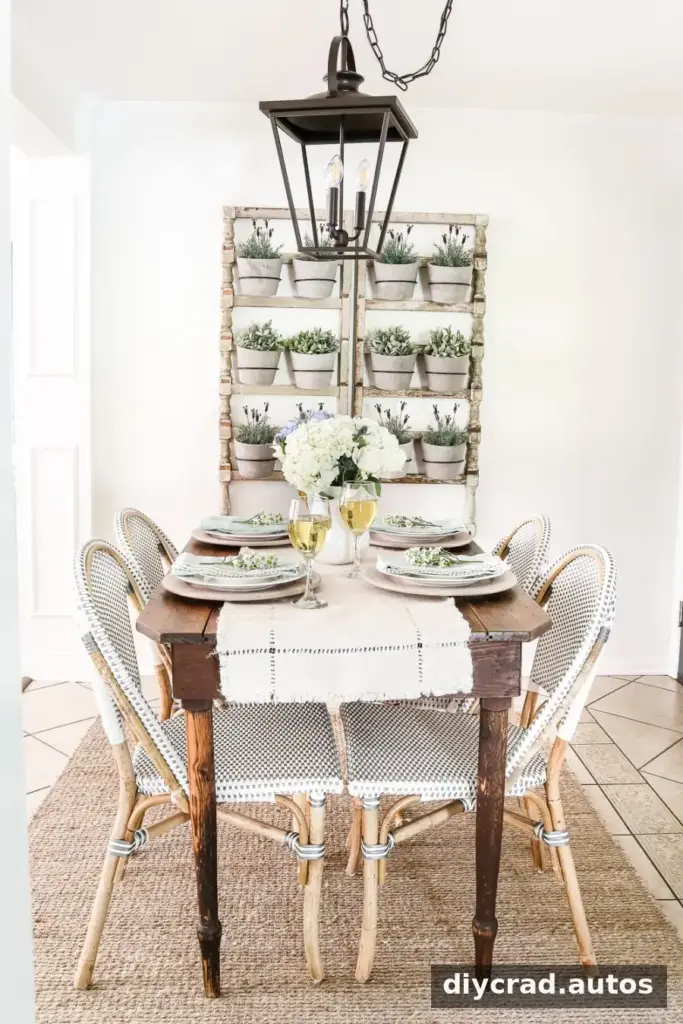
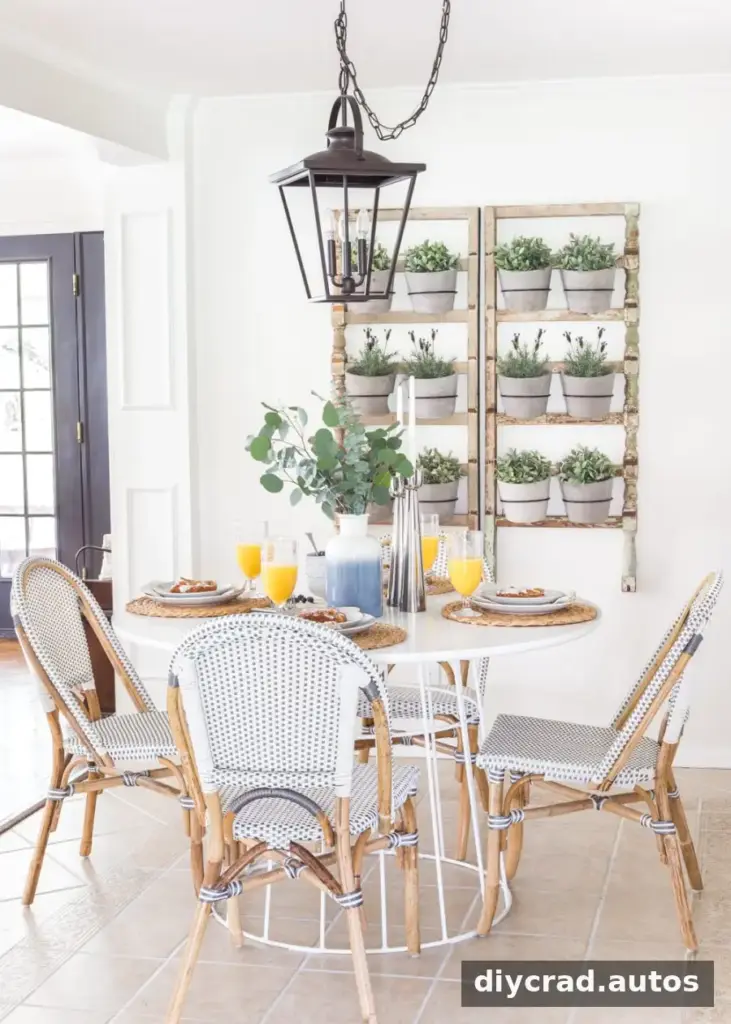
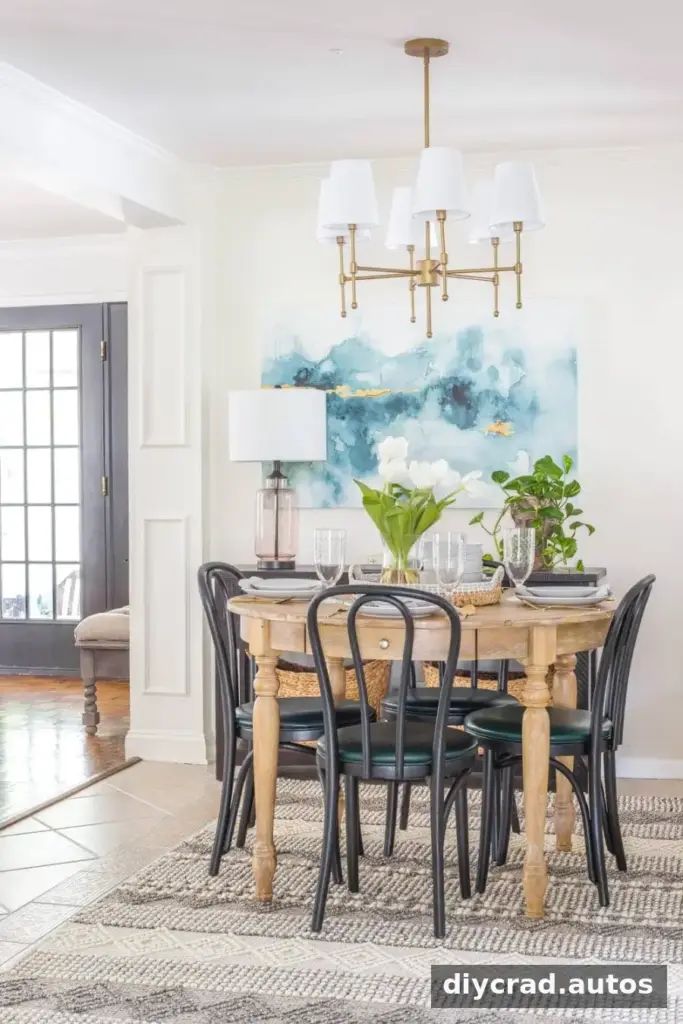
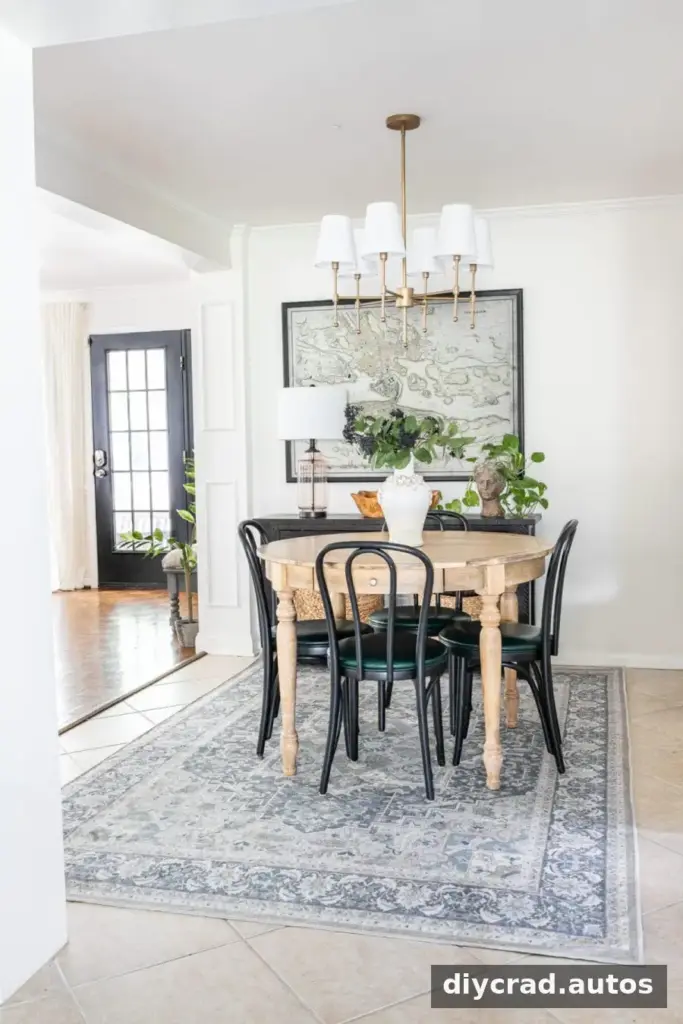
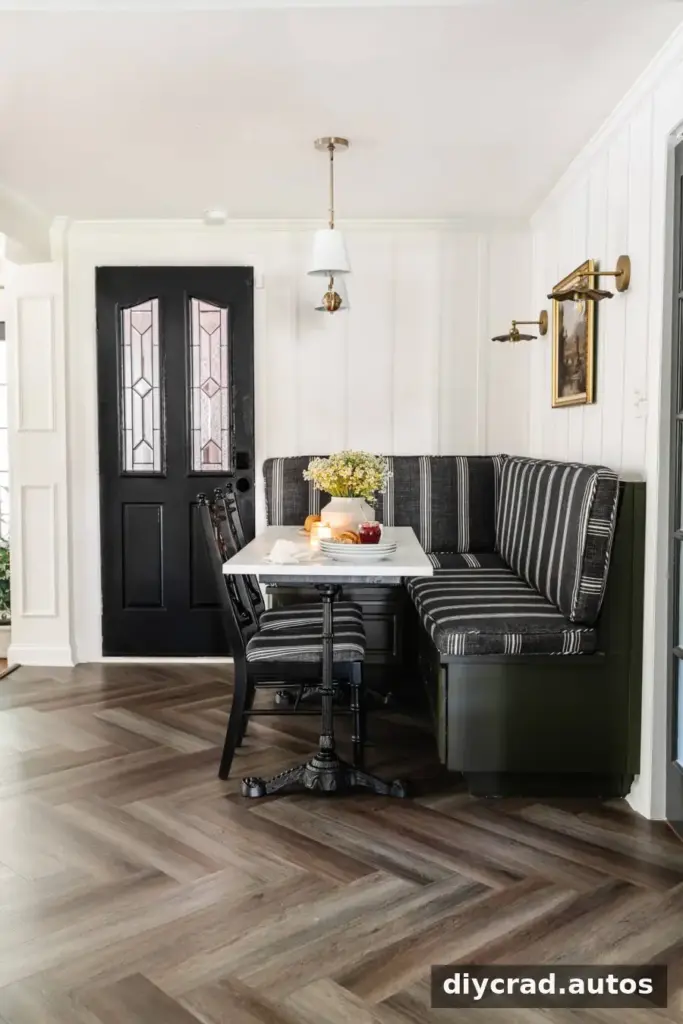
The garage door is still expected to become an interior pocket door after a future addition. Until then, the nook functions as a larger gathering spot with added seating, storage, and layered lighting.
This Parisian bistro breakfast nook demonstrates how a small space can gain character through practical choices: measure carefully, reuse furniture where possible, select durable finishes for everyday use, and budget for professional help when a task calls for it.

