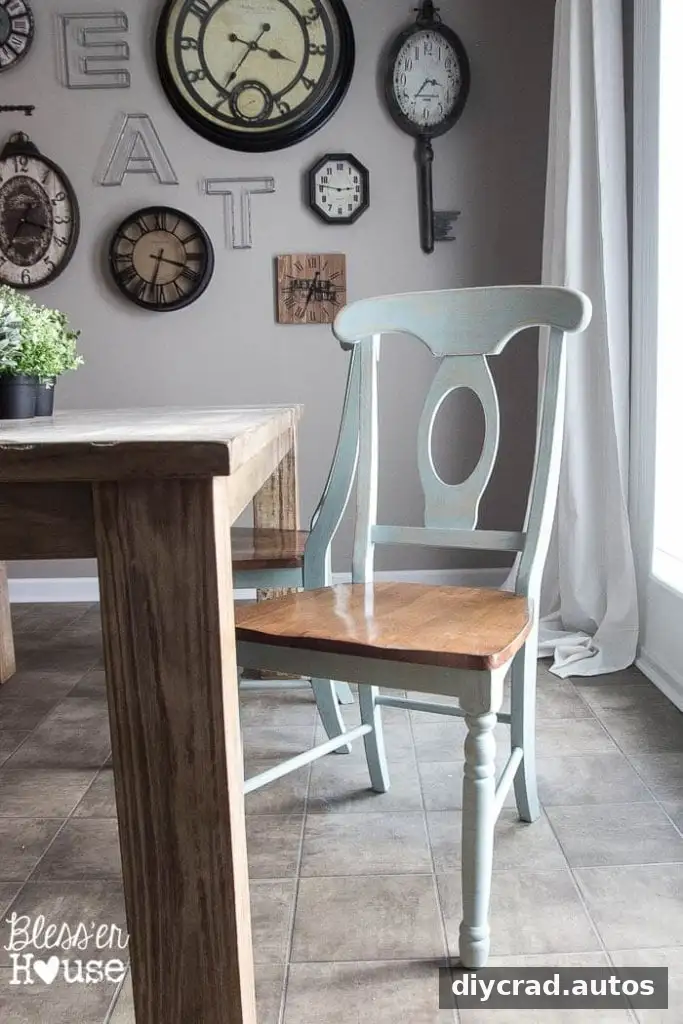
Refreshing dining chairs with paint can add color and character without replacing the furniture. This distressed duck egg dining chairs makeover uses chalk paint, sandpaper and finishing wax to create a softly weathered finish. The step-by-step approach is also useful for beginners who want to update a set of chairs while keeping the project manageable.
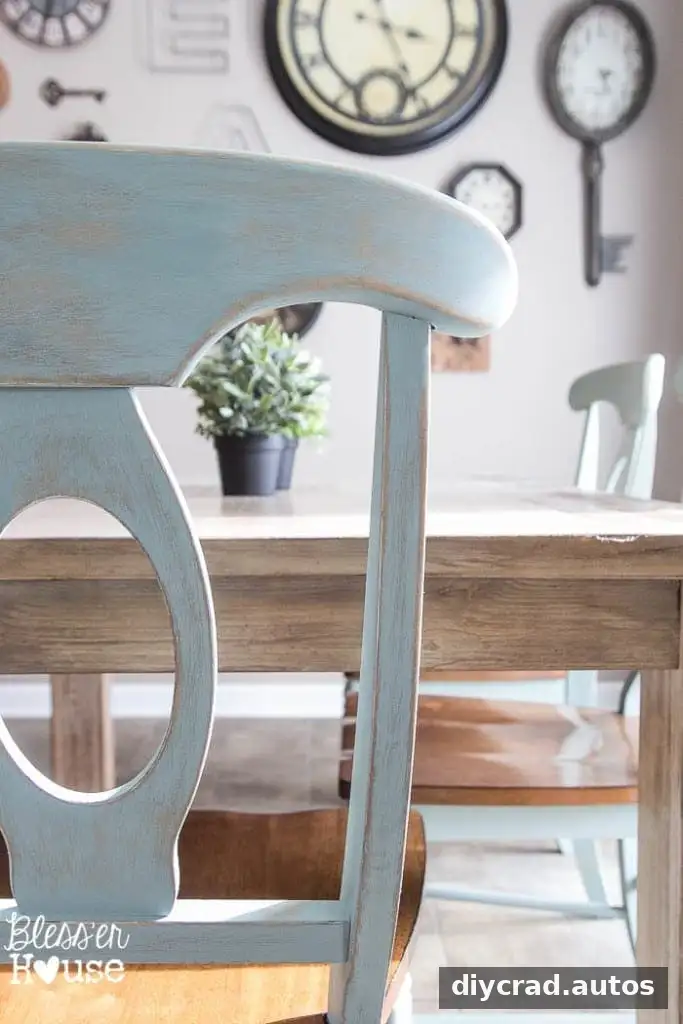
Why paint dining chairs duck egg?
The original chairs had a weathered wood appearance, but their close match with the table made the breakfast area feel too coordinated. A muted duck egg shade adds contrast while still working as a gentle color in a neutral room. Before choosing a paint color, consider the surrounding table, walls and textiles; a small test patch can help you see how the shade looks in the room’s natural light.
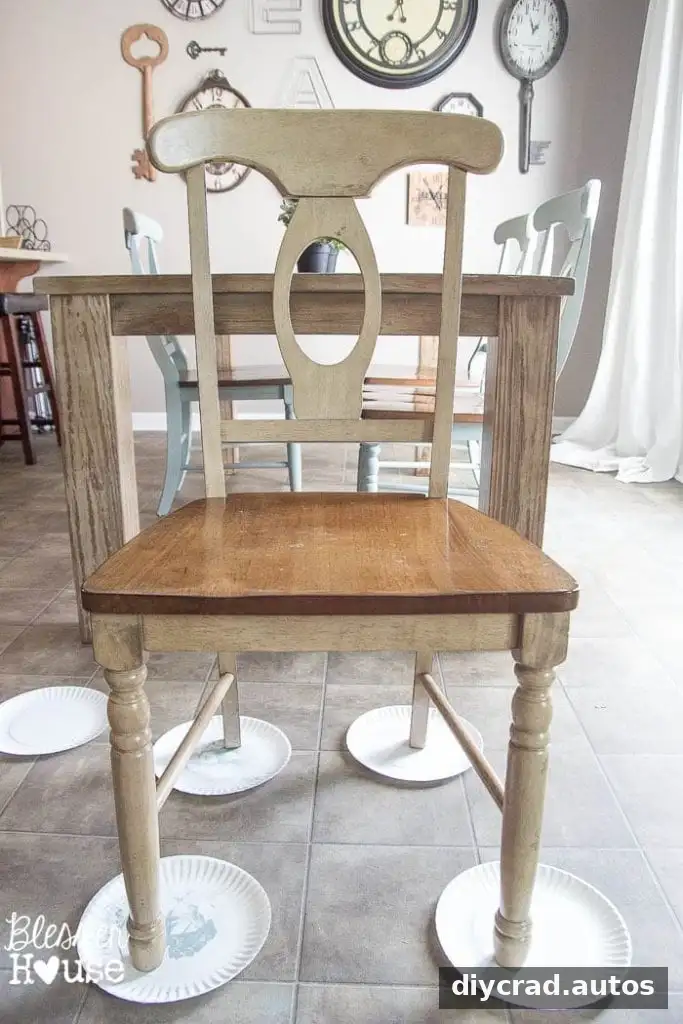
Dining chairs are used often and can collect food, dust and everyday marks. Clean them before painting so dirt does not interfere with the finish. For this makeover, the chairs were wiped with soapy water, cleaned again with a damp cloth and left to dry completely. Protect the floor with a drop cloth or suitable covering, and check that the chair legs are stable before starting.
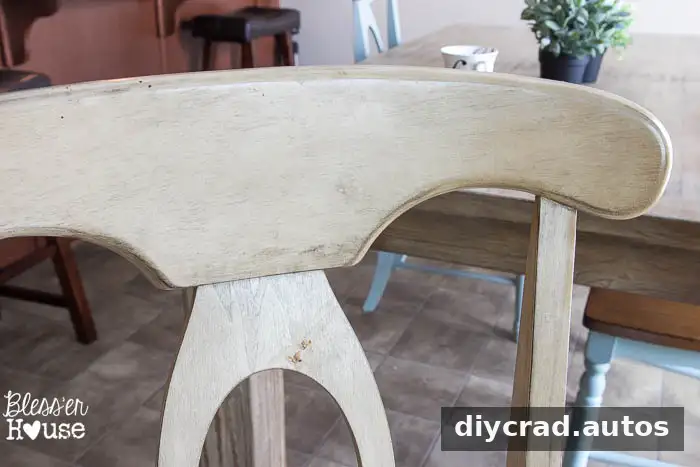
How to paint distressed duck egg dining chairs
Chalk paint is often chosen for furniture projects because it can be applied with relatively simple preparation. Follow the directions on the paint container, as products and suitable surfaces can differ. Have a brush, cleaning cloths, sandpaper and a way to protect the work area ready before you begin.
1. Clean and prepare the chairs
Wipe each chair with soapy water, then remove any residue with a clean, damp cloth. Let the wood dry fully before painting. If the furniture has loose parts, peeling coating or a very glossy surface, address those issues first and follow the paint maker’s preparation guidance.
2. Apply the chalk paint
Use a suitable angled brush to work paint across the chair, including the edges and hard-to-reach areas. Applying paint directly from its container can be convenient, but keep the lid nearby and avoid contaminating the product. Chalk paint may dry quickly, so work in manageable sections and use even strokes. Streaks can be visible while the first coat dries; check the surface once it is dry before deciding whether another coat is needed.
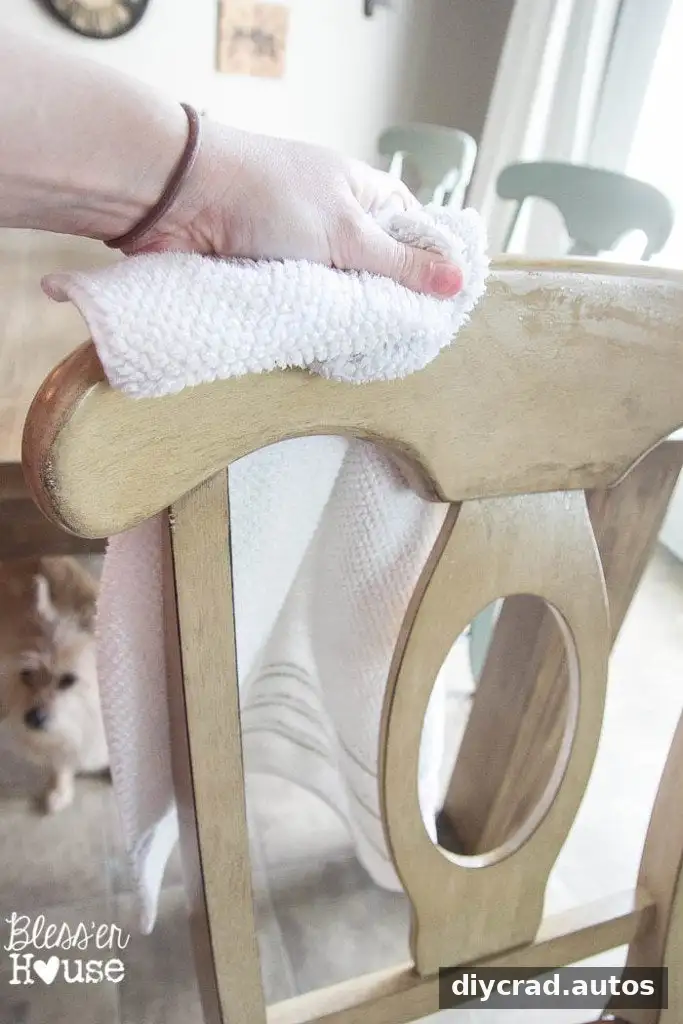
The paint used for this project was Duck Egg, a soft blue-green shade. The finish can look different depending on lighting and the color beneath it, so test the paint on an inconspicuous area if you are unsure. Allow each coat to dry according to the product instructions.
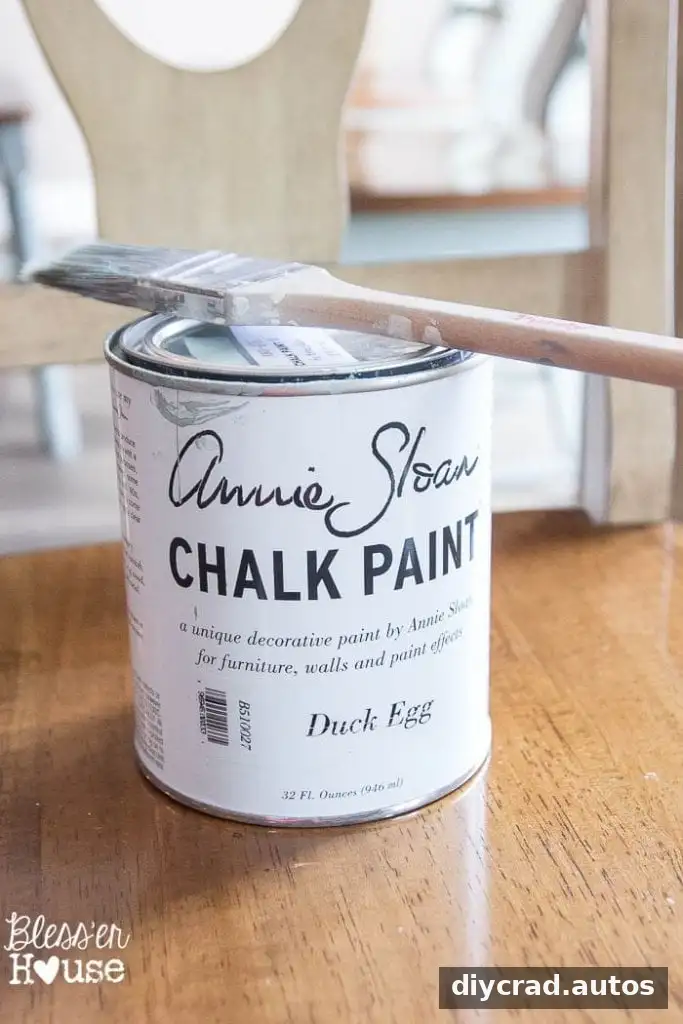
A 1.5-inch angled brush was used for the chairs. Brush size and shape affect how easily you can reach details, so choose one that feels comfortable for the furniture’s legs, rails and seat.
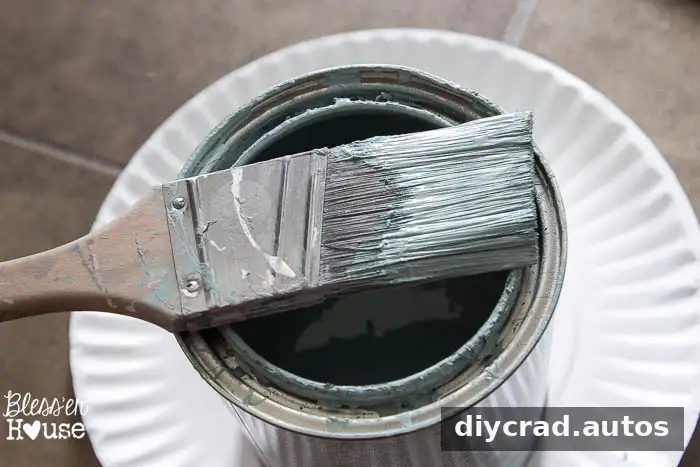
Work steadily over each chair and check for missed spots as you go. Avoid loading the brush with too much paint, which can leave drips around joints and edges. Let the painted surface dry before distressing.
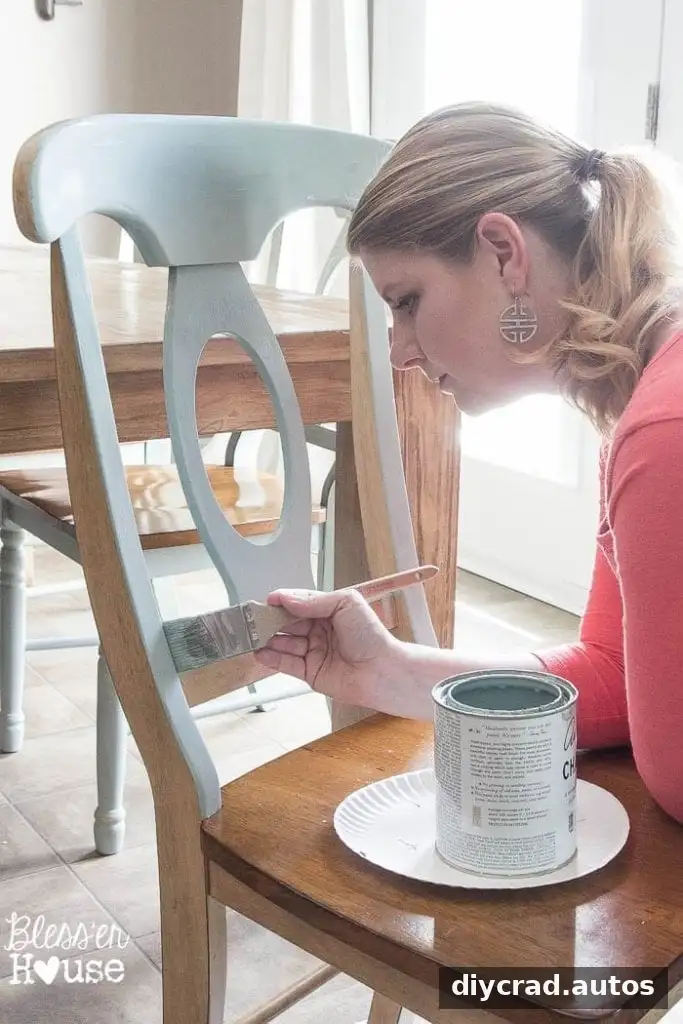
Duck egg can bring a subtle touch of color to a room without overwhelming other neutral finishes. For a coordinated breakfast area, repeat the shade in a small accessory or textile rather than painting every nearby surface the same color.

(c) Brandywine Photography and Cassie Leigh Photography
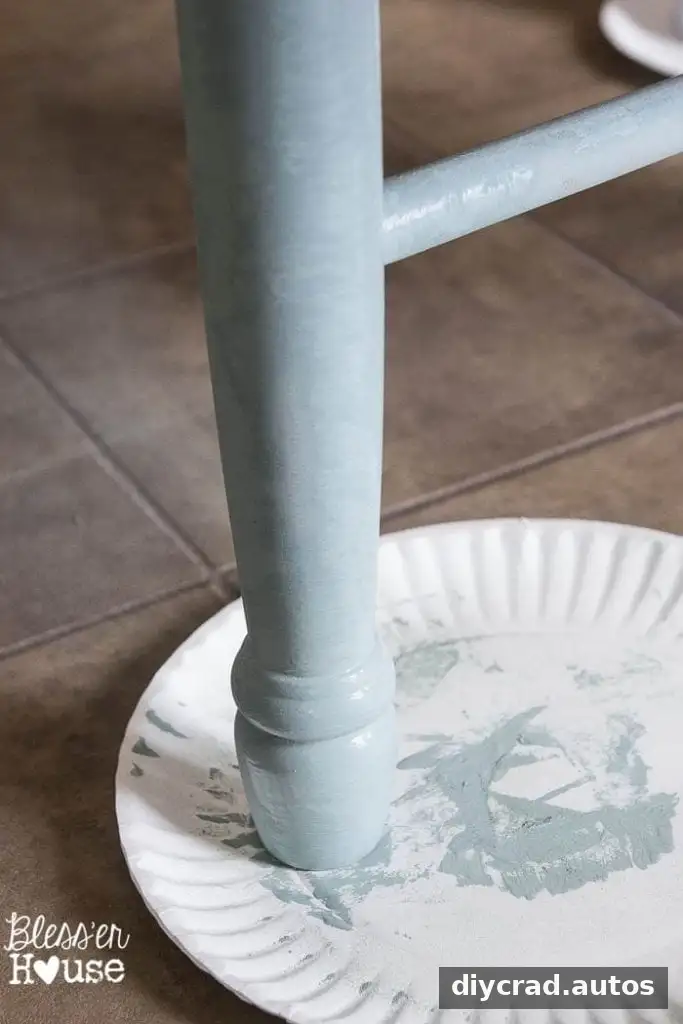
3. Distress the painted surface
Once the paint had dried for about an hour, 100-grit sandpaper was used to reveal parts of the wood underneath. Drying time can vary with the product and conditions, so confirm that the paint is ready to sand rather than relying only on the elapsed time.
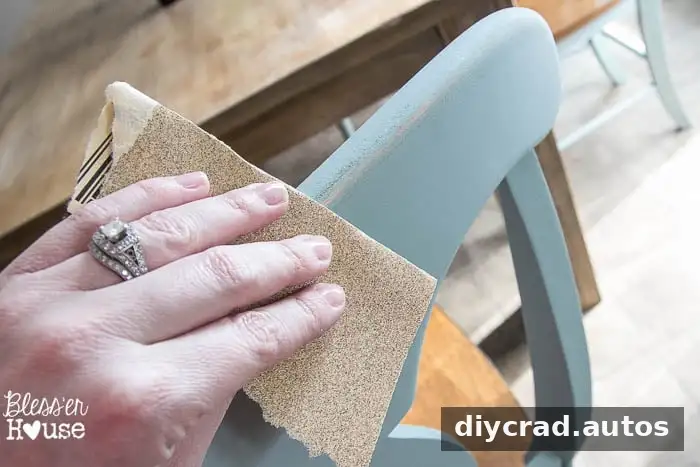
Focus first on edges and corners, where wear might naturally appear, then lightly sand other areas for a more evenly aged effect. Use a gentle touch and pause frequently to check the result; it is easier to remove a little more paint than to recreate an area that has been sanded too heavily.

The exposed wood and softened paint create the distressed, weathered look. If you prefer a more subtle finish, distress only a few edges. For a more visibly aged effect, add variation gradually while keeping the pattern balanced across the chairs.
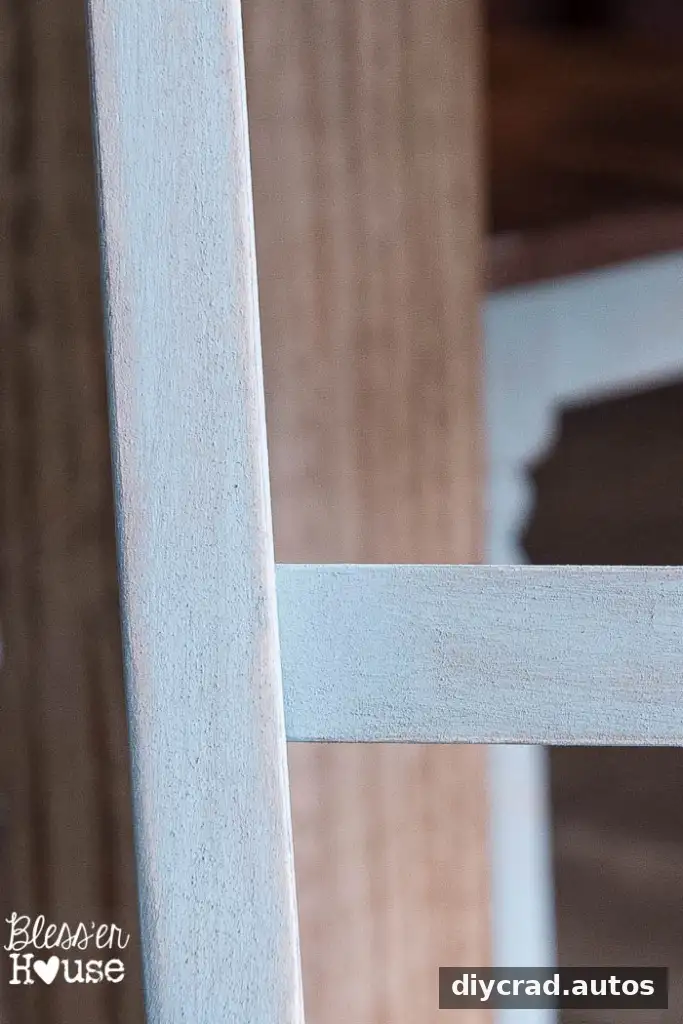
After using 100-grit paper, 220-grit sandpaper was used to smooth and blend the scratches. Wipe away sanding dust with a damp cloth and allow the surface to dry before applying a finish. Fine sanding helps the transitions look less abrupt, but avoid sanding through more paint than intended.
4. Apply finishing wax
A clear paste finishing wax was applied with an old sock worn over the hand, then buffed. Use a clean, lint-free cloth or the applicator recommended by the product instructions, and apply a thin, even layer. Finishing wax can make the surface feel smoother and add protection, but it should not be treated as waterproof or as a substitute for promptly cleaning spills.
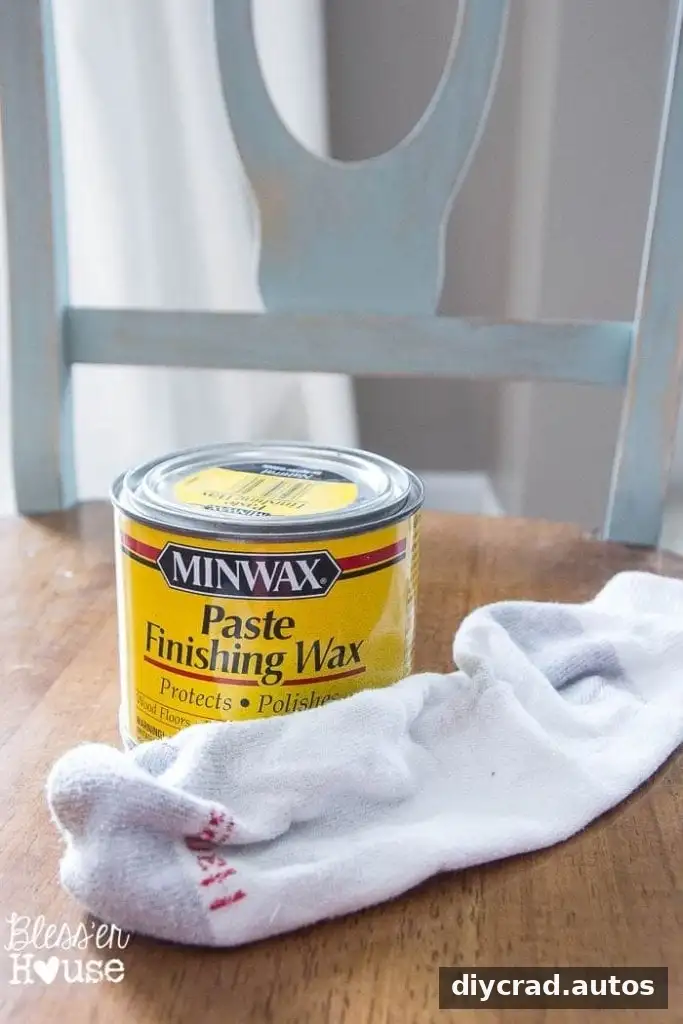
Follow the wax label for application, buffing and curing guidance. Keep the chairs out of heavy use until the finish is ready, and test any cleaning method on an inconspicuous spot. For furniture used daily, occasional checks can help you spot areas that need gentle cleaning or maintenance.
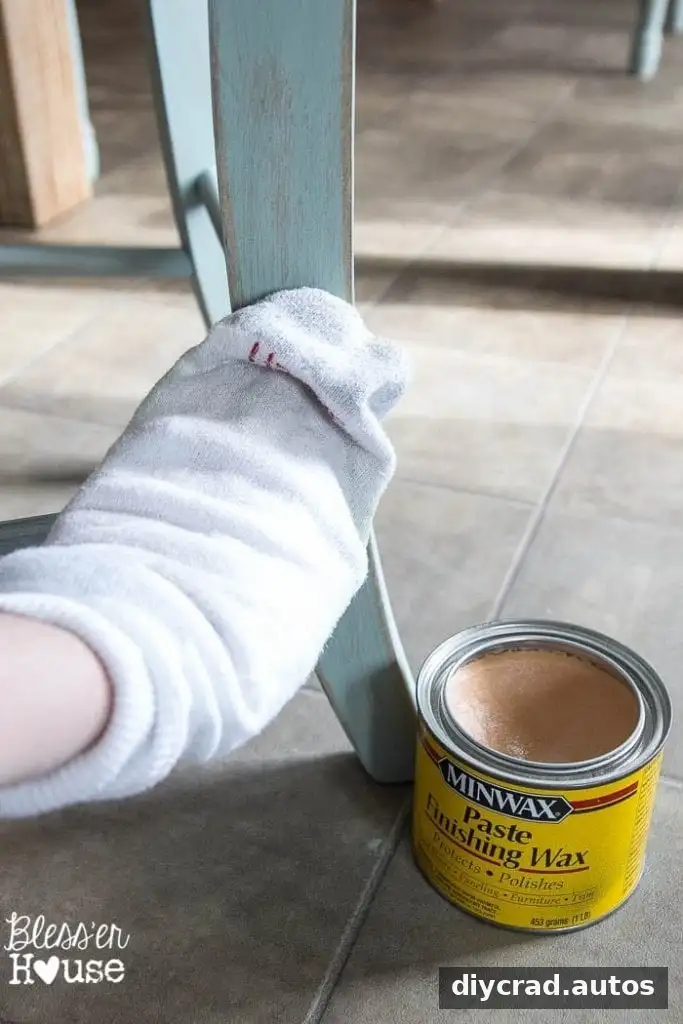
A distressed finish is forgiving because small marks can blend into its intentionally worn appearance. Even so, avoid dragging sharp objects across the chairs, and clean food or drink spills promptly to help maintain the painted surface.
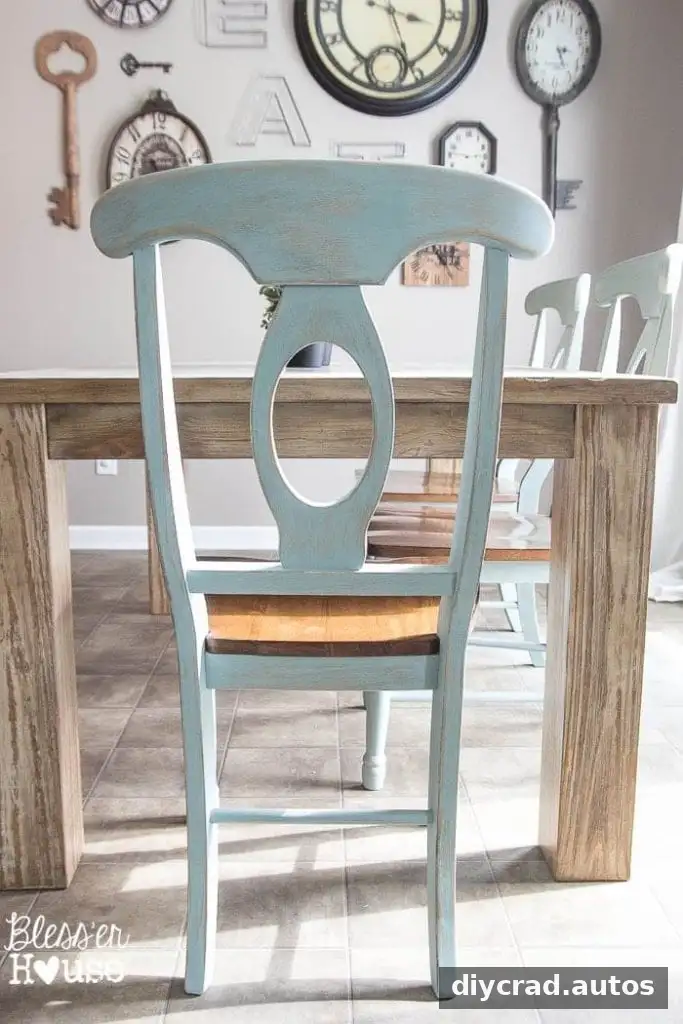
Final thoughts on distressed duck egg dining chairs
This makeover shows how cleaning, painting, careful sanding and a protective wax finish can change the look of dining chairs without replacing them. The key is to prepare the surface properly, let each layer dry as directed and distress gradually. Distressed duck egg dining chairs can add a relaxed pop of color to a breakfast nook, while the amount of sanding lets you choose how subtle or weathered the final result looks.