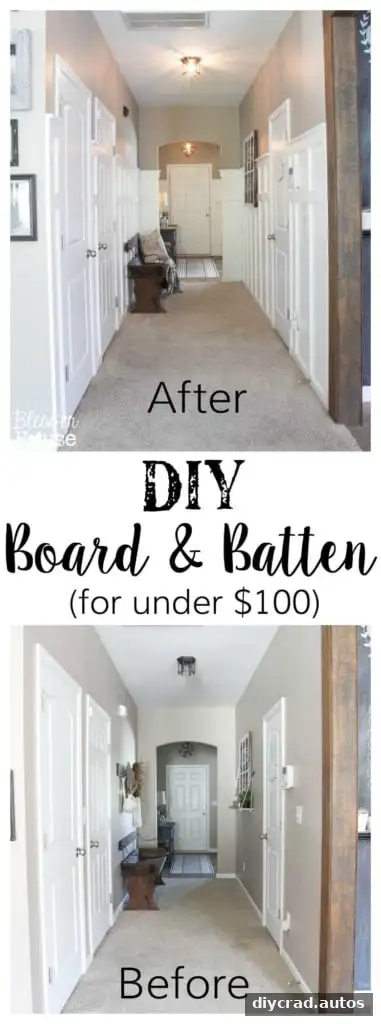
This DIY board and batten project gave a plain foyer and dark hallway a brighter, more finished look. The makeover paired decorative wall trim with a fresh coat of paint, transforming a space that previously felt flat. Here’s a closer look at the preparation, painting process, and final result, along with practical tips for planning a similar update.
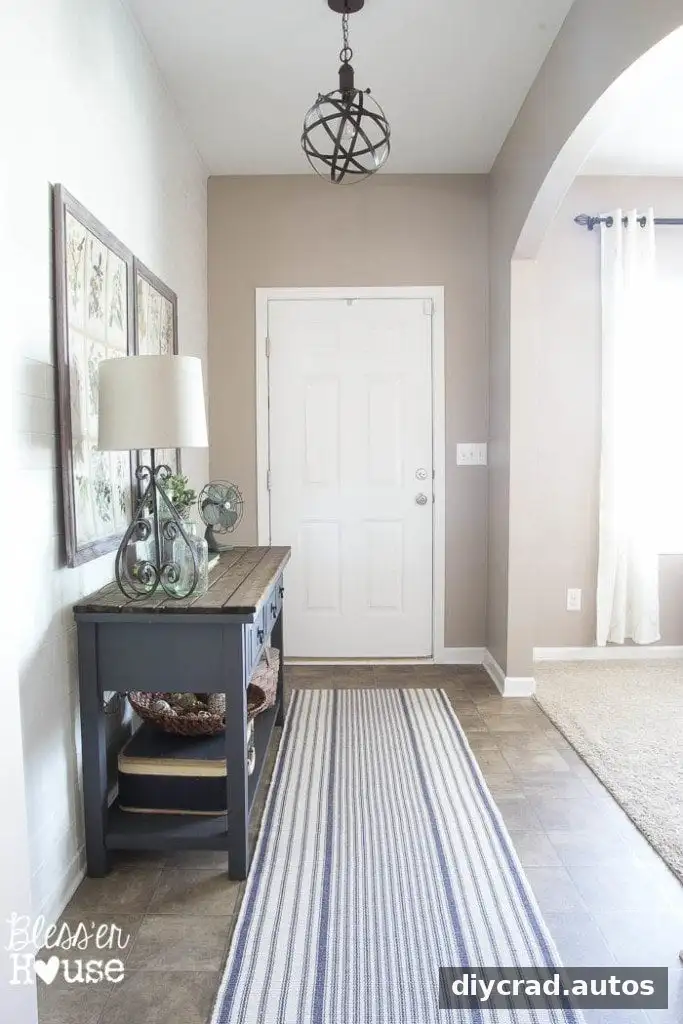
DIY board and batten: the foyer before painting
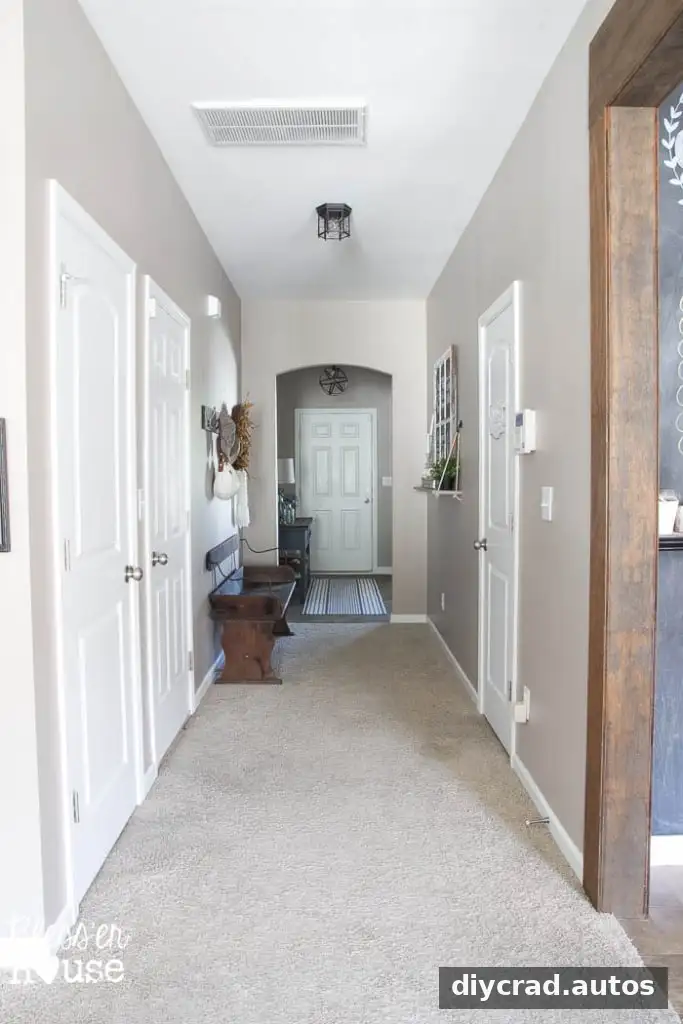
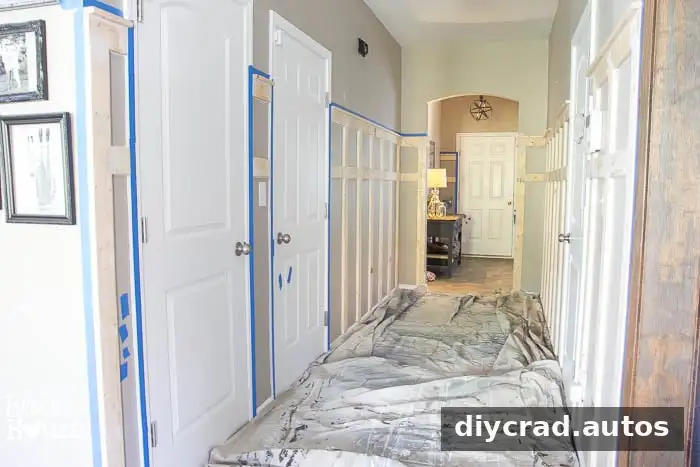
The foyer already had a shiplap wall that added character, but the front door still had a basic, builder-grade appearance. The hallway connecting the foyer to the living room was also dark and lacked natural light and visual interest.
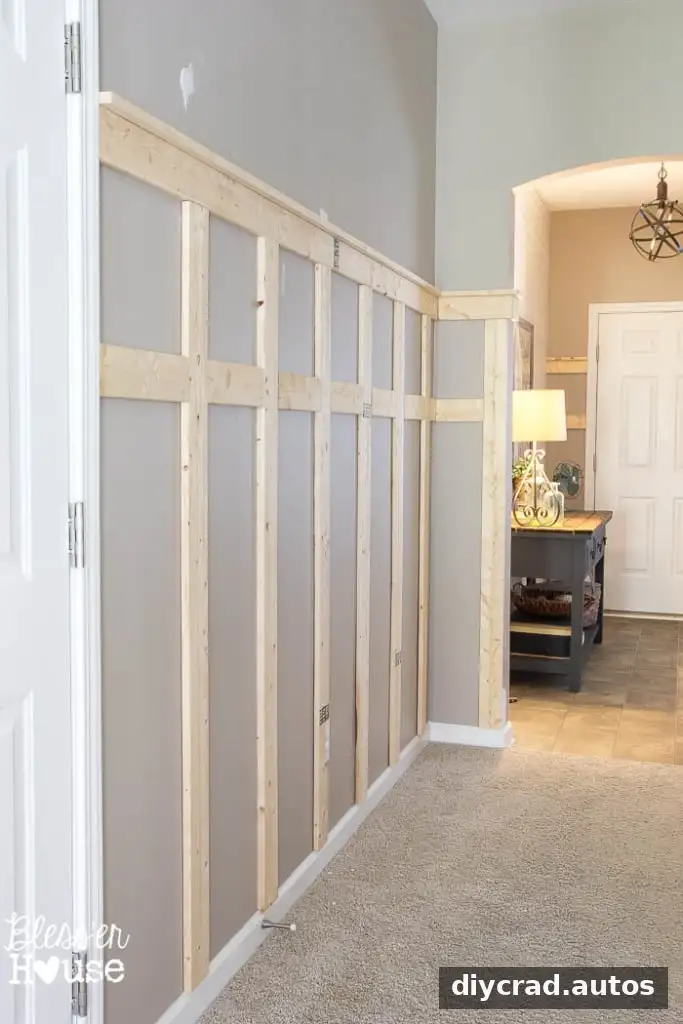
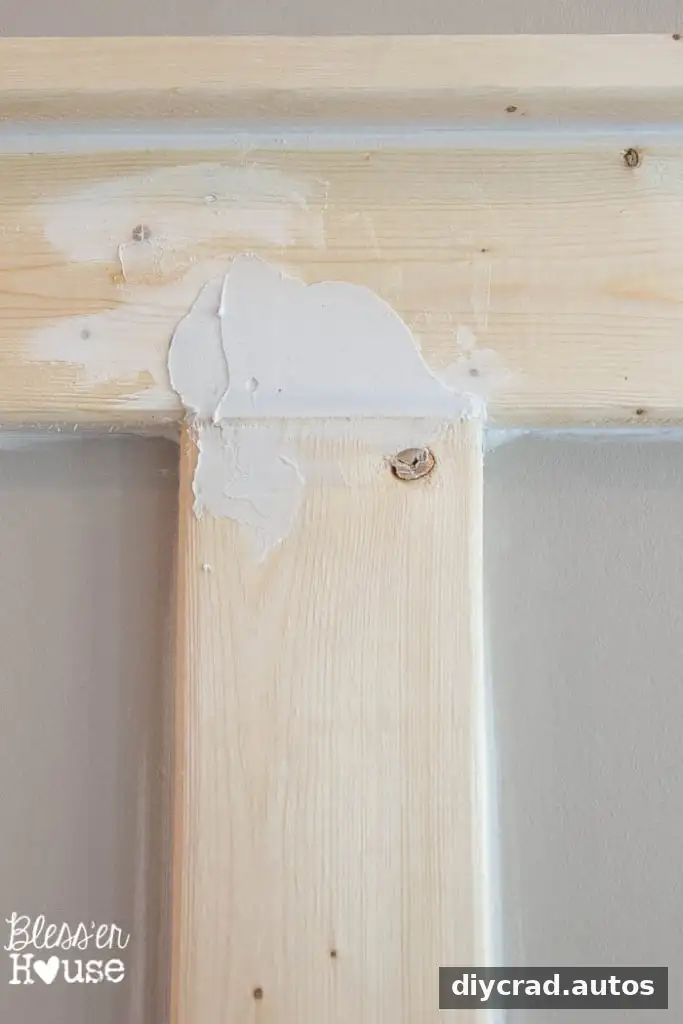
Before the paint went on, the newly installed board and batten was bare. Careful preparation was needed to create a smooth finish across the wood, seams, and nail holes.
Prepare the trim for a smooth finish
Wood knots, joints, and nail holes were filled with spackle, then the trim was caulked and sanded. Sanding is an important step: it helps smooth patched areas and uneven edges before painting. Take time to remove dust afterward so it does not become trapped in the finish.
Painter’s tape was applied along the surrounding trim to help protect adjacent surfaces. Keep tape pressed down along its edge, especially near corners, to reduce the chance of paint bleeding underneath.
Choosing paint and painting the board and batten
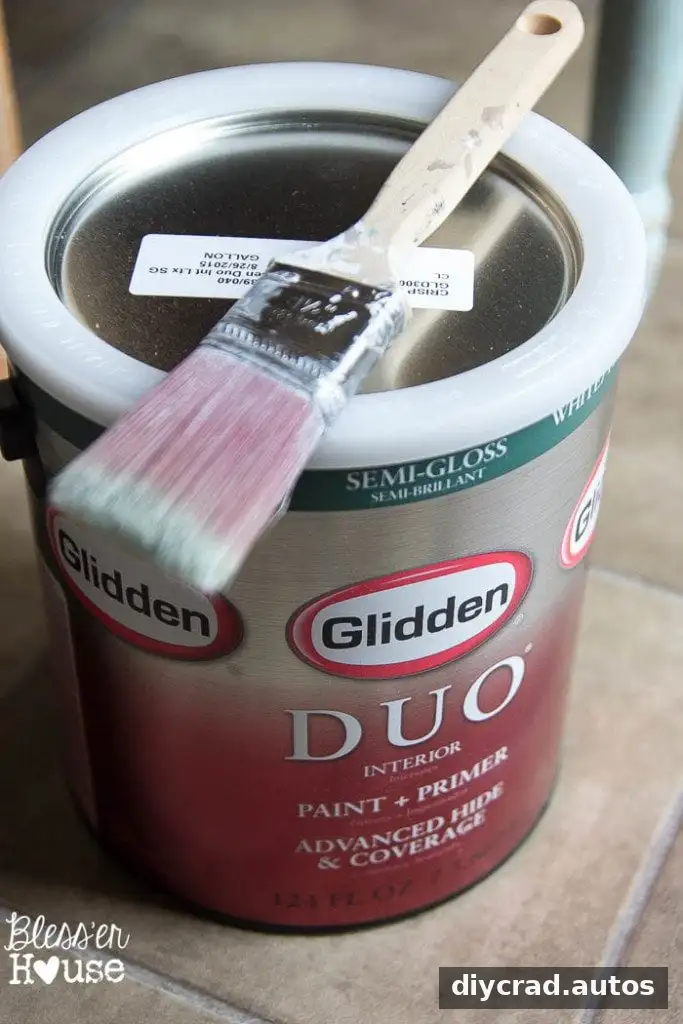
A gallon of paint-and-primer was used for the project. The selected shade was Crisp Linen White in a semi-gloss finish. The project prioritized staying within budget, and the paint was described as affordable while providing good coverage and a smooth finish. A quality brush can also help achieve cleaner results on narrow trim and detailed edges.
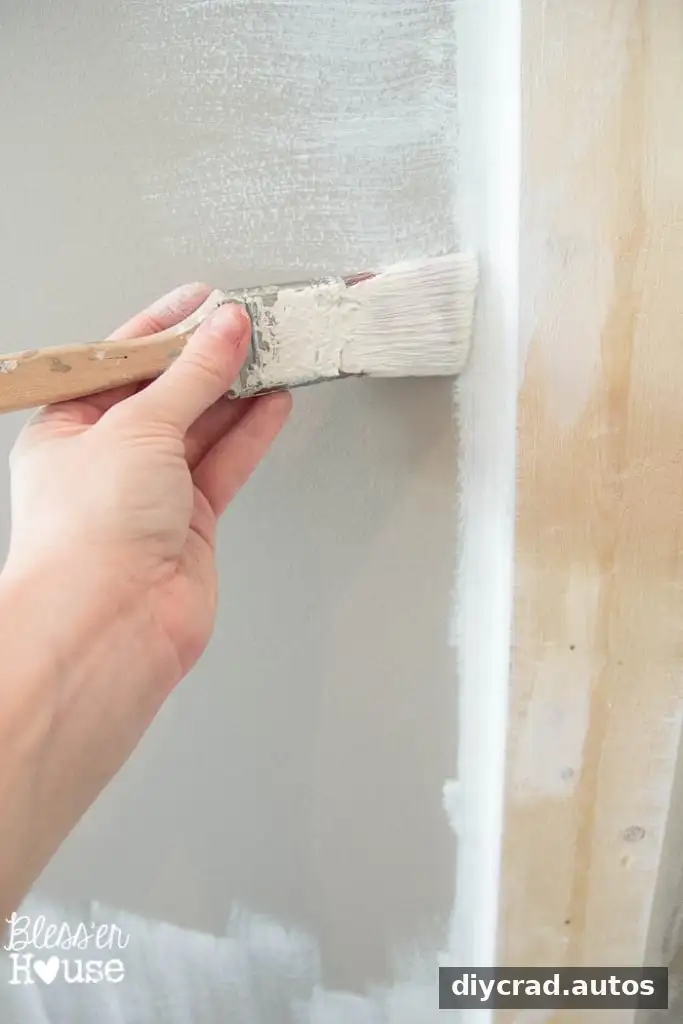
Painting began on the trim. The paint was feathered outward as work progressed to soften the edges and avoid a hard line where brushwork met the wall.
For the larger wall areas, a mini roller made it easier to work around the narrow boards and battens. A small roller is useful for these details, while a brush can reach corners and edges that the roller cannot cover evenly.
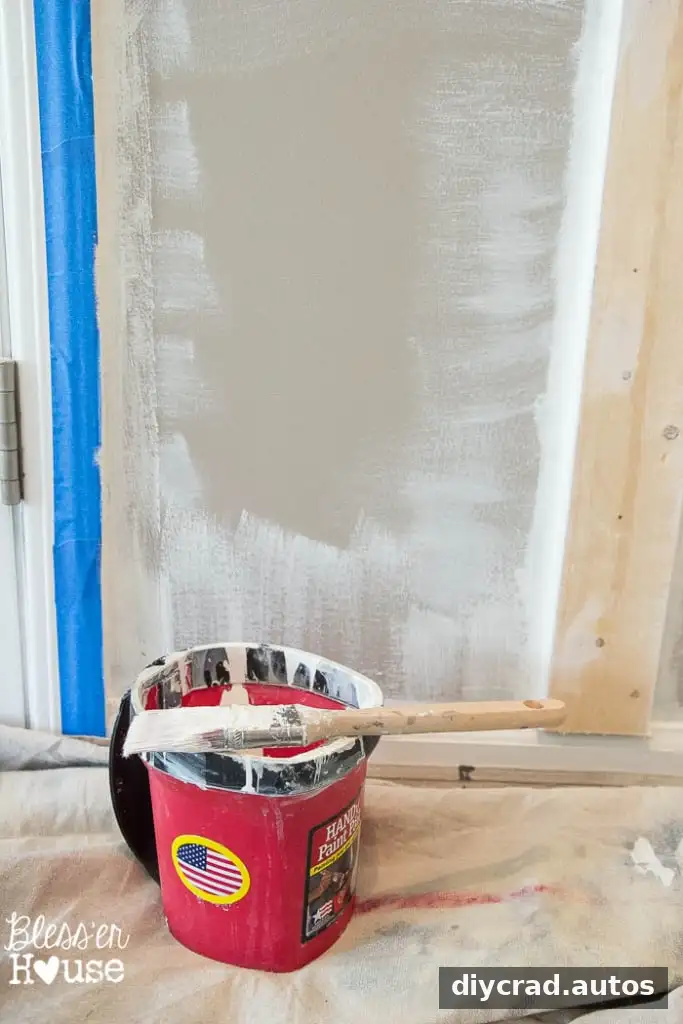

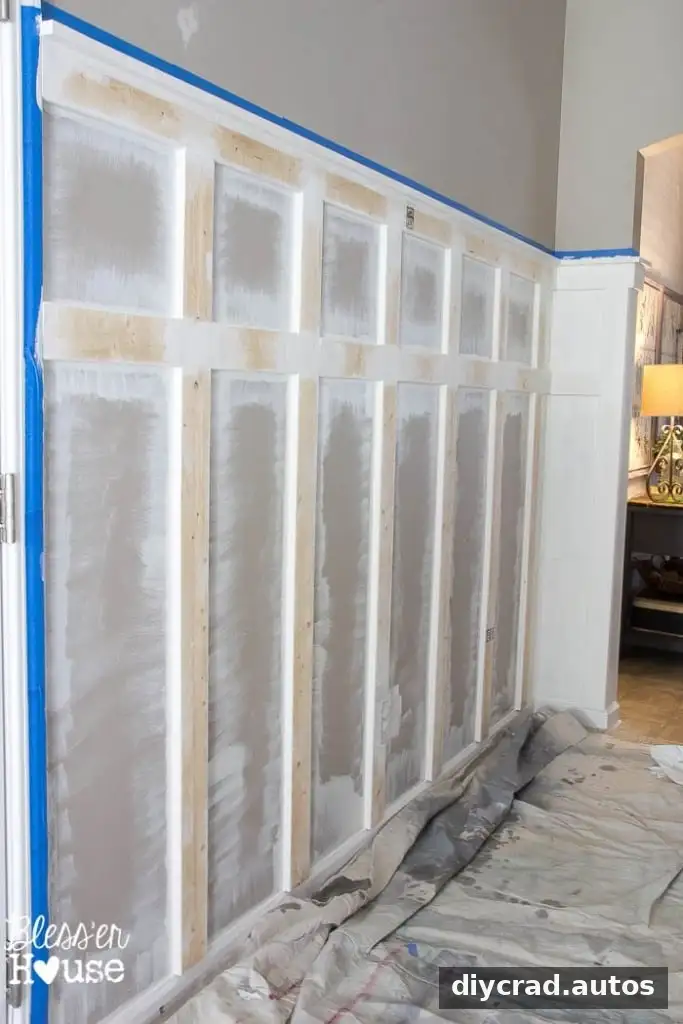
A plastic bag was used to line the paint tray for quicker cleanup. The paint used was low in VOCs, and no noticeable odor was reported during the project. Always follow the product label’s directions for ventilation, application, and cleanup.
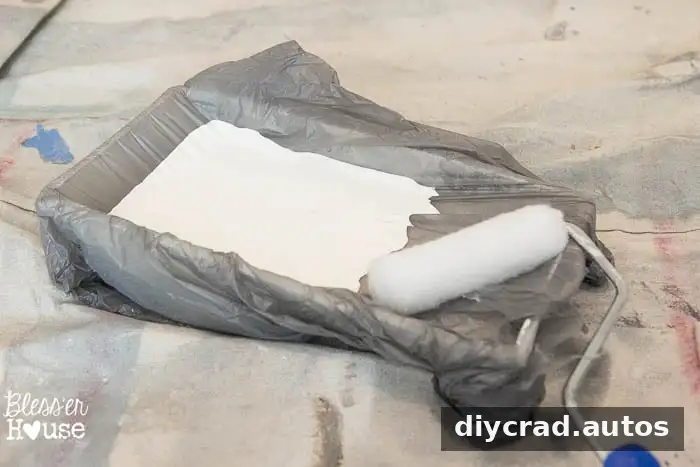
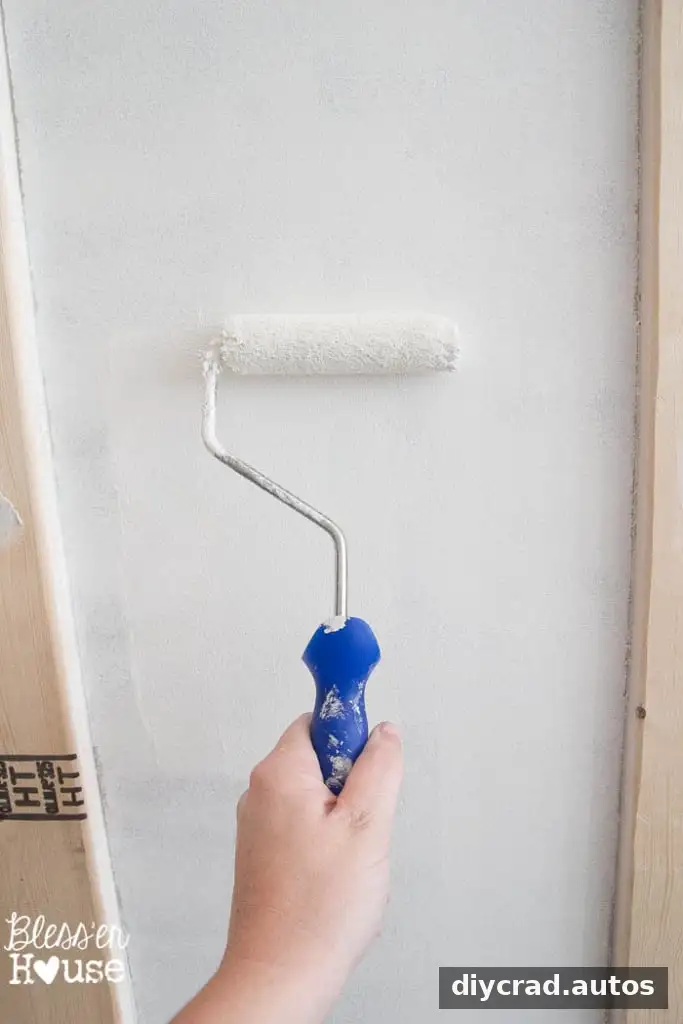
Two coats were applied because the new finish covered darker wall paint and bare wood. The paint dried quickly enough for the next coat to be started after the first was complete. Drying and recoat times vary, so check the paint can and allow the recommended time between coats.
The finished foyer and hallway
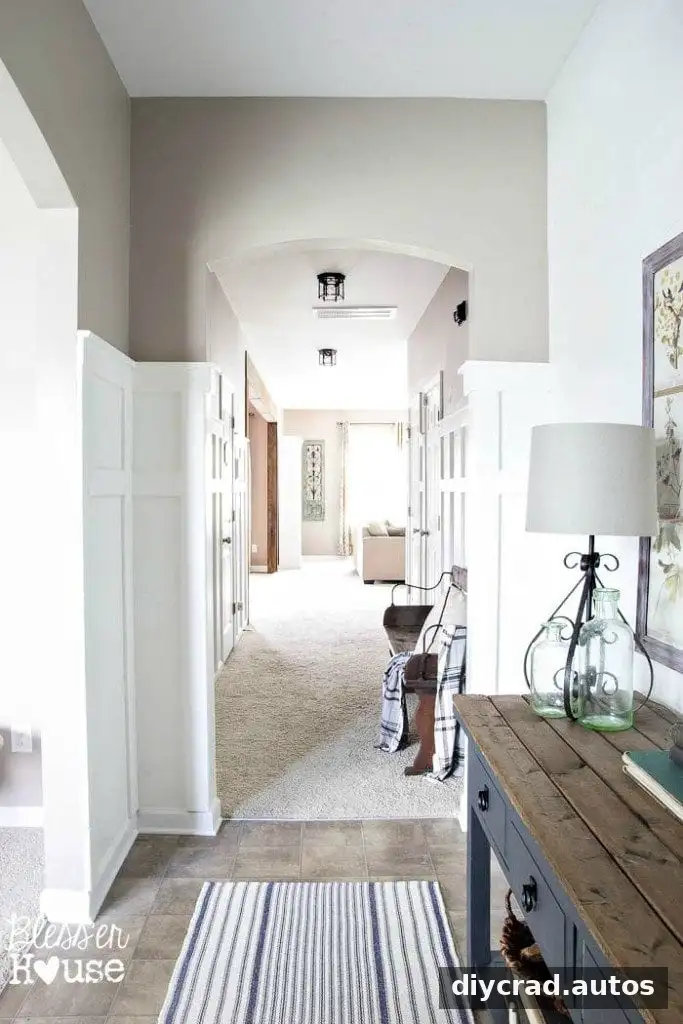
Painting the foyer and hallway, including all the small trim details, took patience. The finished whitework makes the area feel brighter and gives the connecting spaces a more consistent appearance.
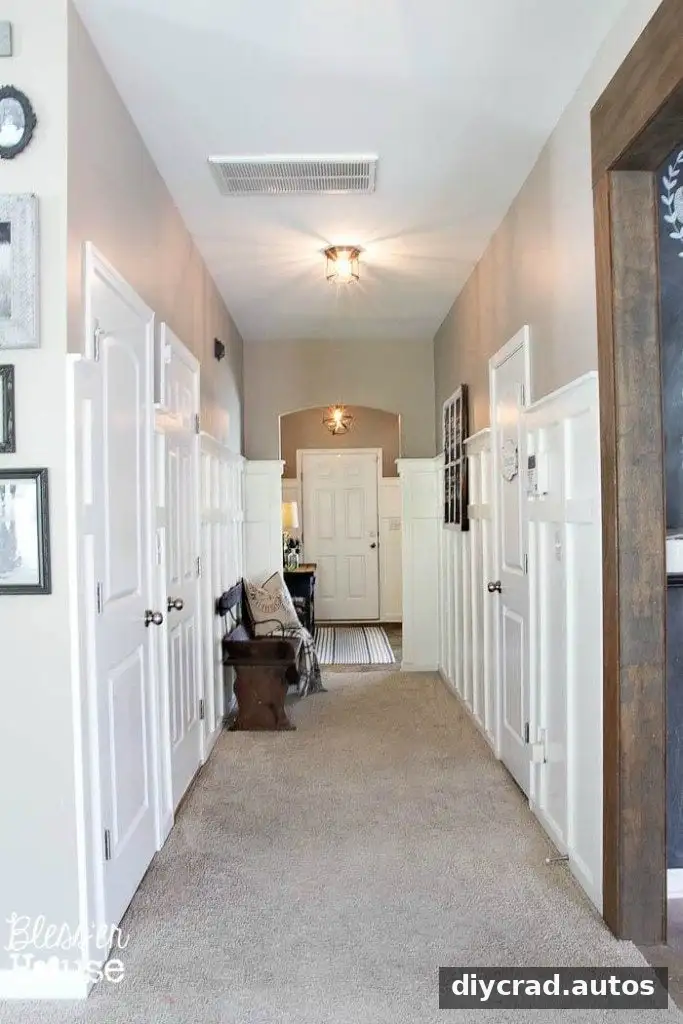
The updated hallway now flows more naturally into the rest of the home. The board and batten also complements an $80 wood beam doorway, adding texture and detail without requiring a major structural change.
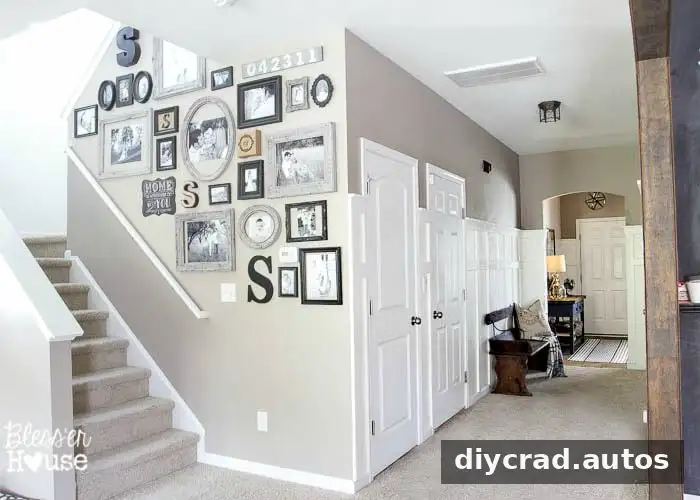
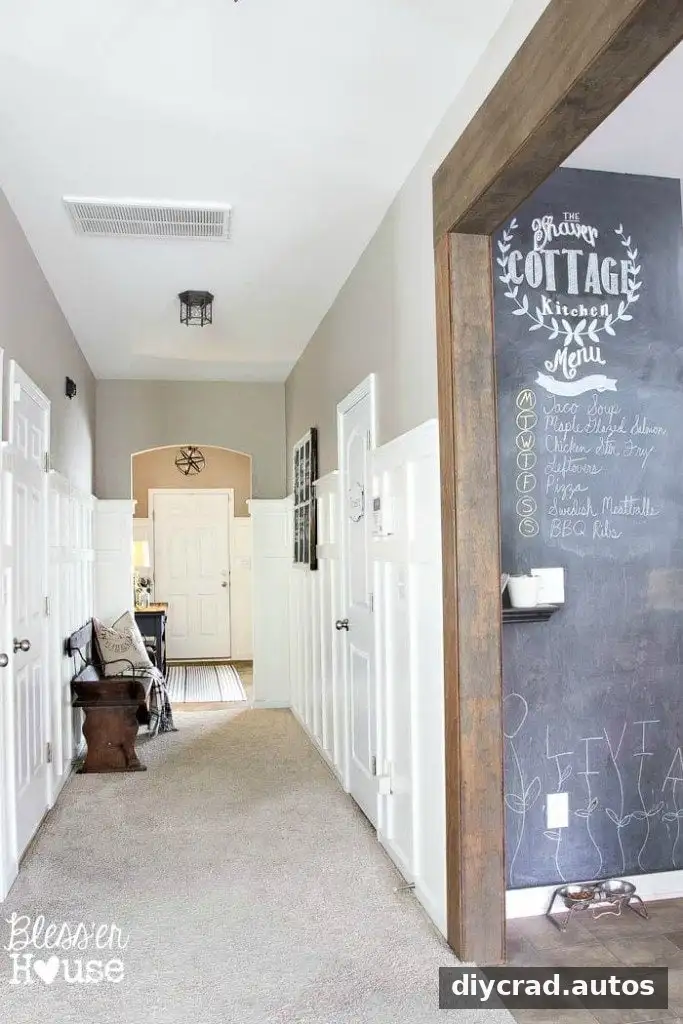
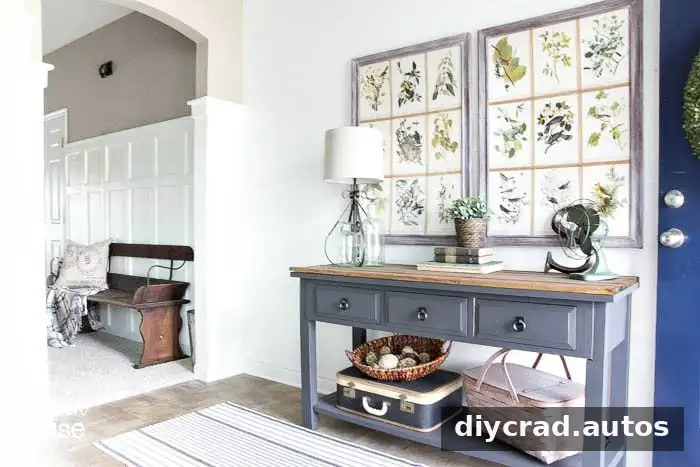
The front door remained white at this stage, with gray or blue considered as possible future colors. When choosing an accent shade, consider the tones in nearby rooms and test a sample in the space at different times of day.
Before-and-after details
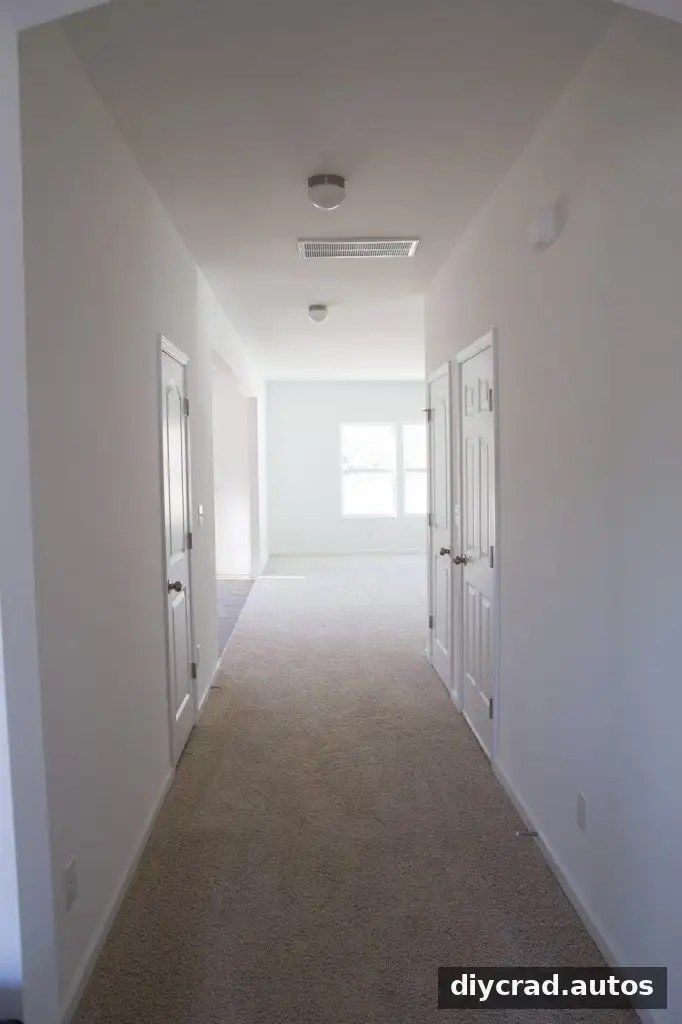
A closing-day photo from December 2013 shows how the foyer looked before the updates. The comparison illustrates how trim, paint, and a few carefully chosen furnishings can change the character of an entryway over time.
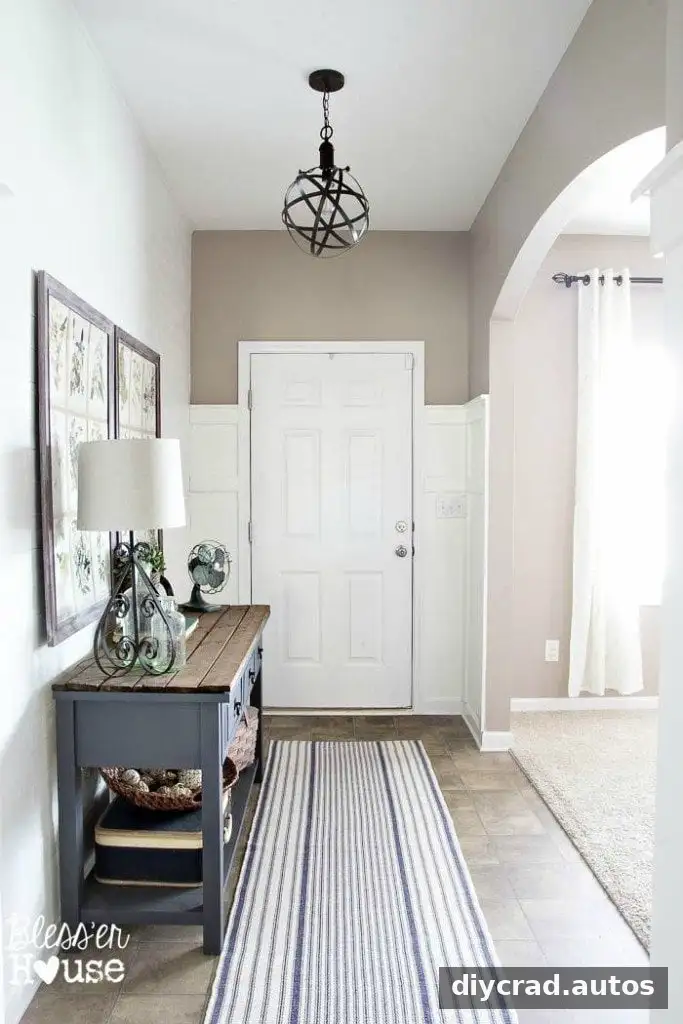
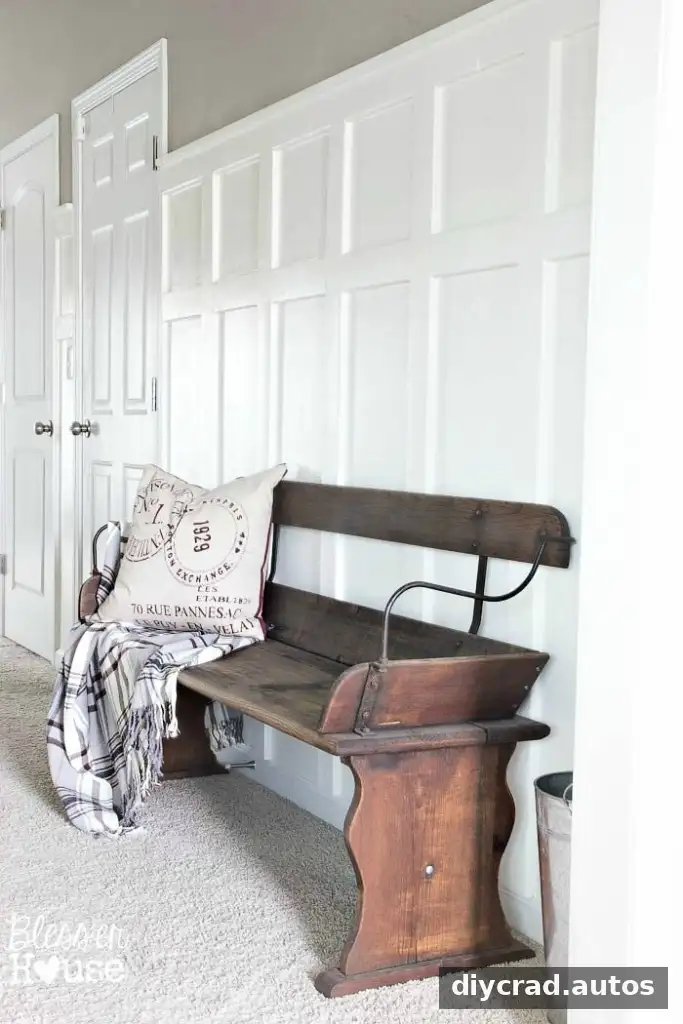
A $35 wagon bench found on Craigslist stands out against the freshly painted trim. Hooks and artwork above the bench were planned as future additions, offering a practical way to add storage and personality without crowding the entry.
Tips for planning a DIY board and batten project
- Fill holes and seams, caulk gaps, and sand before painting for a more even finish.
- Use painter’s tape to protect nearby surfaces, and remove it according to the paint and tape instructions.
- Use a brush for edges and narrow trim, then a mini roller for broader sections.
- Plan for more than one coat when covering dark paint or bare wood, and check the label for recoat times.
- Test paint colors in the room before committing, since natural and indoor lighting can affect how a shade appears.
This DIY board and batten makeover shows how thorough preparation and a considered paint finish can refresh a foyer and hallway. With the right tools, enough time for sanding and drying, and careful attention to trim, the project can add practical character to an entryway.