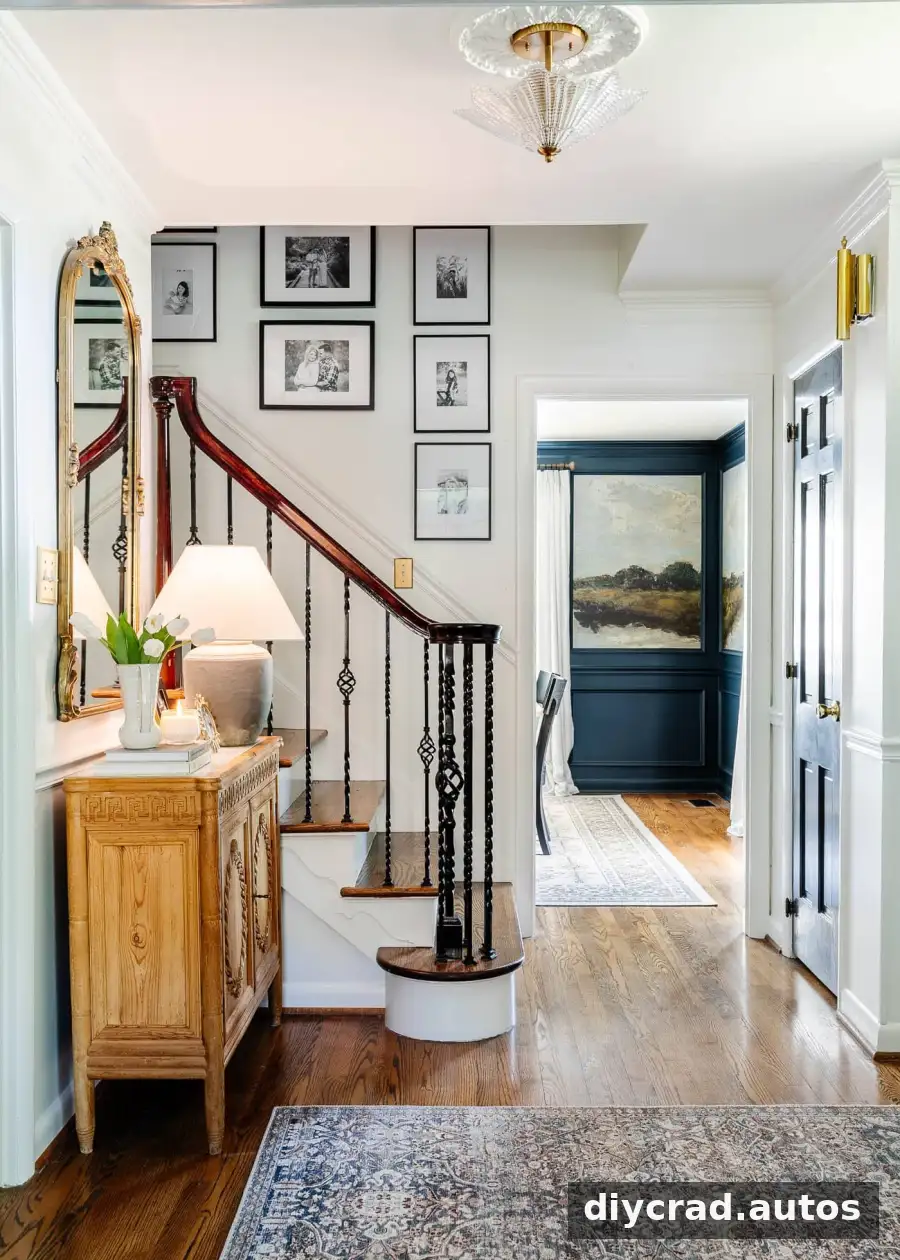
Entry table decor can make a foyer feel welcoming while keeping the space practical and uncluttered. A few carefully chosen pieces—a focal point, varied heights, and one or two personal details—can bring the arrangement together without crowding the table. Use this guide to plan your layout and adapt it to the size and function of your entryway.
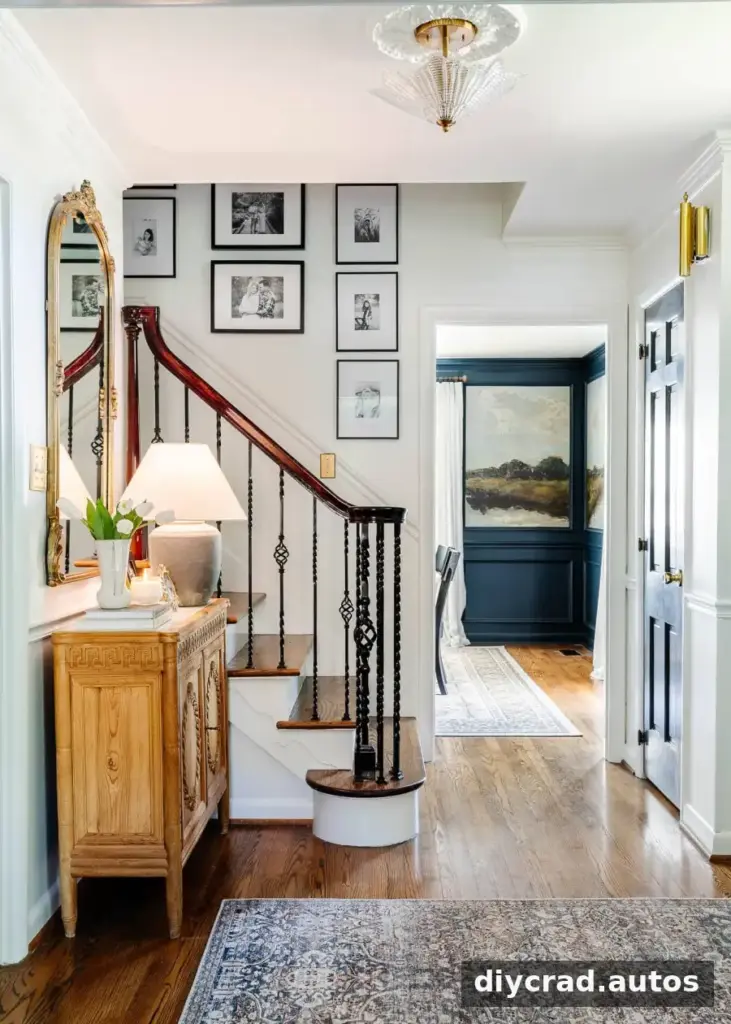
What to Put on an Entry Table
Start with a small selection of items that add light, texture, or meaning. Useful options include:
- A mirror or a large piece of art above the table
- A table lamp for a soft, welcoming glow
- A plant or vase of flowers to introduce an organic element
- A meaningful object, such as a framed photograph or keepsake
Choose items that suit the table’s size and leave enough open surface for everyday use. If you need a place for keys or mail, reserve a clear area or add a small tray.
Entry Table Decor Tips for a Balanced Look
- Keep the arrangement edited. The entry is often the first area visitors see, so avoid filling every inch with small objects. A clear surface is also easier to maintain.
- Use a few substantial pieces. Several larger objects can read more clearly than a collection of tiny decorations. Scale them to the table so they do not overwhelm the space.
- Vary height and texture. Pair tall, medium, and low items, and combine contrasting materials for a layered effect.
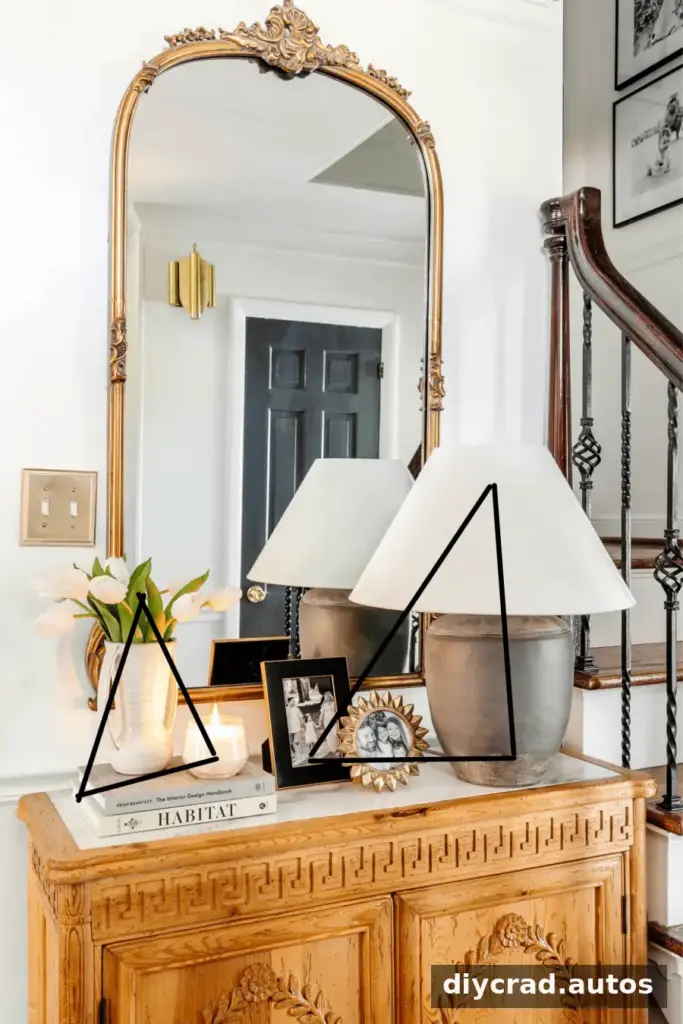
- Try groupings of three. A simple arrangement with different heights can create a visual triangle and help the objects feel connected.
How to Style Entry Table Decor Step by Step
Step 1: Choose a Table That Fits the Space
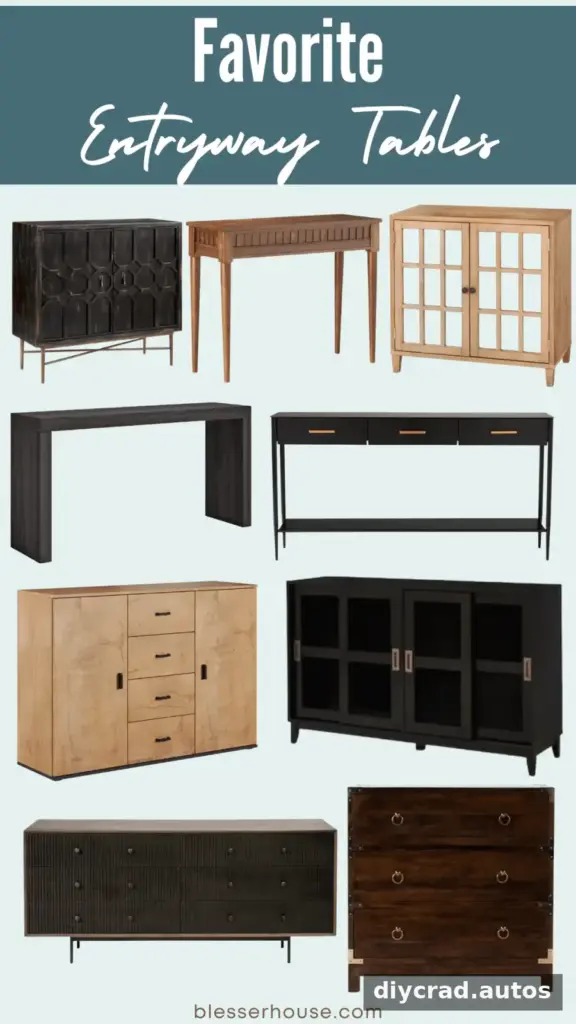
Consider the available floor area, your storage needs, and how the entryway is used before selecting furniture. These common options serve different purposes:
- Chest of drawers or cabinet: A useful choice for a narrow entry that needs concealed storage.
- Credenza or sideboard: A wider option for larger entryways, with more storage capacity.
- Console table: A visually lighter choice for a small space, generally offering little or no storage.
Measure the wall and walking path before buying. Make sure the table leaves enough room for doors to open and people to pass comfortably.
Step 2: Select a Mirror or Artwork
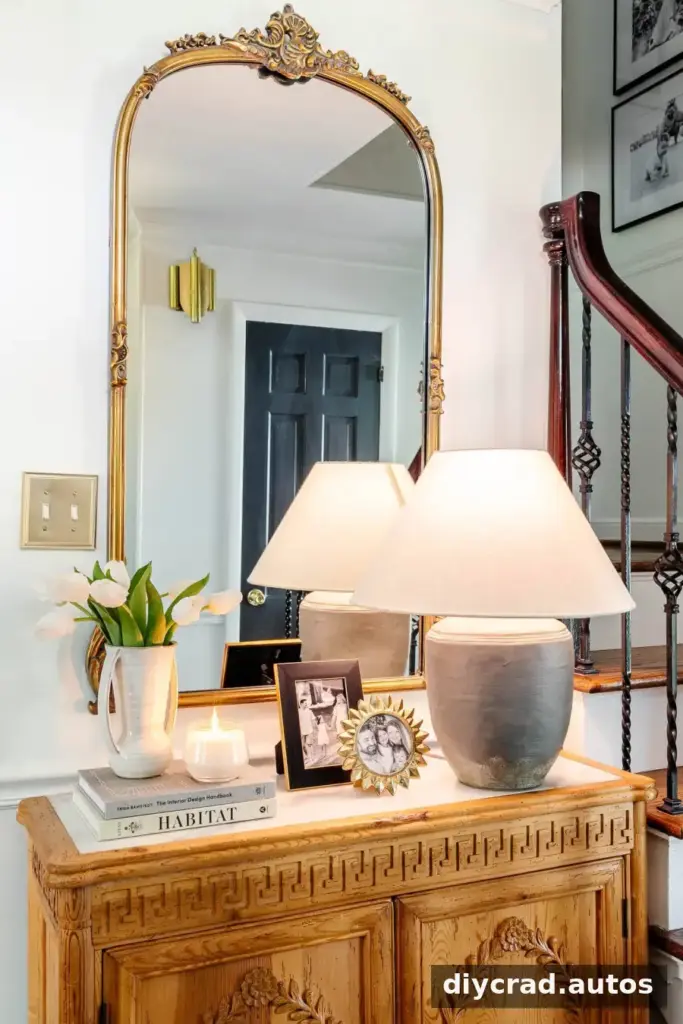
A mirror, artwork, or grouped collection of art gives the wall above the table a clear focal point. You can match the furniture for a coordinated look or mix styles—for example, pairing rustic furniture with modern artwork to balance their different lines.
Mirrors can reflect available light, which may help a windowless entry feel brighter. As a starting point, choose a mirror or artwork around two-thirds to three-quarters the width of the table. Adjust the scale if the wall or furniture calls for a different proportion.
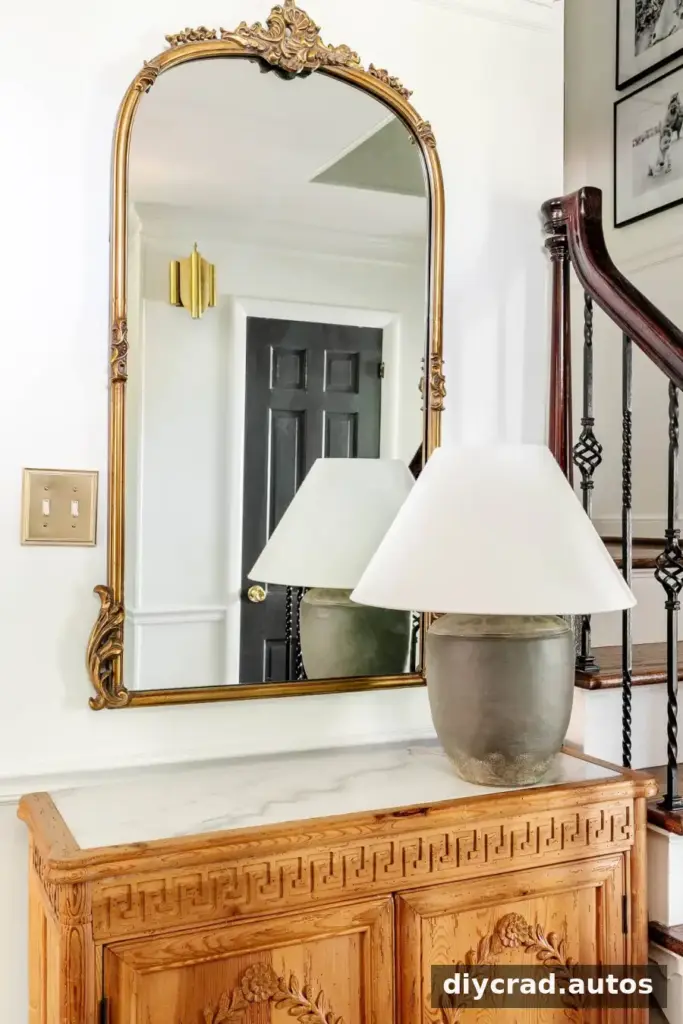
Step 3: Place the Largest Item First
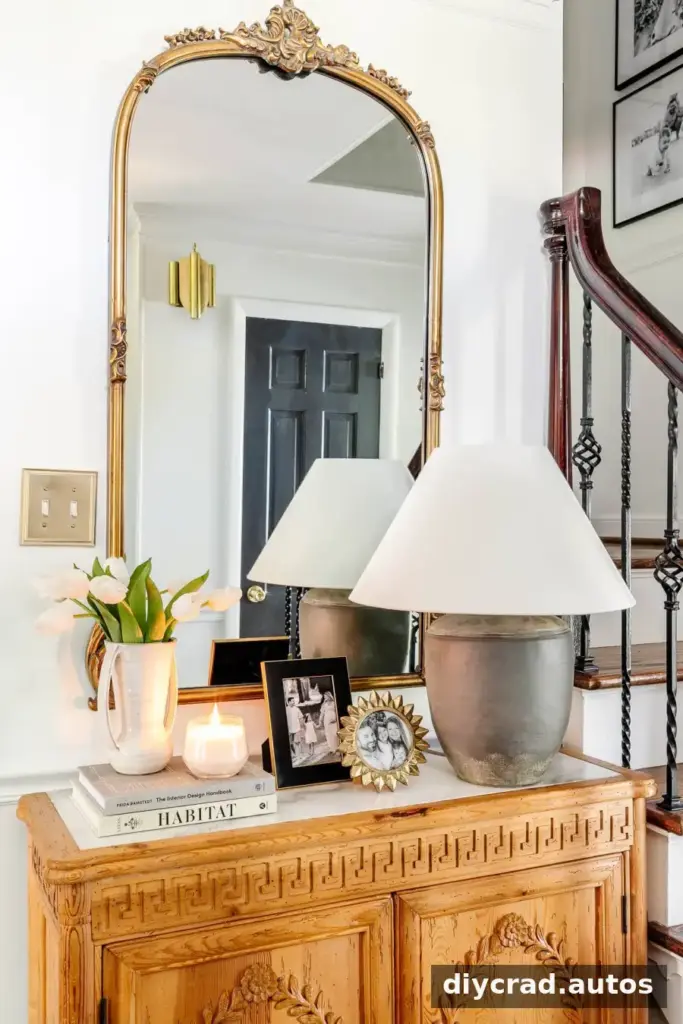
Use one substantial object as the visual anchor. A table lamp or a large vase with branches can work well. Place it toward one end of the table, leaving space for the remaining items. Check that a lamp does not obstruct a doorway or walking route.
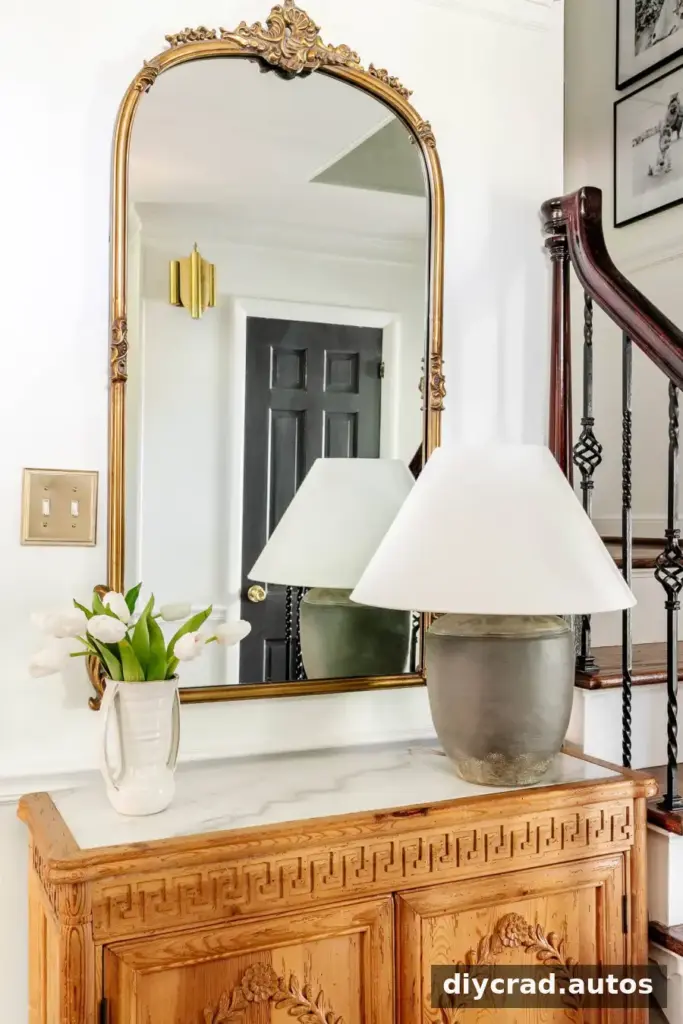
Step 4: Balance It with a Medium-Sized Object
Place a medium-height item on the opposite side of the anchor. A plant or flower vase can balance a lamp by adding natural texture and a different shape. Keep this piece shorter than the main focal object so the arrangement has a clear height variation.
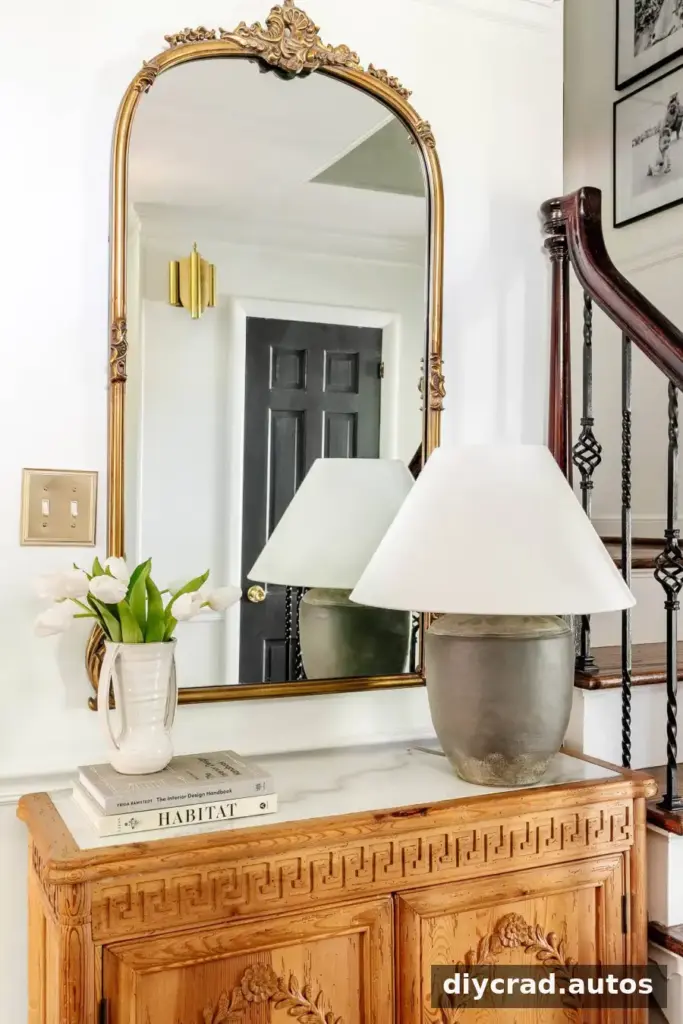
Step 5: Use Books to Add Height
A small stack of books can raise a decorative object and add color or texture. Choose titles with covers you enjoy and make sure the stack is stable. Books are optional; do not add them if they make the table feel crowded.
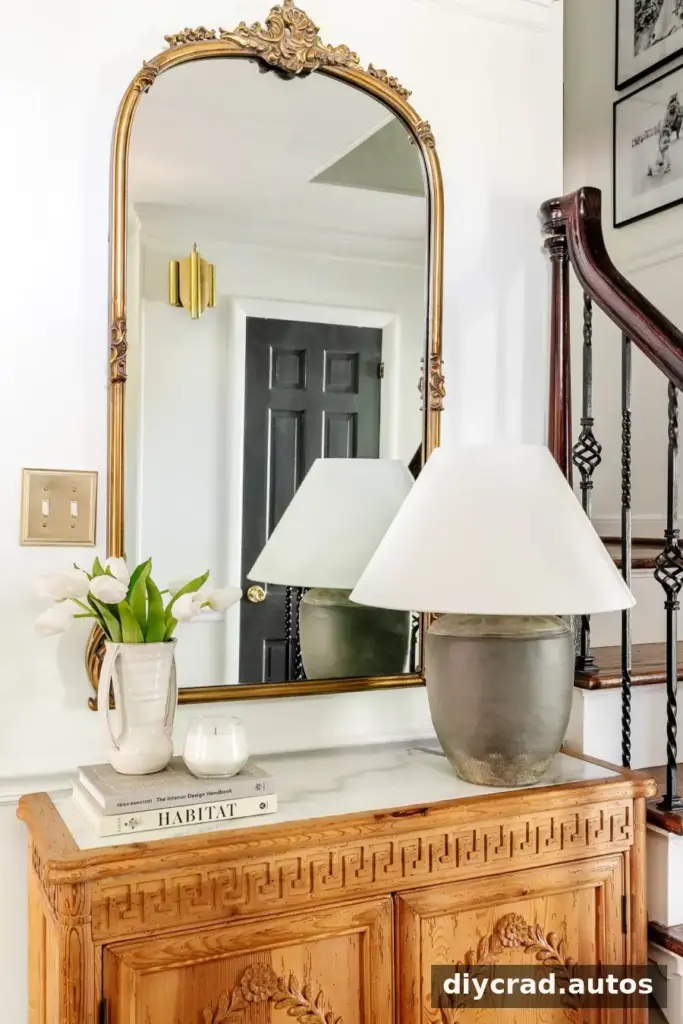
Step 6: Add a Candle or a Personal Detail
A candle or framed photograph can make the arrangement feel more personal. If you use a candle, place it on a stable, heat-resistant surface, keep it away from paper, greenery, and other flammable objects, and never leave it burning unattended. For a lower-maintenance option, use an unlit candle as a decorative piece or choose a framed keepsake instead.
Step 7: Check the Visual Triangle
Look at the arrangement as a whole and see whether the objects create a loose triangle: one tall item, one medium-height item, and one shorter piece. This visual triangle is a practical way to create balance without making both sides identical. Move items around and step back to assess the composition from the entrance.
What to Place Beside an Entry Table
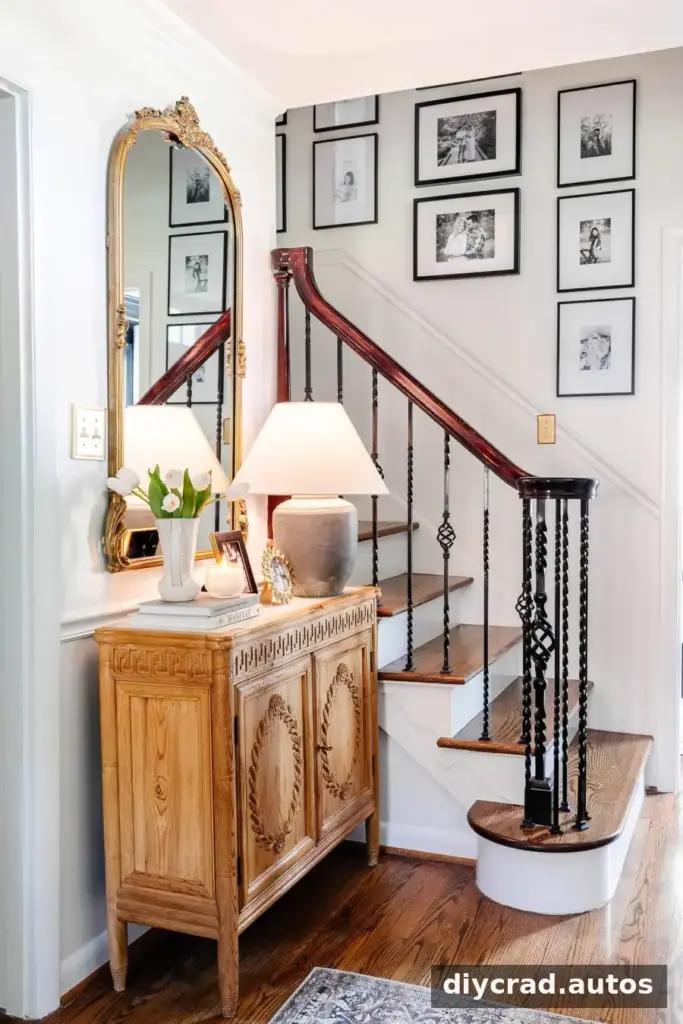
If floor space allows, add a useful item beside the table rather than squeezing more objects onto its surface. Options include an umbrella stand, a lidded cube ottoman, a basket for shoes, or a freestanding coat rack. Choose only what your household needs, and keep the route through the entryway clear.
More Ideas for Styling Other Areas
- Coffee table decor ideas
- Simple nightstand decor ideas
- How to decorate a buffet
- A step-by-step approach to decorating a room
Conclusion
Successful entry table decor starts with furniture that fits the space, then builds around a focal point with a few well-proportioned accents. Vary the heights, leave room for everyday essentials, and add a personal touch that suits your home. Step back to review the arrangement and make small adjustments until it feels balanced and easy to use.