


An ADHD daily routine does not have to be rigid to support healthier habits. For much of adulthood, the writer felt that weight management and healthy living required a level of consistency that was difficult to sustain. As a busy parent with diagnosed ADHD, mornings could feel rushed, meals could be delayed until hunger became intense, and stress could make it harder to follow through.

What helped was not a perfect schedule or more willpower, but practical routines designed to reduce decisions and make everyday tasks easier to remember. Over time, these changes supported a personal weight loss of more than 50 pounds, maintenance for over a year, and improvements in several health risks. The writer also reports staying on track after stopping GLP-1 medication. Individual results vary, and these experiences are not a substitute for medical advice.
The habits below are personal strategies, not professional guidance. Anyone managing ADHD, weight concerns, or medication decisions can discuss an approach with a qualified healthcare professional.

ADHD Daily Routine: Plan Tomorrow Before Bed
Unfinished tasks can be easy to keep replaying mentally. Writing them down before bed may help make the next day feel more manageable and reduce the need to remember everything at once.
The writer uses a phone notes app to create a time-blocked plan for the following day. Rather than listing tasks without a plan, the list includes an approximate time for each one.
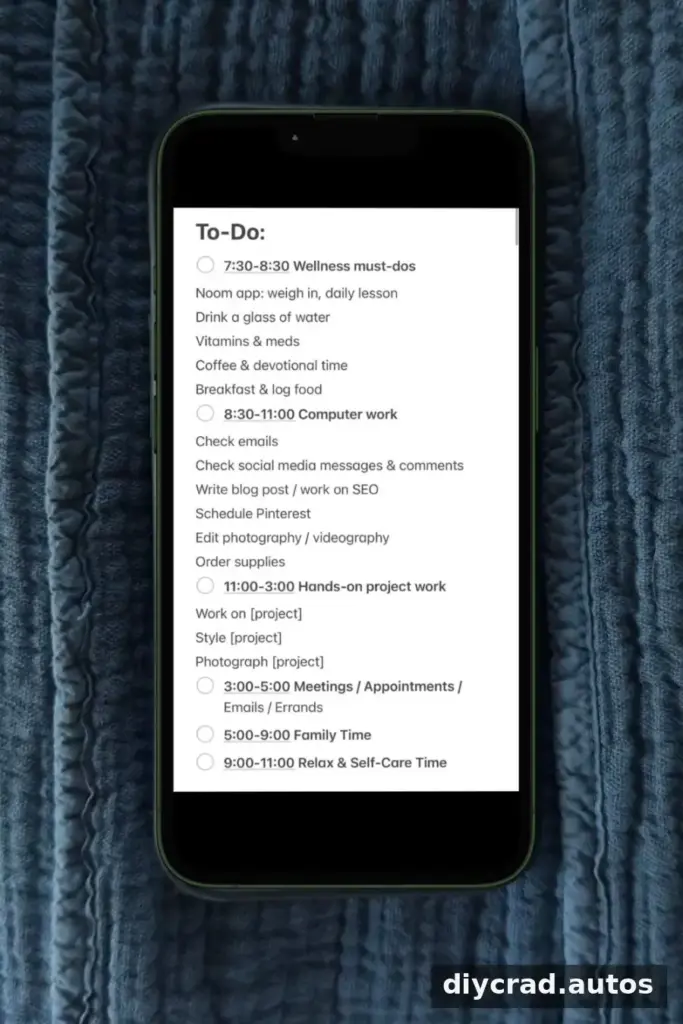
Why this may help:
- It gives reminders a place outside your head.
- It reduces morning decision-making.
- It makes priorities easier to see.
- It can help create a calmer transition into the day.
If a task comes to mind overnight, add a brief note and return to resting instead of trying to solve everything immediately. Keep the plan realistic; leaving open space for unexpected demands can make it more useful.

Schedule Self-Care in the Morning and Evening
When self-care is treated as an optional extra, it can be pushed aside. Scheduling a short block for it can make the habit easier to remember. The routine described here takes about 30 minutes in the morning and another 30 minutes in the evening, but the timing can be adjusted to suit different schedules.
A Simple Morning Routine
The writer’s morning checklist includes weighing in, drinking a large glass of water, having a high-protein food, taking vitamins and prescribed medication, drinking a cup of coffee, and setting aside time for devotion and prayer.
Choose only the steps that fit your needs. For medication, follow your prescriber’s instructions; do not start or change a supplement or treatment based on a routine article.

Choose an Evening Wind-Down Activity
After the children are in bed, the writer picks one or two options from a prepared list. Having choices ready can make it easier to relax without spending time deciding what to do.
- Journal or read a chapter of a book.
- Stretch, do gentle yoga, or try a breathing exercise.
- Listen to calming music or a favorite podcast.
- Take a bath, do a manicure, or use a hair or face mask.
- Try a guided meditation or spend a few minutes tidying one small area.
Activities can be combined when that feels comfortable, such as stretching while listening to a podcast. The aim is to have ways to decompress that do not depend only on food or scrolling. Keep the list short enough that choosing an activity does not become another source of overwhelm.

Protect the First Hour of the Day
The writer avoids social media, email, and news for the first hour after waking. This boundary was uncomfortable at first, but it helped mornings feel less reactive and made it easier to focus on personal priorities before responding to other people’s demands.
- Reduce notifications overnight or during the morning routine.
- Keep the phone away from the breakfast area if that helps.
- Start with a planned activity, such as breakfast or getting ready.
There is no single rule that works for everyone. If a full hour is unrealistic, try a shorter screen-free period and adjust it over time.

Use Food Tracking as Information, Not Punishment
The writer no longer tracks food continuously while maintaining weight. After periods when routines have changed, such as holidays, travel, or stressful seasons, temporary tracking can help bring attention back to portions, protein, and eating patterns.
Tracking is not a requirement for healthy eating, and it may not suit everyone. If it increases anxiety or encourages restrictive behavior, consider another approach and speak with a qualified professional. When used, the writer treats the information as a short-term guide rather than a reason to feel guilty.

Use Habit Stacking to Make New Habits Easier
A new habit is more likely to fit into daily life when it is attached to something that already happens. This approach, often called habit stacking, can reduce the effort needed to remember a task.
For example, the writer wanted to read a Bible chapter each day and paired it with the existing habit of drinking morning coffee. The activity had a natural place in the day, so it felt less like adding another separate task.
Try a simple format: After I do [an established habit], I will do [one small new habit]. Keep the new step manageable. If it repeatedly does not fit, change the timing or choose a different routine to pair it with.

Make Your Home More Comfortable for Sensory Needs
ADHD can involve sensory preferences as well as challenges with attention. In winter, the writer pays attention to the feel of the home, using pleasant scents, warm lighting, cozy textures, gentle music, and calming colors to create a more comfortable environment.
These changes may make a space feel more supportive, but they are not a treatment for seasonal affective disorder or other health conditions. If low mood or emotional difficulties are persistent, seek guidance from a healthcare professional. Start with one low-effort adjustment, such as changing a light setting or choosing a calming playlist.

What to Remember About an ADHD Daily Routine
The central idea is to build systems that support your needs rather than relying on perfection. A routine can include flexible reminders, planned self-care, fewer morning distractions, and small habits connected to activities already in your day.
There will still be difficult days and changes in energy or motivation. A useful system makes it easier to return to a habit without treating a lapse as failure. If you are a busy parent with ADHD, start with one practical step—such as writing tomorrow’s plan before bed—and adjust it as you learn what works for you.
Frequently Asked Questions
Why can routines be difficult to maintain with ADHD?
ADHD may affect executive functions involved in planning, prioritizing, time awareness, and follow-through. A highly rigid routine can be hard to sustain. Flexible plans, written reminders, and habits linked to existing activities may be more practical for some people.
Can an ADHD routine support weight loss?
A routine may help some people make health-related habits more consistent, such as planning meals, managing stress, or remembering regular self-care. The writer attributes a personal loss of more than 50 pounds to a combination of changes, but results differ from person to person. For individualized weight-management advice, consult a qualified healthcare professional.
How can I create a routine that lasts?
Begin with one or two small changes. Write them down, connect each one to an existing part of your day, and make adjustments if the plan is difficult to follow. Aim for a routine that is sustainable and flexible, not perfect.
Do I need medication for an ADHD routine to work?
People have different experiences. The writer reports building routines before recently starting Adderall and therapy, and also reports further improvement since beginning them. Medication can be helpful for some people, but treatment decisions should be made with a qualified clinician. Routines may be used with or without medication, depending on a person’s needs and professional care plan.

