

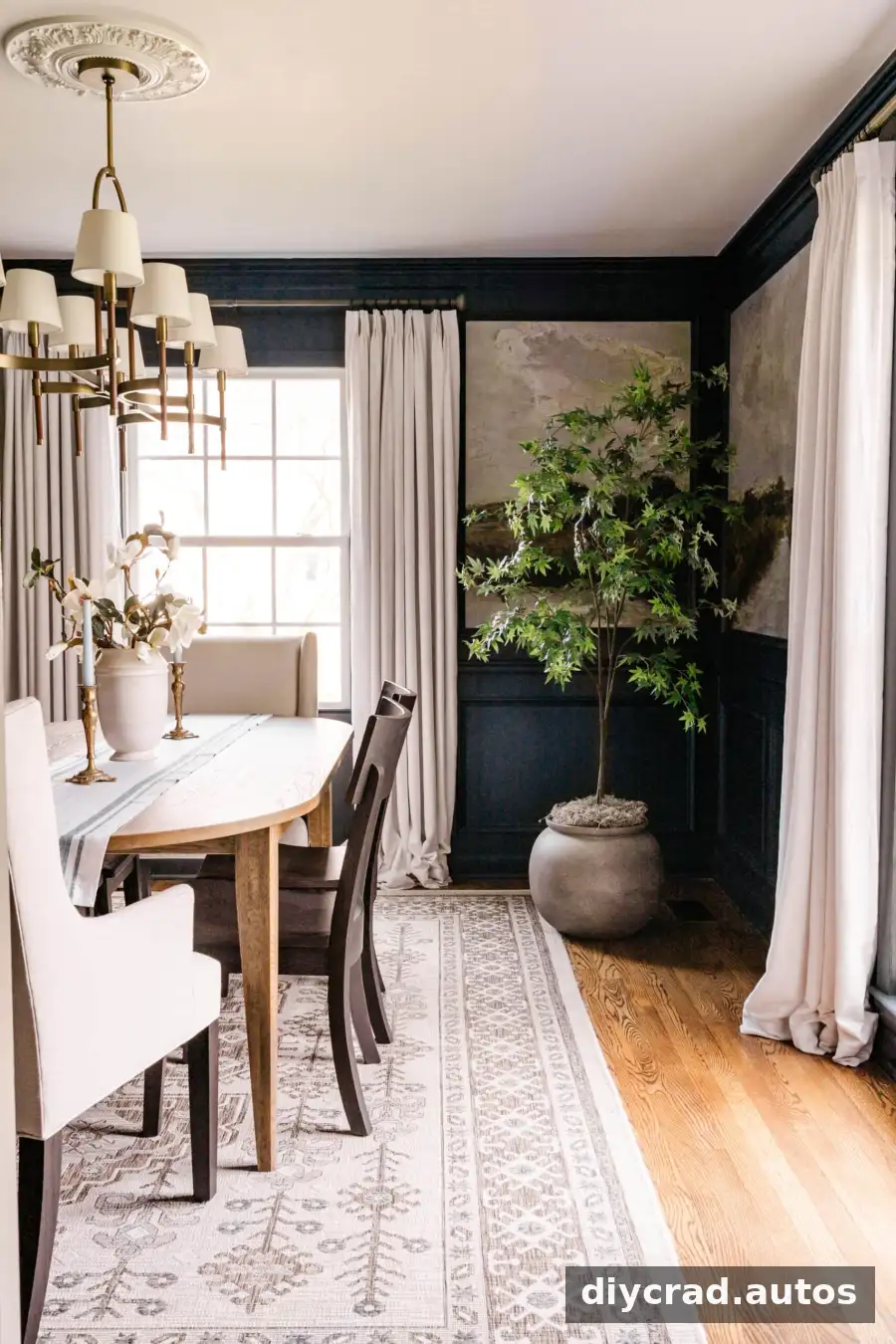
Artificial indoor trees can bring height, color, and a finished look to a room without the watering and light requirements of a living plant. The right tree, paired with a few simple styling techniques, can look more natural and feel like an intentional part of your decor.
Why Add an Indoor Tree?
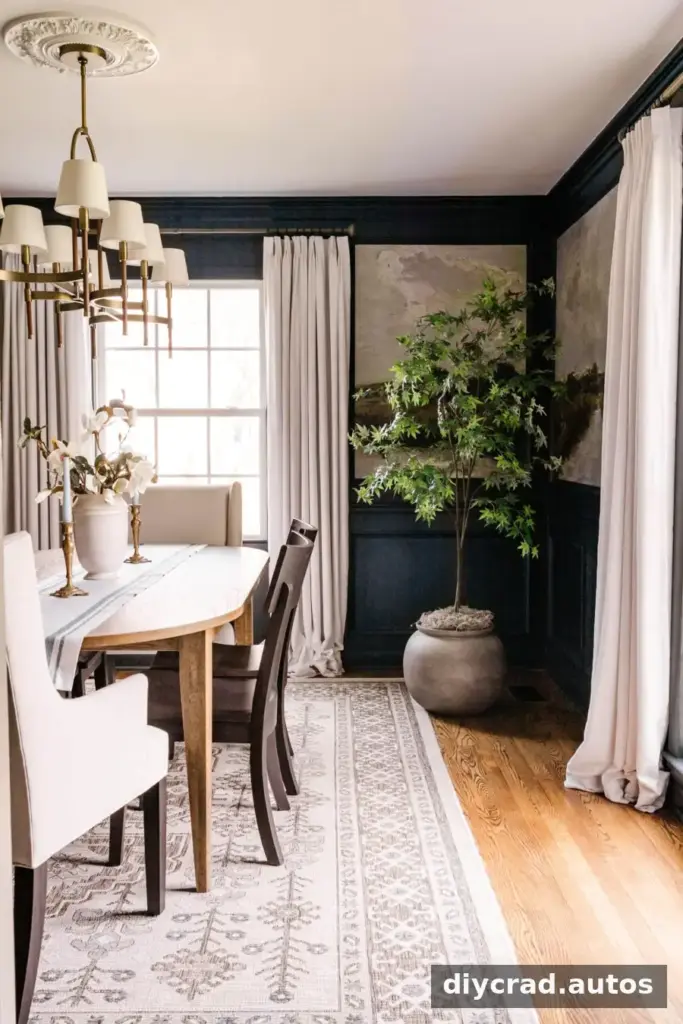
A corner that feels empty may benefit from a leafy plant or a tree that adds vertical interest. An indoor tree can make a room feel more layered, especially beside furniture or in a space with an unused corner. Consider the room’s scale: a taller tree can suit a high ceiling, while a smaller one may work better in a compact area.
Living plants can offer benefits such as connecting people with nature and contributing to a more pleasant indoor environment. Artificial greenery does not purify air or provide the biological benefits of a living plant. However, it can still add color and visual interest for people who prefer low-maintenance decor.
Before choosing a tree, think about the amount of floor space available, the colors already in the room, and whether the tree will be viewed from several angles. Leave enough room to walk around it and avoid blocking doors, vents, or natural light.
Choosing Artificial Indoor Trees
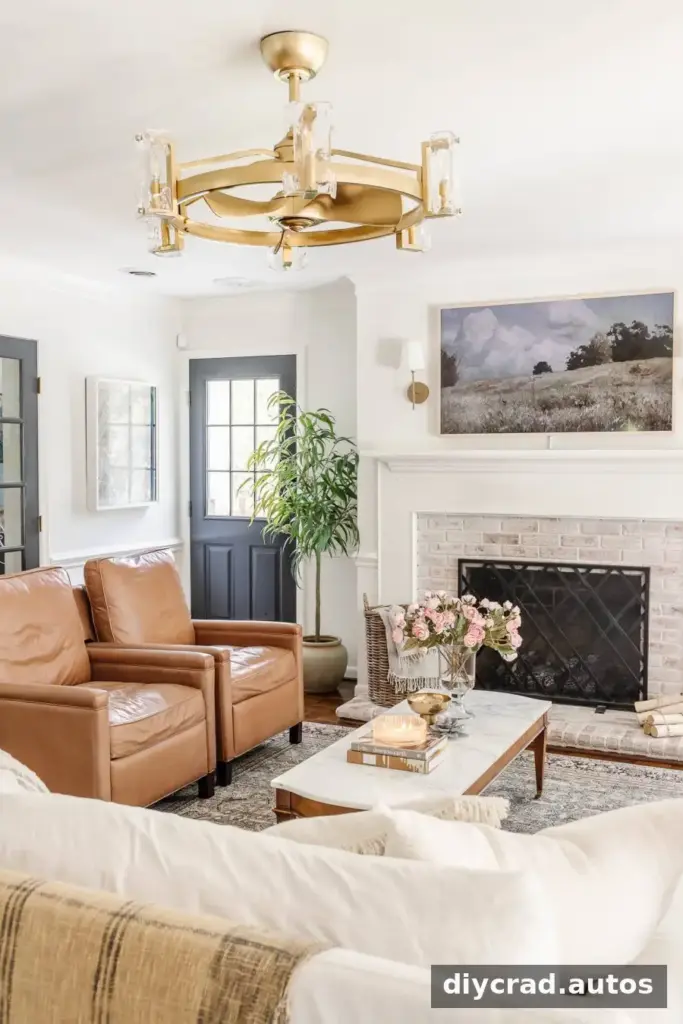
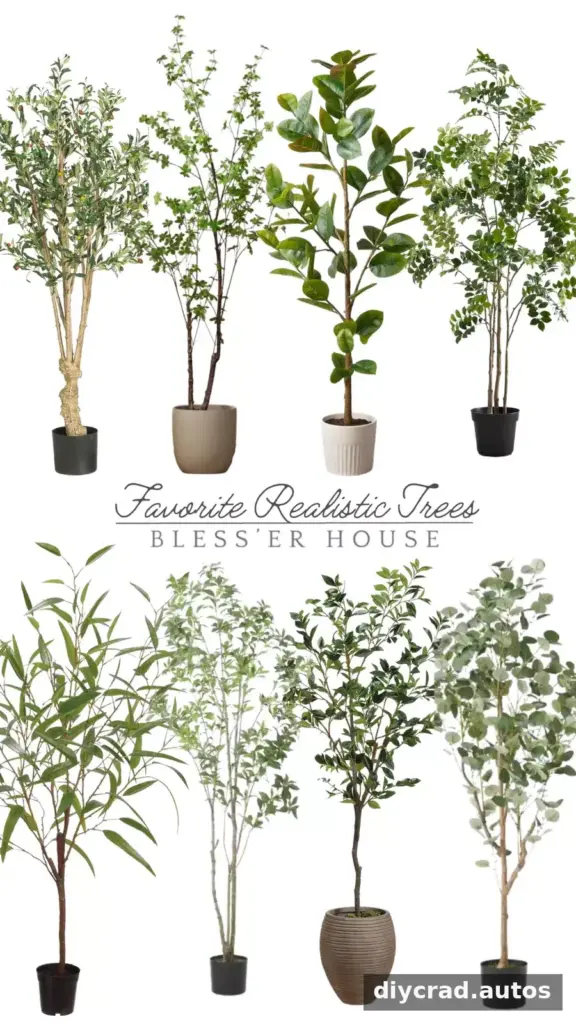
The best artificial indoor trees are those that suit the room’s proportions and look convincing at the distance from which they will usually be seen. Compare the shape of the foliage, the number and arrangement of branches, and the finish of the trunk. A tree that is too sparse or has leaves with a uniform, shiny appearance may look less natural.
Check the listed height and the size of the base before buying. A taller tree can have a strong presence, but it needs a stable position and a planter that suits its proportions. If a ready-made option is beyond your budget, a simple DIY indoor tree made with a cut branch, hot glue, and artificial leaves has been estimated at $25; actual costs can vary depending on materials.
How to Make Artificial Indoor Trees Look Real
Many faux trees arrive with branches pressed together and foliage compressed for shipping. A little shaping and a better-looking planter can make a noticeable difference. Work slowly so you do not pull leaves or stems loose.
1. Hide the Small Base in a Larger Planter
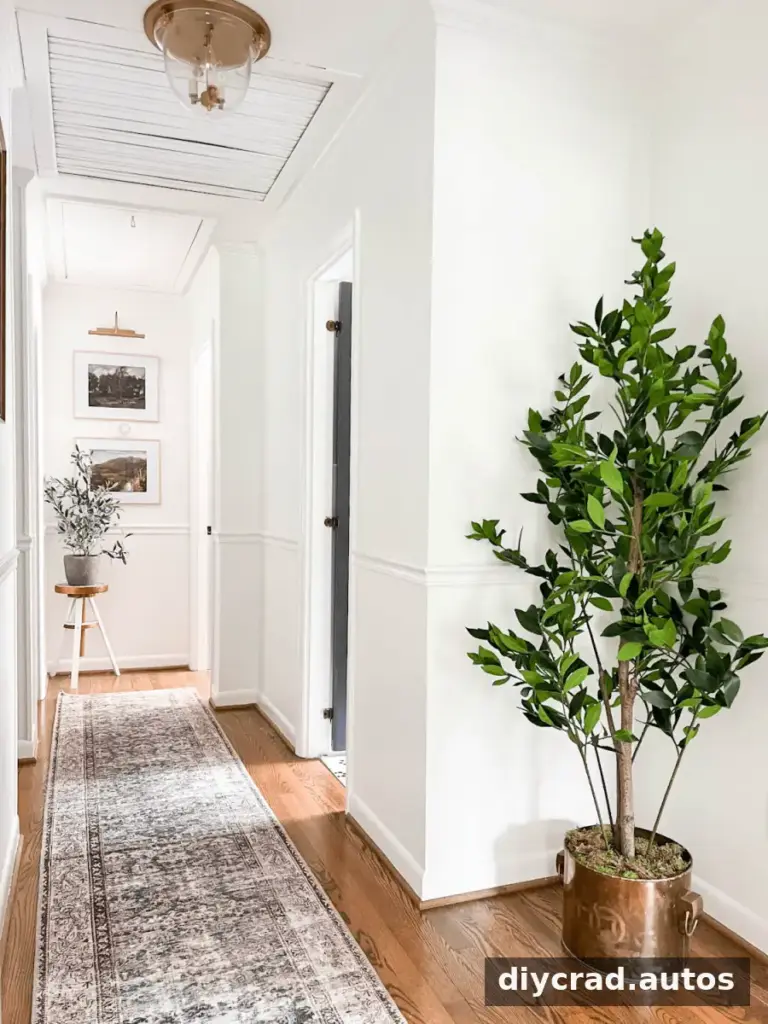
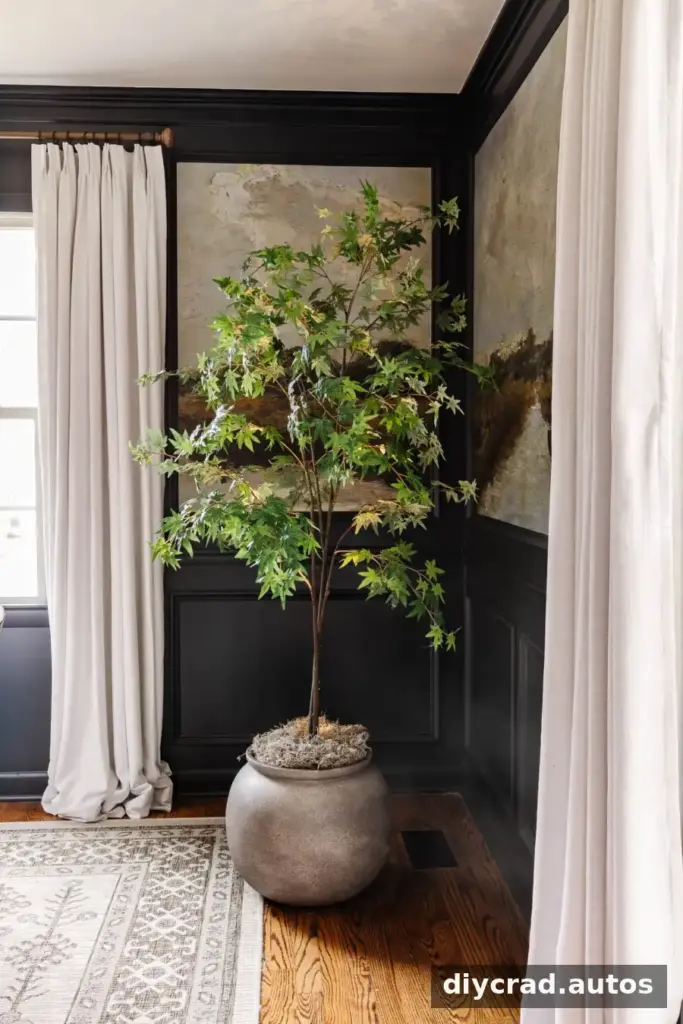
Artificial trees often come fixed into a small plastic pot or base. Place that base inside a larger planter, basket, urn, or crate to give the arrangement a more substantial appearance. Choose a container that is wide and stable enough to hold the tree securely.
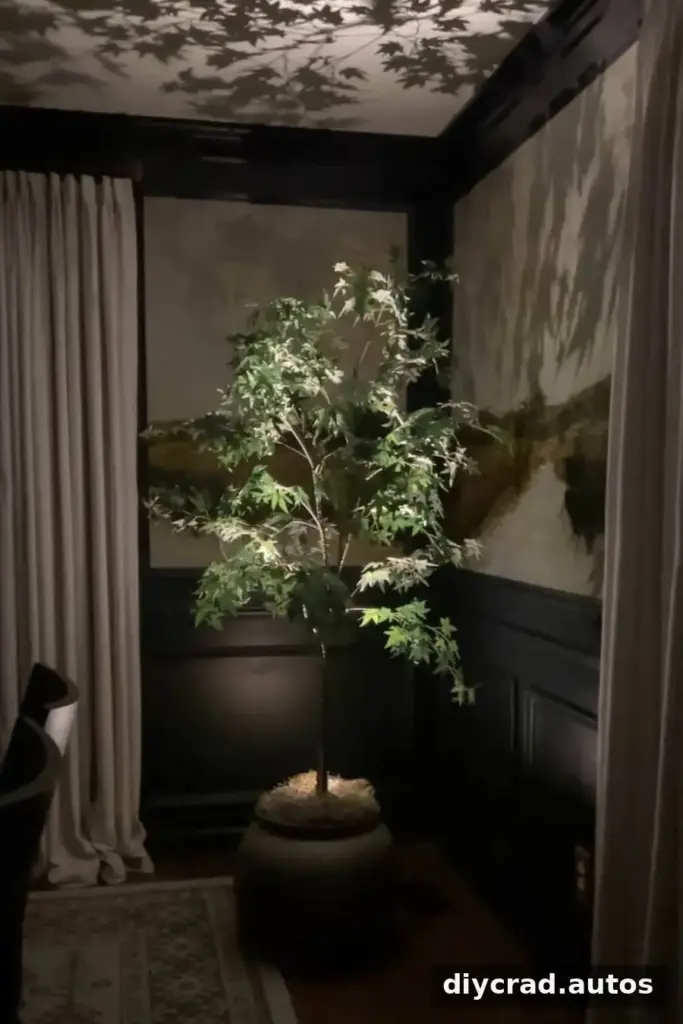
If the tree looks too short, raise its base with sturdy boxes or old books placed inside the outer planter. Make sure the support cannot shift or tip. Cover the visible inner pot and any riser with craft moss or another suitable decorative filler. Keep the material clear of electrical components if you add lighting.
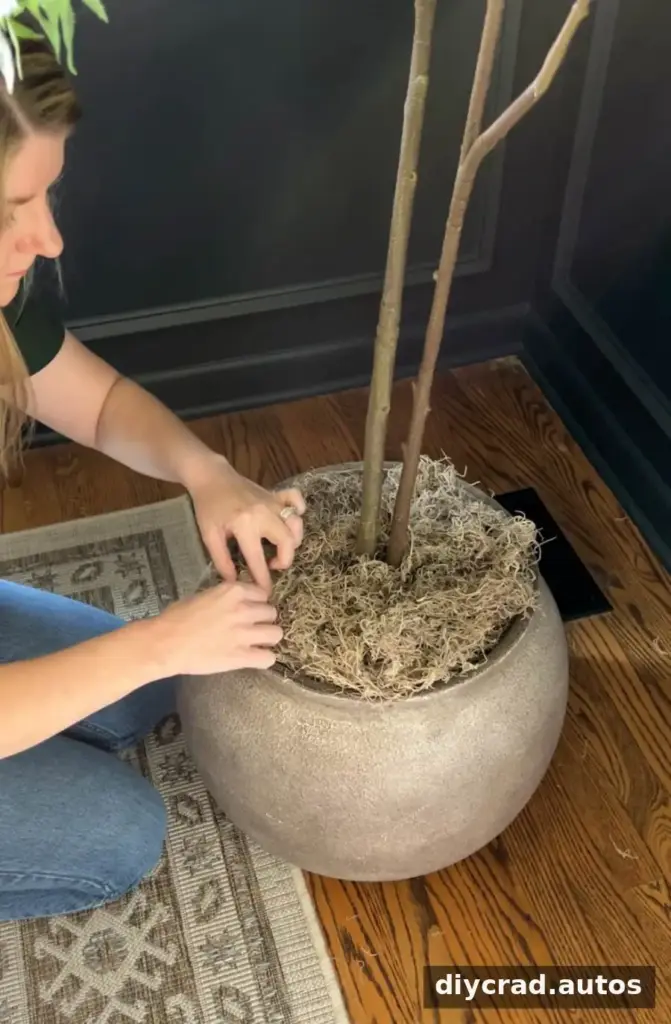
Large planters can sometimes be found secondhand, which may help keep the overall styling budget-friendly. Check a used container for cracks, sharp edges, and stability before placing a tree in it. A basket can also work as a decorative cover, but it should not be relied on to support a top-heavy tree by itself.
2. Separate and Shape the Branches
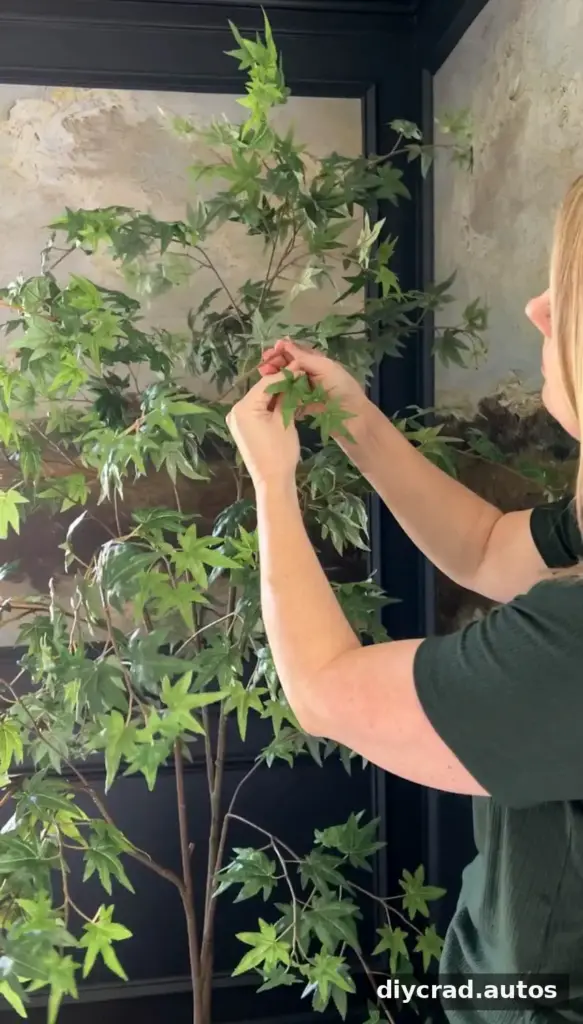
Open each branch gradually, spreading the stems so the foliage has a fuller, less uniform outline. Turn the tree as you work and check how it looks from the main viewing angles in the room. Gently reshape leaves that have been flattened during shipping, following the material’s flexibility rather than forcing it.
For a more natural effect, avoid arranging every branch symmetrically. A slightly varied silhouette tends to look less manufactured. Step back periodically to check the overall shape before making further adjustments.
3. Use an Uplight for Evening Ambience
An uplight will not change how realistic the tree looks in daylight, but it can create an attractive evening effect. A small remote-controlled light placed discreetly near the base can cast shadows from the branches onto nearby walls or the ceiling.
Follow the light manufacturer’s instructions, keep the fixture stable, and use rechargeable batteries if the model requires batteries and they are compatible. If decorative moss or other materials are near the light, check that they do not obstruct ventilation or come into contact with a warm fixture. A timer can make the light easier to use regularly.
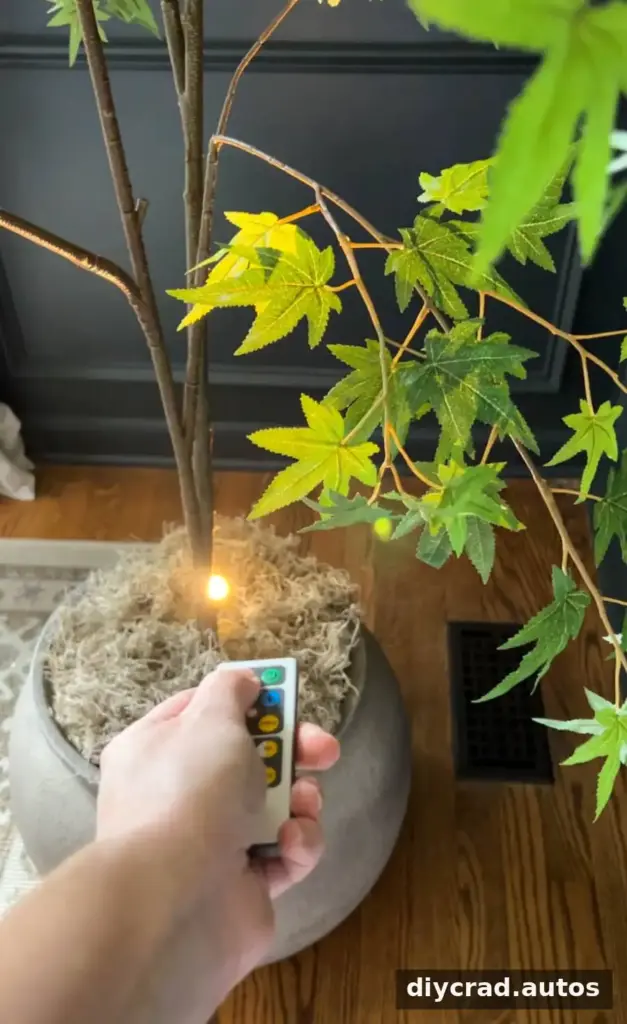
Position the light so it highlights the trunk and foliage without shining directly into people’s eyes. Test the effect after dark and adjust the angle to suit the room.
Final Tips for Styling Artificial Indoor Trees
- Choose a height and shape that fit the room rather than buying the largest tree available.
- Use a stable outer planter and conceal the small factory base.
- Fluff the branches and vary their direction for a less uniform silhouette.
- Dust the leaves occasionally so the foliage stays clean and the finish remains visible.
- Keep the tree away from walkways and make sure any lighting is used safely.
With a suitable planter, carefully shaped branches, and thoughtful placement, artificial indoor trees can add greenery and structure to a room with little ongoing care. They are a practical decor choice for spaces where maintaining a living tree is difficult, while remaining clear that faux foliage does not replace the benefits of real plants.

