

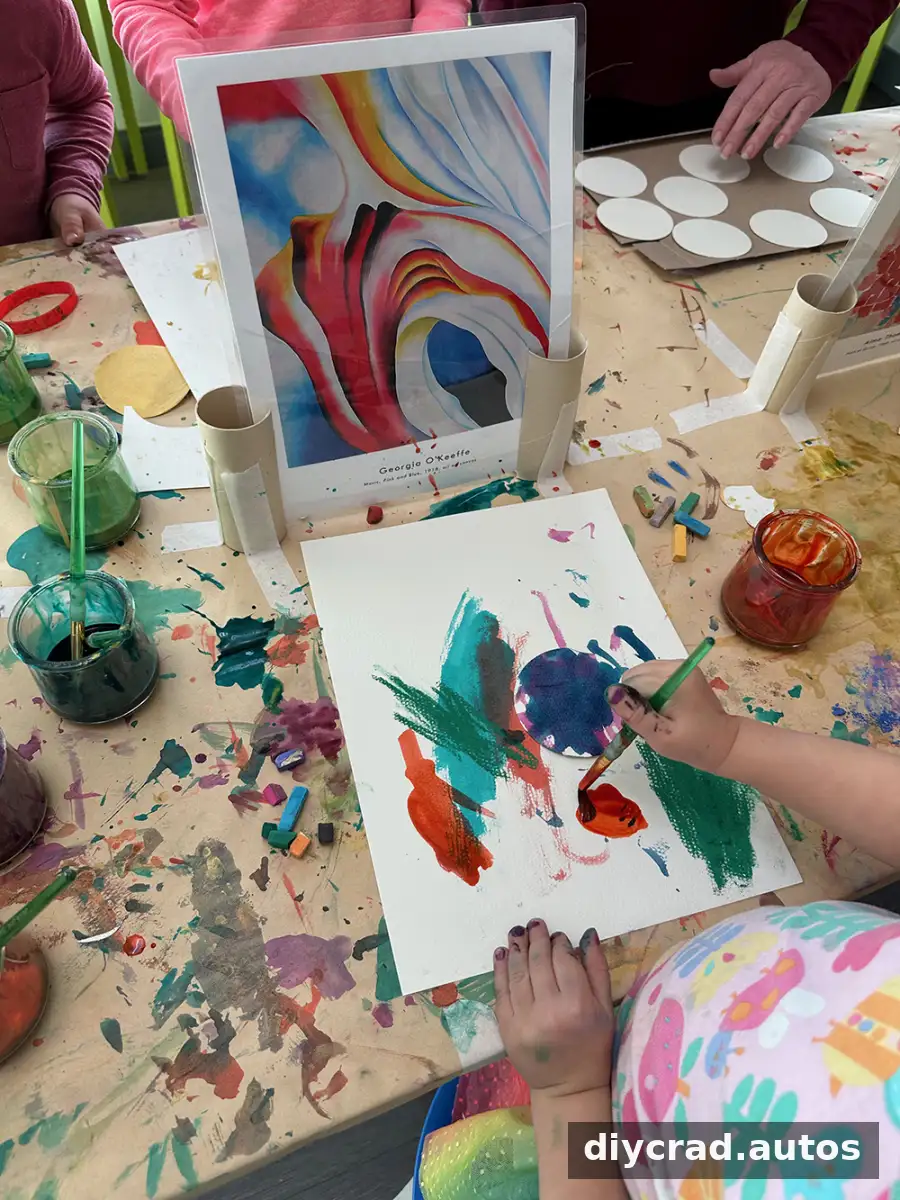
An artist-inspired liquid watercolor painting activity can give children room to explore color, shape and movement without having to follow a step-by-step example. By placing reproductions of artworks alongside watercolor and pastels, you can offer inspiration while letting each child decide what to make. The goal is not to copy a painting exactly, but to create an inviting environment where curiosity leads the way.
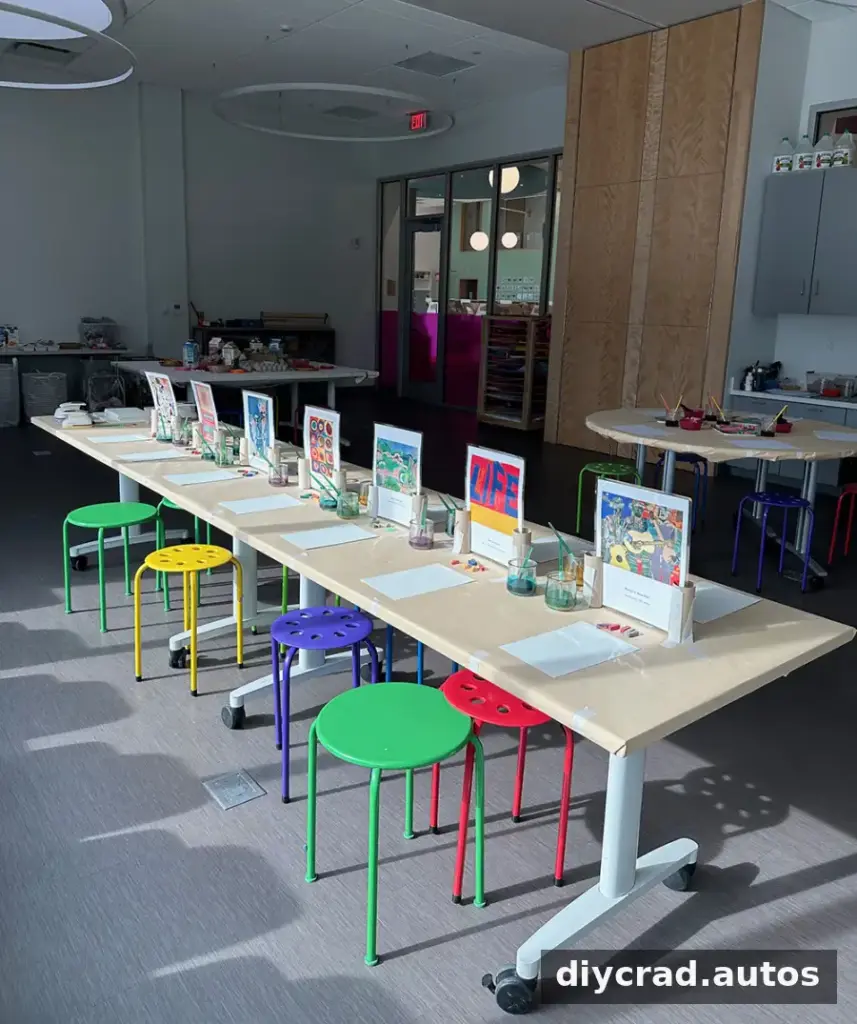
How to set up an artist-inspired liquid watercolor painting table
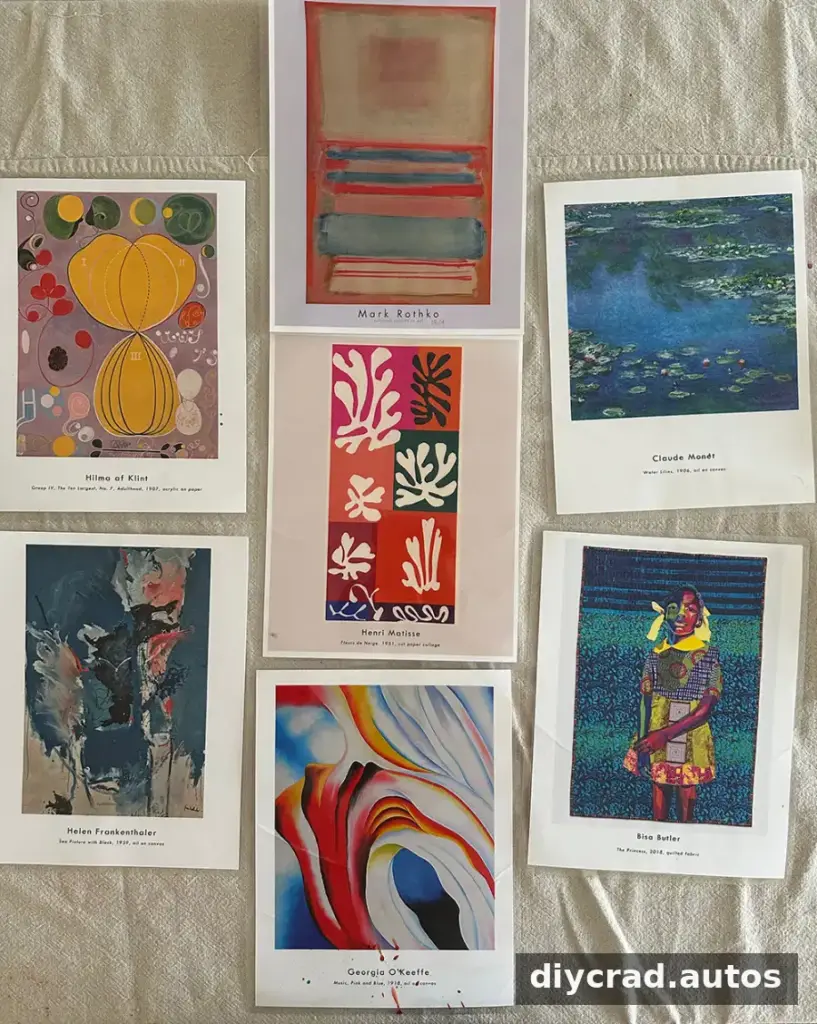
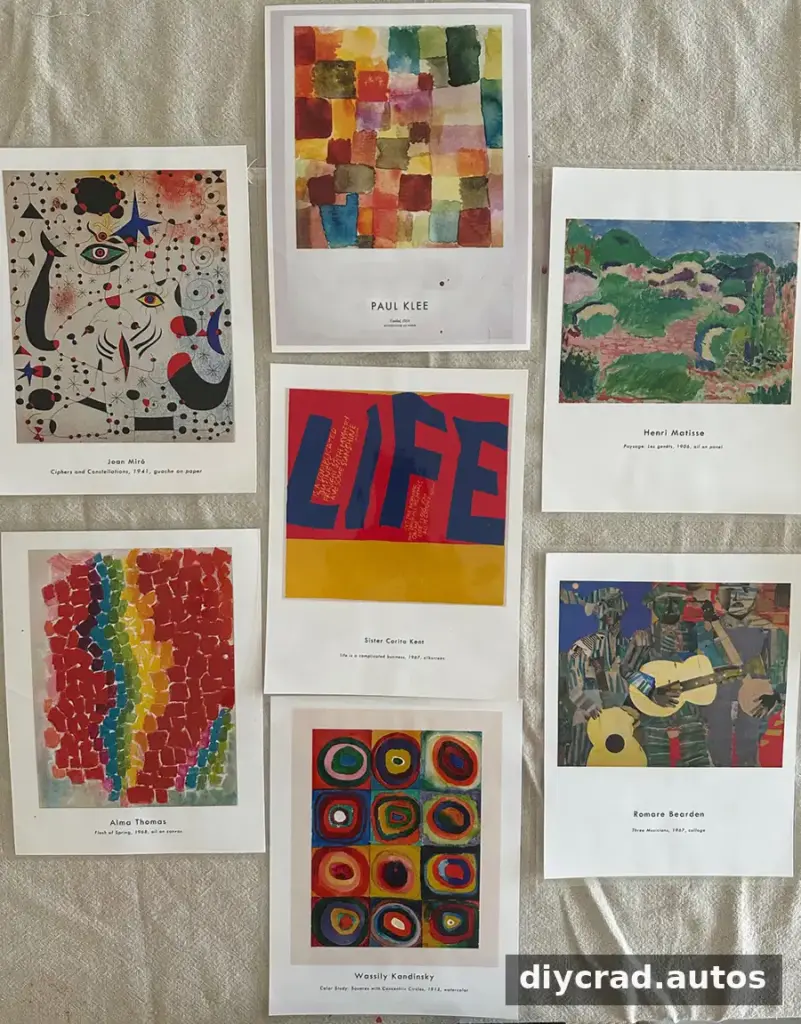
Choose several artworks with varied colors, shapes and compositions, then display them where children can see them as they work. Laminated, double-sided images can stand upright on simple holders, such as cardboard tubes secured with tape. Before printing or displaying artwork, check that you have permission to use it or that it is available for use under suitable licensing terms.
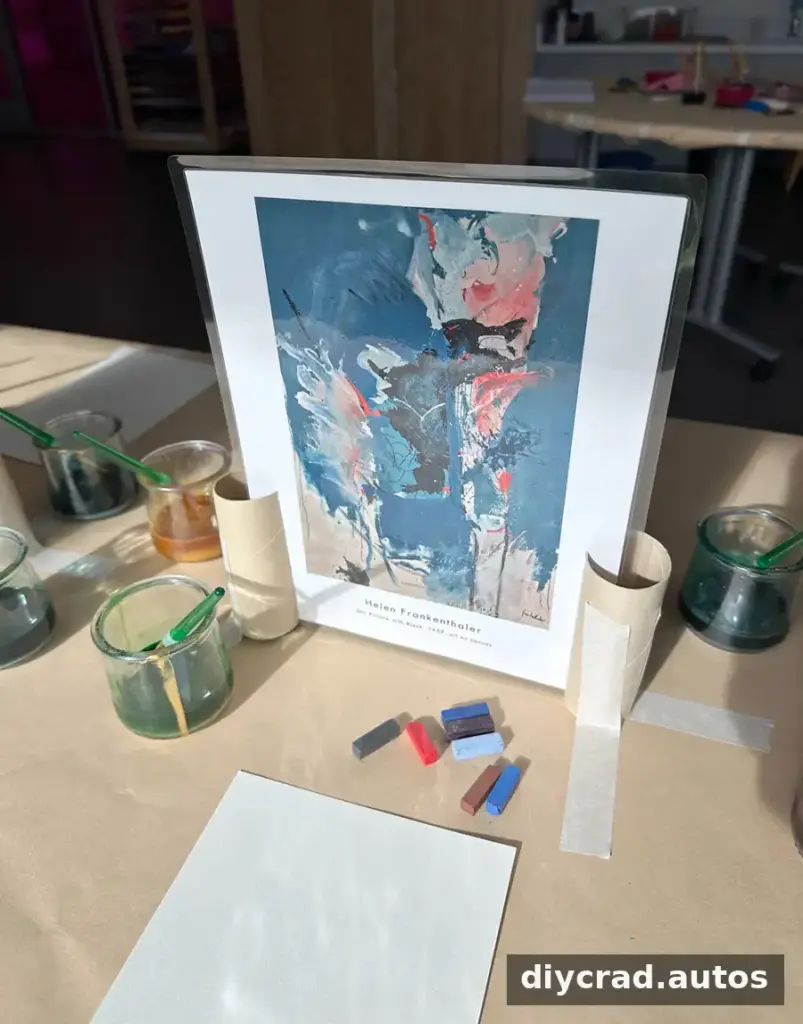
Arrange liquid watercolor and pastels near artworks with related colors. This subtle visual connection can help children notice color choices without directing them toward a single outcome. Keep the paints in small containers and provide enough space for children to reach the materials independently. For a group, set out extra paper and brushes so children can continue if supplies are in use.
Supplies for the painting activity
- Liquid watercolors, diluted with water as needed
- Small jars or containers for paint
- Paintbrushes
- Watercolor paper
- Chalk pastels or oil pastels
Optional tools
- Scissors
- Large paper punches in shapes such as circles, scallops or hearts
Use containers that are stable and suitable for the age group, and supervise children when scissors or small tools are available. Test the paint dilution and paper in advance if you want to see how the materials behave together. Offering a small sample area can also help children discover what happens when watercolor and pastel marks overlap.
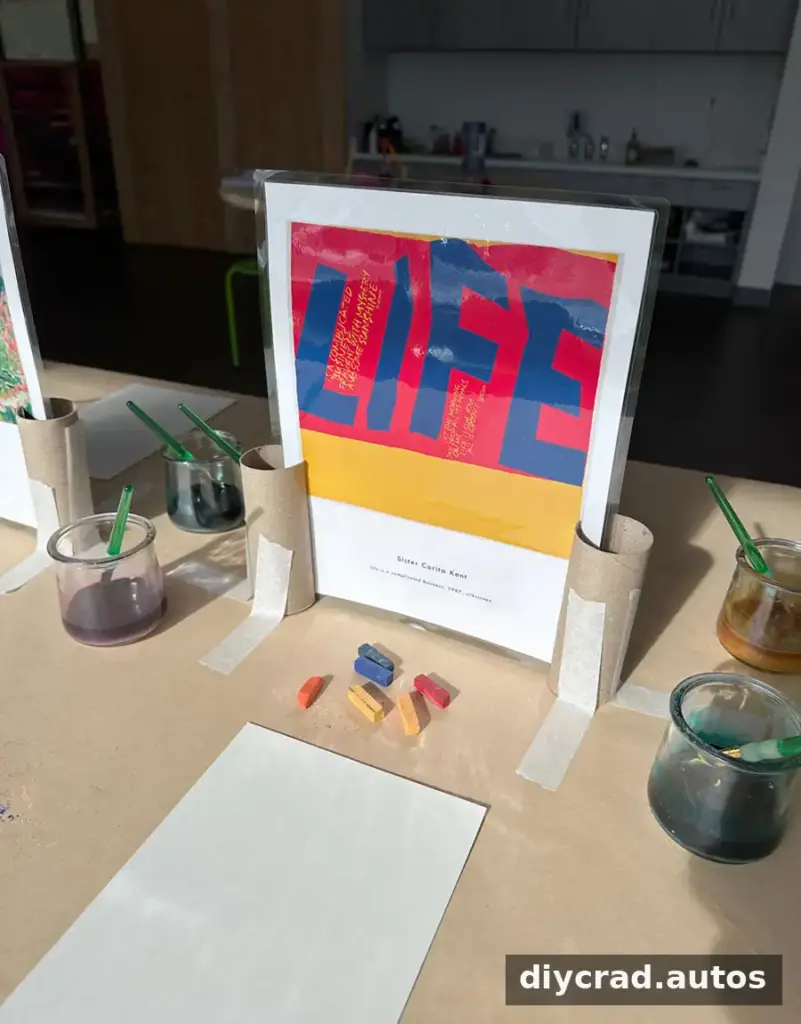
Let children interpret the artwork in their own way
Coordinating the pastel colors with the displayed images is one way to invite children to notice a palette. It is only a starting point: some children may respond to color, while others focus on shapes, lines, mood or the arrangement of marks. Some may not refer to the images at all, choosing instead to concentrate on how the materials feel and work.
Rather than demonstrating a finished result, allow time for children to experiment. Open-ended prompts such as “What do you notice?” or “What might happen if you add another color?” can encourage observation without prescribing what the artwork should look like. For children who want more inspiration, placing a few colored paper shapes on the table can introduce another way to explore pattern and movement.
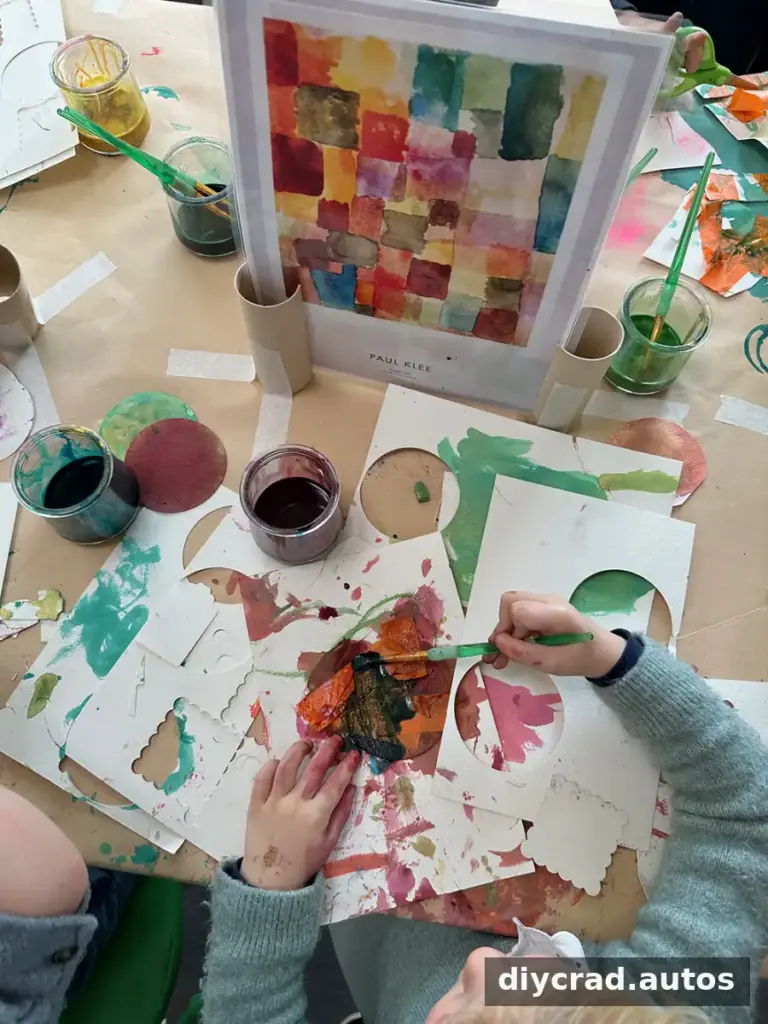
One child responded to the shapes and movement in a Paul Klee painting, using layers and some of the colors as inspiration. The result reflected the child’s own interpretation rather than aiming to reproduce the original.
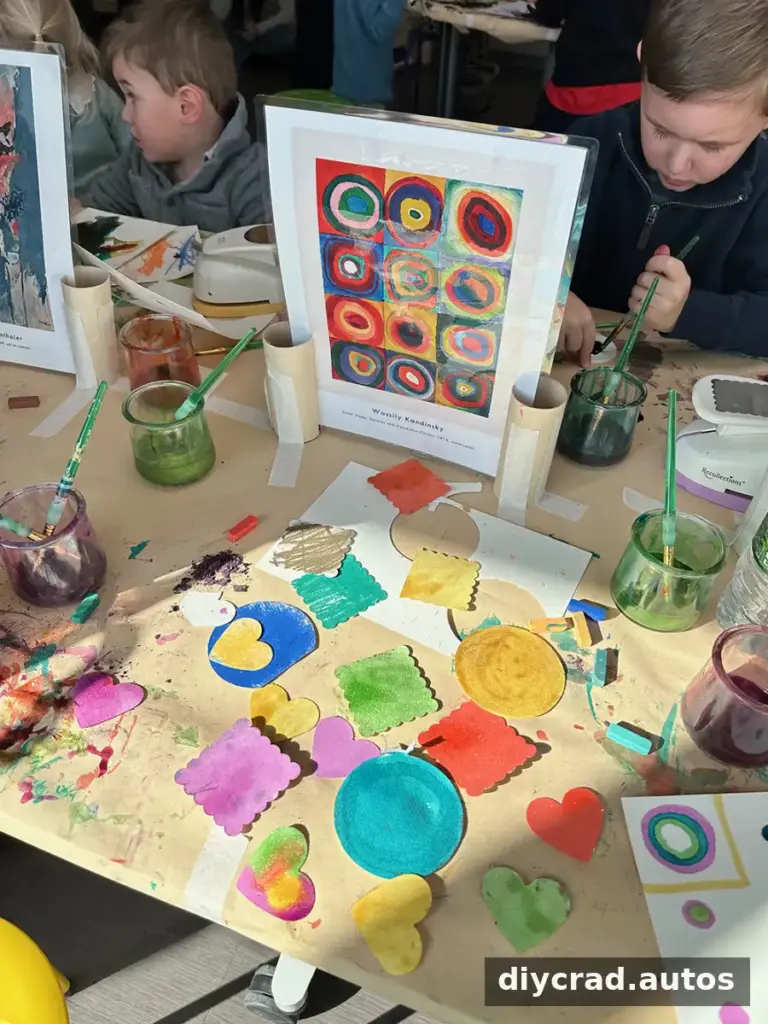
Another child made separate painted shapes and turned them into a playful activity, drawing on the colorful, layered feel associated with Wassily Kandinsky’s work.
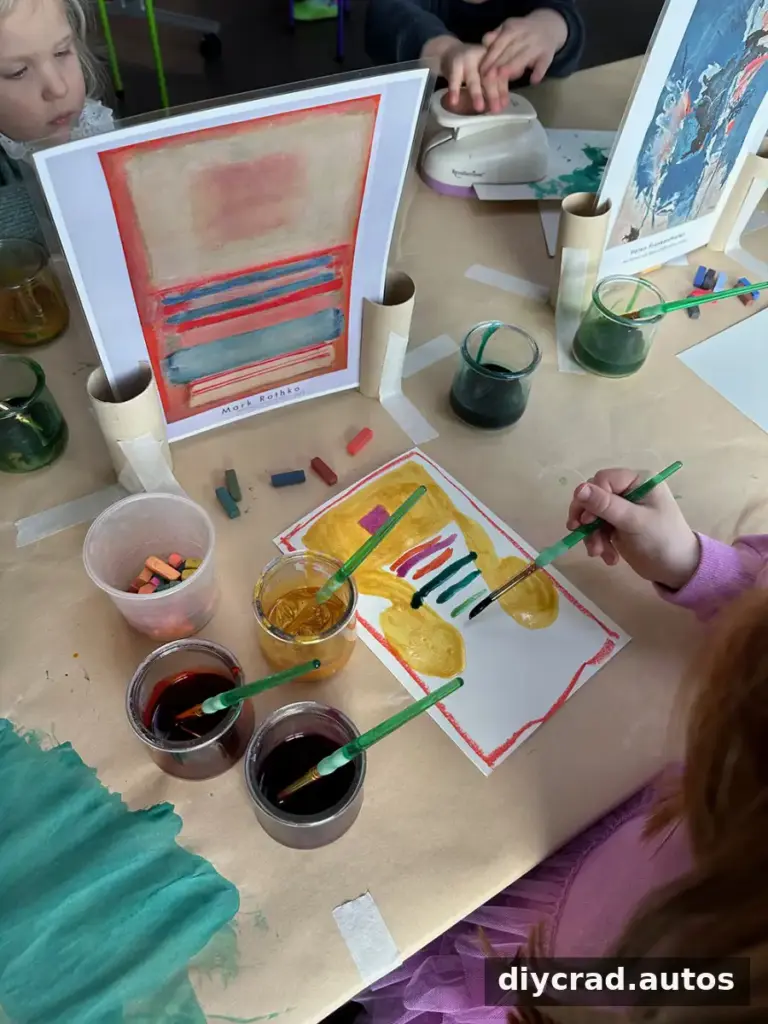
An older child noticed the lines and rectangular forms in a Mark Rothko painting, then selected a color palette of her own. Giving children that freedom can make looking closely part of the creative process.
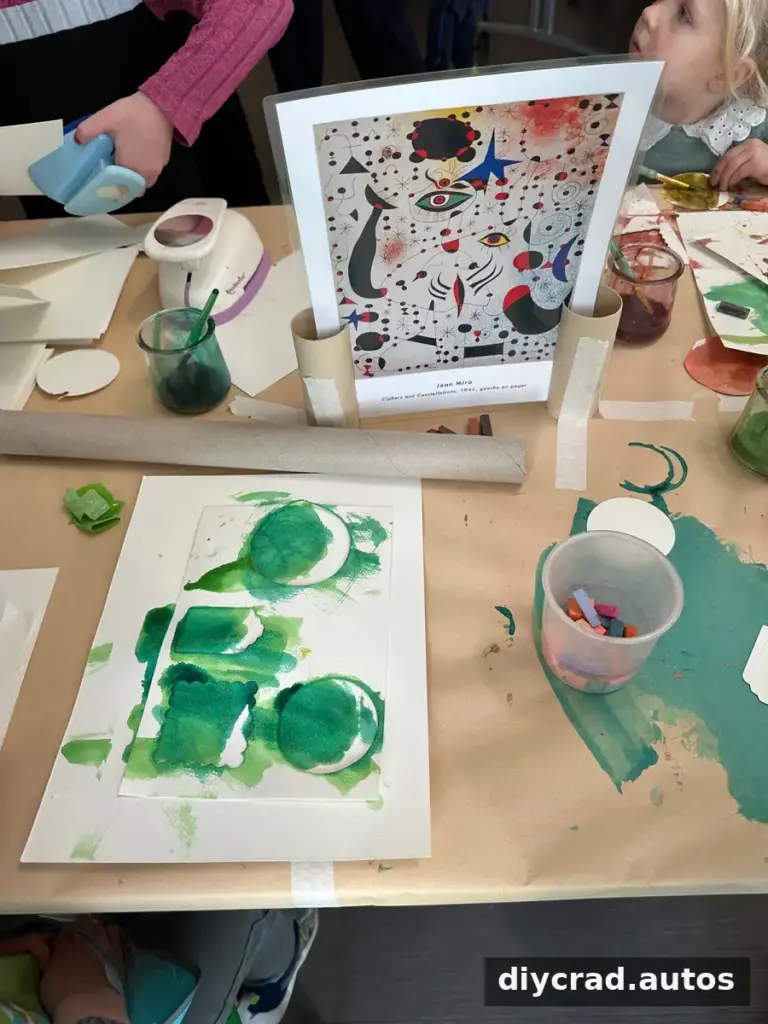
A painting that was left unfinished may have been influenced by a Joan Miró artwork. The floating shapes offered a possible starting point, and the child also discovered a stencil technique while exploring the materials. An unfinished piece can still show valuable experimentation.
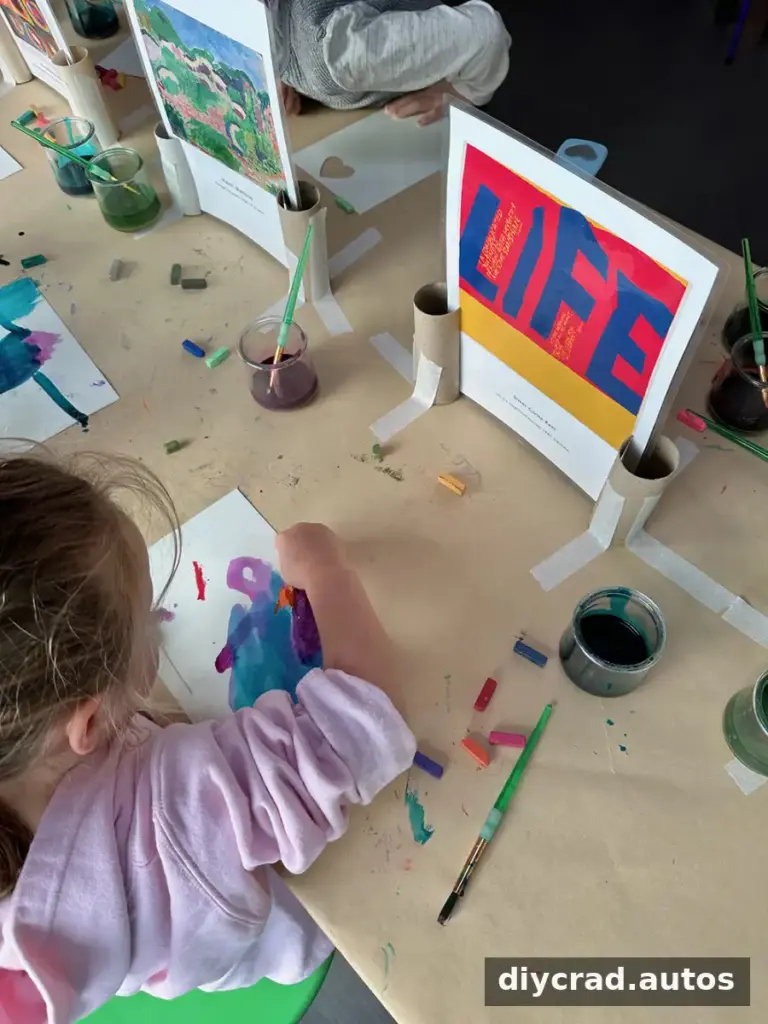
It is fine if a direct connection to an artwork is not apparent. Children may be deeply engaged in painting without looking back at the reference images. If you repeat the activity, consider changing one element at a time—such as adding paper shapes or offering a different selection of colors—to see what new kinds of exploration emerge.
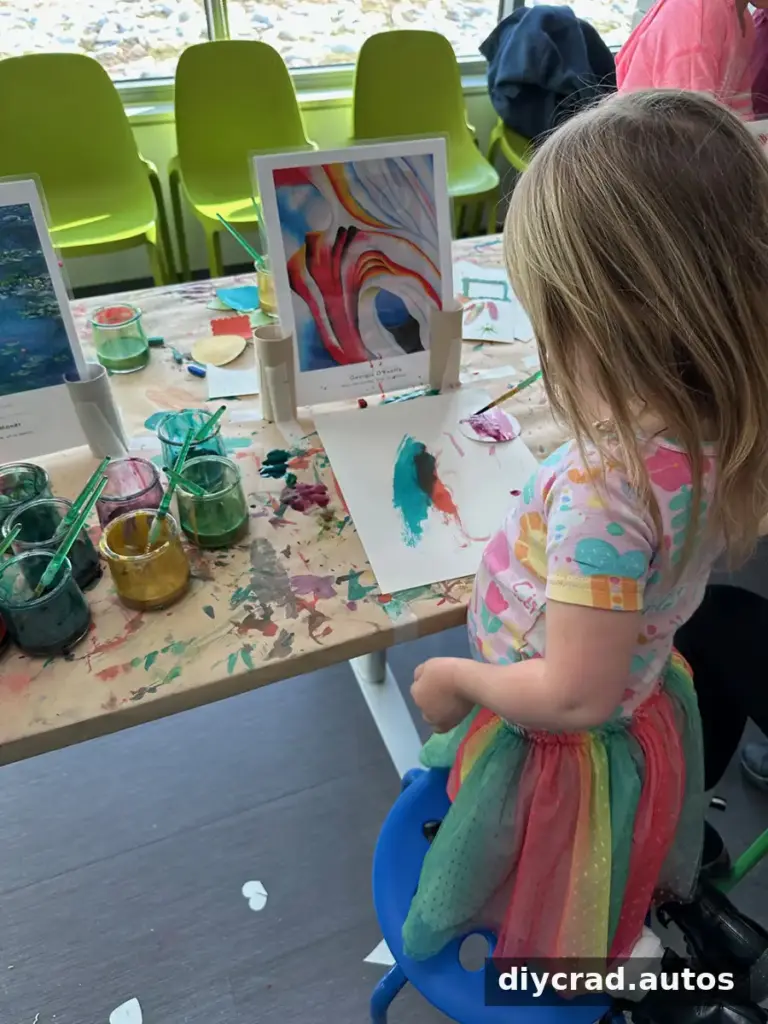
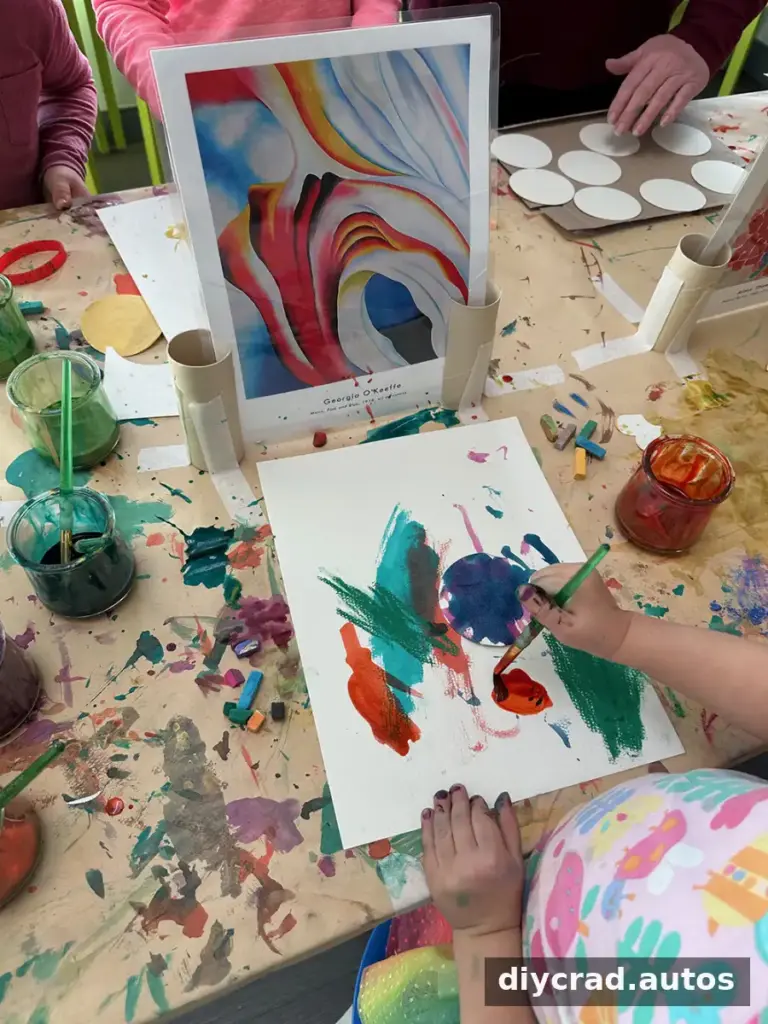
In another example, the movement of a child’s skirt seemed to echo the forms in a Georgia O’Keeffe painting. The child began with bold marks on one side of the paper and later developed a blue focal point, moving paint around the circle. This progression shows how an idea can change as a child spends more time with the materials.
Make looking at art part of the experience
A selection of familiar and less familiar artists can prompt conversations between children and adults. Display artist names with the images so families can refer to them together, but leave room for children to focus on their own observations. Questions about what someone notices, likes or wonders about can make the artwork approachable without turning the activity into a formal lesson.
For a group setting, arrange the table so adults can join their children without crowding the materials. Observing quietly can help preserve the shared conversation and give children time to make their own discoveries. If documenting the activity, avoid interrupting a child who is concentrating or a family discussion.
Conclusion: encourage creative exploration
An artist-inspired liquid watercolor painting table combines accessible materials with visual references, while leaving the creative decisions to the children. Offer a thoughtful choice of artworks, watercolors, paper and pastels, then allow time for independent experimentation. Whether children borrow a color, notice a shape or simply enjoy making marks, the process can support observation, confidence and imaginative play.
More liquid watercolor ideas
Explore these related activity ideas:
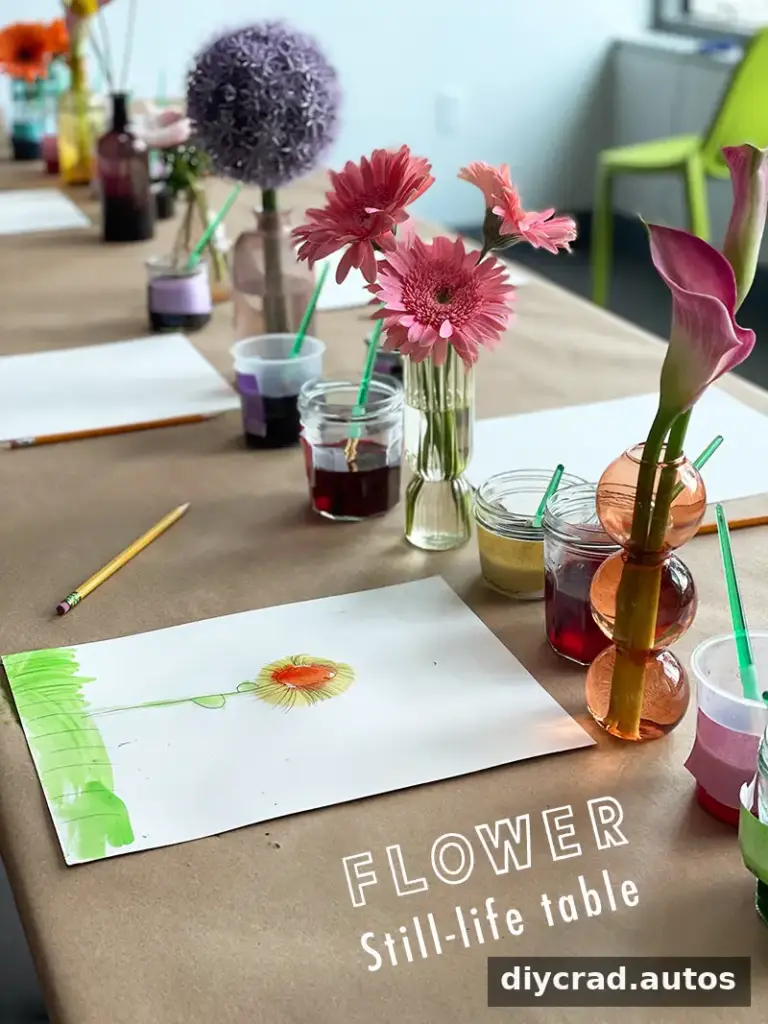
Still Life Painting with Liquid Watercolor
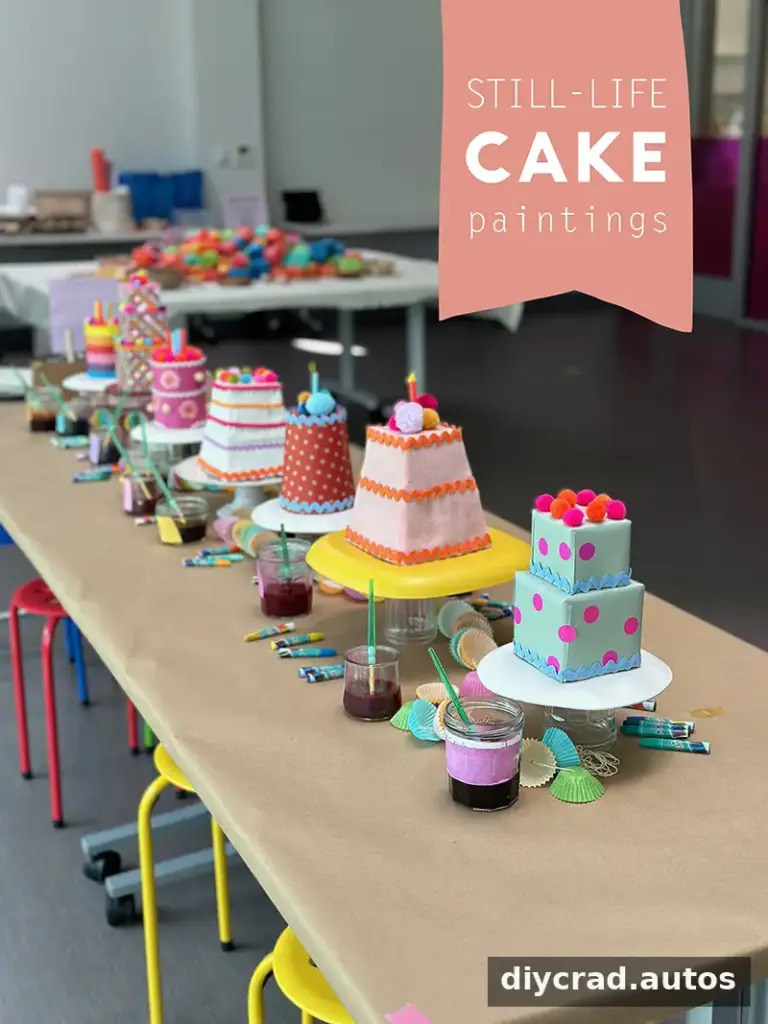
Cake Still-Life Table with Liquid Watercolor
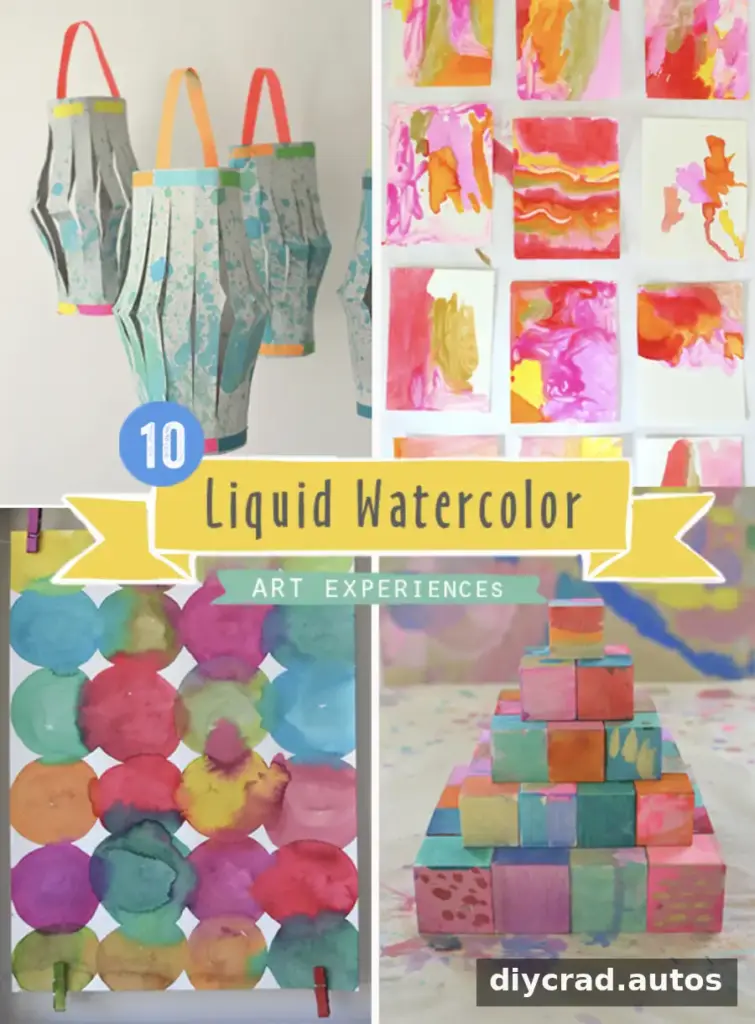
Liquid Watercolor Roundup of Ideas

