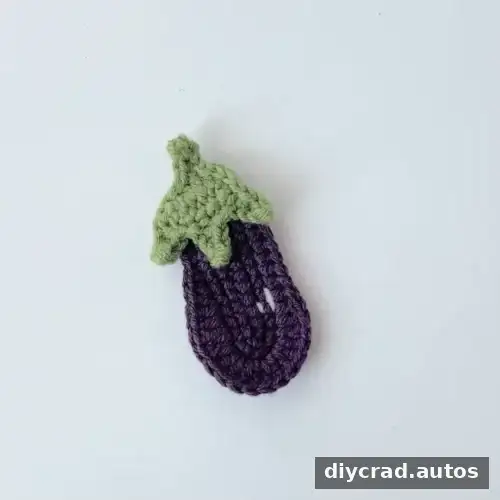
This crochet eggplant applique is a small, flat project made with purple yarn for the fruit and green yarn for its leafy top. The beginner-friendly pattern uses basic crochet stitches and includes a video tutorial for extra guidance. The stated completion time is about 20 minutes, though your pace may vary. Use the finished piece to decorate accessories, clothing, or other crochet projects.
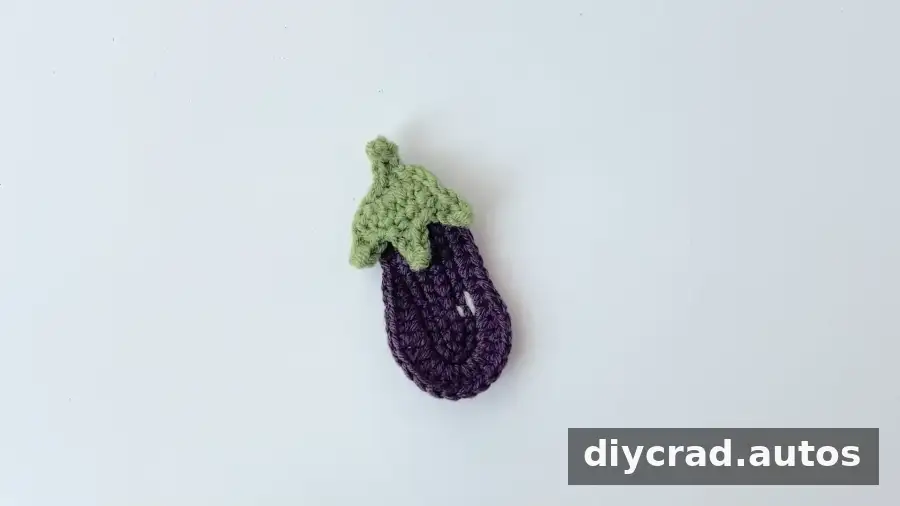
About the Crochet Eggplant Applique Pattern
The applique is worked in separate parts: a purple main shape and a green leaf. White yarn is used at the end to sew two decorative lines onto the eggplant. The instructions are written in US crochet terms, and a 2.0 mm hook is specified.
This is a flat crochet project, so a specific gauge or finished size is not provided. If you want to make the applique larger or smaller, changing the yarn or hook may affect its final dimensions and stitch definition. For a neat result, keep your tension consistent and check that the leaf sits comfortably over the top of the purple piece before attaching it.
Materials and Tools
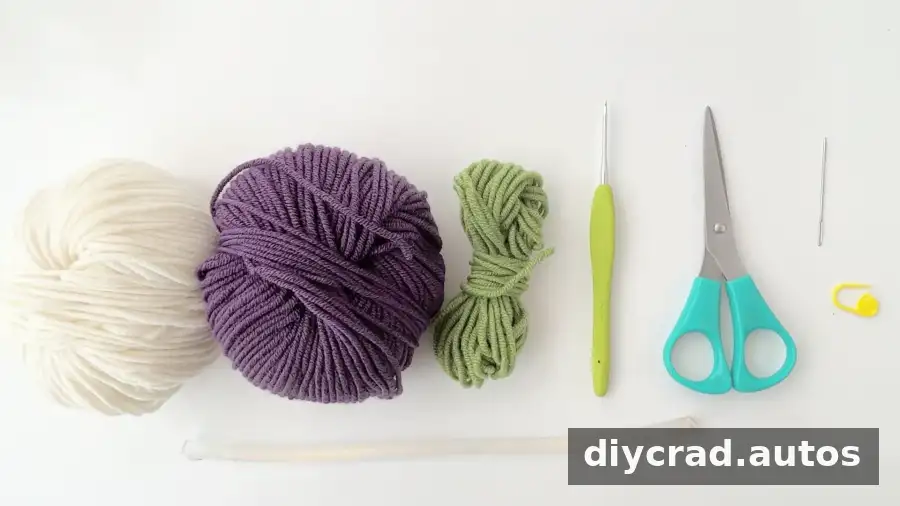
- Yarn in purple, green, and white
- 2.0 mm crochet hook
- Scissors
- Darning needle
- Stitch marker
- Hot melt adhesive
Choose yarns of a similar weight so the pieces fit together as intended. Use hot melt adhesive carefully and follow its product instructions; keep it away from children and protect your work surface while applying it.
Stitches and Abbreviations
- ch: chain stitch
- sc: single crochet
- ss: slip stitch
- hdc: half double crochet
- dc: double crochet
- tr: triple crochet
Read each row carefully and use a stitch marker if you find it helpful to keep track of your starting point. The pattern uses US stitch names, which can differ from UK crochet terminology.
How to Crochet the Eggplant
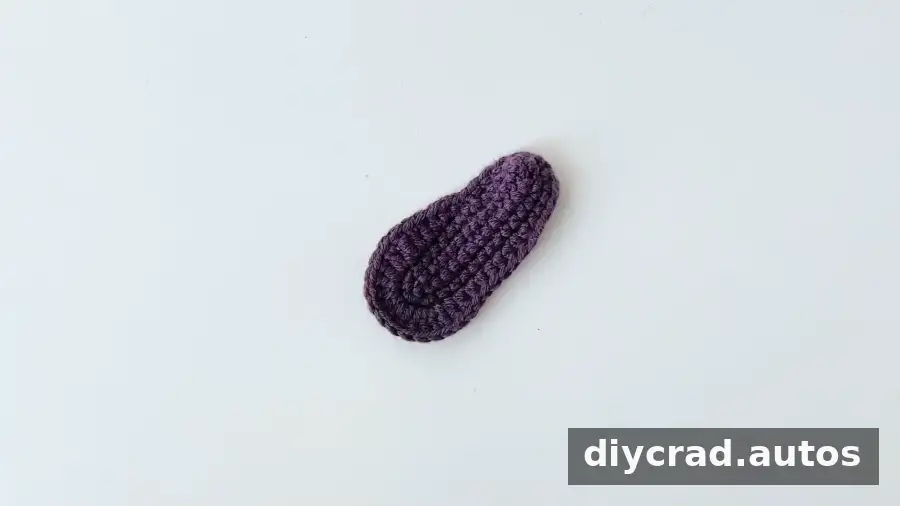
Main Part in Purple
Begin with a foundation chain of 15 ch.
- R1: From the 2nd st of the hook: 13 sc, 3 sc in next st, 12 sc, 2 sc in next st, 1 ss, 1 ch.
- R2: 13 sc, (2 sc in next st) 3 times, 14 sc, 1 ss, 1 ch.
- R3: 5 sc, skip 1 st, 1 ss, 1 sc, 2 hdc, 2 dc, 1 tr, 1 dc, (2 dc in next st) 5 times, 2 dc, 7 hdc, 5 sc.
Keep the stitches even as you shape the main piece. If a stitch count or placement is unclear while working, refer to the accompanying video tutorial before continuing.
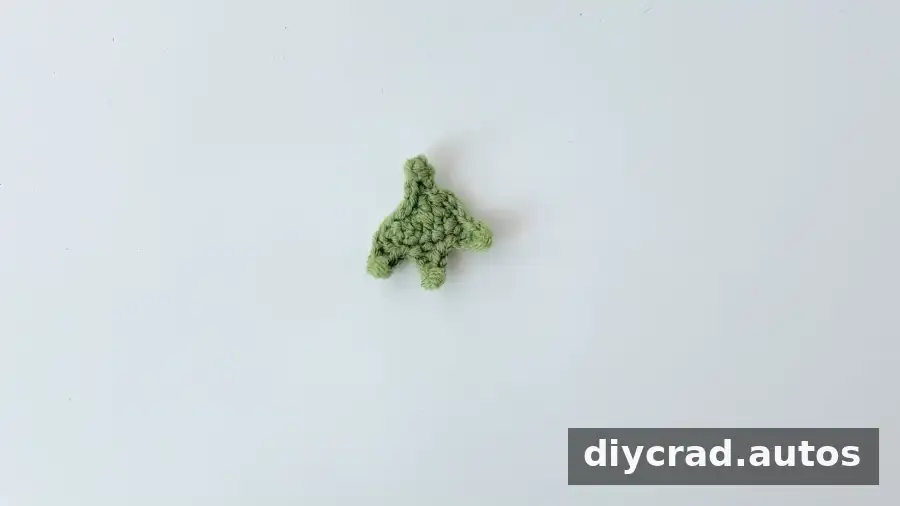
Eggplant Leaf in Green
Begin with a foundation chain of 7 ch.
- R1: From the 2nd st of the hook: 6 sc, 1 sc, 1 hdc, 1 dc, 1 hdc, 1 sc, 1 ss, 1 ch.
- R2: 1 sc, [(4 ch, then from the 2nd st of the hook: 1 ss, 1 sc, 1 hdc), 2 ss] 3 times.
- R3: Skip 1 st, work ss until the middle, 4 ch, then from the 2nd st of the hook: 3 sc, 3 ss.
Arrange the leaf above the purple body before attaching it, checking that the leafy points are positioned as you want them. This small check can help the finished applique look balanced.
Assemble and Add Details
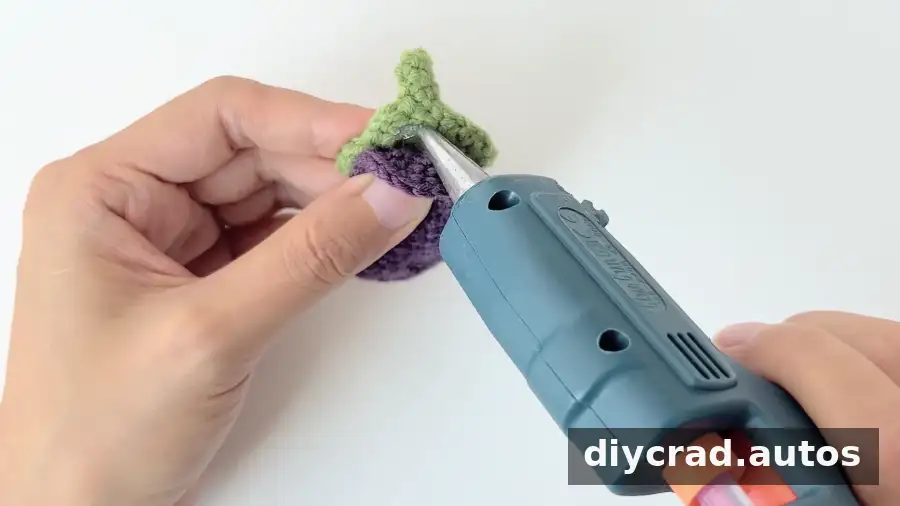
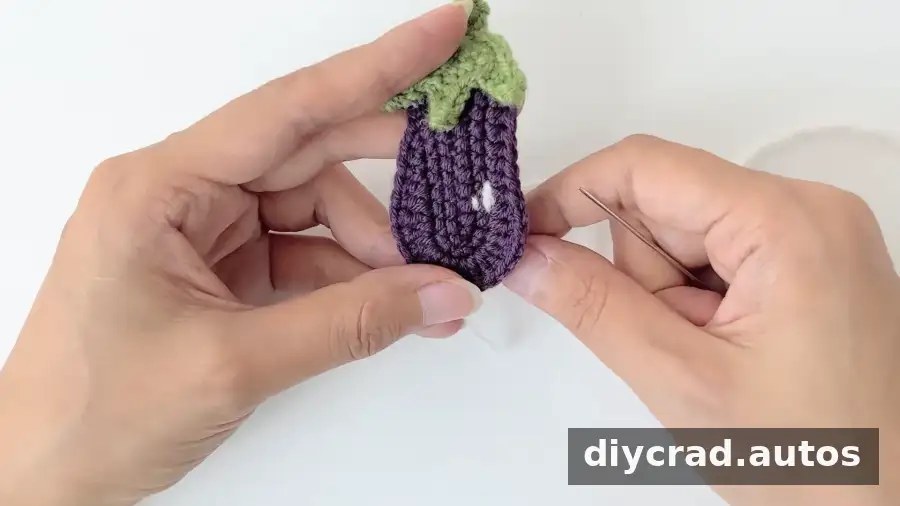
Use hot melt adhesive to attach the green leaf to the main body. Allow the adhesive to set according to its instructions before handling the piece. With white yarn and a darning needle, sew two lines of different lengths onto the eggplant.
Weave in or secure any yarn ends neatly on the back. If the applique will be attached to clothing or an item that needs regular washing, consider whether the adhesive is suitable for that use and follow its care guidance.
Ways to Use Your Crochet Eggplant Applique
Once finished, the applique can be used as a decoration on clothes, bags, or hats. It can also be made into a hairpin, brooch, or bookmark. When adding it to another item, secure it firmly and choose an attachment method that suits how the finished piece will be used.
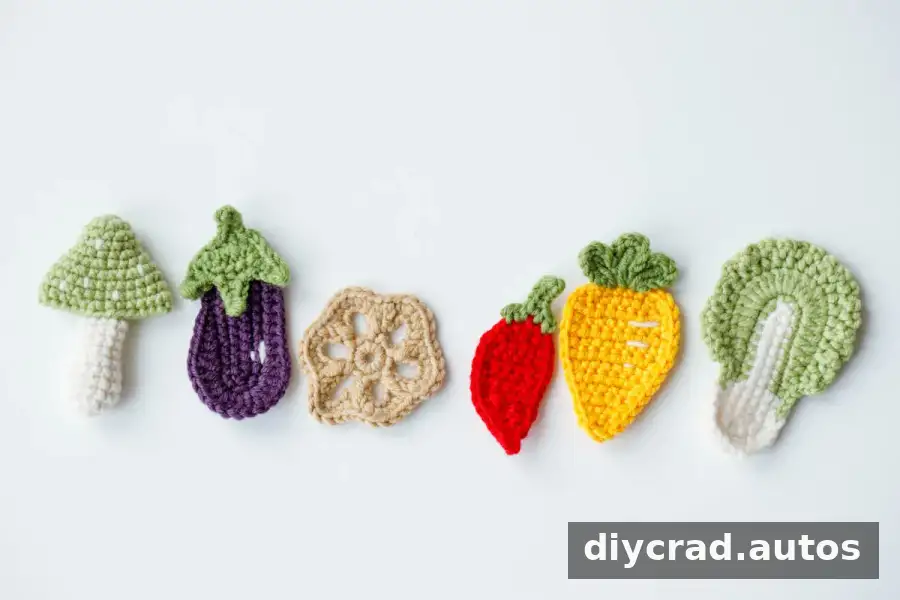
For more vegetable-themed crochet ideas, you could also make carrot, chili, Chinese cabbage, mushroom, or lotus root appliques. Using a consistent yarn weight across a set can help the pieces look coordinated.
Finishing Your Crochet Eggplant Applique
This crochet eggplant applique is a quick project built from a few basic stitches, a purple body, and a green leaf. Follow the row instructions in order, use the video for visual support when needed, and attach the details securely. You can try different yarn colors to coordinate the applique with a decoration project while keeping the original pattern structure.