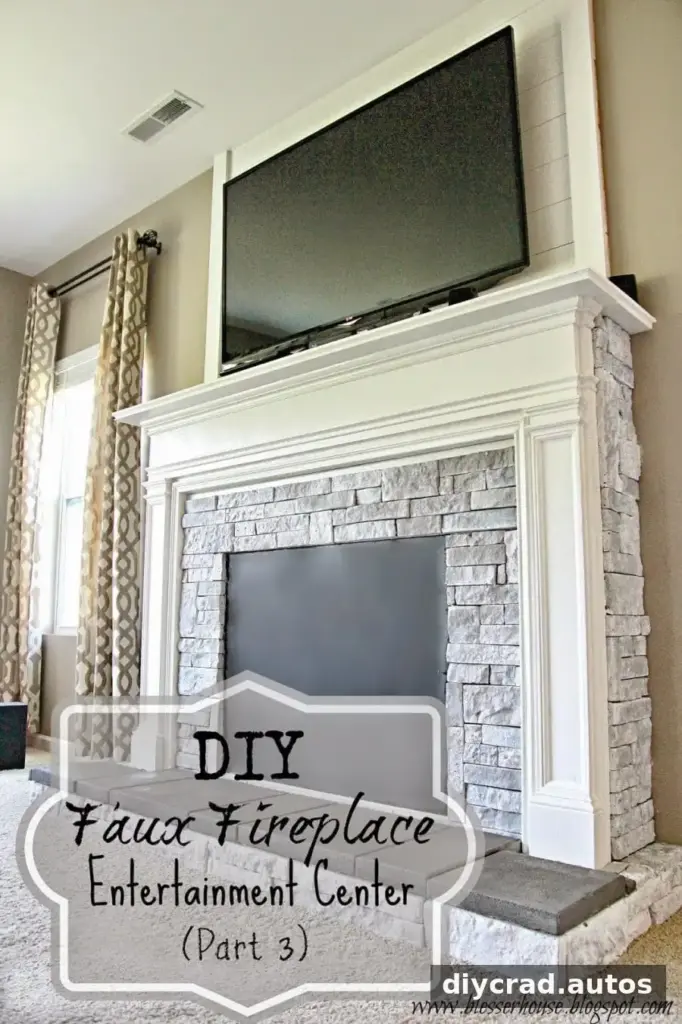
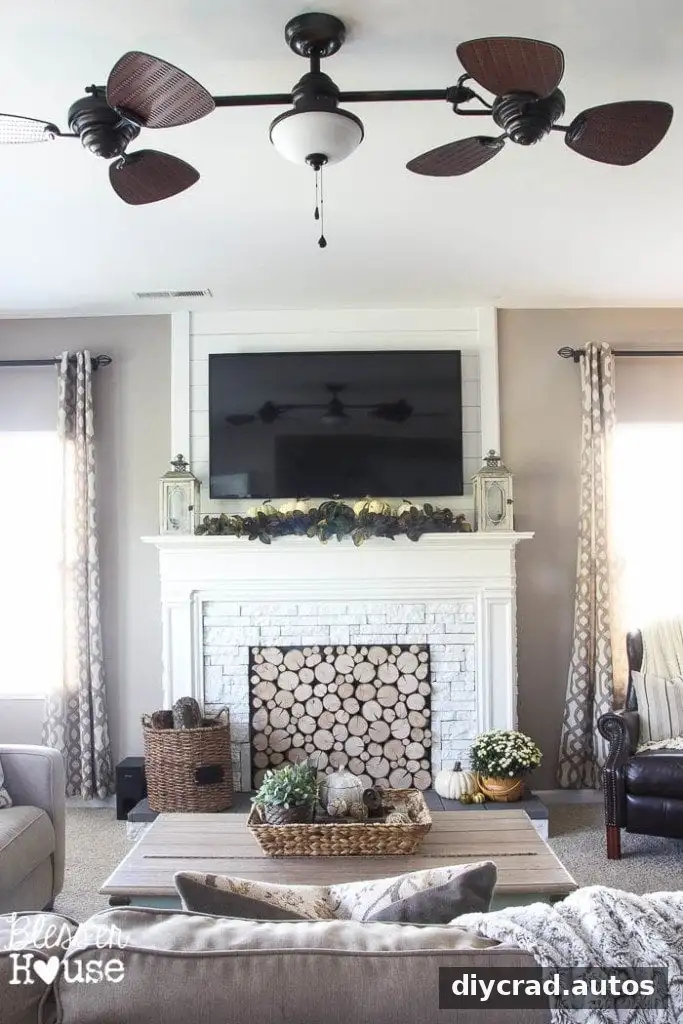
A DIY faux fireplace can create a dramatic focal point without the cost of installing a working fireplace. This living-room project combined faux stone, shiplap, a repurposed antique mantel, and a handmade stacked-log firebox door for a total project cost of less than $600. The fireplace is decorative rather than a source of heat, but thoughtful materials and a little planning can make the finished feature feel substantial.
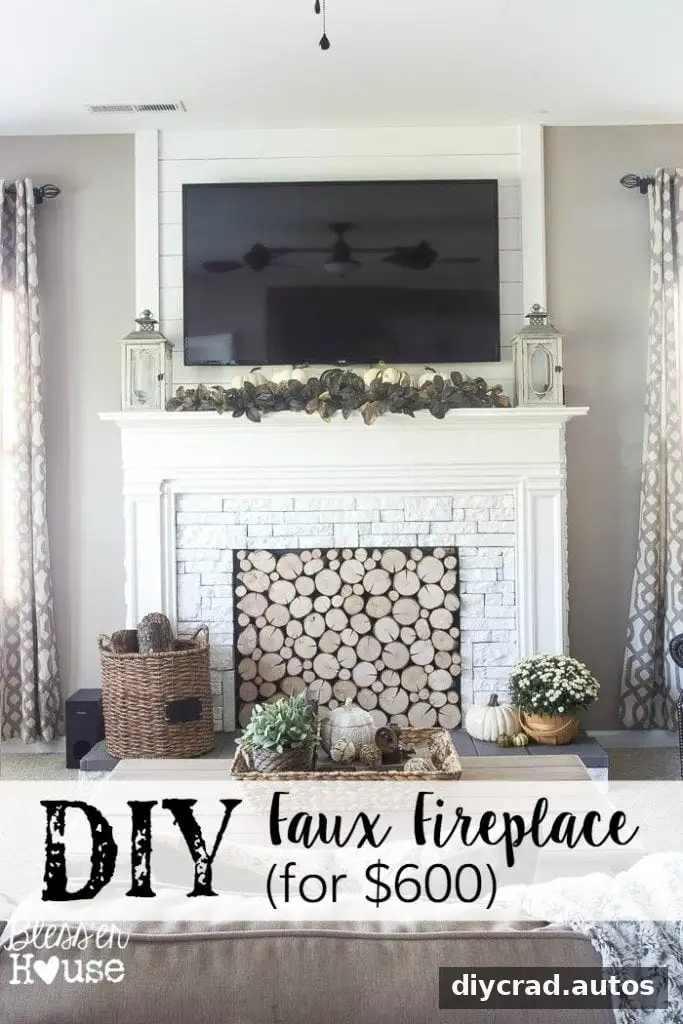
The finished mantel provides a place to display seasonal decorations, while the faux firebox adds the look of stacked wood. Because the project involves several parts and finishes, it helps to plan the overall design before beginning. The larger build was completed over the course of about a week, with some tasks happening while glued pieces dried.
Planning a DIY Faux Fireplace on a Budget
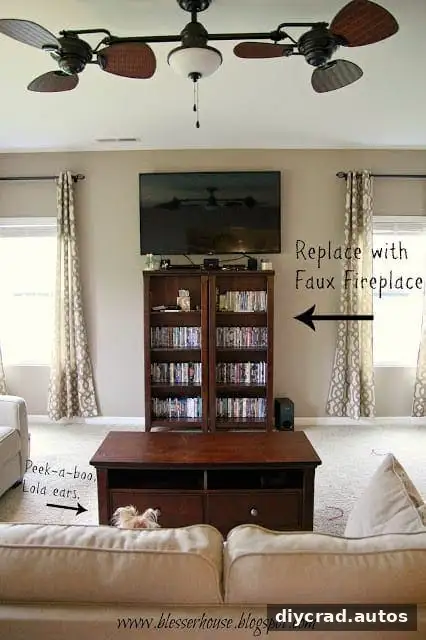
The existing living room did not have a fireplace, and a builder-installed upgrade was quoted at a starting price of $5,000. Instead, the homeowners developed a lower-cost plan using a combination of new materials, reclaimed elements, and do-it-yourself work. The completed project came in under $600, although individual costs can vary depending on material availability and local prices.
The fireplace was built in stages: the hearth, mantel, and firebox door; the plank wall above the mantel and TV wiring; the faux-stone finish and concrete hearth; and finally the stacked-log door. Breaking a large project into smaller phases makes it easier to measure carefully, manage drying times, and make design adjustments before moving on.
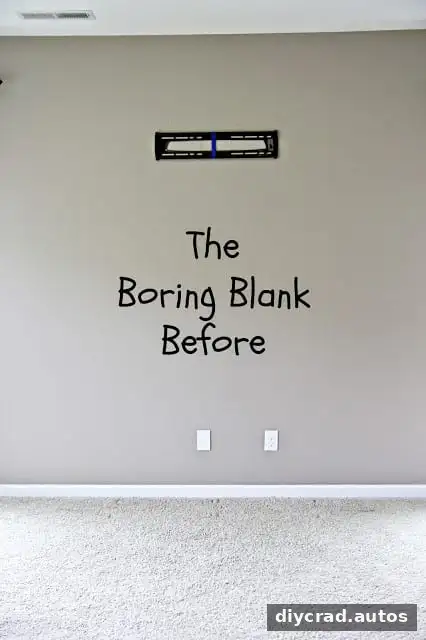
Before construction, measure the wall and decide how the mantel, firebox opening, and surrounding finishes will fit together. Check the planned dimensions against any television, electronics, or furniture that will remain in the room. A quick layout marked on the wall can help reveal proportion or spacing issues before materials are cut.
How to Make a Stacked-Log Firebox Door
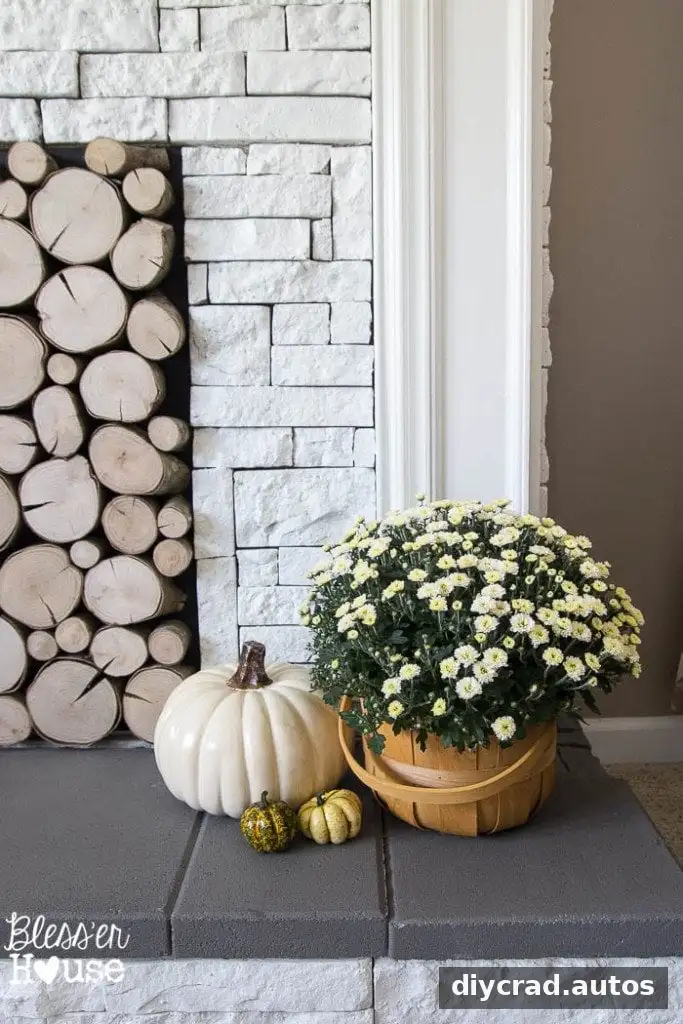
The faux firebox door gives the opening the appearance of neatly stacked logs. The design idea was inspired by Pepper Design Blog. For this part of the project, gather:
- Pre-cut wood slices or small logs
- 3/4-inch plywood
- A circular saw, miter saw, or band saw if the wood slices need cutting
- Matte black paint or chalkboard paint
- A paintbrush
- Construction adhesive suitable for the materials
- A piano hinge
Prepare the panel and wood pieces
Measure the firebox opening and cut the plywood to the dimensions needed for the door. Paint the panel matte black and let it dry completely. The dark background helps disguise gaps between the wood slices and gives the finished arrangement more depth.
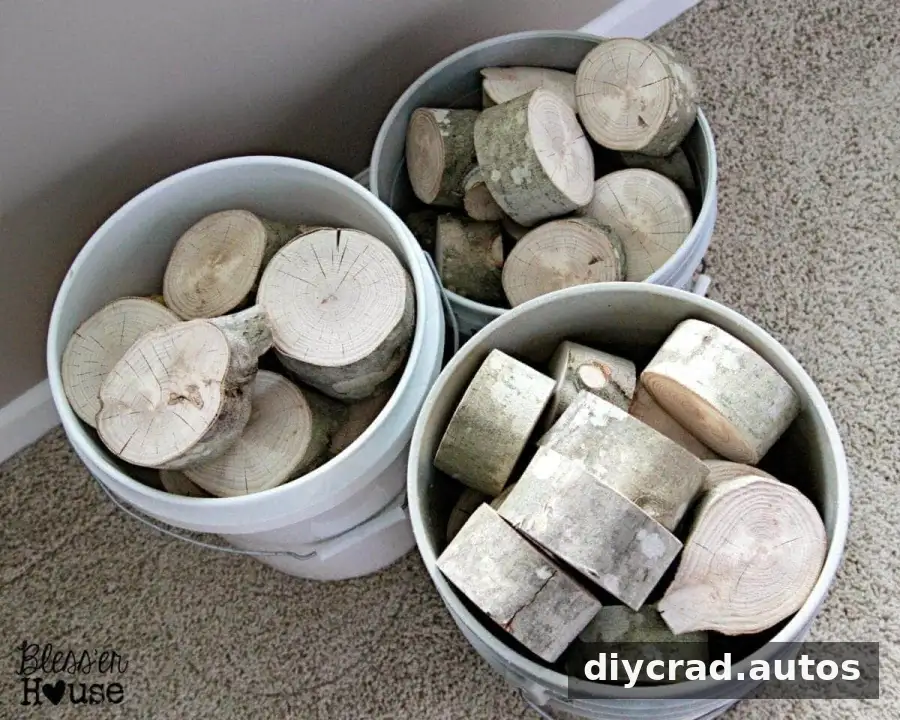
Cut the log ends to a consistent depth. In this project, the pieces were about two inches long, which helped them appear deep enough to resemble a stack. The wood came from a beech tree found on a wooded trail after it had been felled by a beaver. If using freshly cut wood, allow it to dry thoroughly before attaching it.
Arrange, attach, and hang the door
Place the painted plywood on a flat, stable surface and arrange the log pieces across it before applying adhesive. Treat the layout like a puzzle: move the pieces around until the pattern looks balanced and the panel is covered as intended. Taking a photo of the final arrangement can help you remember where each piece belongs.
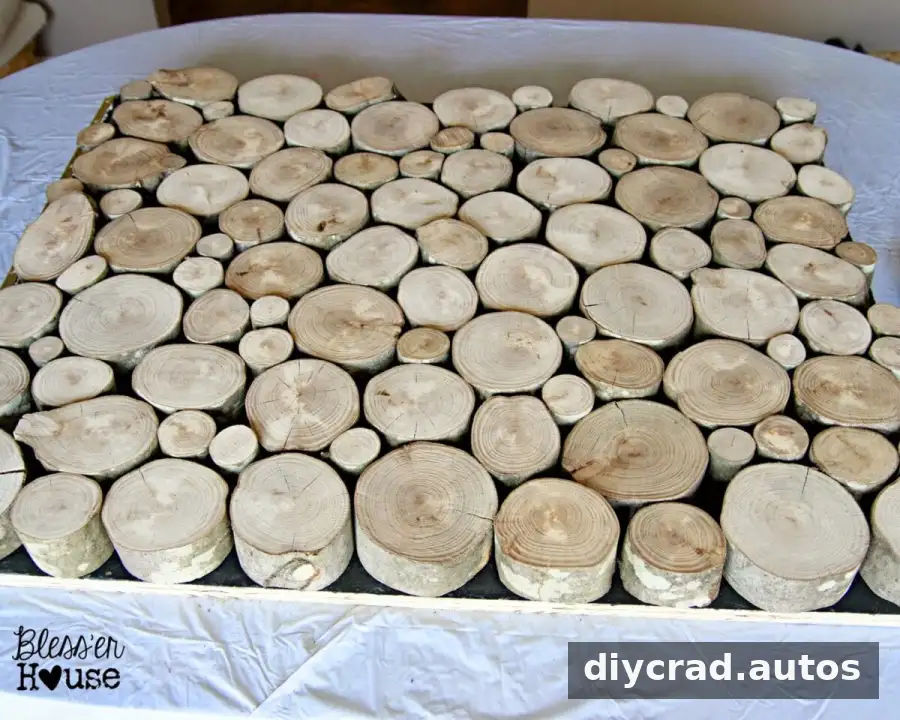
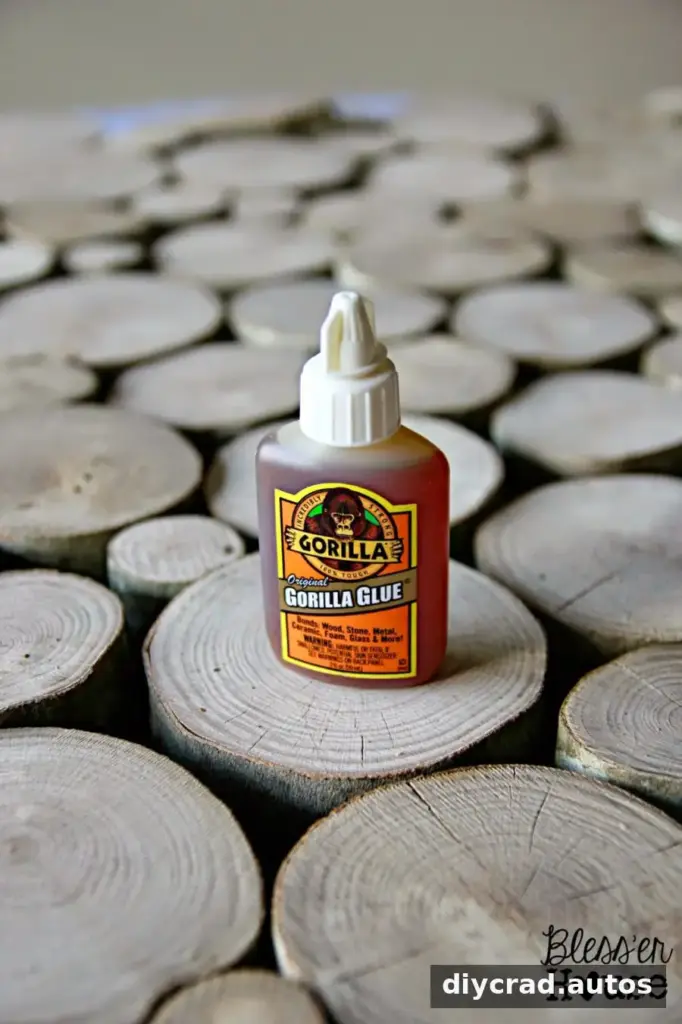
Once the layout is set, attach the pieces with an adhesive suitable for wood and follow its instructions for application and curing. Allow the adhesive to dry fully; this project allowed 24 hours before the door was installed. A piano hinge was used to hang the completed panel on the firebox opening. Because a log-covered door can be heavy, make sure the hinge and its fasteners are appropriate for the door’s weight and the surface supporting it.
Finishing the Fireplace and Managing Electronics
After seeing the completed log door alongside the whitewashed faux stone and mantel, the finishes felt visually busy. The stone was repainted white to create a more unified appearance. When choosing colors, compare samples beside the mantel and firebox materials in the room’s lighting before painting a large area.
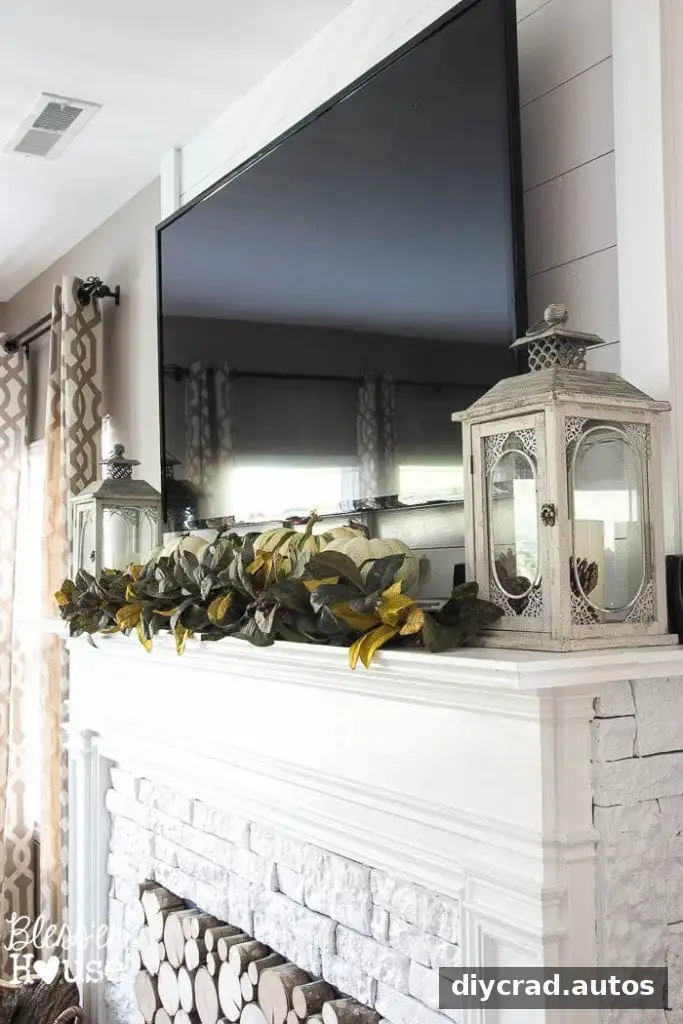
Electronics also affected the final arrangement. The stacked-log door was too heavy to use as convenient access for devices stored inside the firebox, so the speakers, disc player, and game console remained on the mantel. A leafy decoration helped soften their appearance, but the important practical point is to keep devices accessible and avoid blocking ventilation.
For cord access, a hole was later made in the top of the mantel with a hole-saw bit to reach an outlet behind the firebox door. Cord covers are another option for concealing visible wires. Before drilling, check for hidden wiring or other obstructions, and use a qualified professional if you are unsure about electrical work. Keep cords arranged so they do not create a trip hazard.
Other Firebox Options and Project Tips
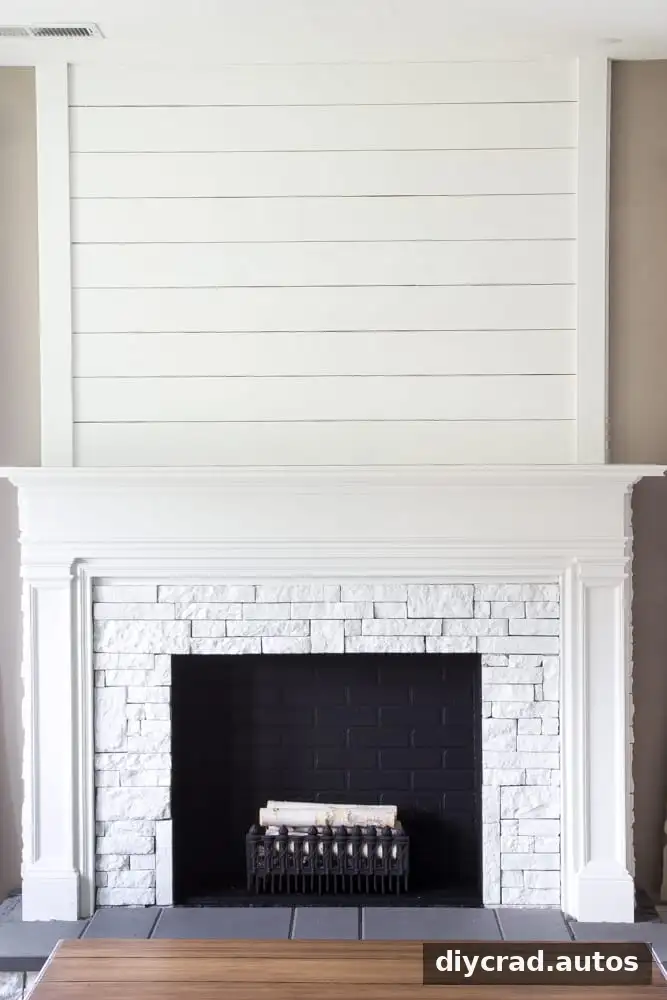
A stacked-log panel is only one way to finish a faux firebox. Faux brick paneling was used as an alternative in a later version of this project. Whichever finish you choose, check the dimensions and weight of each component before installation, and follow the relevant product instructions.
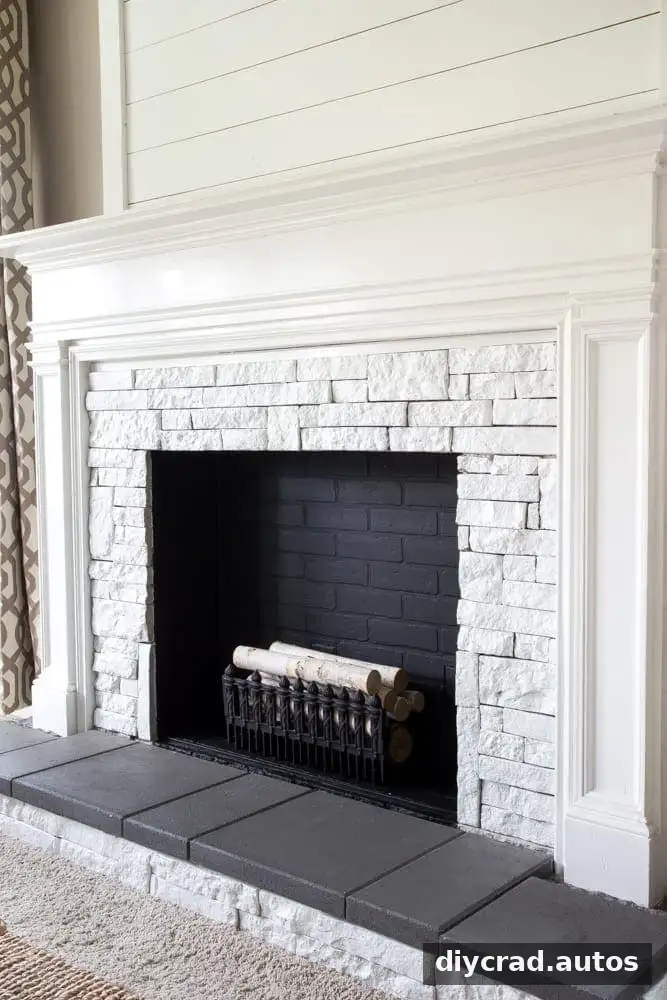
An electric fireplace insert may also be possible, but the opening must be sized for the specific insert. Follow the manufacturer’s installation requirements, including electrical needs and clearances. A decorative faux fireplace is not automatically suitable for an operating heat-producing insert; adapt the design only when the finished construction meets the insert’s safety instructions.

Frequently Asked Questions
Should the cut ends of the logs be sealed?
The wood was allowed to dry before use. For added protection, sealing the cut ends with spray polyurethane is a practical option. Test the finish on a spare piece first and follow the product directions, including ventilation and drying guidance.
How can TV cords be routed from above the fireplace?
A hole in the mantel can provide access to an outlet behind the firebox, while cord covers can conceal cables on a visible surface. Check for hidden wiring before drilling, and follow applicable electrical safety requirements.
Can an electric insert be added to this design?
Possibly, but the dimensions and construction need to suit the selected insert. Check its installation manual for opening size, clearances, and electrical requirements before building or modifying the surround.
Conclusion
This DIY faux fireplace shows how faux stone, shiplap, a repurposed mantel, and a handmade stacked-log door can turn a plain living-room wall into a focal point for under $600. Measure carefully, allow adhesives and finishes to dry fully, and plan access for electronics before closing in the firebox. With those details considered, a DIY faux fireplace can offer a personalized look without requiring a traditional built-in fireplace.