

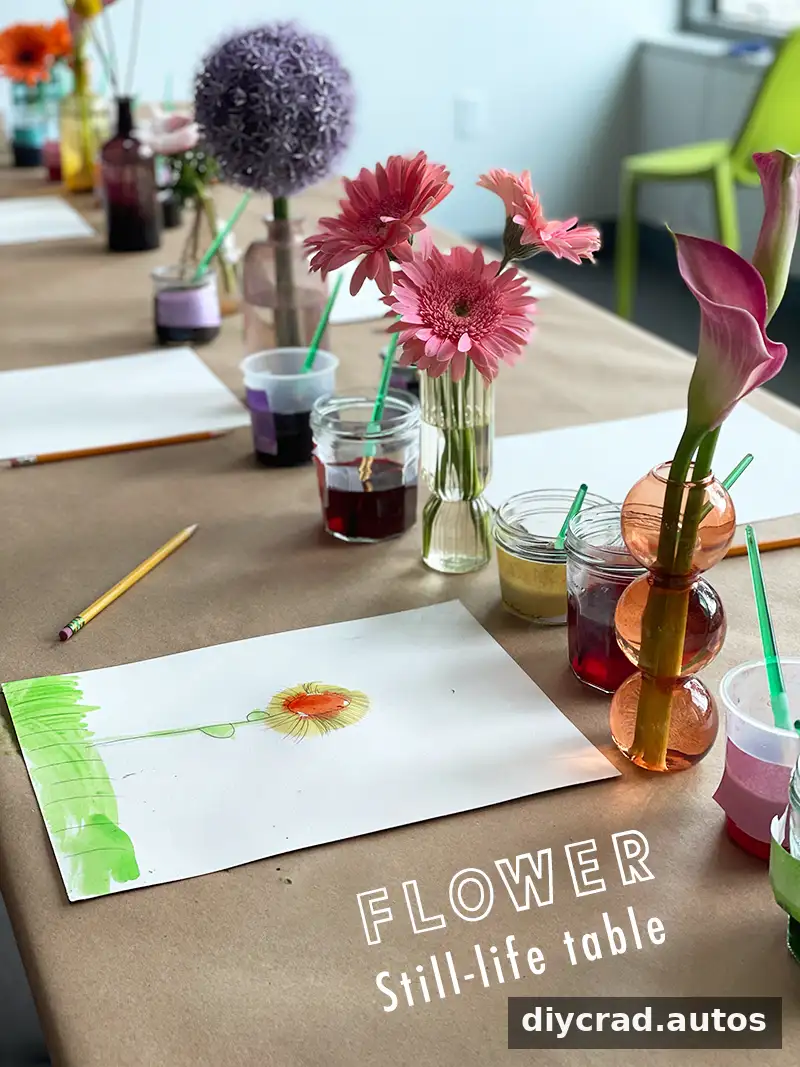
A flower still-life table can turn a few fresh blooms and simple art supplies into an inviting creative activity for children and families. With no required finished product, participants can draw, paint, observe, and experiment at their own pace. This setup was used as one of three open-ended stations at a family workshop in a local library, welcoming children from ages 2 to 16.
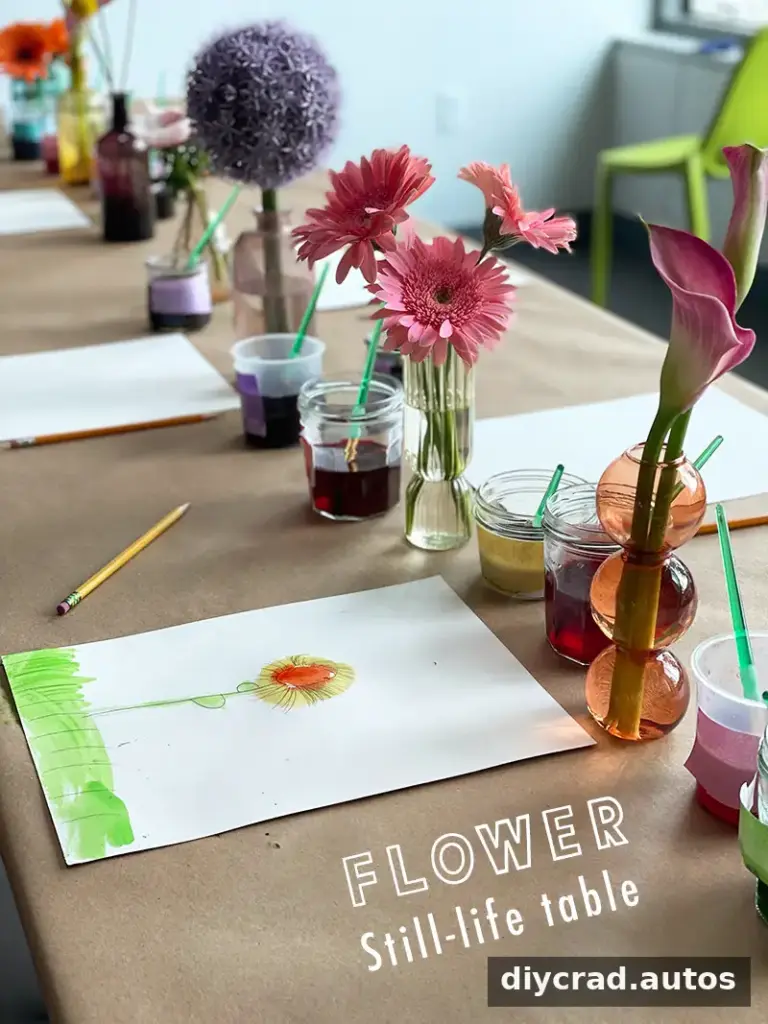
Flower Still-Life Table Materials
Gather the materials before the session so participants can begin independently and spend more time creating. Covering the table and preparing separate containers for paint can also help keep the activity organized.
- Butcher paper to protect the table
- Liquid watercolor
- Jars or other containers for the watercolor; no-spill cups are another option
- Watercolor paper, with extra sheets available
- Pencils
- Paintbrushes in sizes that are comfortable for different ages
- Small vases, bud vases, or jars for the flowers
- Fresh flowers from a garden, a flower shop, or another available source
Arrange a small selection of flowers where they can be seen from different seats. Keep paint containers stable and within easy reach, and place clean paper nearby so artists can choose a new sheet whenever they like.
How the Flower Still-Life Table Worked
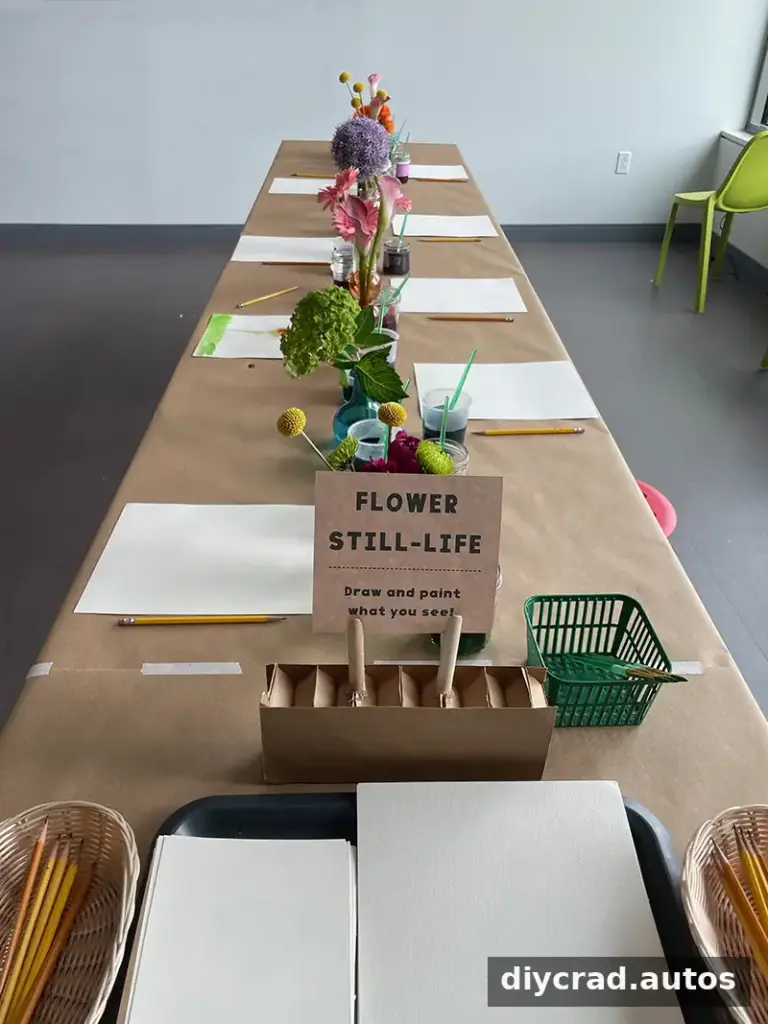
The library workshop offered three self-serve, open-ended stations: cardboard ice cream cones for tempera painting and collage, a maker table for construction, and a still-life station for drawing and liquid watercolor. Drawing can feel intimidating when participants think they need to make a realistic picture, so the still-life table was designed as an invitation to explore rather than a lesson with one correct result.
Children between 2 and 16 sat down to use the paints. The flowers’ colorful display and the unfamiliar liquid watercolor may have helped draw them in. Many participants had not used this type of paint before, making the materials themselves part of the discovery.
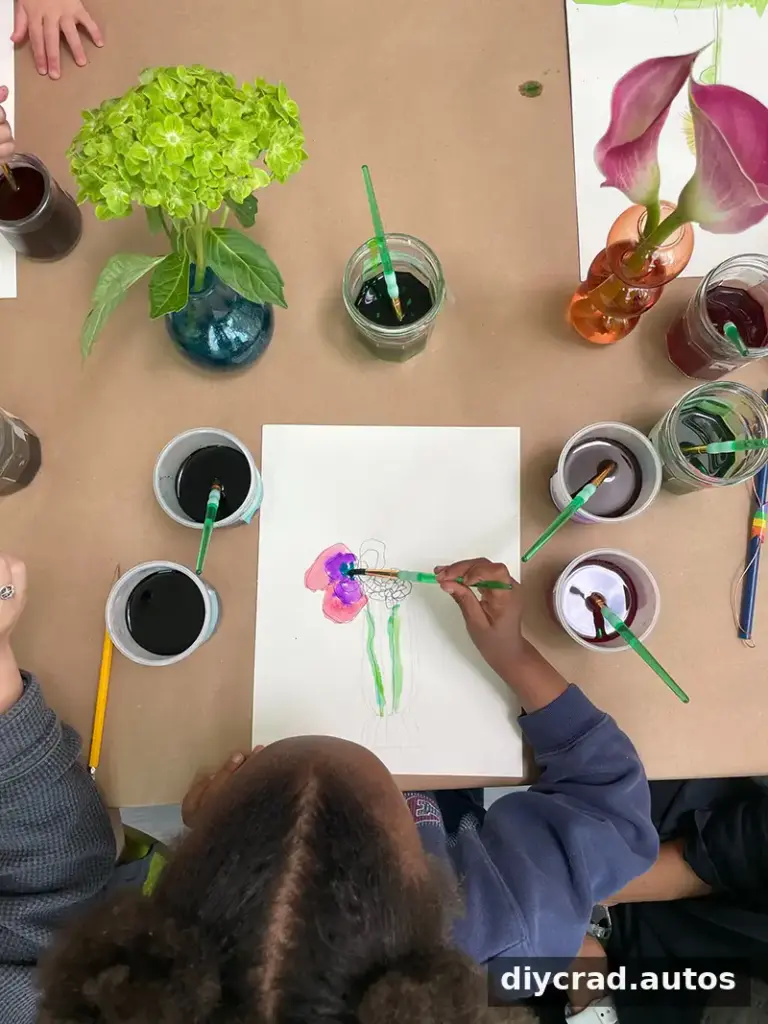
A child of about 5 arrived with her older sister, who was babysitting. When the older sister began sketching a vase for her, the younger child made it clear that she wanted to draw it herself. Her sister stepped back, allowing her to take the lead. The child spent about half an hour drawing and testing the watercolor. She began with brushstrokes, then tried dots of paint and noticed how the colors blended.
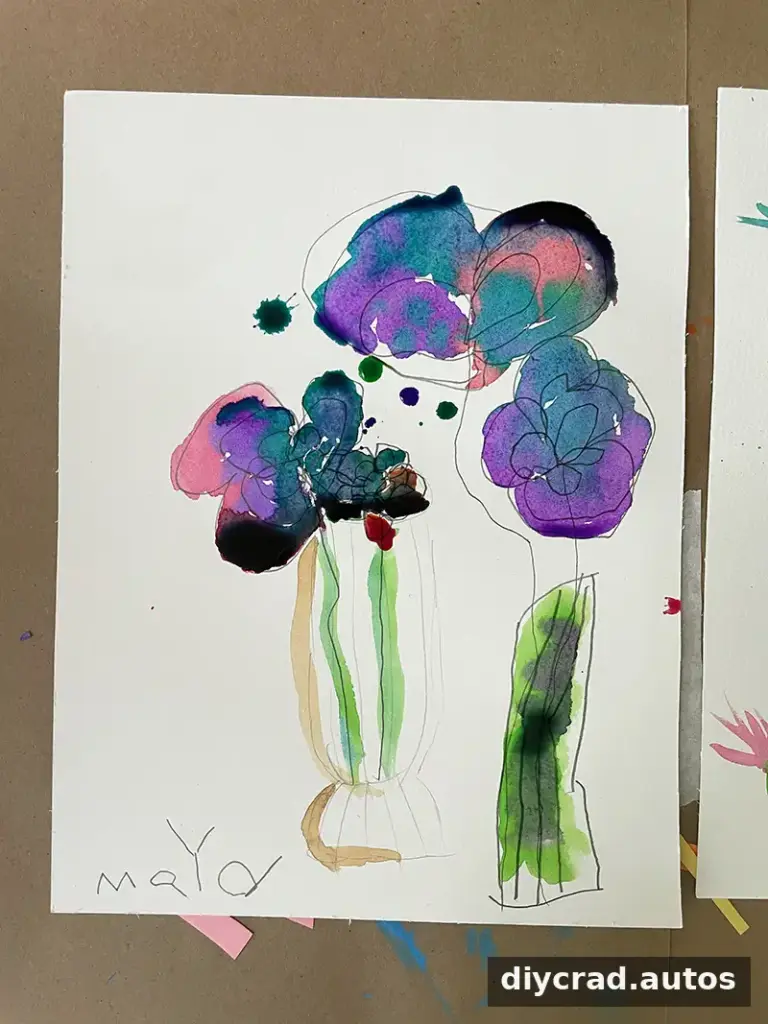
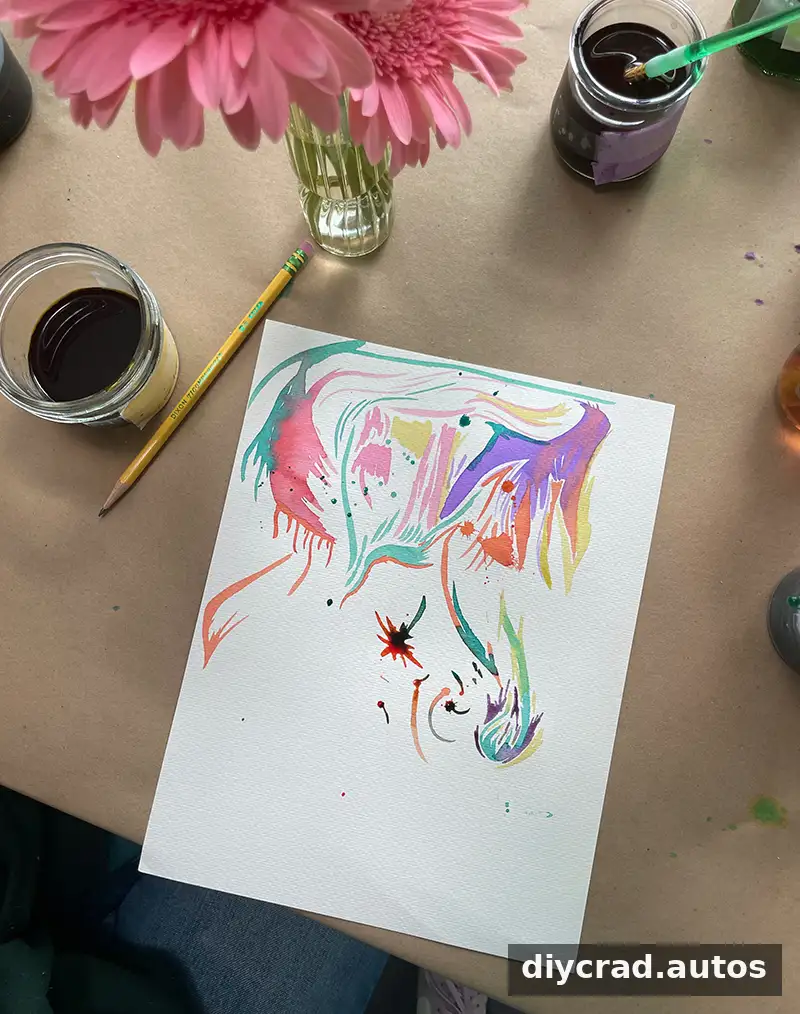
The older sister also began experimenting with the watercolor independently, interpreting the flowers as bursts of color. The moment illustrates how an open-ended setup can encourage different responses to the same still-life arrangement.
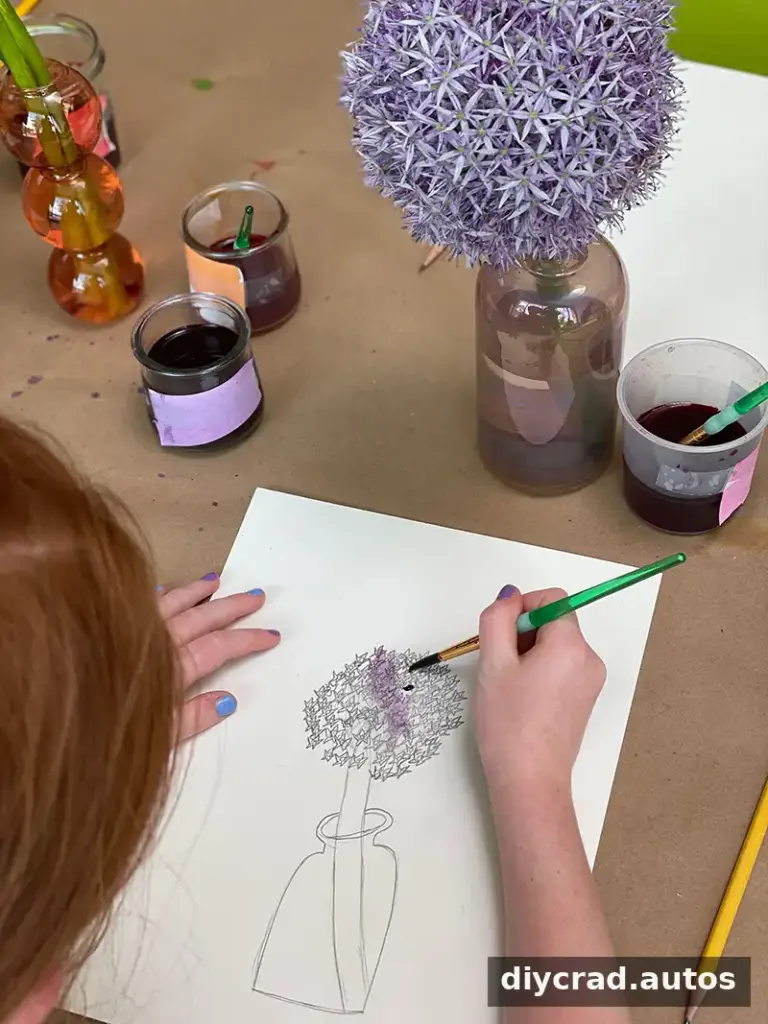
A participant of about 12 chose one of the more challenging flowers to draw and used an eraser frequently. She remained focused at the table for more than 30 minutes, despite having no previous experience with liquid watercolor. Her concentration and persistence helped her complete a piece she felt proud of. For older children, leaving pencils and erasers available can make it easier to plan a drawing while still keeping the activity flexible.
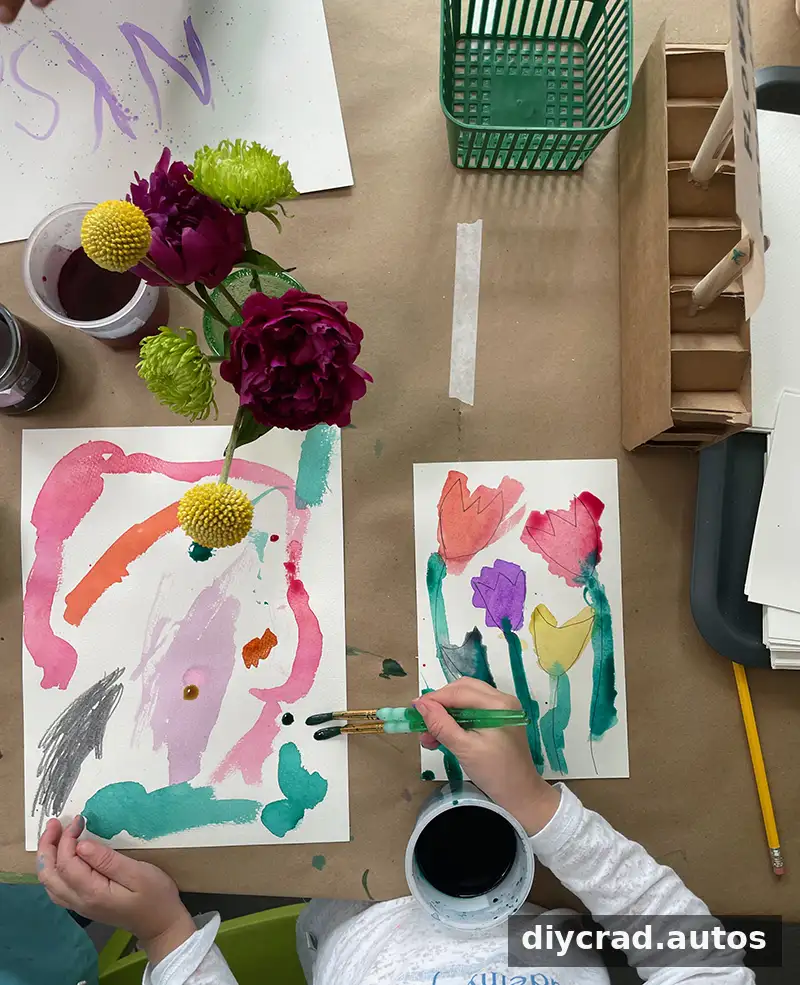
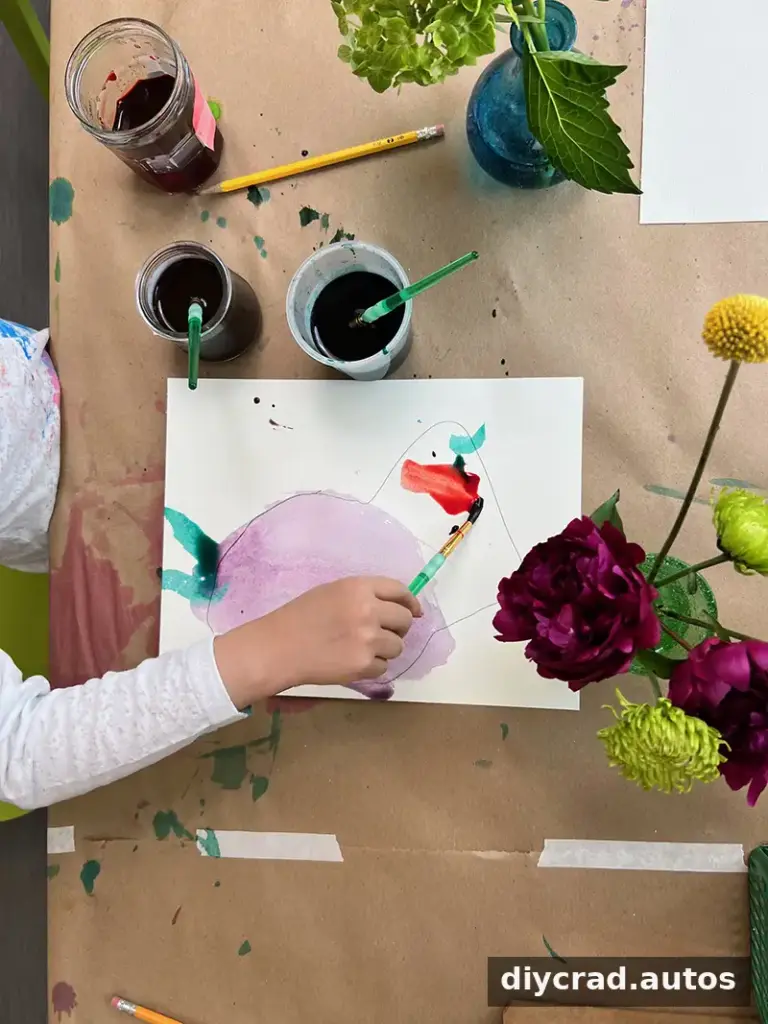
Another child, about 5 years old, initially had a parent draw flowers for her to color. After exploring other stations, the child returned to the still-life table. In the meantime, her parent noticed her confidence and allowed her more freedom to decide what to make. The child then continued exploring the paint on her own. Adults can support young artists by offering materials and encouragement without deciding what the artwork should look like.
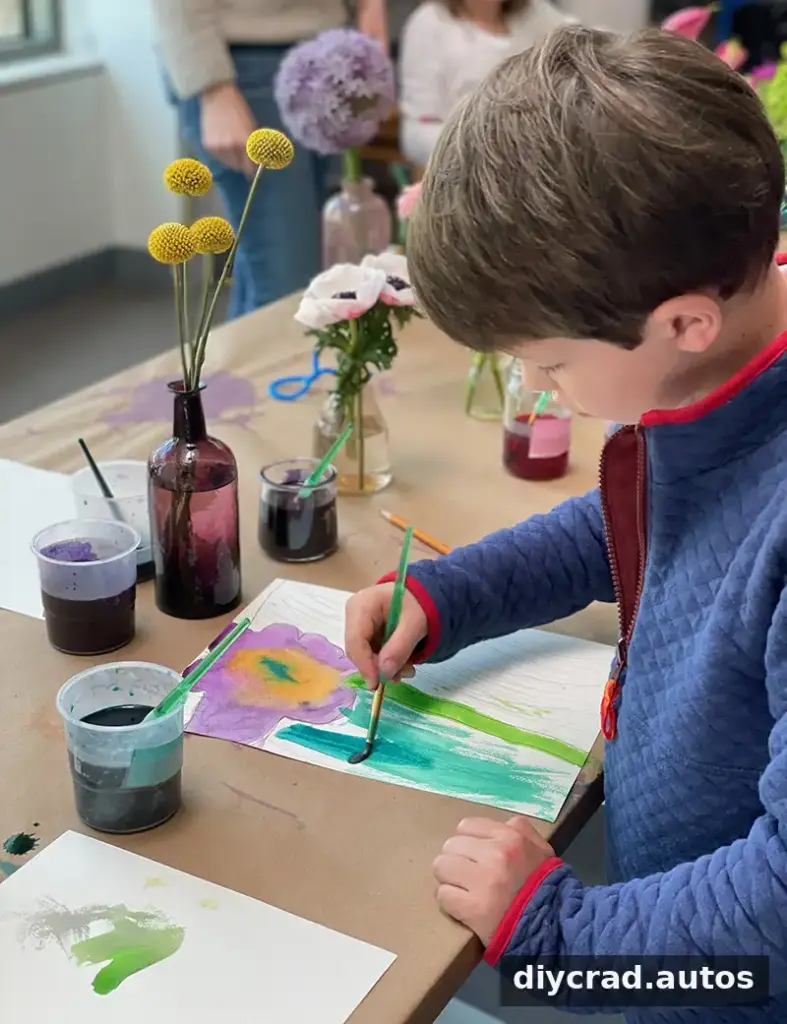
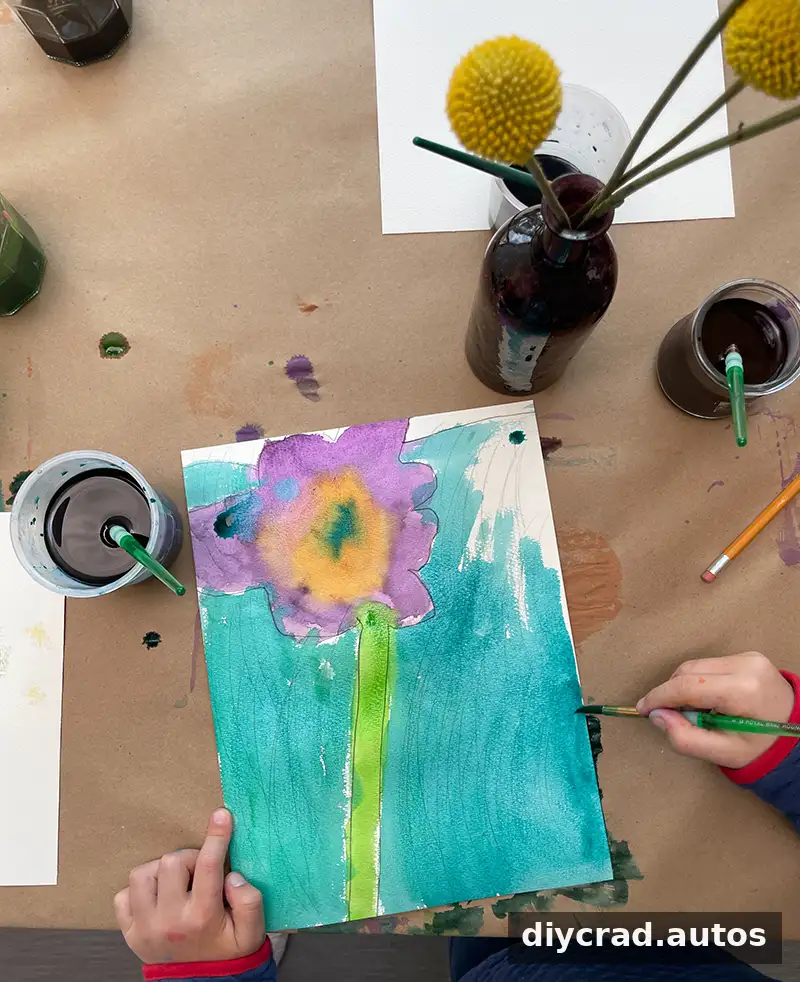
One young artist used nearly the entire page and asked for sky blue. After the color was mixed, he painted it along the top edge. He also found a way to blot a painting against the butcher paper to help remove excess paint. Keeping scrap paper or a protected surface nearby gives children room to test ideas and manage wet work.
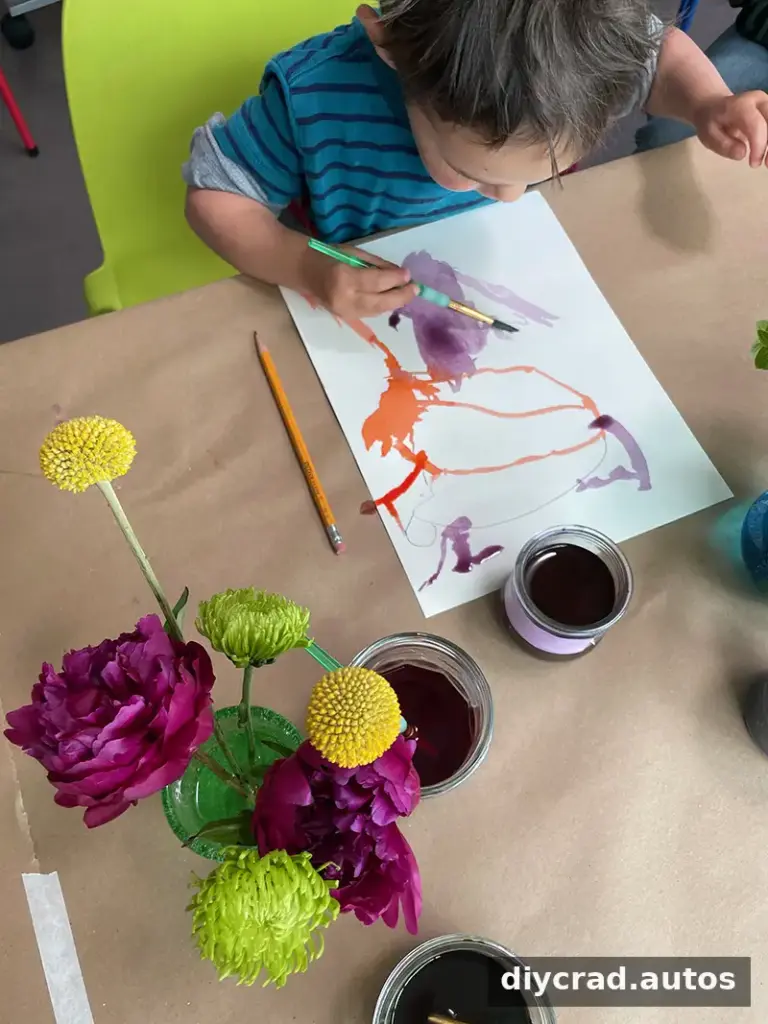
One of the youngest participants, about 3 years old, made a few pencil lines before spending around 10 minutes exploring the paint. A toddler also tried a paintbrush for the first time while her parents stood nearby, helped with the paint colors, and returned brushes to their jars. She was otherwise free to make her own choices. She carried her painting to the maker table to add stickers, then brought it back to continue working.
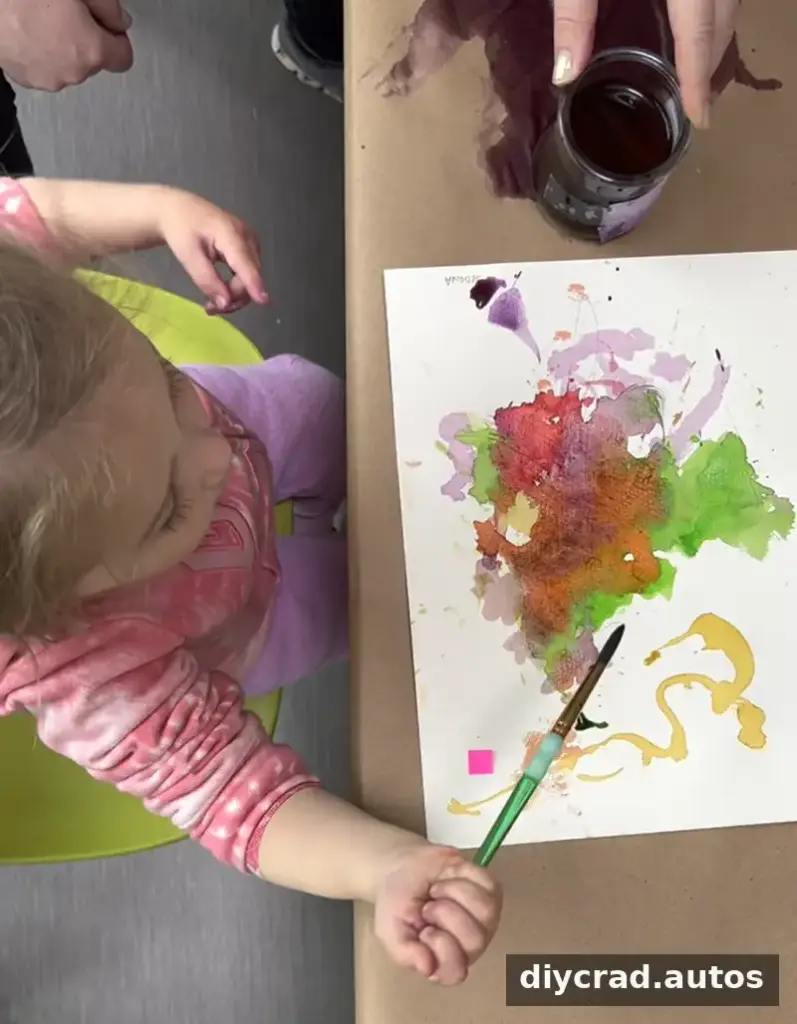
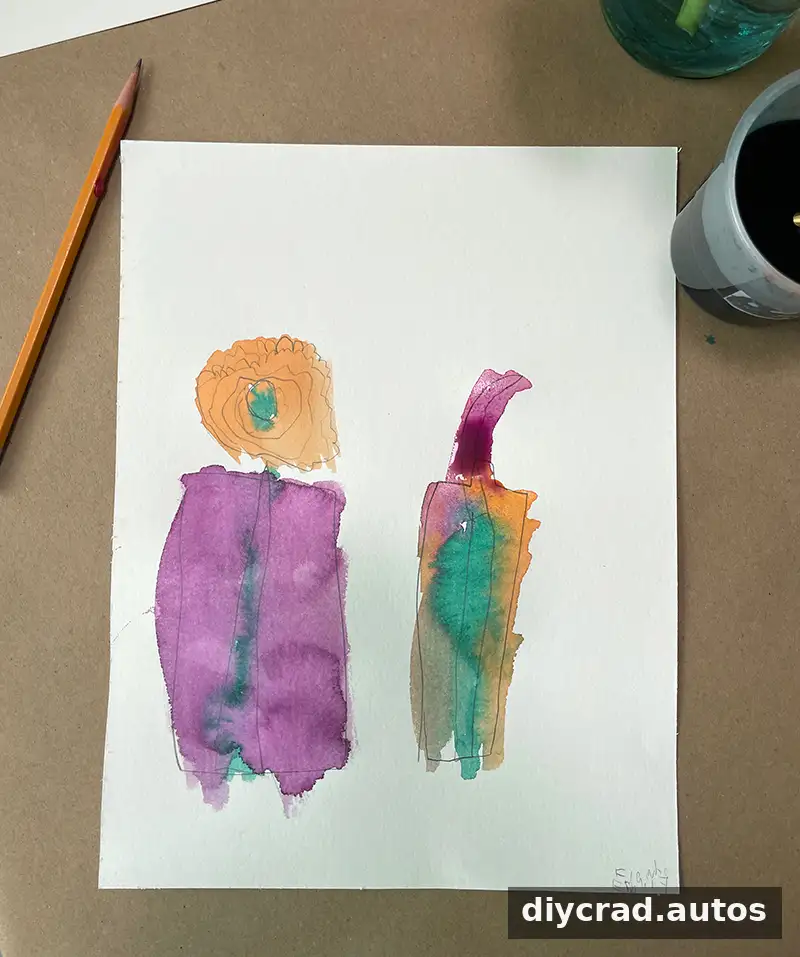
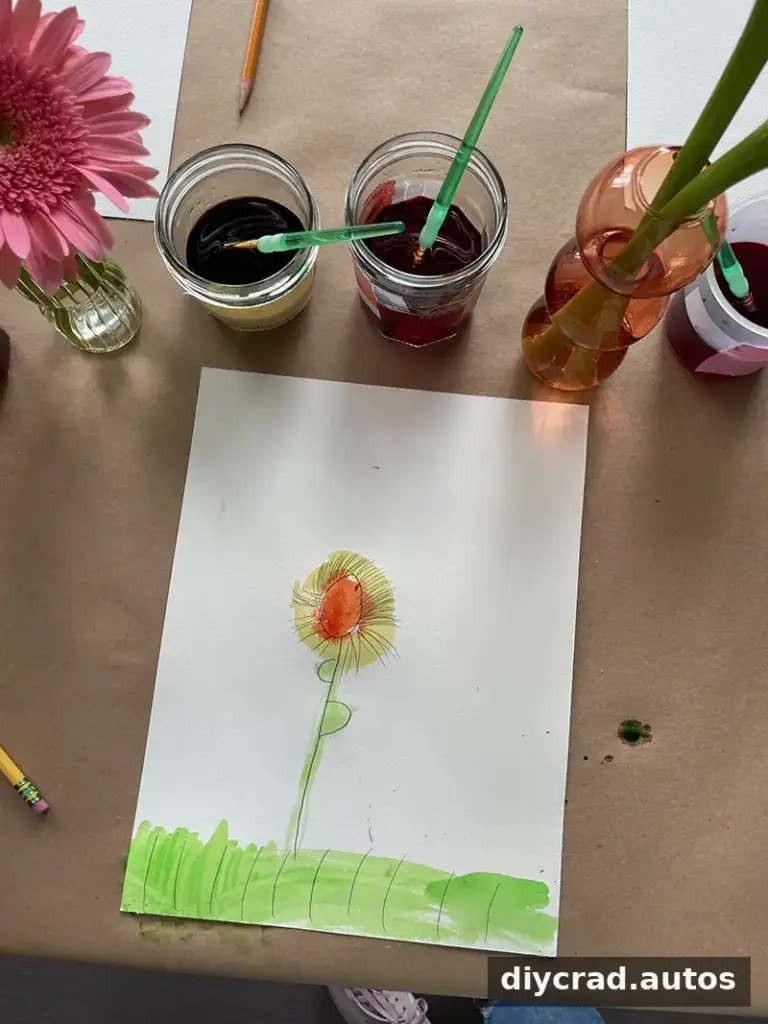
Not every painting was observed from beginning to end, but the range of finished work showed how differently participants approached the same materials. Some focused on drawing the flowers, while others explored color, marks, and movement.
Tips for a Successful Multi-Age Art Activity
- Keep the invitation open-ended. Avoid requiring everyone to copy a sample or complete the same picture.
- Make materials easy to access. Arrange paper, pencils, brushes, and paint where participants can reach them safely.
- Let children lead. Adults can help with practical tasks while leaving artistic decisions to the child.
- Plan for plenty of paper. Extra sheets allow participants to start again or experiment without worrying about using up a single page.
- Allow time to explore. Participants may return to a station, try a new technique, or combine materials from different activity areas.
This flower still-life table can be adapted for a home, school, party, or community space. A simple arrangement of flowers, accessible supplies, and room for personal choice can make the activity welcoming to a wide range of ages and abilities. Workshop notes by Bar.
More Still-Life Drawing and Painting Ideas
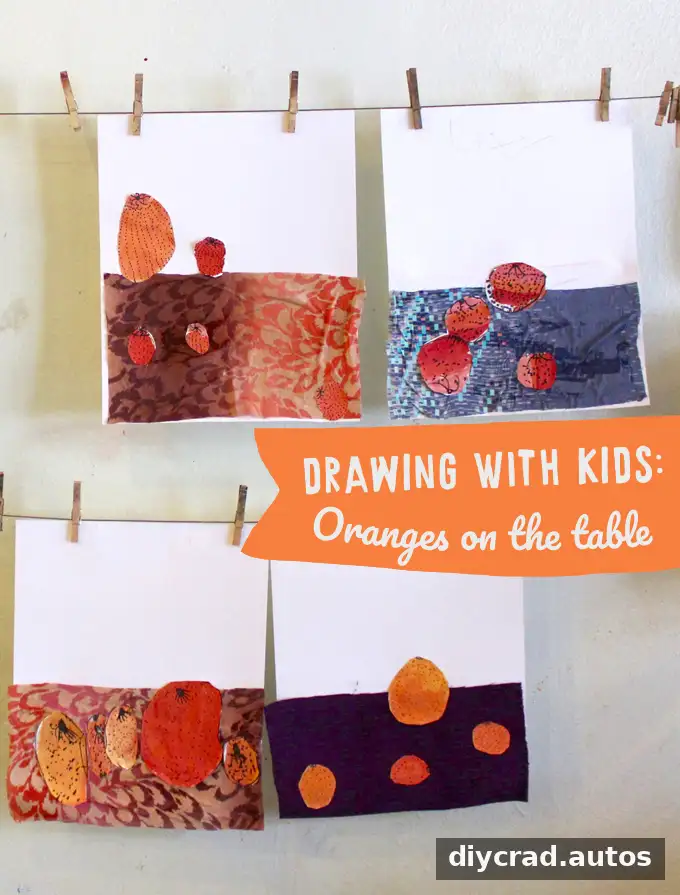
Drawing with Kids: Oranges on the Table
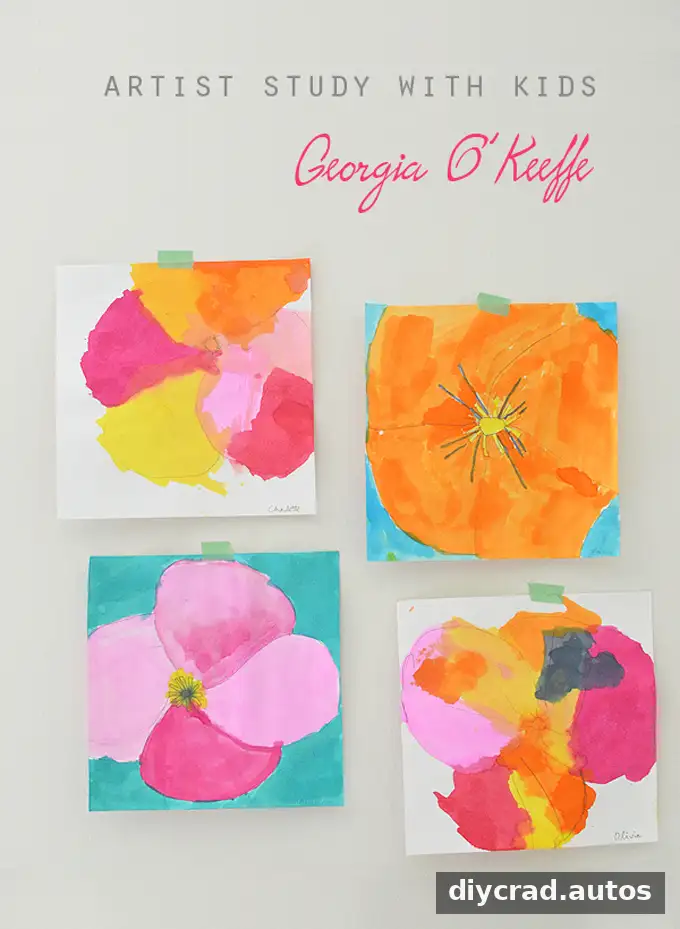
Georgia O’Keeffe Artist Study with Kids
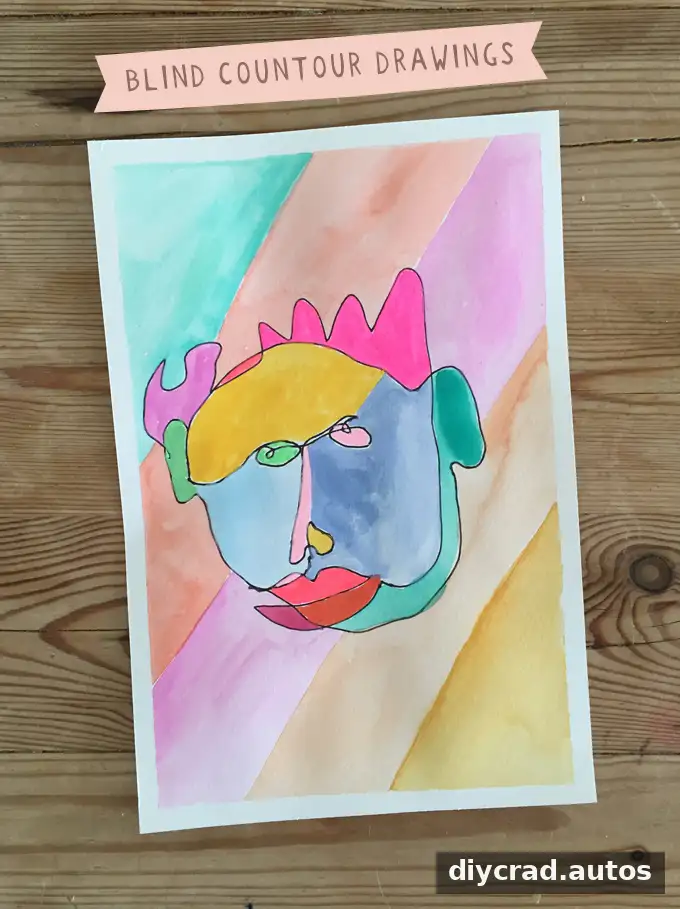
Blind Contour Drawings with Kids
With a little preparation and enough paper, a flower still-life table offers a practical way to invite observation, experimentation, and creative choice.

