

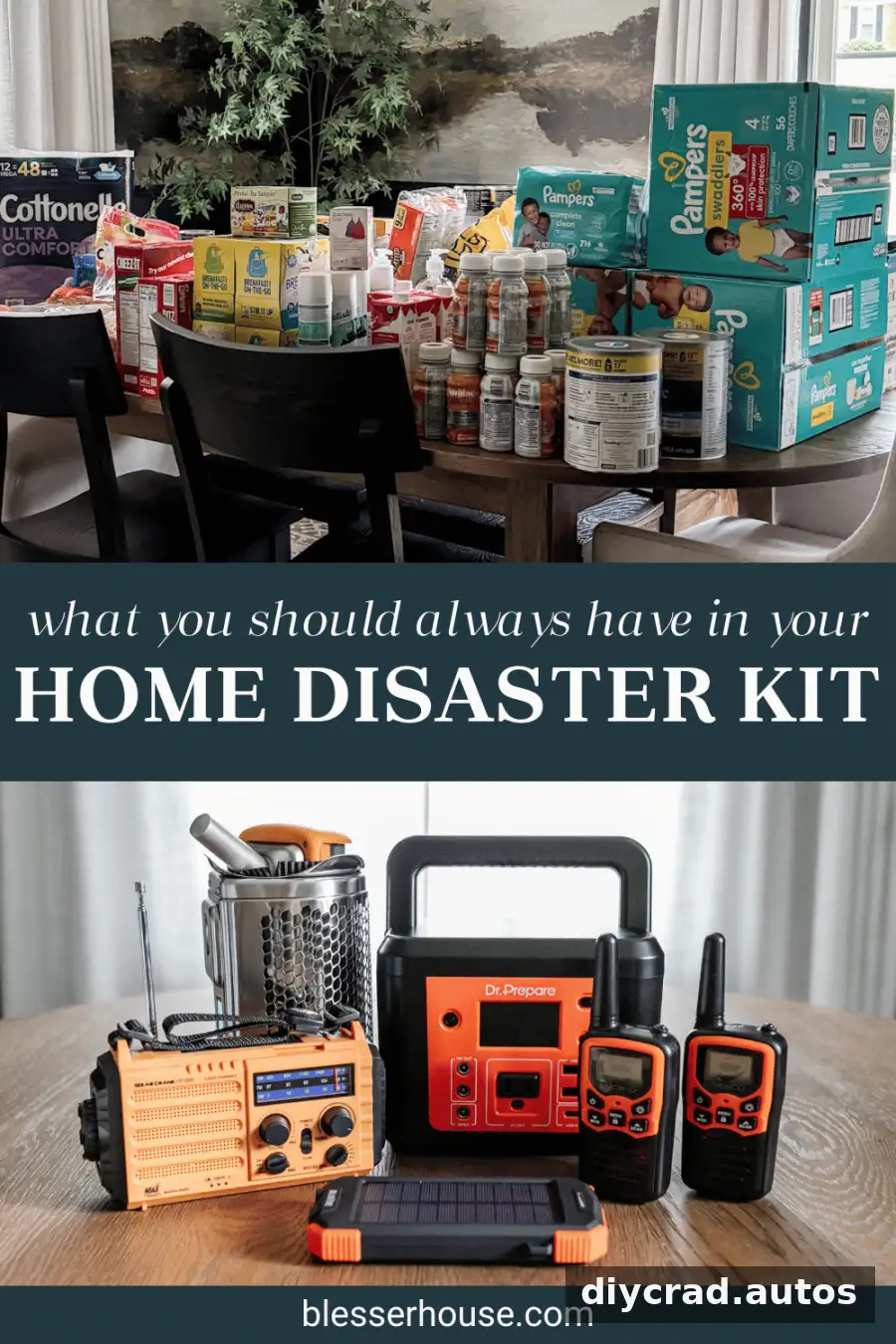
A well-planned home disaster kit can help your household manage an evacuation or stay safer at home during a storm, power outage, or other emergency. Prepare supplies before a forecast creates shortages, and tailor your kit to your family, local risks, and the advice of emergency officials.
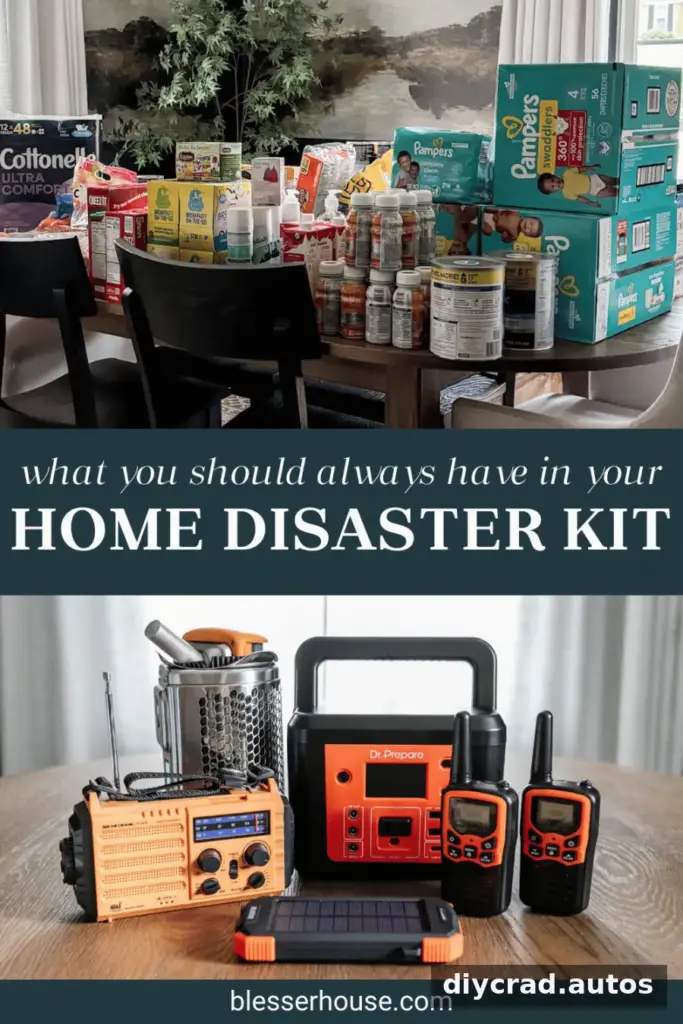
Prepare for an Emergency Before It Happens
Planning ahead makes it easier to respond calmly when time is limited. Consider taking a first aid course, creating a family emergency plan, and discussing where to meet and how to communicate if household members are separated. Local firefighters or community organizations may also offer safety activities for children.
- Learn basic first aid; online courses may be available through organizations such as the Red Cross.
- Write down an emergency plan, including evacuation routes, meeting points, and important contact details.
- Collect and check supplies well before severe weather is forecast. Buying only what your household needs helps avoid contributing to shortages.
Tasks to Complete Before a Forecast Storm
Some events provide advance notice, while earthquakes and tornadoes may offer little time to prepare. When officials forecast a hurricane or another storm with warning time, useful steps may include:
- Refuel vehicles, if it is safe and practical to do so.
- Check that a generator is working and has suitable fuel. Operate generators outdoors, away from doors and windows, to reduce carbon monoxide danger.
- Pack your go bag and gather the supplies you may need at home.
- Freeze water in suitable containers, leaving room for expansion. If power fails, frozen containers can help keep a refrigerator cold for longer; use water only when it is known to be safe.
Prioritize personal protection, rescue and communication, safe drinking water, and food. Follow evacuation orders and local emergency instructions rather than relying on supplies alone.
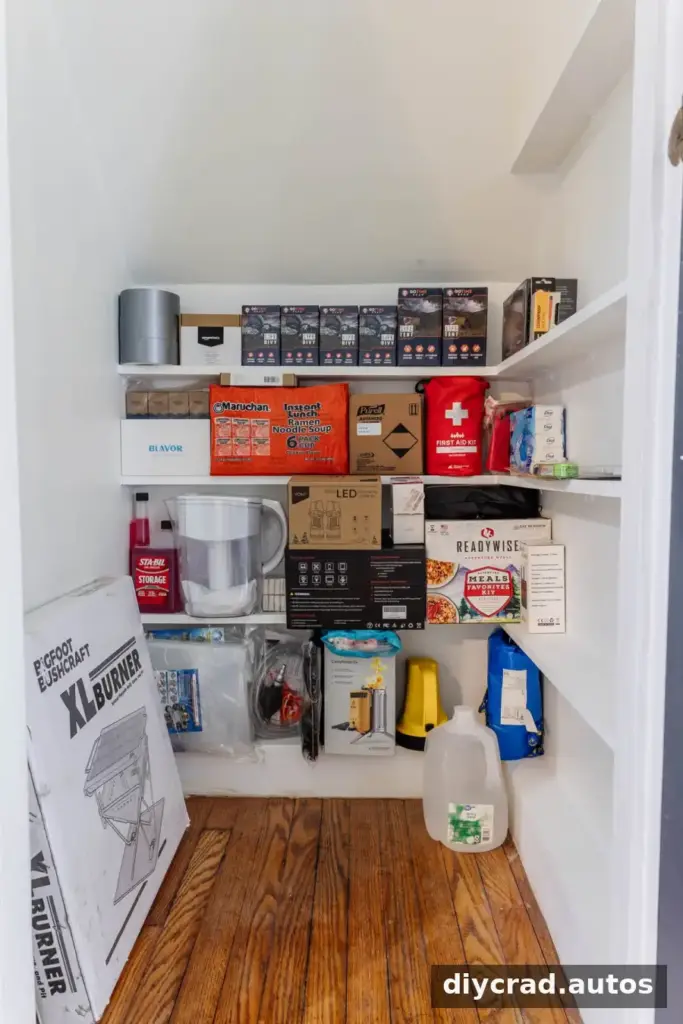
How to Store a Home Disaster Kit
Keep supplies in a cool, dry place, ideally on a shelf above the floor. A waterproof backpack and a lidded, water-resistant storage bin can make essential items easier to carry and protect from moisture. Store items where adults can reach them quickly, but keep hazardous tools and fuels away from children.
Go Bag or Bug-Out Bag
Pack a separate waterproof backpack for each adult, with essentials that can be carried if evacuation is necessary. Adjust the contents for children, older adults, pets, medical needs, and the climate in your area.
Go-Bag Checklist
- A water bottle with a capacity of about one gallon, if practical, and a personal water filter
- At least three days of non-perishable food, such as jerky, protein bars, and peanut butter
- A first aid kit and prescribed medication
- A solar phone charger, flashlight, and battery- or hand-crank weather radio
- A multipurpose tool, pocket knife, duct tape, and work gloves
- An emergency blanket or compact shelter, sturdy shoes, socks, and a change of clothes
- Wet wipes, hand sanitizer, insect repellent, and sunscreen
- Waterproof matches or another fire starter; use fire only where permitted and safe
- Cash in small bills and copies of important documents in a waterproof, fire-resistant pouch
- A paper map of your area, a compass, a whistle, and contact lens solution or spare eyeglasses if needed
Grab-and-Go Storage Bin
Keep bulkier household supplies in a sturdy bin with a lid. Store it in an accessible location so you can take it with you if there is time. For a tornado warning, follow local shelter guidance; a small interior room on the lowest floor, away from windows, is generally preferable when no purpose-built shelter is available.
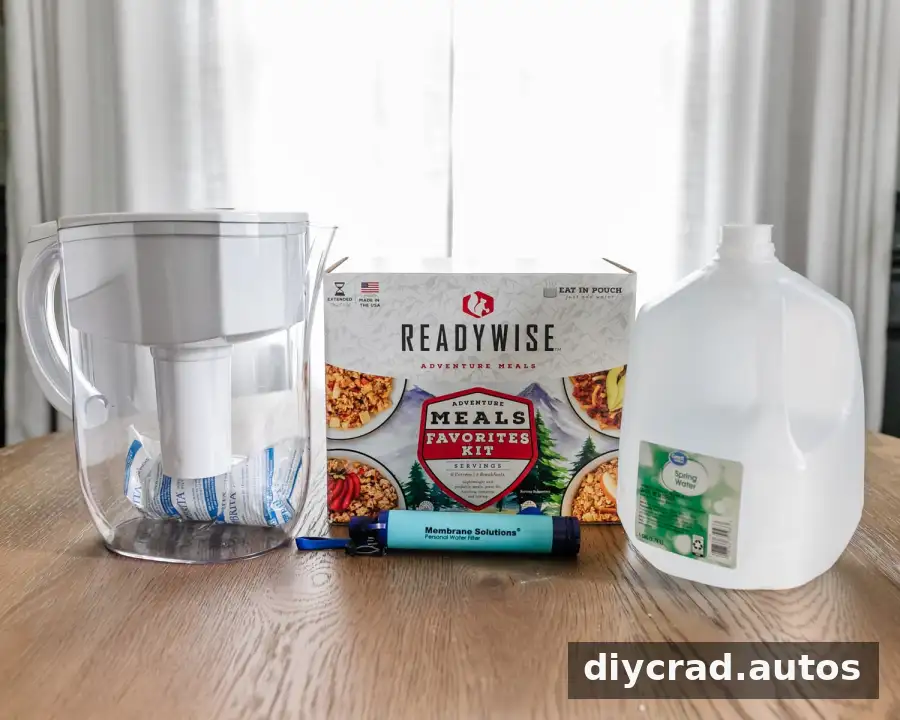
Food and Water for Your Home Disaster Kit
Plan for at least three days of drinking water: a common emergency-planning guideline is 1 gallon per person per day. This amount is for drinking and basic needs, so households with hot weather, illness, pregnancy, or other special circumstances may need more. Store water in clean, food-safe containers and follow local guidance about treatment and storage.
Water-storage containers can hold several gallons; a 5.3-gallon container is described as enough drinking water for one person for five days when rationed for drinking. A bathtub water-storage liner can hold up to 100 gallons and may be useful when a storm is forecast. Use stored water only as directed and discard it if its safety is uncertain.
Portable filters can reduce certain contaminants, including some bacteria and parasites, but filters differ in what they remove. A personal filter rated for up to 1,000 gallons still requires correct use and maintenance, and may not remove viruses or chemicals. Check the product instructions and local advisories; use an approved disinfection method when needed.
Emergency Food to Keep on Hand
- Ready-to-eat protein such as canned meat, tuna, beans, peanut butter, and beef jerky
- Canned fruit, vegetables, and juice
- Crackers, pretzels, granola bars, oatmeal, and rice
- Shelf-stable or powdered milk and shelf-stable protein drinks
- Canned soup, honey, instant coffee, and tea
- Paper plates, cups, disposable utensils, and a manual can opener
Include infant formula and baby food where needed, along with pet food and water for animals. Check expiration dates every six months and use and replace items before they expire. If the power goes out, keep refrigerator and freezer doors closed; follow food-safety guidance for deciding what to use or discard rather than eating food that may have become unsafe.
Hygiene and Health Supplies
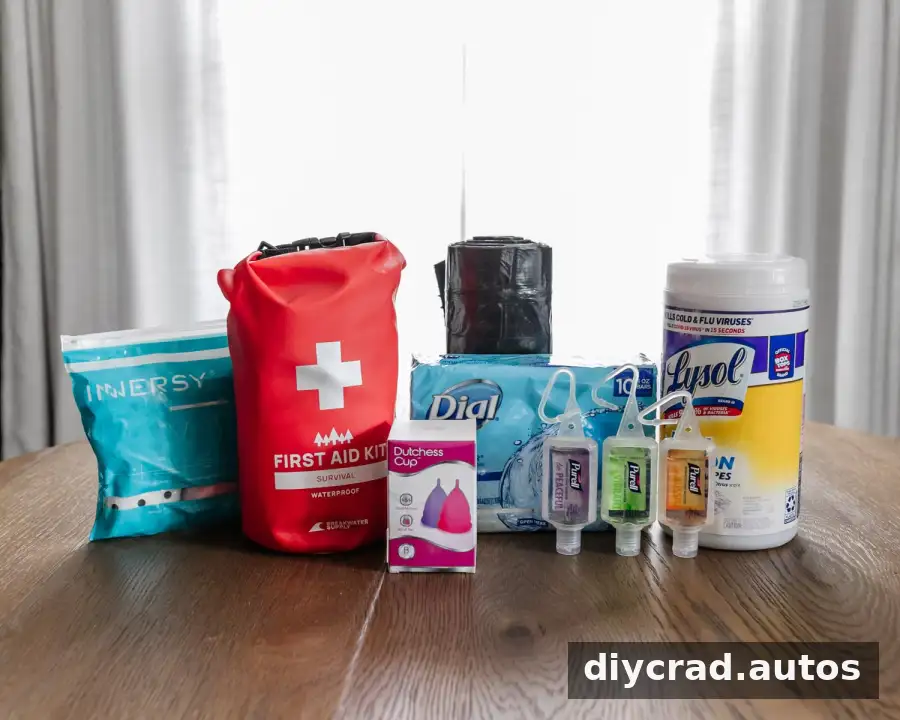
Small cuts and poor hygiene can become serious problems when access to clean water or medical care is limited. Keep a first aid kit stocked and store prescription medicines according to medical advice. Where possible, maintain an emergency supply of essential medication and ask a pharmacist or clinician how to store it safely.
- Toothbrushes, toothpaste, soap, and biodegradable body wipes
- Prescription medication, first aid supplies, and any necessary medical equipment
- Contact lens solution and spare eyeglasses
- Menstrual products and other personal hygiene supplies
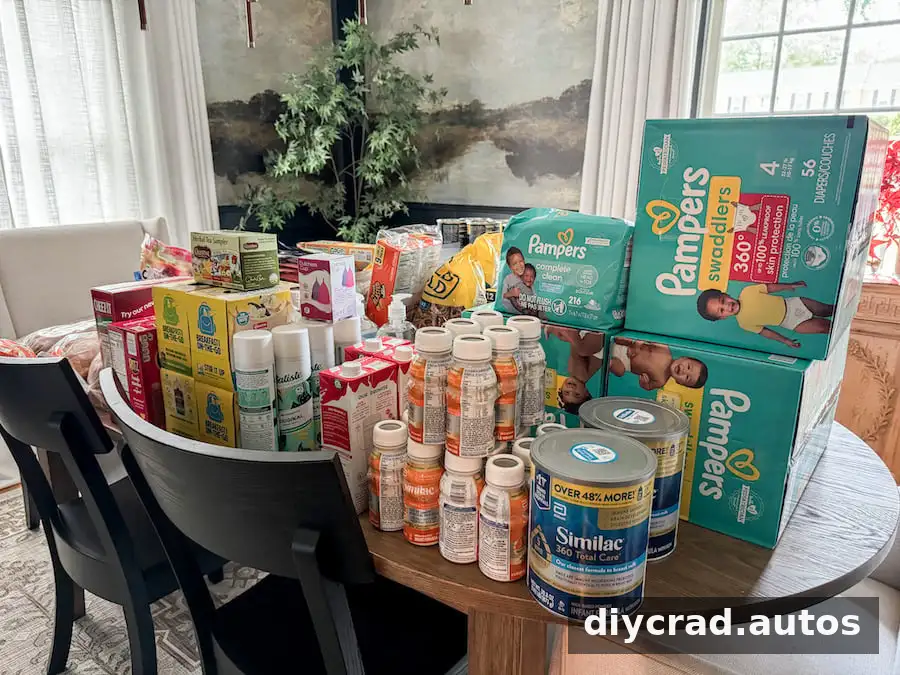
- Diapers, wipes, and diaper rash cream for babies or toddlers
- Insect repellent and sunscreen
Also consider garbage bags, disinfecting wipes, work gloves, chemical-resistant gloves, and dust masks. Choose protective equipment appropriate to the hazard, and follow label directions for cleaning products. Hand sanitizer can help when soap and clean water are unavailable, but it does not replace handwashing when hands are visibly dirty.
Heat and Light
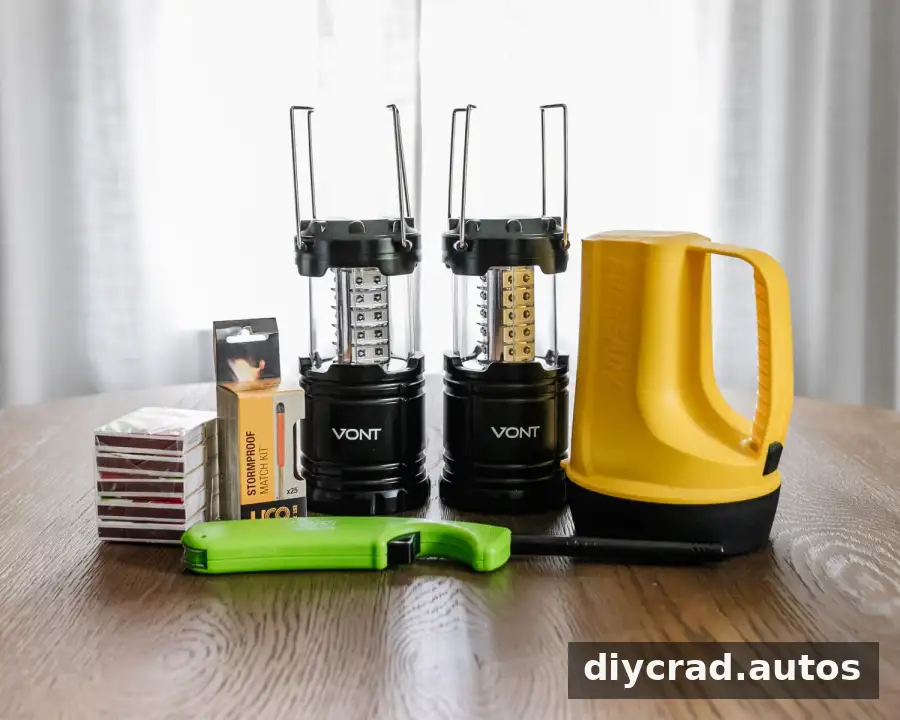
Power outages can make it difficult to move around safely or prepare food. Pack a lantern, flashlight, or headlamp, and check its charge or batteries during routine kit maintenance. A solar lantern may provide up to 25 hours of light per charge and can also offer backup phone charging, depending on the model.
Waterproof, windproof matches and fire starters can be useful, but open flames and portable stoves create fire and carbon monoxide risks. Use them only outdoors or in an area specifically approved by the manufacturer, and never use a camping stove or grill indoors. A wood-burning camp stove may generate electricity and include a USB charger, but it still requires safe outdoor use. A portable grill or fire pit can provide a cooking surface where local rules allow it.
Power and Communication
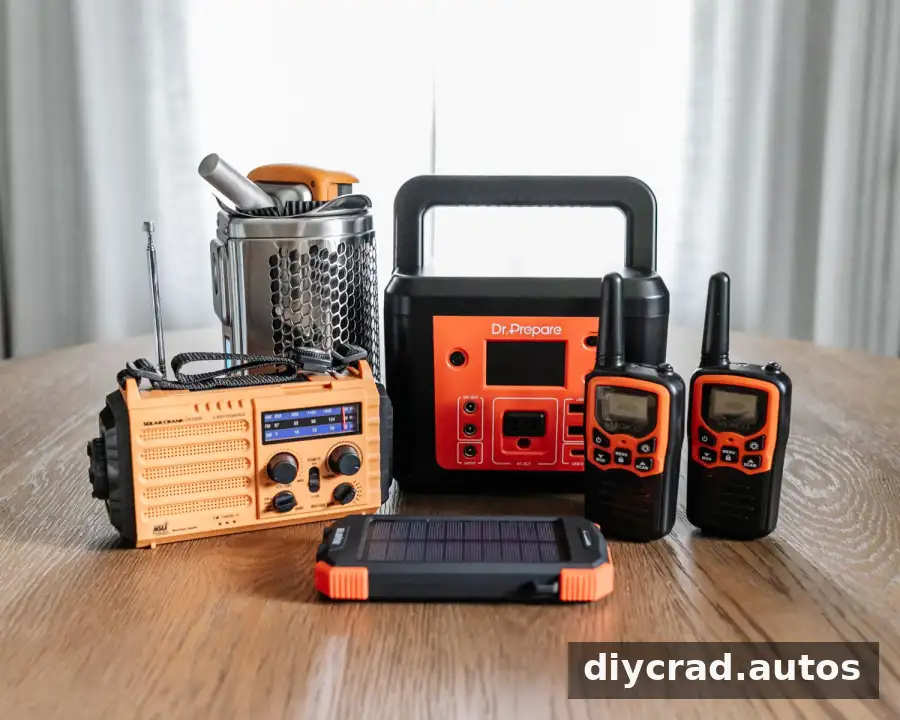
Keep a backup power bank charged and include cables that fit your devices. Solar chargers can help when an outage lasts, but charging may be slow or limited by weather, so do not rely on one device alone.
- A solar phone charger, ideally with a built-in flashlight
- Two-way radios for communicating when household members are apart
- A weather alert radio with NOAA alerts, a hand-crank or solar charging option, and a USB output if available
Write down emergency contacts and meeting locations on paper. Phone networks may be congested or unavailable during a major incident.
Tools, Documents, and Cash
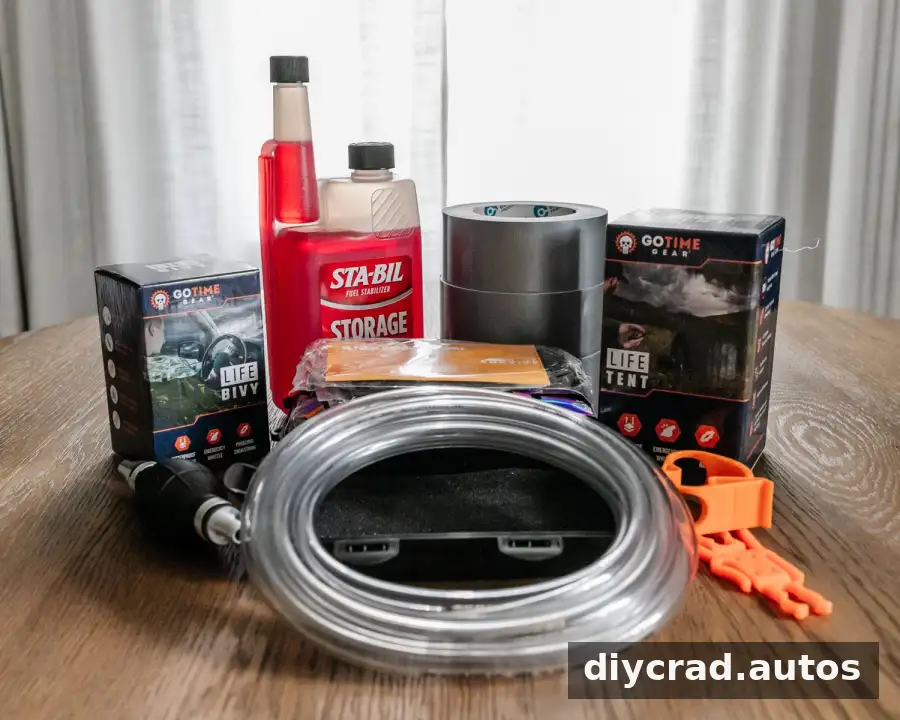
A pocket knife or multitool, duct tape, and basic hand tools can help with small practical tasks. A compact emergency bivy can serve as a thermal sleeping bag or shelter; some models include a whistle and cord. Consider an axe or chainsaw only if someone in the household is trained to use it safely.
Fuel requires special care. Use only approved fuel containers, follow local storage limits, and keep gasoline in a well-ventilated, secure place away from living areas, ignition sources, and children. Fuel stabilizer may keep stored gasoline usable for up to 24 months when used according to its label. Never siphon fuel by mouth or handle fuel unless you can do so safely and lawfully.
Keep small bills and copies of essential records in a waterproof, fire-resistant document pouch. Useful documents include:
- Identification records, such as copies of licenses, passports, birth certificates, and other relevant family documents
- Printed emergency contacts and addresses
- Medication lists, medical conditions, allergies, and key care information
- Insurance details, policies, property records, and other documents needed after an evacuation
Pack suitable clothing, socks, and sturdy boots for each person, along with a local paper road map. Keep digital copies of important records securely backed up as an additional option.
Start with the Essentials
If building a complete kit feels overwhelming, begin with these basics and add supplies over time:
- Water: 1 gallon per person per day for at least three days
- Three days of non-perishable food for each person
- A first aid kit, prescription medication, and a personal water filter
- Lanterns, a solar power bank, and a weather radio
- Hand sanitizer, wet wipes, and basic hygiene supplies
- A lighter or waterproof matches, tarp, duct tape, and multitool
- Clothing, shoes, socks, and a blanket for each household member
- Cash, protected copies of documents, and a waterproof storage bin
Maintain Your Home Disaster Kit
Schedule a supply check twice a year, choosing dates that make sense for the hazards and severe-weather seasons in your region. Replace used items, rotate food and water as needed, check medication dates and storage instructions, and test radios, lights, chargers, and generators. Update the kit when household needs change.
A practical home disaster kit does not have to be assembled all at once. Start with water, food, health supplies, light, communication, and essential documents, then build on that foundation. Review local emergency guidance so your supplies and family plan are suited to the risks where you live.

