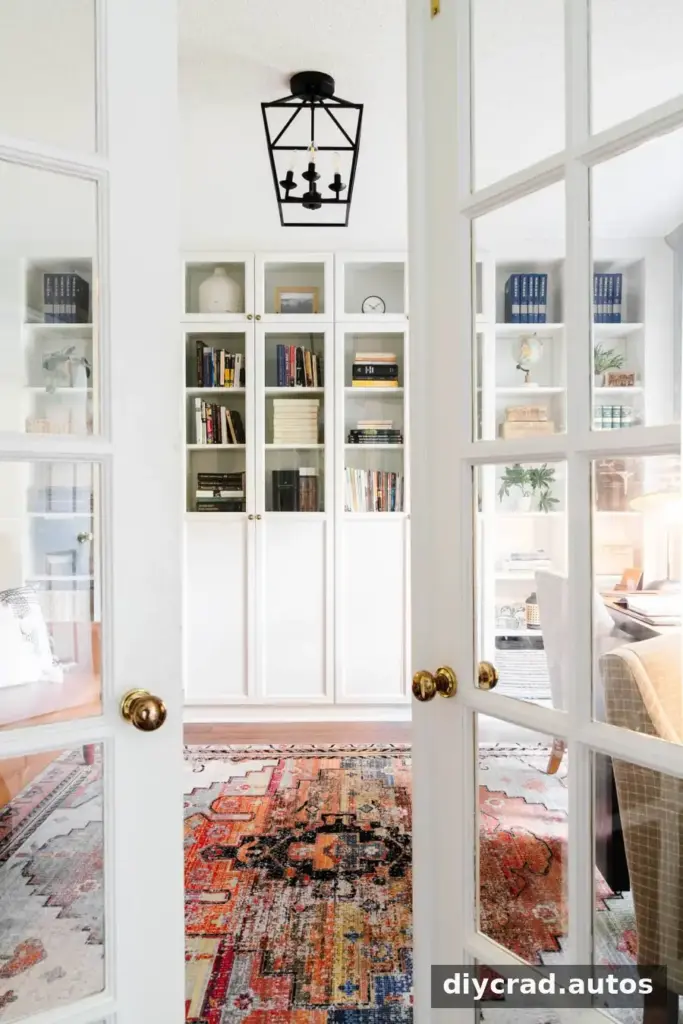
A well-planned home office setup can make it easier to focus, stay organized, and use a room for more than one purpose. This office makeover was designed to support studying, lesson planning, children’s homework, meetings, and occasional overnight guests. The ideas below can help you adapt a workspace to your own room, routines, and storage needs.
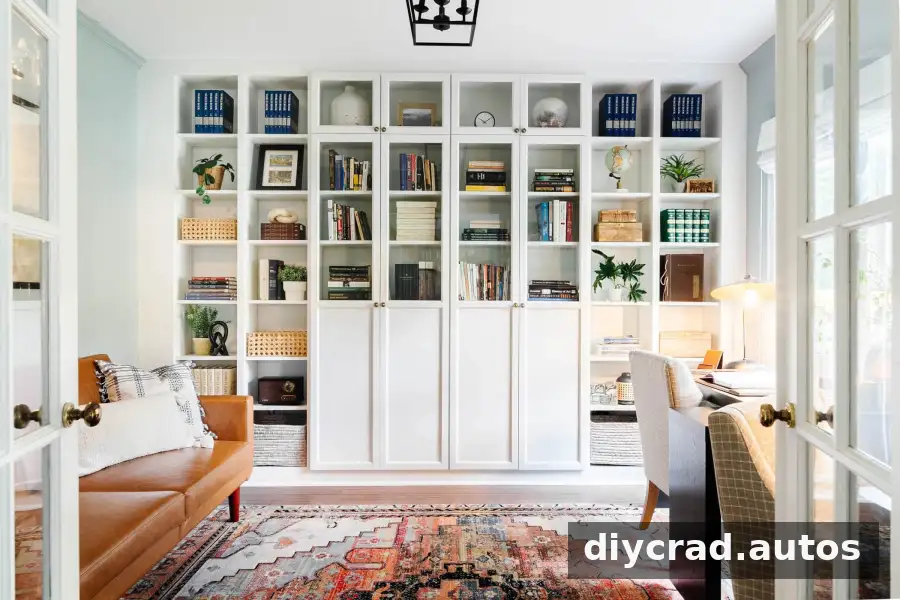
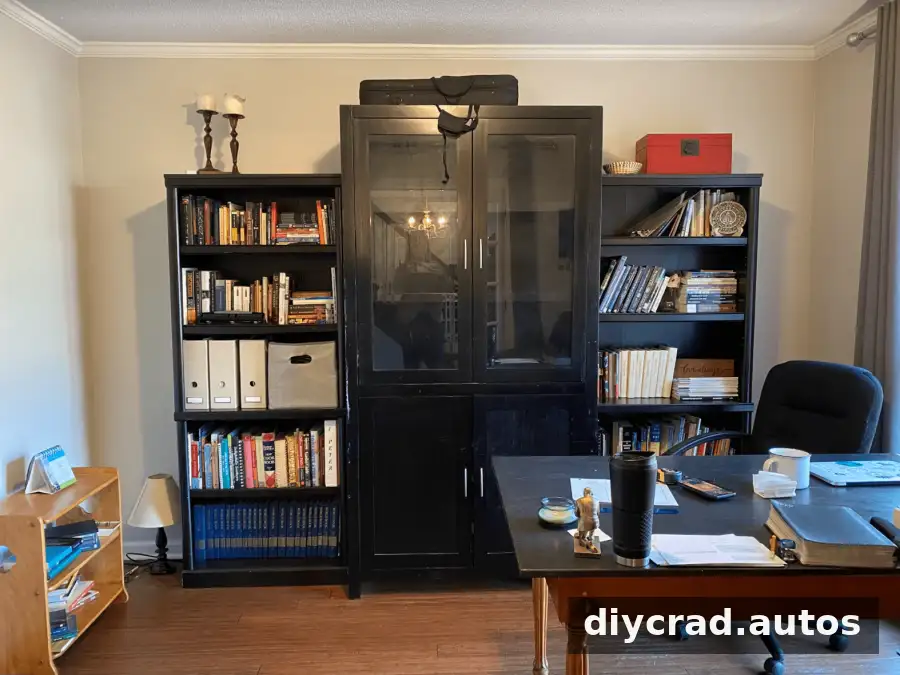
Before choosing furniture or decor, list the activities the room needs to support. In this example, separate desks, flexible seating, and closed storage help different family members use the same space without making it feel crowded.
Plan Your Home Office Setup Around Daily Needs
- Focused work: Set aside a desk area for writing, planning, and computer work.
- Study and storage: Provide a suitable homework surface and keep books and supplies nearby.
- Guest use: If the room sometimes serves as a bedroom, consider a futon or convertible chair.
- Meetings: Add comfortable seating that can be rearranged when needed.
20 Practical Home Office Setup Tips
Use these suggestions as a checklist, adapting them to your available space and how you work. Prioritize comfort, safe cable management, and storage that is easy to maintain.
1. Choose a Space-Saving Desk
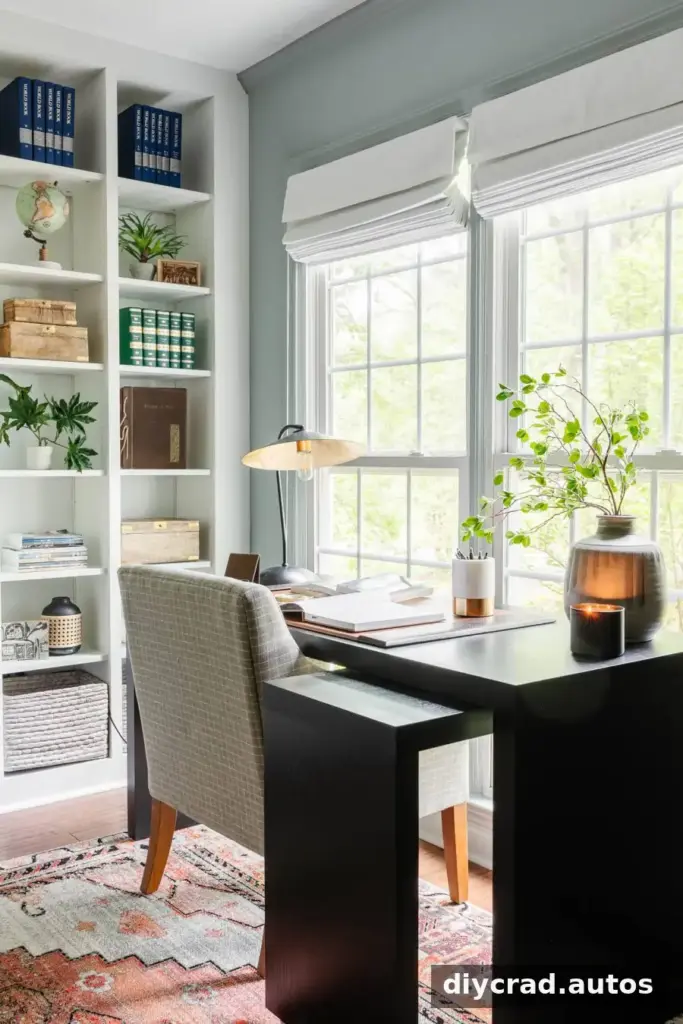
Look for a desk that fits your room and work habits. A pull-out surface can provide extra space when needed, while drawers help keep supplies contained. If you spend long periods sitting, consider whether a standing option would suit your routine.
2. Give Everyday Items a Home
List the supplies you use and decide where each will go when it is not in use. Choose baskets, boxes, or drawer organizers to match those needs. A desk pad can also define a clear writing area.
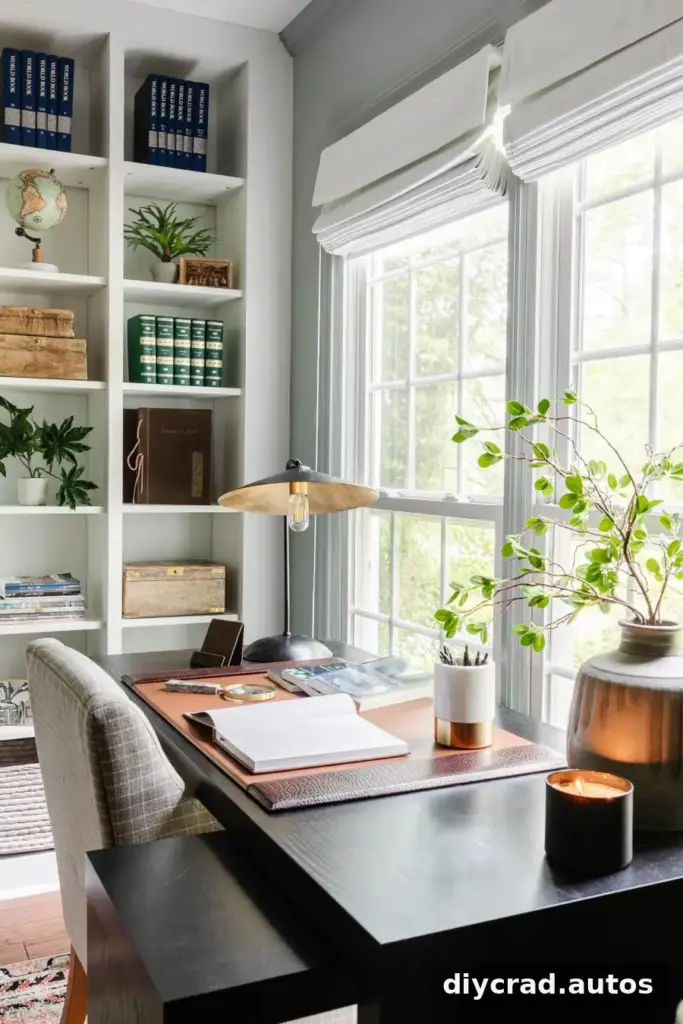
3. Layer Your Lighting
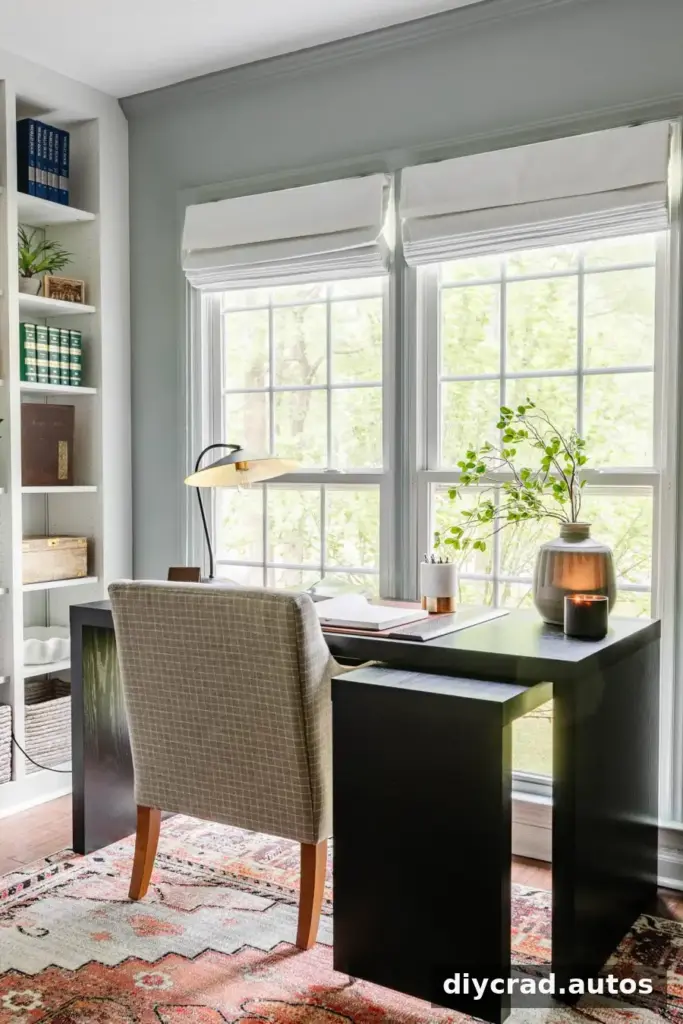
Make use of daylight where possible, and add a desk lamp for close-up tasks. Adjustable shades can help manage glare on screens. For a warm-toned lamp, bulbs in the 2700–3000K range are an option; choose lighting that feels comfortable for your eyes and room.
4. Consider a Soft, Neutral Wall Color
Light, muted colors can help a small room feel open without competing with work materials. Painting trim and walls in similar tones may create a more continuous look. Test a sample in the room first, since daylight and existing finishes affect how paint appears.
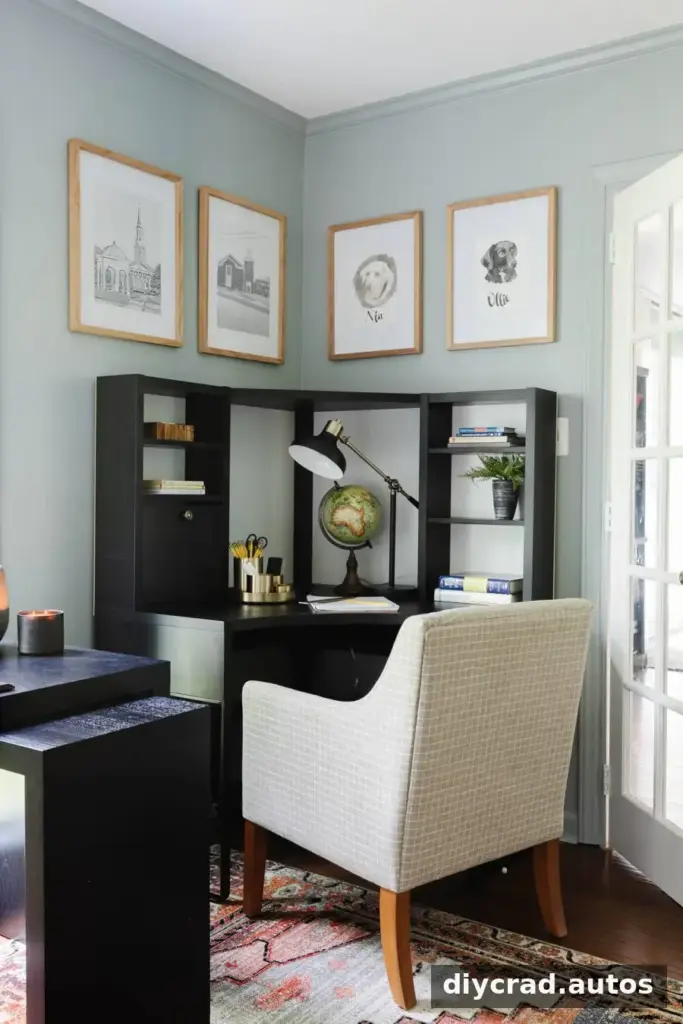
5. Choose a Comfortable Chair
If you work at a desk for extended periods, prioritize a chair that supports a comfortable posture and suits your desk height. Upholstered dining chairs may work for shorter sessions, but an adjustable chair can offer more flexibility.
6. Use Unoccupied Corners
A corner desk, cabinet, or shelf can make use of an awkward area. A compact secondary desk can also give another household member a dedicated place for homework or planning.
7. Organize Cables
Route cables along desk channels or use clips and ties to keep them from tangling. Keep cords away from walkways, and make sure plugs remain accessible. A small printer stand can keep equipment handy without taking up the main work surface.
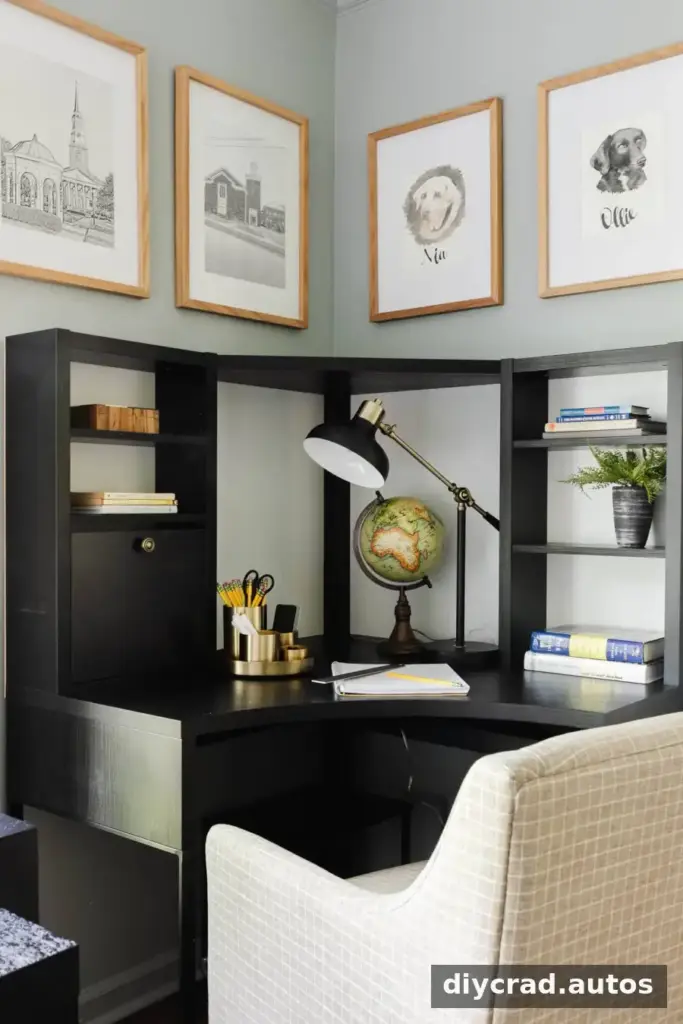
8. Add Vertical Storage
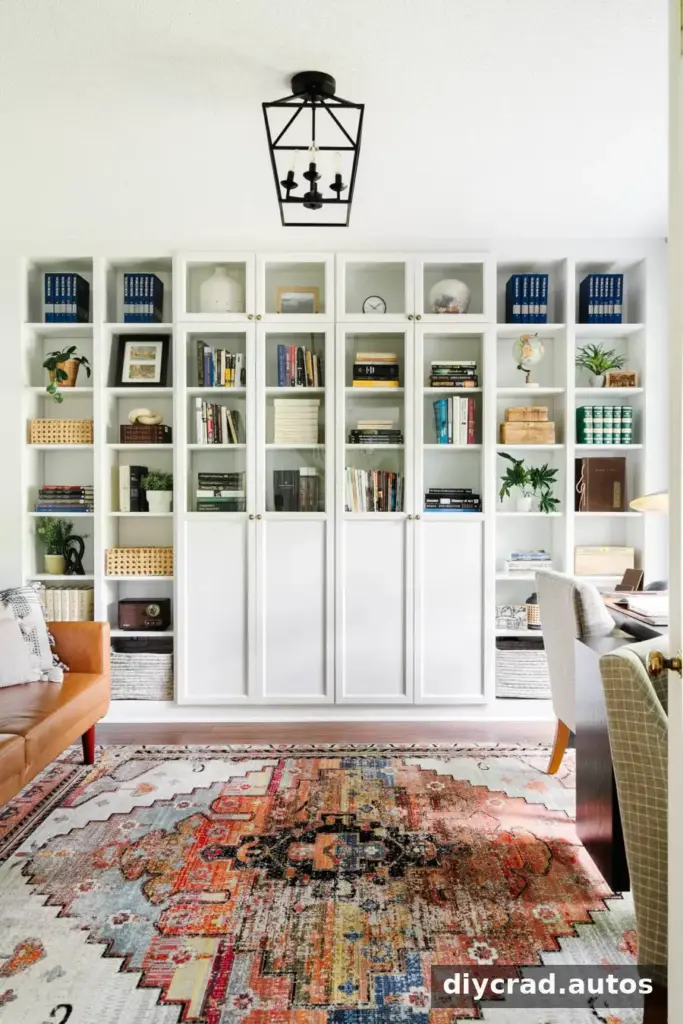
Shelves and cabinets use wall height for books, files, and supplies. Closed doors can conceal visual clutter, while open shelves keep frequently used items easy to reach. Leave room for items you may need to store later.
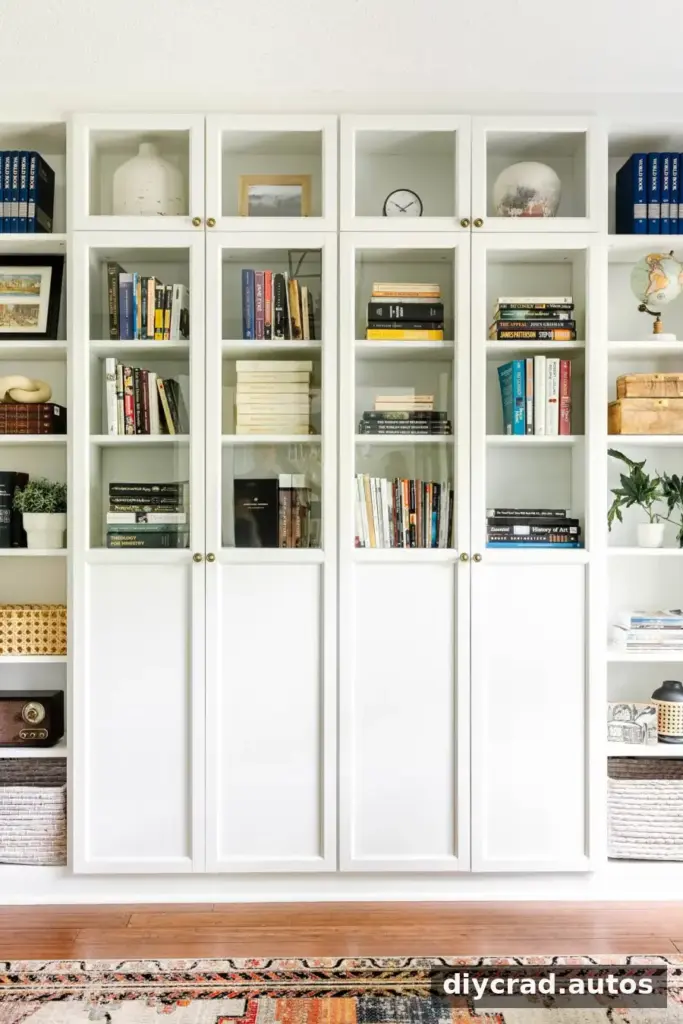
9. Create a Reading or Conversation Area
If space allows, add an armchair or small sofa for reading, breaks, or meetings. Keep a clear path between the seating and desk so the room remains easy to use.
10. Use Art Thoughtfully
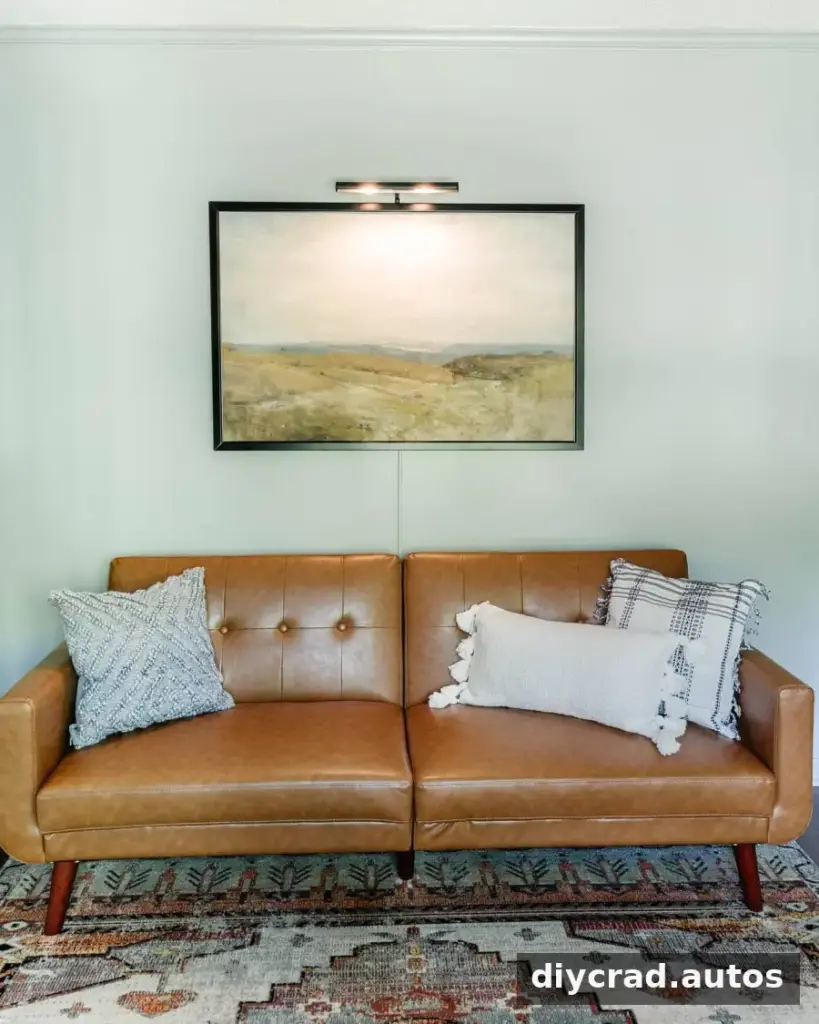
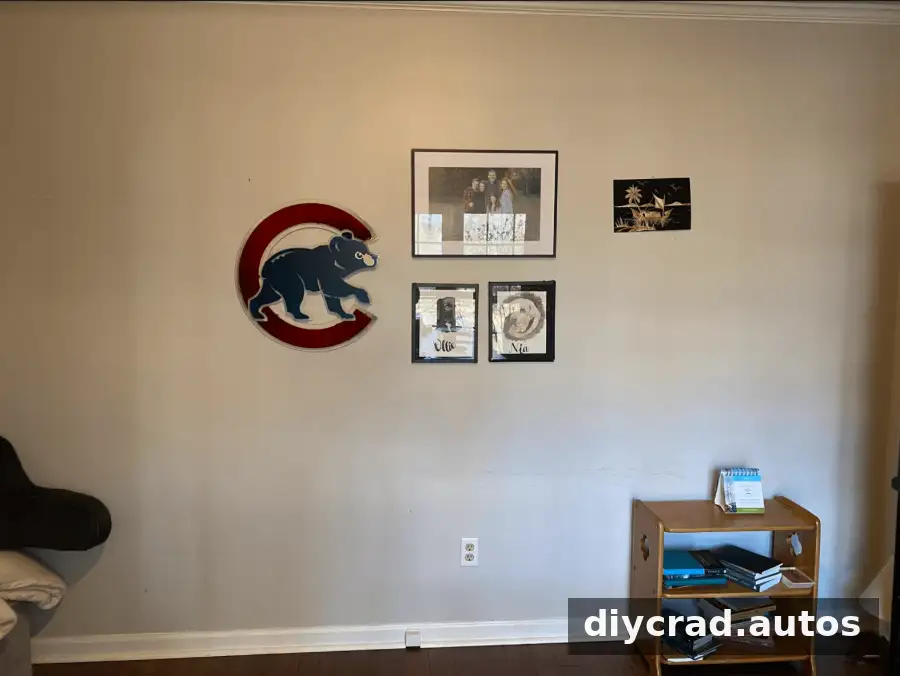
A large artwork can give a blank wall a focal point and add personality. A picture light can provide accent lighting, but it should not replace task lighting for reading or desk work.
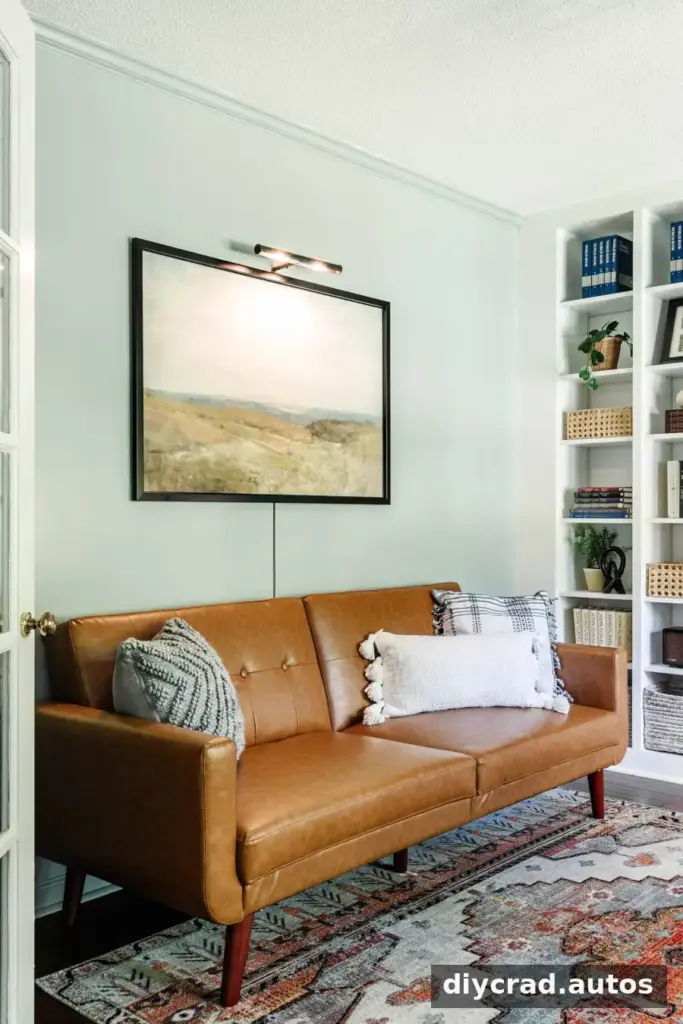
11. Make the Room Multi-Purpose
For a room that occasionally hosts guests, consider a futon, sleeper sofa, or convertible chair. Measure the furniture both open and closed, and check that it does not block doors or essential storage.
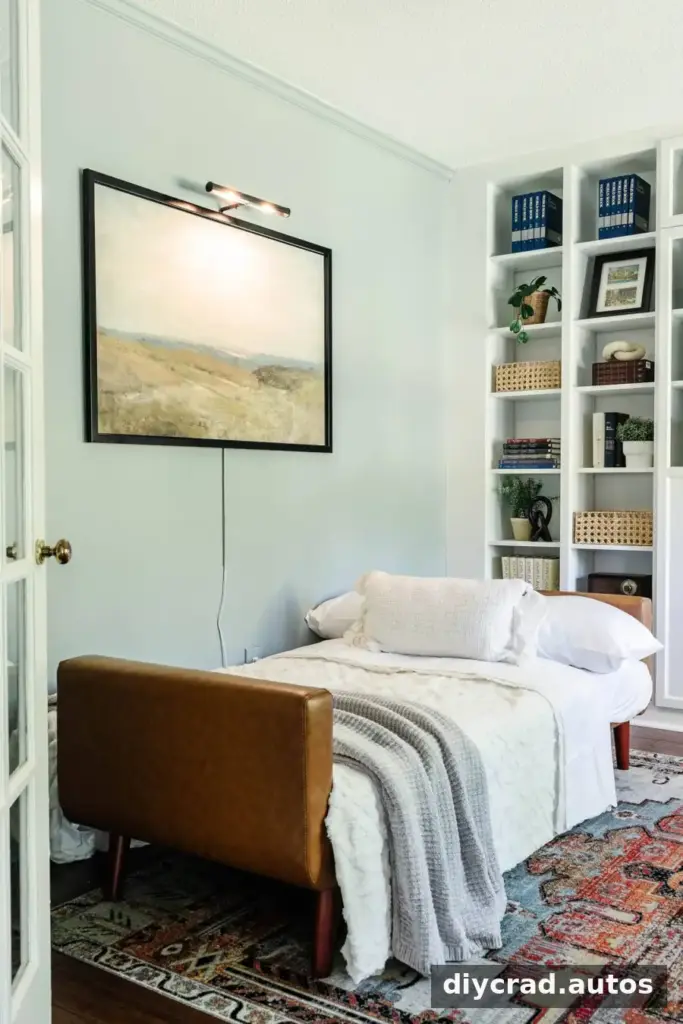
12. Add a Speaker if It Suits Your Routine
A small wireless speaker can be useful for music or podcasts. Keep volume low during calls and choose a location that does not take up valuable desk space.
13. Bring in Greenery
A plant can add color and soften a workspace. Choose one that suits the room’s available light and your maintenance routine. If you prefer, a faux plant offers a decorative option without watering.
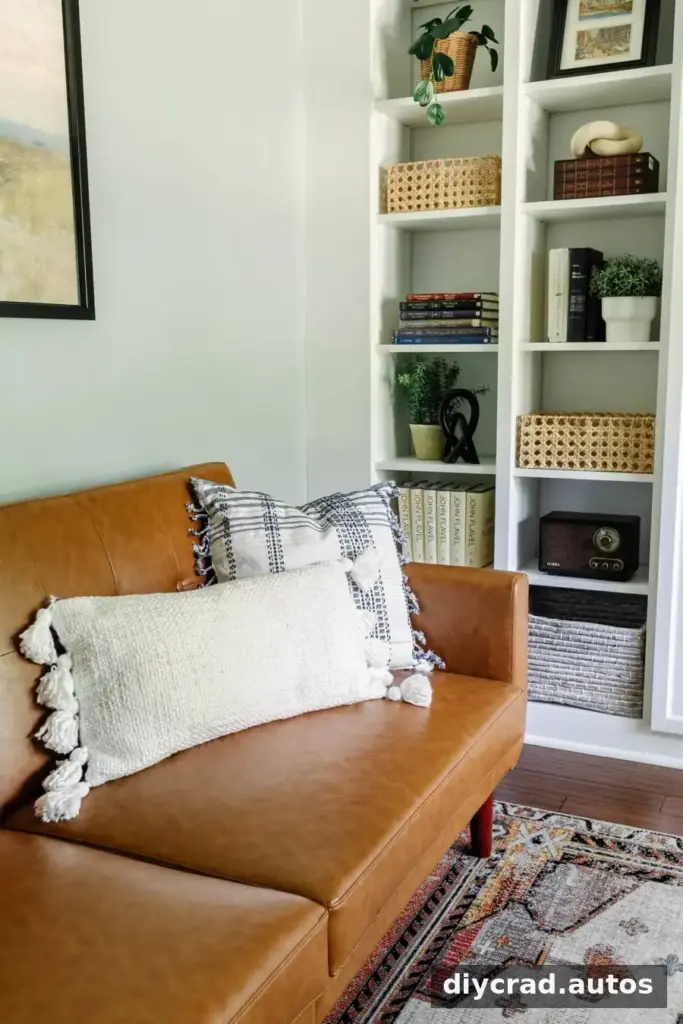
14. Set Up a Small Refreshment Station
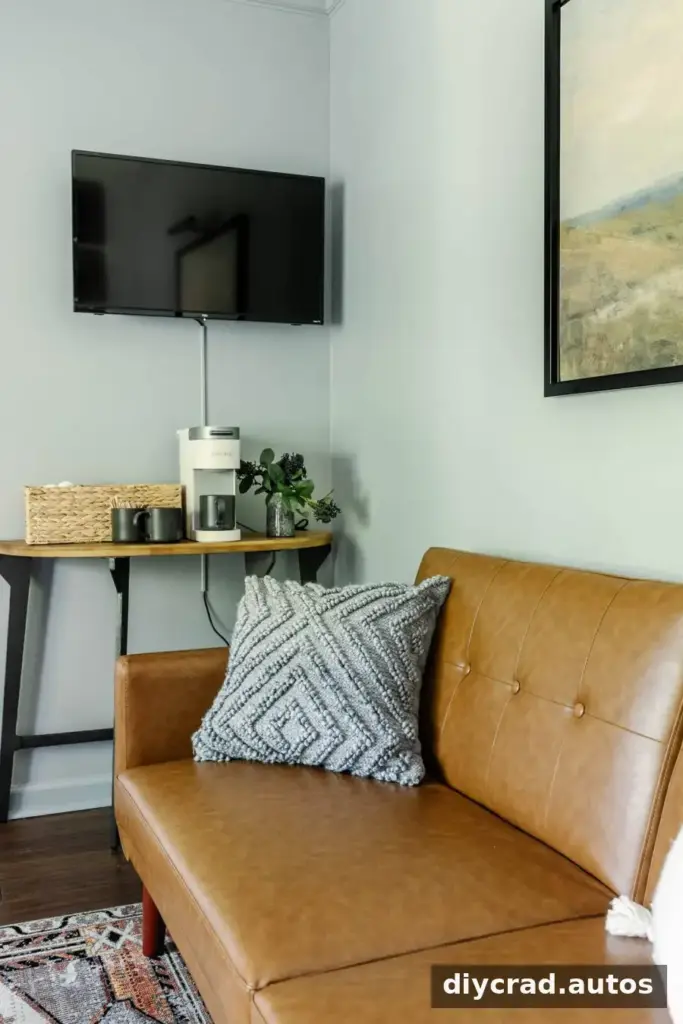
A compact table can hold a coffee maker or water supplies, especially if the room is used for meetings. Keep hot appliances on a stable surface and away from papers, cables, and children’s work areas.
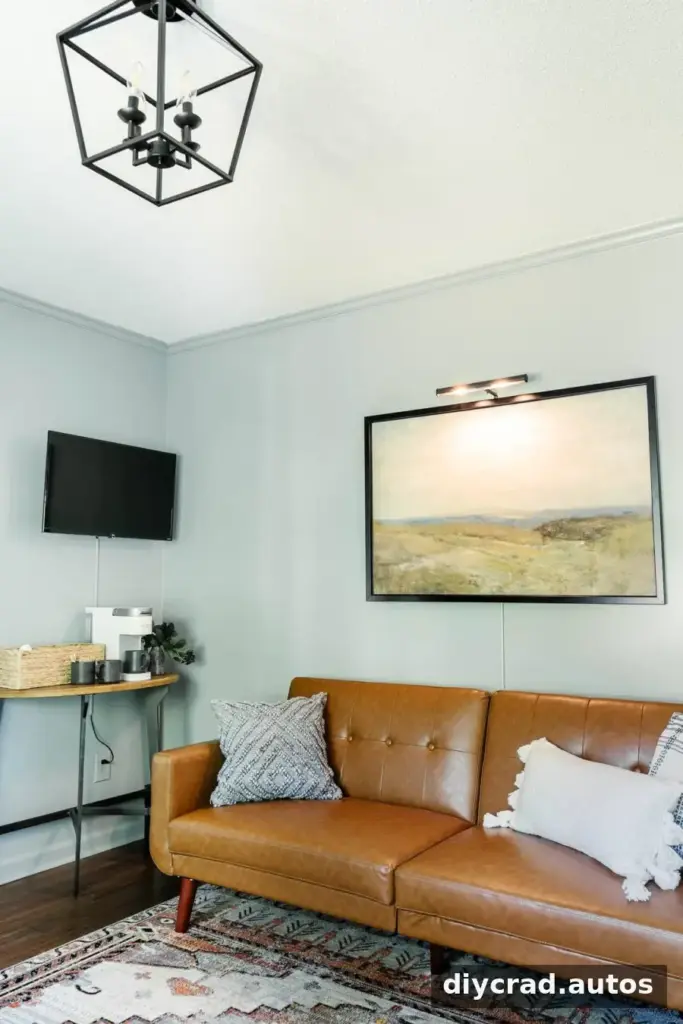
15. Consider a Larger Display
A television or monitor can provide a larger view for presentations or screen mirroring. Position it at a comfortable viewing height and distance, and adjust brightness to suit the room.
16. Conceal Cords Safely
Cord covers can make cables less noticeable along walls. Choose covers that fit the cords, secure them properly, and avoid running cables where they could become a trip hazard.
17. Add a Rug
A rug can bring color and texture into the room and define a seating area. Use a suitable rug pad to reduce slipping, and check that chair legs move easily across its surface.
18. Use Candles with Care
A candle may add soft ambient light, but never leave it unattended. Keep it away from papers, curtains, children, pets, and other flammable materials; an LED candle is a safer alternative.
19. Be Thoughtful with Diffusers
A diffuser can add fragrance, but scents may bother people with sensitivities. Follow the product directions, ventilate the room, and check that any oils used are appropriate around children and pets.
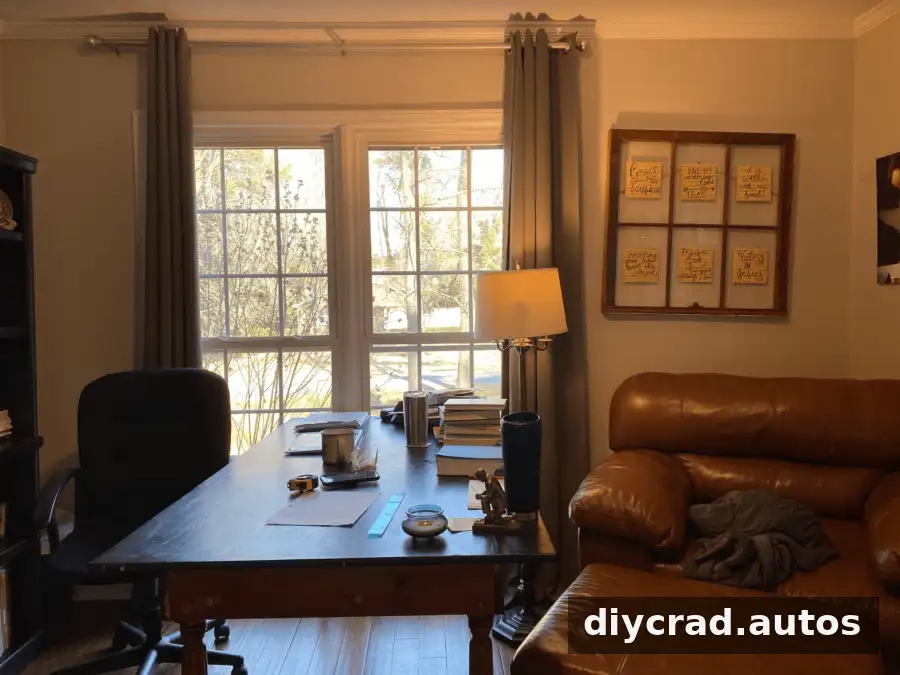
20. Plan the Room in Zones
Give each part of the room a clear purpose, such as desk work, storage, reading, or guest use. Arrange furniture so these zones support one another without blocking movement. This makes it easier to share the room and return items to the right place.
Finishing Details for a Functional Workspace
Useful finishing touches for this design include a pull-out desk, corner work surface, upholstered chairs, convertible seating, bookcases, a floor rug, window shades, lamps, landscape art, and small organizers. Decorative objects such as baskets, globes, frames, and a diffuser can add character, but keep the most-used supplies within easy reach.
When planning your own home office setup, start with the room’s essential tasks, then choose furniture and storage that support them. A comfortable chair, practical lighting, tidy cables, and clearly defined zones can make a workspace more functional without requiring every idea on this list.