A well-planned homework desk can give a child a comfortable place to study, keep school supplies in order, and take part in online lessons. In Olivia’s room, the start of second grade and her upcoming eighth birthday prompted a change: a former play area was replaced with a desk and a few practical organizing details.
Why Olivia’s room needed a homework desk
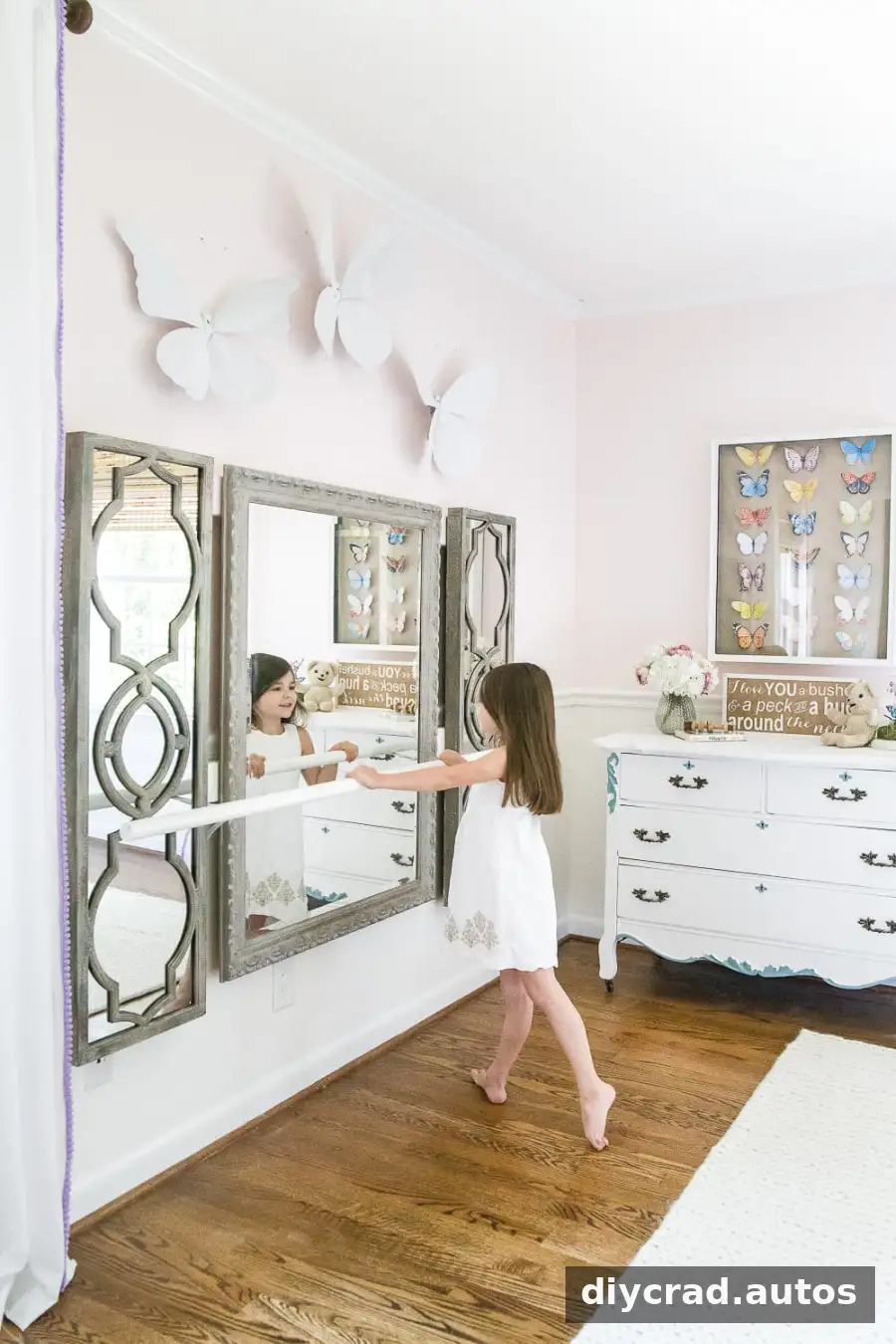
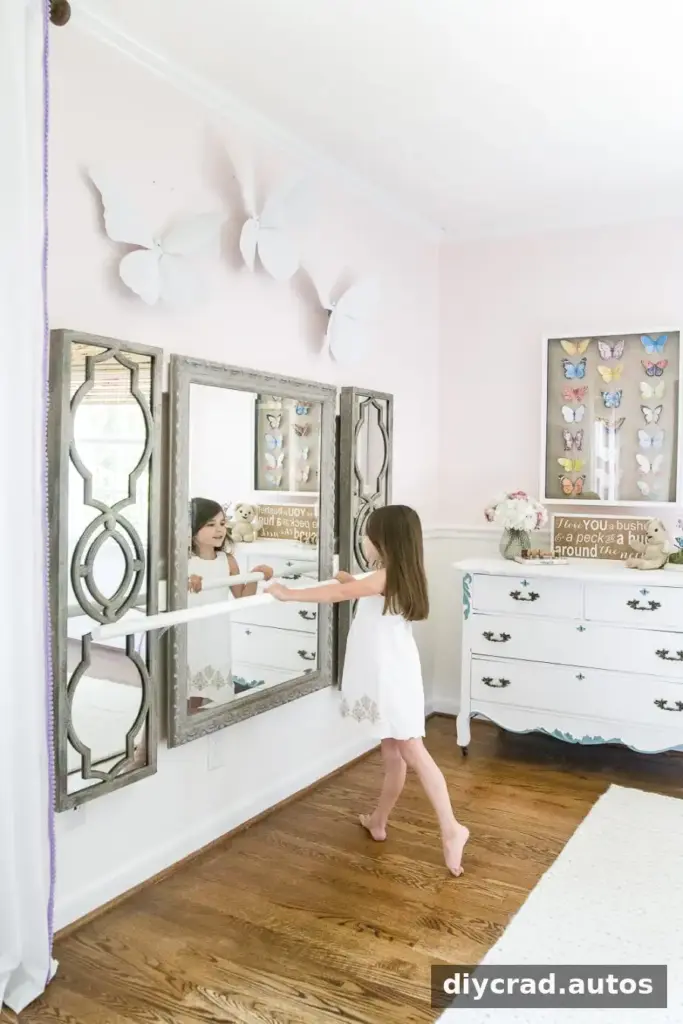
The room had once included a do-it-yourself ballet barre, installed when Olivia was five, along with a wall of mirrors. The barre eventually came away from the wall during a gymnastics move, and the mirrors were no longer serving a useful purpose. Rather than keeping features that were no longer a good fit, the room could be updated for her changing needs.
With school plans uncertain and online meetings expected, a dedicated place for homework and video lessons made sense. A desk can help define a study area, even when it is set up inside a bedroom. It also gives school materials a consistent home, which can make it easier for children to begin tasks and put supplies away afterward.
Setting up a functional homework desk
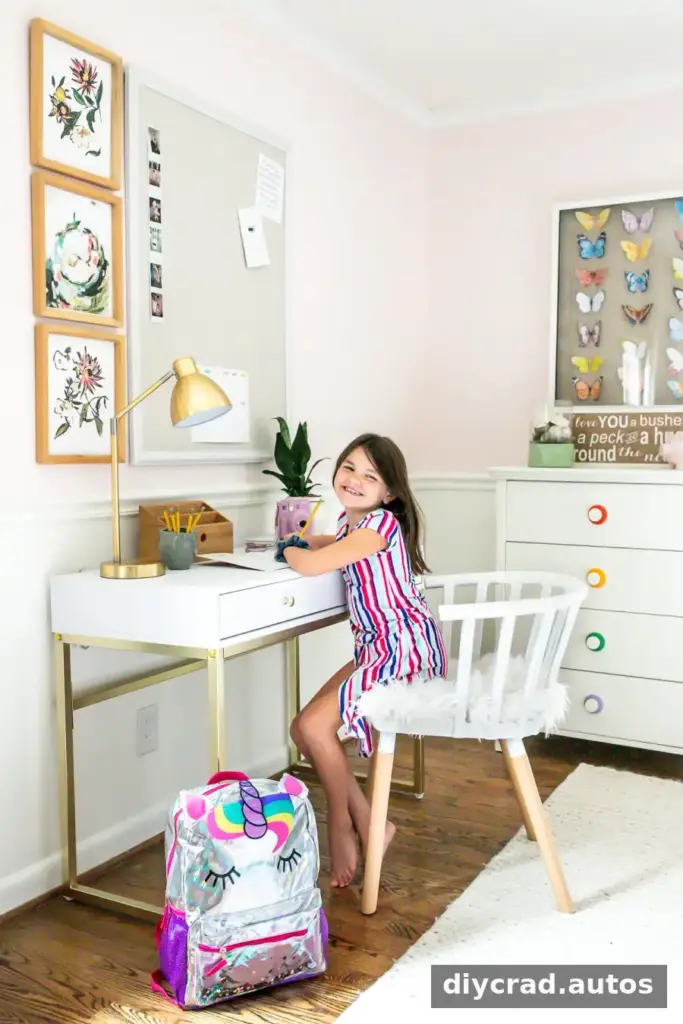
The new desk is white and gold, with a linen memo board nearby. Existing picture frames were repurposed, and the chair was spray-painted to work with the updated look. Olivia also liked that the desk could serve as a makeup vanity, showing how one piece of furniture can support more than one age-appropriate activity.
A useful study space does not need complicated storage. A few small choices can make the desk easier to use:
- Keep everyday supplies close: Place pencils, paper, and other frequently used items within easy reach.
- Use the memo board for reminders: Display schedules, notes, or current assignments where they are easy to see.
- Leave room to work: Keep the main desk surface as clear as possible so there is space for books, writing, or a laptop.
- Choose flexible furniture: A desk that can support studying and another suitable activity may remain useful as a child’s interests change.
- Check the setup for online lessons: Before a video meeting, make sure the child can sit comfortably and has the materials needed for the lesson.
When refreshing a room, reusing frames or updating an existing chair can help tie the area together without replacing every item. Before painting furniture, check that the surface and paint are appropriate for the material, and follow the product’s instructions for preparation and drying.
Simple back-to-school preparation
In the weeks before school, clothing was selected online and delivered at home. Planning ahead can reduce last-minute errands, but the most useful preparation will depend on each family’s routine and the school’s requirements. It can help to check clothing needs, gather basic supplies, and set aside a place for school notices and assignments.
Starting a new school year can feel different when plans are changing. A calm, encouraging approach can help children feel supported as they adjust. Small routines—such as putting school materials in one place and reviewing the next day’s schedule—can add structure without making the study area feel overly formal.
Back-to-school favorites
A selection of clothing and other back-to-school favorites was gathered for the season. When choosing items for a child, consider comfort, school guidelines, and how well each item fits into the family’s everyday routine.


Make the homework desk work for your child
Every child’s needs change over time, so a study area does not have to be elaborate or permanent. A useful homework desk, a visible place for reminders, and a few easy-to-follow routines can make school days feel more organized. For Olivia, replacing the old mirrors with a homework desk was a practical way to prepare for second grade while giving her room a fresh purpose.
As the school year begins, focus on creating a space that feels comfortable and easy to maintain. A homework desk that keeps essentials within reach can support studying, online lessons, and the everyday habits that help children stay organized.