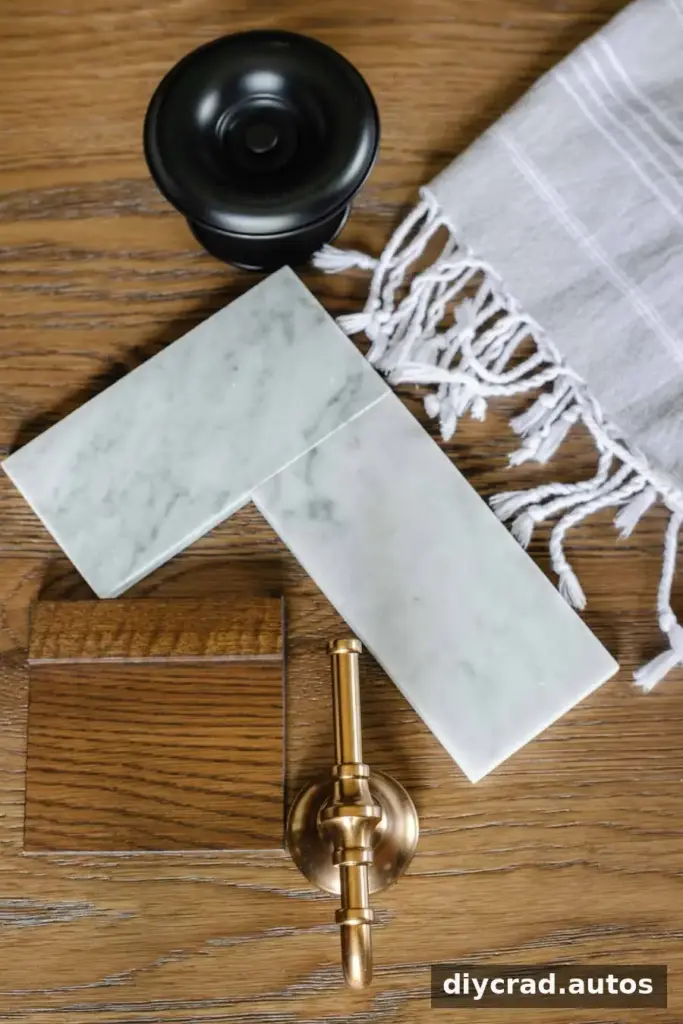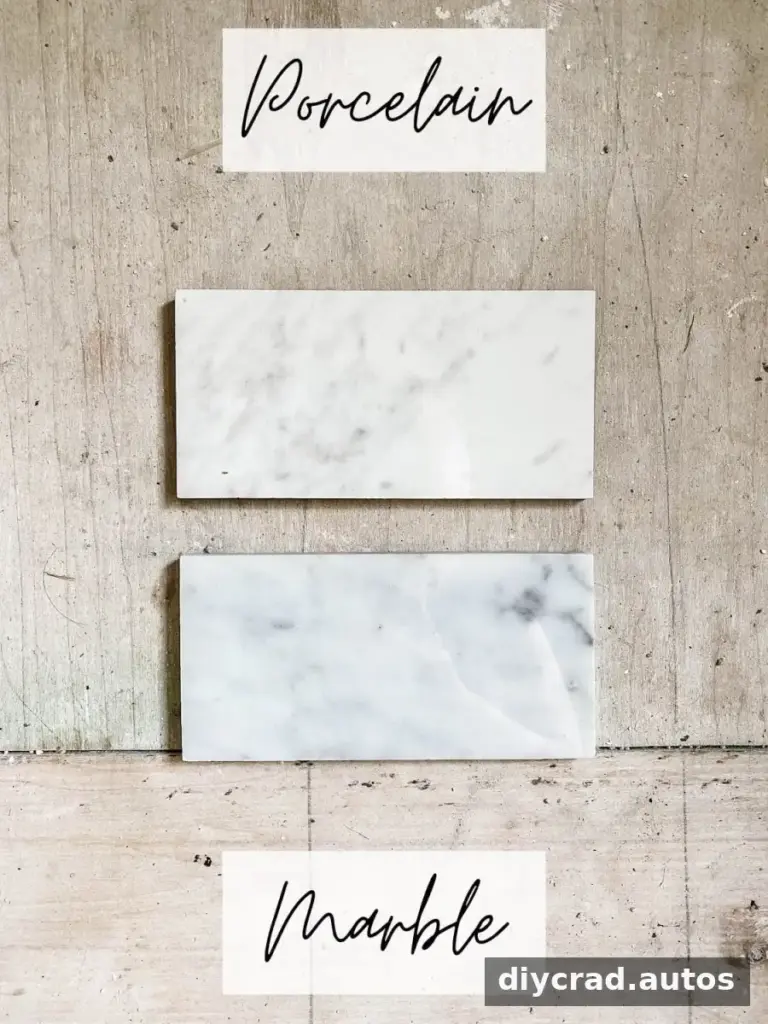
Choosing between natural stone and a porcelain lookalike can shape the appearance, upkeep, and budget of a renovation. This guide to marble tile vs marble effect tile compares their key benefits and drawbacks, with practical points to consider before choosing a surface for a kitchen or bathroom.
Marble offers naturally formed veining and variation, while marble effect porcelain tile recreates the look with a manufactured design. The best choice depends on what matters most in your space: natural character, maintenance, cost, or resistance to everyday wear.

Marble Tile vs Marble Effect Tile: How to Choose
Before deciding, consider where the tile will be installed and how much care you are willing to give it. Bathrooms and kitchens can expose surfaces to water, cleaning products, spills, and frequent use. Ordering or viewing samples in person can also help you compare color, finish, and pattern in the room’s actual lighting.
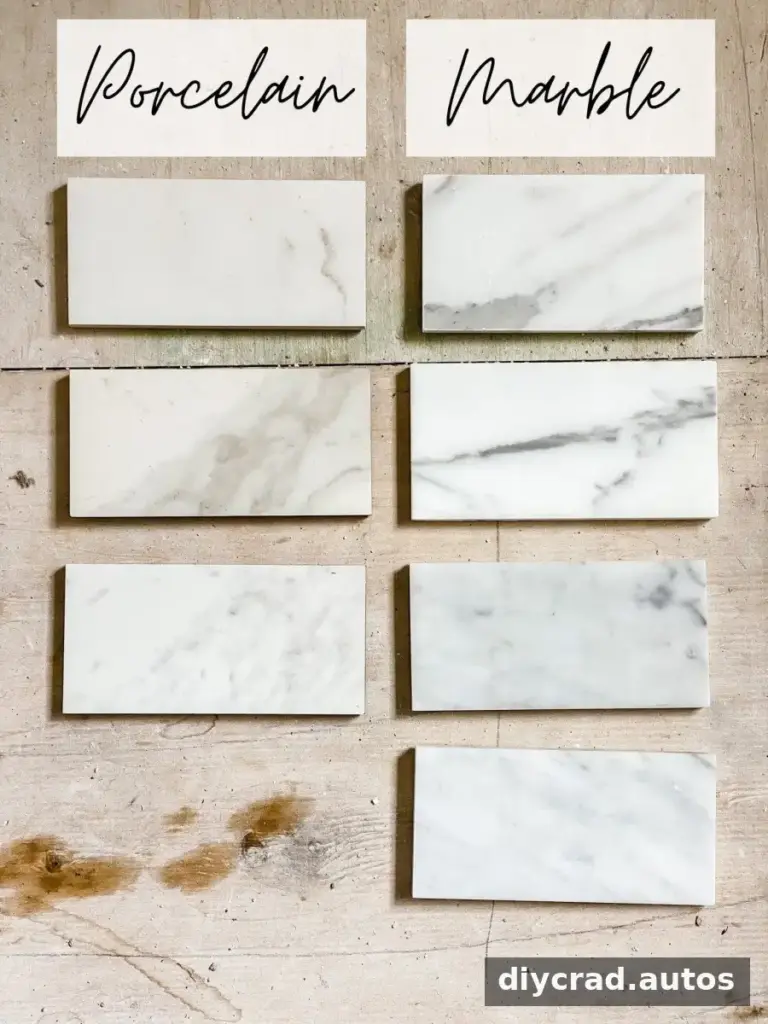
Finish and tone matter as much as material. Polished and honed surfaces reflect light differently, and warm or cool colors can change how spacious or cozy a room feels.
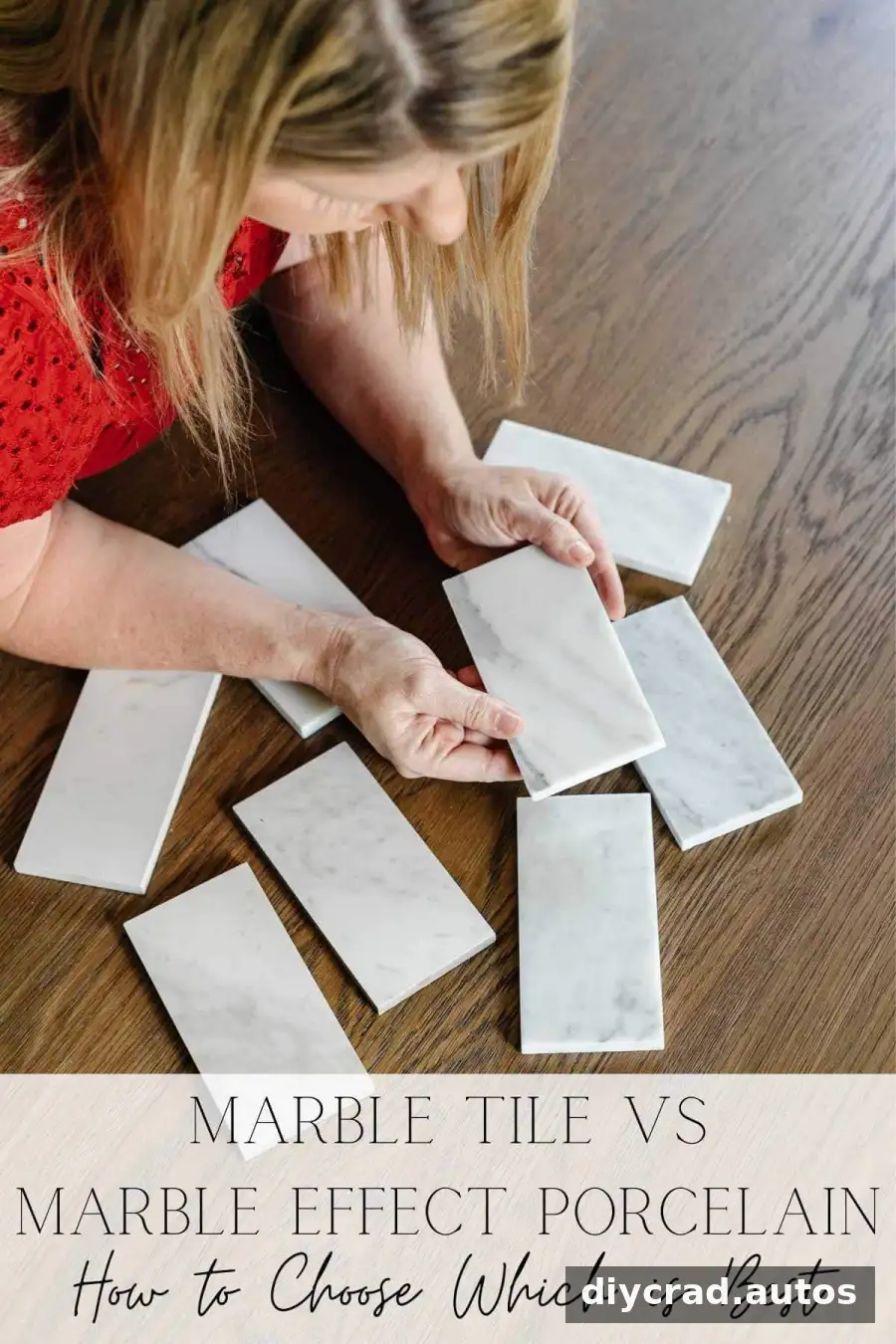
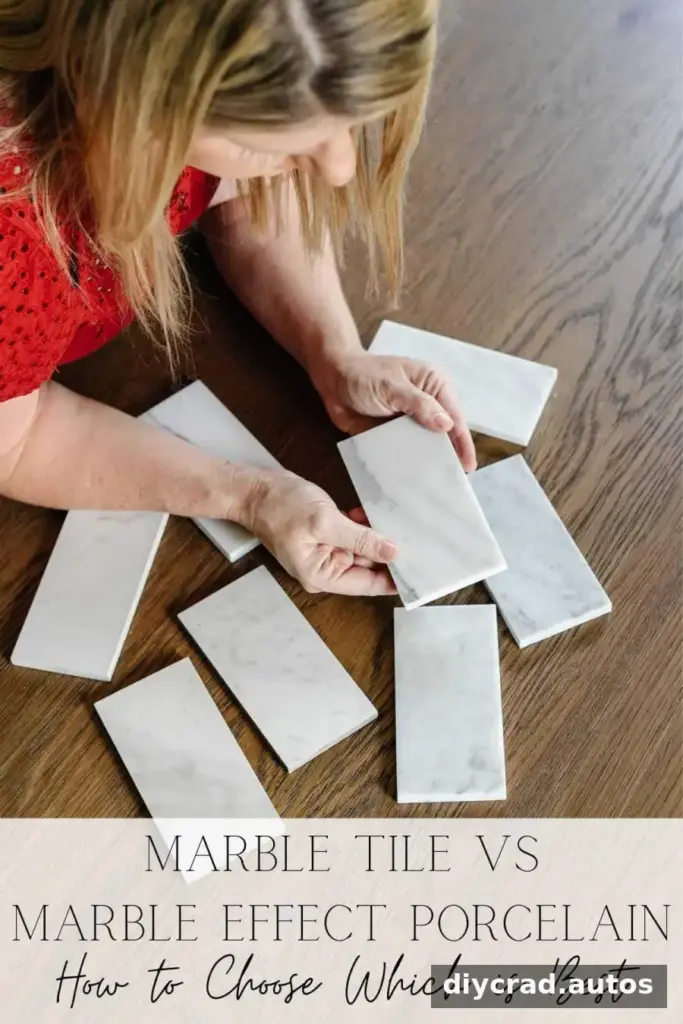
Tile samples shown: Semi-Polished Calacatta Porcelain, Matte Calacatta Porcelain, Polished Carrara Porcelain, Polished Calacatta Gold Bettogli, Honed Calacatta Marble, Polished Carrara Marble, and Honed Carrara Marble.
Natural Marble Tile
Marble is a natural stone, so veining and color variation are part of its appeal. Individual tiles may not look identical, which can create depth and a distinctive finish. That variation can also make it difficult to match new pieces to existing marble.
Advantages
- Natural veining gives each installation variation and character.
- Its light-reflecting qualities can brighten a room.
- Compared with porcelain, marble is less likely to shatter if a heavy object is dropped on it.
- It can stay relatively cool in direct sunlight and retain warmth in winter.
- Its broad appeal may be a consideration when planning for resale.
Points to consider
- Marble is porous and can stain, so it needs regular sealing and careful cleaning.
- It is softer than porcelain and can chip or scratch more easily.
- Acidic substances can etch the surface, so use cleaning products suitable for natural stone.
- It generally costs more than marble effect porcelain tile.
- Natural variation can make replacement tiles difficult to match.
Practical tip: Ask about sealing and cleaning requirements for the specific marble and finish you choose. Wipe spills promptly and avoid assuming that a cleaner safe for porcelain is also suitable for stone.
Marble Effect Porcelain Tile
Porcelain tile uses a manufactured pattern to suggest the appearance of marble. Its veining is typically more consistent than natural stone, which can make it easier to coordinate across a room or match with existing tiles.
Advantages
- It offers strong resistance to stains and scratches compared with marble.
- It generally requires little maintenance and does not need sealing.
- Frequent cleaning does not affect its quality in the same way that care can affect natural stone.
- It is usually less expensive than marble and easier to match to existing tile.
- It is easier to clean and can withstand abrasive cleansers.
Points to consider
- The veining is manufactured and may look less natural, with less variation and character.
- Porcelain is more likely than marble to shatter if a heavy object is dropped on it.
- It can feel cold, especially in winter.
- Depending on its finish, it may reflect less light than marble.
Practical tip: Compare samples from different parts of a pattern, not just one tile. This gives a better sense of how repeated veining will look across a larger floor or wall.
Polished Marble vs. Honed Marble
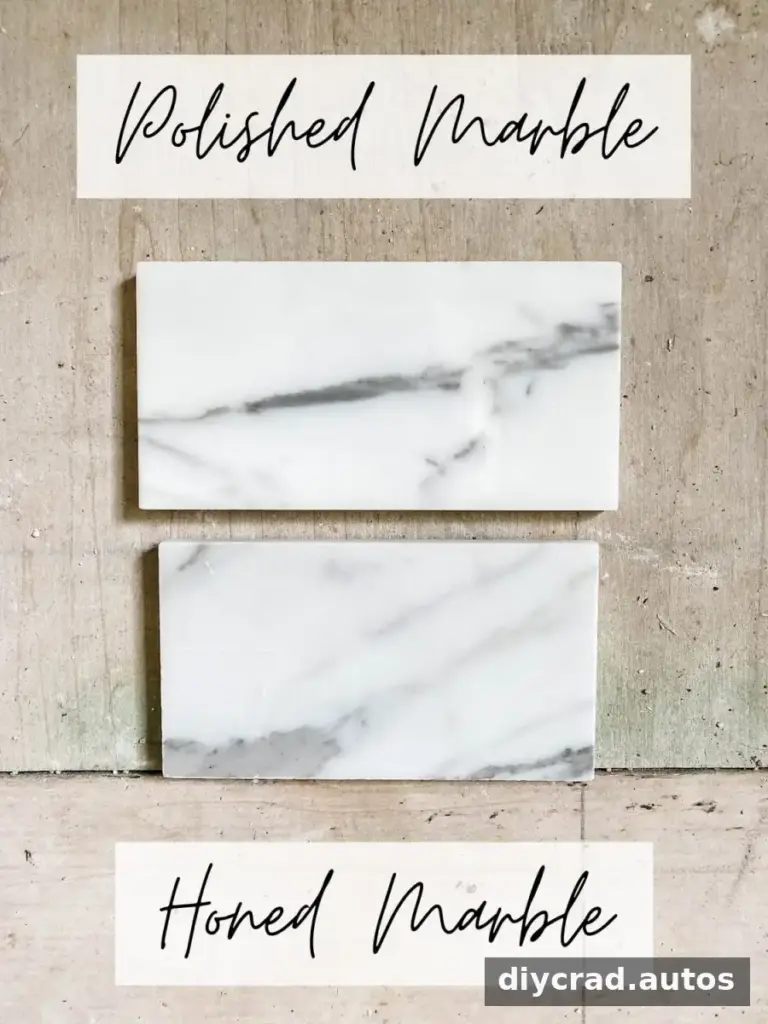
Marble finishes affect both appearance and everyday care. A polished surface is glossy, while a honed surface has a softer, less reflective look.
Polished marble
- Reflects light and may help a small room feel larger.
- Is generally easier to clean and more stain resistant than honed marble.
- Can show scratches more easily, along with smudges and hard-water spots.
- May become more slippery than a honed finish when wet.
Honed marble
- Can make scratches less noticeable and is considered less slippery when wet.
- Conceals smudges more effectively.
- Reflects less light, so it may not make a room feel as spacious as a polished finish.
- Can require more scrubbing to clean and is more susceptible to stains than polished marble.
For a bathroom, consider how the finish feels underfoot and how the surface will be used. A less slippery reputation does not guarantee that any tile is slip-proof; check product information and installation guidance for the specific tile.
Warm-Toned Tile vs. Cool-Toned Tile
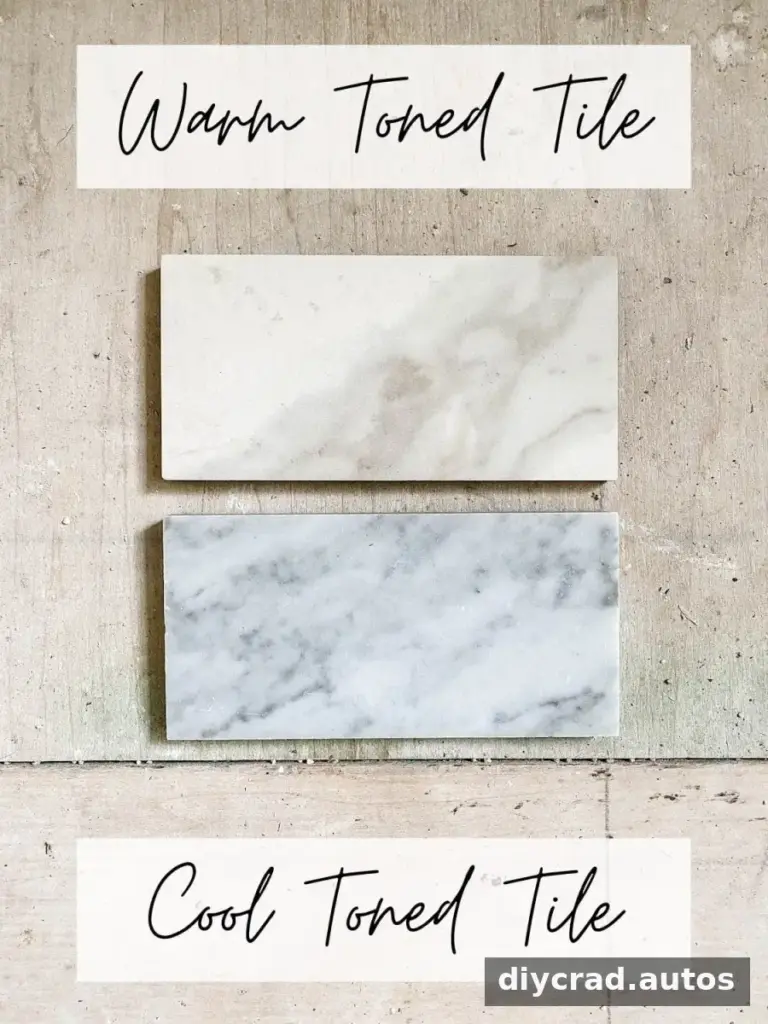
Color temperature can influence the mood and perceived size of a room. Use samples alongside your cabinets, paint, and lighting before making a final selection.
- Warm-toned tile: Can make a large space feel more intimate and create a comfortable, cozy atmosphere.
- Cool-toned tile: Can make a small space feel larger and contribute to a calm, refreshed look.
Which Tile Is Best for Your Remodel?
When comparing marble tile vs marble effect tile, choose natural marble if distinctive veining and the character of real stone are priorities and you are prepared for sealing and careful maintenance. Marble effect porcelain may suit a project where stain resistance, lower maintenance, easier matching, or cost are more important.
There is no single best option for every kitchen or bathroom. Compare samples, review care requirements, and consider the finish and color in the room where the tile will be installed. These steps can help you select a surface that fits both your design and daily routine.