A narrow hallway can feel dark and overlooked, but thoughtful updates can make it brighter, more welcoming, and visually spacious without changing the floor plan. These narrow hallway decorating ideas combine lighting, color, texture, and carefully chosen accessories to give a small passageway a more finished look.
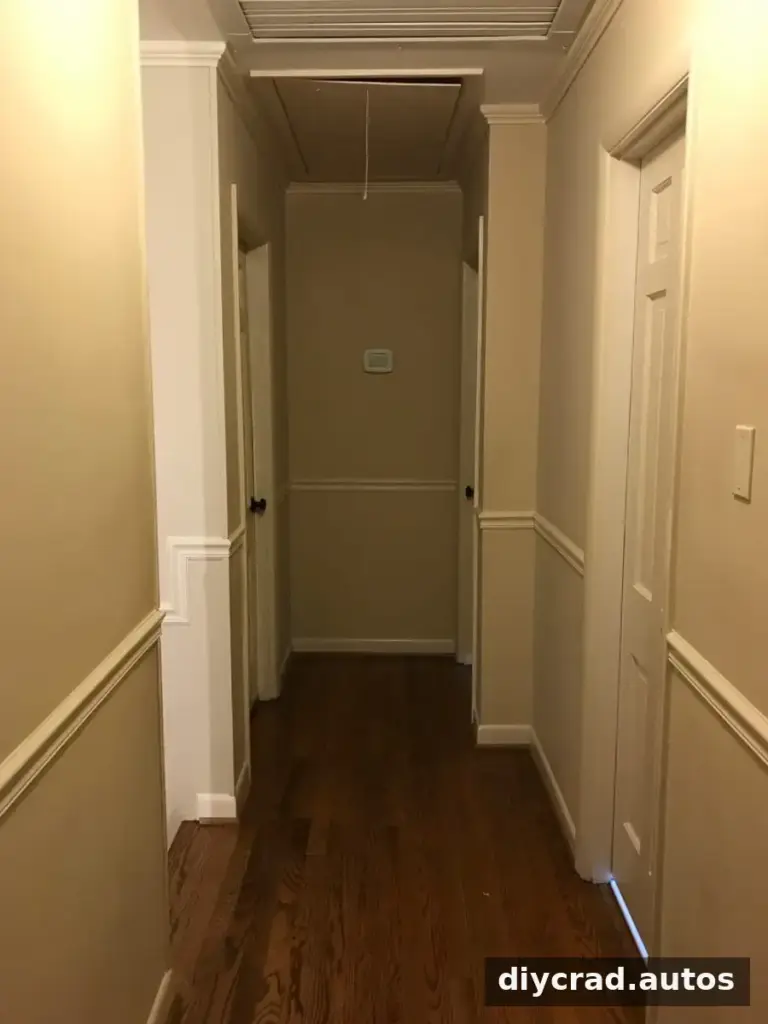
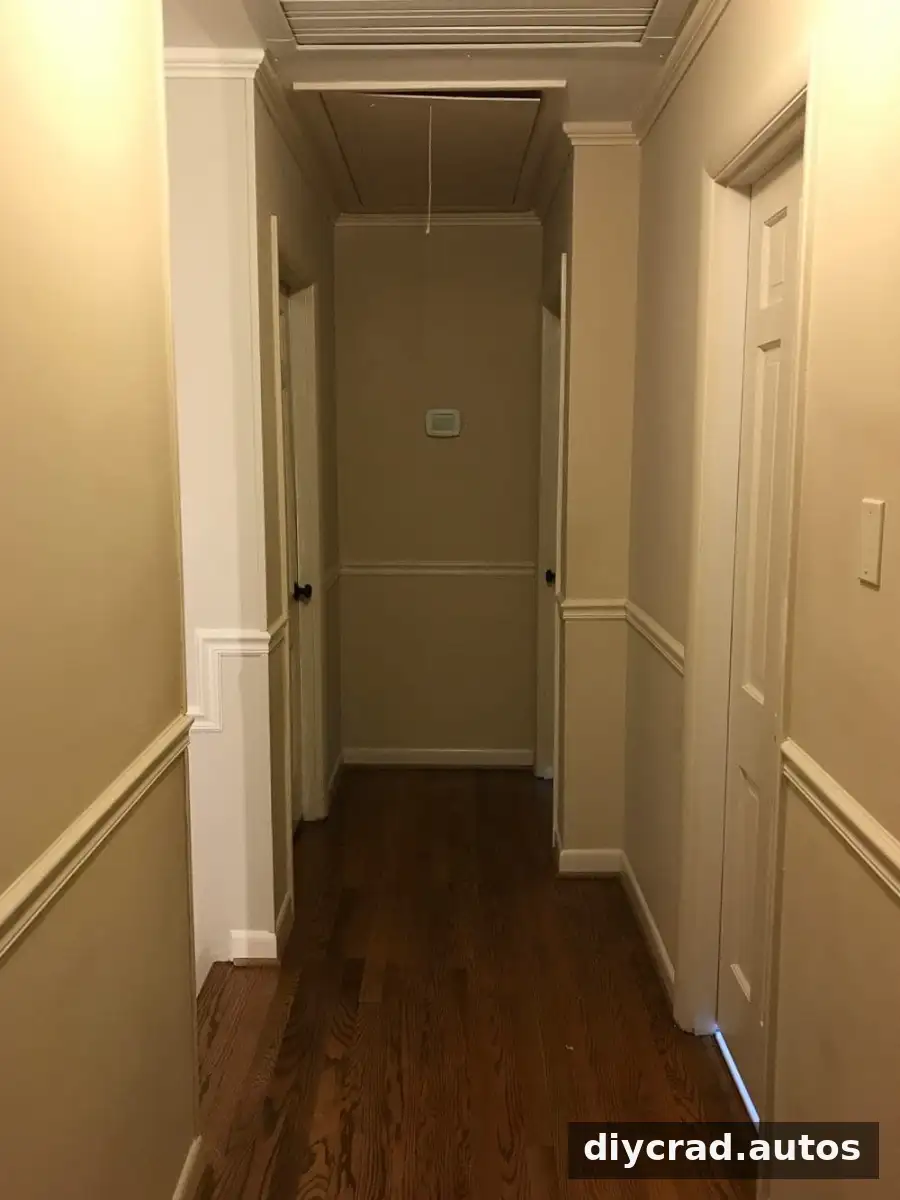
The makeover described here transformed an upstairs corridor that had dim lighting, an uneven-looking ceiling, and an unused attic fan into a more polished part of the home. The changes were made in stages, showing how a hallway can improve through a series of manageable projects rather than one major renovation.
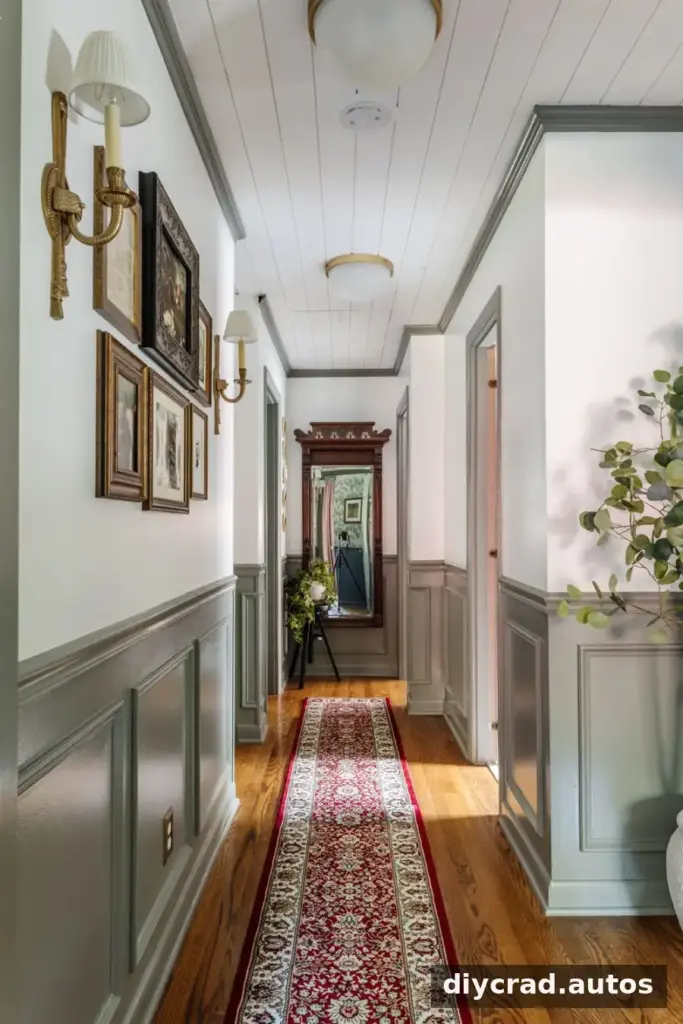
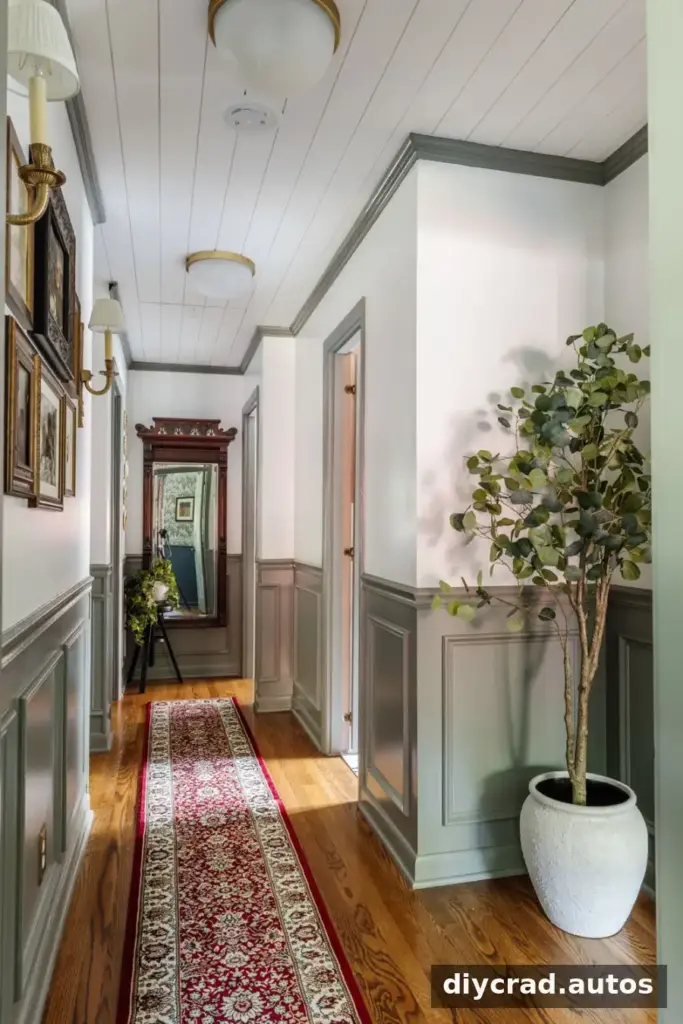
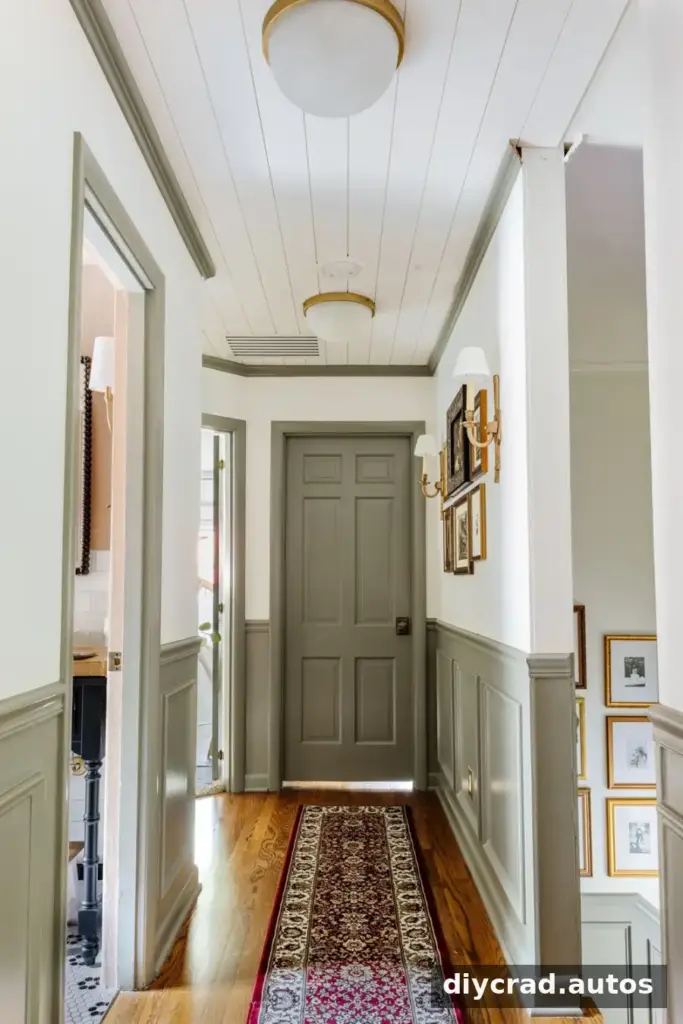
The finished design uses white walls and ceiling alongside olive-green trim, doors, and wainscoting. A runner, plants, artwork, and multiple light sources add warmth while keeping the walkway open.
Narrow Hallway Decorating Ideas: Start with the Architecture
Before adding decor, consider what makes the hallway feel cramped. In this example, the textured ceiling, protruding attic access, and dim fixtures made the space feel unfinished. Addressing those visual distractions first helped create a cleaner foundation for decorating.
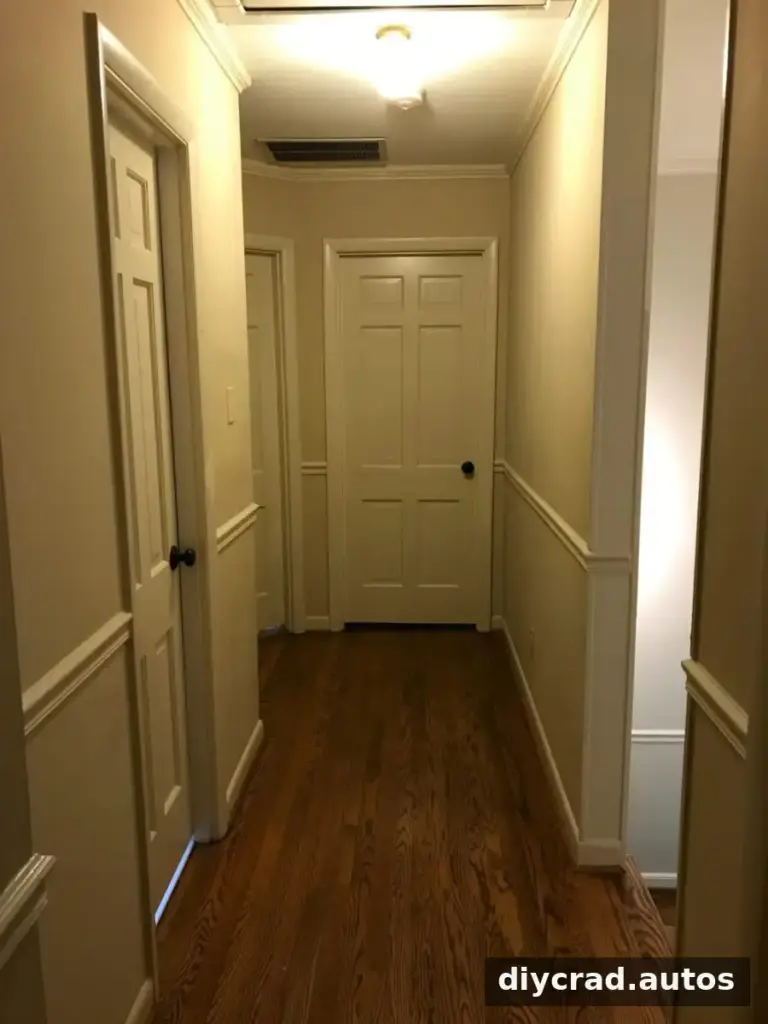
- The unused attic fan was removed, and the old attic opening was patched over.
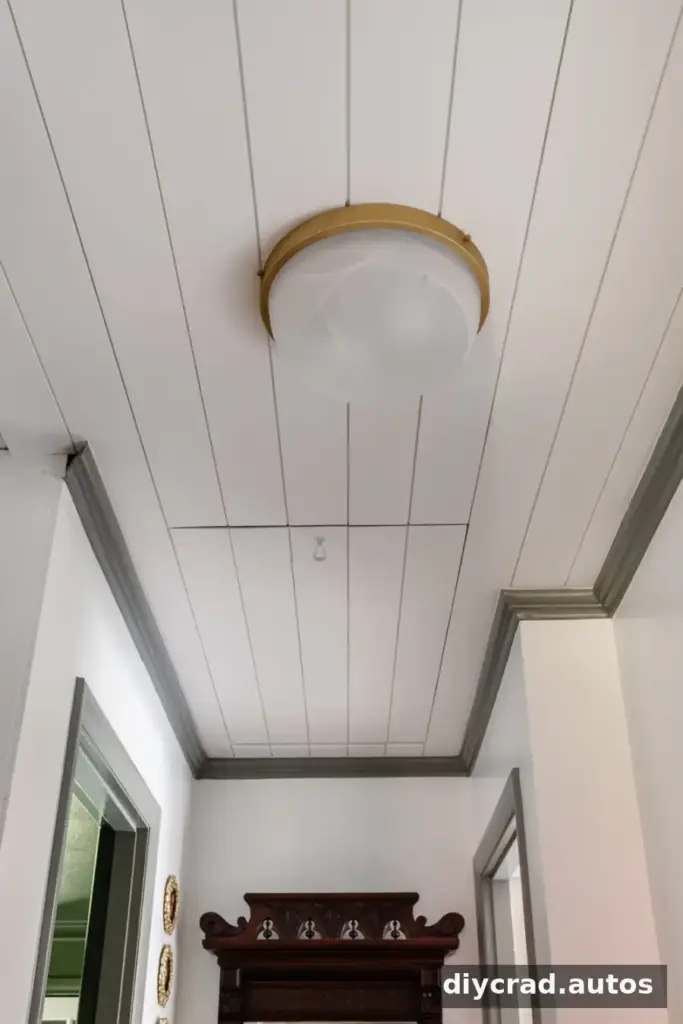
- Tongue-and-groove ceiling planks added subtle texture. The ceiling project cost less than $300.
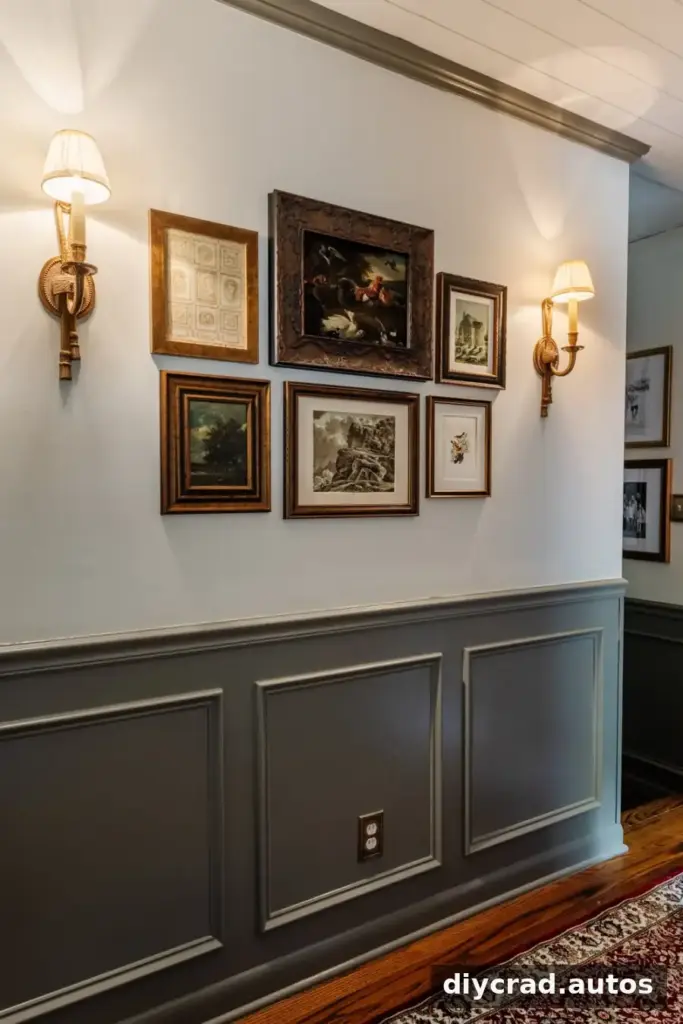
- Picture-frame molding was added below the chair rail.
- The wainscoting, doors, and trim were painted a soft olive green, while the walls and ceiling remained white.
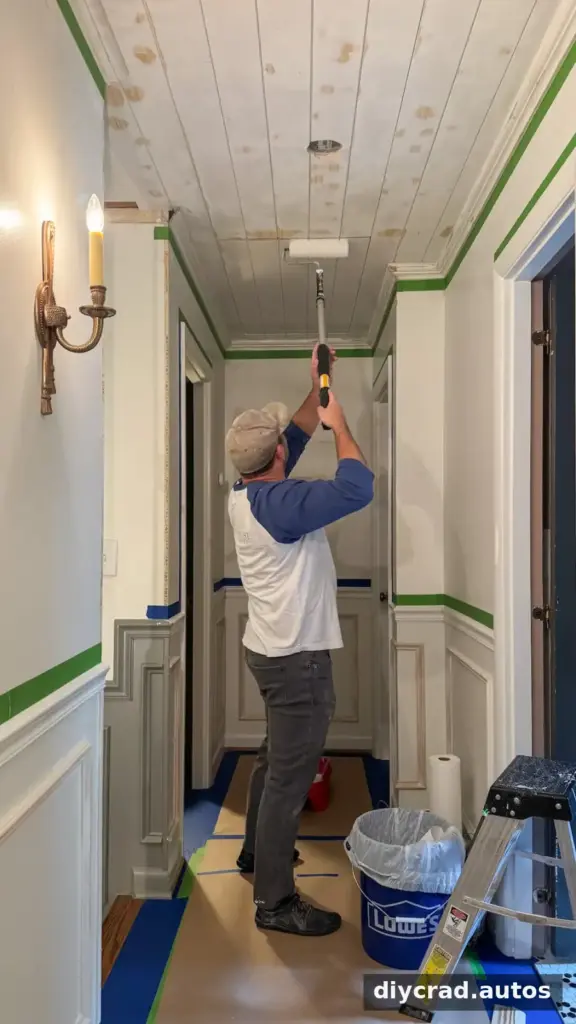
The ceiling planks create lines that draw the eye along the corridor, helping it appear longer. Keeping the upper walls and ceiling light also maintains a bright impression, while the contrasting trim adds definition. These effects change how the space is perceived; they do not physically increase its size.
For projects involving an attic fan, ceiling opening, or attic access, check the relevant building requirements and use an appropriate professional if the work involves electrical or structural changes.
Decorating a Narrow Hallway Without Adding Clutter
In a tight passage, every item should earn its place. Choose decor that adds color or character without narrowing the walking route. Keep the floor clear, and think about how doors open and how people move through the hallway before positioning furniture or planters.
1. Choose Low-Profile Ceiling Lights
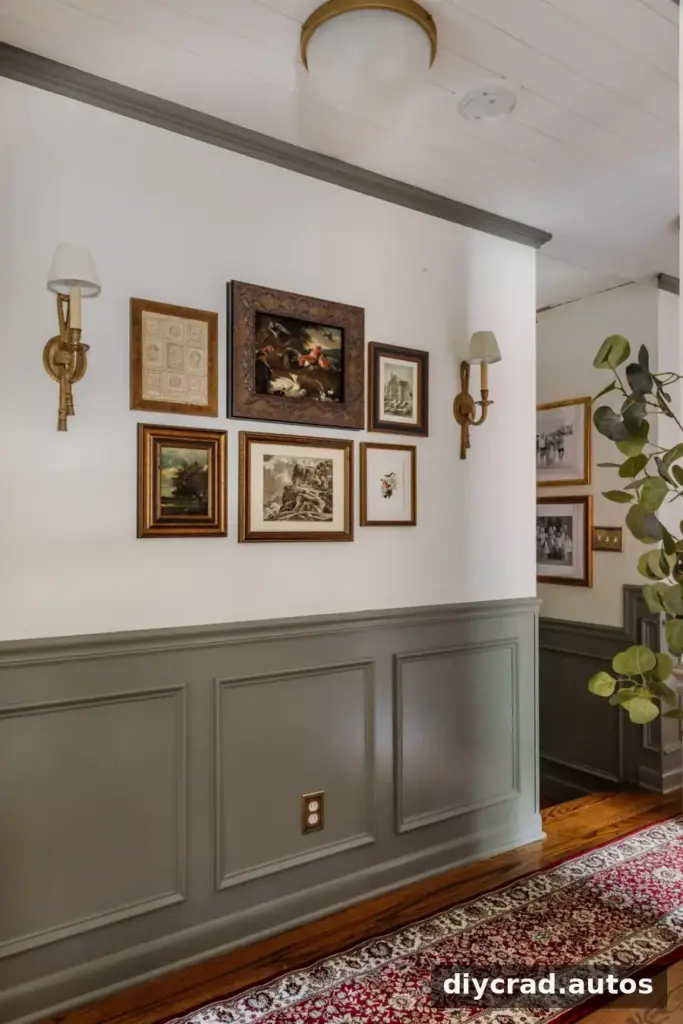
Brushed-gold flush-mount fixtures replaced the old lights in this hallway. Their close-to-ceiling shape suits a passage where hanging fixtures could feel intrusive or get in the way. The selected fixtures cost less than $90 each.
For a similar update, check the fixture’s dimensions and make sure its finish and brightness work with the rest of the home. A consistent light color can help the corridor feel more cohesive.
2. Add Color with a Runner
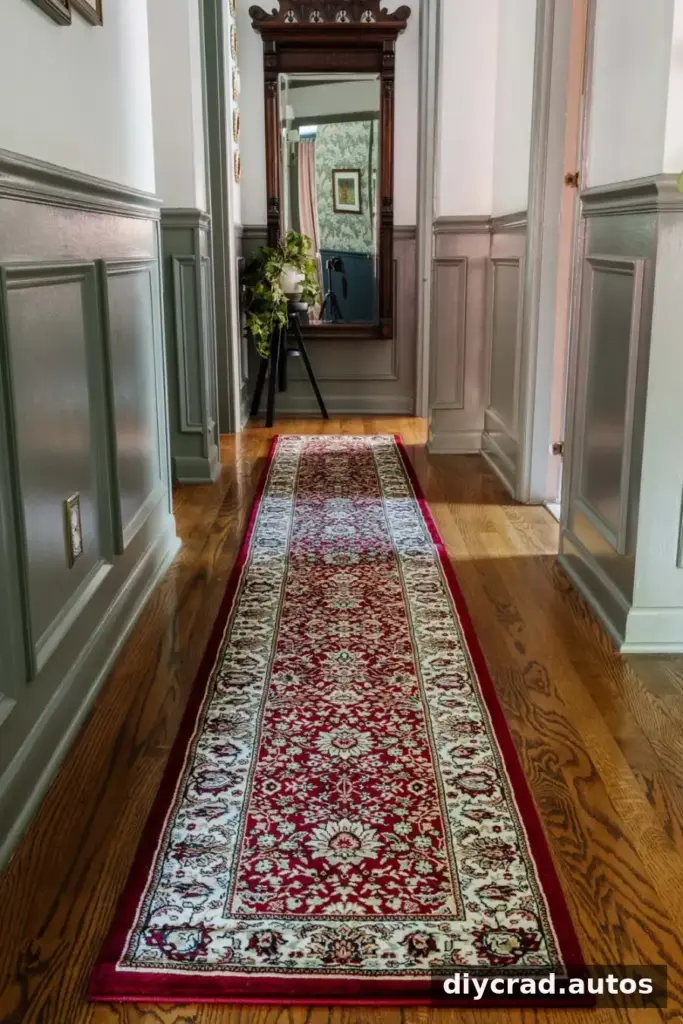
A red Oriental-style runner brings a strong color accent into the otherwise calm palette and echoes the red rug in the foyer. Two runners were placed end to end to cover the length of the hallway.
Measure the corridor before choosing a rug, leaving a visible border of floor along the sides where possible. If using multiple runners, align their edges carefully and use a suitable non-slip rug pad to help keep them in place.
3. Use Greenery That Suits the Light
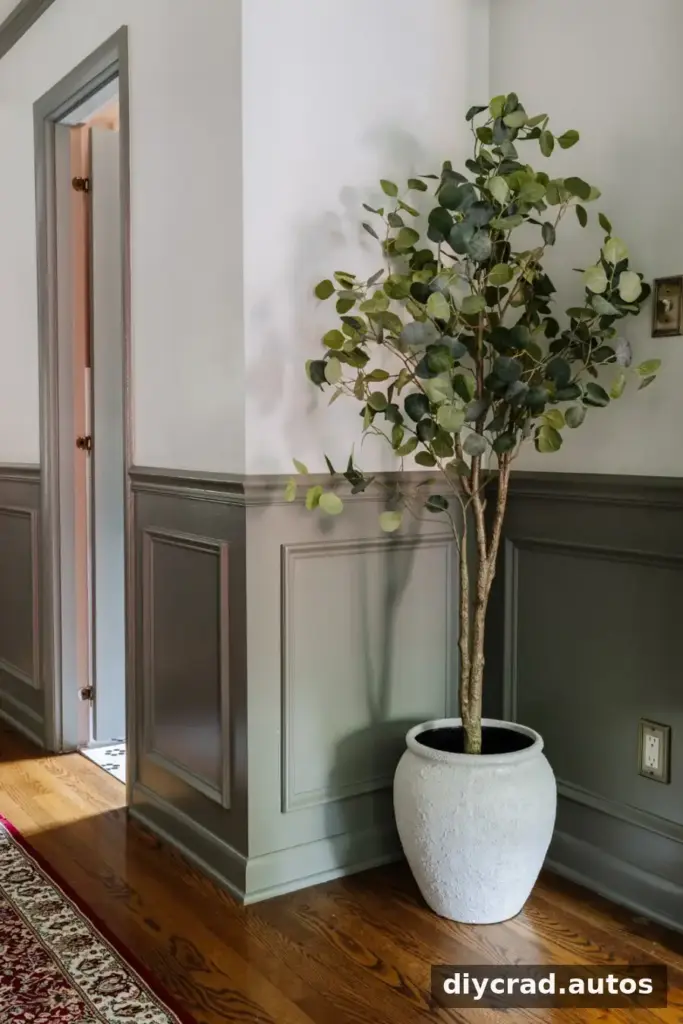
A faux eucalyptus tree adds a touch of greenery to a corner without needing sunlight or watering. It sits in a modern white planter, bringing a simple sculptural shape into the space.
Artificial plants can be a practical option in hallways with little or no natural light. Choose a size that fits the corner without obstructing the walkway, and keep the planter stable on the floor.
4. Vary Planter Shapes and Heights
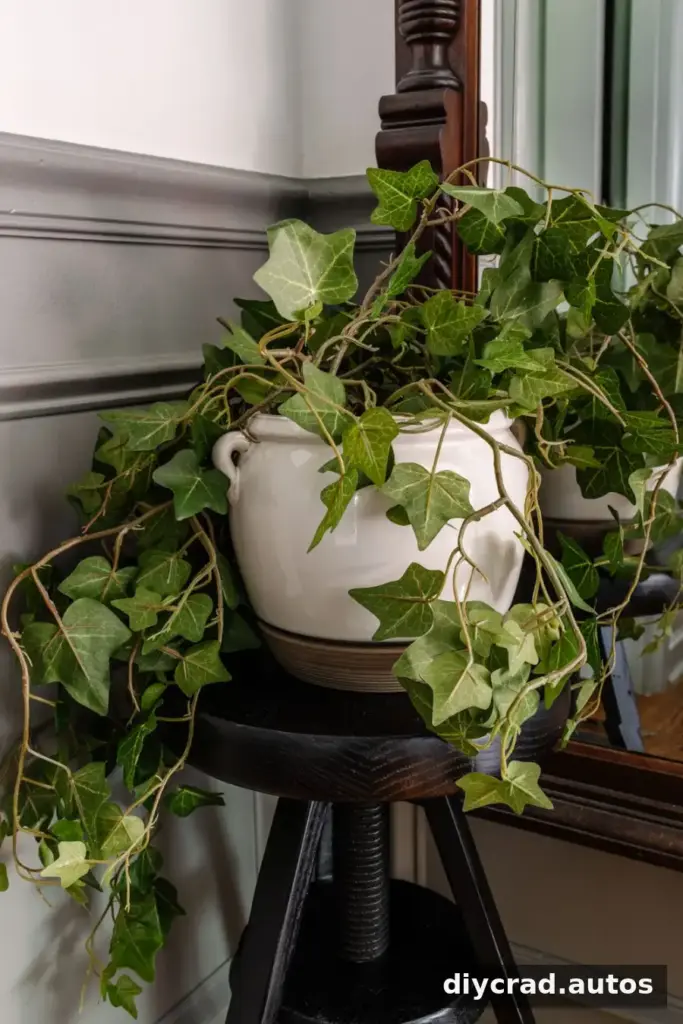
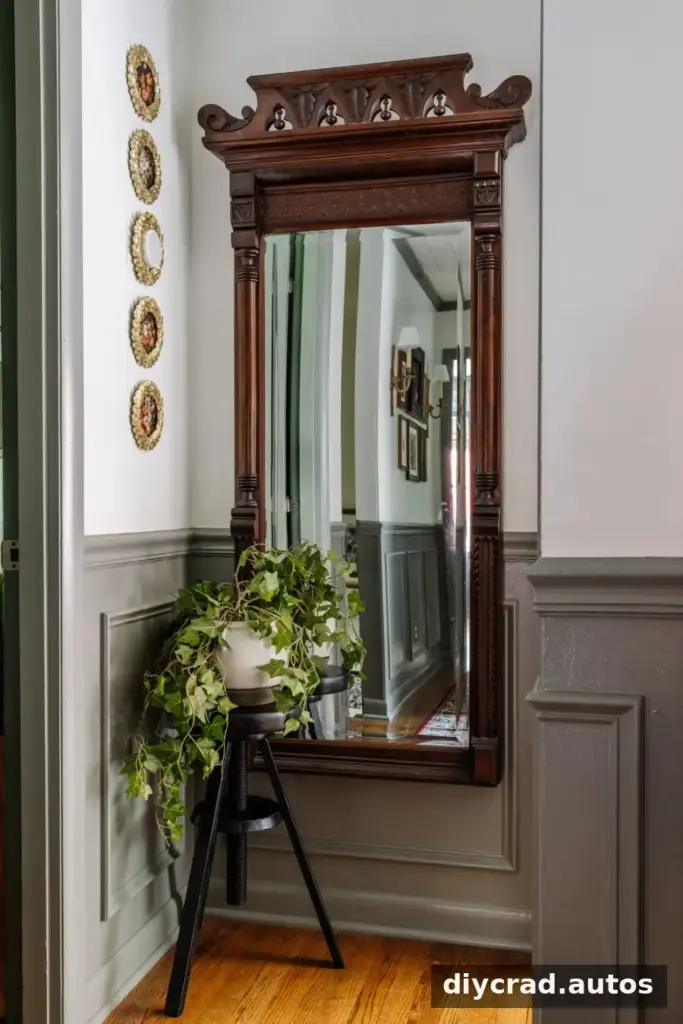
A second plant in a white ceramic planter adds another layer of texture. It is raised on a repurposed piano stool, creating height variation while using an existing piece of furniture.
In a narrow corridor, keep raised objects away from door swings and high-traffic areas. A small accent can add interest, but it should not make the passage difficult to use.
5. Reflect Light with a Mirror
A floor-length antique mirror at the end of the hallway reflects light and nearby artwork, making the space feel more open. Mirrors can also provide a useful last-look spot before leaving the room.
Position a mirror where it reflects something pleasant, such as a light fixture or artwork. Secure larger mirrors properly, especially in busy areas where they could be bumped.
6. Layer in Wall Sconces
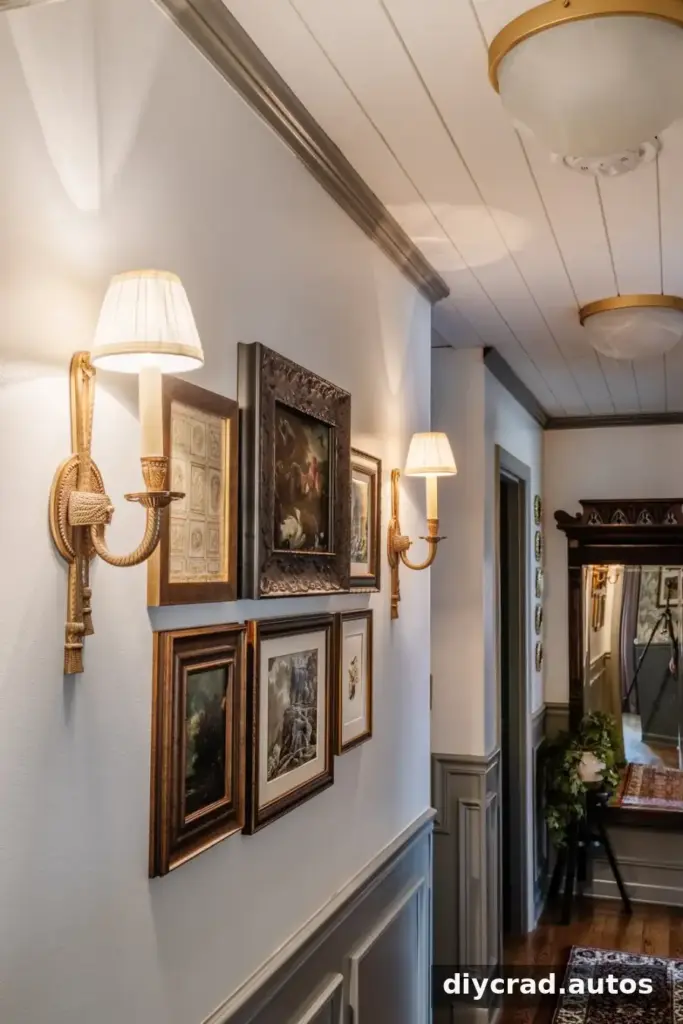
Vintage-style sconces add a soft glow and complement the ceiling lights. Using more than one type of lighting helps the hallway feel less dependent on a single overhead source.
Plan sconce placement so fixtures do not interfere with doors or people walking through. For hardwired lights, use a qualified electrician where required.
7. Create a Cohesive Gallery Wall
Public-domain art prints form a small gallery wall. Keeping the frames visually consistent makes the arrangement feel connected, while a modest mix of frame sizes gives it a collected appearance.
Lay out the arrangement on the floor before hanging anything. In a narrow hallway, a compact grouping can add personality without overwhelming the walls.
Make Small Updates Over Time
A hallway does not need to be redesigned all at once. Start with the issue that affects the space most: improve the lighting, add a properly secured runner, or hang artwork. Then build on the first change with color, a mirror, or a small plant.
The most useful narrow hallway decorating ideas balance style with everyday movement. Light finishes, streamlined fixtures, reflective surfaces, and a few well-chosen accents can make a corridor feel more intentional while keeping it practical.