

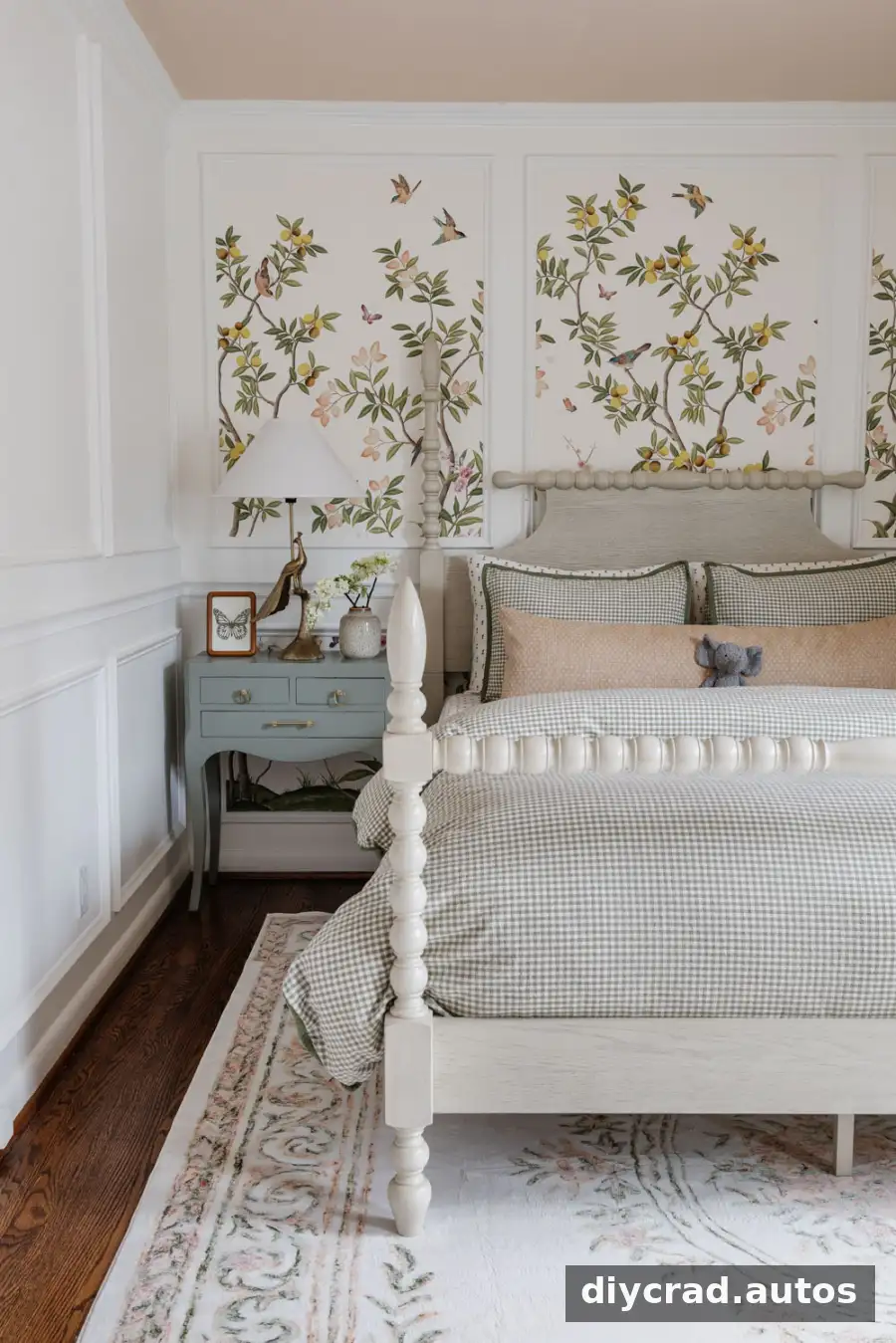
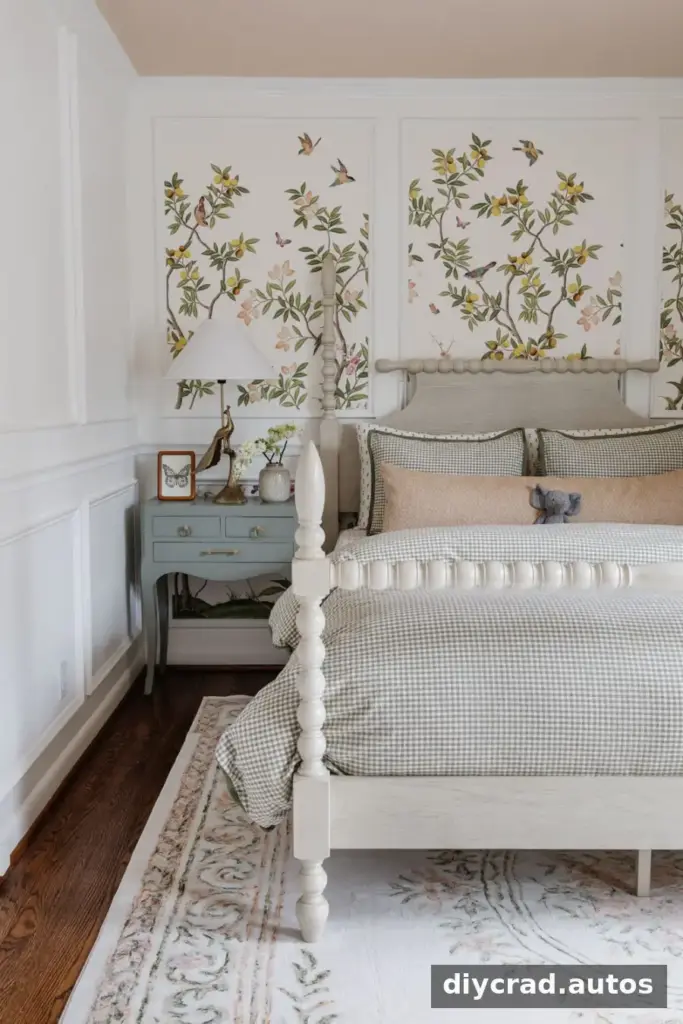
Pattern mixing can make a room feel layered, personal, and inviting—but combining prints without a plan may leave the space feeling crowded. The key is to create balance: choose a starting pattern, vary the scale of each print, and repeat colors so the different elements feel connected. These practical pattern mixing guidelines can help you decorate with confidence, whether you are updating a bedroom or another living space.
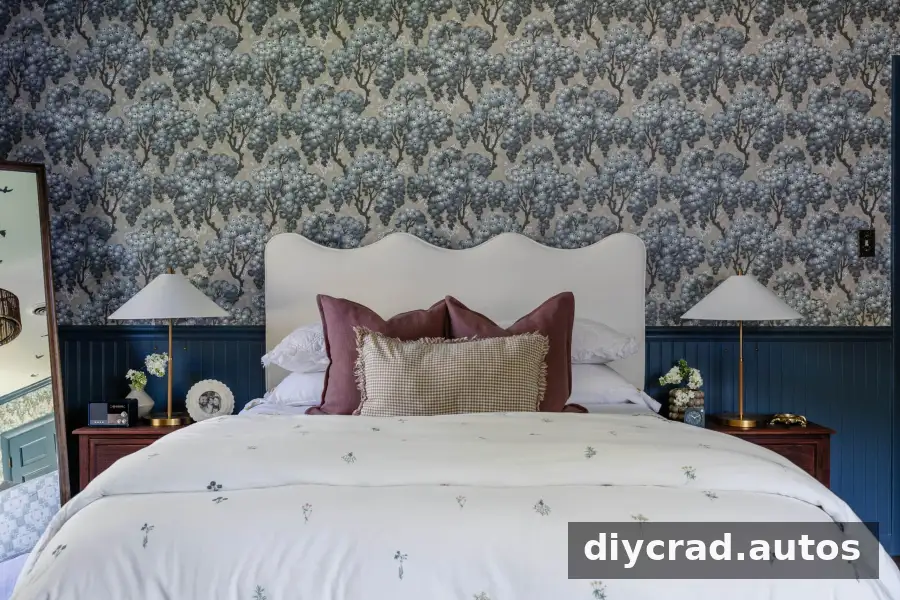
Pattern Mixing: Start With One Favorite Print
Begin with one pattern you genuinely like, such as floral wallpaper, a plaid rug, a striped chair, or a patterned duvet. Treat it as the room’s anchor rather than selecting several competing prints at once.
Once you have a starting point, notice its main colors and the size of its motifs. Those details can guide your choices for supporting patterns and help keep the overall design cohesive. If you are unsure what to add next, select a smaller item, such as a pillow, so you can test the combination without covering another large surface.
Vary Pattern Sizes to Create Visual Balance
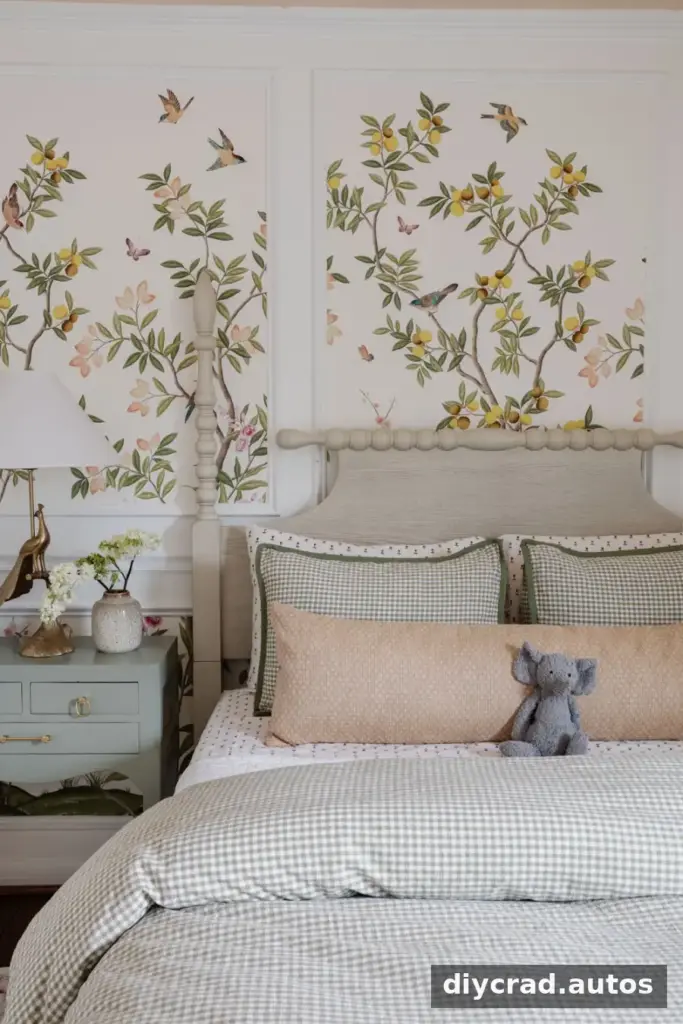
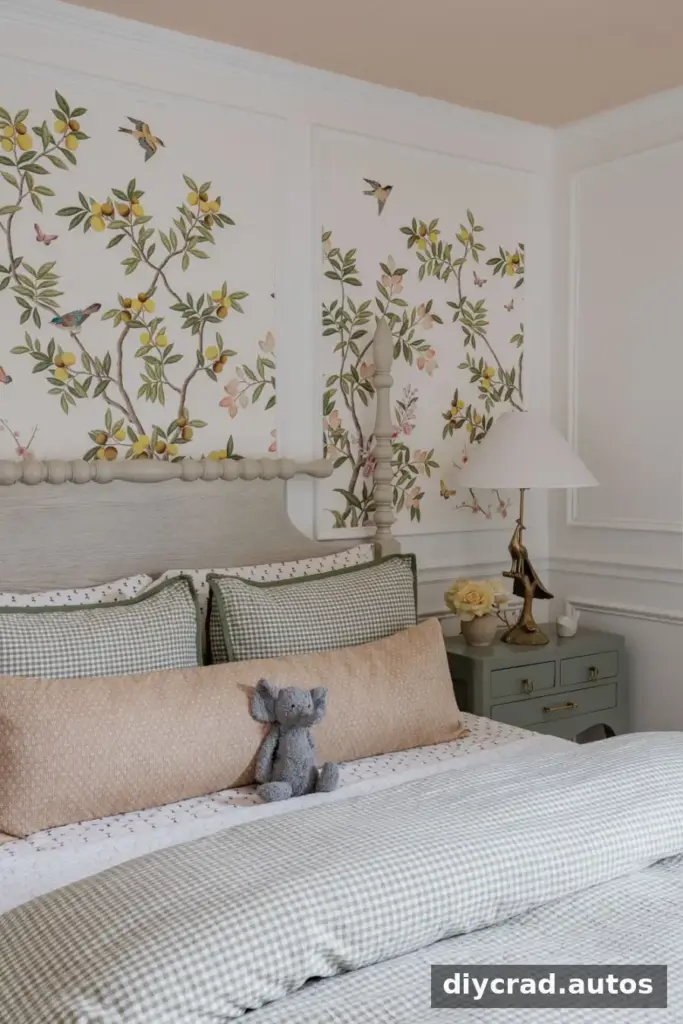
Using prints at different scales is one of the simplest ways to prevent them from competing. A room might combine one large-scale pattern, one medium-scale print, and one small-scale design. For example, floral wallpaper with oversized blooms could work alongside a medium-scale striped duvet and a small ditsy floral pillow.
Look at the patterns from across the room, not only up close. If several prints seem equally prominent, consider replacing one with a quieter design or a solid fabric. Different scales help the eye move through the space instead of landing on too many details at once.
Repeat Colors Across Different Prints
A shared color palette can bring together patterns that have very different motifs. If wallpaper includes blue, green, and ivory, repeat one or more of those shades in bedding, pillows, curtains, or a rug.
The colors do not need to match exactly. Aim for a visual connection rather than identical tones. Before buying new items, identify two or three colors already present in the room and use them as a guide. This makes it easier to choose additions that feel intentional.
Combine Structured and Organic Patterns
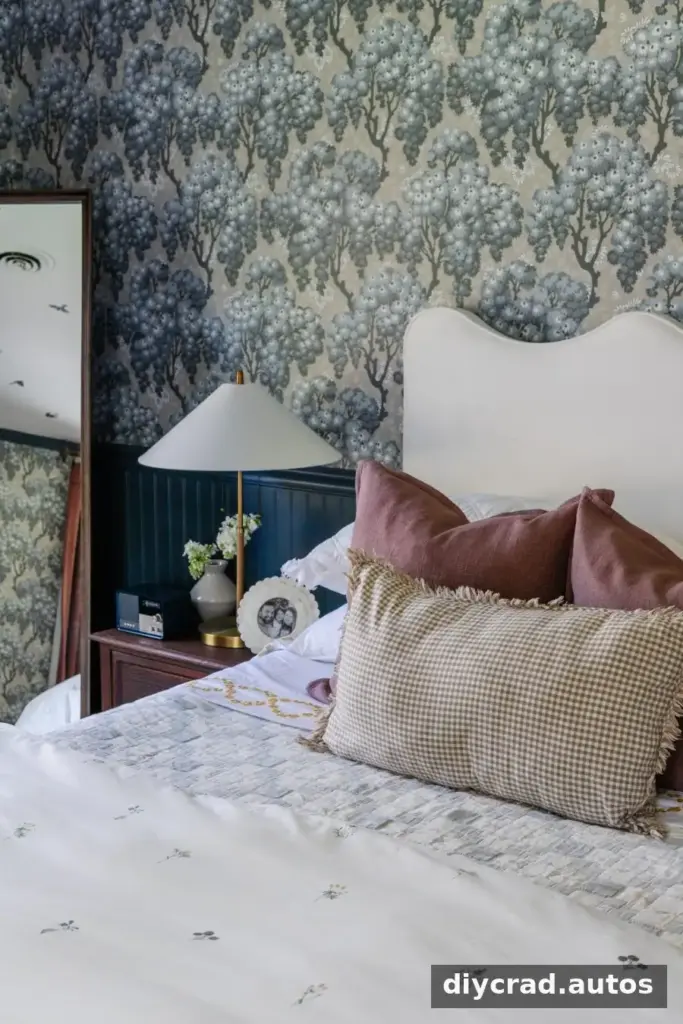
Structured prints, including stripes, plaids, checks, and geometric designs, can add order and definition. Organic patterns such as florals, botanicals, abstract watercolor designs, and nature-inspired motifs often bring softer shapes and movement.
Combining the two types can create contrast without relying on color alone. For instance, a floral print can soften the clean lines of a striped fabric. If a room already has several geometric patterns, try adding an organic motif; if it feels dominated by florals, a simple check or stripe may provide balance.
Use Solid Colors to Give the Eye a Rest
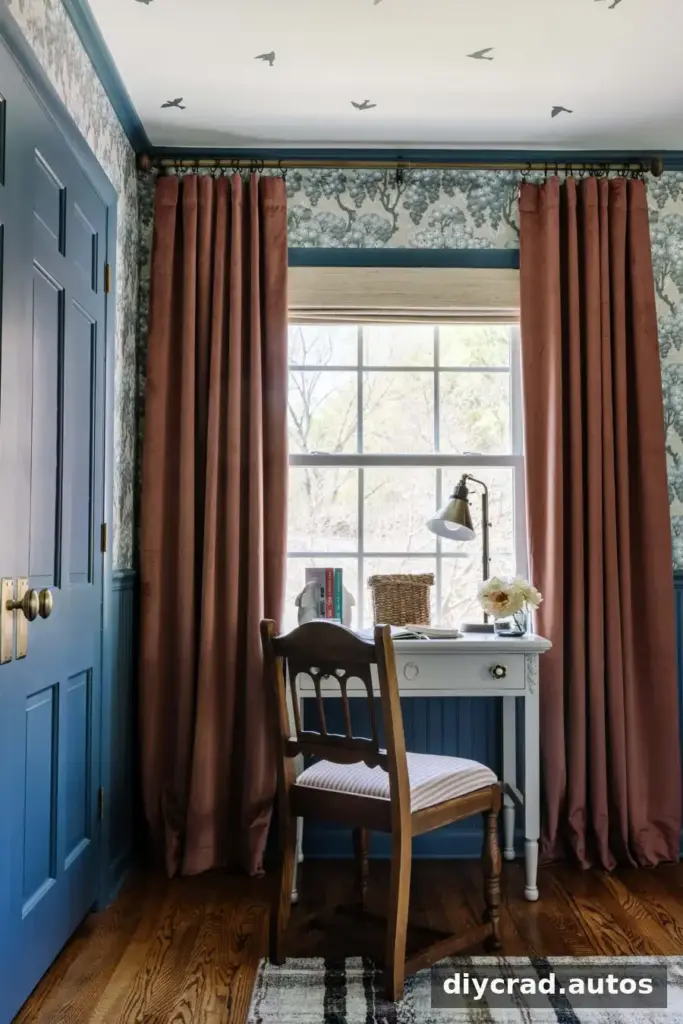
Solid fabrics and finishes help prevent a room from feeling overloaded. Plain bedding, painted furniture, neutral curtains, or a simple area rug can provide visual breathing room between patterned surfaces.
Solids are especially useful when patterns appear on large areas, such as walls and windows. You do not need to remove every print; instead, leave some surfaces quieter so the patterned pieces remain easy to appreciate.
Choose One Pattern to Be the Focal Point
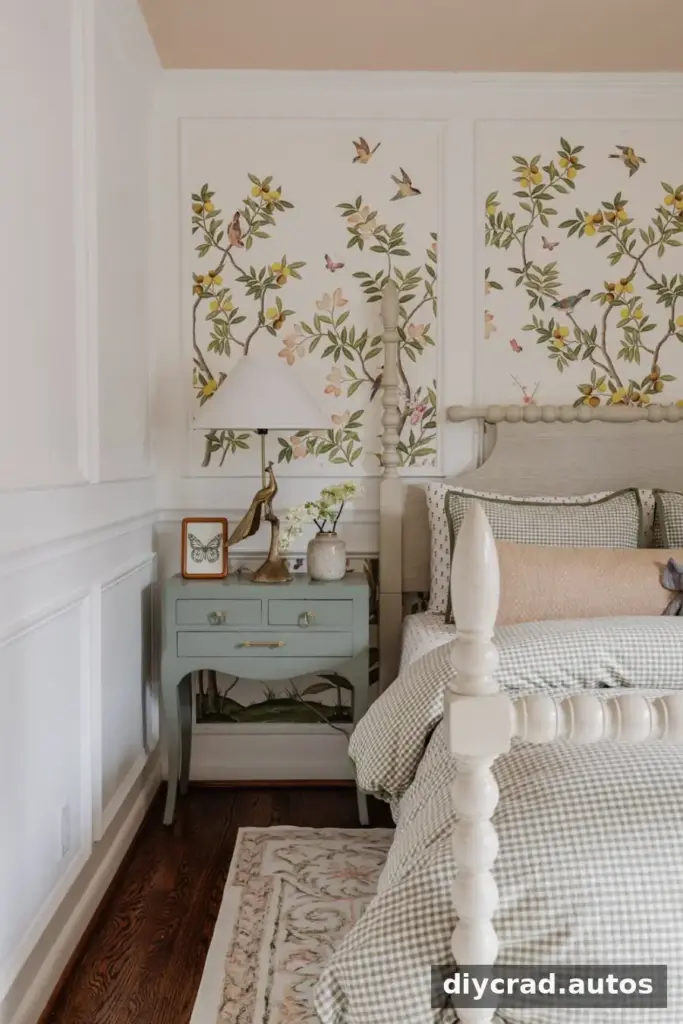
Decide which print should draw attention first. A large wallpaper design or a bold rug may naturally become the focal point. Other patterns and accessories can support it with related colors, smaller scales, or simpler motifs.
Ask yourself, “Which pattern should people notice first?” If the answer is unclear, reduce the strength of one competing print or introduce a solid element nearby. This small adjustment can make the room’s visual hierarchy easier to read.
Build the Room in Layers and Review as You Go
Pattern combinations can feel unsettled while a room is still being assembled. Add the larger elements first, then bring in smaller pieces such as pillows, artwork, and accessories. Once the main patterns are in place, step back and assess the whole room before adding more.
Lighting, artwork, and solid-colored finishes can help the completed space feel more connected. If the room still looks busy, remove one accessory or swap a small print for a solid rather than adding another pattern to solve the problem.
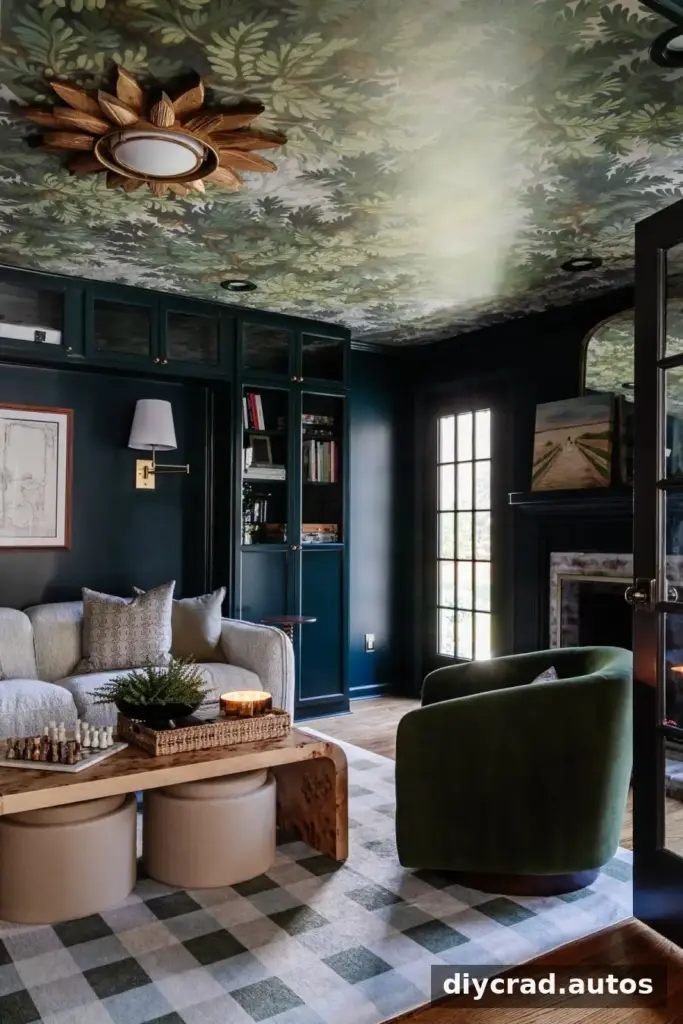
Source: Media Room Makeover Reveal
Pattern Mixing Is a Skill You Can Practice
Successful pattern mixing does not depend on choosing prints at random. Start with a favorite design, vary pattern scale, repeat colors, balance structured and organic motifs, and leave room for solids. Let one print lead while the others play supporting roles.
Use these principles as a starting point, then adjust the room by looking at it as a whole. With a clear focal point and enough visual breathing room, pattern mixing can make a space feel more layered and distinctive without looking busy.

